Tomb of Gaius Publicius Bibulus: A Republican Public Tomb in Rome
Site at a Glance
- Popularity
- Medium
- Country
- Italy
- Primary era
- Classical
- Eras represented
- Classical, Modern
- Civilizations
- Italian, Roman
- Site type
- Burial
- Remains
- Tomb
On this page8 sections
History
Republican-era tomb and public honor
The Tomb of Gaius Publicius Bibulus is a Roman funerary monument in Italy, whose surviving structure dates to the first half of the first century BC. The Senate and Roman people granted public land for the tomb of Bibulus, a plebeian aedile, an elected official responsible for aspects of public administration, and his descendants. The inscription says the grant recognized his distinction and merit. Such a public burial grant was exceptionally rare in Rome, and the reason for the honor is unknown.
Bibulus is placed in the second century BC, earlier than the surviving tomb’s date. This difference has led to the suggestion that the structure may be a later rebuilding of his original tomb. Livy records Bibulus as a tribune of the plebs in 209 BC. In that elected office, he took part in proceedings against Marcus Claudius Marcellus at the Circus Flaminius, a public space used for games and other activities. Little else is known about Bibulus or the actions that earned him the burial grant.
In antiquity, the tomb stood along the Clivus Argentarius, a road linking the northeastern slopes of the Capitoline Hill with the route known as the Via Lata or Via Flaminia. It was near the Porta Fontinalis and outside the Servian Walls, an early defensive circuit around Rome. Its position also lay outside the pomerium, Rome’s sacred boundary, within which burial was traditionally prohibited. The boundary is thought to have run along the foot of the Capitoline Hill at the time, and the tomb was probably about 100 metres from the gate.
Medieval reuse and modern preservation
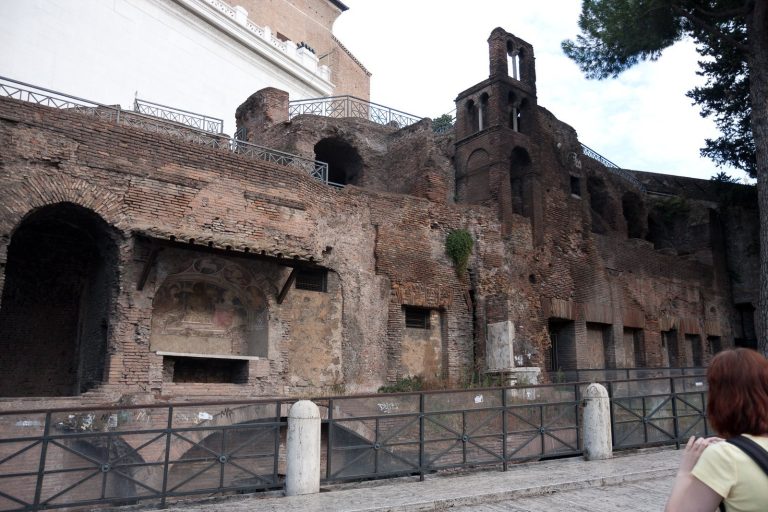
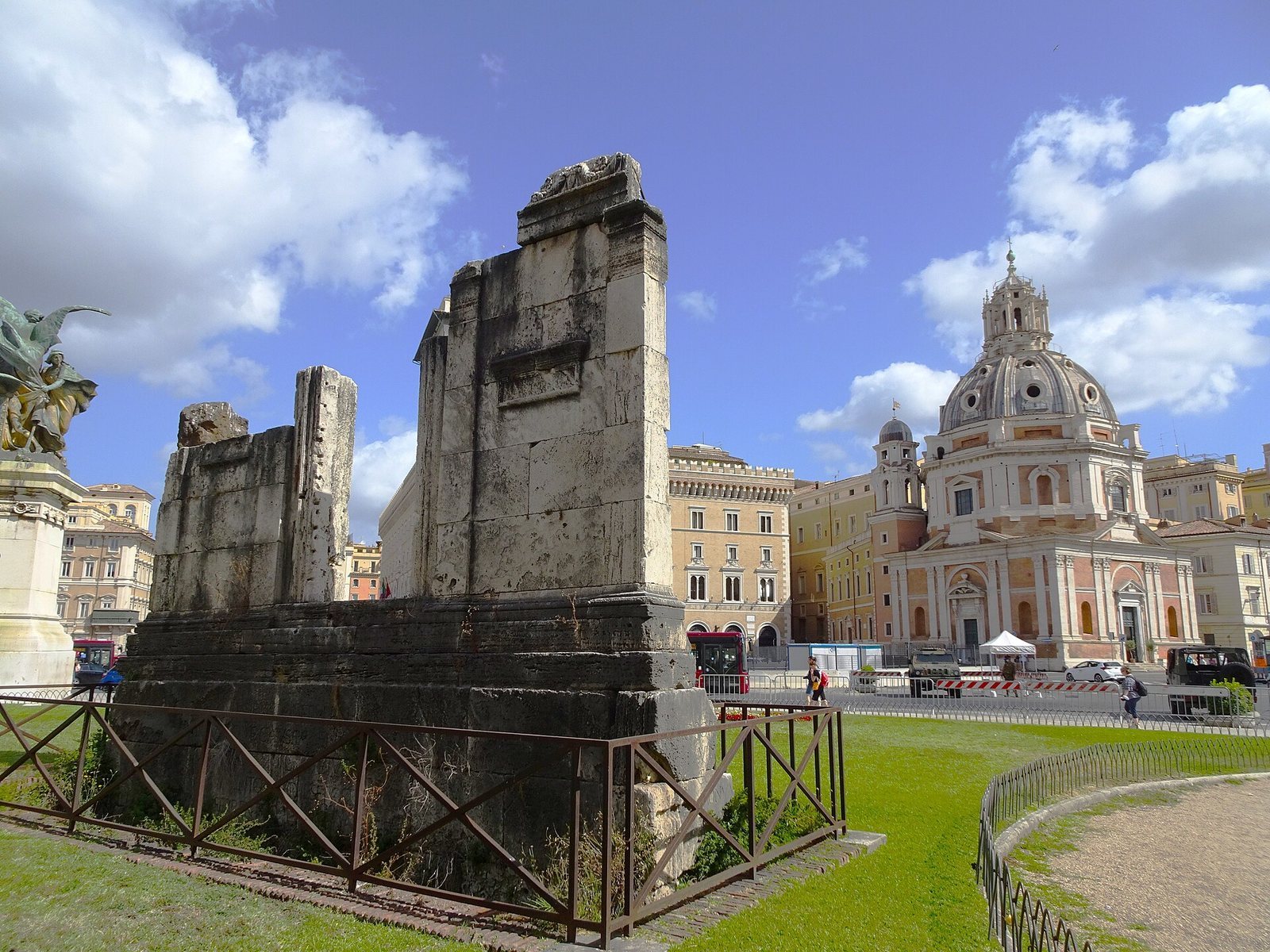
In the medieval and Renaissance periods, the tomb was incorporated into the side façade of a residential building identified as Palazzo Mantaco or Mantica. That building was demolished in 1902 during work to create the area around the Vittoriano, Rome’s monument to Victor Emmanuel II. The ancient tomb wall remained in its original location.
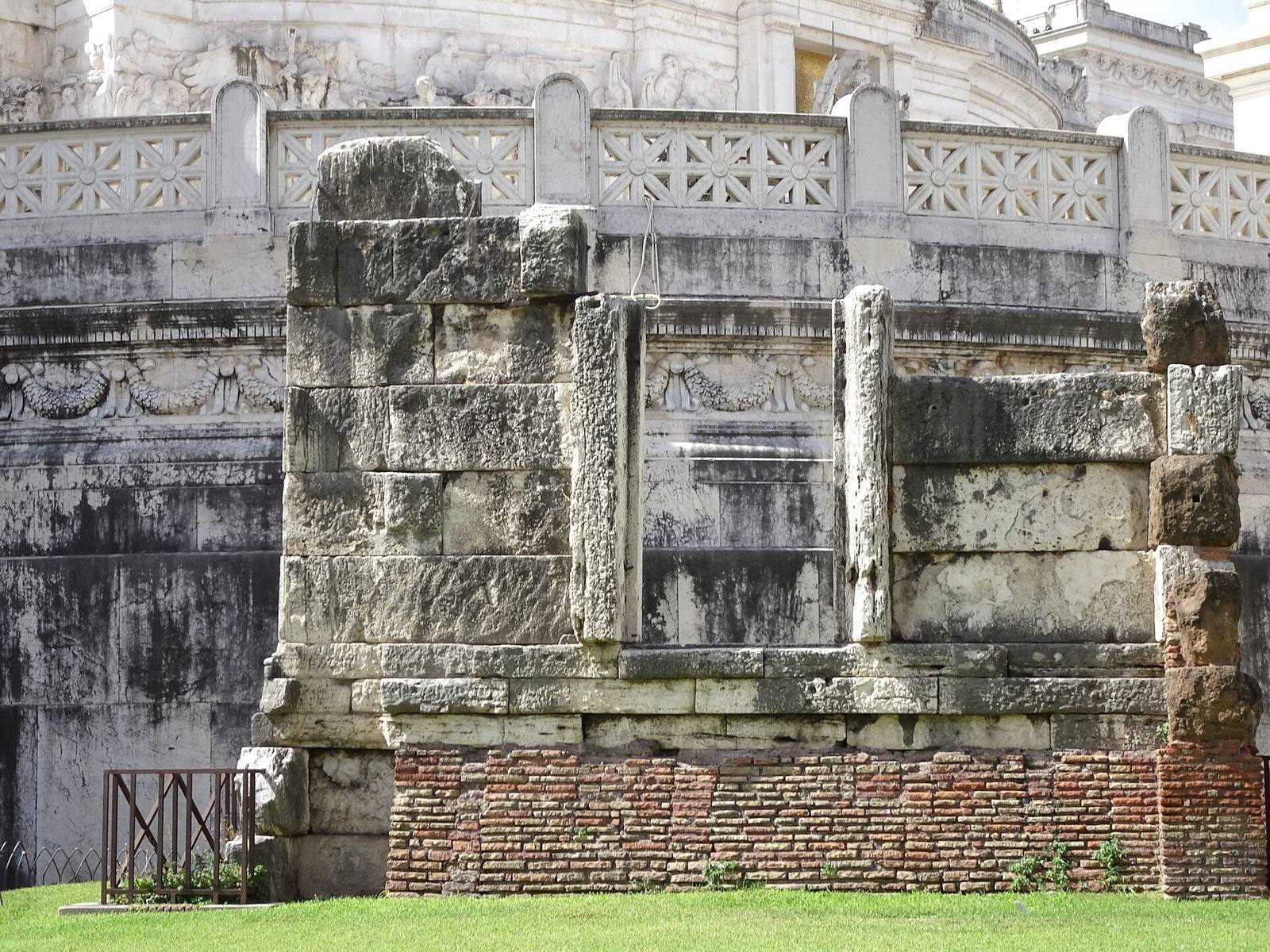
During construction of the Vittoriano, from the late nineteenth to the early twentieth century, the remains were preserved in place as a rare surviving trace of Republican Rome on the Capitoline slopes. They were left beside the new complex, and an iron railing was installed to protect the side of the base bearing the ancient inscription. A restoration and enhancement project begun in November 2024 and completed in February 2025 addressed the poor condition of the stone surfaces and aimed to improve the monument’s appearance and visibility.
Remains
The surviving monument
The tomb was originally a small temple-like structure, with a shallow entrance porch, a high raised base, and a rectangular enclosed chamber above it. Today, one façade wall and a fragment of an adjoining side survive; the original tomb stood higher than the portion now visible.
Plan and raised base
The surviving base measures 4.76 metres high and 6.50 metres wide, but is now almost entirely buried because the ancient street level was substantially lower than the present one. The tomb was built from Aniene tuff and travertine, with tuff used in parts that were not visible.
Façade
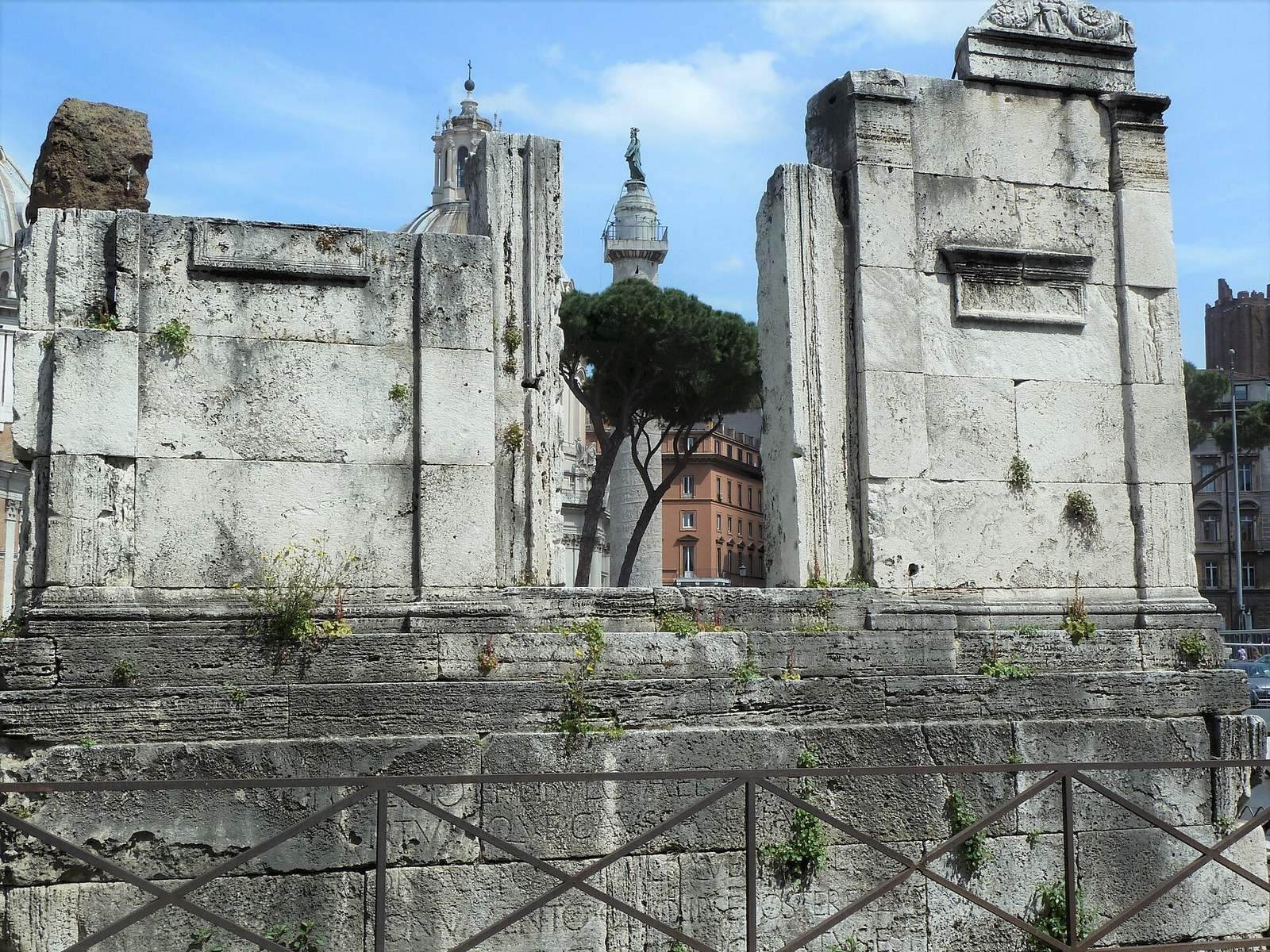
The surviving façade faces the Vittoriano. Four Tuscan pilasters, flat wall supports in a plain classical style, frame a central opening. It has been described as a doorway and may instead have been a niche for a statue. Two rectangular panels flank the opening. Part of the upper horizontal structure also survives, including a carved band decorated with garlands, rosettes, and bull skulls.
Inscriptions
The original sides were enclosed and had projecting slabs intended to carry inscriptions. The tomb’s text was cut into the upper two courses of the base and repeated on at least two sides. Two inscriptions appear on the portion above ground; the one on the west side remains fully legible.