Abbotsford House: Walter Scott’s Historic Residence
Site at a Glance
- Rating
- 4.7
- Popularity
- High
- Country
- United Kingdom
- Primary era
- Modern
- Eras represented
- Modern
- Civilizations
- British
- Site type
- Domestic
- Remains
- Castle
On this page9 sections
History
Scott’s estate and house
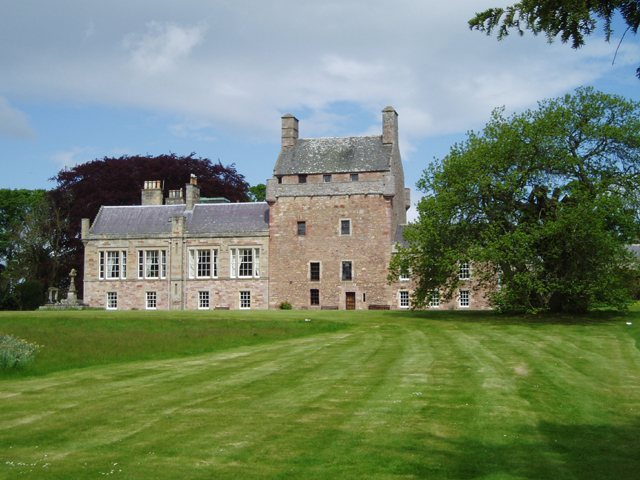
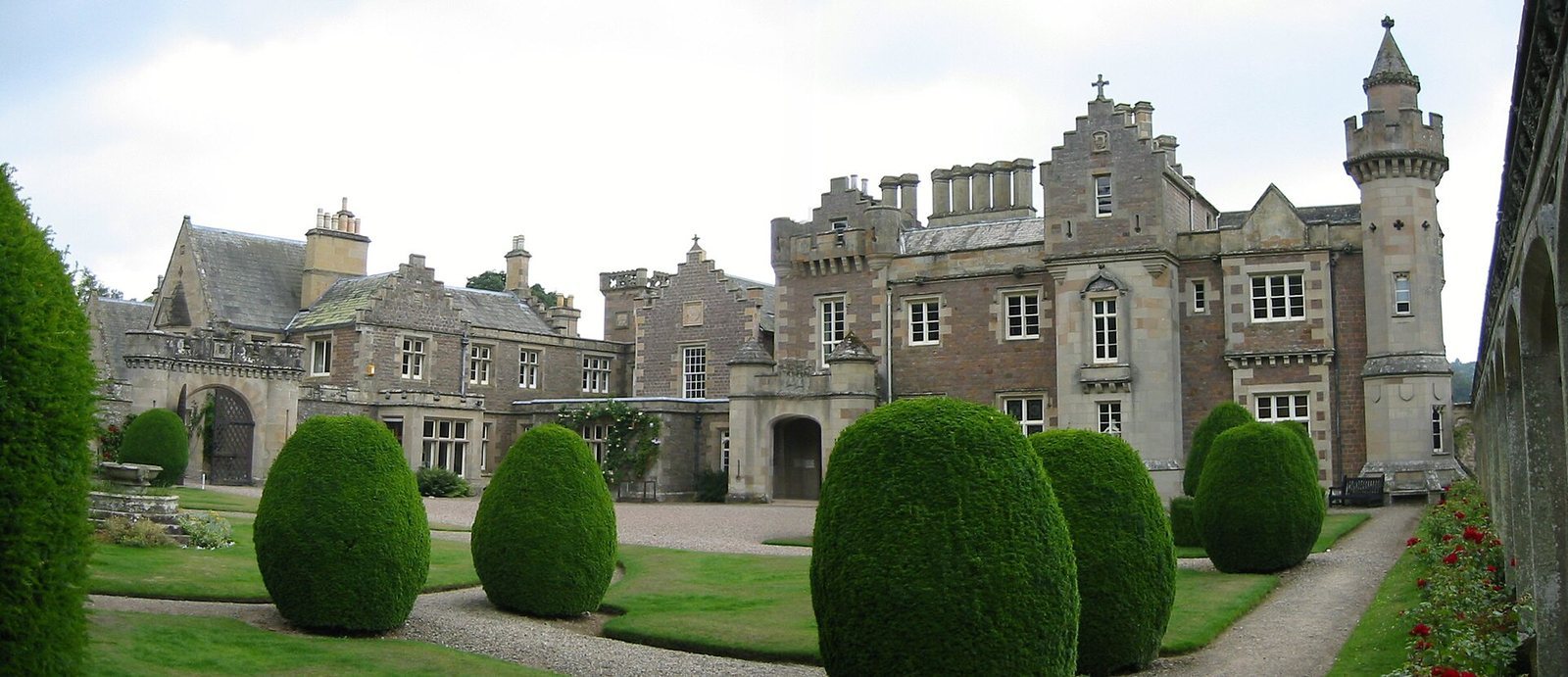
Abbotsford House is the residence developed by Scottish poet and novelist Walter Scott near Galashiels in Scotland, United Kingdom. Scott made it his home between 1817 and 1825; construction of the new house began and finished in 1824. Its design combines Gothic Revival, a renewed use of medieval Gothic forms, with Scottish Baronial, a revival drawing on Scotland’s medieval and Renaissance architecture.
The estate began as a 100-acre farm called Cartleyhole, also nicknamed Clarty Hole, or “muddy hole.” Scott bought it in 1811 after his lease at neighbouring Ashestiel ended. He named the property Abbotsford after a nearby ford used by monks from Melrose Abbey, a medieval Cistercian monastery. Scott enlarged the estate with further purchases, including Toftfield, later renamed Huntlyburn, in 1817. It eventually covered about five square kilometres, and Scott planted trees across the grounds.
Work began with a modest enlargement of the farmhouse in 1811–1812, followed by major building campaigns in 1816–1819 and 1822–1824. Scott supervised the planning and construction, choosing William Atkinson as architect and seeking advice from Edward Blore and Daniel Terry. Scott, Atkinson, and Blore helped pioneer the Scottish Baronial style. The house, which Scott intended to unite a historical character with modern comforts, became an influential model in the Scottish Borders and beyond.
Debt, inheritance, and public opening
Scott lived at Abbotsford for about a year before financial difficulties left the estate burdened with debt. He had transferred the property to his only son, Walter, while retaining the right to live there; his property, library, collections, and other assets were placed under trusteeship. In 1830, creditors returned his library and museum to him as a gift. Scott died at Abbotsford in 1832, and the house opened to the public the following year.
In 1847, publisher and bookseller Robert Cadell cleared the remaining debt by cancelling the bond on the property in exchange for the family’s share of the copyright in Scott’s works. Scott’s son Walter died childless that year while returning from India, ending the family baronetcy, a hereditary title below the rank of baron. The estate passed to Scott’s grandson Walter Scott Lockhart, then to Lockhart’s younger sister Charlotte Harriet Jane Hope-Scott. Charlotte’s husband, James Hope-Scott, added a southern wing in 1855. After Charlotte died in 1858, the estate was entrusted to a Catholic association while their daughter Mary was a minor. Mary inherited it after her father’s death in 1873.
Literary legacy and later stewardship
Scott’s son-in-law and literary executor, John Lockhart, judged the unpublished novel The Siege of Malta too weak for publication without risk to Scott’s reputation. The family kept its manuscript at Abbotsford for more than 150 years, until the novel appeared in 2008. The house also gave its name to the Abbotsford Club, founded by William Barclay Turnbull in 1833 or 1834 in Scott’s honour. Following the Bannatyne and Maitland Clubs, it published historical works connected with Scott’s writings from 1835 to 1864.
Scott’s descendants continued to occupy the house until 2004. Dame Jean Maxwell-Scott, his great-great-great-granddaughter and the last direct descendant to hold the estate, inherited it from her elder sister Patricia in 1998. After Jean’s death in 2004, her heirs transferred Abbotsford to the Abbotsford Trust, established to protect the house and its collections. Extensive renovation work later received the European Union Prize for Cultural Heritage, also known as the Europa Nostra Award, in 2014. The house is Category A listed, Scotland’s highest level of listed-building protection, and the estate is included in Scotland’s Inventory of Gardens and Designed Landscapes.
Remains
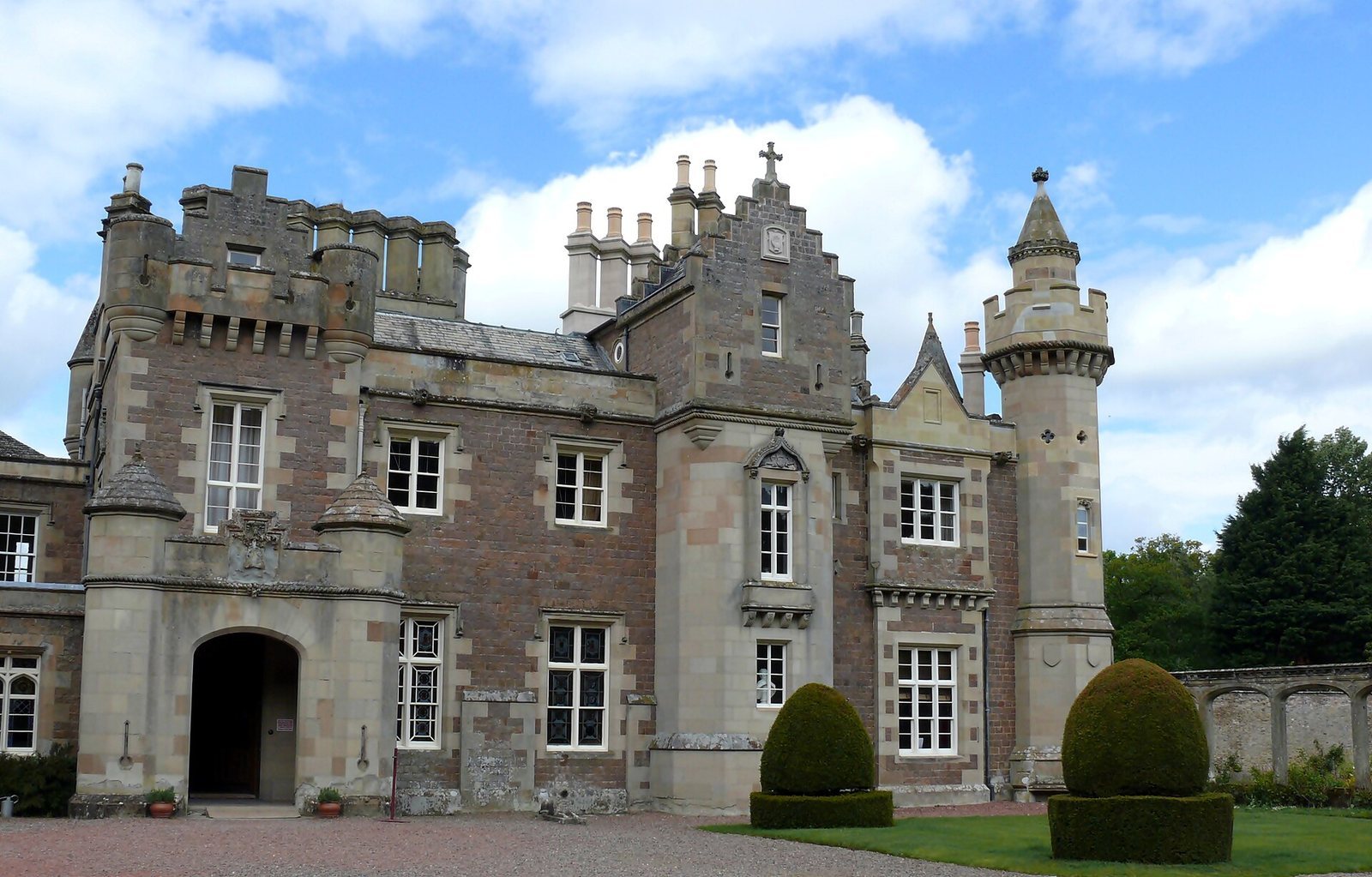
Abbotsford has an irregular, parallelogram-shaped plan, with one side overlooking the River Tweed. Gothic Revival and Scottish Baronial features give the house and garden walls a castle-like appearance, including small towers and imitation battlements.
House and grounds
House exterior
Scott incorporated architectural relics into the building, among them a doorway from Edinburgh’s old Tolbooth and sculptures taken from Scottish castles and abbeys. He also attached to the castellated gateway the jougs he had rescued from Threave Castle. Jougs were iron collars used as instruments of public punishment.
Gardens and courtyards
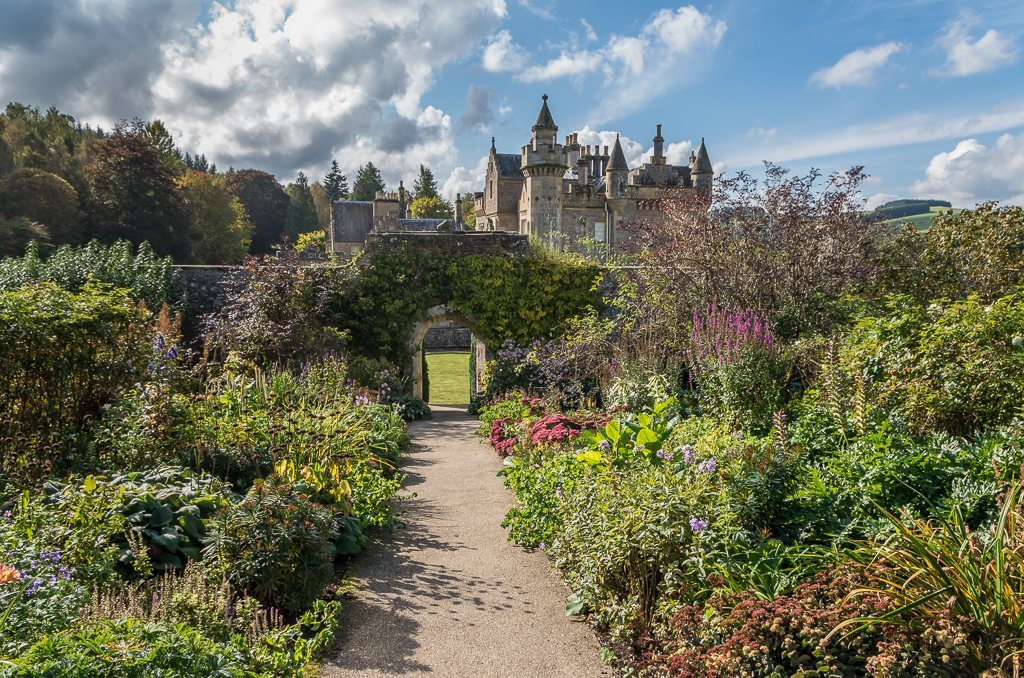
The grounds include a walled garden, courtyards, a conservatory, and an orangery. A row of Gothic arches once ran along the South Garden walls. Along its former route are remains of Edinburgh’s fifteenth-century Mercat Cross, a Scottish market cross associated with civic and commercial life, as well as examples of classical sculpture. A statue of Morris, a character in Scott’s novel Rob Roy, is also among the estate’s features.
Collections and household technology
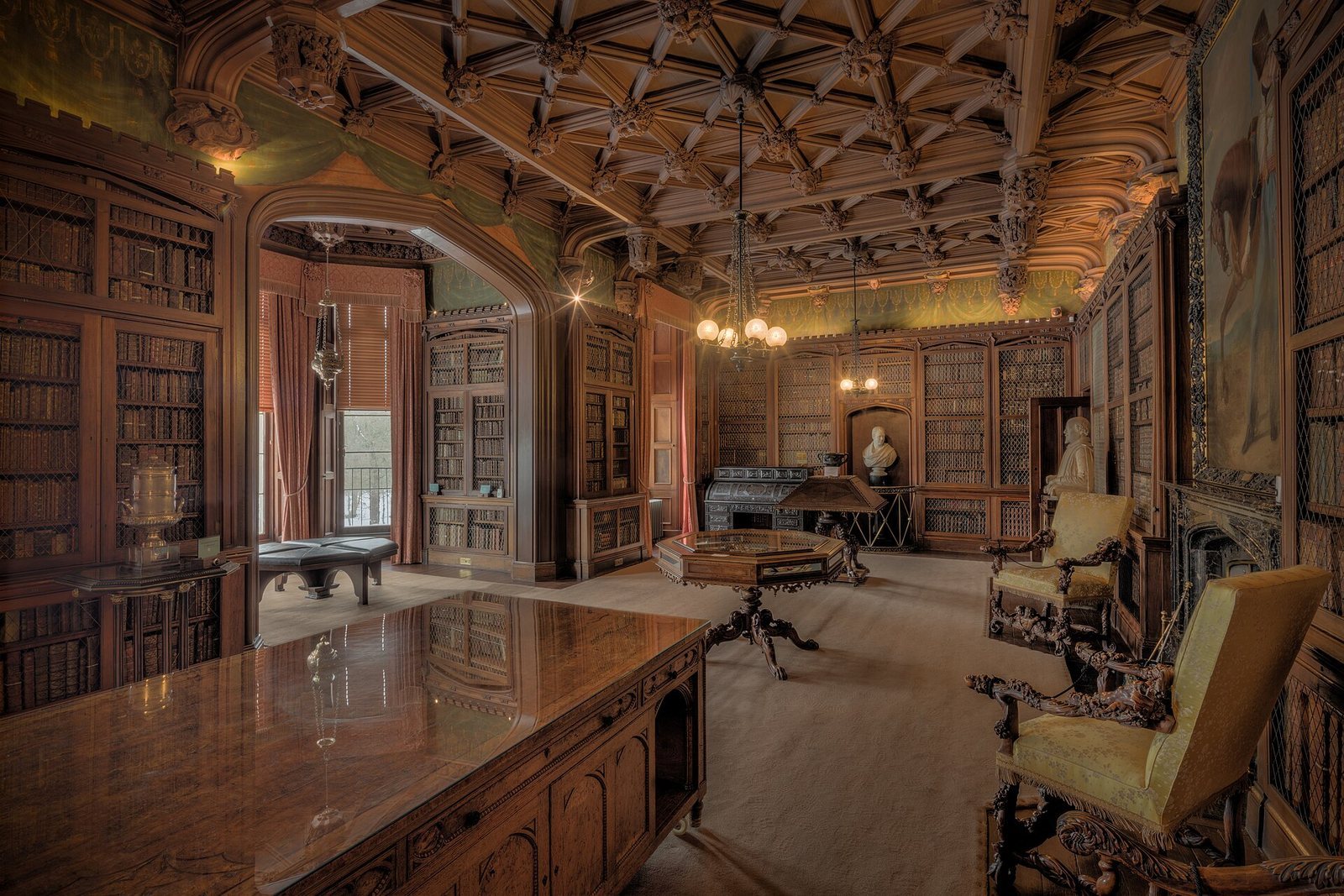
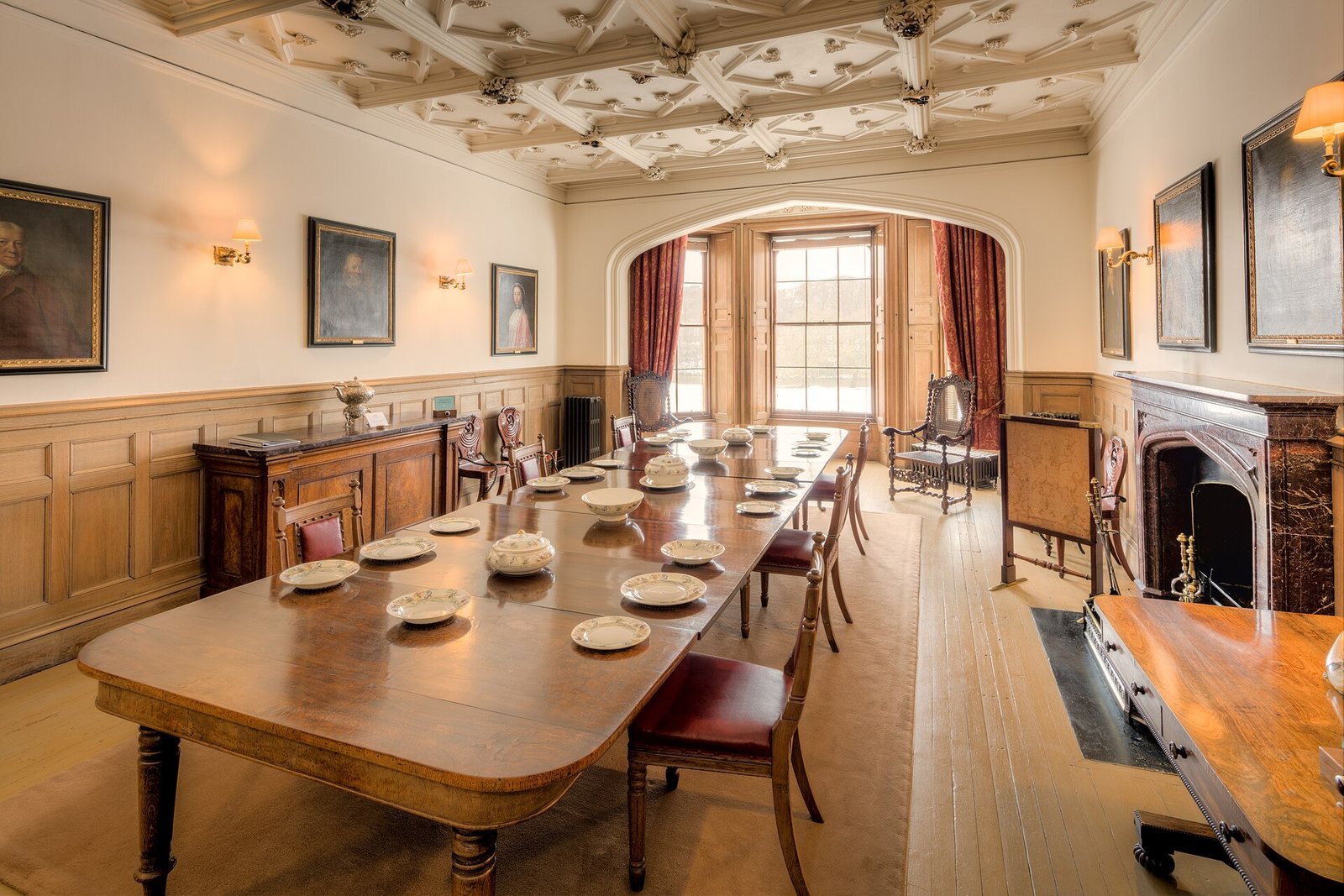
Scott assembled a large library and collections of antique furniture, arms and armour, and objects associated especially with Scottish history. They included the Celtic Torrs Pony-cap and Horns and the Woodwrae Stone, now in the National Museum of Scotland. Carved Victorian oak furnishings in the library helped popularize the Abbotsford style of furniture. The house also had early gas lighting and air-pressure bells that connected residents with servants elsewhere in the building. Electricity was installed in 1962.