Woking Palace: A Medieval Manor and Tudor Royal Residence
Site at a Glance
- Rating
- 4.1
- Popularity
- Low
- Country
- United Kingdom
- Primary era
- Early Modern
- Eras represented
- Medieval, Early Modern
- Civilizations
- English
- Site type
- Domestic
- Remains
- Palace
On this page9 sections
History
Woking Palace is a former royal residence in the United Kingdom, developed from the Crown’s medieval manor at Woking. The manor house became a palace in the early sixteenth century and served successive Tudor and Stuart monarchs.
The Crown manor and Tudor palace
A house at Woking is first mentioned in 1272. The Royal Manor of Woking remained at the Crown’s disposal and passed among its nominees until 1466, when Edward IV granted it to Lady Margaret Beaufort, the mother of Henry VII, and her third husband, Sir Henry Stafford.
Henry VII converted the existing manor house into a palace in 1503. Margaret Beaufort, Henry VII, and his son Henry VIII all used the residence, which Elizabeth I also later remodelled. Henry VIII visited frequently and ordered continuing repairs and alterations. His additions included a wharf beside the River Wey and two bowling alleys. Other work ranged from replacing bridge planks and window glass to changing room partitions, plastering and painting, retiling roofs and fireplaces, and installing windows.
James I and the Zouch estate
James VI of Scotland, who ruled England as James I, visited Woking in March 1606 and returned often, commonly in March. During one stay, a false report reached London that Catholic conspirators had killed the king and several courtiers with poisoned knives or pistol fire. Whitehall Palace and the Tower of London were secured. James returned safely, and bells rang at St Margaret’s, Westminster.
On 9 May 1609, James appointed Sir Edward Zouch steward of the manor and keeper of its park, making Zouch the park’s first keeper. That June, royal-works surveyor Simon Basil estimated repairs to the manor, service buildings, wharf, and two bridges; the King’s Lodging was already in good repair. At Zouch’s request, Basil also priced clearing the moat and building a bridge over the Wey in front of the house, intended to increase the privacy of the King’s Garden.
In 1620, the financially strained Crown transferred the estate to Zouch in return for annual rent of £100 and a duty to serve the first dish to the king at a feast on St James’s Day. Zouch may have allowed buildings at Woking to be stripped for materials for a new mansion at Hoe Bridge Place, nearly a mile away.
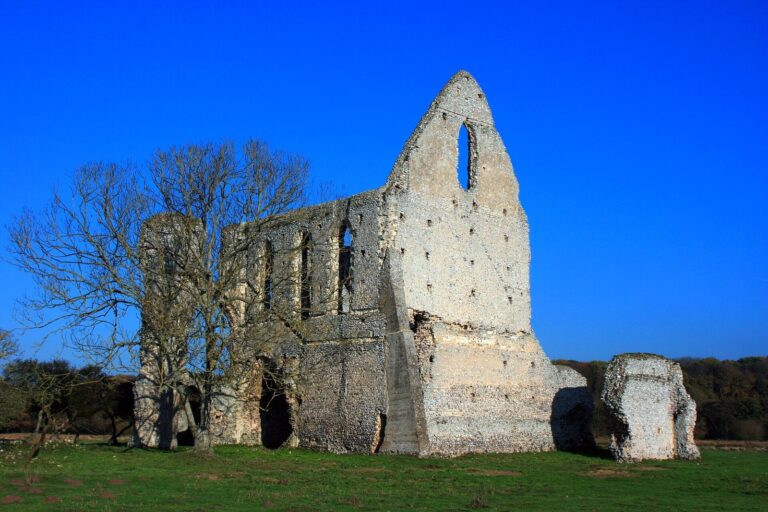
By the reign of Charles II (1660–1685), Woking Palace appears to have been abandoned and was virtually in ruins. It is now a Scheduled Ancient Monument, a legally protected archaeological site in England, and Woking Borough Council owns and cares for it. The site has been assessed as an “excellent survival” among pre-sixteenth-century royal sites, with diverse remains and substantial archaeological potential, including in its waterlogged moats. Its planning value reflects national historical, architectural, and archaeological importance.
Remains
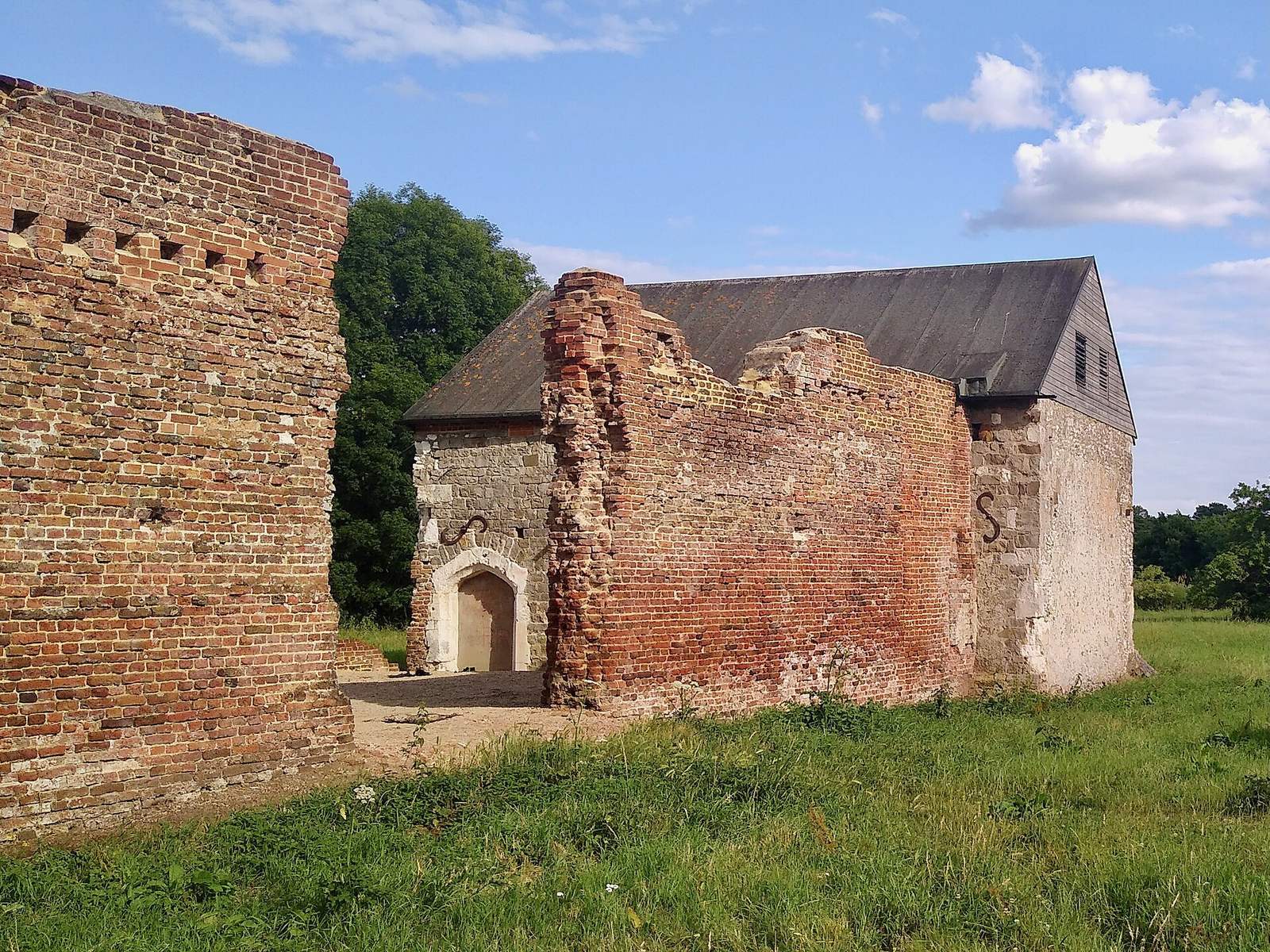
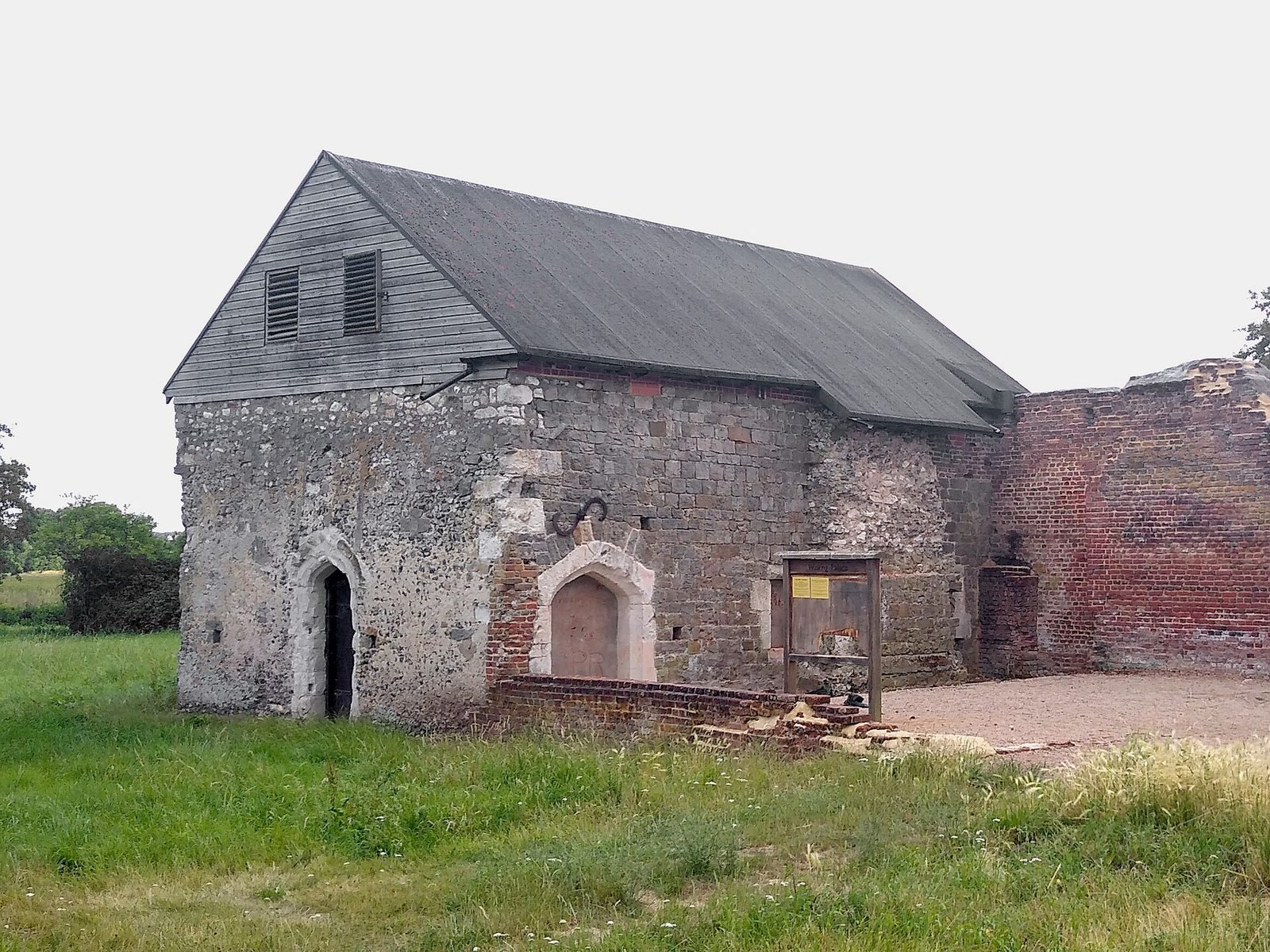
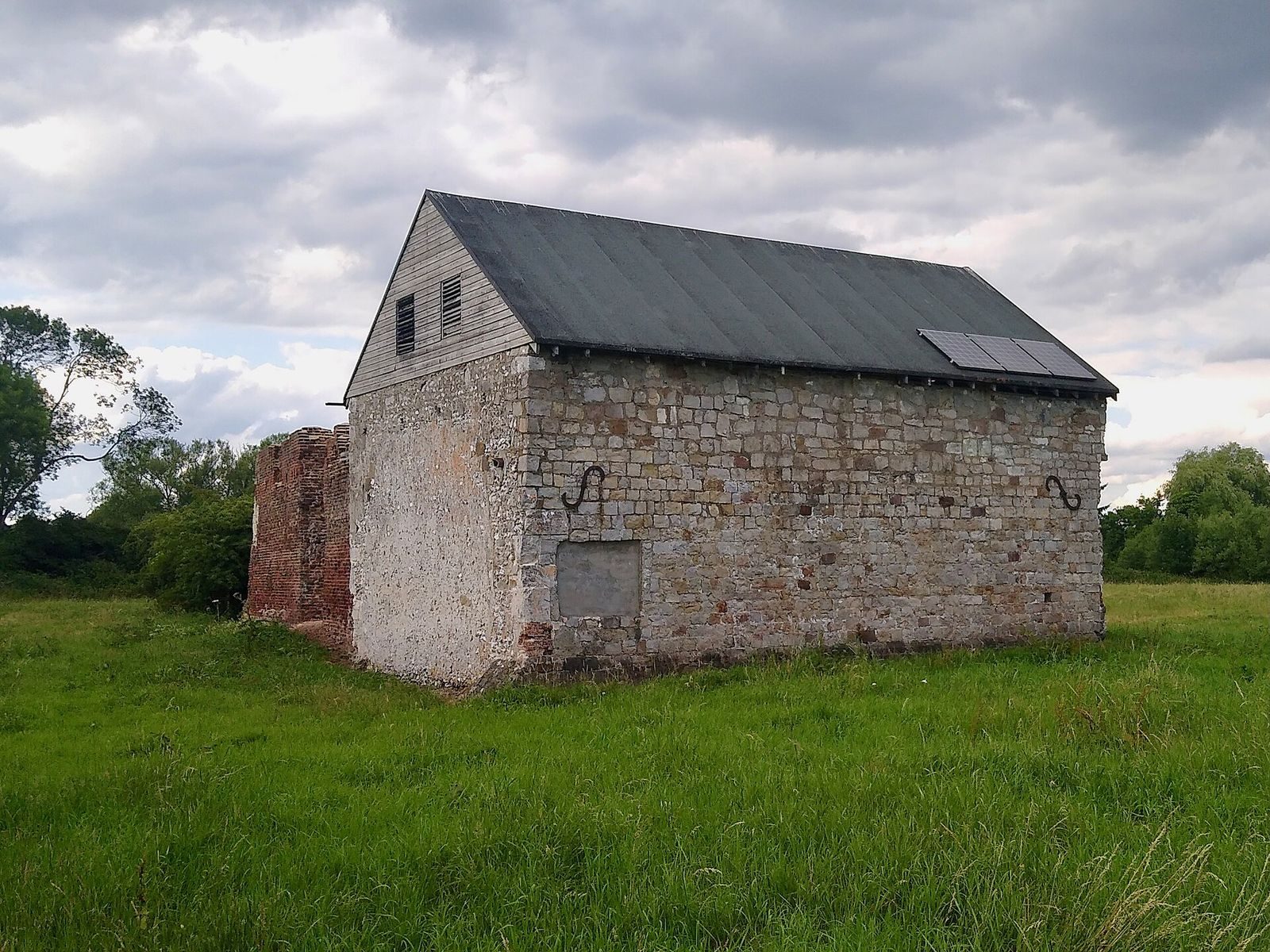
Buried and exposed building remains occupy a cut and grazed water meadow. The moated site is divided into four areas: a northeast quadrant; a southeast area containing King’s Hall and a medieval barrel vault; the southwest King’s Garden; and the northwest Copse. The moat runs along three sides, while the River Wey bounds the fourth.
Royal buildings
King’s Hall
Henry VII built King’s Hall in 1508. It lies in the southeast part of the site, within the moated layout.
Barrel vault
The medieval barrel vault, a continuous curved ceiling shaped like an elongated arch, is also in the southeast area. Protective work has included a roof over the vault, a lockable door, and repairs to the surviving Tudor wall.
Garden and orchard grounds
The King’s Garden was originally a formal kitchen garden and is now rough meadow. The northwest Copse was formerly an orchard; it contains two large, elongated fish ponds and a smaller round pond.
Finds
Objects associated with Woking Palace include a gold brooch or pin dated 1400–1550, set with amethyst in the shape of a fleur-de-lys, a stylized lily. A copper-alloy object dated about 1750–1900 bears an image of a horse prancing to the left. A close parallel suggests it may originally have been cylindrical and shaped like a lid, with lead or solder filling. Some finds associated with the site fall under the Treasure Act 1996, which sets reporting requirements for qualifying discoveries.