Saaleck Castle: Fulda’s Southern Strongpoint
Site at a Glance
- Rating
- 4.5
- Popularity
- High
- Country
- Germany
- Primary era
- Medieval
- Eras represented
- Medieval
- Civilizations
- Holy Roman Empire
- Site type
- Domestic
- Remains
- Castle
On this page7 sections
History
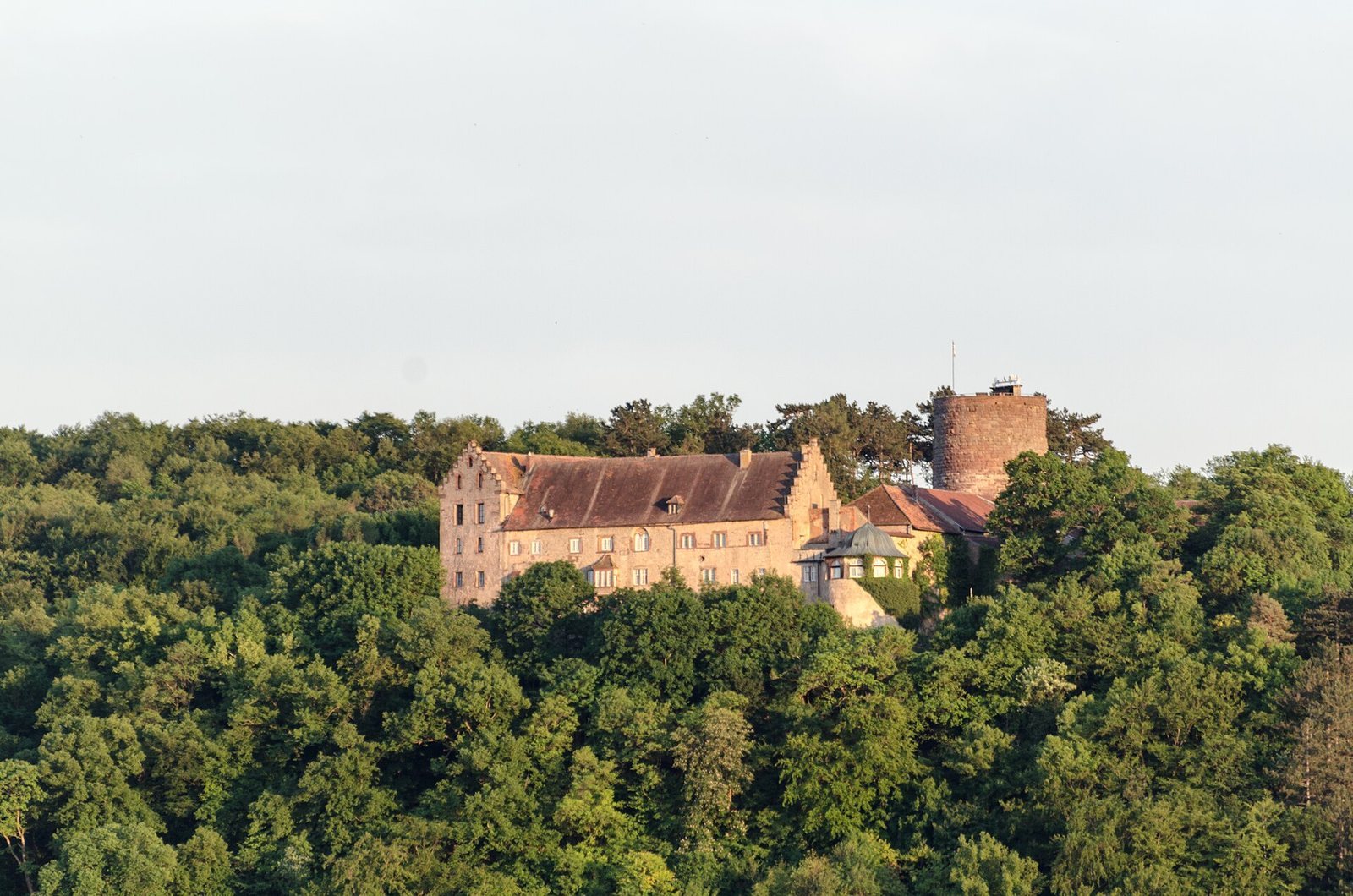
Saaleck Castle stands on a spur of Schlossberg near Hammelburg, Germany. The spur was used for fortifications in prehistoric times, and the medieval castle later served as Fulda’s southernmost strongpoint. Fulda was a major Benedictine abbey that also governed surrounding territory.
Origins and medieval defenses
A tradition places a chapel on the spur around 800. During the Christianization of the Rhön, small churches and chapels were often established at pre-Christian cult sites or within fortifications. The castle’s beginnings remain uncertain, and its first mention is traditionally placed around 1030, when nearby Homburg was thought to have been substantially expanded. A verse associated with this tradition describes watch being kept toward Trimburg and Saaleck to prevent raiders from approaching that way.
Major fortification work took place in the thirteenth century. Abbot Heinrich von Erthal, head of Fulda’s monastery during 1249–1261, completed the defenses. Abbot Marquard I later strengthened the castle, and building work continued in subsequent centuries.
Decline and rebuilding
In the early sixteenth century, the German humanist and knight Ulrich von Hutten paid to renew the wooden bridge across the southern defensive ditch. By the time of the Peasants’ War, the castle had lost its military importance and fallen into ruin. Insurgents occupied and devastated it during the uprising of 1524–1525, a large revolt in German-speaking lands.
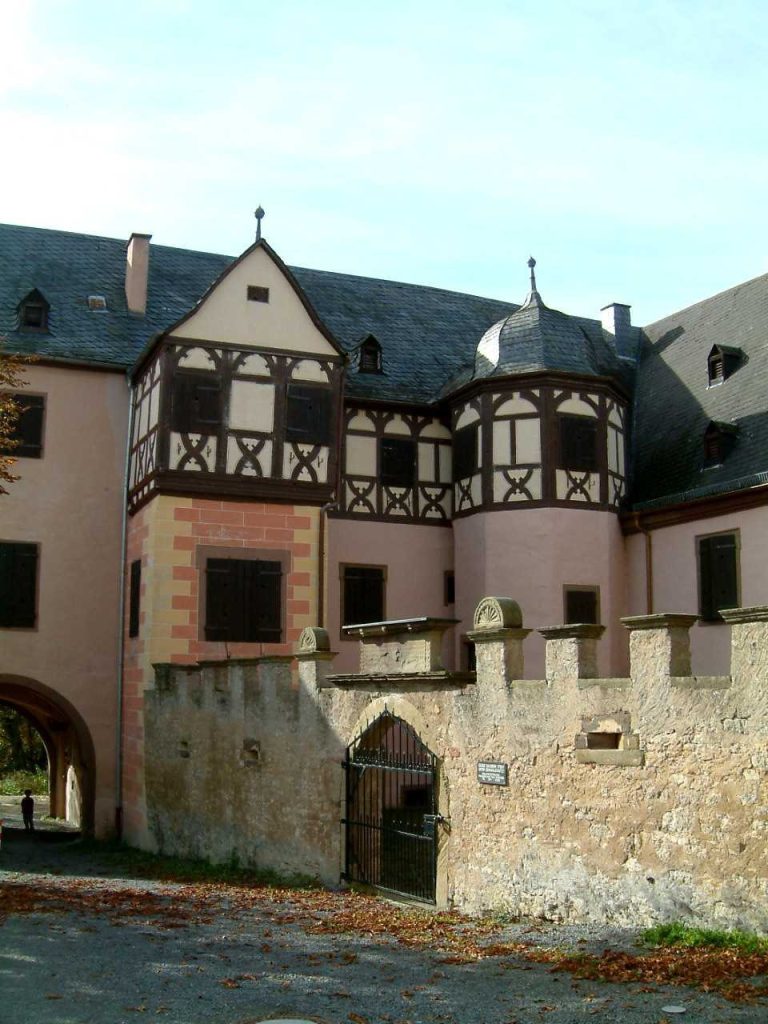
After the Thirty Years’ War, the European conflict fought from 1618 to 1648, the German nobleman Salentin von Sintzig adapted the castle as a retirement residence. He described it as ruinous and believed local people had taken heavy stones for their own building projects. Rebuilding took place from 1644 to 1667, spanning the latter part of the war and its aftermath. Much of the castle’s present appearance reflects this work.
Modern ownership and preservation
Hammelburg acquired the castle and its associated winegrowing business in 1964, bringing a continuing dispute over the complex to an end. The municipal winery operated about 25 hectares of vineyards at Saalecker Schlossberg, Hammelburger Heroldsberg, and Hammelburger Trautlestal. In October 2011, the winery passed into private ownership; the new operation worked about 18 hectares at Saalecker Schlossberg and Hammelburger Heroldsberg. The castle is protected as a landscape-defining architectural monument.
Remains
Castle spur and defensive tower
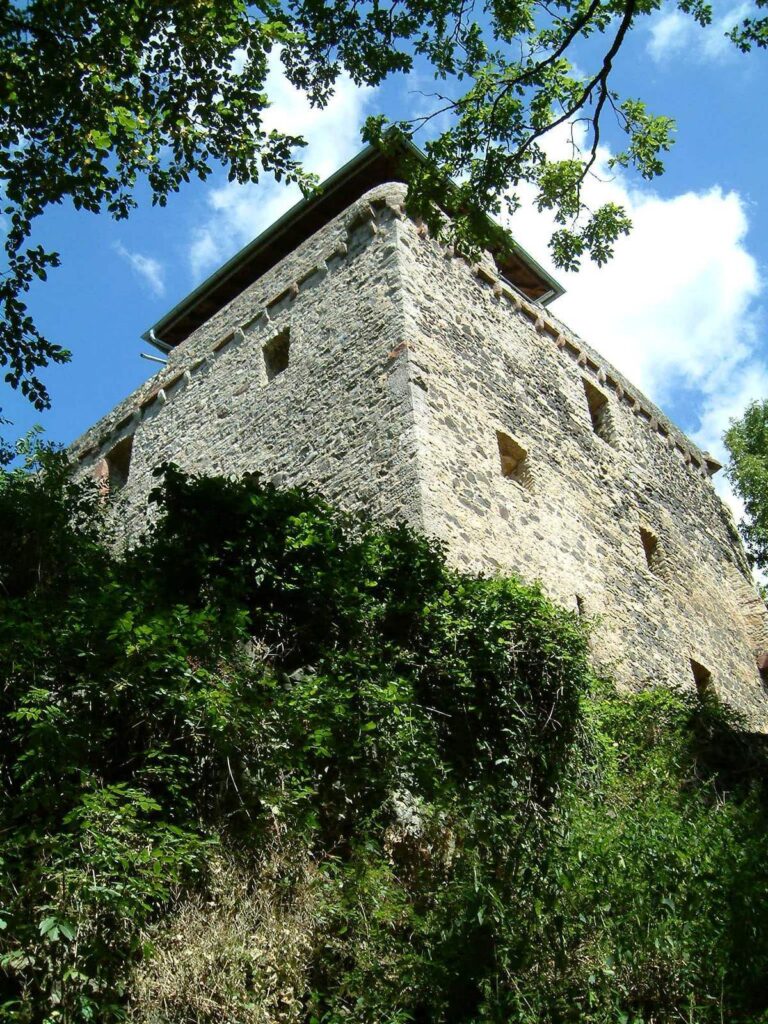
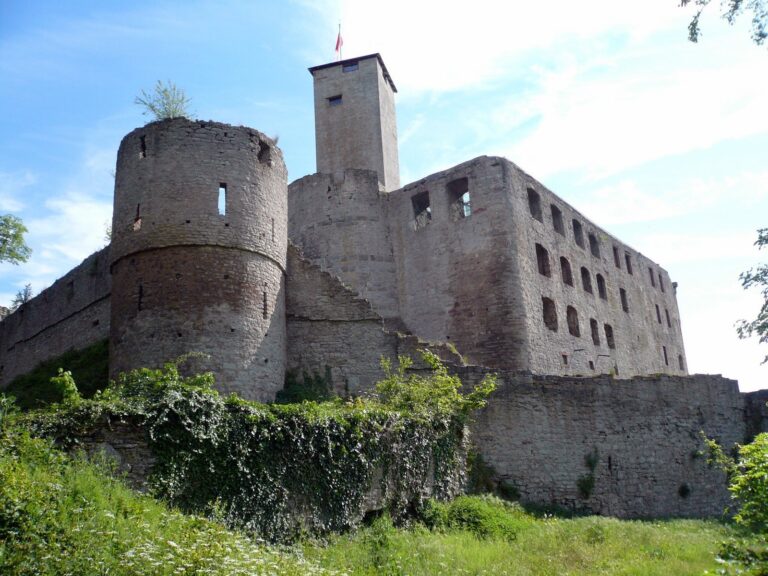
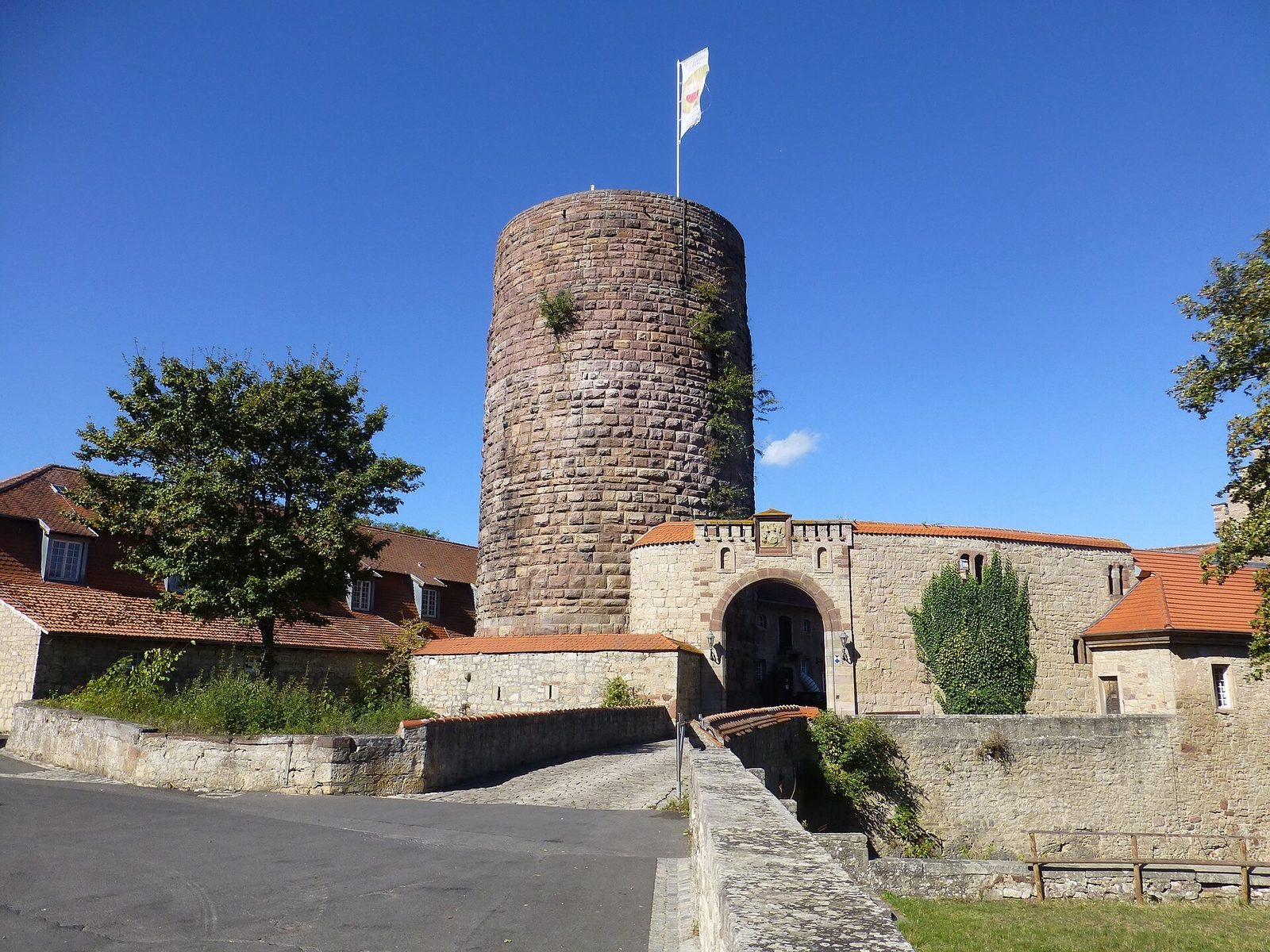
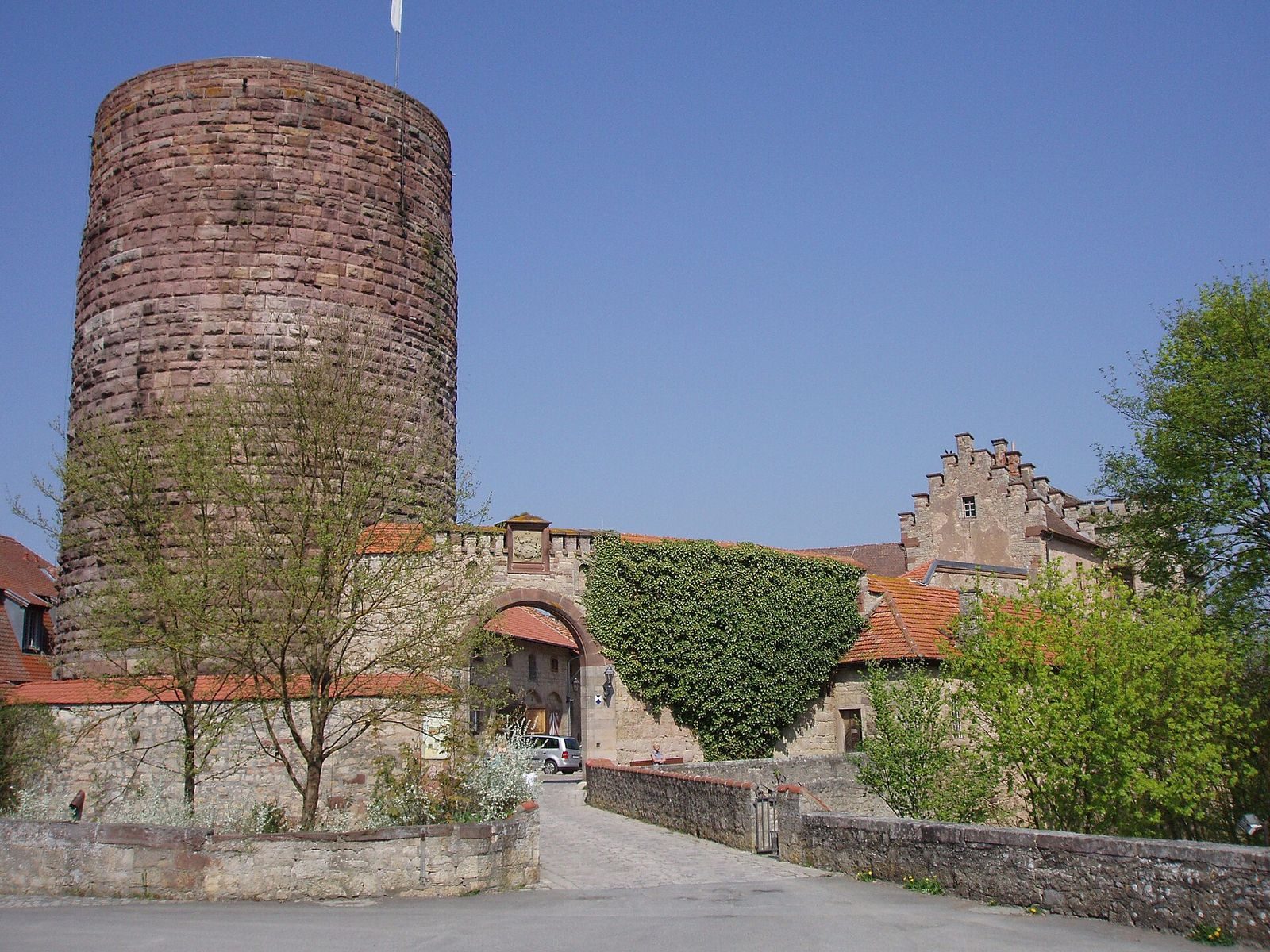
The castle occupies a spur about 280 metres high on Schlossberg, which reaches 308 metres above sea level. Its defensive system included ditches, walls, a strengthened wall on the vulnerable side, and walls with notched tops. The defensive tower, dated to the twelfth or thirteenth century, is preserved in its original state and stands 22 metres high. During the Thirty Years’ War it lost about six metres of height because of its dilapidated condition. Extensive restoration later made it accessible as a viewing tower from September 1998; its platform looks over the Saale Valley and Hammelburg. About 100 metres below the castle is the upper end of the Stations of the Cross associated with Altstadt Monastery.
Winery and vineyards
A winery building beside the castle processes grapes from the surrounding vineyards. The vines grow in shell-limestone soils, and the area’s climatic conditions are credited with shaping the character of its wines.