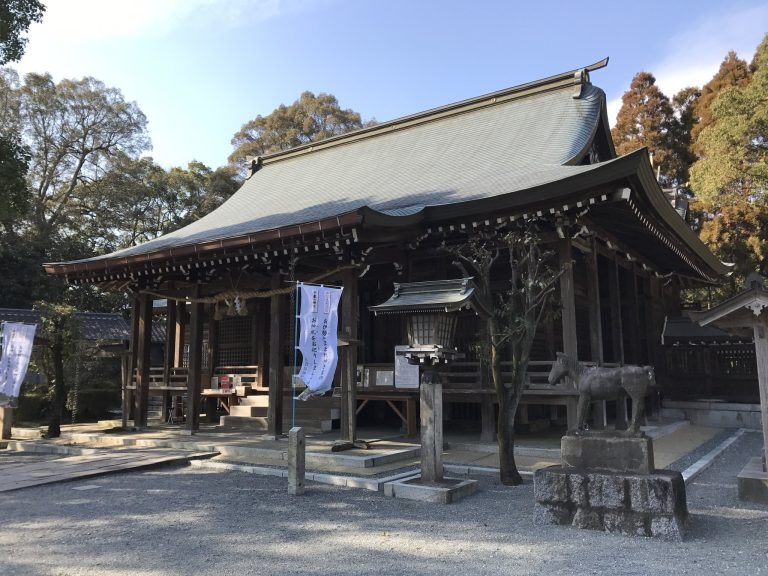
Sekijinsan Kofun: A Burial Mound in the Yame Kofun Group
Site at a Glance
- Rating
- 4.3
- Popularity
- Medium
- Country
- Japan
- Primary era
- Classical
- Eras represented
- Classical
- Civilizations
- Unclassified
- Site type
- Burial
- Remains
- Burial Mound
On this page10 sections
History
Fifth-century foundation
Sekijinsan Kofun is a kofun, a monumental Japanese burial mound, in Ichijo, Hirokawa Town, Fukuoka Prefecture, Japan, and part of the Yame Kofun Group. Its shape and excavated Sue ware, a type of high-fired ceramic used in ancient Japan, suggest that it was built in the early to mid-fifth century.
The mound predates the tomb of Tsukushi no Kimi Iwai by several generations. Iwai was a sixth-century regional ruler in northern Kyushu. Sekijinsan Kofun has been proposed as the burial place of his grandfather, although it was formerly identified as Iwai’s own tomb.
Edo period and later recognition
The burial chamber was opened during the Edo period (1603-1868). The armed stone figure had become known by this period, appearing in historical records. A healing belief held that striking or rubbing the figure could cure pain in the corresponding part of a person’s body, and people acted on that belief.
The mound received national historic-site designation in 1938. In 1978, its designation was consolidated with those of other tombs, three more tombs were added, and the group designation was renamed the Yame Kofun Group. The armed figure has a separate designation as an Important Cultural Property of Japan, a national status for culturally significant tangible property.
Remains
Mound and surrounding features
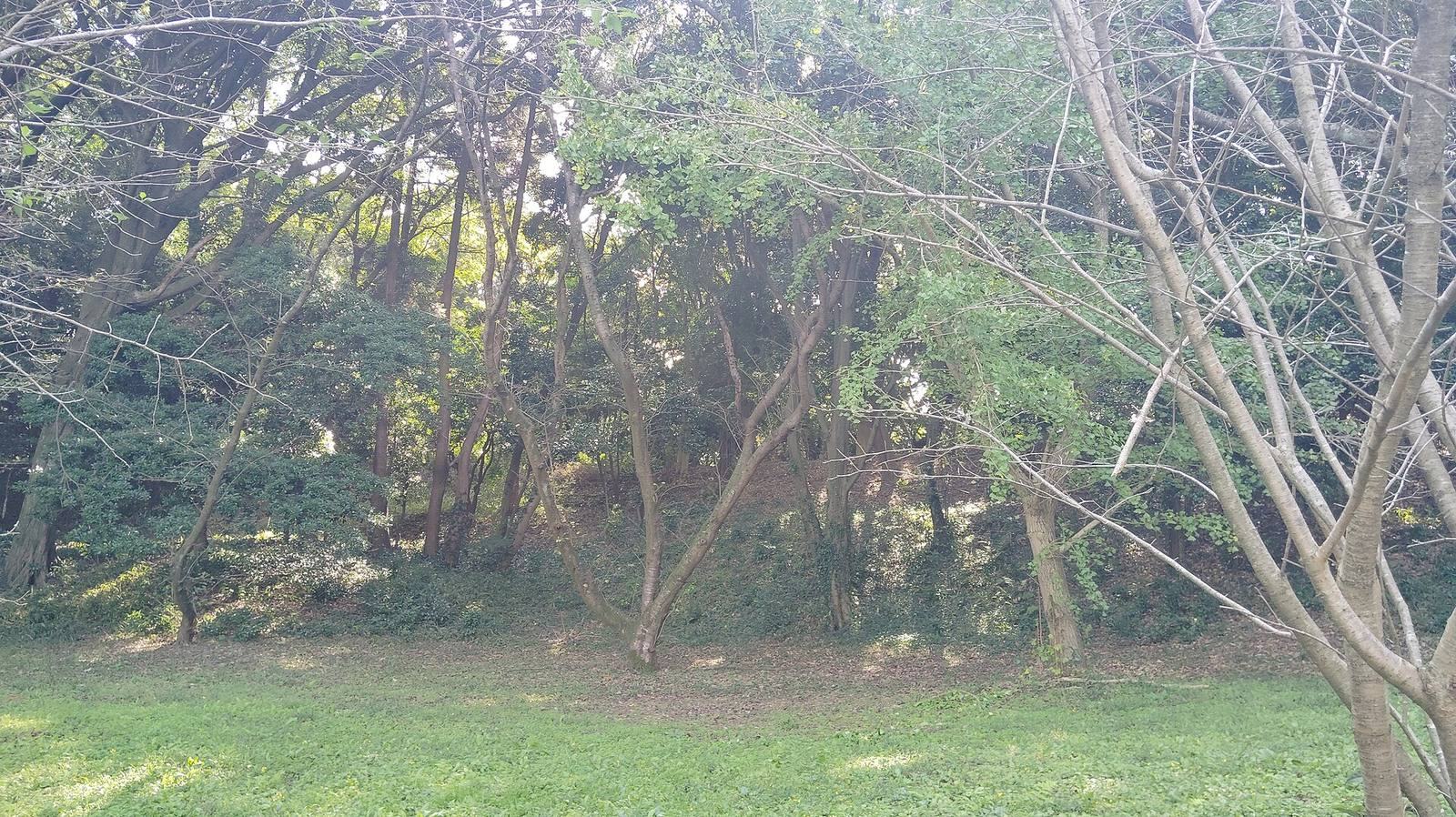
The keyhole-shaped mound, with a rectangular front joined to a rounded rear, measures 107 metres long. Its front section rises in two tiers, while the rear has three. A projecting platform remains at the north side of the junction between the two sections. The mound is thought to have had a moat and an embankment; parts of these features can still be identified west of the front section and east of the rear.
Burial chamber and coffin
Stone burial chamber
At the center of the rear mound is an early horizontal-entry stone chamber, entered through a passage in its side. Flat slabs of chlorite schist, a metamorphic rock containing chlorite minerals, form the chamber. Its ceiling is missing, and a protective structure now covers it. The interior can be viewed by looking inside.
House-shaped stone coffin
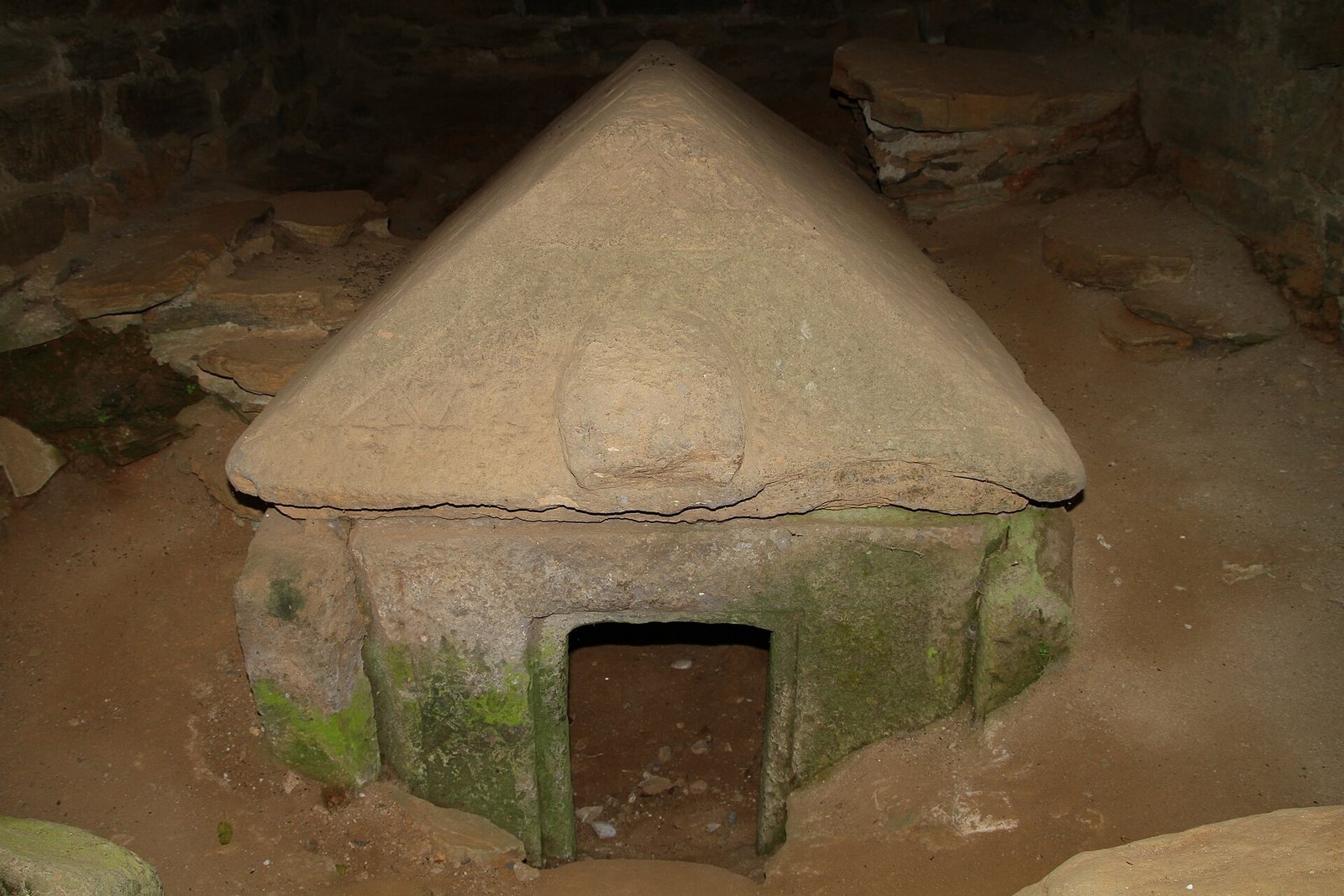
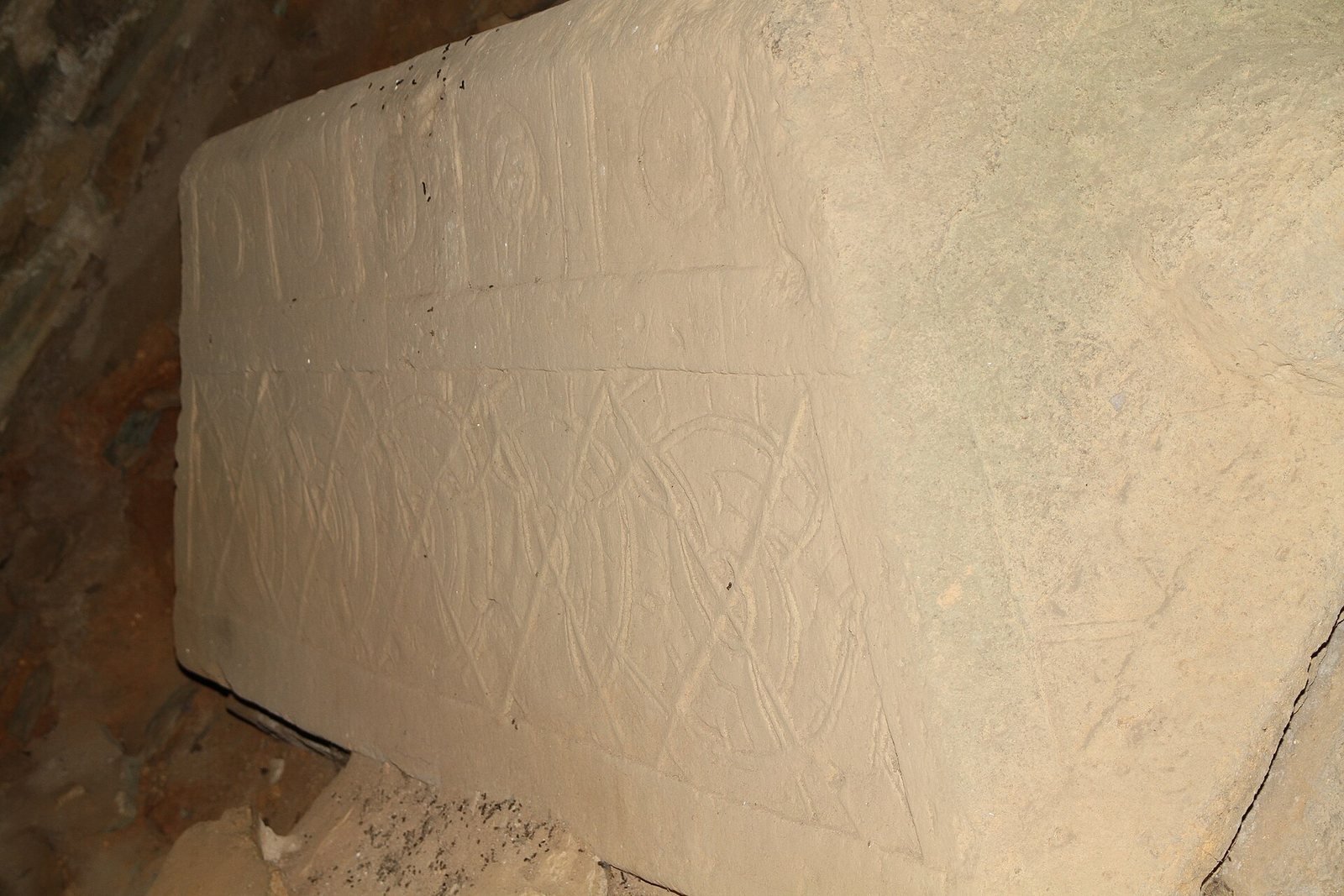
A side-opening stone coffin shaped like a house sits inside the chamber. Its body is made from four stone slabs and measures 1.4 metres high and 2.3 metres long. The lid has a hipped-roof shape, measures 2.8 metres along its base, and has projections for hanging ropes at the gable ends. Carved straight-and-arc and concentric-circle patterns decorate the lid, which also bears red pigment. The tomb is an early example of a decorated kofun, a burial mound with carved or painted decoration.
Armed stone figure
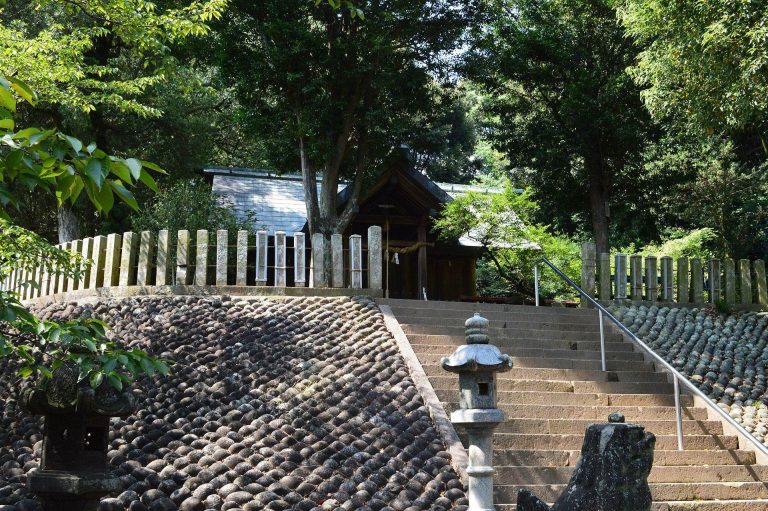
In a shrine in front of the chamber stands an armed figure made of Aso welded tuff. About 1.8 metres tall, it faces away from the chamber. It wears a triangular-plate cuirass, or torso armor, and an armor skirt; a recess at its left side was made to carry a stone sword. Together with an armed figure from another tomb in Miyama City, it is considered among the earliest examples of its kind in southern Chikugo. The figure’s face is damaged, and the designs on its upper body are indistinct. An Edo-period copy drawing shows its eyes, nose, and mouth.
Excavated finds
Excavations yielded haniwa, clay objects associated with kofun, including cylinders and figurative forms.