Devil’s Quoits: A Neolithic Henge and Stone Circle in Oxfordshire
Site at a Glance
- Rating
- 4.2
- Popularity
- Medium
- Country
- United Kingdom
- Primary era
- Stone Age
- Eras represented
- Stone Age, Bronze Age, Modern
- Civilizations
- Unclassified
- Site type
- Civic
- Remains
- Megalithic Monument
On this page10 sections
History
Devil’s Quoits is a prehistoric henge and stone circle near Farmoor Reservoir in Oxfordshire, United Kingdom. The henge dates to the Late Neolithic and is about 4,000 to 5,000 years old. The stone circle and central stone setting may have been added in the Early Bronze Age, after the henge had already been used for a time.
Neolithic and Early Bronze Age
The circular earthwork was the monument’s first phase. Its stone circle and central arrangement belong to a possible later phase, reflecting continued activity at the site across the Neolithic and Bronze Age.
Later history and restoration
By the end of the medieval period, most of the circle’s original stones had been removed. The name Devil’s Quoits is linked to a local tradition in which the Devil played quoits, a game of throwing rings at a target, against a beggar for the beggar’s soul. The Devil supposedly won by throwing the great stones. The story places the game on Wytham Hill, several miles away, possibly near the Swinford Farm trig point, a fixed surveying marker overlooking the Thames Valley.
The earthwork remained faintly visible until 1940, when construction of an airfield, including concrete runways and extensive ground levelling, caused severe damage. At that time one stone still stood in its original position, while two others had been re-erected nearby. Gravel extraction later damaged the site further. Excavations in 1972, 1973, and 1988 established the monument’s full plan; work at the ends of the ditch indicated repeated use and deposition.
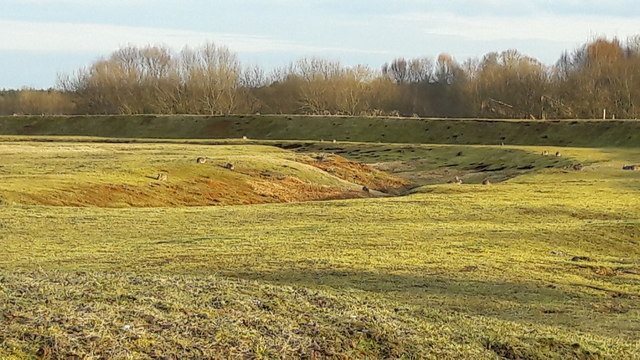
Between 2002 and 2008, the earthworks were reshaped to approximate their condition at the start of the Roman period, conventionally dated in Britain from AD 43 to the early fifth century. The work aimed to protect Neolithic and Bronze Age deposits in the ditch. Devil’s Quoits is protected as a Scheduled Ancient Monument, a British designation for nationally important archaeological sites.
Remains
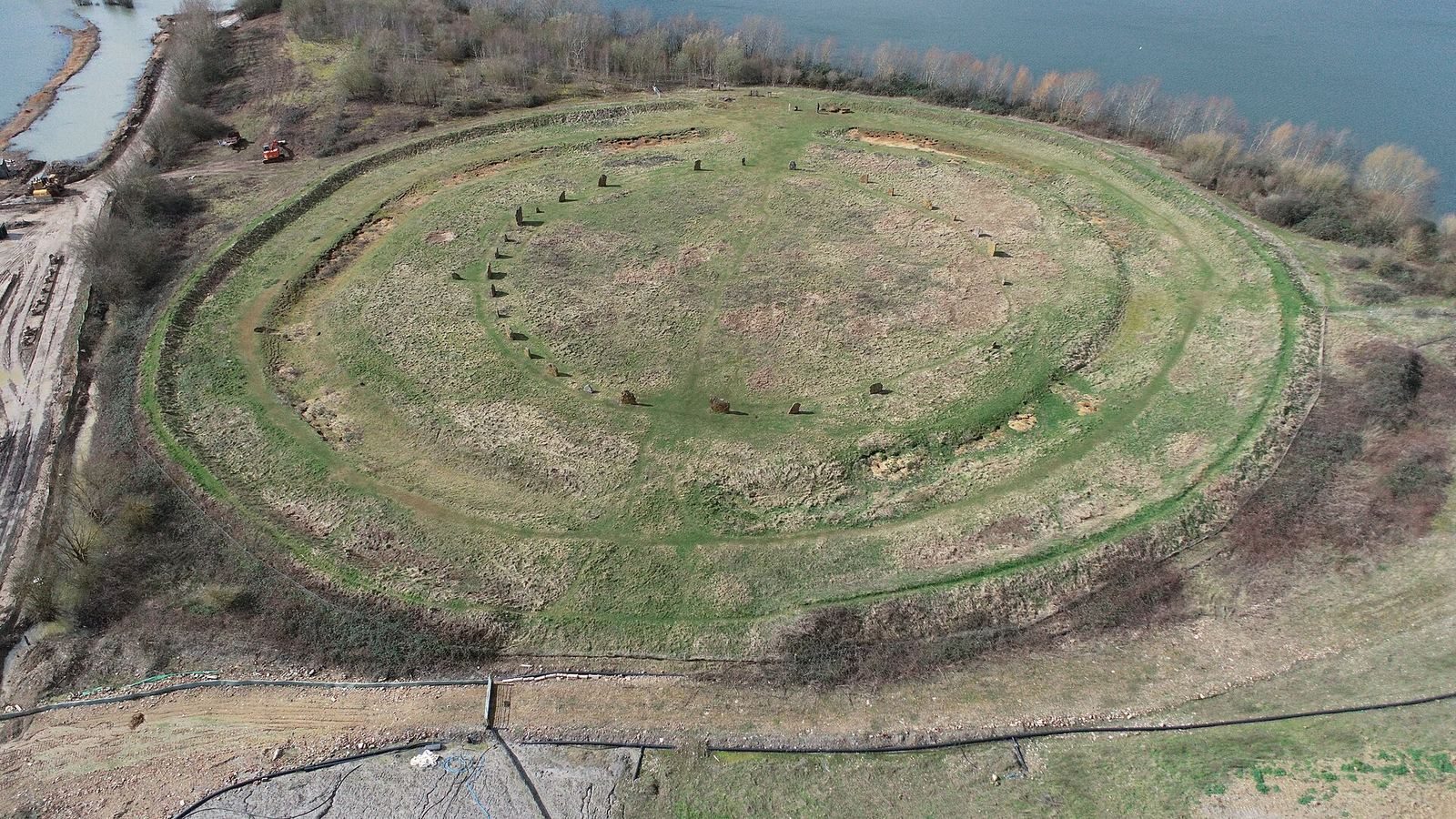
The site is arranged around a circular henge enclosing a slightly oval stone circle, with both features aligned and the circle at the centre. Together they form the central part of a wider complex of later prehistoric monuments.
Enclosure and stone circle
Henge
The henge’s circular ditch encloses an area up to 120 metres across, with entrances opposite one another on the east and west, facing almost due east and west. The northern half appears to have had an additional enclosing ditch. The earthwork bank was rebuilt during restoration with imported soil and raised to 2 metres, about half its original height.
Stone circle and central setting
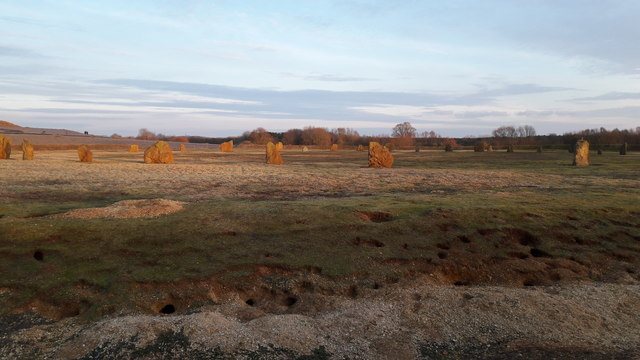
The slightly oval stone circle measures up to 79 metres across and follows the henge’s alignment. It originally contained 36 stones and includes a central stone setting. Stones A, B, and C, along with other conglomerate stones, were re-erected during restoration. Some had been recovered from the ditch or stone holes during excavation; others came to light during topsoil stripping or quarrying. Their restored positions may approximate their original ones, with the largest uprights apparently near the circle’s entrances.
Restored features and excavated finds
Replacement stones
Restoration placed 20 replacement stones in original holes, bringing the stated total to 28 stones. It also filled 20 remaining spaces with modern blocks of conglomerate, a rock made from rounded fragments cemented together, obtained from a nearby quarry at Ducklington.
Ditch deposits and finds
Excavations at the ditch ends indicated repeated use and deposition. They also uncovered hearths and animal and human bones.