Columns of Piazza dei Signori: Civic Monuments in Vicenza
Site at a Glance
- Popularity
- Medium
- Country
- Italy
- Primary era
- Medieval
- Eras represented
- Medieval, Early Modern
- Civilizations
- Venetian
- Site type
- Civic
- Remains
- Monument
On this page10 sections
History
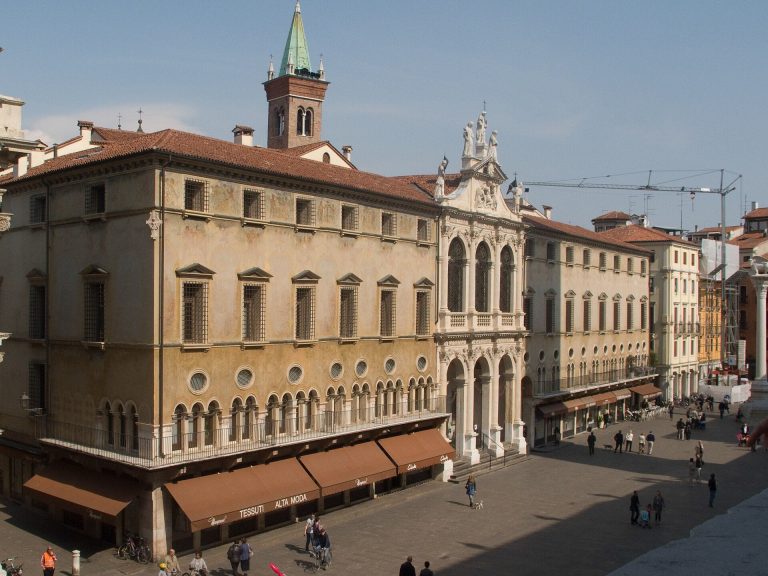
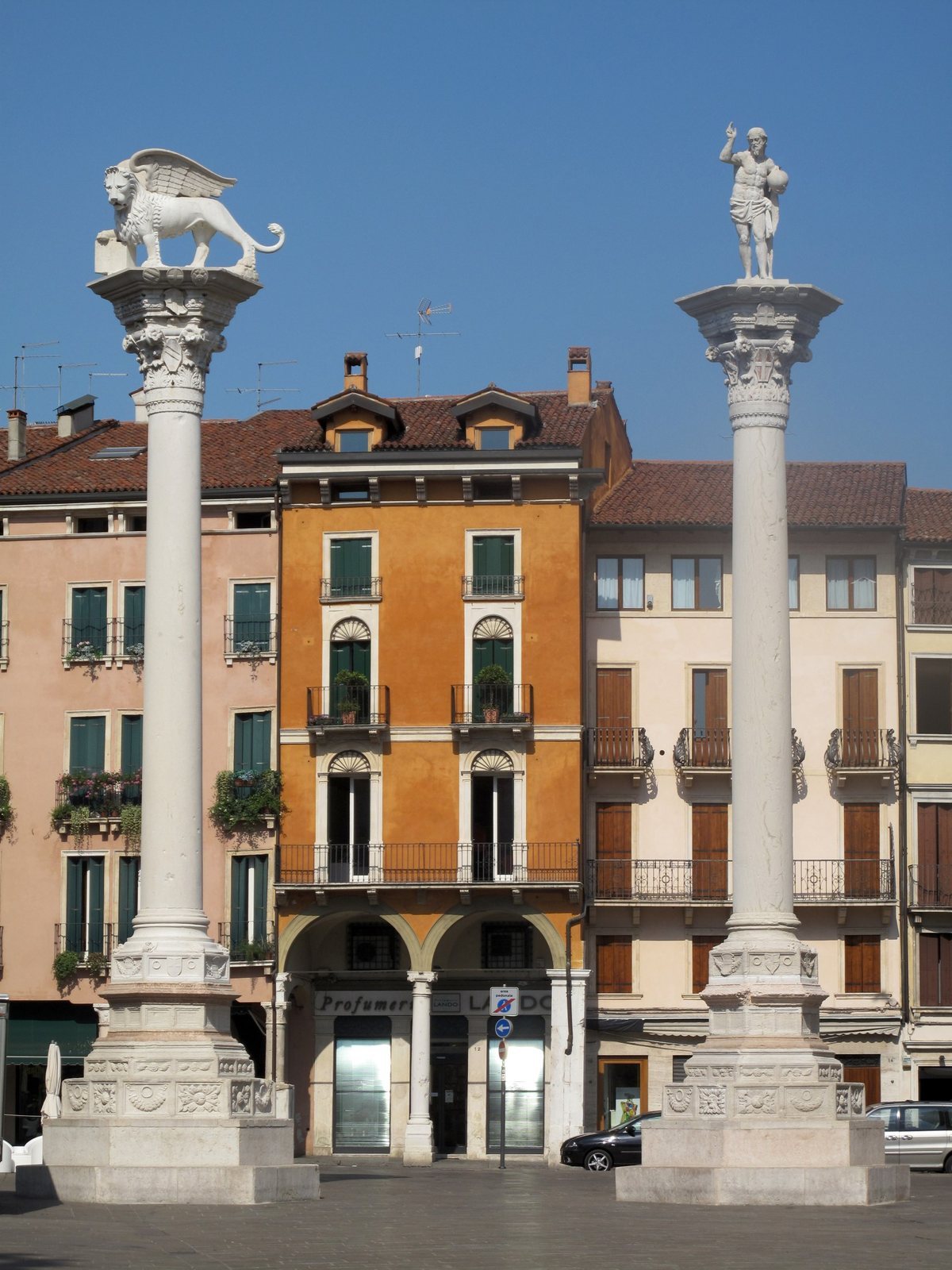
The Columns of Piazza dei Signori are two marble civic monuments in Vicenza, Italy, conceived in the fifteenth century during improvements to the city’s principal ceremonial square. Vicenza’s authorities intended the pair to mark the division between the square and Piazza delle Biade.
Plans for the square and the first column
The programme began with changes to the square’s surroundings. In 1462, the authorities demolished the Furriers’ House, which had become a grain and flour market, and removed the Salt Warehouse in the years that followed. They also partly reduced a difference in level of more than a metre between the two squares before choosing columns to mark their boundary.
Work on the first column began with marble quarried at Chiampo. In January 1447, a wagon pulled by 30 oxen and accompanied by 200 workers carried its parts to Vicenza. The winter journey took advantage of frozen ground, which made it easier to move the heavy load. The column remained on the ground for 17 years before 80 people used five winches to raise it on 27 October 1464.
Venetian and imperial symbols
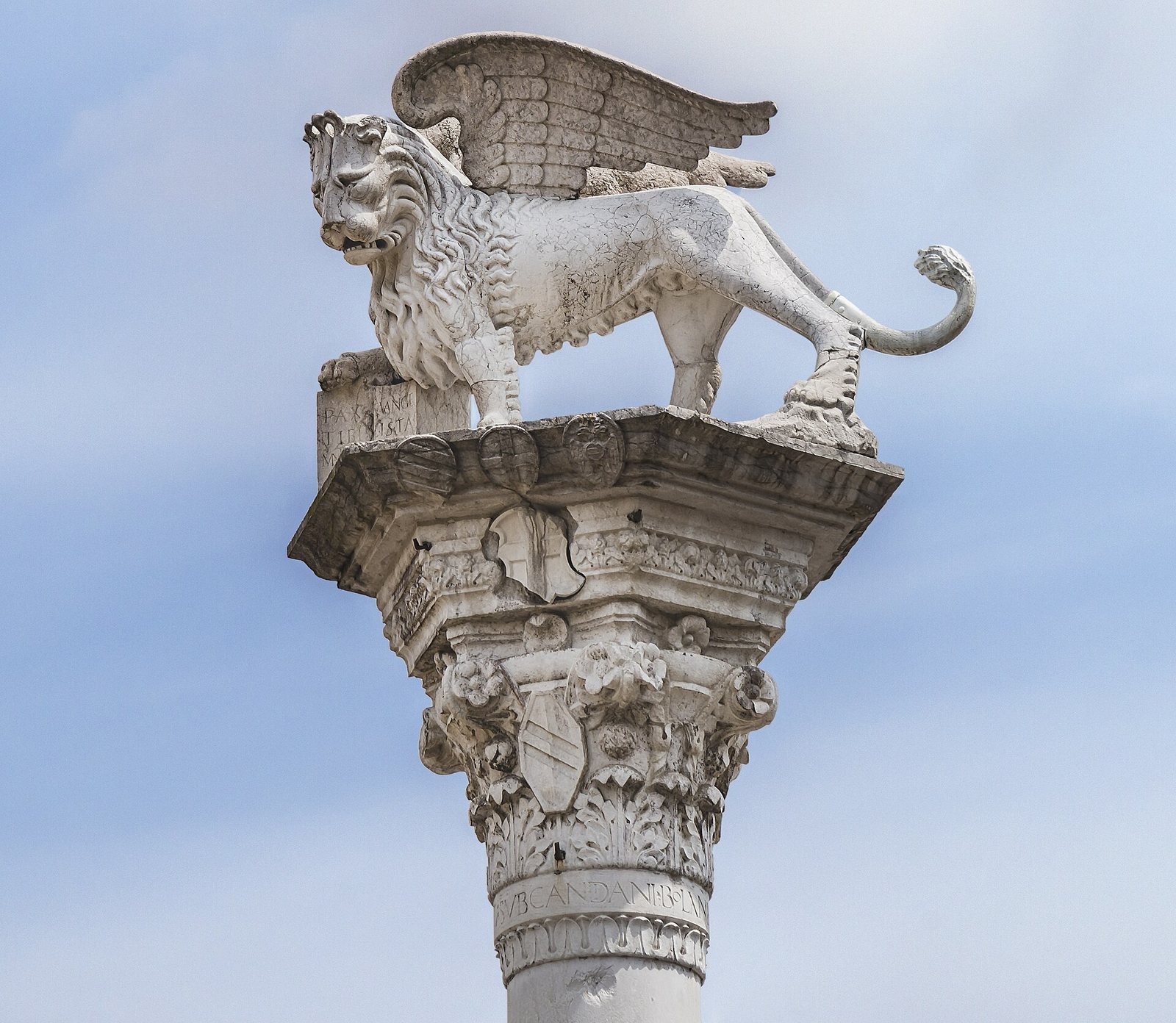
The first column expressed Vicenza’s allegiance to the Serene Republic of Venice, the state to which the city belonged. In 1473, a statue of Saint Mark’s winged lion was placed at its summit. The lion is both Venice’s traditional emblem and a Christian symbol of Saint Mark, one of the Evangelists.
During the War of the League of Cambrai, a conflict between Venice and a coalition formed against it, imperial forces captured Vicenza in 1509 after Venice’s major defeat at Agnadello. They replaced the lion with a double-headed eagle. Vicenza was recaptured in November, and the eagle was thrown down. A new lion was installed in 1520.
The second column
A second marble shaft was cut at Chiampo soon after the first, but its transport was delayed by the cost and difficulty involved. The plan stalled until 1625, when Vicenza’s podestà, a civic magistrate with executive authority, Giorgio Emo, found the shaft during an inspection of the quarries. It broke in an attempt to move it, so the city ordered another. Oxen and workers brought the replacement to Vicenza, where architect Antonio Pizzocaro directed its installation.
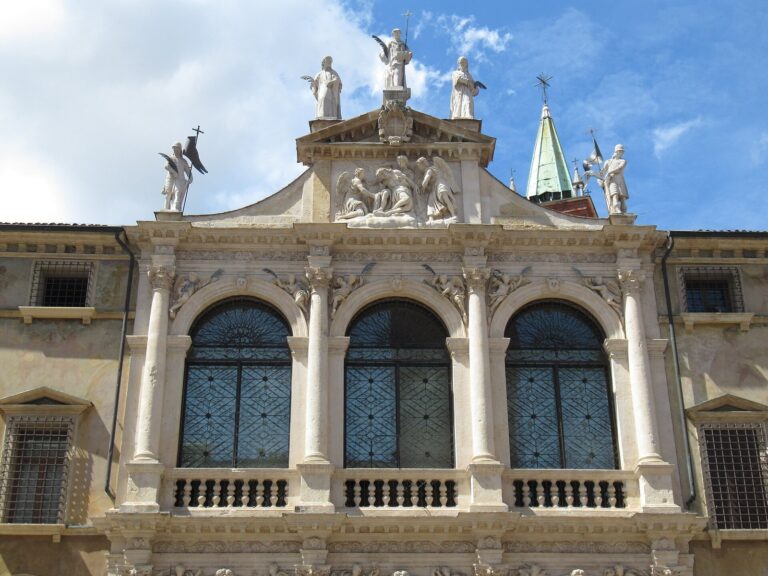
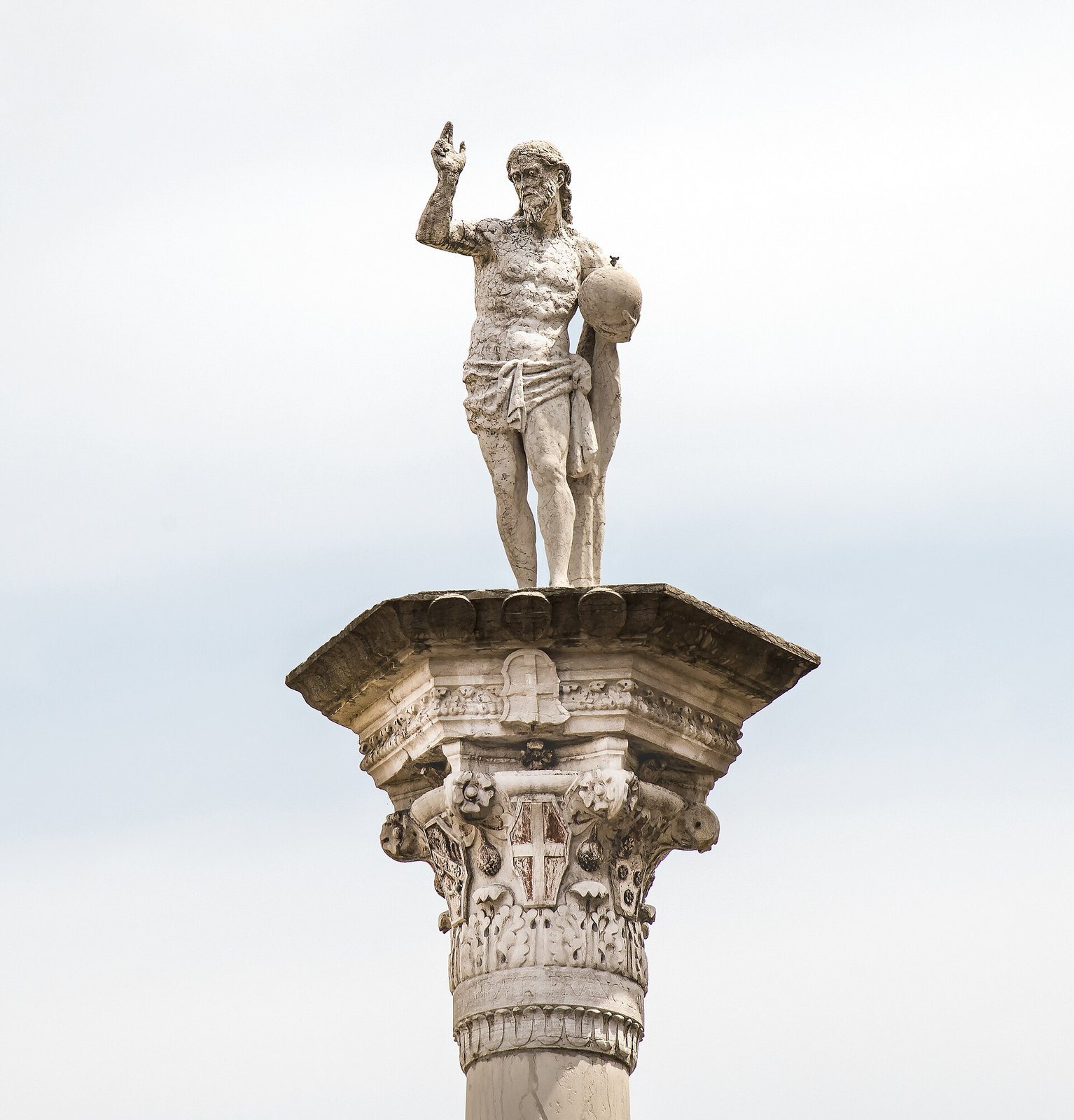
Fifteenth-century figures of Saint Vincent and Saints Felix and Fortunatus, intended for this column, had by then been placed on the nearby Church of San Vincenzo. The city chose not to commission another set. Instead, it dedicated the column to Jesus Christ, known in Christian tradition as the Redeemer, and commissioned a statue from sculptor Giovanni Battista Albanese.
Damage and restoration
French revolutionary troops toppled and broke the Venetian emblem in April 1797. In 1863, while Vicenza was under Austrian rule and the Risorgimento movement for Italian unification was under way, the city decided to restore the lion. Engineer Luigi Dalla Vecchia carried out the work.
Remains
Layout and design
The two marble columns stand at the boundary of Piazza dei Signori and Piazza delle Biade. Their principal vertical sections are known as shafts, while the crowning elements are capitals. An early design proposed hexagonal bases and matching capitals. It also envisaged pedestals of red and white marble, decorated with coats of arms and plant motifs, and gilding for the capitals, the lion, and statues of the city’s patron saints. These were elements of the proposed scheme.
Individual columns
Column of the Lion of Saint Mark
The first column’s shaft, base, and capital were cut from marble at the Chiampo quarry. The winged Lion of Saint Mark crowns the column, linking its physical form to the emblem through which Vicenza expressed its allegiance to Venice.
Column of the Redeemer
The second marble column is topped by Albanese’s statue of the Redeemer. Its subject differs from the civic and Venetian imagery of its partner, reflecting the city’s decision to dedicate the monument to Jesus Christ rather than use the figures of the patron saints originally intended for it.