Sinaia Monastery: An Orthodox Monastic and Defensive Complex in Romania
Site at a Glance
- Popularity
- High
- Country
- Romania
- Primary era
- Modern
- Eras represented
- Early Modern, Modern
- Civilizations
- Kingdom of Romania, Ottoman, Principality of Wallachia
- Site type
- Religious
- Remains
- Fortified Monastery
On this page16 sections
History
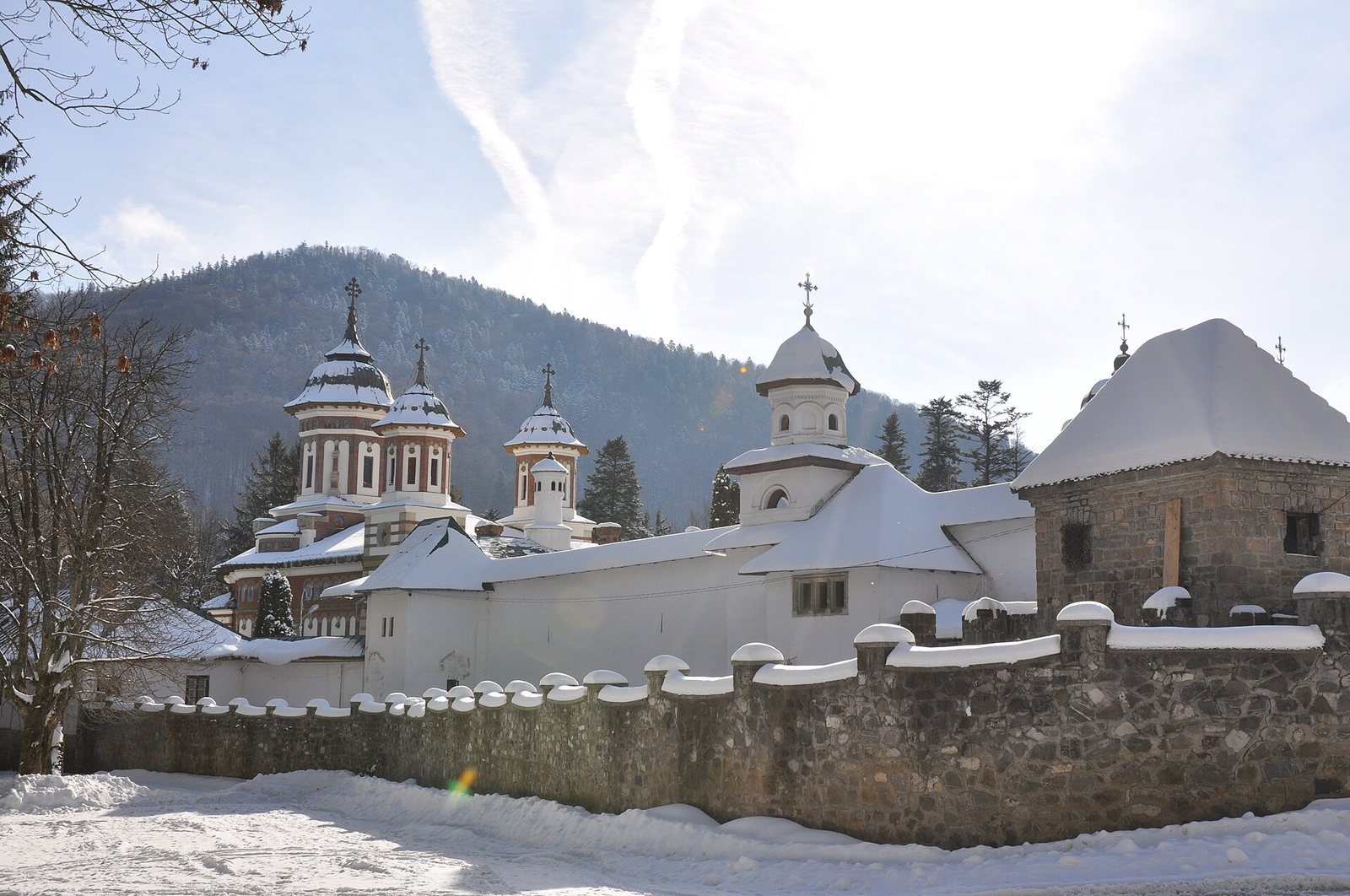
Sinaia Monastery is an Orthodox male monastery in Sinaia, Romania, founded by the Wallachian nobleman Mihail Cantacuzino in 1695, with its first buildings constructed between 1690 and 1695. Intended both as a religious house and a fortified stronghold on the route between Brașov and Bucharest, it was the area’s first building and later gave its name to the nearby town. Its design combines Byzantine and Moldavian features with Brâncovenesc elements, a Wallachian style named for ruler Constantin Brâncoveanu and associated with carved stone columns and plant ornament.
Foundation and name
Cantacuzino planned the monastery after a pilgrimage to Mount Sinai, where he visited Saint Catherine’s Monastery. His mother, Elena, and sister, Stanca, accompanied him. He intended the new foundation to honor the Virgin Mary and named it Sinaia after the mountain. A naming tradition published in 1903 says Dositei, the senior Orthodox bishop of Jerusalem, first called the monastery Buceagul before Cantacuzino gave it the name Sinaia.
The monastery was initially planned for twelve monks, in imitation of the twelve apostles, though its community later grew. In 2005, thirteen monks lived there. The monastery is part of the Archdiocese of Bucharest.
Warfare and recovery
During the Russo-Turkish War of 1735–1739, fought between Russia and the Ottoman Empire, the monastery was abandoned amid the fighting. Ottoman forces defeated troops stationed inside, burned the surrounding area, and broke through the walls in two places. They looted the monastery’s valuables; before leaving, the monks had hidden some of them inside a bell. A fire during the conflict damaged the Old Church. Turkish and Austrian invasions also caused partial damage, and the monastery’s recovery was completed by the end of the eighteenth century.
Nineteenth-century development
Until 1850, the settlement around the monastery consisted of little more than the religious complex and a group of huts. In 1864, the monastic estate was assigned to the Board of Civil Hospitals. The board established a hospital and baths and helped develop the area’s mineral springs.
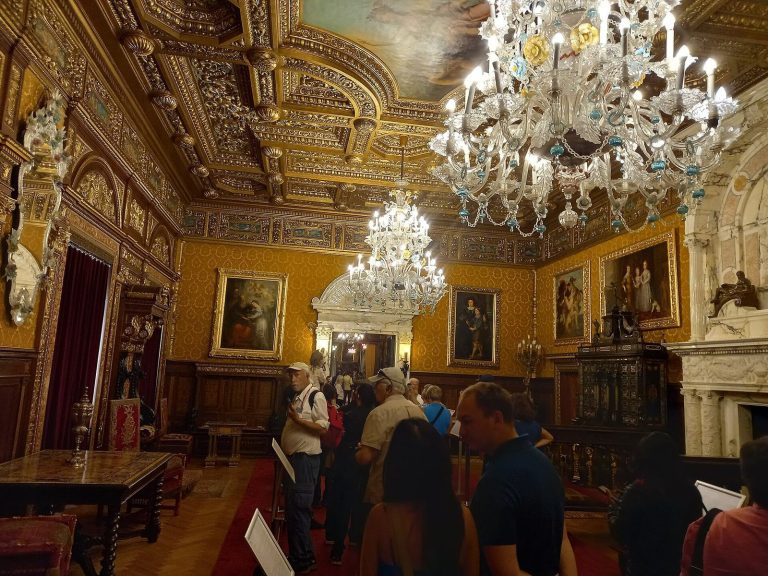
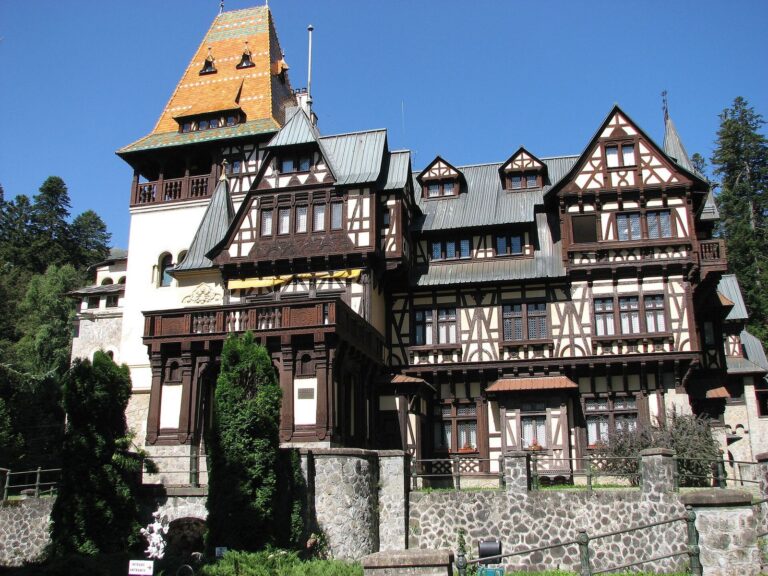
Beginning in 1871, the Romanian royal family spent holidays at the monastery for eleven years before moving to Peleș Castle. Their former residence rooms were later adapted for the monastery museum. With King Carol I’s encouragement, the Great Church received electric lighting, making it the first electrified church in Romania.
The monastery museum opened in 1895 during celebrations of the Old Church’s two-hundredth anniversary. It was the first museum of religious art in Romania. During the First World War, politician and former prime minister Take Ionescu recovered from illness at the monastery and requested in his will that he be buried there.
Twentieth-century stewardship
In 1948, the Board of Civil Hospitals transferred its patronage of the monastery to the Archdiocese of Bucharest. Romanian Patriarch Justinian Marina directed a restoration campaign from 1951 to 1957, financed by the archdiocese. The work also brought running water, electricity, and natural gas to the complex. The monastery is included on Romania’s historical-monuments list.
Remains
Courtyards and churches
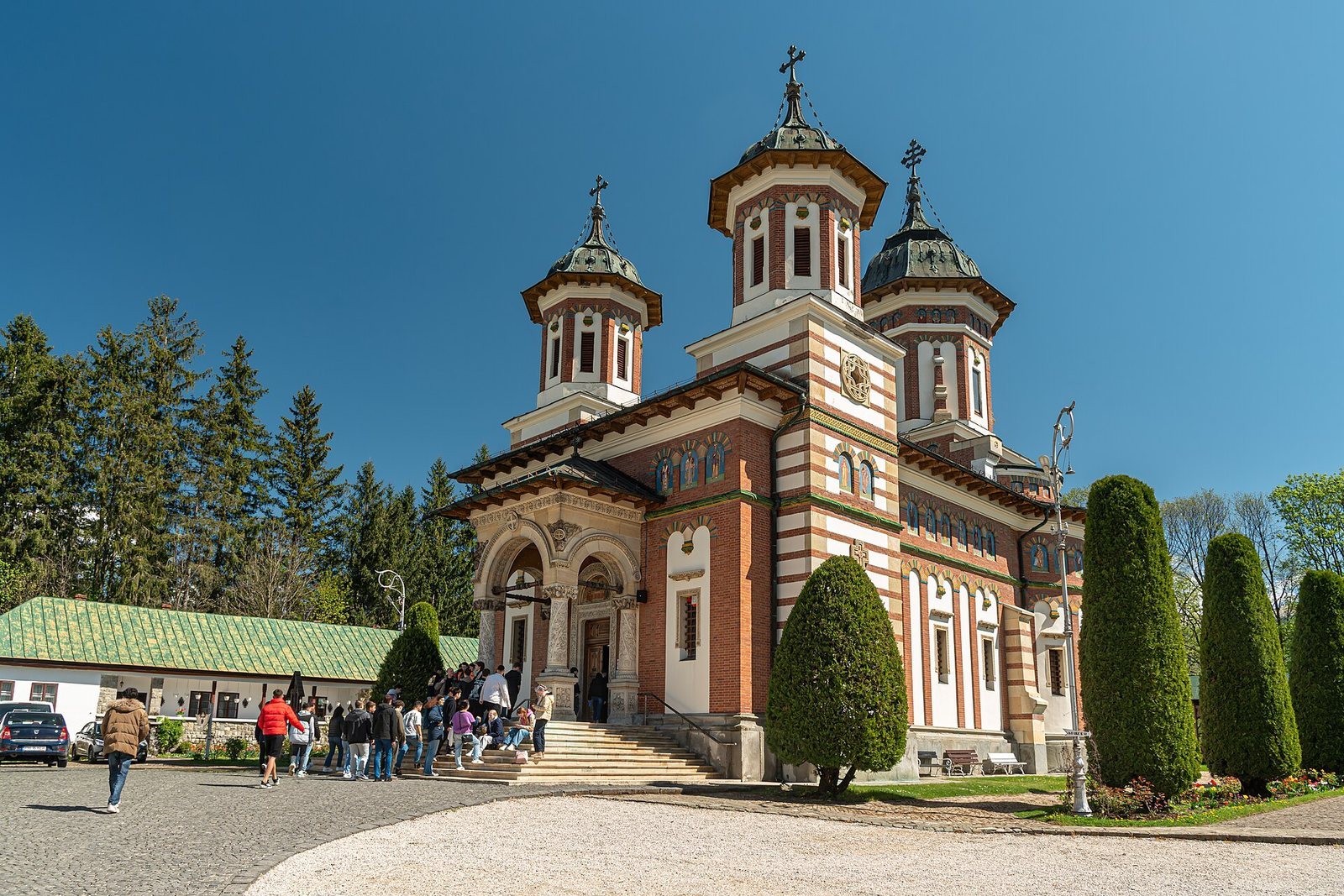
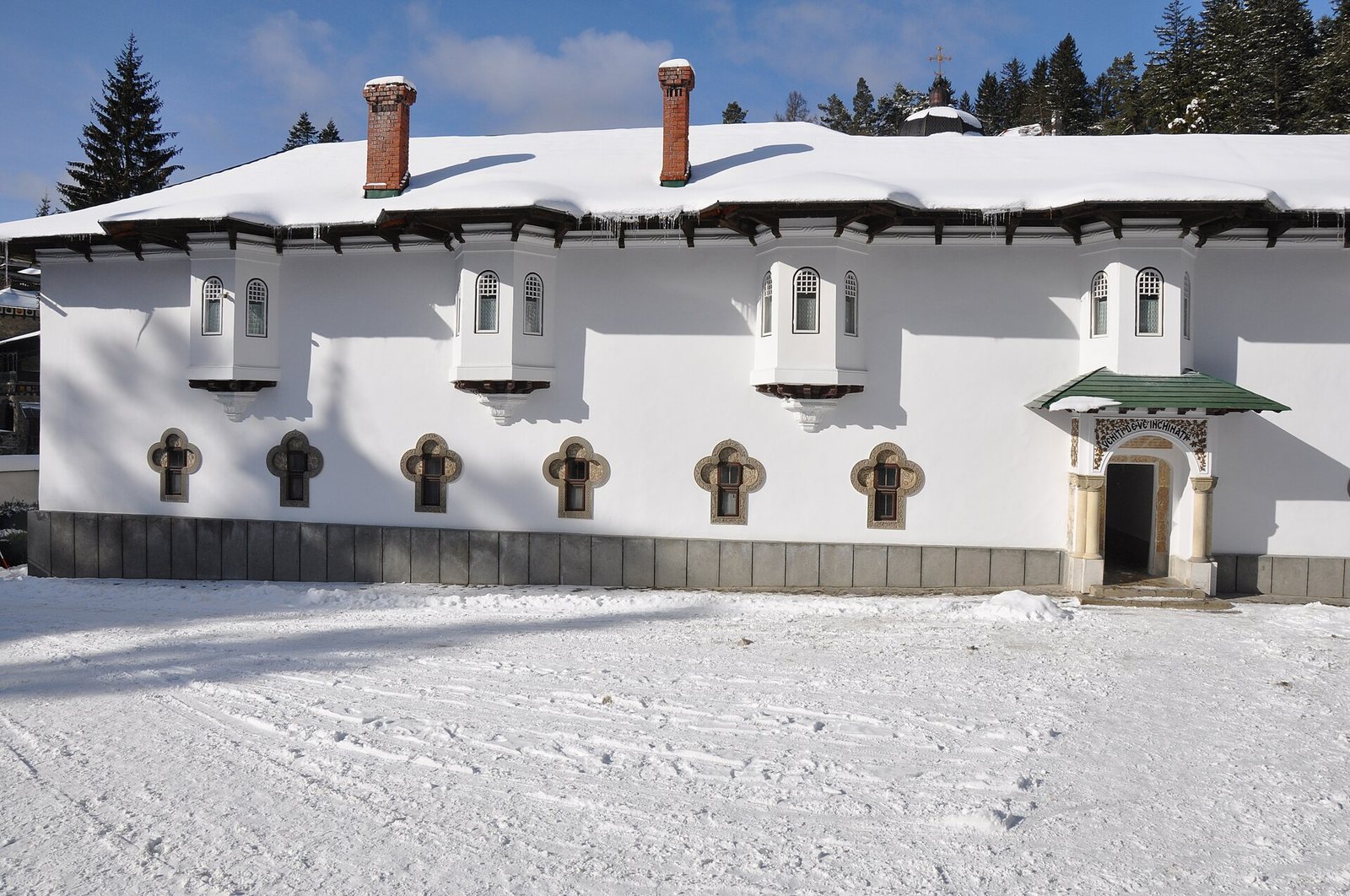
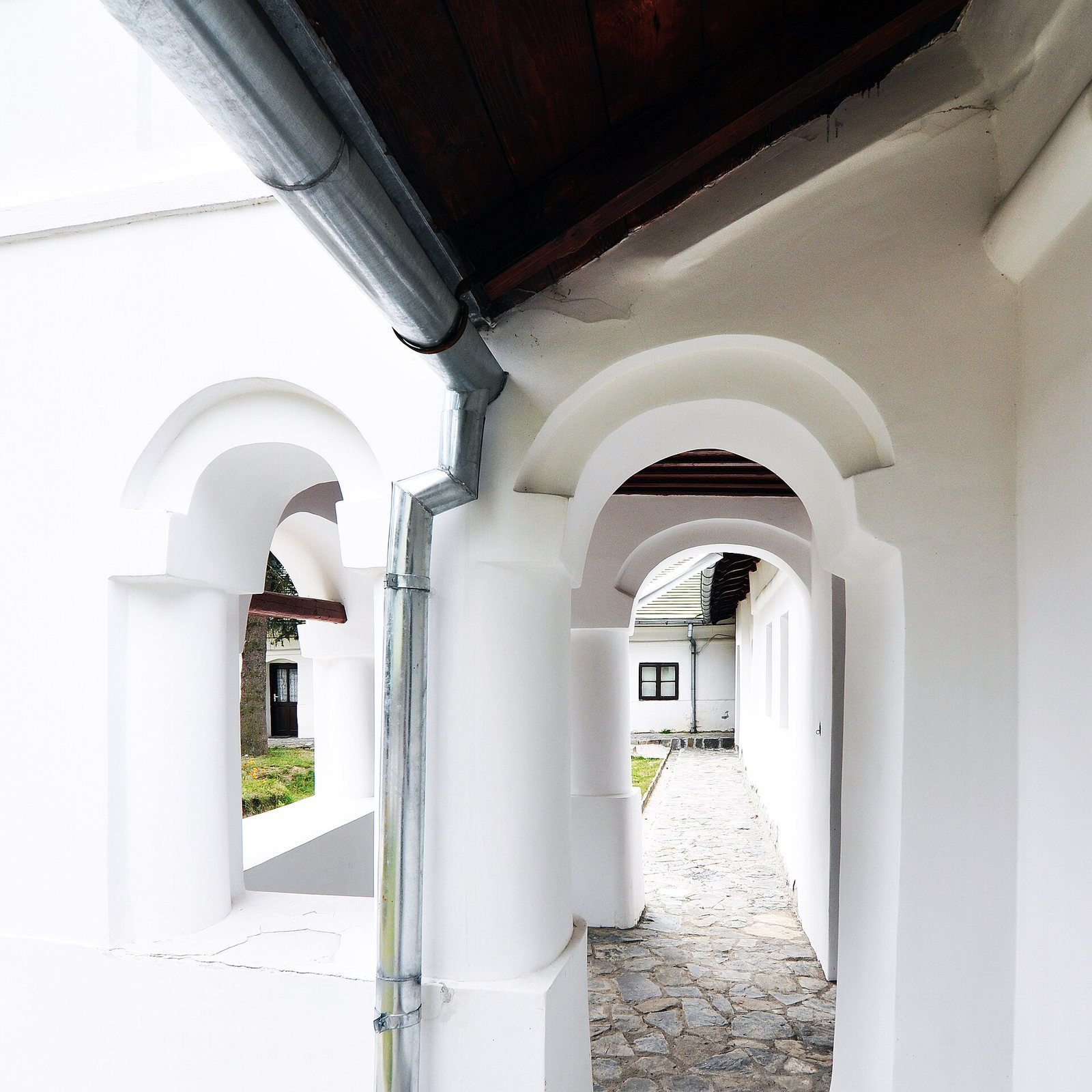
The complex is arranged as two courtyards enclosed by low buildings, with a church at the center of each. The older structures occupy the inner courtyard, entered from the square before the Great Church. The churches reflect different architectural influences, and the Great Church is built of stone and brick.
Old Church
Also called the Church of the Dormition of the Virgin Mary, the Old Church was built in 1695 in the Brâncovenesc style and served as the monastery’s main church until the Great Church was built. The Dormition is the Orthodox commemoration of the Virgin Mary’s death. Its sculpted entrance shows Moses holding the Tablets of the Law and Aaron carrying a flowering staff. Between them is the Cantacuzino family emblem, a double-headed eagle holding a scepter and a cross.
Original paintings by Pârvu Mutu survive in the porch and nave. The porch dome depicts episodes from the lives of Saints Catherine, George, and Demetrius. A founder’s votive painting, associated with the church’s patronage, fills the pronaos, the entrance chamber before the main worship space. It portrays Cantacuzino with his eighteen children, two wives, and other family members, including Neagoe Basarab, Radu Șerban, Constantin Șerban, Constantin Cantacuzino, and Șerban Cantacuzino. Many figures extend a hand, expressing the founder’s emphasis on Christian charity. The church’s frescoes were restored in 1795 after the fire during the siege. The building closed for restoration in 2006 and reopened in 2016; later work included its paintings and roof. A cross associated with Stephen the Great, the fifteenth-century ruler of Moldavia, stands on its dome.
Great Church
Dedicated to the Holy Trinity, the Christian belief in one God as three persons, the Great Church was built between 1842 and 1846. It was partly reconstructed from 1893 to 1903 and enlarged from 1897 to 1903. Architect George Mandrea directed the renovation that established its present appearance. Thick walls and strong buttresses give the building a solid form, while three twisting lines of green glazed ceramic encircle its exterior. These lines are said to represent both the Trinity and the union of Transylvania, Moldavia, and Wallachia in Romania.
The interior paintings by Danish artist Aage Exner use a Byzantine-inspired style against a gold-mosaic background. Among the figures shown are Metropolitan Primate Iosif Gheorghian, the senior Romanian Orthodox Church leader who reconsecrated the church in 1903; King Carol I; Queen Elisabeth, also known as Carmen Sylva; their daughter Maria; and Mihail Cantacuzino. Carol appears in military dress beside a stone pillar with a missing corner, representing Romanian territories that lay outside the kingdom at the time.
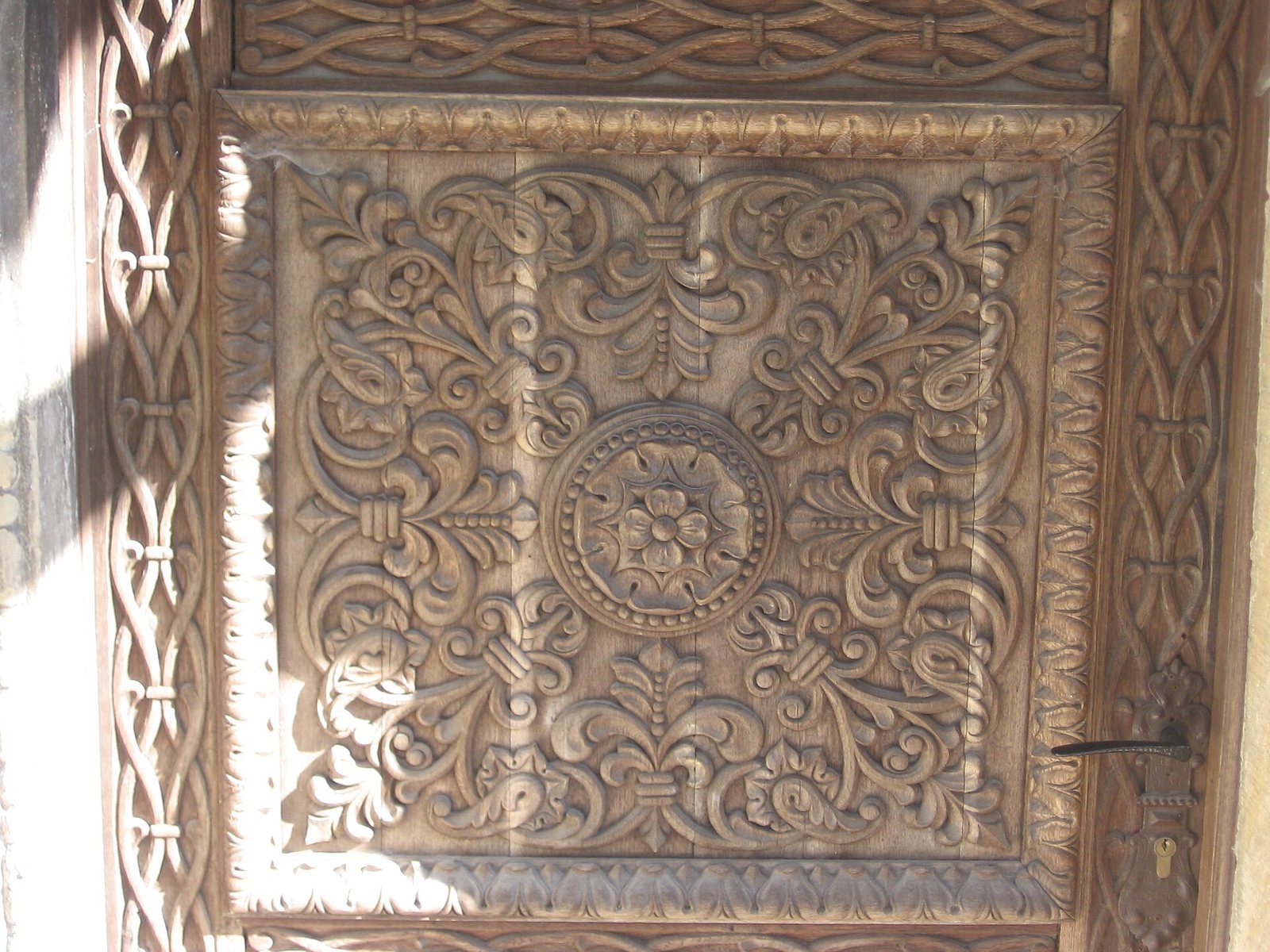
Wooden furnishings made by Constantin Babic and students of the Bucharest Art School use sycamore, maple, and oak. The gilded royal throne bears the royal emblem and the Latin motto Nihil sine Deo, meaning Nothing without God. The queen’s gilded throne carries the initials E.D. The church’s entrance is marked by a Greek cross, Latin crosses appear on its pronaos towers, and a multi-barred Slavic cross stands on the central dome.
Other precinct features
Monks’ chapel
A small chapel in the former monks’ quarters dates to the monastery’s foundation and is no longer in use. Its low interior and darkened original paintings give it a crypt-like appearance. Frescoes include a cycle on the Passion of Christ. In the chapel’s pronaos, scenes follow the final events of Christ’s earthly life, from Judas’s betrayal and the arrest through the trials, scourging, journey to Golgotha, and crucifixion.
Bell tower
The bell tower stands near the gate, built into the monastery walls. Completed in 1892 under Abbot Nifon Popescu, it houses a bell weighing about 1,700 kilograms that was brought from the Colțea Tower in Bucharest. Its cross combines a Latin cross with a sun.
Take Ionescu’s tomb
Ionescu’s tomb is in the old precinct beside the chapel. A white-marble bust of his second wife, Adina, stands beside his sarcophagus. Sculptor Roscitano made the bust in Rome in September 1926.
Collections and objects
Religious furnishings and objects
The complex includes two Russian icons depicting Saint Nicholas and Saint Sergius of Radonezh. Tsar Nicholas II gave them in 1903, and they were presented to Abbot Nifon for the baptism of Prince Nicholas, son of King Ferdinand. An epitaphios, an embroidered cloth used in Orthodox worship, was made by Anna Roth from 1897 to 1900. She worked gold and colored silk onto cotton over the course of three years.
Museum and library
The museum holds seventeenth-century icons and crosses, religious objects, books, and other valuable items. Its collection includes a Romanian Bible translated and printed in Bucharest in 1688 under Șerban Cantacuzino. The monastery library holds the Cantacuzino family jewels and an earlier Romanian Bible translation dated 1668.