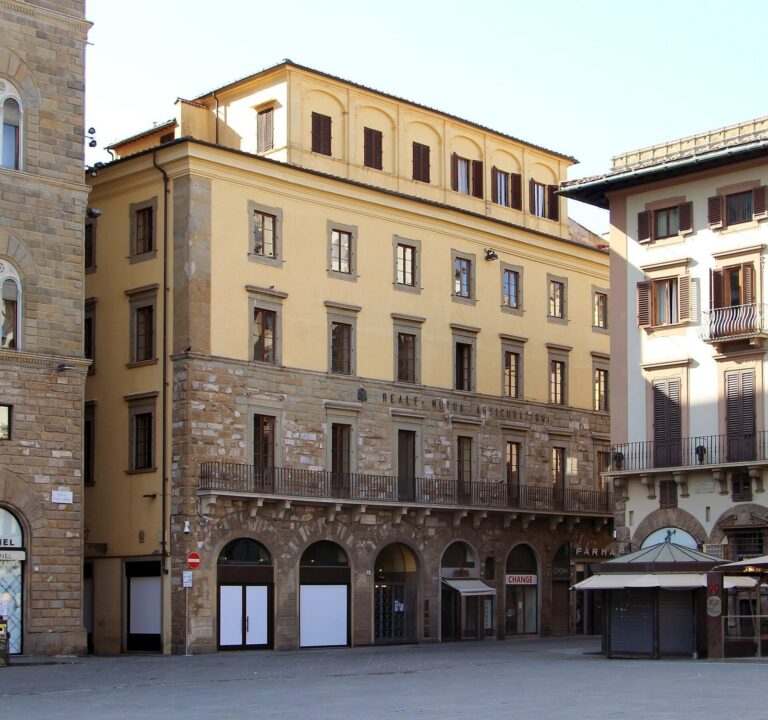
San Pier Scheraggio: A Romanesque Church and Civic Meeting Place in Florence
Site at a Glance
- Popularity
- Medium
- Country
- Italy
- Primary era
- Medieval
- Eras represented
- Medieval, Early Modern
- Civilizations
- Duchy of Florence, Holy Roman Empire
- Site type
- Religious
- Remains
- Church
On this page11 sections
History
San Pier Scheraggio is an 11th-century Romanesque church in Florence, Italy, consecrated in 1068. Romanesque architecture is a medieval tradition associated with rounded arches and substantial masonry. The church belonged to the Roman Catholic Church, followed the Roman rite, and was under the Archdiocese of Florence. It was one of 36 parishes within the city’s old walls and served as a priory, a religious establishment headed by a prior, for one of Florence’s districts.
Parish and civic life
The church’s name comes from a ditch called the schiaraggio, which ran beside Florence’s first circuit of walls. Before the Palazzo dei Priori was built, San Pier Scheraggio hosted meetings of the city councils. The medieval poet Dante Alighieri and writer Giovanni Boccaccio also spoke there, notably from the church’s pulpit.
Reductions and incorporation into the Uffizi
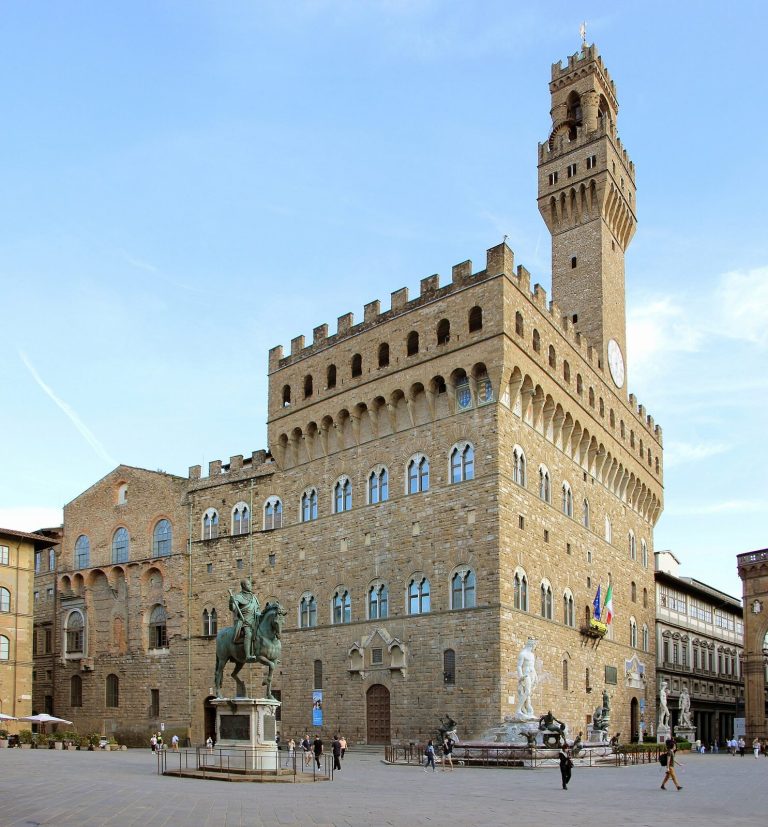
In 1298, construction of the Palazzo dei Priori, also known as the Palazzo della Signoria or Palazzo Vecchio, reduced the church’s size. A chapel containing a Madonna and Child attributed to Cimabue, a prominent Italian painter of the late 13th century, was demolished. The image was called the Madonna of the Lullaby because Mary’s tender pose suggested that she was soothing the child. Its name also gave rise to the name Via della Ninna.
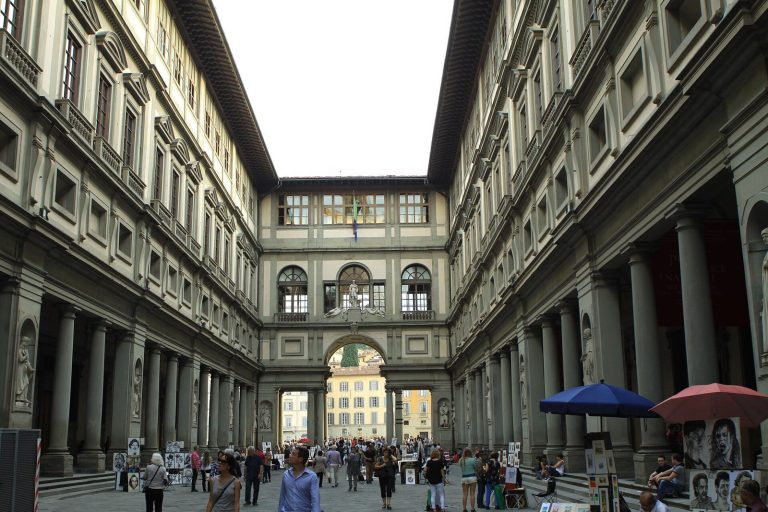
In 1410, the widening of Via della Ninna took away the church’s north aisle. In 1560, the church was partly demolished and incorporated into the Palazzo delle Magistrature, or Uffizi, designed by Giorgio Vasari. The project was intended to redevelop the surrounding Baldracca district. The church lost its bell tower, rectory, and small cemetery.
Later use and rediscovery
Worship continued for a time after the church became part of the Uffizi. Its underground spaces were also used by several confraternities, or organized religious associations. These included a group dedicated to Saint Anthony Abbot, an early Christian monk associated with monasticism; the Pietà association of the Tavolaccini, municipal attendants, named for the image of Mary mourning Christ; and the confraternity of the Assumption of San Pier Scheraggio, named for the Catholic belief that Mary was taken bodily into heaven.
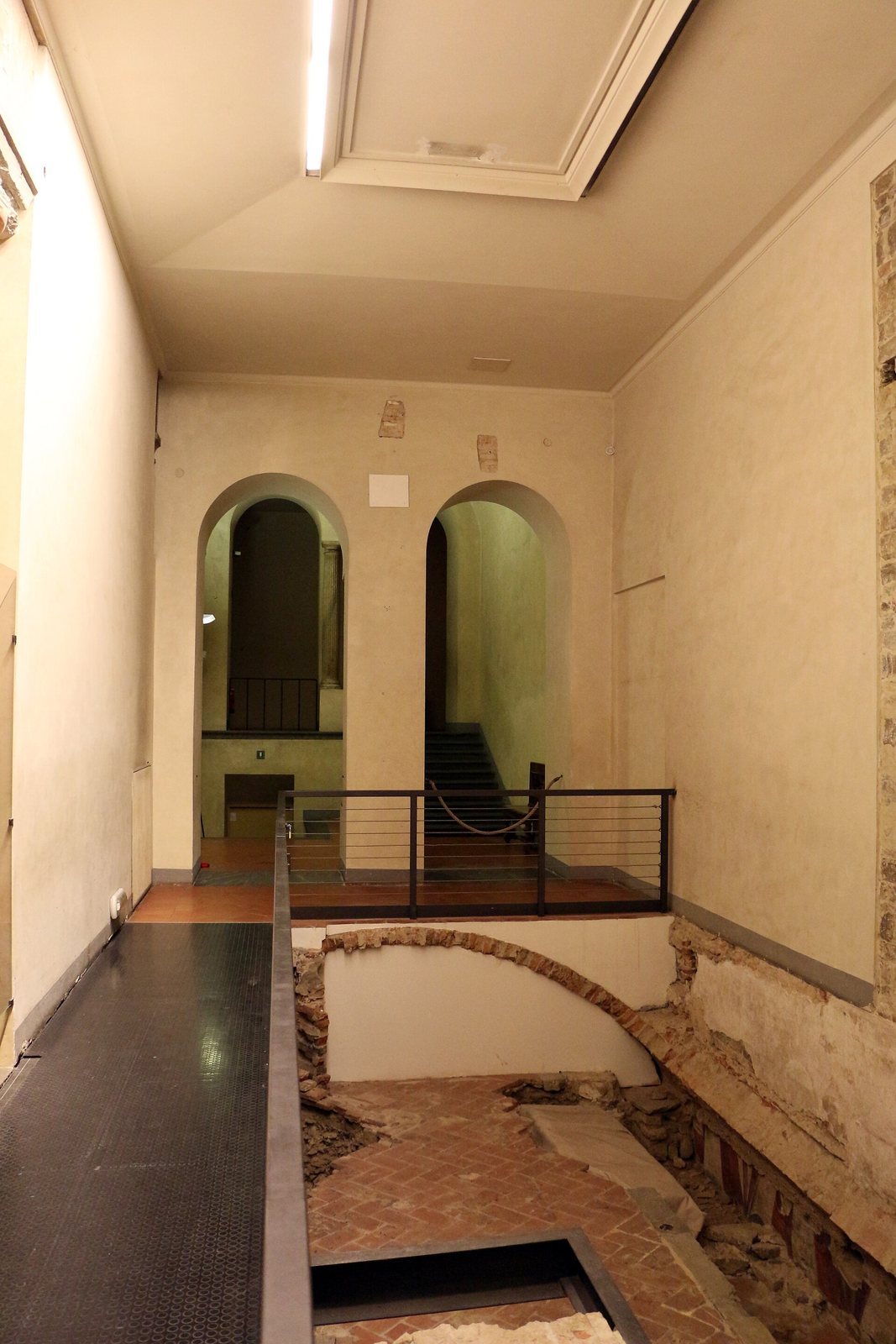
Worship ended in 1743, during the rule of the House of Lorraine, a dynasty that governed Tuscany in the 18th century. The church then became an archive for the courts. Part of its former cemetery was excavated in 2014. In 2020, an aisle became visible again inside the Uffizi, alongside excavation work.
Remains
The Romanesque church had three aisles and an interior decorated with frescoes, an unusual feature for a building of this style. Its surviving fabric is found both along Via della Ninna and within the Uffizi.
Surviving architectural fabric
Interior aisle
One aisle survives inside the Uffizi, behind the former ticket office. It is used for special occasions and temporary exhibitions.
Via della Ninna remains
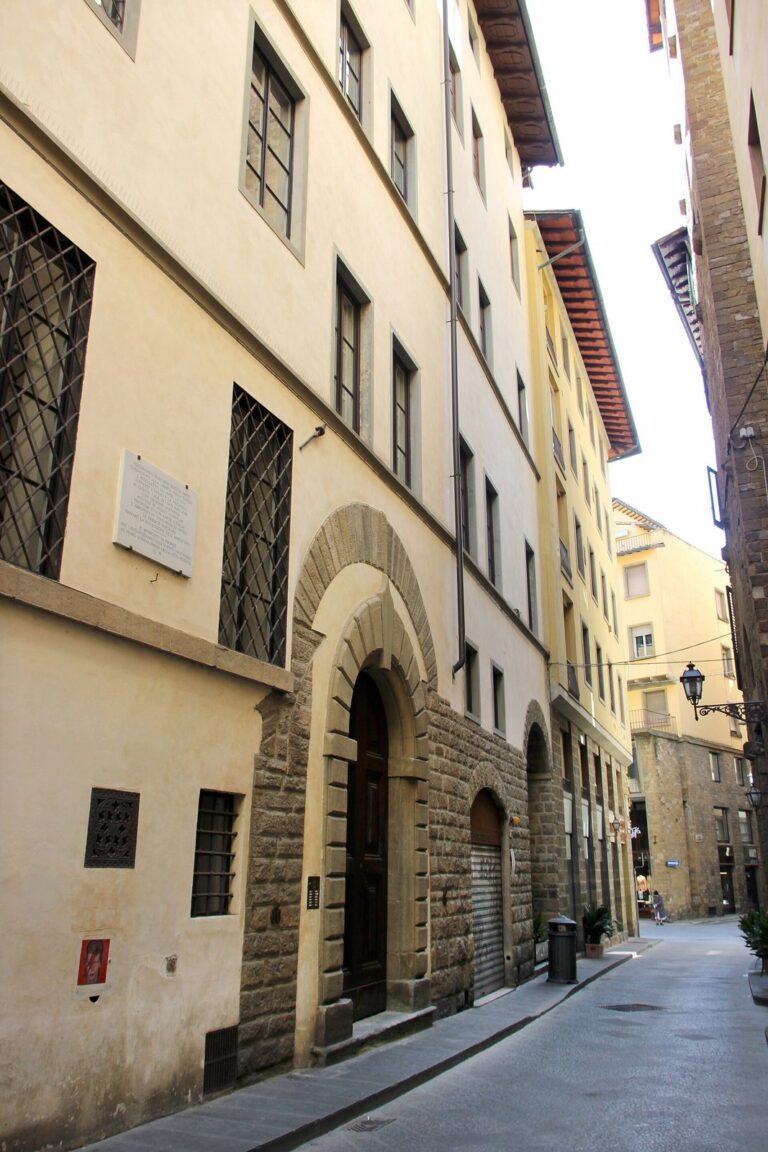
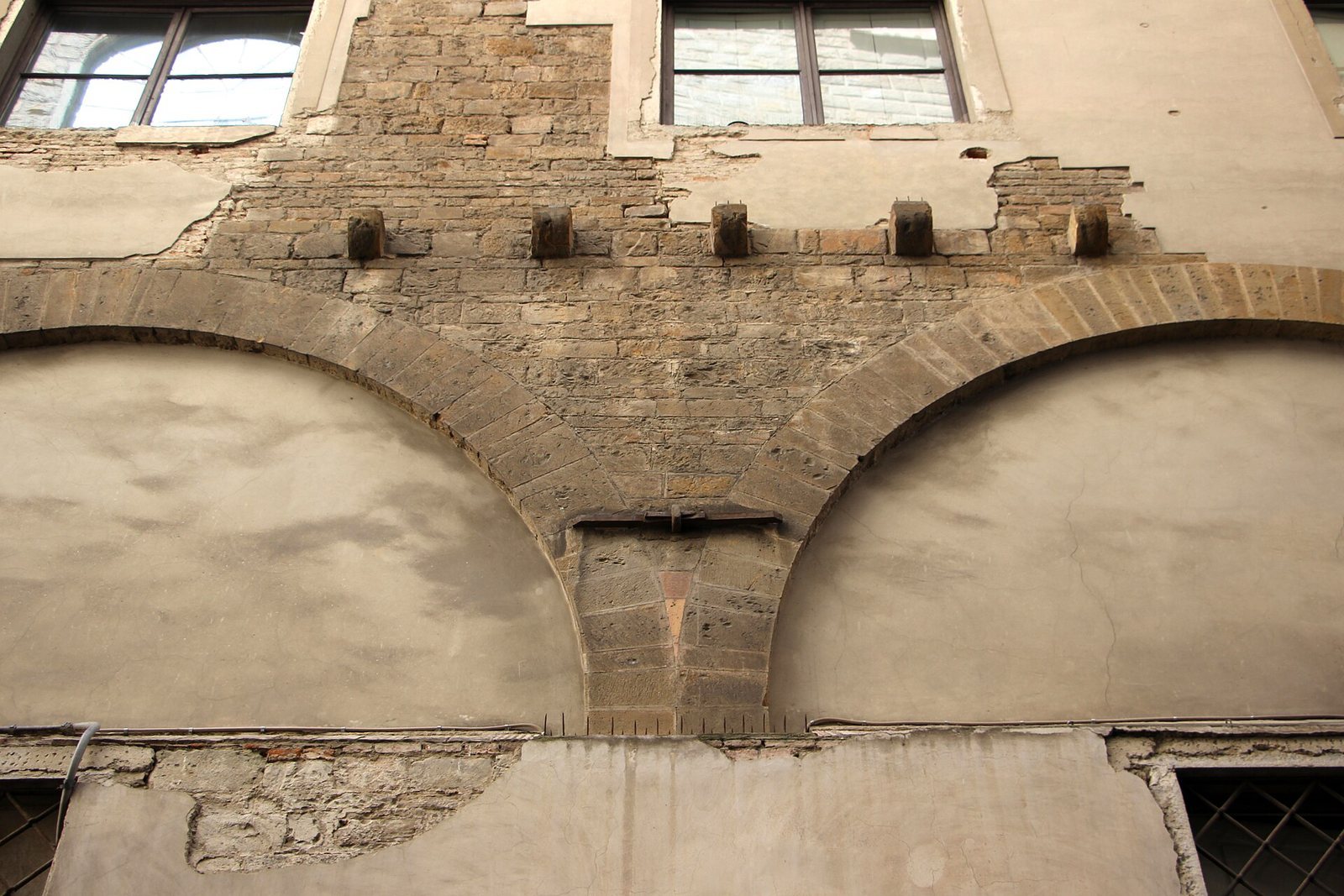
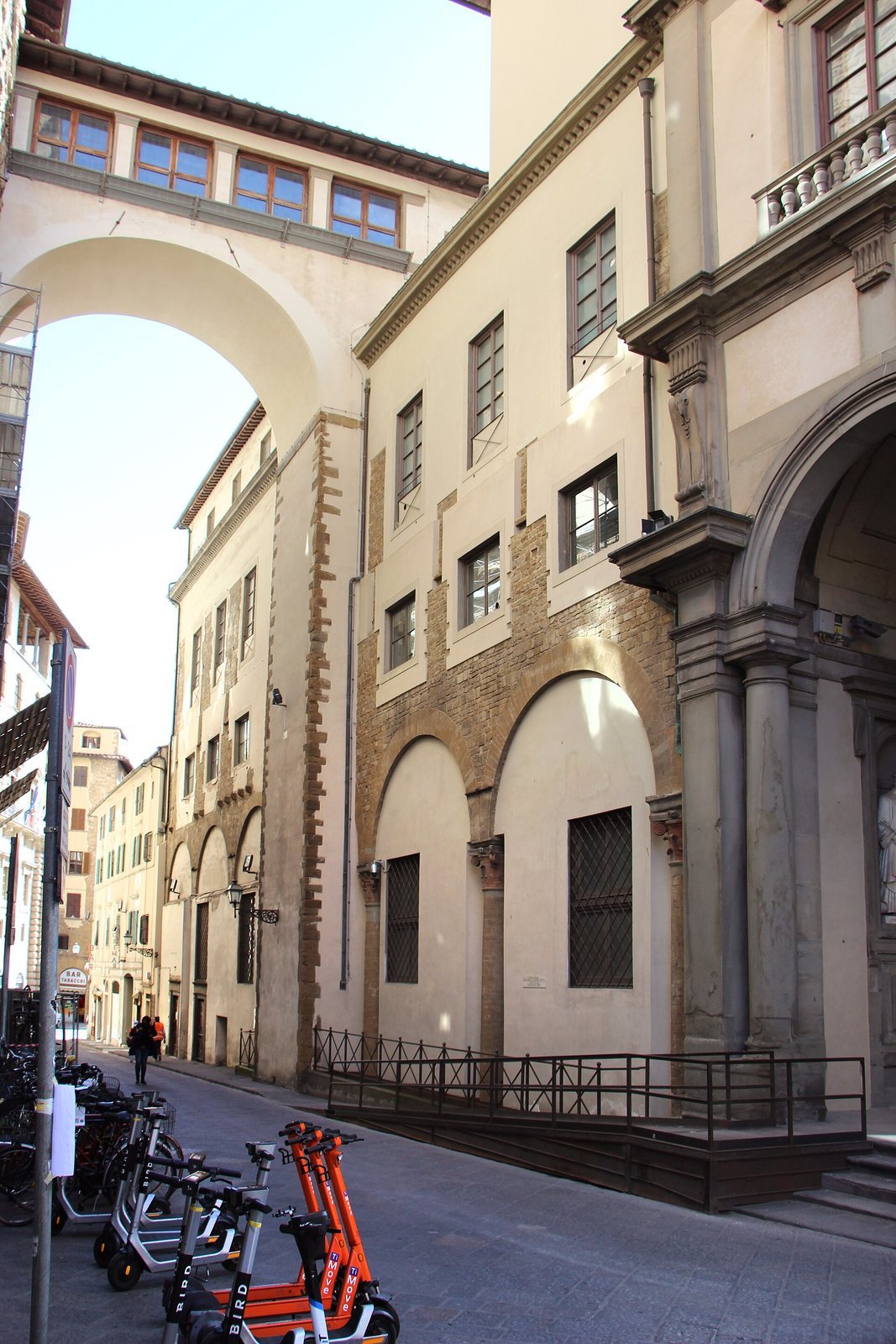
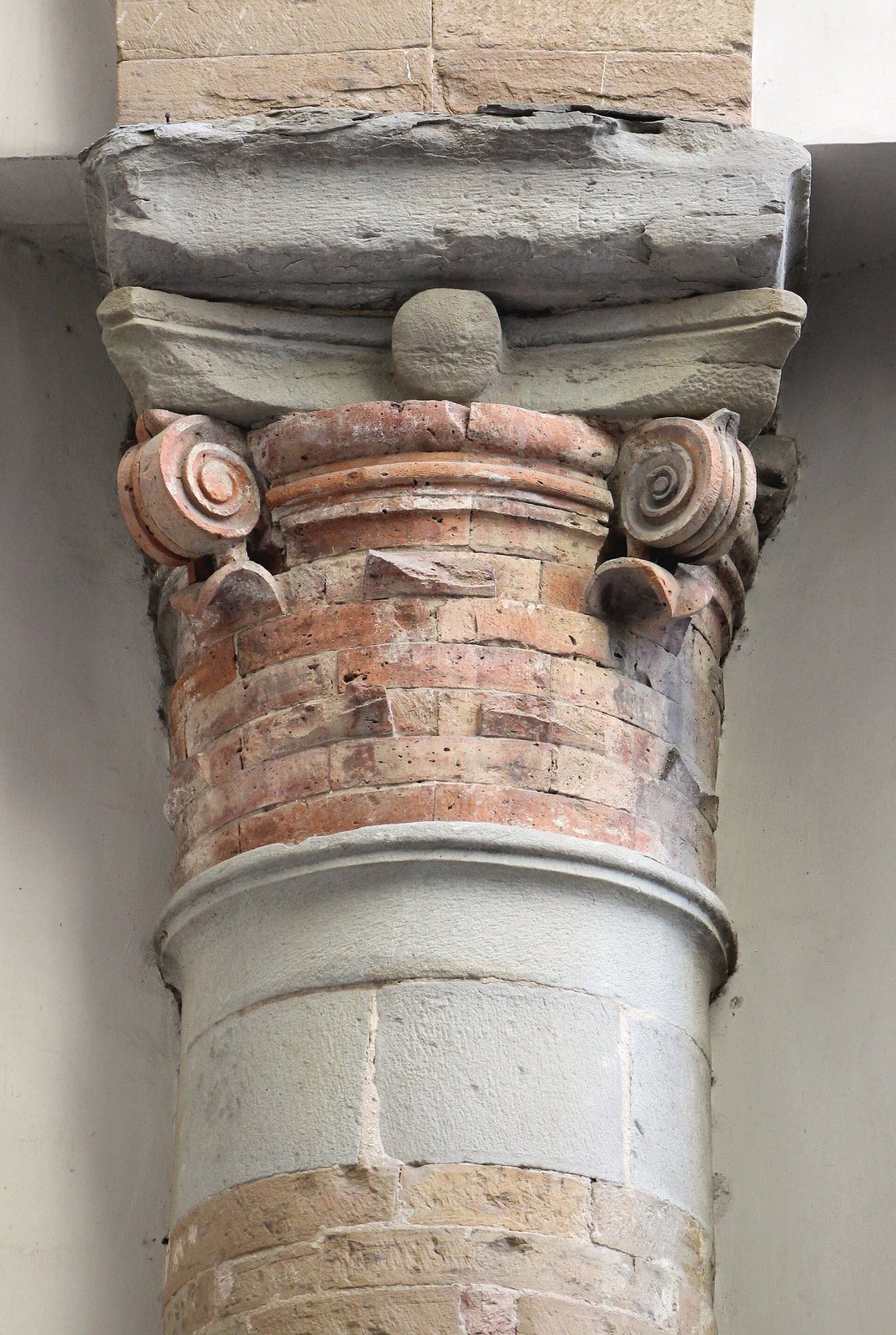
Columns and several arches remain along Via della Ninna. The apse, the church’s rounded end, has an outer face visible inside a shop on the street.
Relocated and commemorative features
Pulpit
The church’s pulpit was dismantled and later installed in San Leonardo in Arcetri, where it remains.
Façade and plaque
A small marble rosette with radiating rays decorated the façade. It was believed to be a wheel from the carroccio, a communal war wagon associated with medieval Italian city-states, captured from Fiesole during the war of 1123. This identification is a historical belief, not an established fact. A plaque on the exterior wall commemorates the remains of San Piero a Scheraggio and notes that the church gave its name to one of the city’s districts.