Benedictine Abbey of Mariastein: A Monastery and Pilgrimage Shrine in Switzerland
Site at a Glance
- Popularity
- High
- Country
- Switzerland
- Primary era
- Early Modern
- Eras represented
- Medieval, Early Modern, Modern
- Civilizations
- Holy Roman Empire, Swiss
- Site type
- Religious
- Remains
- Monastery
On this page16 sections
History
The Benedictine Abbey of Mariastein is a Roman Catholic monastery and pilgrimage shrine in Switzerland. Benedictine monks from Beinwil established their community at the shrine in 1648, and the abbey church was built between 1648 and 1655. It retains late-Gothic features alongside Baroque furnishings. Dedicated to Saint Vincent, the abbey belongs to the Diocese of Basel, the Roman Catholic jurisdiction, and the Swiss Benedictine Congregation, an association of Benedictine monasteries. Its pilgrimage is regarded as Switzerland’s second most important, after Einsiedeln.
Pilgrimage origins and the early chapels
The pilgrimage’s beginnings are placed in the late fourteenth century. A local tradition tells of a shepherd boy who fell beside the rocky plateau and was saved by a woman whom his parents believed to be the Virgin Mary. They built a chapel in her honor above a cave where the boy’s mother had rested. The legend was written down in 1442 and is thought to reflect a story about a century older. A stone chapel at the site is first definitely mentioned in 1434.
The first pilgrimage chapel burned in 1466 and was rebuilt in 1470. In 1530, during the Reformation, the religious movement that led to the formation of Protestant churches, the chapel was devastated and plundered. Jakob Augsburger, a restorer from Swabia, repaired the pilgrimage site. In 1541, Hans Thüring Reich von Reichenstein survived a fall from the cliff, renewing interest in the shrine after its decline during the Reformation. The Reichenstein family then treated the chapel as its family shrine.
The Beinwil community and the abbey
Benedictine monks from Beinwil began providing pastoral care at Mariastein in 1636. Their earlier monastery had been founded around 1100 at Passwang, a mountain pass in Solothurn, but declined from the late Middle Ages. Solothurn administrators reoccupied it in 1633. At the urging of a papal legate, a representative of the Pope, the abbey joined the Swiss Benedictine Congregation in 1647. The following year, Abbot Fintan Kiefer moved the remaining Beinwil community to Mariastein, where the monks built a monastery and church around the shrine. This brought the histories of the monastery and pilgrimage chapel together. The abbots of Mariastein also retained the title of Abbot of Beinwil. The pilgrimage later attracted visitors from Switzerland, southern Germany, and Alsace.
Suppression, exile, and return
In 1798, during the French Revolutionary period, the abbey was secularized, meaning transferred out of ecclesiastical control. French visitors had come to Mariastein for baptisms and marriages, leading to opposition and threats from the French government. Solothurn authorities installed a civil governor who prohibited public Masses. That year, French troops under General Balthazar Alexis Henri Schauenburg sacked the monastery and sent the monks into exile. The abbey was restored in 1802.
A second suppression took place in 1874 and 1875 during the Kulturkampf, political conflicts over relations between state and church. The state guaranteed the pilgrimage, and some monks were permitted to remain to serve it. The exiled community first settled in Delle, France. After another expulsion under French law in 1901, it moved to Dürrnberg near Hallein, where its monastery operated from 1902 to 1906, and then to Bregenz. In 1926, Pope Pius XI gave the church the honorific title of minor basilica. On 15 August that year, papal representative Luigi Maglione crowned the image of grace on the Pope’s behalf. In 1941, the Gestapo, Nazi Germany’s secret state police, closed the Bregenz monastery and expelled the monks. They returned to Mariastein and received asylum.
Following a referendum in 1970, the abbey was officially re-established on 21 June 1971. Solothurn’s senior cantonal official, Landammann Willi Ritschard, restored its legal rights to Abbot Basilius Niederberger. The abbey church underwent a comprehensive restoration between 1973 and 2000 under Abbots Mauritius Fürst and Lukas Schenker. The complex is protected as a monument, and Mariastein’s pilgrimage is included in Switzerland’s list of living traditions. Today it draws Christians from different denominations, Tamil Catholics and Hindus, Turkish Alevis, and people without religious affiliation. Some Tamil pilgrims identify Mary with a Hindu deity, while others have adopted Catholic beliefs and practices.
The monastery’s library also reflects its periods of suppression and restoration. It lost part of its collection in 1798, then gained books from other monasteries dissolved after its restoration. Following the 1874–75 suppression, the Canton of Solothurn took ownership of the books and placed them in a cantonal library with collections from other dissolved religious houses. That library merged with Solothurn’s city library in 1930 to form the Central Library of Solothurn. Mariastein’s books began returning to the monastery in 1998.
Remains
The abbey complex
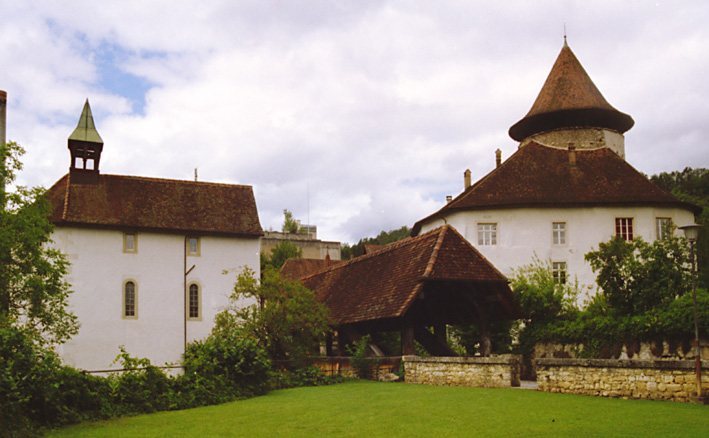
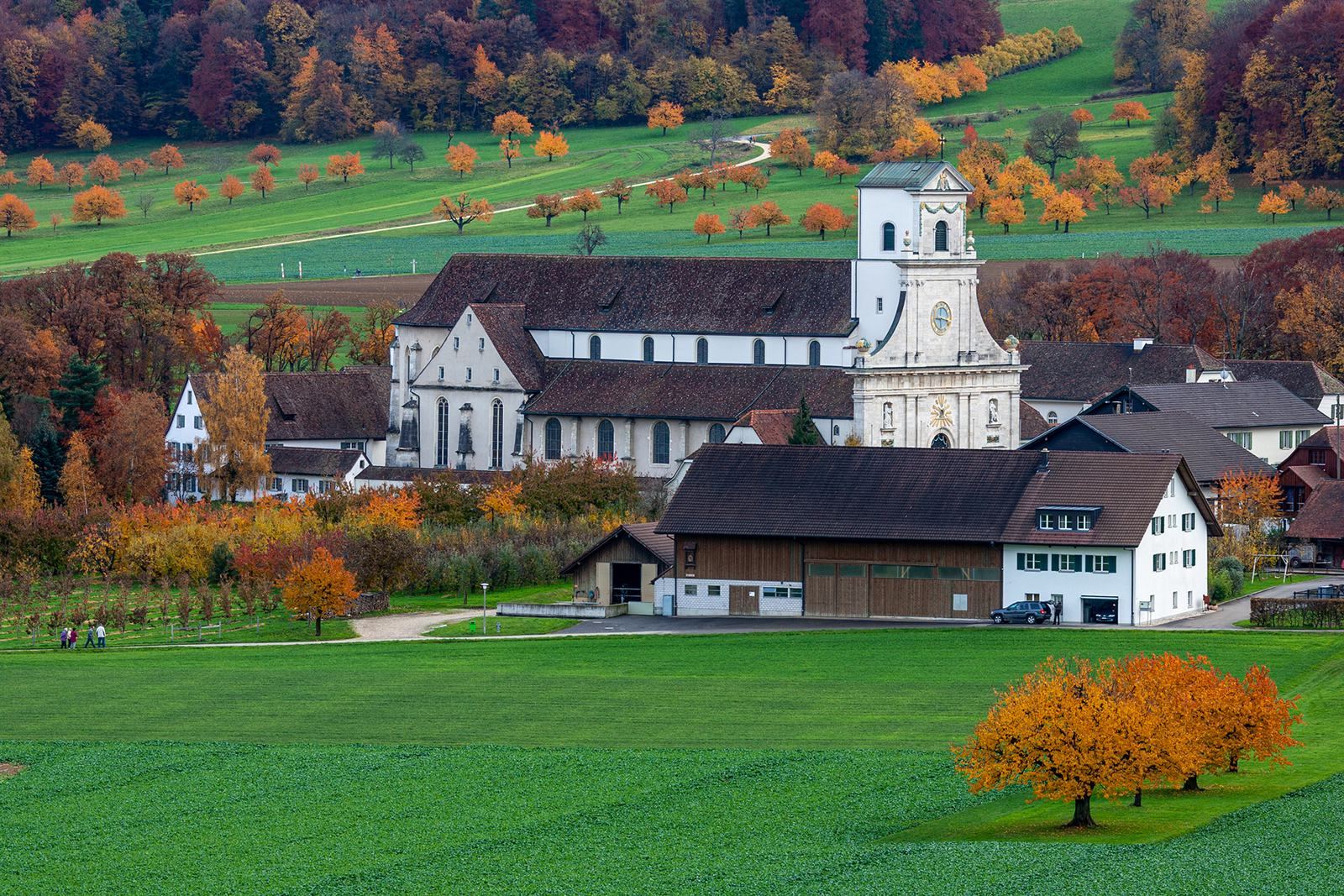
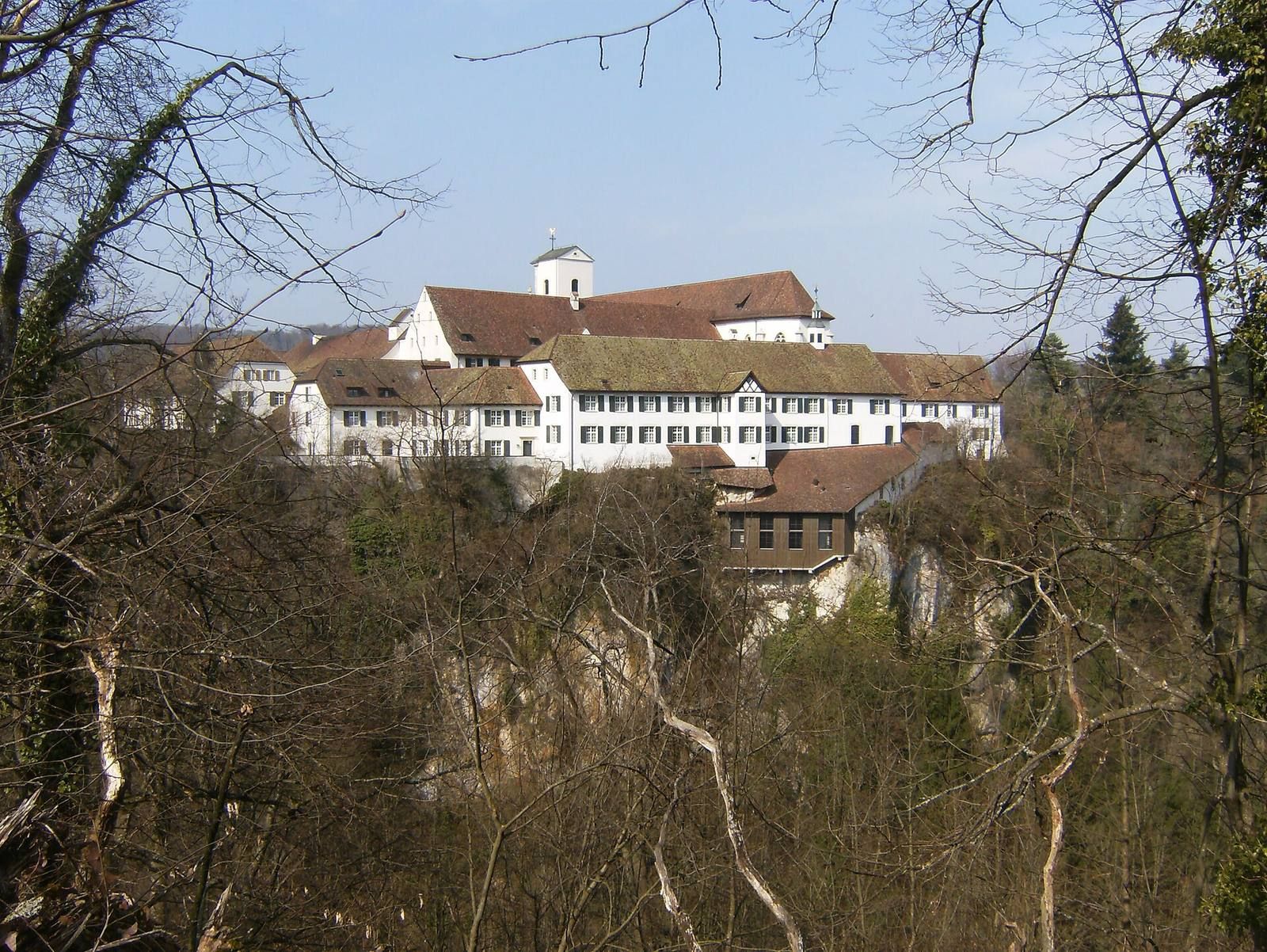
The square complex is fitted to the natural limits of the rock and has a fortress-like appearance when seen from the valley. The convent wing occupies the eastern, rock-facing side. The church stands to the north, with an annex containing the Reichenstein Chapel. To the south, the library building incorporates the cloister; an openwork wing forms the western side, where an earlier cloister stood. The historic pilgrimage road approaches from the west, and the church forecourt was redesigned in 1997. The wider ensemble also includes a half-timbered farmstead that belonged to the Reichenstein family until the mid-nineteenth century.
The abbey church
Structure and painted decoration
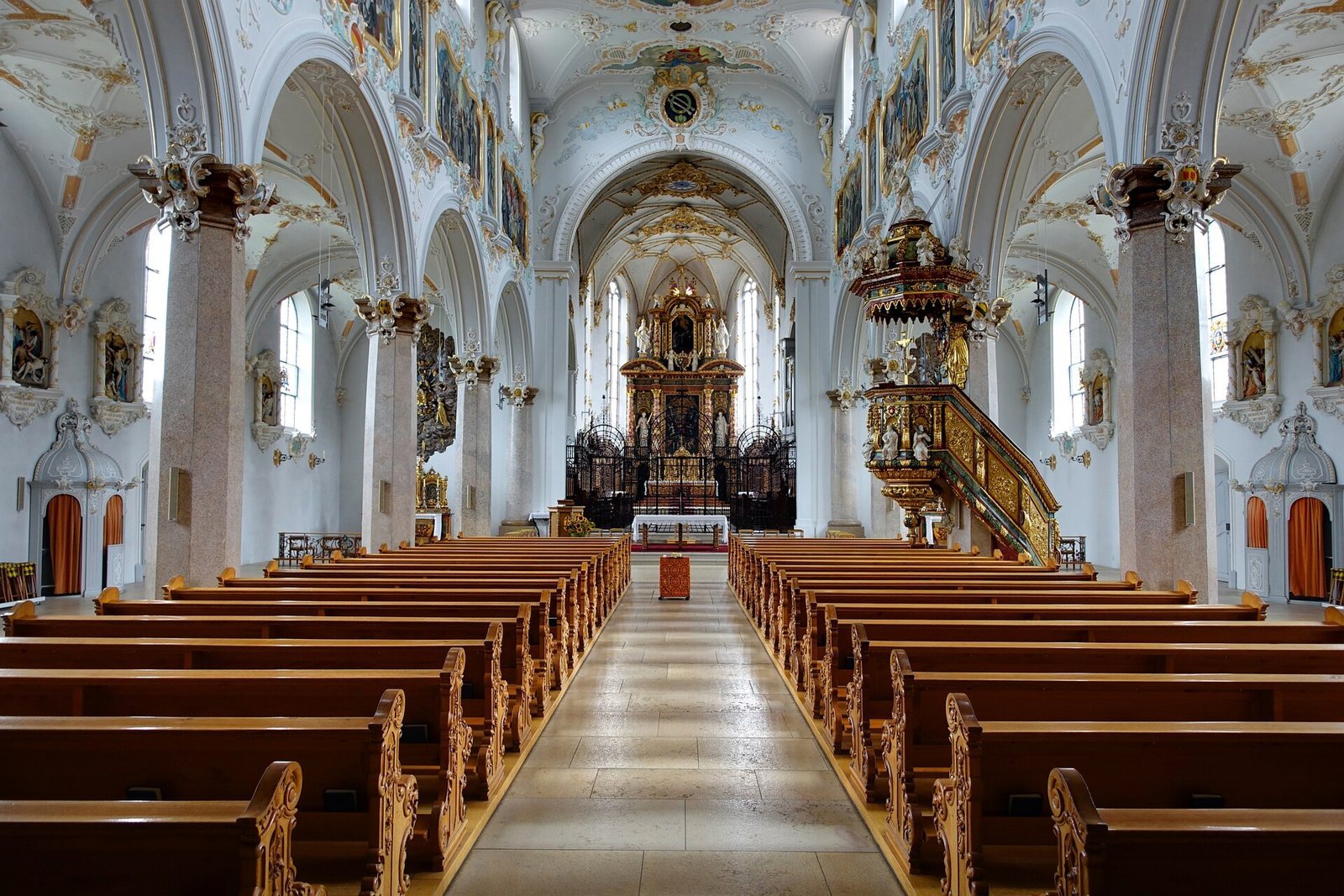
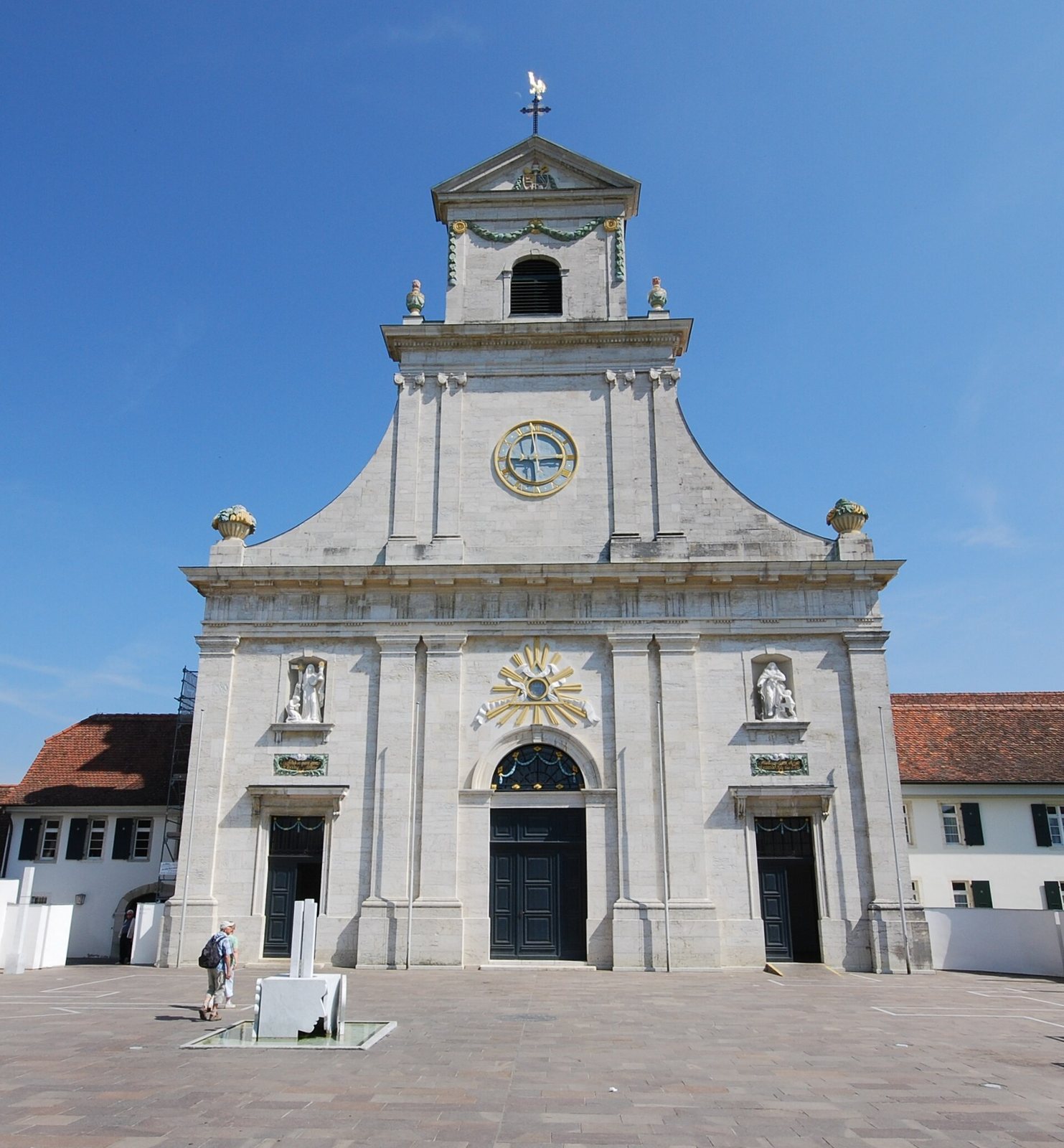
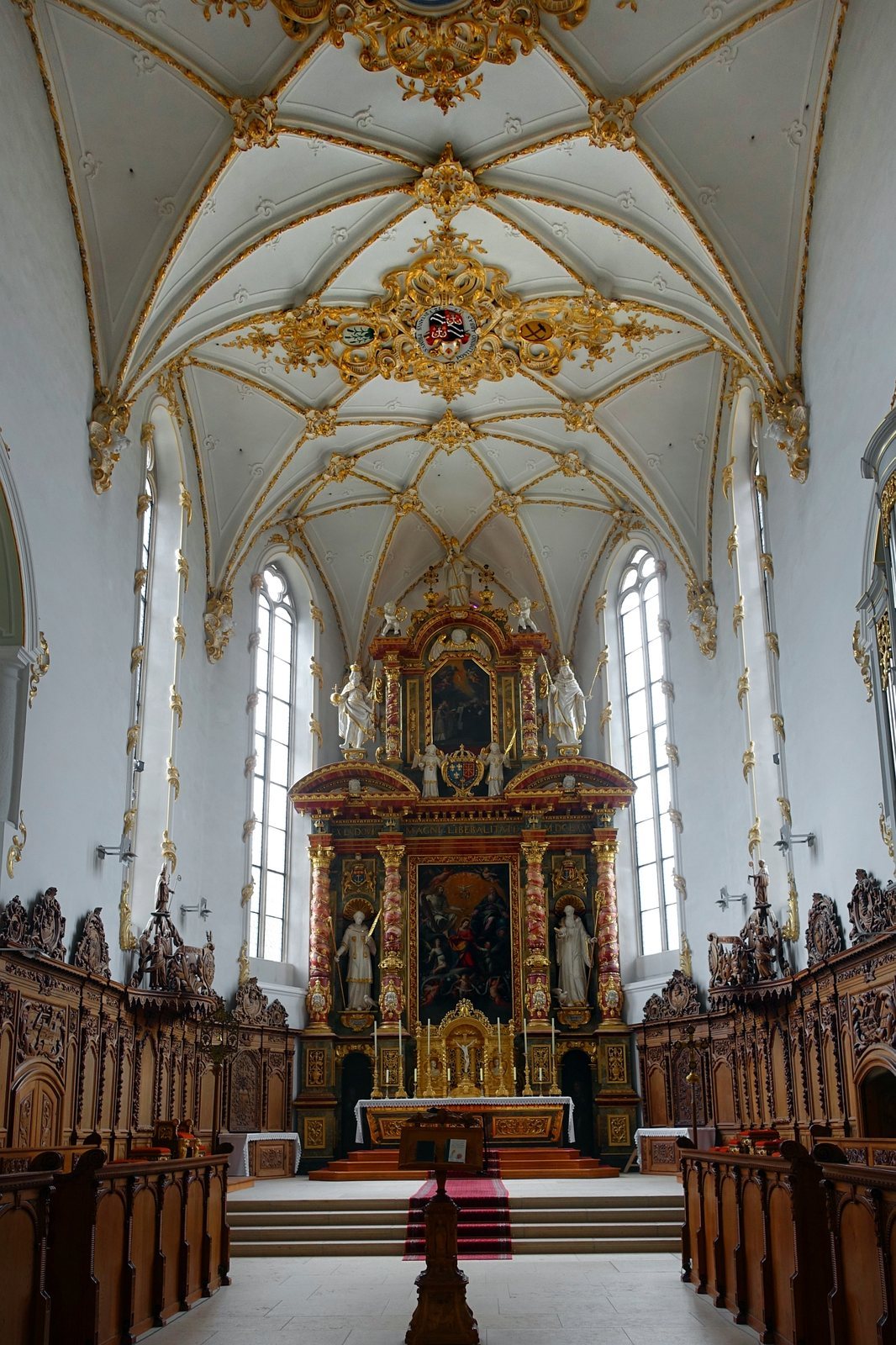
Urs Andermatt of Solothurn built the three-aisled church between 1648 and 1655. Its choir retains late-Gothic net-patterned rib vaulting, with ribs arranged in a network. Baroque-revival alterations were made between 1900 and 1934. Jakob Begle of Vorarlberg remodelled the entrance façade between 1830 and 1834 using Jura limestone with sandstone ornament. Work in 1999 and 2000 restored the façade and removed older overpainting.
The ceiling paintings show the falling-child miracle and episodes from Mary’s life, while the wall paintings depict events from the life of Saint Benedict. Lothar Albert of Basel painted the ceiling works and the upper-nave picture cycle between 1931 and 1933.
Furnishings
The Baroque high altar, dated 1680, is dedicated to Saint Benedict. It has turned columns, marble figures of saints, and paintings that change with the season. Louis XIV donated the altar. A wooden pulpit with figures of the Apostles dates to 1733, and the wrought-iron grille around the choir dates to 1695.
Organs and bells
Johann Burger of Laufen built the Great Organ on the west gallery in 1836. After alterations left it unplayable in 1970, Metzler Orgelbau installed a new instrument behind the existing case in 1978, based on the earlier organ’s arrangement. It has 38 sets of pipes, three hand keyboards, and a foot keyboard. Roman Steiner of Fehren built the choir organ in 2001. With 16 sets of pipes, two hand keyboards, and a foot keyboard, it mainly accompanies the monks’ daily prayers and can also be played in alternation with the Great Organ. It replaced a two-keyboard organ with 24 sets of pipes, built by the Frey firm of Lucerne in 1970. Steiner also built the one-keyboard organ in the Chapel of Grace in 1988 and 1989. It has 10 sets of pipes and replaced an organ dated 1824, probably made by Burger. The church has six historic bells; Bell 1 weighs 3,060 kilograms.
Pilgrimage chapels
Chapel of Grace
The Chapel of Grace occupies a cave below the abbey church and is reached by descending 59 steps. Plaques left in thanks or in fulfillment of vows line the descent to the grotto. The image of the Mother of Consolation shows Mary standing free in the rock, carrying the child on her right arm, with six childlike decorative figures holding candleholders around her. The image in its present form dates to the seventeenth century. Beside it stands a Eucharistic altar dated 1645, made in the workshop of Solothurn sculptor Heinrich Scharpf. Its Baroque marble structure has turned columns and depicts Mary and the child with saints.
Reichenstein Chapel
Also called the Seven Sorrows Chapel, the Reichenstein Chapel occupies the northeastern corner of the complex. Its late-Gothic sacrament house, a structure for reserving the Eucharist, dates to 1520. A limewood statue of the Virgin, estimated to date from the second half of the seventeenth century, stands in an alabaster altar dated 1824.
Library and treasury
Library and photographic collection
The library building includes the southern cloister. Its historical holdings include early printed books produced before 1501, other printed works through the nineteenth century, and books on a wide range of subjects with a strong theological emphasis. The music collection comprises manuscripts and printed music from the seventeenth century to the present, including works composed or kept at the monastery. The library was reorganized from 2016, with building work and the incorporation of deposits held elsewhere.
Renovation work in 2022 uncovered more than 2,000 glass-plate photographic negatives, some still in their original boxes. The images date from the late nineteenth and early twentieth centuries and show Mariastein, the Gallusstift in Bregenz, and Karl Borromäus College in Altdorf. Some were collected by the monk Beda Weisser and record his travels. The negatives were restored and presented publicly in February 2026.
Treasury objects
The treasury’s oldest and most valuable object is the Essostab, an ivory head from a ceremonial staff carried by an abbot or bishop. It depicts a doe and a bird and received a silver mount in the sixteenth century. The object came from the earlier monastery at Beinwil, though it was probably not made there. Its style is associated with the period of the Hohenstaufen ruler Frederick II in southern Italy or Sicily. A seventeenth-century chalice attributed to Wilhelm Krauer, decorated with enamel and gemstones, is another notable work of sacred art at Mariastein.