St Mary-at-Hill: A Parish Church in the City of London
Site at a Glance
- Popularity
- Medium
- Country
- United Kingdom
- Primary era
- Early Modern
- Eras represented
- Medieval, Early Modern, Modern
- Civilizations
- British, English
- Site type
- Religious
- Remains
- Church
On this page13 sections
History
Origins and religious life
St Mary-at-Hill is a parish church in the City of London, United Kingdom. Its foundation is placed in the 12th century, but a document from 1177 describes a church here as ancient, pointing to an origin in the 11th century or earlier. Dedicated to Mary, the mother of Jesus, it was also known as St Mary de Hull and St Mary de la Hulle.
In 1336, Rose Wrytell paid to establish a chantry, a religious foundation for prayers and masses for the dead. The Chapel Royal, the monarch’s chapel and musical establishment, began singing at the church in 1510. Organ builder Mighaell Glocetir worked there from 1477 to 1479; he may have been the same person as Myghell Glancets, who worked at St Michael, Cornhill, in 1475. Thomas Tallis, the English Renaissance composer, served as organist in 1538–39. The church remained Roman Catholic until 1536 and is now part of the Church of England. A congregation of St Anne’s Lutheran Church also shares the building with the Anglican congregation.
Fire and rebuilding
The Great Fire of London, which devastated parts of the City in 1666, began in nearby Pudding Lane and severely damaged St Mary-at-Hill. Christopher Wren rebuilt the interior and east end between 1670 and 1674. The parish was joined to that of St Andrew Hubbard, whose church was not rebuilt. Later alteration campaigns continued from the late 18th century through the mid-19th century.
Parish customs included the Beating of the Bounds, a procession that marked the parish boundary. It took place on Ascension Day, with participants carrying rods; children were formerly given light whippings at points along the route. In 1682, four shillings were spent on fruit for the procession. An October Costermongers’ Festival, also called the Fish Harvest Festival or Harvest of the Sea, was associated with Billingsgate fish market.
Later parish history
During the Victorian era, Parliament prohibited new burials in the City of London, and churchyards closed. In 1847, St Mary-at-Hill bought perpetual burial rights for its parish in a small consecrated section of West Norwood Cemetery. In 1904, its parish was united with St George, Botolph Lane; the church received sword rests, plate, royal arms, ironwork, an organ, and an organ case from St George.
The church escaped damage during the Blitz, the German aerial bombing campaign against Britain in the Second World War, but a fire severely damaged it in 1988. Restoration in 1990–91 reinstated the roof, plaster vaults, and dome. The organ was partly restored after the fire, and a full restoration began in 2000. In 1990–91, Lambeth Council also compulsorily purchased the main cemetery at West Norwood and removed memorials from the church’s section. A Chancery Court ruled the removal illegal and ordered a process through which descendants could request the restoration of monuments. St Mary-at-Hill was designated a Grade I listed building, the highest English category for buildings of exceptional interest, on 4 January 1950.
Remains
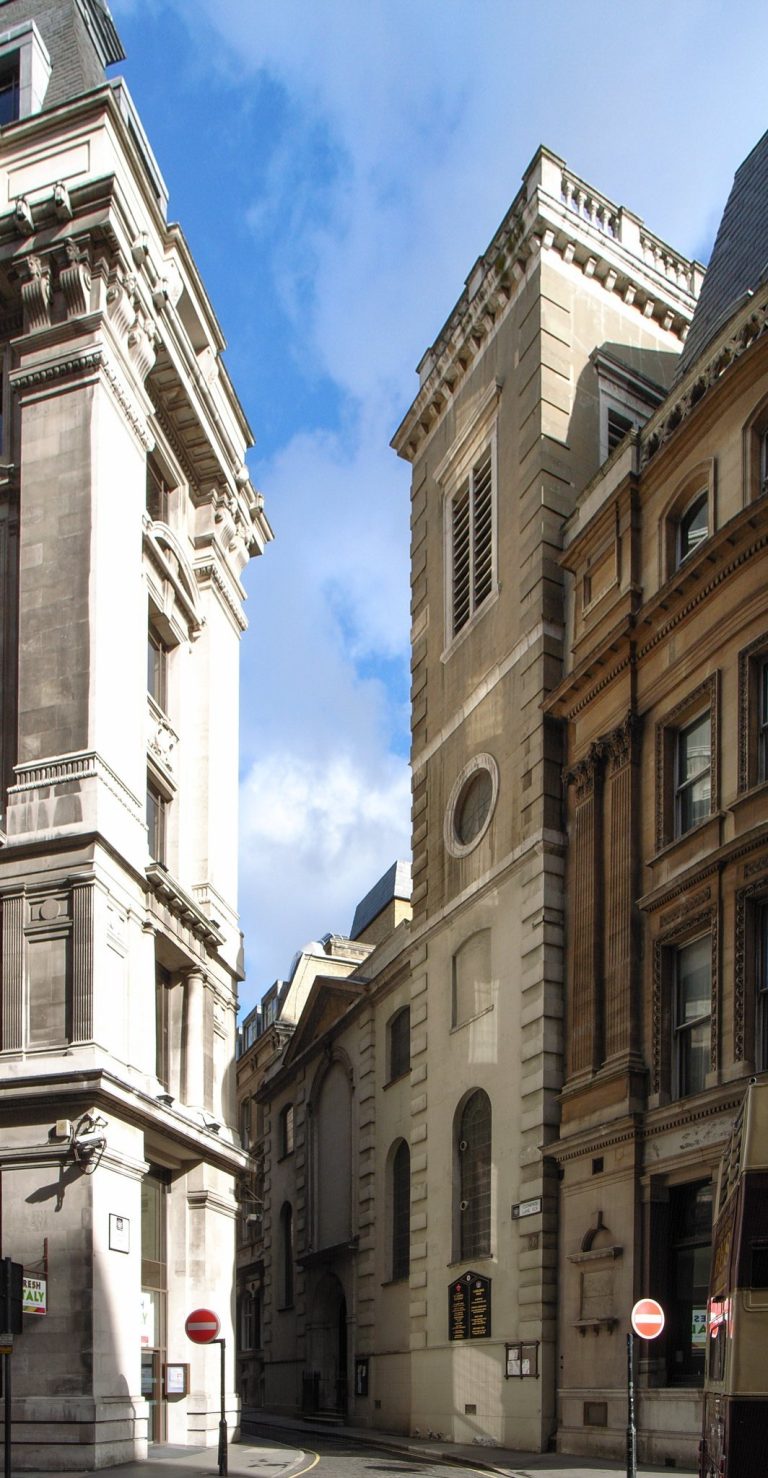
The church occupies sloping ground descending toward the Thames, among the City’s narrow streets. It measures 96 feet long by 60 feet wide. Its present form brings together medieval fabric, post-fire rebuilding, and later changes. The name St Mary-at-Hill reflects the rise from Billingsgate, an explanation given by London historian John Stow in the late 16th century.
Church fabric and interior
Medieval fabric and plan
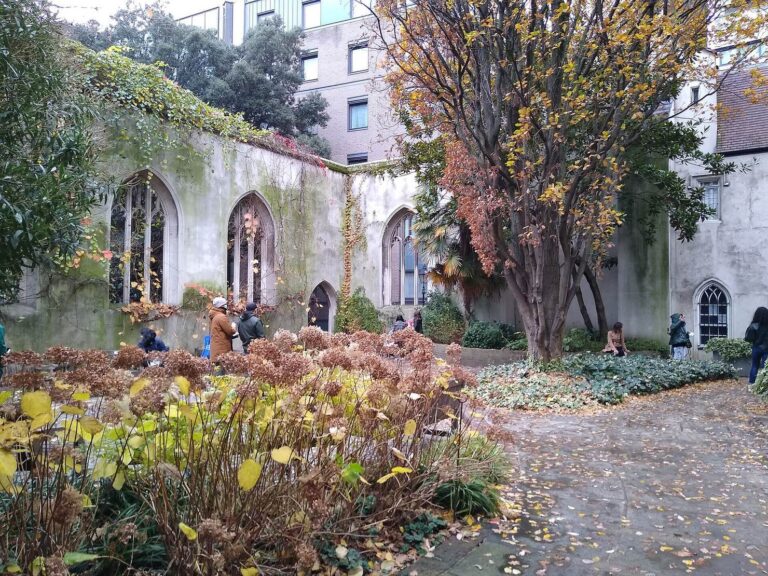
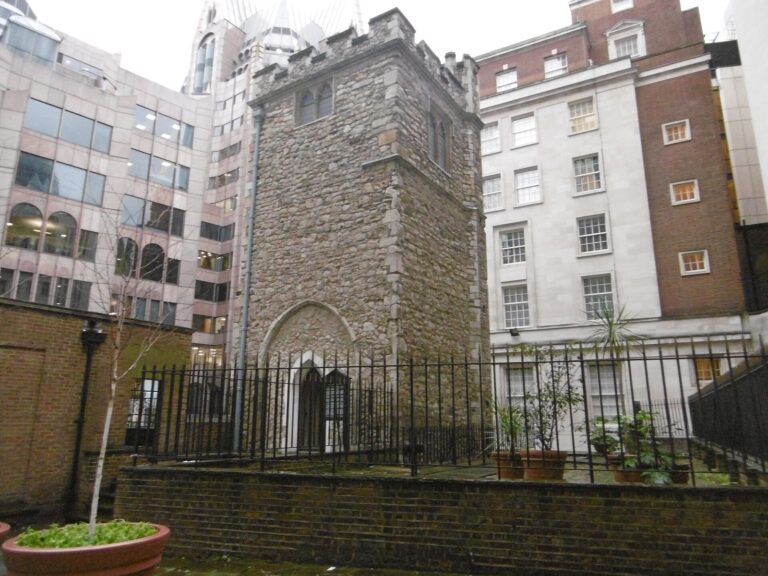
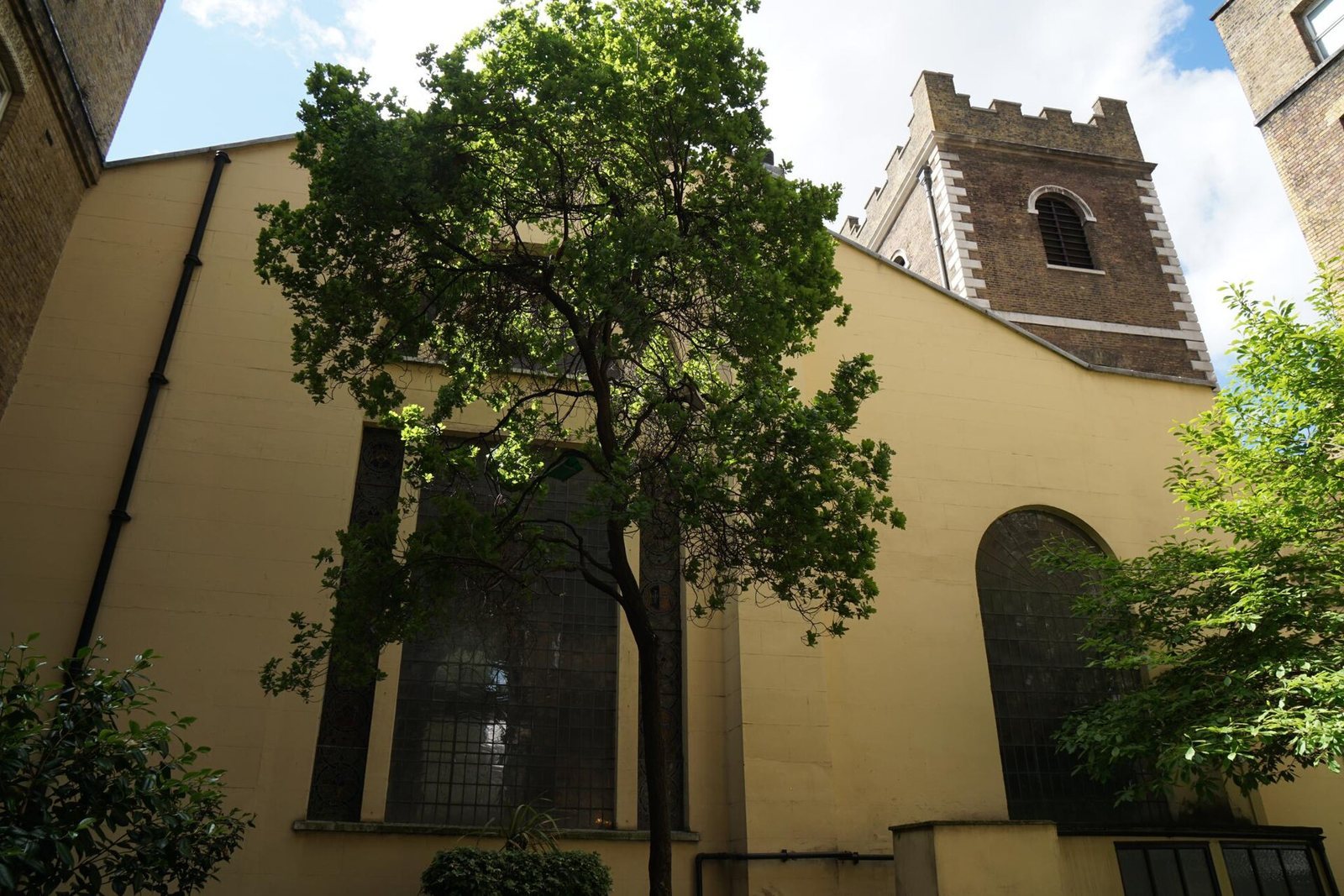
The north aisle was rebuilt in the late 15th century, and a south aisle and steeple were added somewhat later. Medieval fabric survives particularly in the north wall, which borders a small churchyard. Wren’s rebuilding retained medieval walls on three sides; the west tower was also retained at that time, before later replacement.
Interior and east end
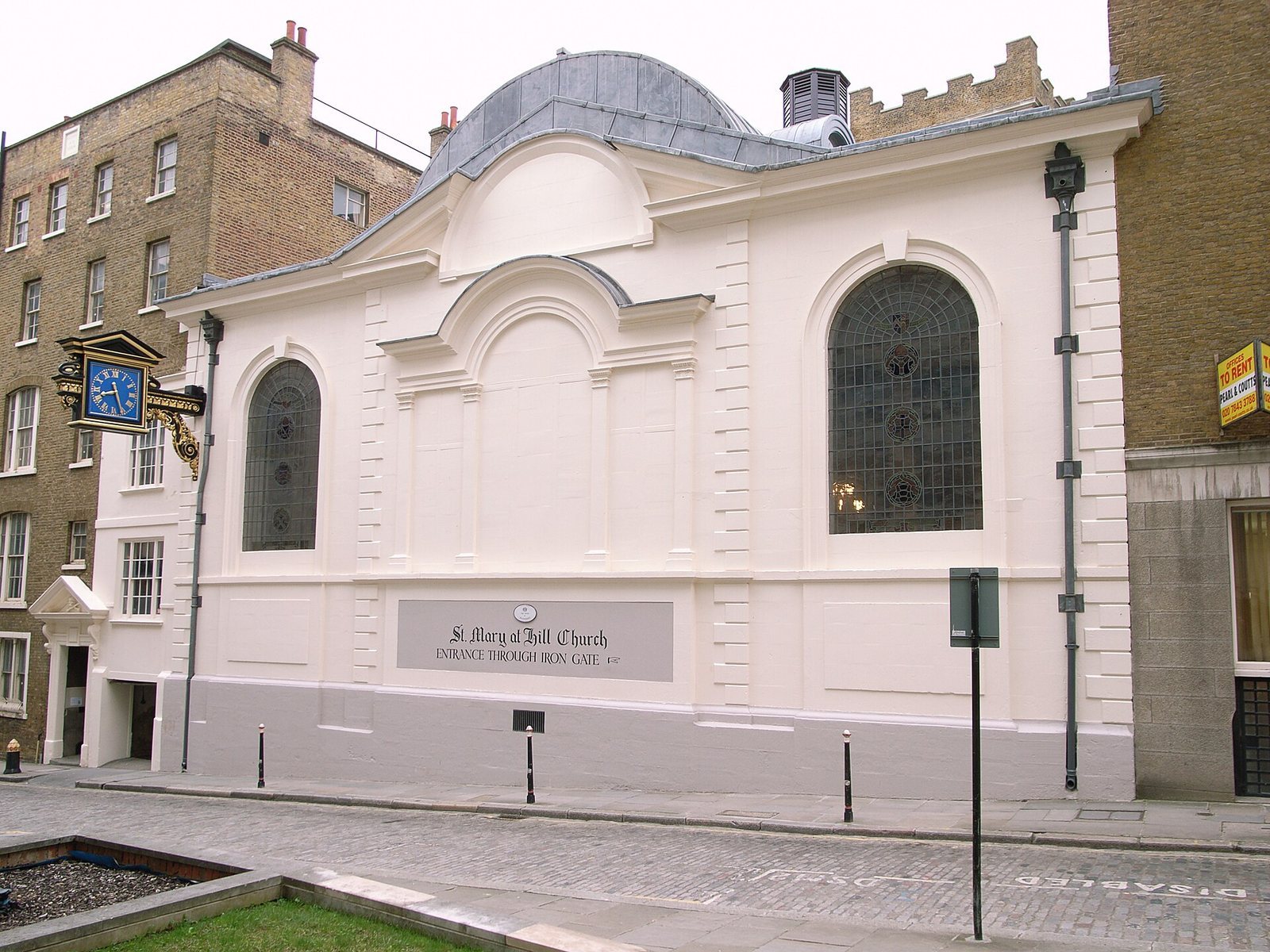
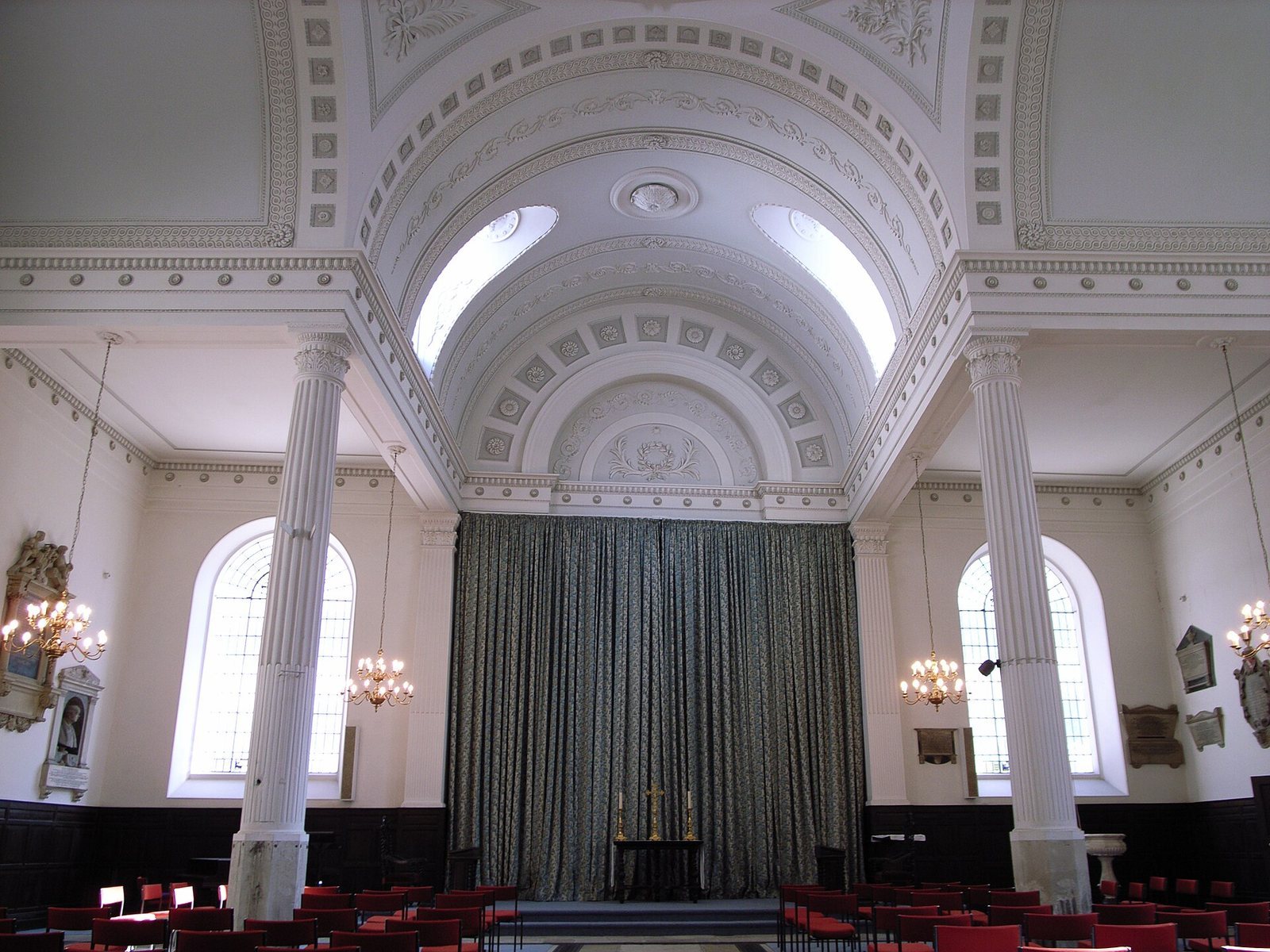
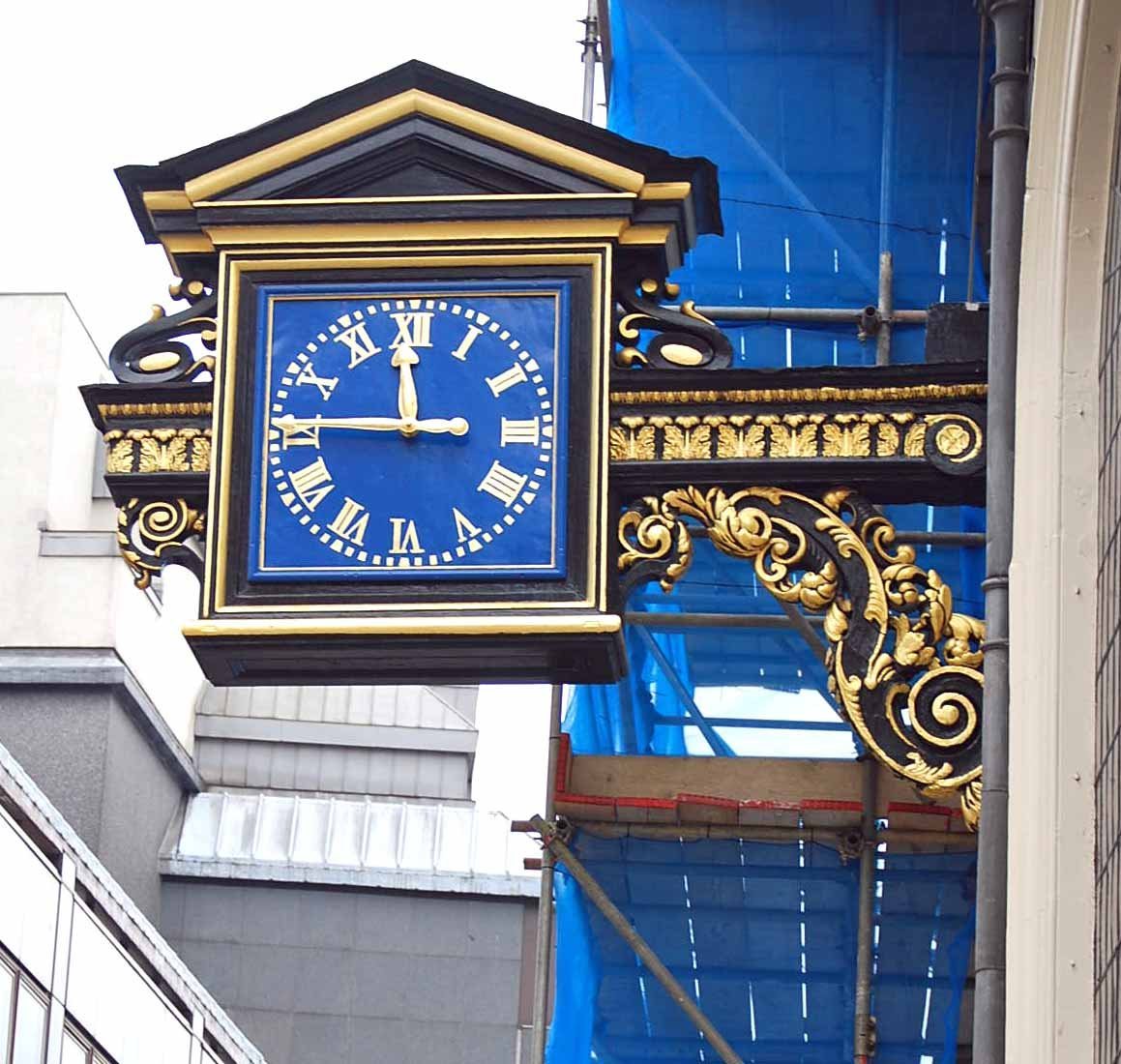
The interior follows a quincunx, or five-point arrangement, with four free-standing columns around a central dome. The columns have leafy capitals, and support barrel vaults, or long arched ceilings, set out in a Greek-cross pattern. The dome has a coffered surface. At the east end, the central Venetian window is blocked, with a semicircular window on either side; the pediment above is no longer intact. A clock projects several feet into the street.
Tower, windows, and fittings
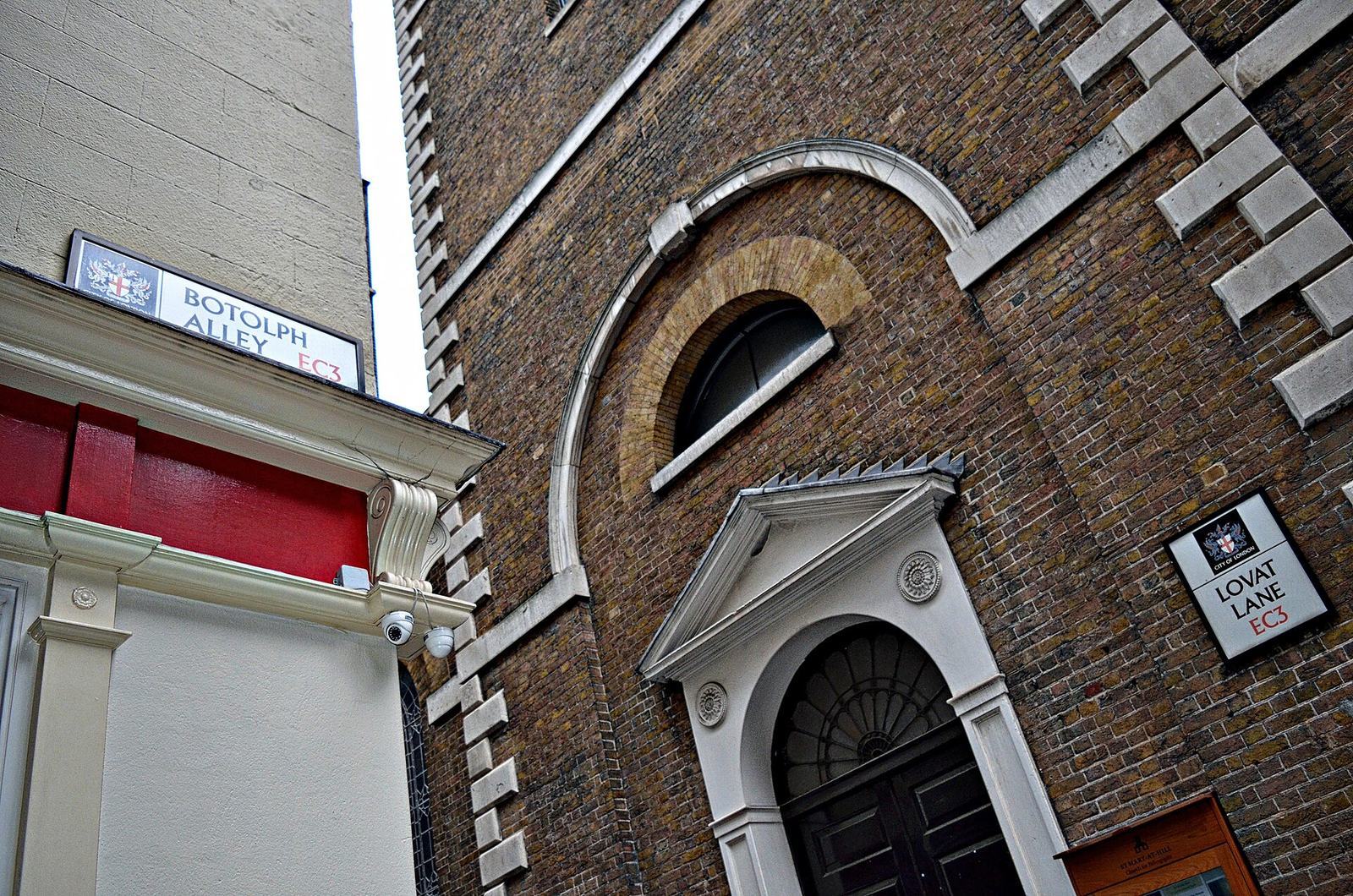
The west wall and tower were rebuilt in yellow brick in 1787–88. Round-headed, iron-framed windows were installed in the north wall in 1826–27, when the vaults, ceilings, and plasterwork were also replaced. Later work added a cupola to the dome and cut windows through the chancel vault. The church’s 17th-century woodwork was adapted and supplemented in 1849. Openwork screens are present on the roof. Most interior fittings and woodwork survived the 1988 fire, while the pulpit, reredos, and other furnishings remained in storage rather than being returned. A William Hill organ was installed in 1848 and partly restored after the fire.
Associated structures and finds
Rectory
The adjacent rectory, built of brick and stone, dates to 1834. It was designed by James Savage and incorporates a vestry from the late 17th century.
Parish burial enclosure
The parish’s burial section at West Norwood Cemetery was marked by railings and planting that included monkey-puzzle trees. Its memorials were removed in 1990–91.
Mary Hill Hoard
The Mary Hill Hoard was found in an 18th-century basement near the church. It included the only known coin from the Horndon mint, struck during the reign of Edward the Confessor, the English king who ruled in the 11th century.