Orlovi Skali: A Thracian Rock Sanctuary in Bulgaria
Site at a Glance
- Popularity
- Medium
- Country
- Bulgaria
- Primary era
- Iron Age
- Eras represented
- Stone Age, Bronze Age, Iron Age
- Civilizations
- Thracian
- Site type
- Religious
- Remains
- Sanctuary
On this page7 sections
History
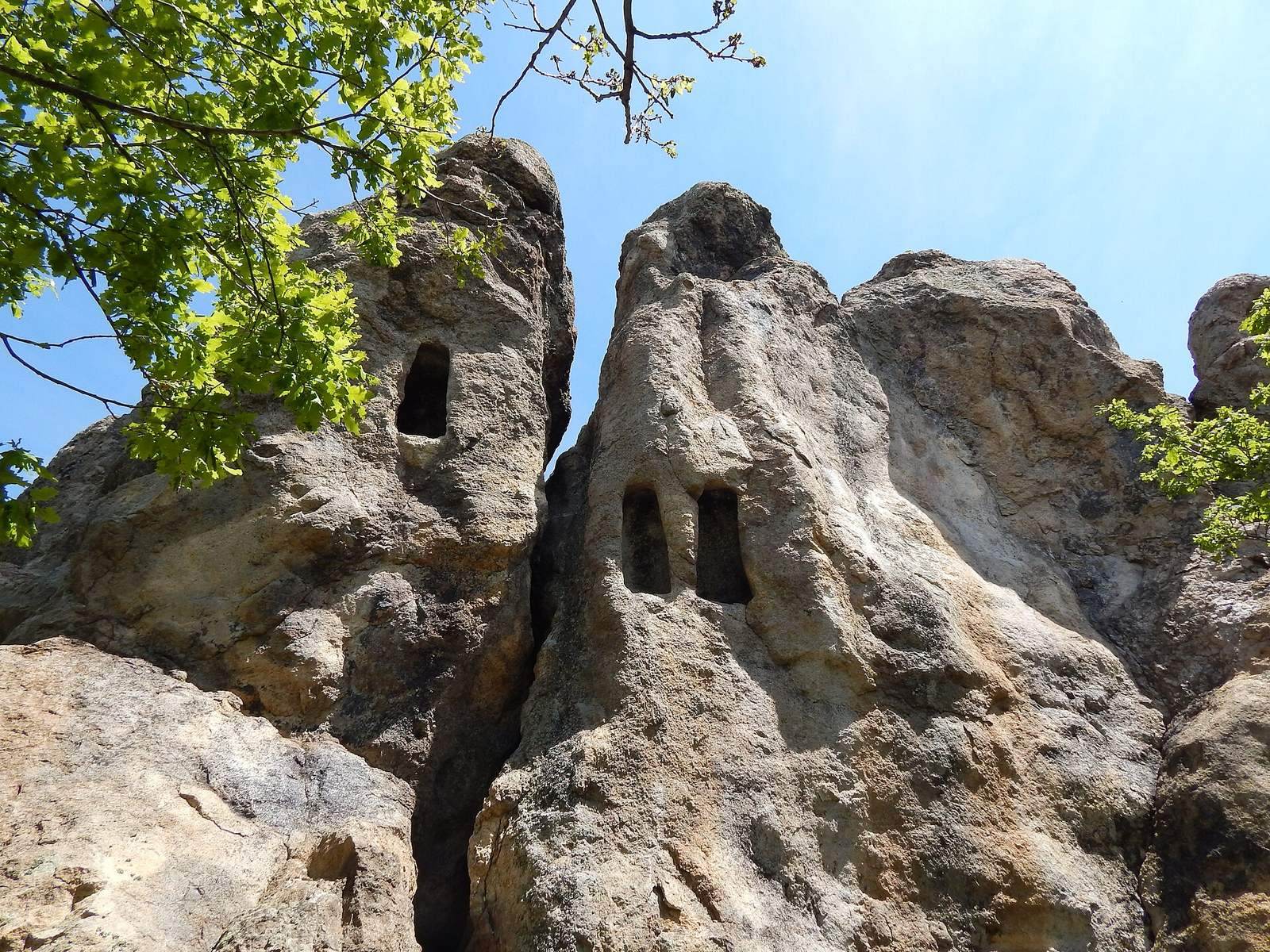
Orlovi Skali is a Thracian rock sanctuary near Ardino in Bulgaria. Its archaeological period is broadly classified from the Copper Age to the Iron Age, while pottery found near the niches dates to the fifth and fourth centuries BCE. Bulgarian archaeologist Ivan Velkov introduced the site in scholarly literature in the 1940s.
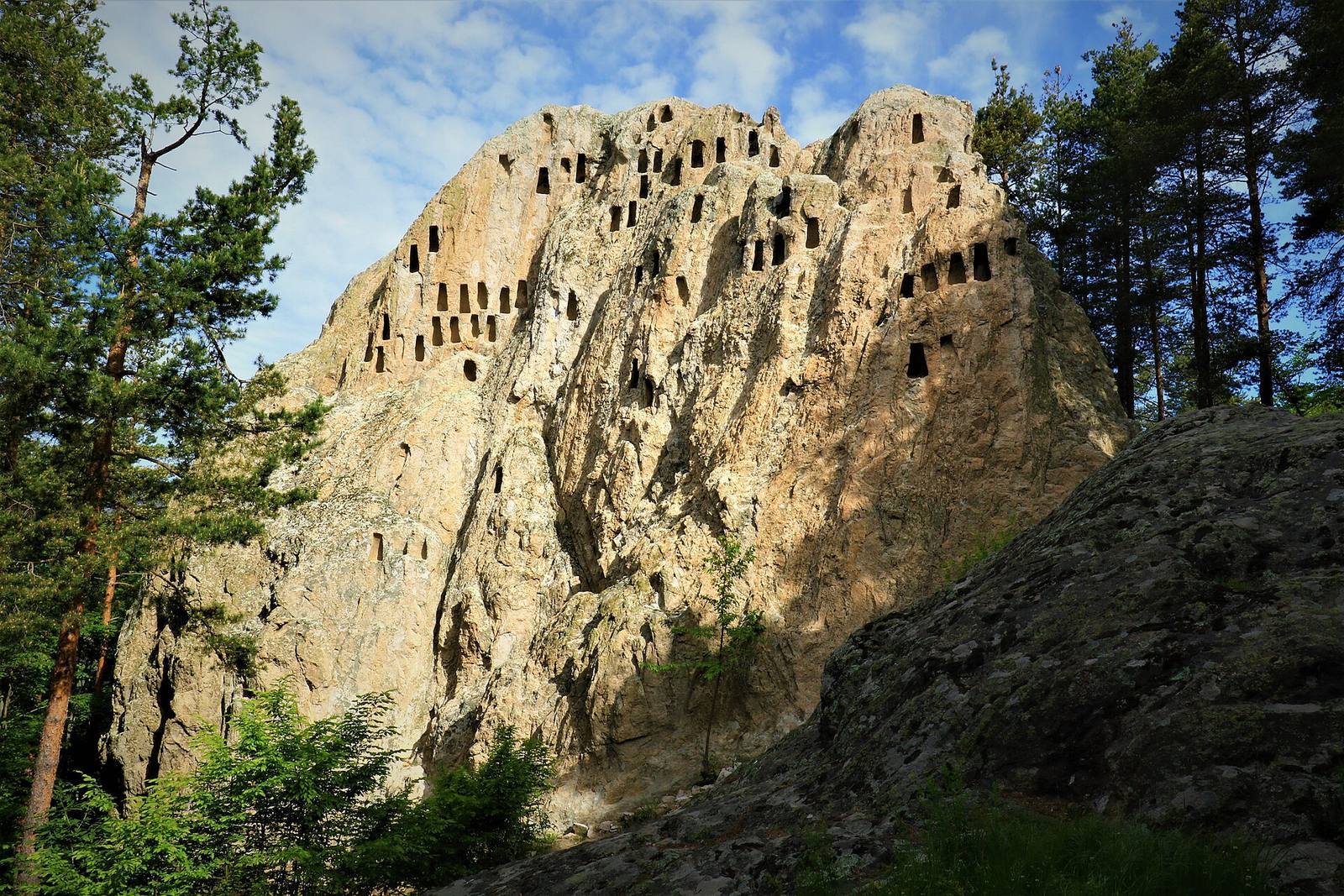
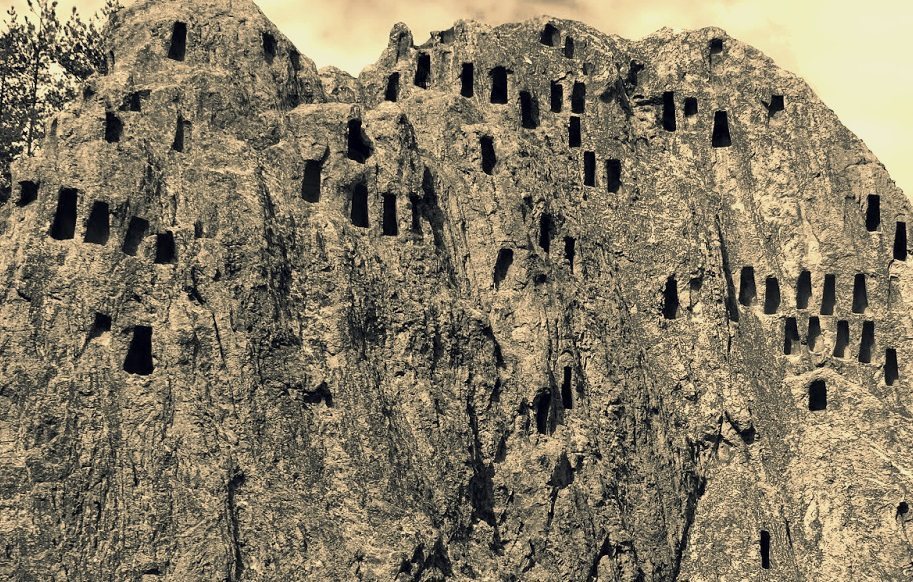
The purpose of the trapezoidal niches remains uncertain. Some writers have connected them with the Odrysians, a Thracian people and political community. Georgi Nehrizov has interpreted similar niches in the region as major Thracian burial installations of the Early Iron Age. One funerary theory proposes that the niches held urns containing cremated remains, since bodies would not fit. Nikolay Genov has suggested that they served ordinary people, in contrast to rock-cut tombs for rulers and their retinues. Reaching niches in difficult positions may have required ropes.
Ana Raduncheva sees the niches as symbolic passages between the worlds of the living and the dead, perhaps linked to particular people, groups, or lineages. She connects their trapezoidal form with the bat, which some Stone Age communities believed guided souls to the afterlife. In her interpretation, niches and artificial caves could form a connected passage. She also considers lineage-based groupings possible and views the spread of rock carvings, especially in the Eastern Rhodopes, as evidence of a sanctuary system.
Valeria Fol argues that the burial interpretation needs material confirmation and notes the physical difficulty of funerary rites on such inaccessible rock faces. She instead proposes that a niche might have been carved for a single ritual, with sacred objects placed inside on particular days during a cosmic or initiation ceremony. In one speculative version of this idea, an initiate suspended above an abyss would leave an offering to the Great Mother, a mother-goddess figure, and her unidentified son in a niche associated with a lineage.
The fortress near the niches was protected as a Historic Place in 1979, and Orlovi Skali was designated a natural landmark in 2003. A local legend tells of an underground river beneath the rocks and a dragon guarding treasure.
Remains
Setting and layout
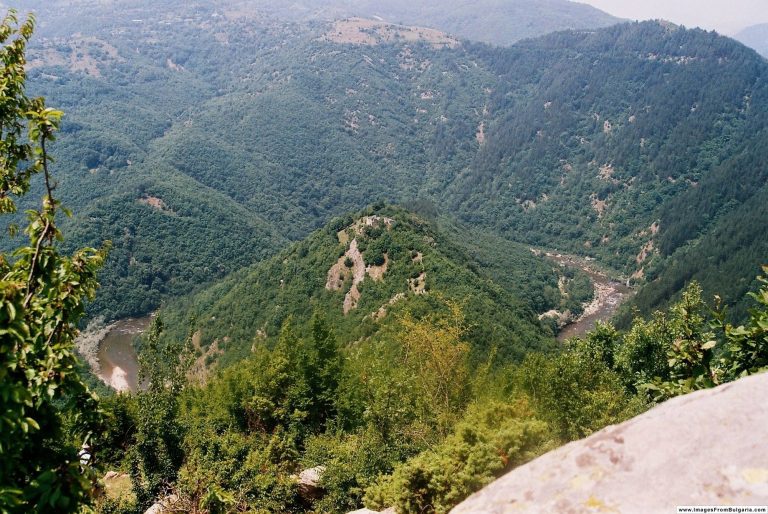
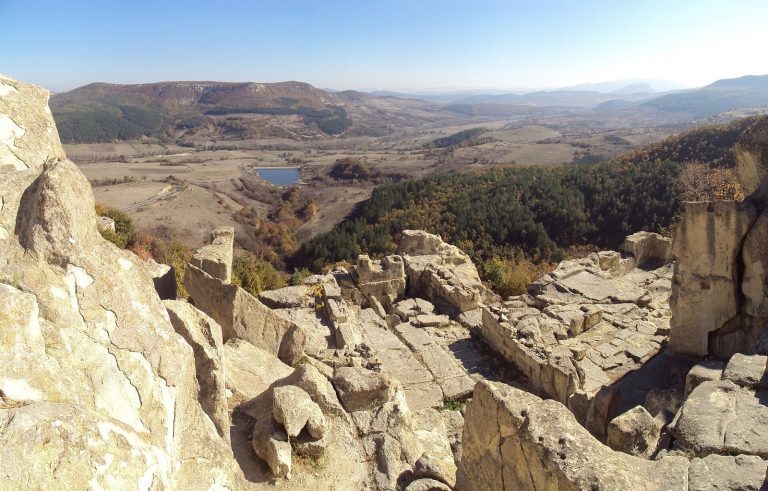
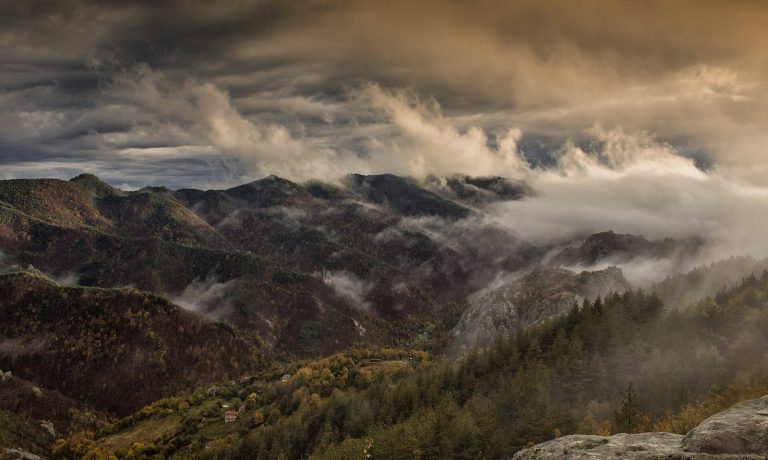
The complex lies about 2 km from Ardino and 30 km southwest of Kardzhali, on a steep, west-facing mountain slope at an elevation of about 760 m. Its rocks rise as much as 25 m above the surrounding ground amid forest. The niches are cut into the rocks, while traces of channels, altars, and other carved features lie below them. The ruins of the fortress known as Kaleto stand at the rise before the niches.
Rock-cut features
Trapezoidal niches
Ninety-seven niches survive from an original total of 100, with three destroyed. Of the surviving examples, 55 are on the west face, 35 on the south, and five on the north. The accessible east face has five or six niches that are destroyed or unfinished. Their arrangement shows no discernible pattern, and each is 8–12 cm deep.
Channels, altars, and pottery
Traces of channels, altars, and other rock-cut installations occur below the rocks. Pottery fragments found near the niches have traces of burning on many of their inner surfaces. This has prompted the suggestion that they held oil, possibly for ritual use.
Kaleto fortress
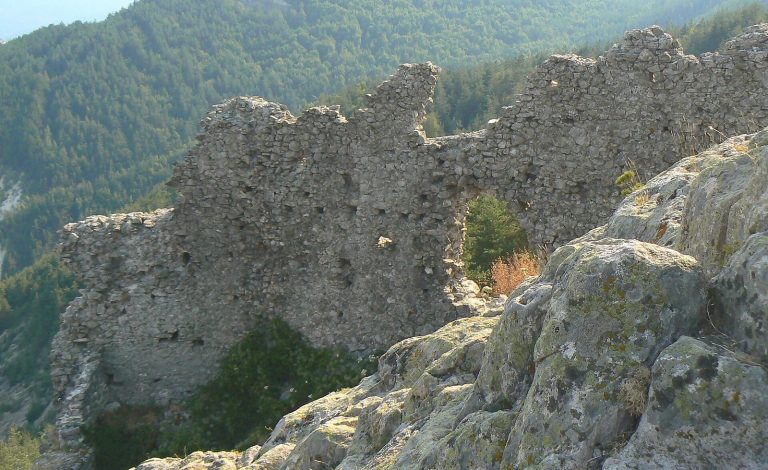
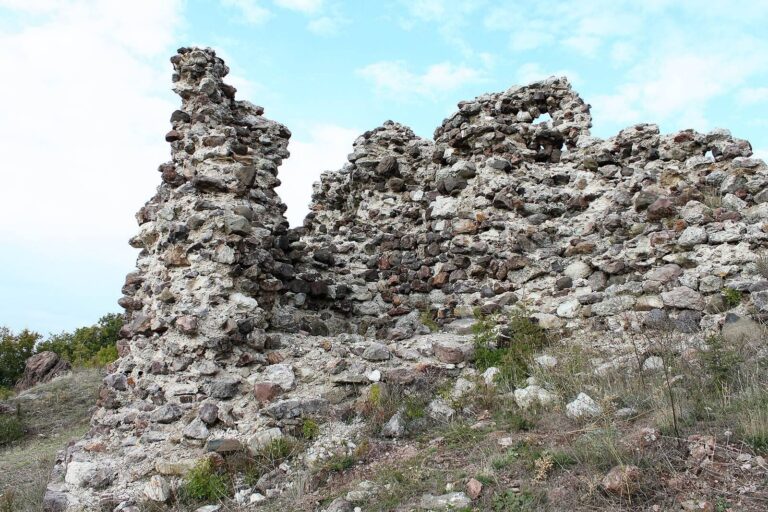
The ancient Thracian fortress covered about 0.5 decares. Its wall followed an irregular circle measuring 67 m across and was built without mortar. The wall has collapsed, and its masonry has slid down the slope. Fragments of Thracian pottery are scattered across the surface.