Church of Saint Gregory of Gagkashen: An Armenian Apostolic Church at Ani
Site at a Glance
- Popularity
- Medium
- Country
- Turkey
- Primary era
- Medieval
- Eras represented
- Medieval
- Civilizations
- Armenian
- Site type
- Religious
- Remains
- Church
On this page9 sections
History
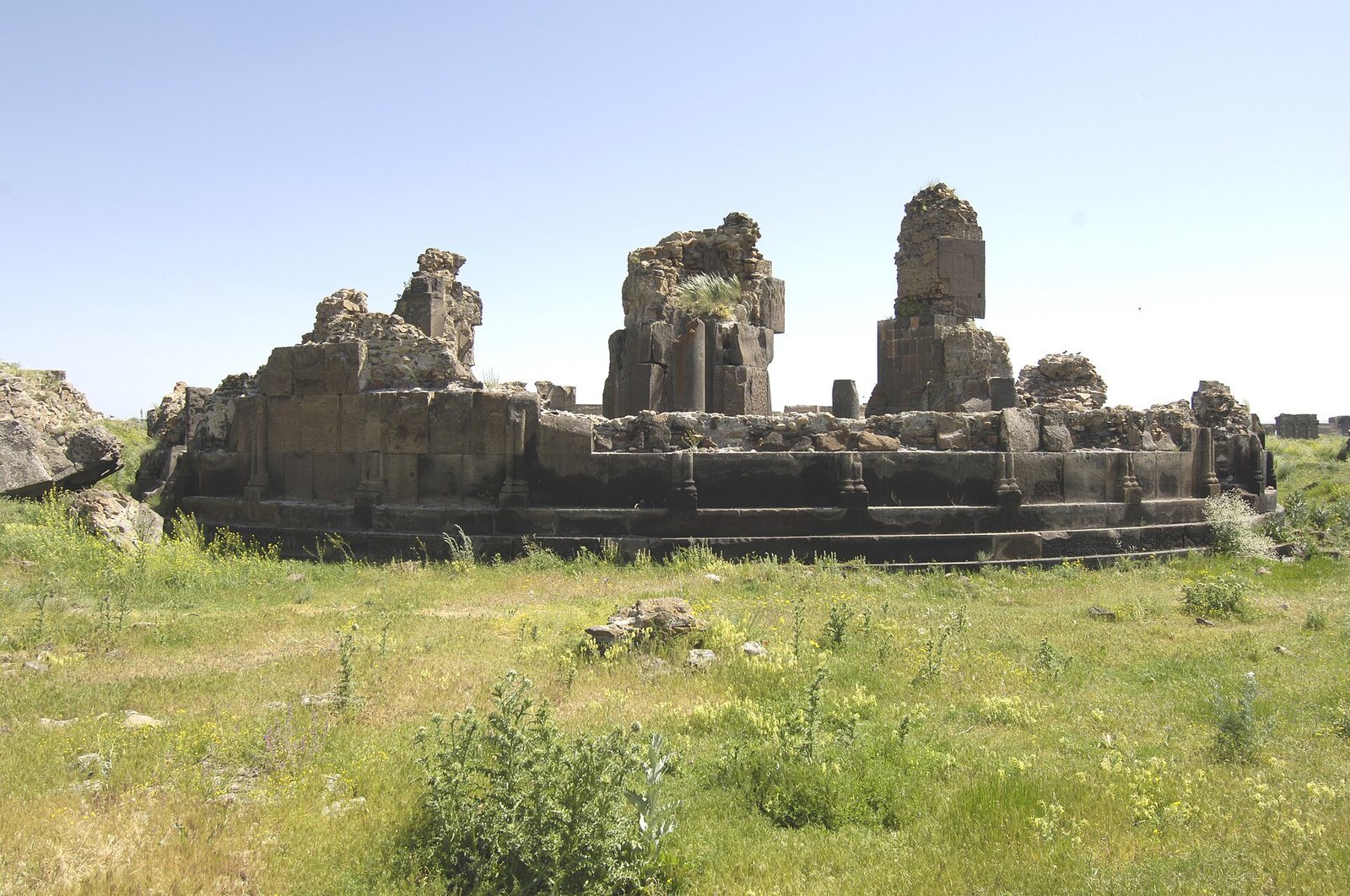
The Church of Saint Gregory the Illuminator, known as Gagkashen, was an Armenian Apostolic church built in the early 11th century at Ani, Turkey. King Gagik I of the Bagratuni dynasty, which ruled a medieval Armenian kingdom, commissioned it after Ani Cathedral was completed. Its architect, Trdat, had also designed the cathedral.
Royal commission and purpose
Gagik dedicated the church to Saint Gregory the Illuminator, whom Armenian tradition regards as the evangelizer of Armenia and a foundational figure in its church. The title “martyr” refers to someone who died for the Christian faith. Gagik envisioned the building as a church for the millennium. The 11th-century Armenian historian Stephanos Asoghik wrote that, near the end of the millennium and during the reign of Byzantine emperor Basil II (976–1025), Gagik ordered a church at Ani to match the size and architecture of Zvartnots Cathedral, a 7th-century Armenian church at Vagharshapat.
Structural damage and collapse
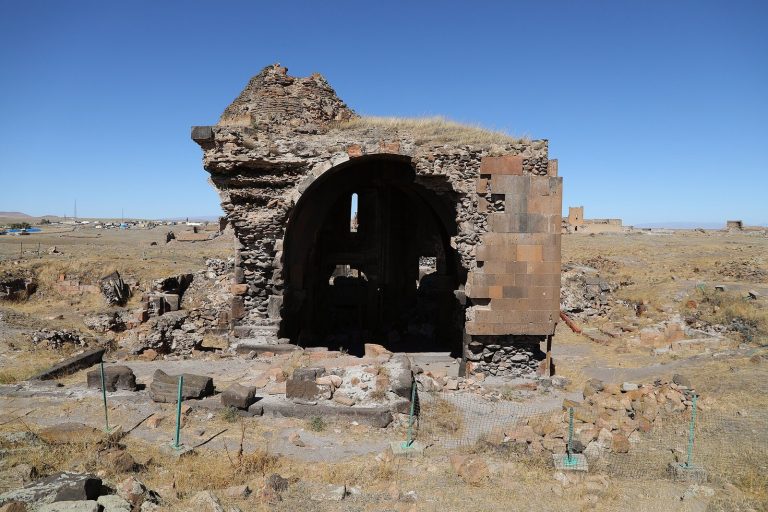
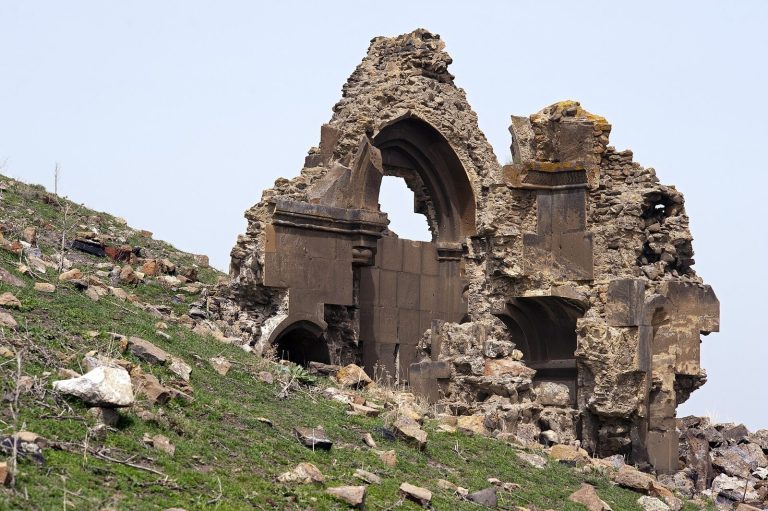
The church suffered serious structural damage in 1013, when cracking threatened its stability. Repairs strengthened the central pair of columns in each apse, the semicircular sanctuary projection, and reinforced other parts of the building. Further repairs did not prevent its collapse by the 13th century. Afterward, people reused its stones to build houses around the ruins, while earth gradually covered the site.
Rediscovery and archaeological study
By the 19th century, just a few wall fragments remained visible. The location had been forgotten, and the ruins were thought to belong to an unidentified Armenian church. A Turkish invasion also damaged the remains. Excavations in 1905–06 revealed the church’s plan and uncovered religious objects; Nikolai Marr led the 1906 excavation. The Armenian architect and architectural historian Toros Toramanyan studied the remains and prepared a reconstruction proposal. The Archaeological Site of Ani, which includes Gagkashen, was inscribed on the UNESCO World Heritage List in 2016.
Remains
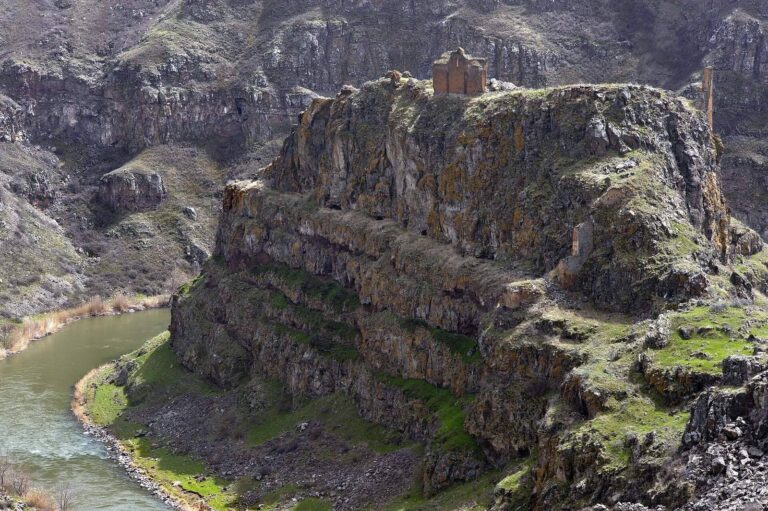
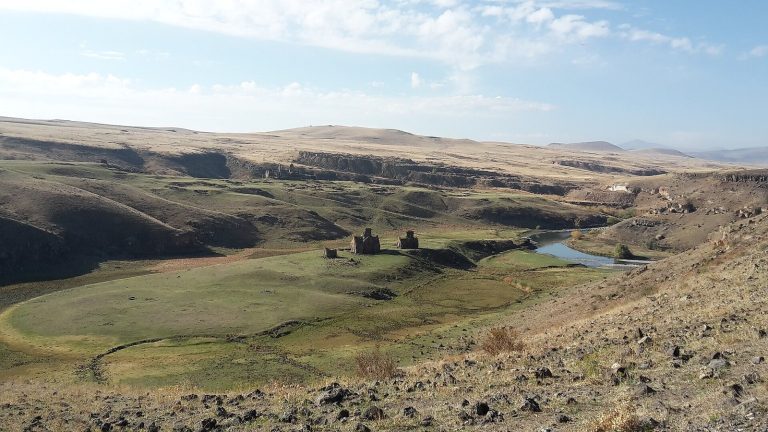
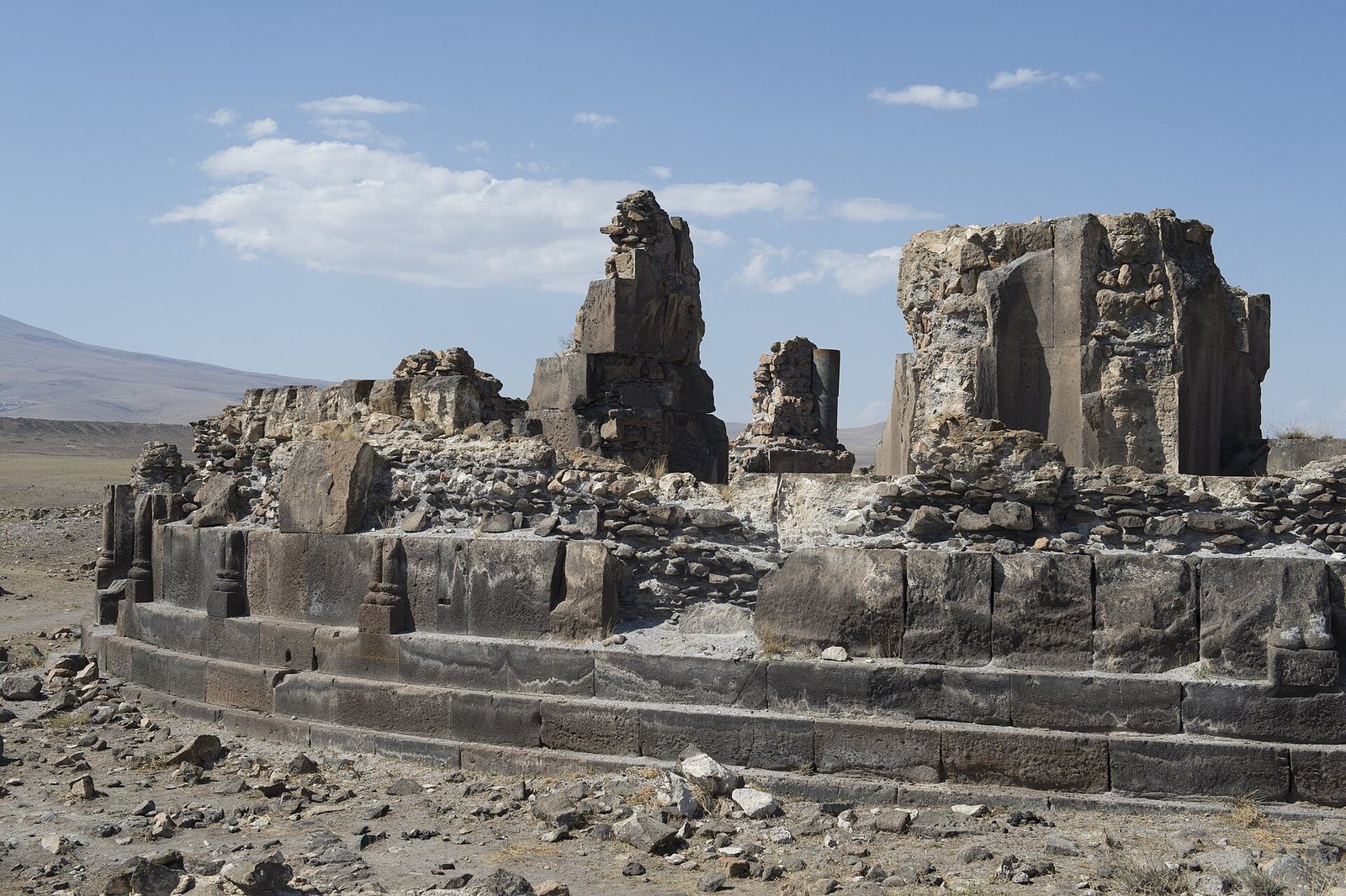
Gagkashen stood in western Ani near the Tsaghkotsadzor gorge. Its excavated foundations reveal a central, cross-form plan, while reconstructions describe a three-storey design modeled on Zvartnots. The church’s precise height remains uncertain, and reconstructions differ over the form of its second storey.
Plan and reconstructed elevation
Central plan
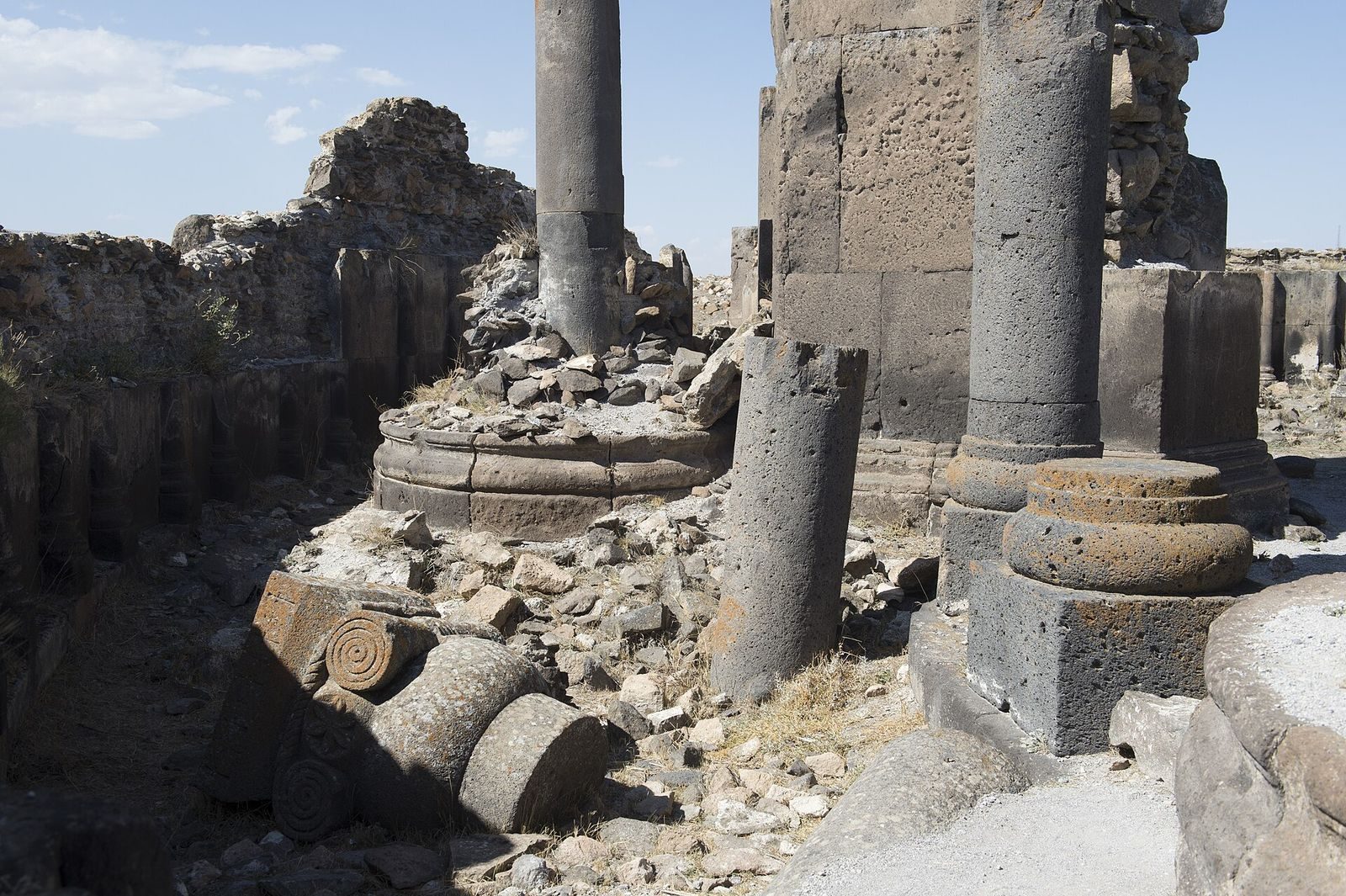
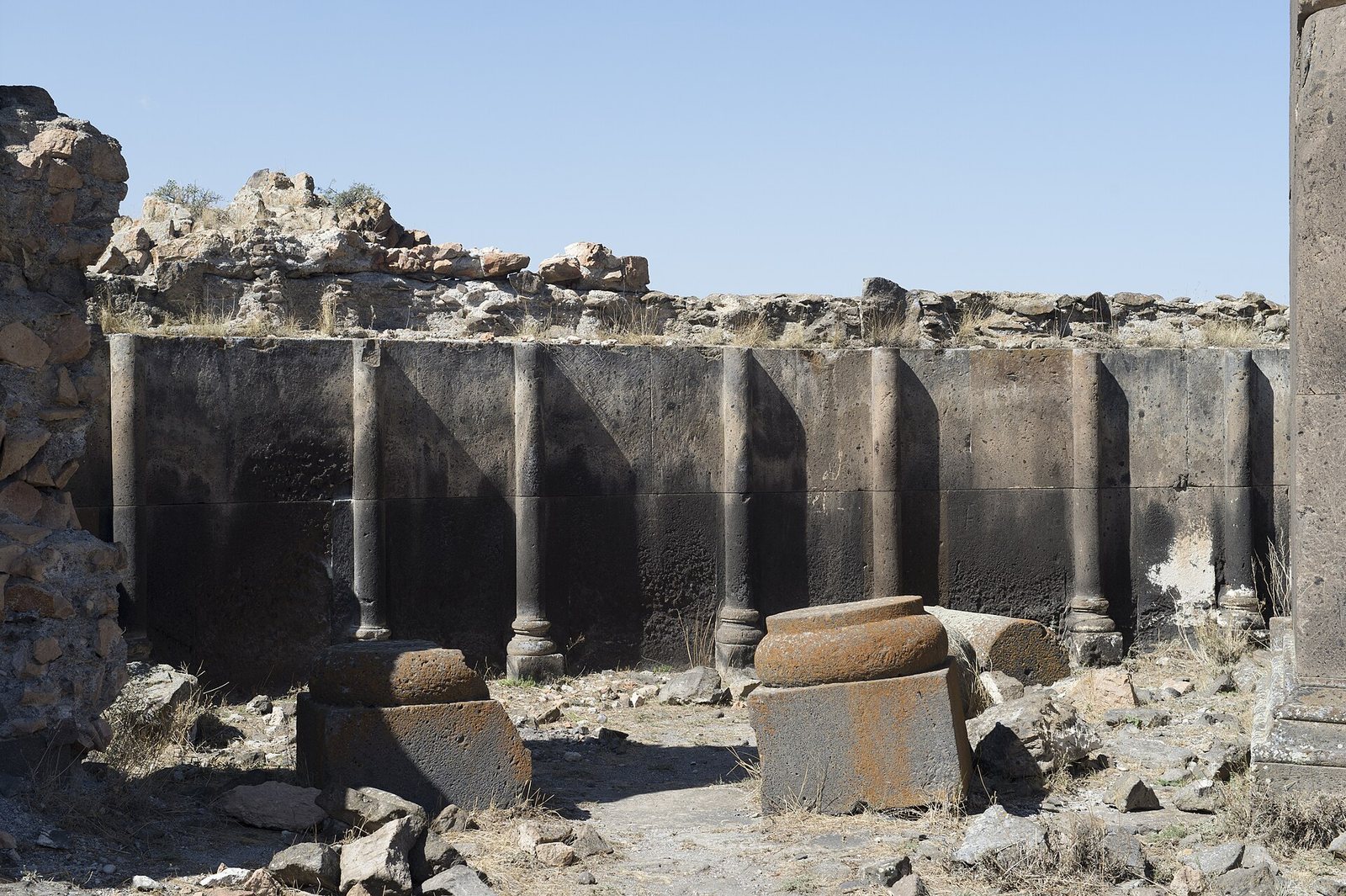
Four semicircular sanctuary projections formed a cross-shaped arrangement around the center, with a passage encircling them. Four substantial supports stood between the columned projections. Four structural divisions continued through the storeys and carried the central dome. Trdat adapted the Zvartnots design by widening the square beneath the dome and replacing thick supports with slender columns.
Upper structure and exterior
The planned building rose through three cylindrical tiers that decreased in diameter upward and had polygonal outer faces. Reconstructions differ on whether the second storey formed a complete circle or four semicircular sections. Toramanyan’s model used a full circle, a form described as visually ideal but structurally uncertain. Trdat increased the number of exterior faces from 32 to 36 and simplified the architectural details. Decorative rows of arches ran along the outer walls of all three levels, supported by paired columns projecting partly from the walls.
The design included 36 windows, 36 interior arches, and three doors. Sculptures adorned the cornices above the doors. The high dome may have been intended to evoke the sky.
Statue and excavated objects
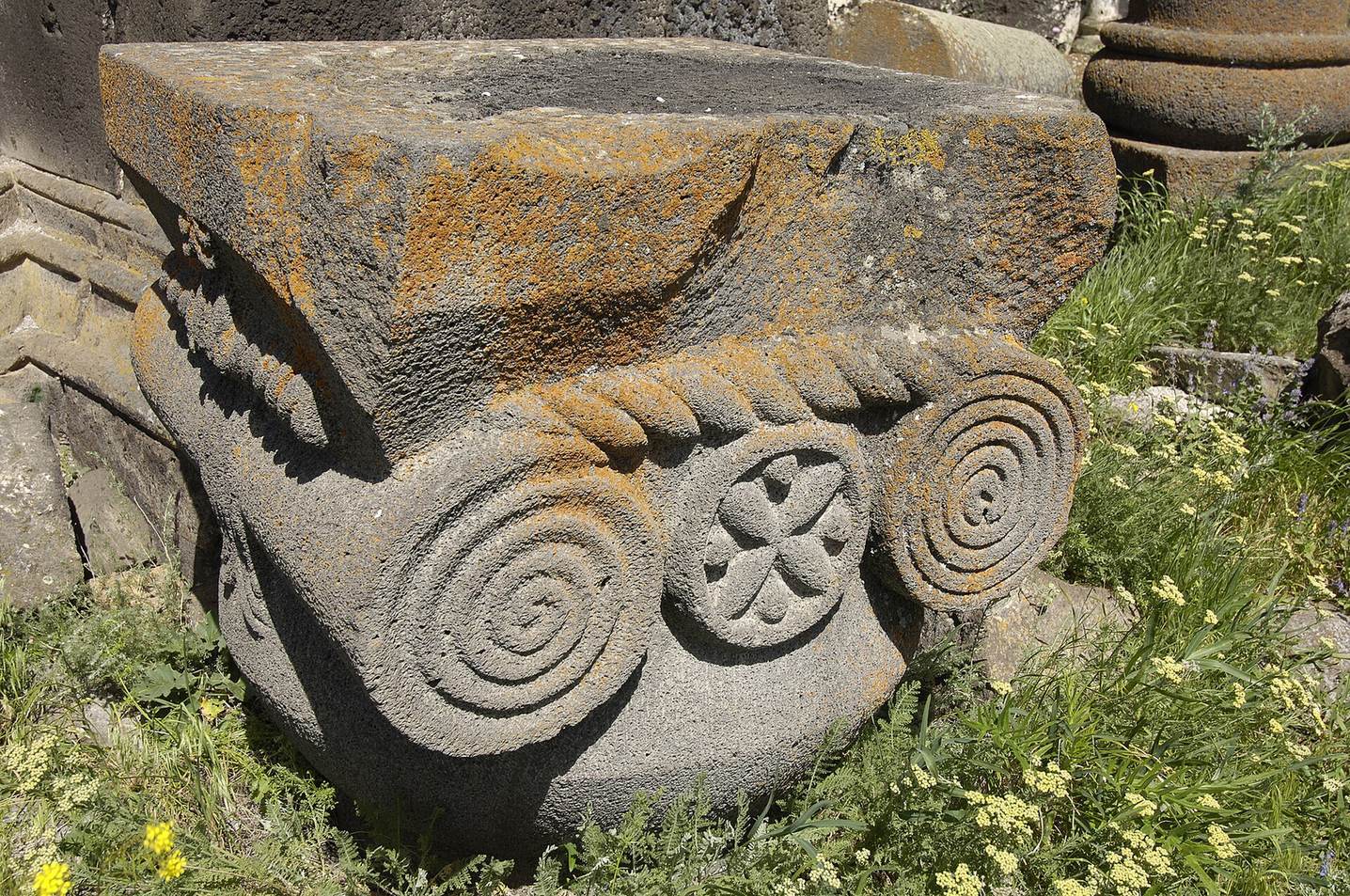
A stone statue found during excavation depicts Gagik holding a model of the church. The upper part of the model is damaged. Excavations also yielded numerous objects used for religious purposes.