Temple of Baalshamin: A Sanctuary in Ancient Palmyra
Site at a Glance
- Popularity
- High
- Country
- Syria
- Primary era
- Classical
- Eras represented
- Classical
- Civilizations
- Roman, Seleucid
- Site type
- Religious
- Remains
- Temple
On this page11 sections
History
The Temple of Baalshamin was a sanctuary in ancient Palmyra, in present-day Syria. Its earliest building phase dates to the late second century BCE, and the complex later brought together ancient Syrian and Roman architectural traditions. Dedicated to Baalshamin, a deity associated with the sky, it underwent successive changes under Roman rule and became one of Palmyra’s most complete ancient buildings before its destruction.
Palmyra under Roman rule
The temple’s development took place as Roman power expanded through Syria. Pompey’s victories over Mithridates VI in 64–63 BCE ended the rule of the Seleucid dynasty, and Syria became a Roman province in 64 BCE. Tadmor was incorporated into the province under the emperor Tiberius, and its name was Romanized as Palmyra, meaning “Oasis of palm trees.” Roman provincial rule in Syria continued until 211 CE.
Over the centuries, the sanctuary was altered and enlarged. A major phase of expansion and decoration took place under the emperor Hadrian around 130–131 CE, with substantial rebuilding in 131.
Worship and civic patronage
Palmyrians worshipped Baalshamin by 23 CE, and devotion to the deity developed under the influence of the Bene Maazin, a tribe probably of Arab origin. Baalshamin’s identity had been linked with different divine traditions; under King Hadad I, he came to be understood as a sky god. His name was often shortened to Baal. Baalshamin and Bel were Palmyra’s principal pre-Islamic deities and were also associated with Yarhibol and Aglibol.
An inscription commemorates Hadrian’s visit to Palmyra around 129 CE and the benefactions of Male Agrippa, a Palmyrene official serving for a second time as secretary. Agrippa supplied oil for citizens, troops and visitors, and took care of their encampment. He also paid for the temple, its vestibule and its decoration. The Palmyrene Senate and people honored him, while the dedication named Baal Shamin and Durahlun.
Christian use and archaeological study
The temple was probably closed during a late Roman campaign against pagan worship led by Maternus Cynegius, the senior official governing the eastern praetorian prefecture, between 25 May 385 and 19 March 388. As Christianity spread in the region during the fifth century, the building was converted into a church.
James Dawkins and Robert Wood travelled to Syria in 1751 to investigate Palmyra’s ruins. Excavations in 1753 uncovered remains, and Wood made engravings of the monuments and the site. A further excavation series in 1756 established the temple’s location and architectural classification. The French photographer and naval officer Louis Vignes took the first photographs of the temple in 1864.
In 1953, UNESCO, the United Nations agency for education, science and culture, assigned Swiss archaeologist Paul Collart to inventory cultural property in Syria and Lebanon. Collart organized a major Swiss archaeological project at Palmyra in 1954–1956, with particular attention to the temple. Restoration continued until 1966, when several portico columns were reassembled from their original stone elements. Before its destruction, the temple was considered one of Palmyra’s most complete ancient buildings. It formed part of the Palmyra World Heritage Site, designated in 1980 and listed as endangered from 2013 to 2015.
War and destruction
Bombing during the Syrian Civil War damaged parts of the temple in 2013. The Islamic State captured Palmyra in May 2015, saying it would not demolish the World Heritage Site’s buildings while threatening objects it considered pagan. On 23 August 2015, or possibly earlier in July, militants detonated explosives inside the temple, destroying it. UNESCO described the deliberate destruction as a war crime, and a French Pléiades satellite verified the resulting ruins.
After the Syrian Army retook Palmyra in March 2016, the director of antiquities announced plans to rebuild the temple, the Temple of Bel and the Monumental Arch using surviving remains. From 2017, a project led by the University of Lausanne’s Institute of Archaeology and Ancient Sciences catalogued site archives and digitized Collart’s archive. In collaboration with Iconem, the project also produced three-dimensional models and combined them with archival images.
Remains
Precinct and architectural features
Setting and overall plan
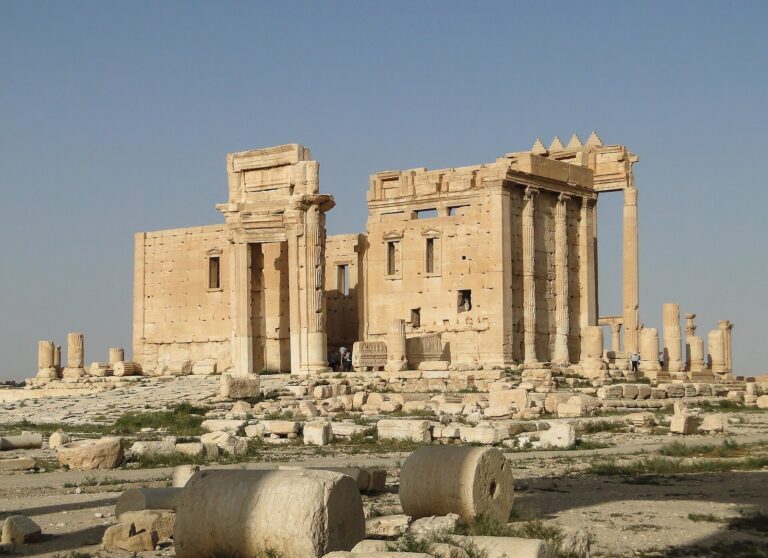
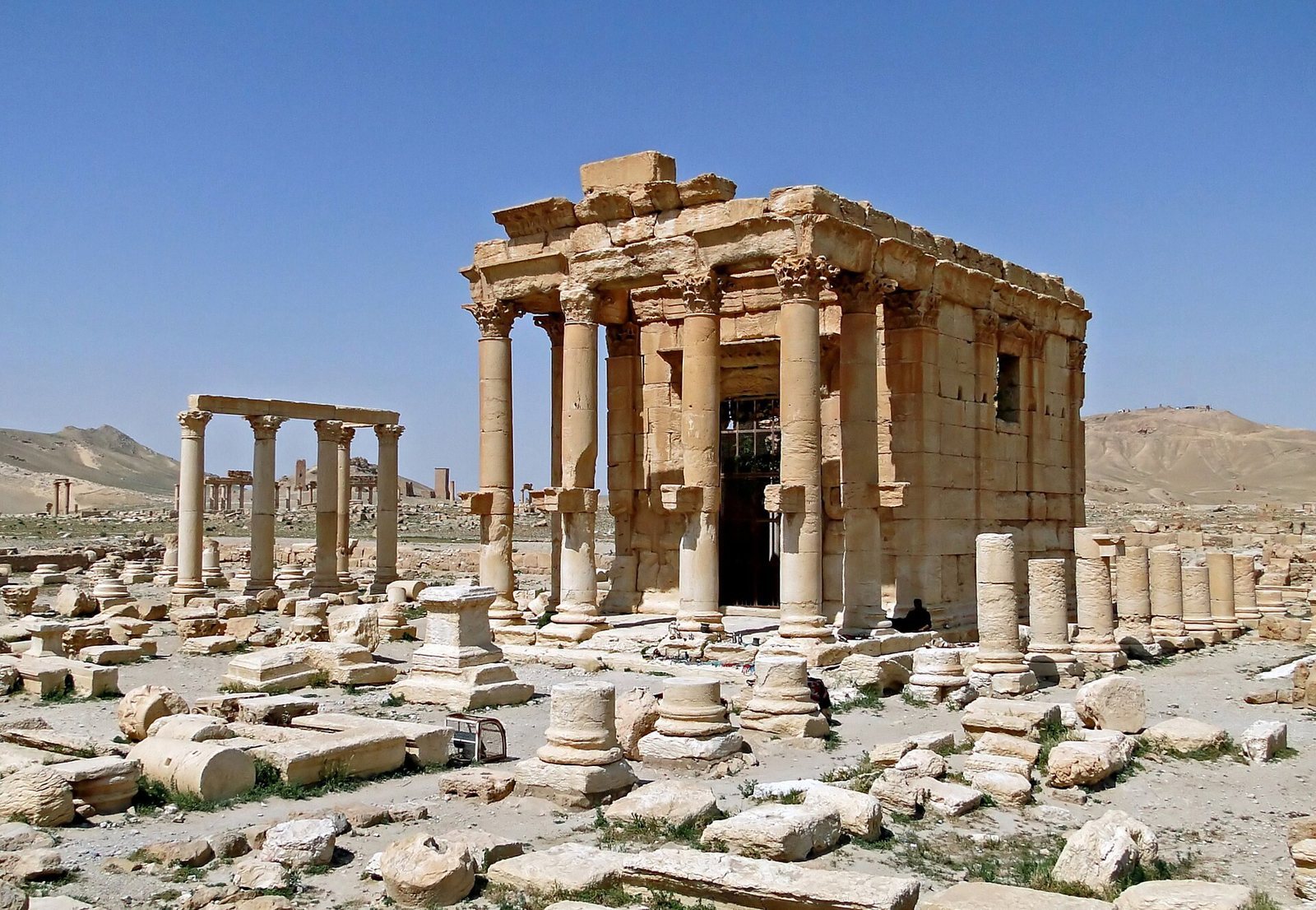
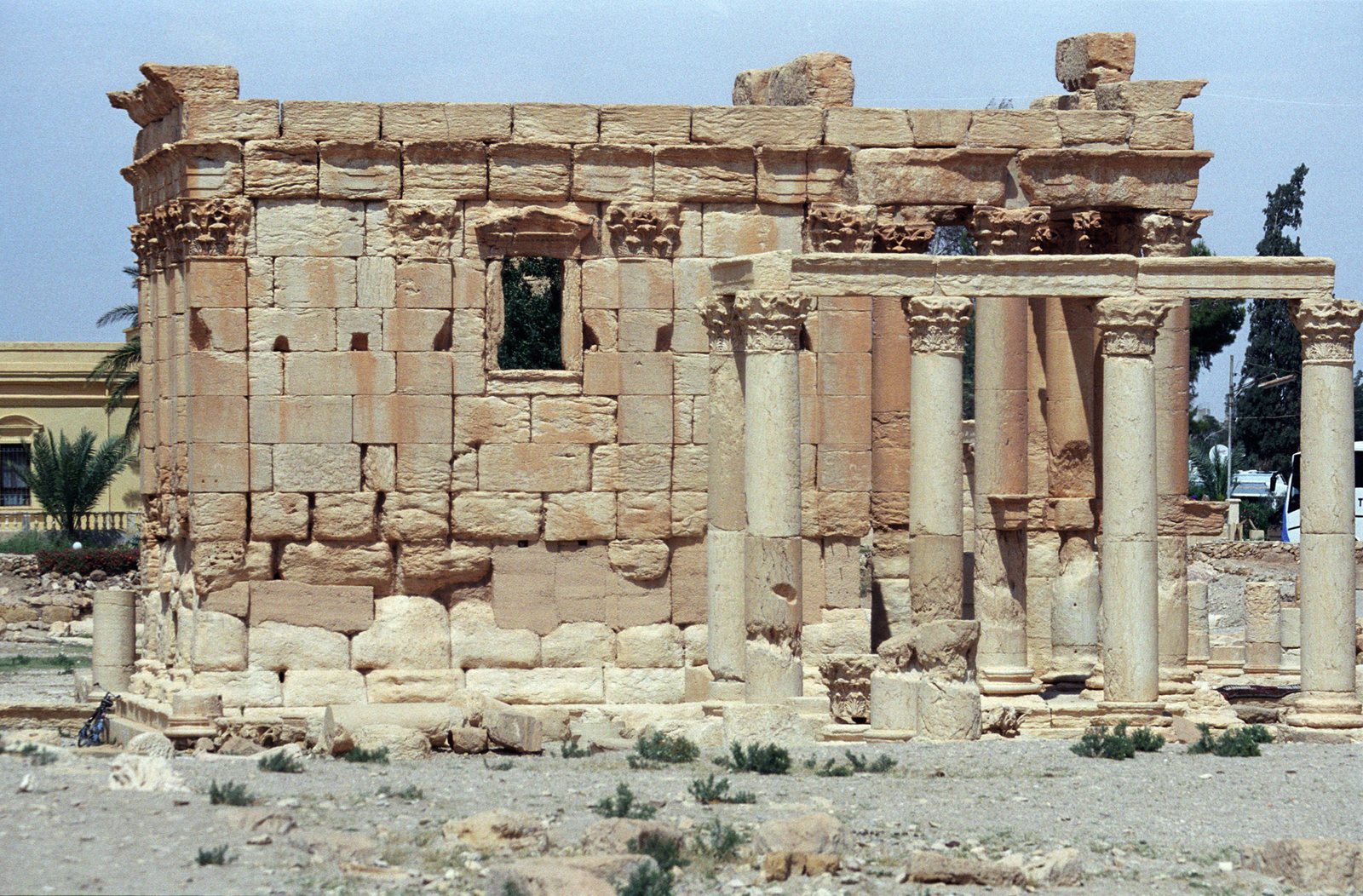
The temple stood in the eastern part of ancient Palmyra, about 500 metres northwest of the Temple of Bel. The wider archaeological area lies southwest of modern Tadmor, east of the Valley of the Tombs and southeast of the North Necropolis. Built of stone, the temple covered a stated area of 3,600 square metres and formed part of a precinct with three courtyards.
Portico and courtyard colonnade
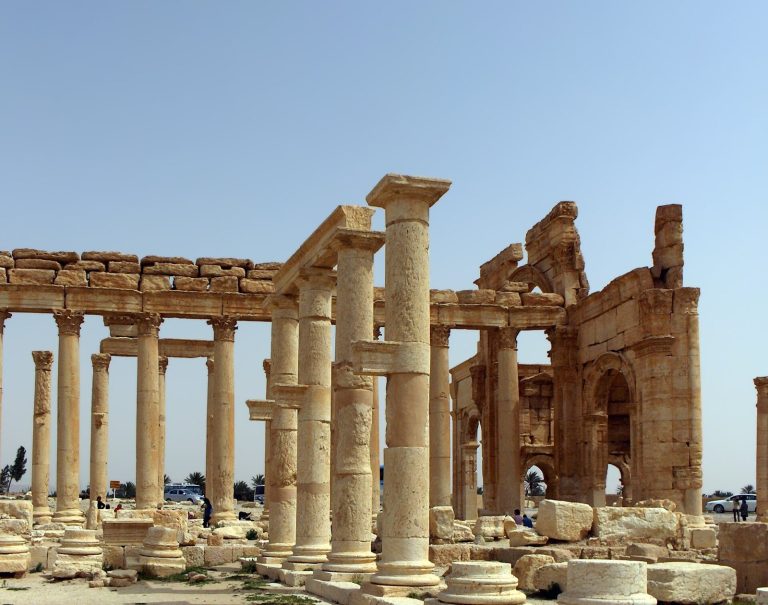
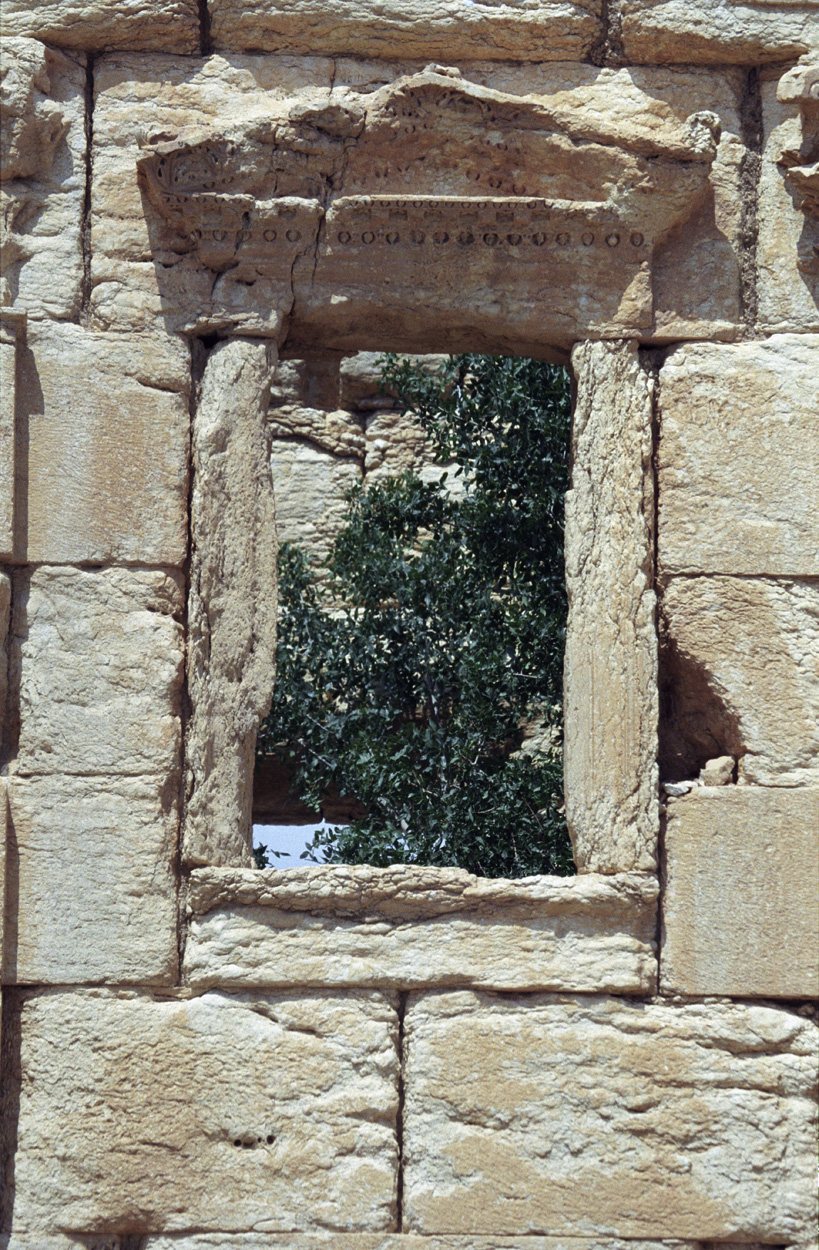
A front portico of six columns marked the entrance. Its colonnade was erected in 17 CE, while a colonnade around the great courtyard was built around 67 CE. The proportions and capitals drew on Roman models. The leafy capitals followed the Corinthian style, a classical form known for foliage decoration, with details influenced by Egyptian design. Ornament above the columns and the side windows reflected Syrian traditions. The courtyard colonnade also followed a tradition associated with Rhodes.
Sanctuary and chapels
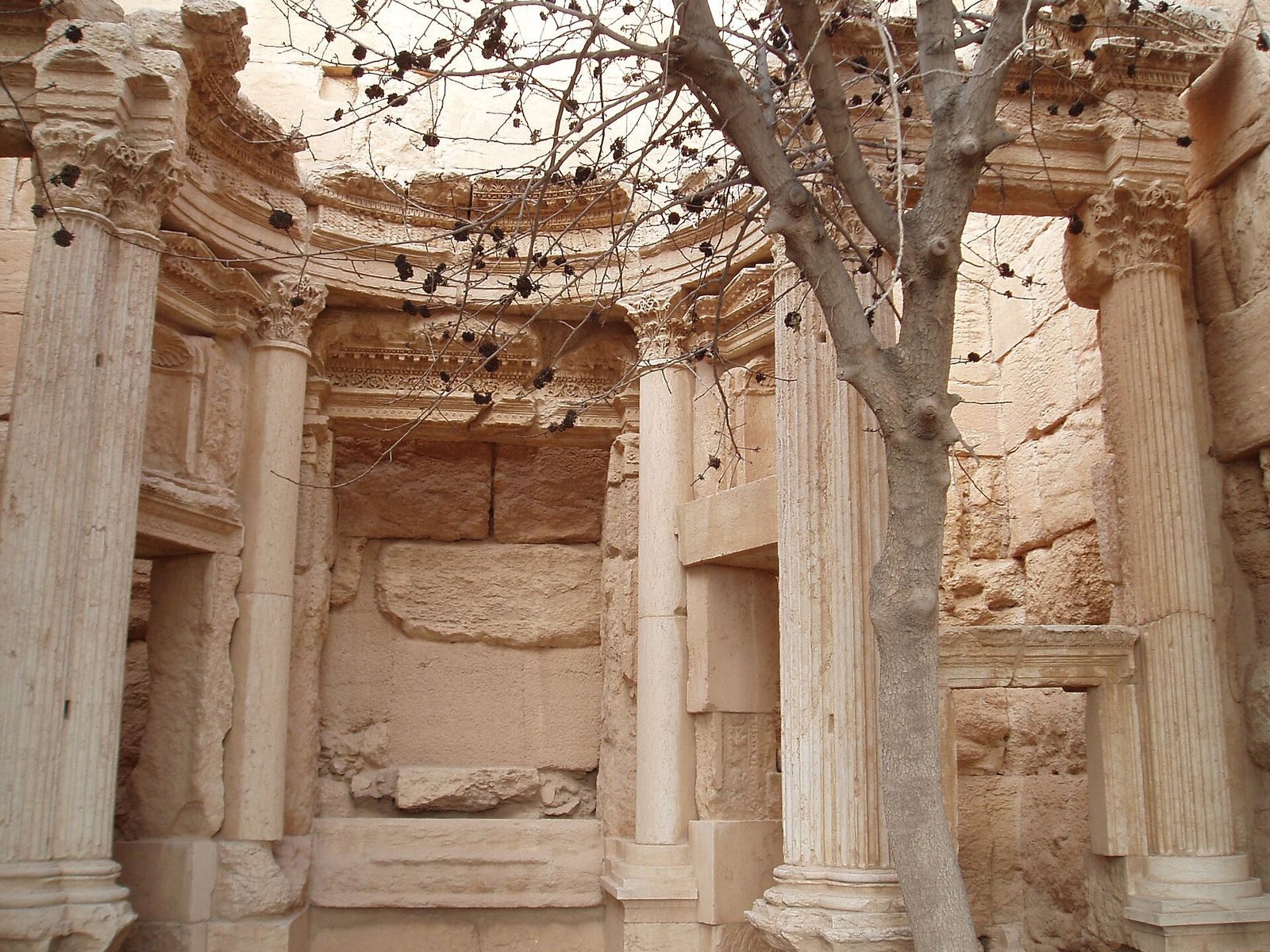
The sanctuary’s exterior had a classical Greco-Roman appearance, while its interior used Near Eastern architectural and decorative forms. Three lines of columns ran along the sides and rear, surrounding the sanctuary. Inside, wall projections shaped like shallow columns framed a central hall, with subsidiary chapels opening from it. The chapels carried Near Eastern-style motifs and carved images of Baalshamin and Bel. The altar was built in 115 CE, and the sanctuary was enlarged and embellished under Hadrian around 130–131, followed by substantial rebuilding in 131.
Inscription and surviving fabric
An inscription in Greek and Palmyrene was carved on a bracket supporting a bust of Male Agrippa. The text recorded his benefaction and the temple’s dedication, naming Baal Shamin and Durahlun. The temple now survives as ruins. At the southeastern corner of its wall, two openings made during looting provided access to furniture in the adjacent guesthouse.