Roman Theatre at Palmyra: A Roman Performance Venue in Syria
Site at a Glance
- Rating
- 4.2
- Popularity
- Very Low
- Country
- Syria
- Primary era
- Classical
- Eras represented
- Classical
- Civilizations
- Roman
- Site type
- Entertainment
- Remains
- Theatre
On this page6 sections
History
The Roman Theatre at Palmyra is a second-century Roman theatre in ancient Palmyra, Syria, built probably during the Severan period, the era of the Roman Severan dynasty in the late second and early third centuries AD. The building remained unfinished, but it formed part of Palmyra’s archaeological landscape and later became a setting for public performances.
Construction and later use
Construction took place during the second century AD, probably under the Severan dynasty. The theatre was later incorporated into Palmyra’s annual festival, where it hosted folk-music performances. In the 1950s, accumulated sand was cleared from the building, which was subsequently restored.
The theatre forms part of the wider archaeological site of Palmyra, which UNESCO, the United Nations Educational, Scientific and Cultural Organization, inscribed on the World Heritage List in 1980 under criteria recognizing outstanding cultural value, cultural exchange, and an important architectural ensemble. The site has been listed as endangered since 2013.
Wartime destruction and restoration
ISIL, an armed extremist organization that controlled territory in Iraq and Syria during the 2010s, occupied Palmyra by May 2015. That month, 25 adult male captives were executed on the theatre’s stage, and a video of the killings was released in early July.
Syrian government forces recaptured Palmyra in March 2016 with Russian air support. On 5 May, two classical-music concerts were held in the theatre to commemorate victims of the Syrian Civil War, including those executed there, and to mark the recapture. The first was a 20-minute performance by the Mariinsky Theatre Orchestra of Saint Petersburg, conducted by Valery Gergiev, with Sergei Roldugin as soloist. It was dedicated to Alexander Prokhorenko, a Russian special-forces soldier killed near Palmyra while directing air strikes against ISIL. A Syrian orchestra and choir performed a second concert that evening.
ISIL reoccupied Palmyra in December 2016. The theatre was then partially destroyed, with severe damage to the proscenium, the architectural zone immediately in front of the stage, and the reported complete destruction of the facade. Satellite imagery indicated deliberate destruction, while drone footage showed the building in a partially ruined condition. UNESCO Director-General Irina Bokova characterized the destruction as a war crime. Syrian government forces retook Palmyra in early March 2017.
On 23 July 2023, the Syrian Directorate-General of Antiquities and Museums and the Institute for the History of Material Culture of the Russian Academy of Sciences agreed to begin comprehensive restoration. The work was completed before the end of 2023.
Remains
Layout and seating
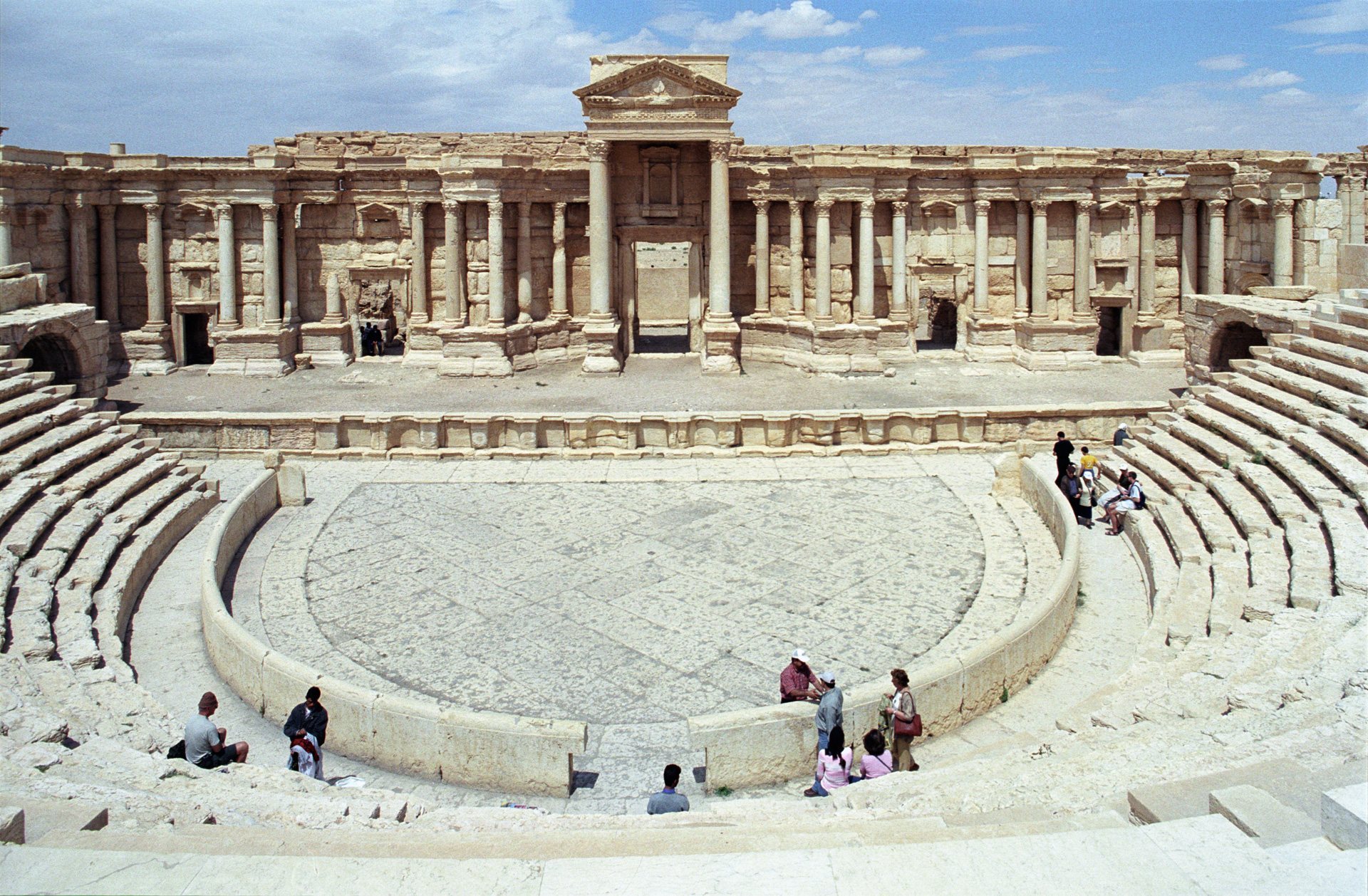
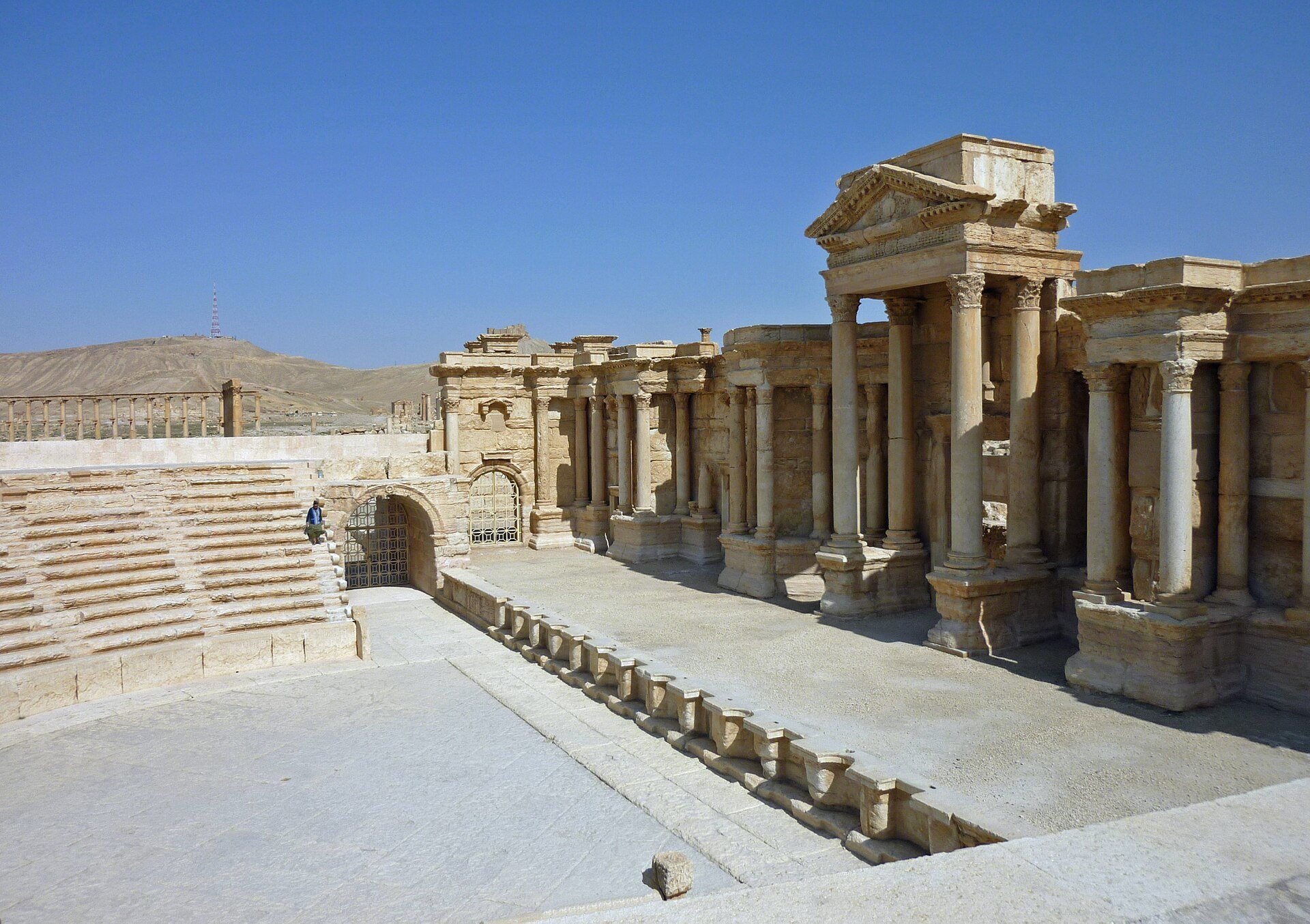
The theatre occupies approximately 0.36 hectares in ancient Palmyra, in the Syrian Desert. It stands at the centre of a semicircular, colonnaded piazza measuring 82 by 104 metres. The piazza opened toward Palmyra’s South Gate and lay southwest of the city’s main colonnaded street.
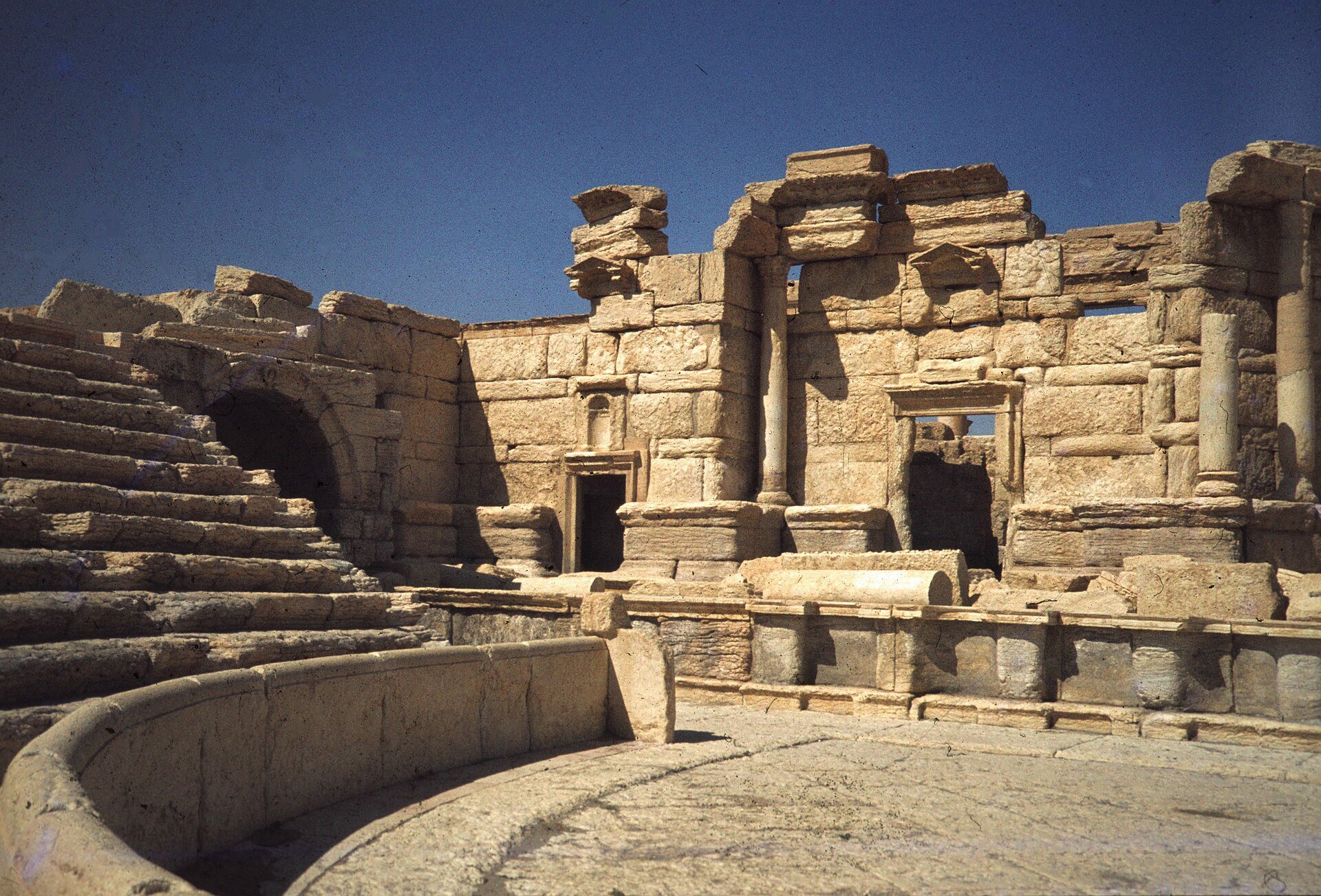
The unfinished cavea, or auditorium, measures 92 metres in diameter. Only the ima cavea, the lowest seating zone surrounding the orchestra, was completed. It is divided into eleven wedge-shaped sections called cunei, each containing twelve rows, and faces north-northeast toward the cardo maximus, the principal north-south street of a Roman town.
Two principal entrance passages, known as aditus maximi, are each 3.5 metres wide. They lead to a stone-paved orchestra, the central area before the stage, which measures 23.5 metres in diameter and is enclosed by a circular wall 20.3 metres across.
Stage architecture
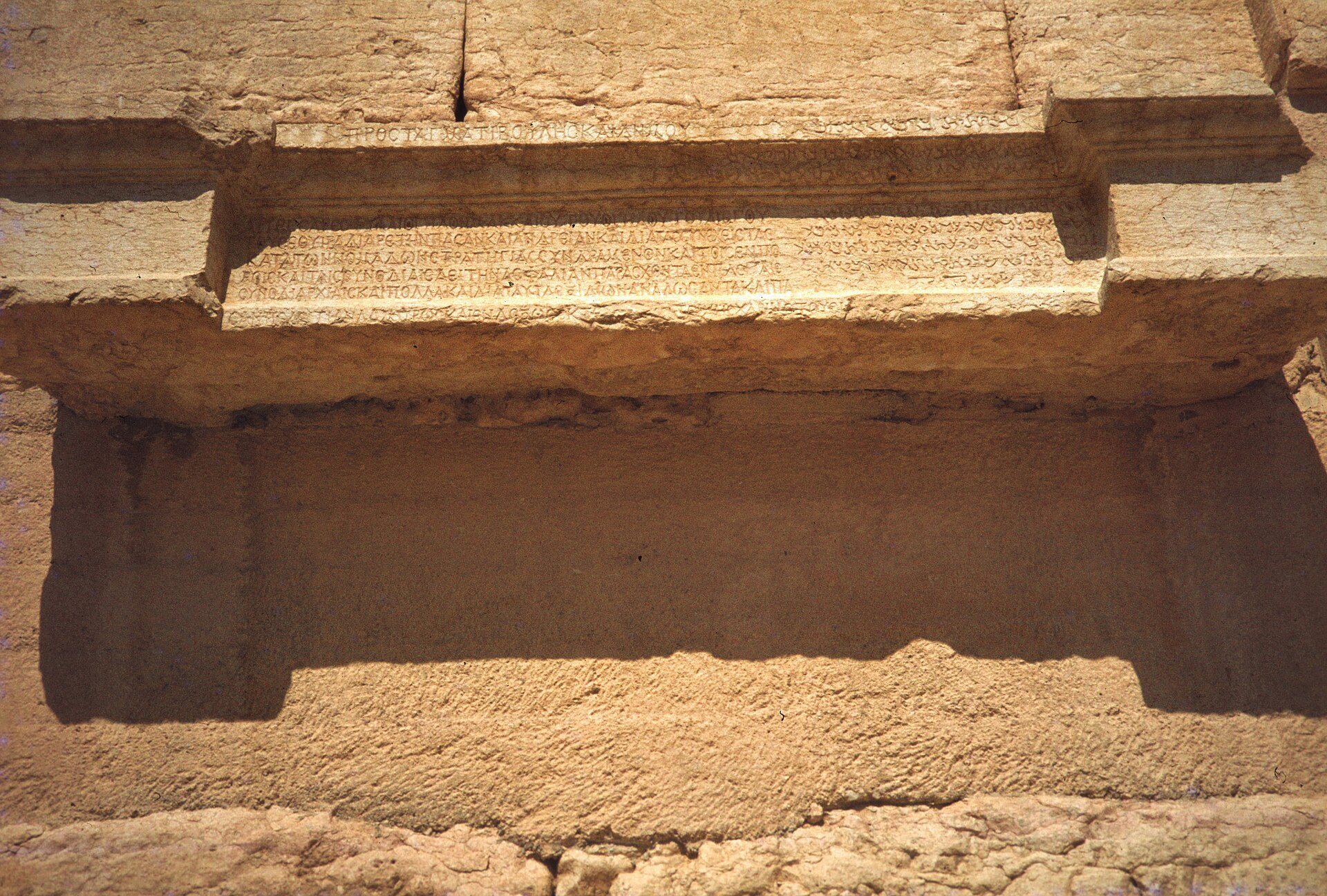
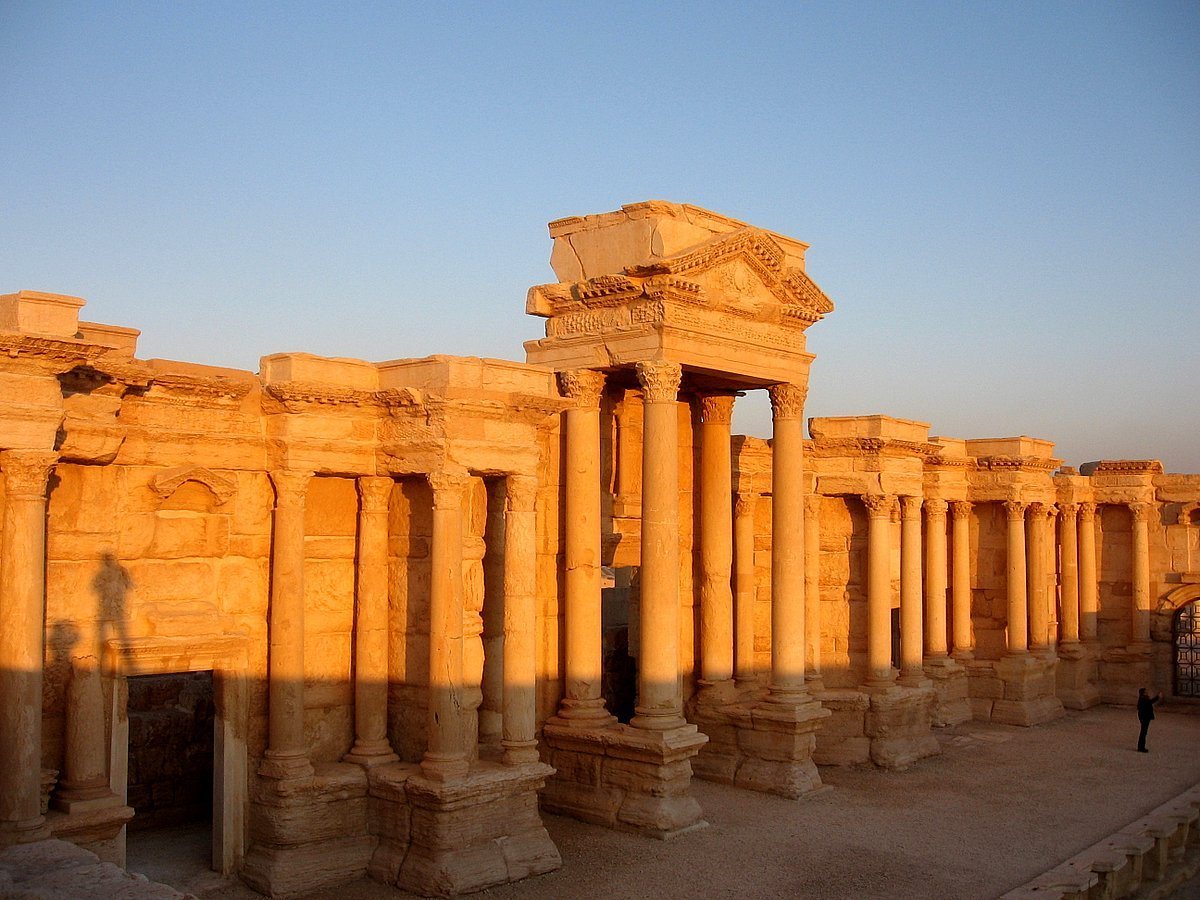
The stage measures 45.5 by 10.5 metres and is reached by two staircases. Its proscenium wall contains ten curved niches and nine rectangular niches arranged alternately. The scaenae frons, or articulated stage facade, had five doors: a central valva regia within a broad curved niche, two side valvae hospitales in shallow rectangular niches, and two additional doors at the ends of the stage.
The niche of the central door is associated with a statue of Nero, the Roman emperor who ruled from AD 54 to 68 and was known to have placed the statue there. Columns on the stage use the Corinthian order, whose capitals are decorated with acanthus leaves. The theatre was built from ashlar, masonry formed from regularly cut and dressed stone blocks.
Drone footage after the 2016 recapture showed the theatre largely intact before the later destruction during ISIL’s second occupation. The proscenium and facade subsequently sustained major damage, followed by the comprehensive restoration completed in 2023.