Ashraf Hall: A Safavid Palace Hall in Iran
Site at a Glance
- Popularity
- Medium
- Country
- Iran
- Primary era
- Early Modern
- Eras represented
- Early Modern
- Civilizations
- Safavid
- Site type
- Domestic
- Remains
- Palace
On this page5 sections
History
Ashraf Hall is a Safavid palace hall in Iran, built during Shah Abbas II’s reign and completed under his successor, Shah Suleiman. It served as a royal residence and formed part of the palace complex in the Safavid government quarter. The name has led to an association with Ashraf Afghan, an early-eighteenth-century ruler, but the hall’s construction belongs to Abbas II’s reign.
Safavid royal residence
During the Safavid period, Ashraf Hall was part of the royal harem, the private residential quarters of the ruler’s family and women of the court. Visitors from abroad during and after this period praised the hall as precious, imposing, and beautiful.
Qajar and wartime uses
Under the Qajars, the building became the residence of Isfahan’s military commander. It was later used to store fodder and to house Russian soldiers. In the early years of the First World War (1914–1918), military units used the hall as a store, and it subsequently served as a venue for a military band. During this period, plasterwork and painted decoration were covered with plaster. Repairs in the late Qajar period helped save the building from ruin, after which it was assigned to the education department.
Restoration and government use
After the buildings on either side were demolished, the Archaeological Department restored the hall to prevent further deterioration. Later work uncovered paintings beneath the plaster and restored them, with skilled Isfahani craftsmen and painters carrying out the repairs. The building subsequently housed offices for public health and civil registration, education, culture and arts, and education and training. It later became the provincial governorate’s ceremonial office and continues to be used by the Isfahan Governorate for ceremonies. Ashraf Hall is registered as an Iranian National Monument, number 106. It may also have suffered damage in attacks by the United States and Israel on the historic Safavid government quarter.
Remains
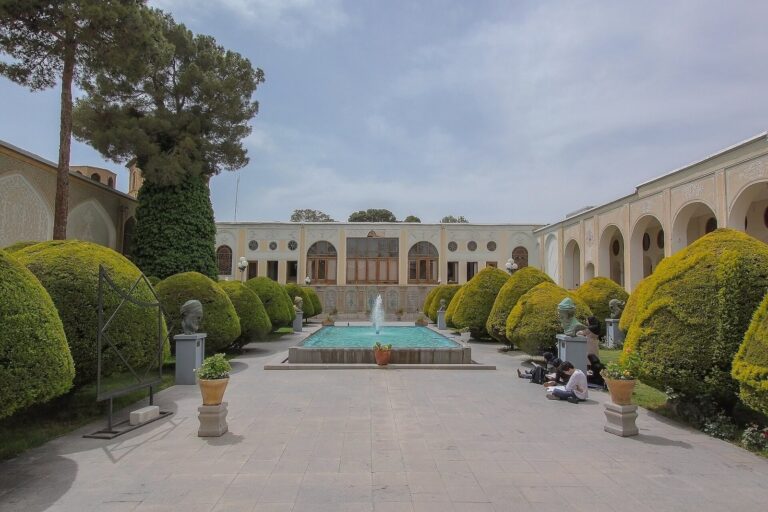
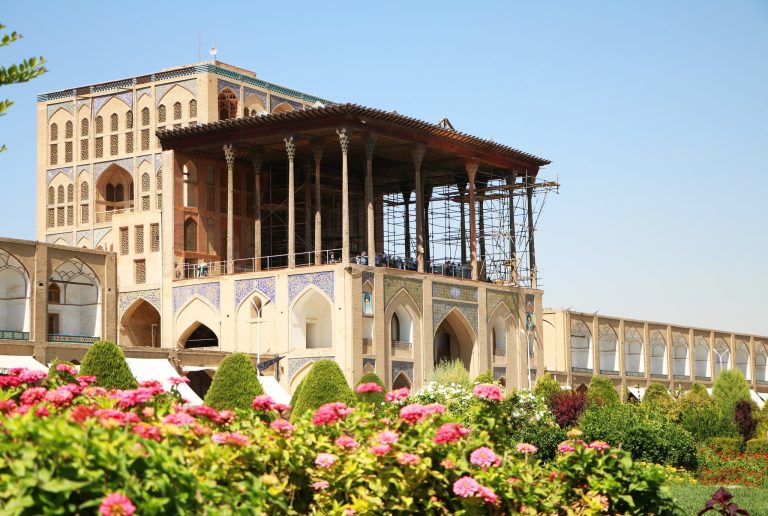
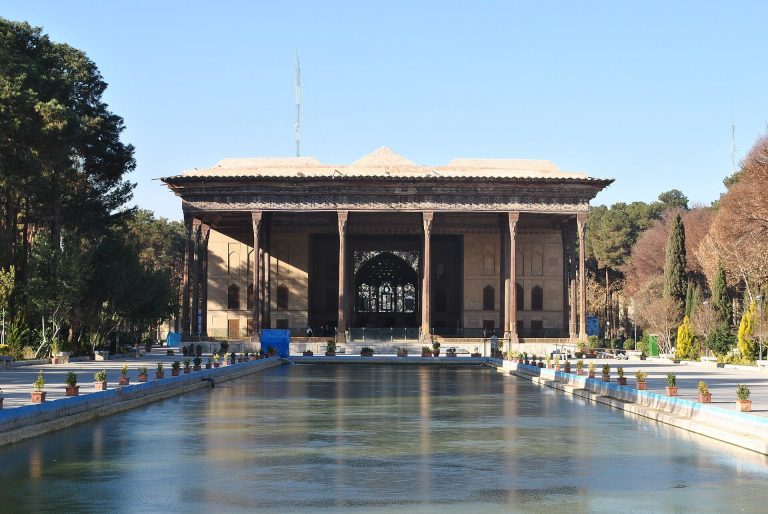
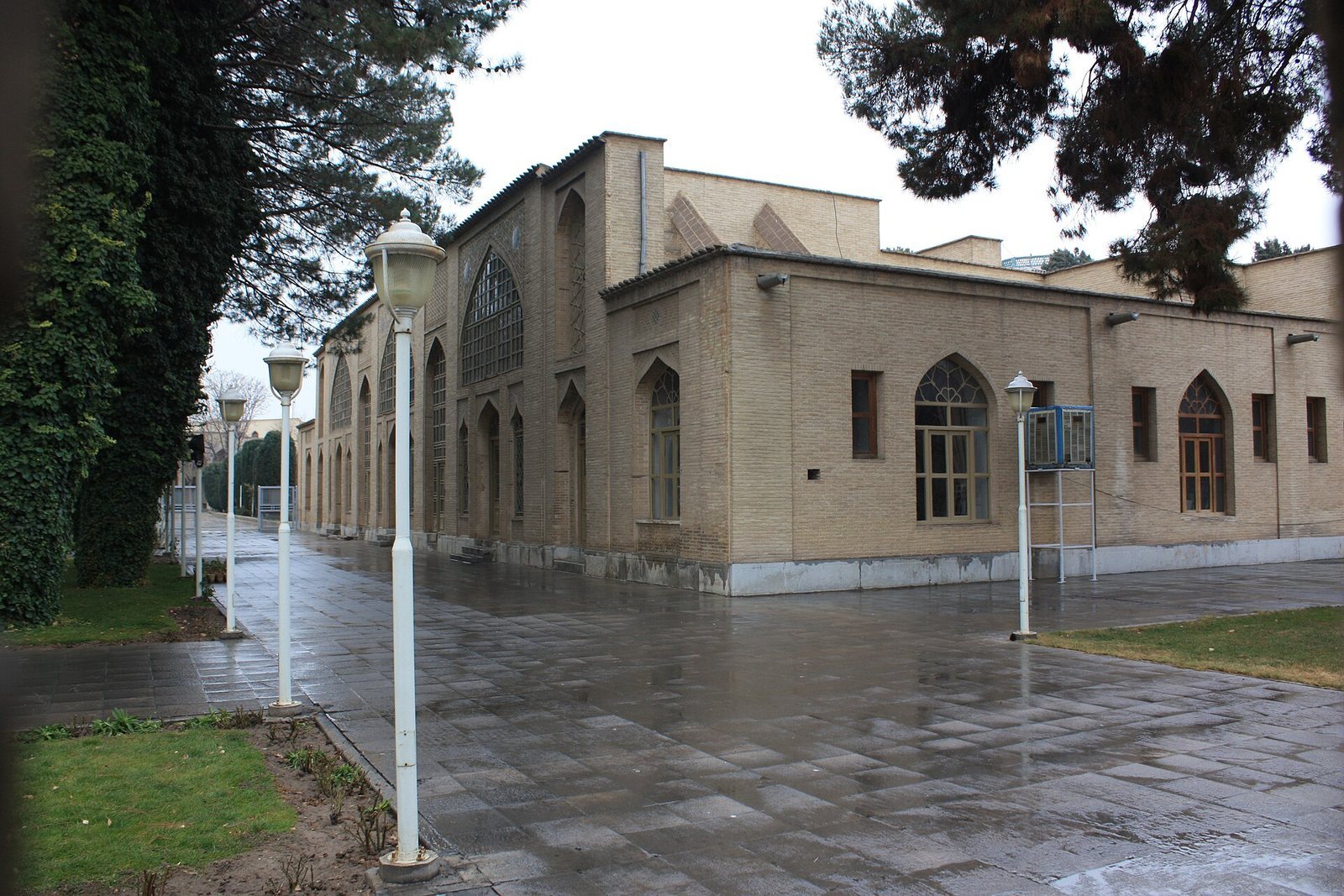
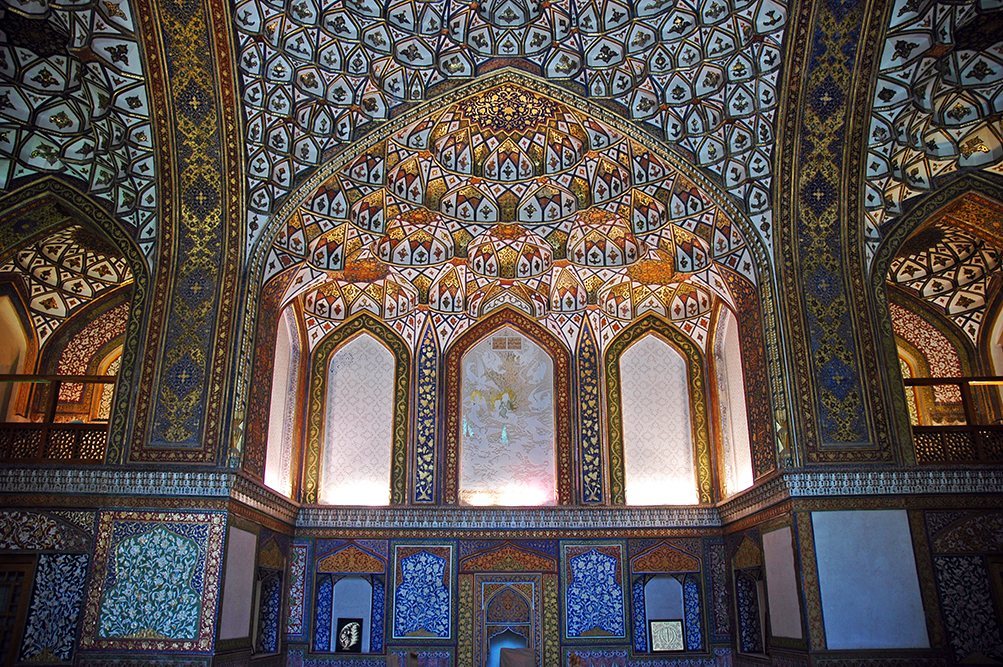
Ashraf Hall is a surviving part of a larger Safavid palace group. It stands west of Governorate Street, within the Isfahan Governorate garden. The group included the Covered Hall, Hasht Behesht Palace, the Palace Behind the Kitchen, Rakib Khaneh, and Timurid Hall; Chehel Sotoun and Tohid Khaneh were also nearby. The hall is timber-built, with a flat roof supported by tall, thick, gilded pillars. Its plan centers on a large hall, with rooms on either side.
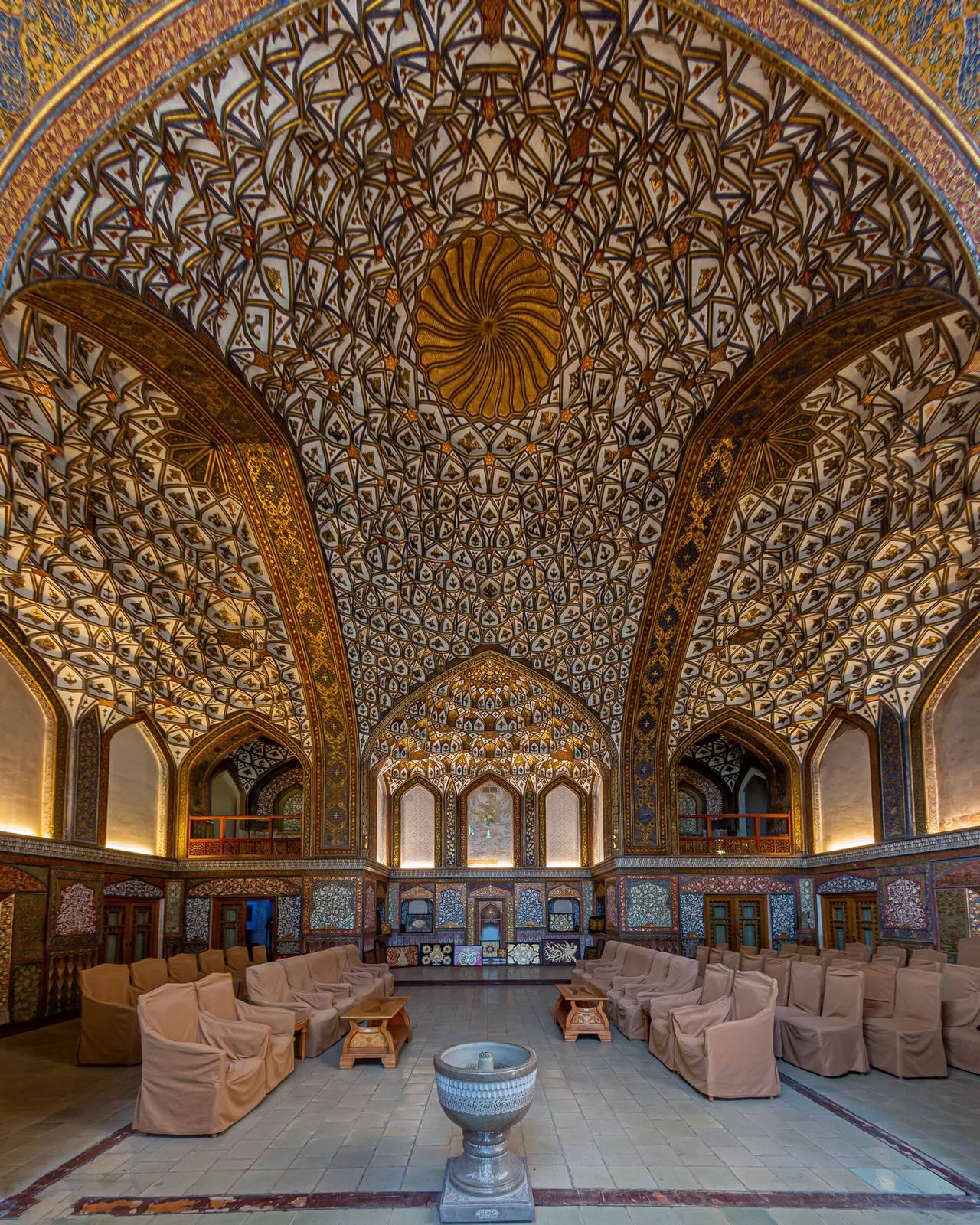
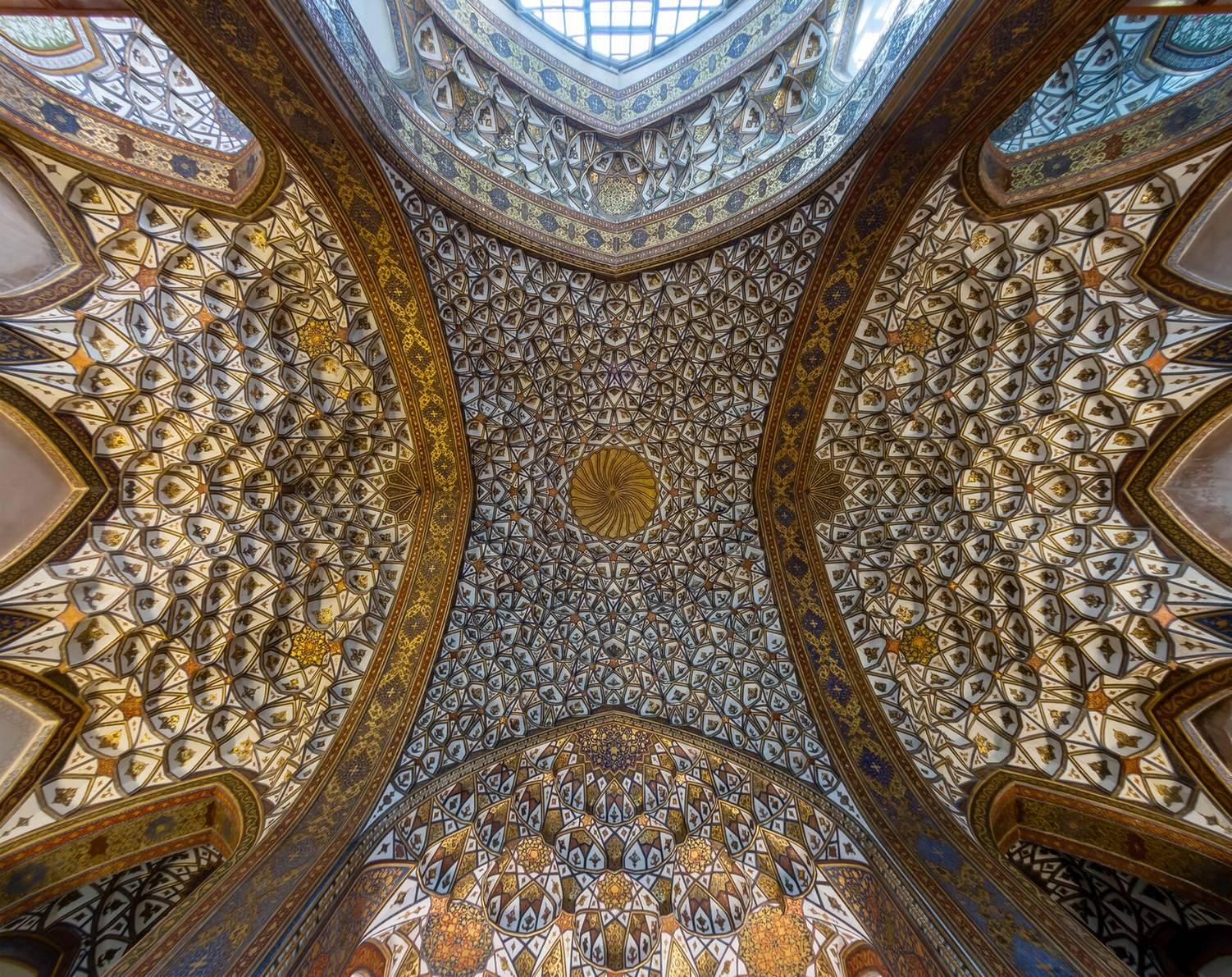
The central hall has a high, arched ceiling adorned with muqarnas, three-dimensional ornament formed from tiered, niche-like elements. Tiered cornice decoration, gilding, and colorful stucco in lapis-lazuli blue enrich the ceiling, while patterned muqarnas surround a larger twelve-petaled medallion. At its highest point, a sun-wheel design bears 24 golden rays, with painted stars around the ornament. The building also preserves decorative painting, stucco work, and carefully proportioned brick vaults.