Ullastret: An Iberian Urban Settlement in Catalonia
Site at a Glance
- Popularity
- Medium
- Country
- Spain
- Primary era
- Classical
- Eras represented
- Iron Age, Classical, Medieval
- Civilizations
- Carolingian, Iberian
- Site type
- Settlement
- Remains
- City
On this page20 sections
History
Early settlement and urban growth
The Iberian town of Ullastret is an archaeological complex in Catalonia, Spain, founded by Iberian communities in the sixth century BC. It was the largest Iberian urban settlement discovered in Catalonia. The complex includes settlements at Puig de Sant Andreu and Illa d’en Reixac, which are thought to have formed a double city and probably belonged to one community.
Human activity in the area began long before the town took shape. Finds include Upper Paleolithic flint tools and Chalcolithic pottery. A stable settlement was established on Puig de Sant Andreu late in the seventh century BC, before the city’s foundation in the sixth century.
The town stood in the territory of the Indigetes, an Iberian people of the northeastern Iberian Peninsula. Ullastret has been proposed as the Indigetes’ capital, known as Indika or Untikesken, but the identification remains unsettled. The case for Indika partly rests on a single reference by Stephanus of Byzantium. Other interpretations place Indika at Empúries or in an Indigete quarter beside the Greek Neapolis, or “New City,” there.
Ullastret was fortified from the late sixth century BC. Around 400 BC, the defenses were enlarged as the town’s area nearly doubled, a change associated with a period of insecurity. Further major alterations took place in the last third of the third century BC, around the start of the Second Punic War, the conflict between Rome and Carthage that began in 218 BC.
Community, economy, and religion
The community could organize large public works and controlled a surrounding territory. Its economy relied especially on farming and livestock, alongside mining, quarrying, and other activities. Ullastret’s inhabitants traded with neighboring communities and with Greek and Phoenician-Punic peoples, whose culture developed from Phoenician traditions and was associated especially with Carthage.
The temples’ worship was probably directed toward Indigenous deities. Terracotta masks appear to have served as votive offerings, objects dedicated in connection with worship. Their use was unusual in the Iberian world and may reflect Greek and Phoenician-Punic influence, as well as the adoption of Mediterranean ritual practices.
Roman intervention and abandonment
Roman arrival changed how the surrounding territory was occupied and economically exploited. Ullastret lay within the direct sphere of influence of Empúries, the first place where the Romans landed on the Iberian Peninsula. Cato the Elder, a Roman statesman and military commander, ordered the town’s walls demolished.
Ullastret was abandoned in the first quarter of the second century BC. The reason for the departure is unknown, and it may have been peaceful.
Later activity and archaeological study
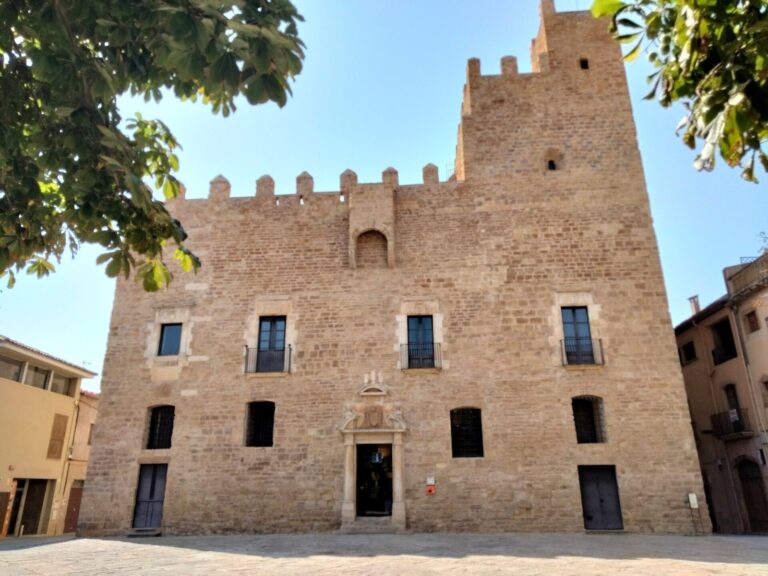
Activity at the site continued in later periods, including the construction of a Carolingian-period castle and an earlier Christian hermitage. The Museum of Archaeology of Catalonia’s Ullastret branch preserves, studies, and interprets the remains. Its displays draw on finds from Puig de Sant Andreu and Illa d’en Reixac, as well as the cemetery at Puig de Serra in Serra de Daró, and cover subjects including trade, religion, funerary practices, urban life, and the economy.
The process to designate the archaeological zone a Cultural Asset of National Interest began in 2012, and the designation was approved in 2014.
Remains
Landscape and settlement plan
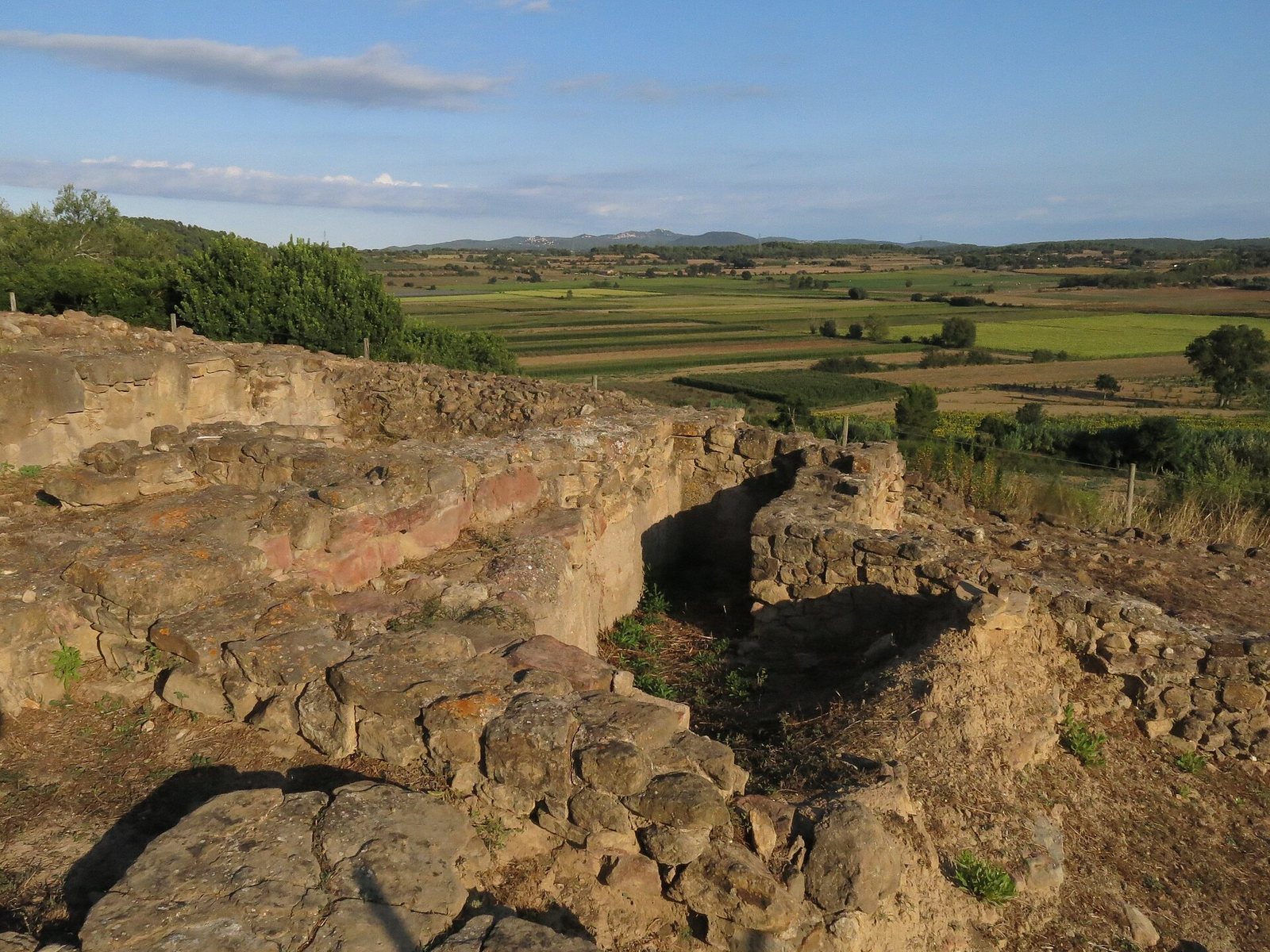
Puig de Sant Andreu is a small hill about 53 metres above sea level, overlooking the landscape around the lower Daró. The archaeological area extends across the municipalities of Ullastret, Serra de Daró, and Fontanilles. Illa d’en Reixac lies about 500 metres northeast of the hill, on an island in the former lake of Ullastret, which was drained in the nineteenth century. This second settlement has been investigated less extensively and may have been as important as, or more important than, the hill settlement.
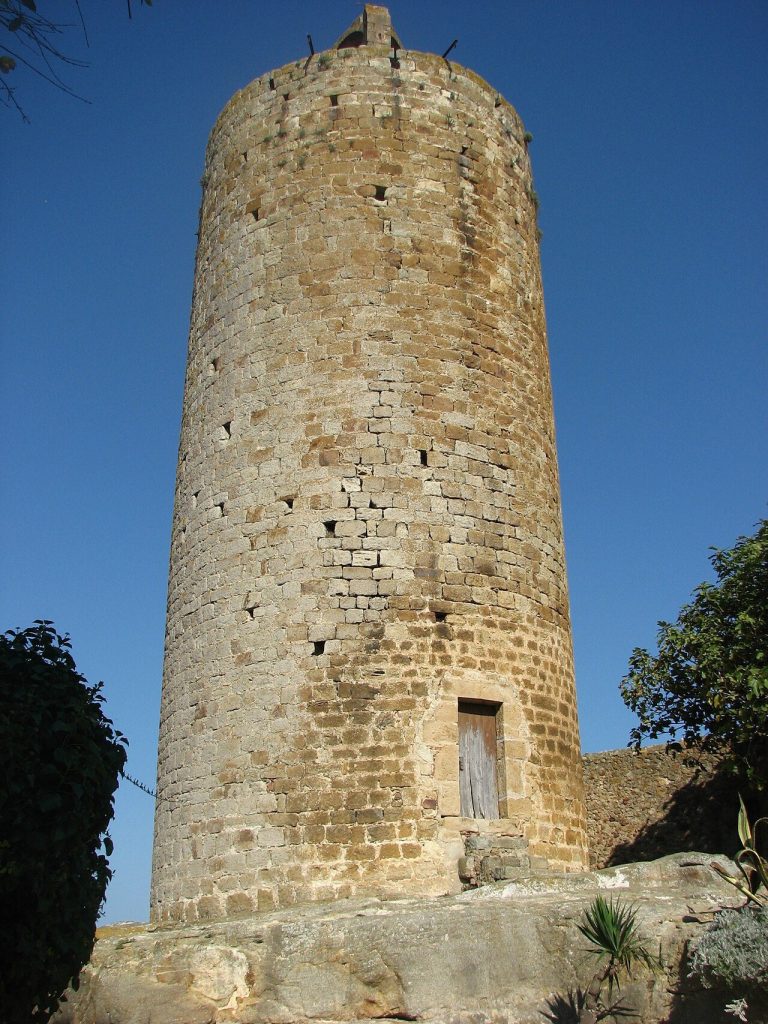
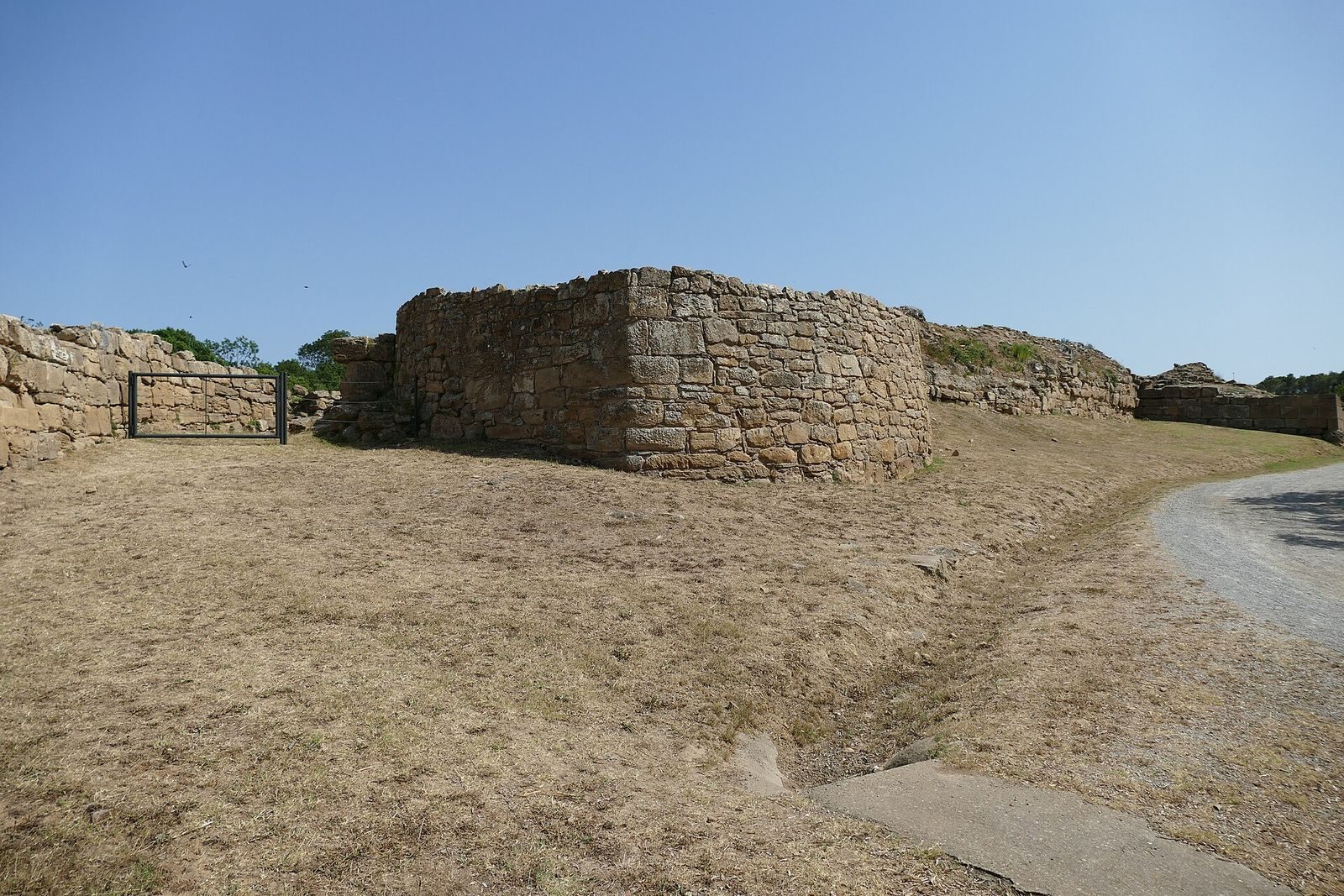
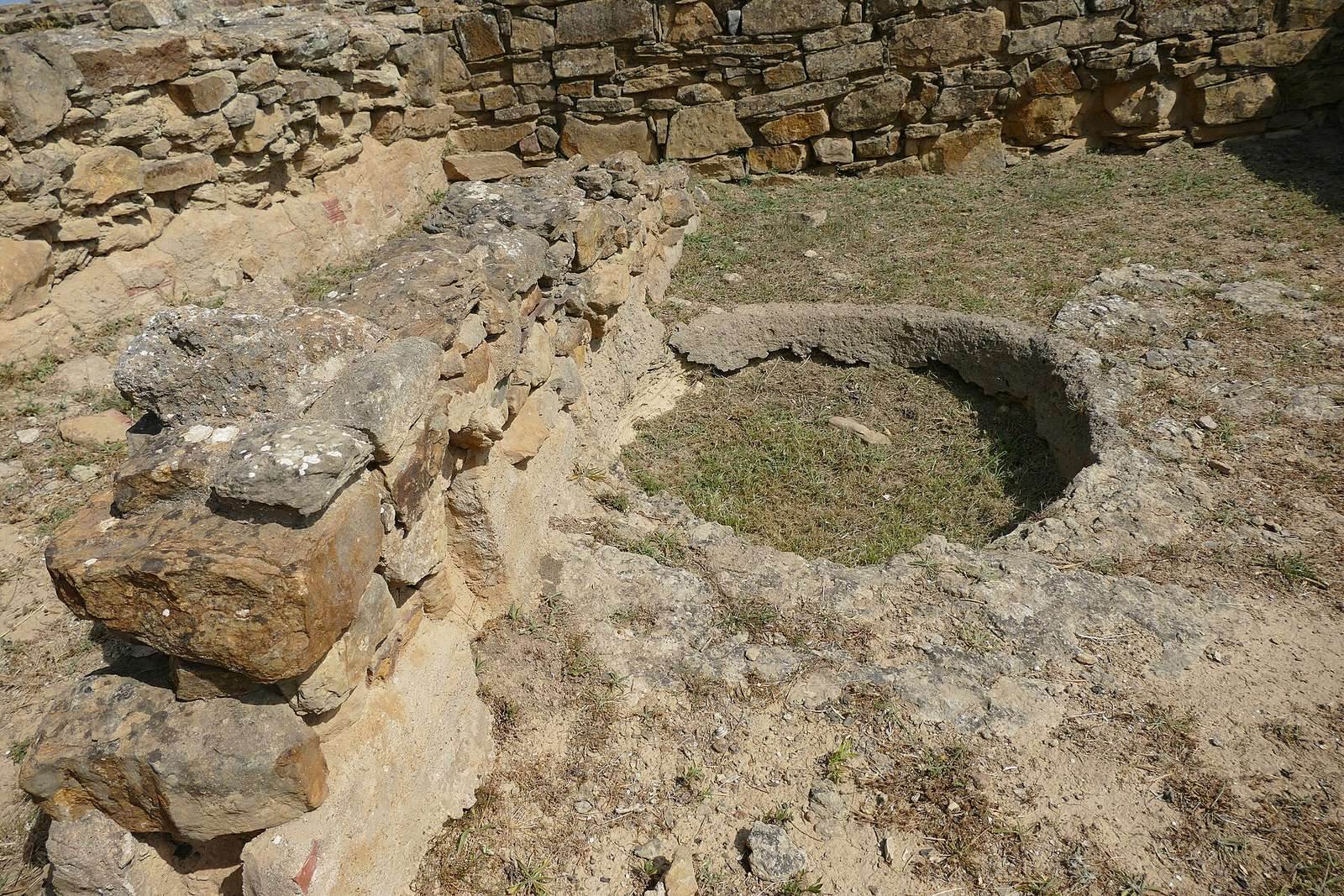
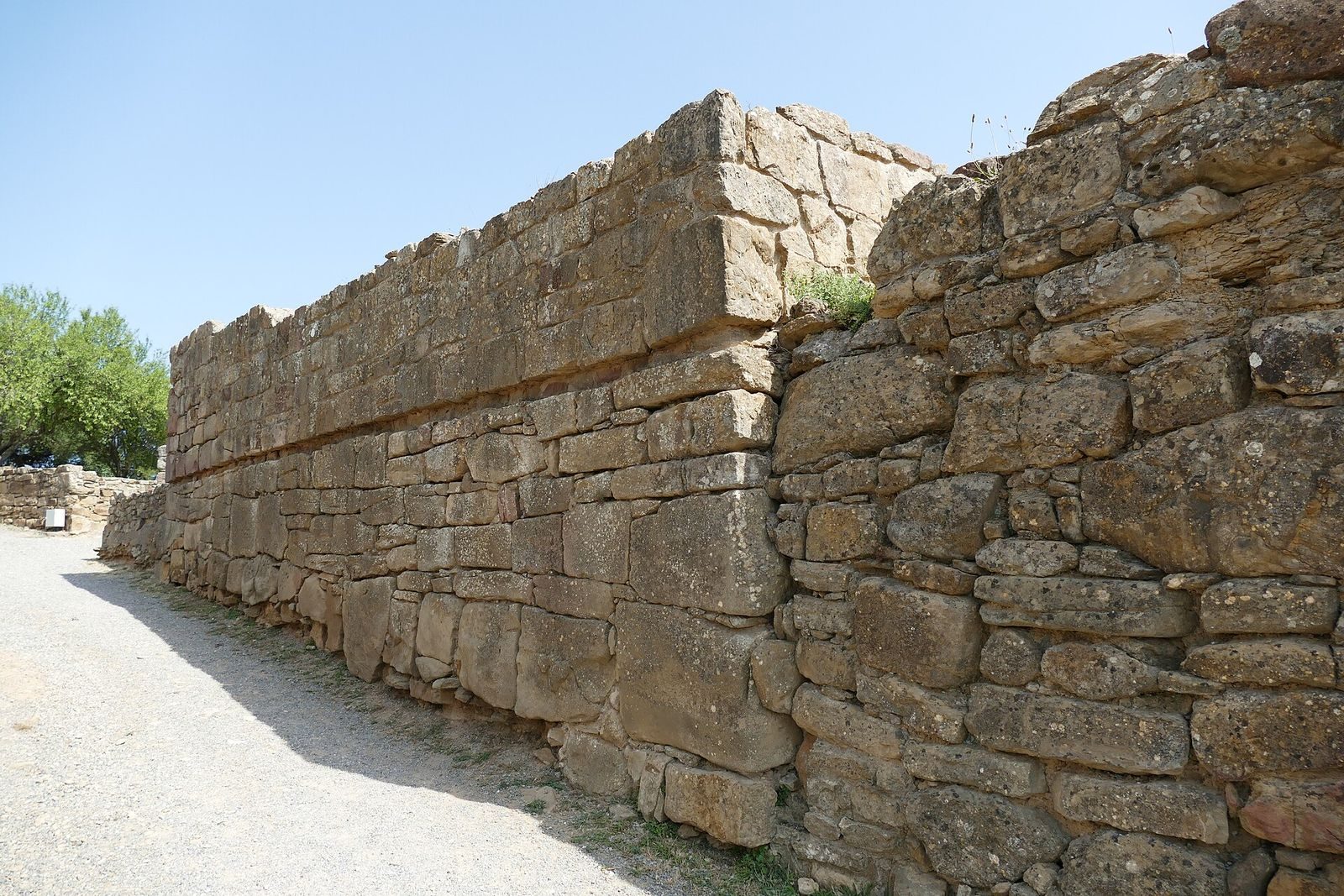
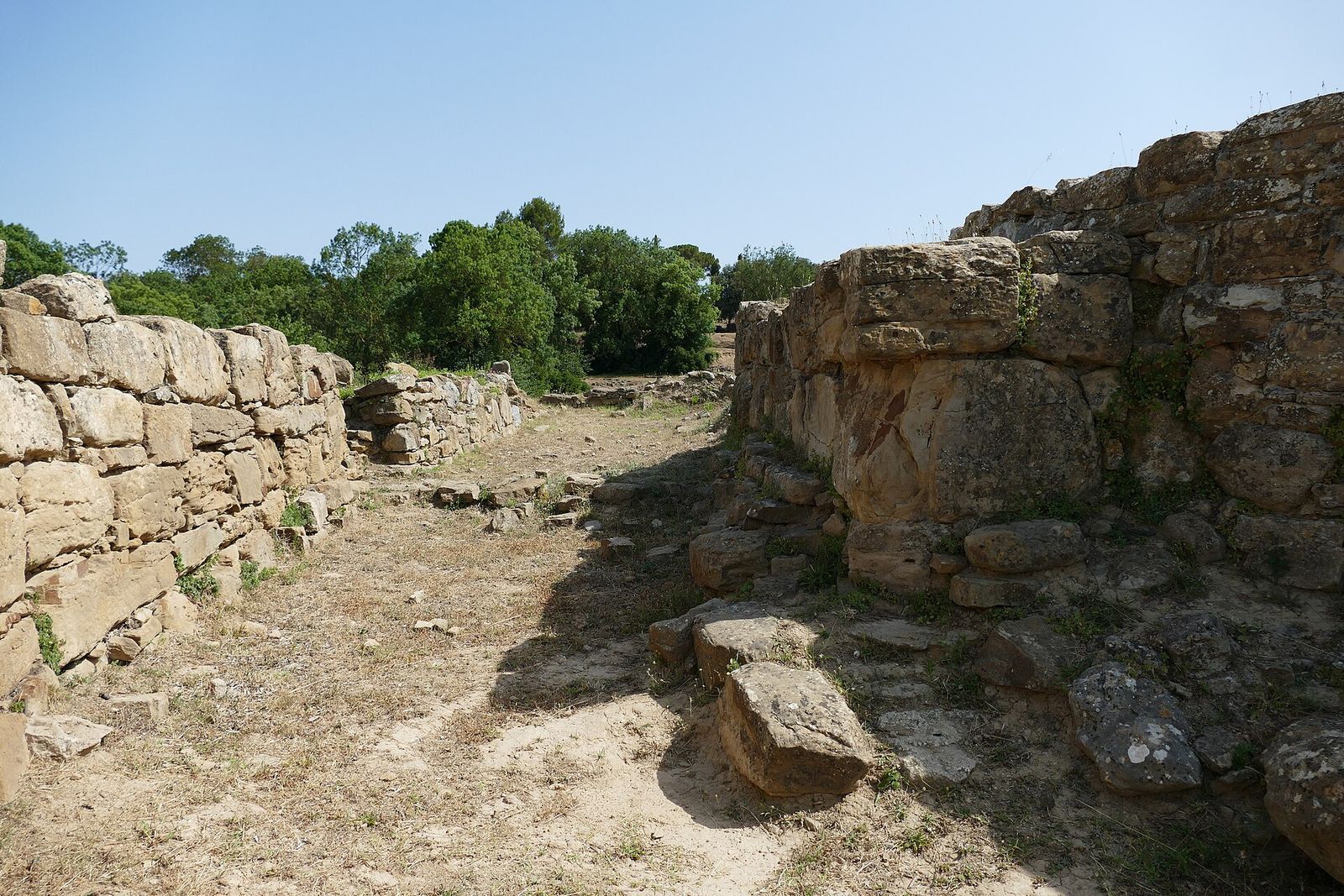
On Puig de Sant Andreu, a substantial wall survives with square and circular towers. Streets follow the hill’s contours, and excavated areas within the enclosure include houses, grain-storage silos, cisterns, and public spaces. Much of the hill settlement has been excavated, and the site is well preserved.
Public and elite buildings
Temples
Two temples in the sacred area date to the third century BC. Their architectural features belong to the Mediterranean tradition of buildings used for worship.
Palace and large house
A palace of about 500 square metres, dating to the third century BC, is associated with a dominant family. A separate large house, built in 325 BC, contained a square hearth measuring 1.30 metres on each side.
Streets, workshops, and stonework
Street and artisan quarter
Evidence for settlement extends beyond the walled enclosure. Within it, a central street measures 50 metres long and 4 metres wide; an artisan quarter lay outside the walls. A paved surface was also found in the settlement.
Metalworking and stone extraction
A third-century-BC furnace was used to work bronze and iron. A fragment of an elongated iron stone-working hammer has a hole for a wooden handle and an axe-shaped end for marking and cutting stone; its other end served to chip or break the material. Tools of this kind were used to obtain large blocks from the moat excavation or from quarries north and south of Puig de Sant Andreu. The blocks were then used to build the wall.
Military structure and eastern slope
A structure at the site may be the first military building identified by archaeological work in Iberian Catalonia. Olive trees on the eastern slope are attributed to planting in the Iberian period and are more than 2,000 years old.
Objects and inscriptions
Terracotta masks
Thirty-seven terracotta mask fragments have been recovered across the settlement, most from the sacred area. Other pieces came from a cistern and from the ruins of the two temples; some retain traces of multiple colors. Their similar forms suggest that they may have come from a single workshop, perhaps a local one. The figures probably represent deities and include idealized, demonic, or mythological faces. These include Achelous, a Greek river god; a satyr, a mythological being with human and animal traits; and a Gorgon, a snake-haired figure. Most fragments have been attributed to the Gorgon, whose features include hair, two snakes below the chin, and exaggerated facial traits.
Figurine and decorated vessel
A displayed terracotta figure depicts Bes, an Egyptian deity associated with household protection and the safety of pregnant women and sleeping people. Shown frontally as a bearded dwarf with his tongue out, one hand raised, and a short kilt, the figure has lost the plume that once rose from its head. It was probably decorated in multiple colors. Another displayed object, the ceramic Horse Vase, was made on a potter’s wheel and painted in white. Geometric and plant designs surround an unusual scene of a rider leading a second horse by its reins. This pottery type is characteristic of the Indigenous Iberian Indigete area, where Ullastret and its surroundings were important production centers.
Human remains
A displayed skull belongs to a man estimated to have been about 40 to 50 years old. An iron nail passes through it at an angle, apparently to support the head and secure it to a wall or another structure. Among Mediterranean Gauls and northern Iberian groups in present-day Catalonia, the severed heads of defeated enemies were displayed as war trophies on building fronts, porches, or in courtyards, sometimes with their weapons.
Funerary inscription and lead document
A stone bearing a fourth-century-BC funerary inscription, the oldest known from Catalonia, was found in 2003 and studied by the German Archaeological Institute. A separate displayed document consists of an elongated sheet of lead, inscribed on both sides in the northeastern Iberian script, a writing system whose language remains only partly understood. The sheet was probably folded into nine sections. Six lines cover one side, while a single line runs the length of the other. Readable personal names and numerals support its interpretation as a commercial letter, and it is among the most complete Iberian inscriptions.
Later structures
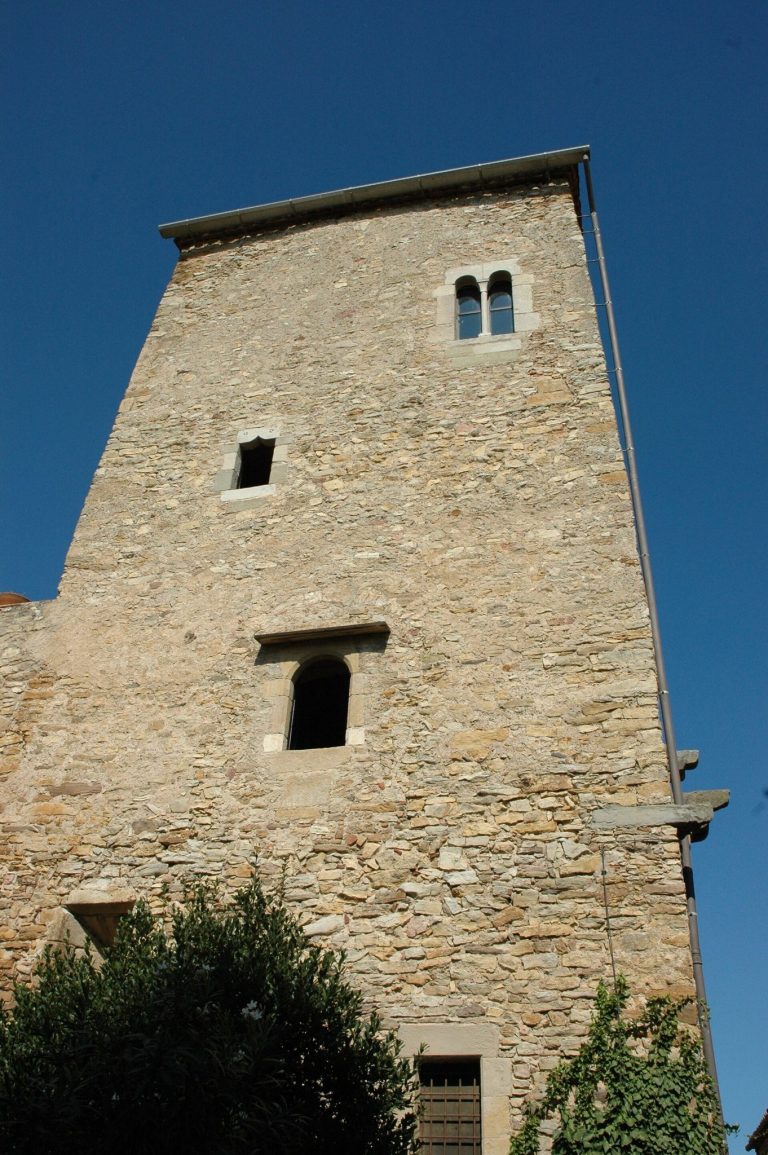
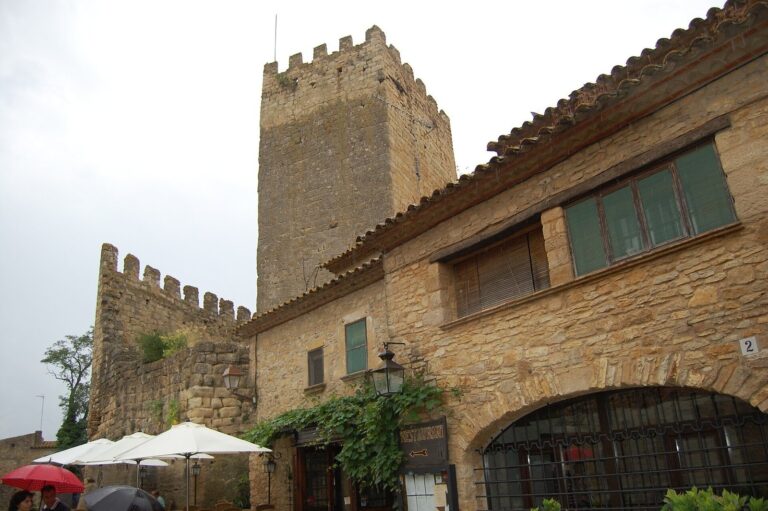
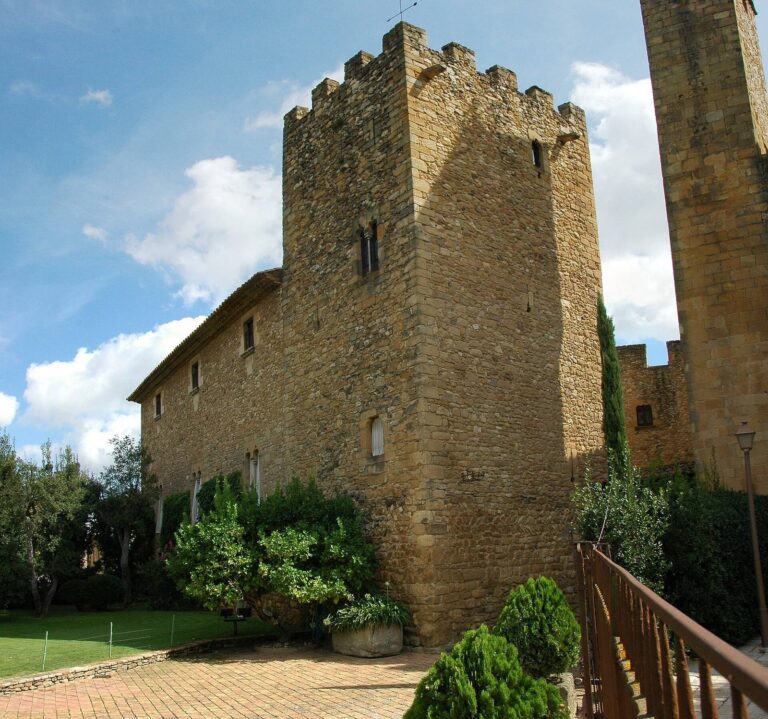
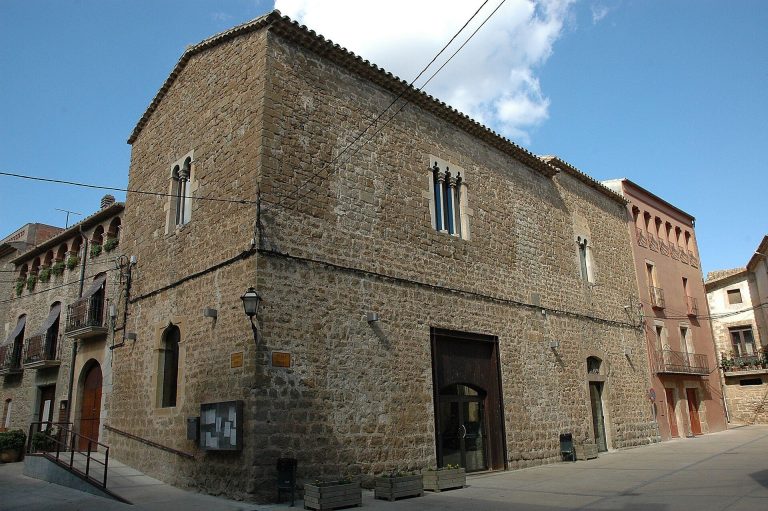
The museum building occupies the site of a former Christian hermitage and a Carolingian-period castle. Two ditches protected the castle on its southern and western sides. A fragment of a rounded, neckless ceramic vessel with a handle and a spout below the rim was found near one of them. Its surface, shaped with a spatula, is characteristic of early medieval pottery.