St Wilfrid’s Chapel, Church Norton: A Former Parish Church and Chapel of Ease
Site at a Glance
- Popularity
- Medium
- Country
- United Kingdom
- Primary era
- Medieval
- Eras represented
- Medieval, Modern
- Civilizations
- British, English
- Site type
- Religious
- Remains
- Chapel
On this page11 sections
History
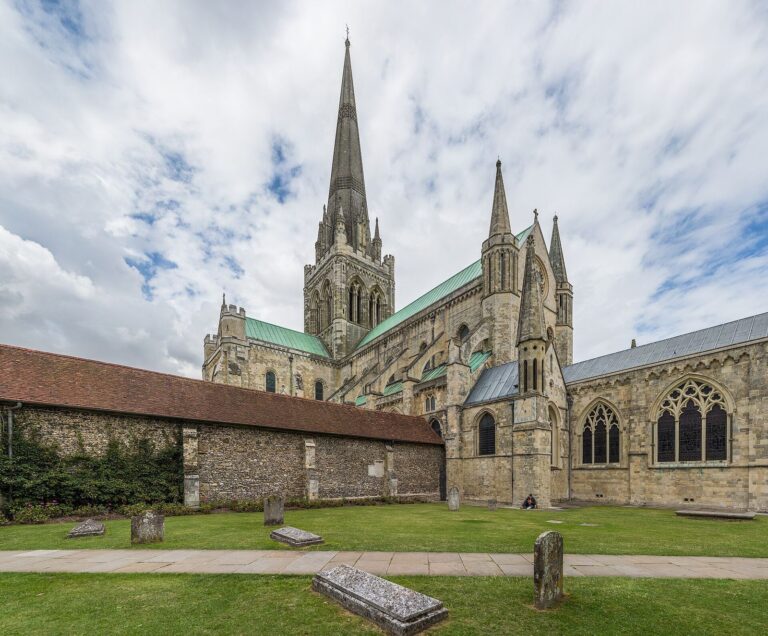
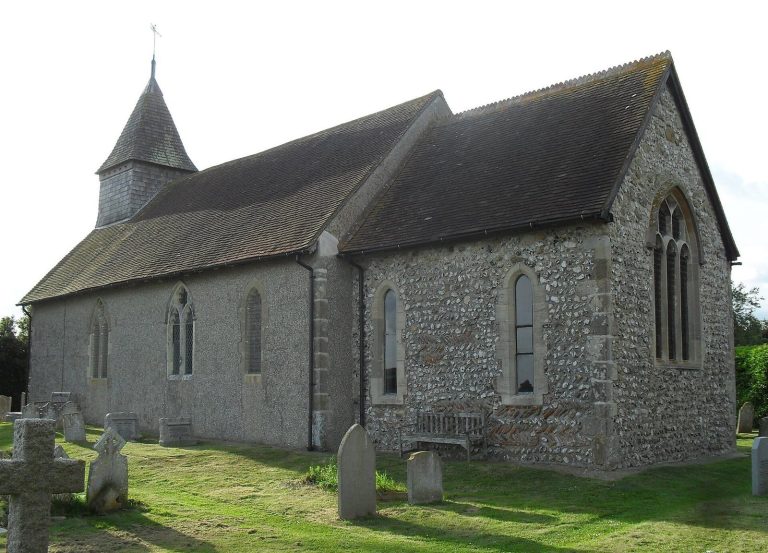
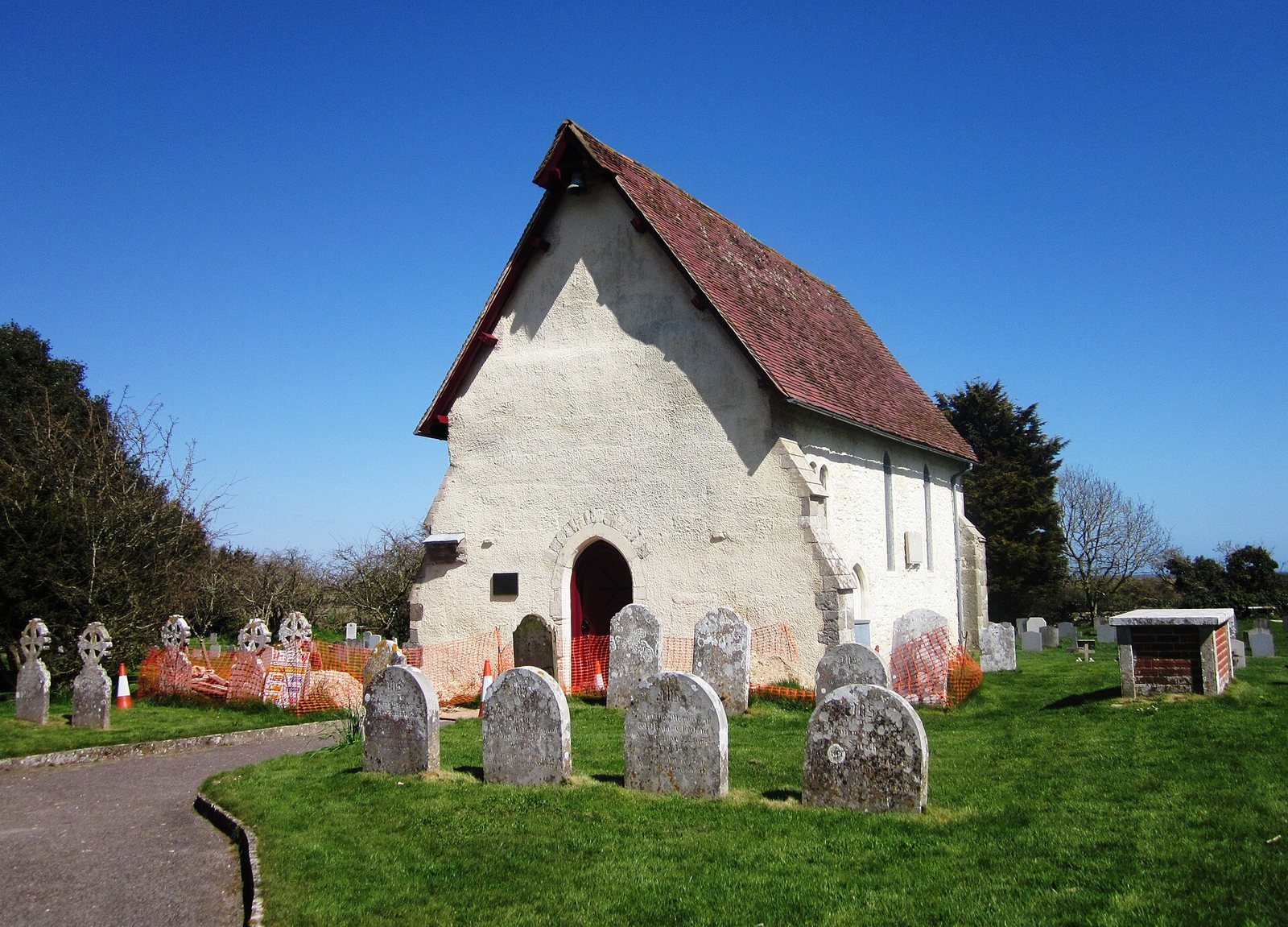
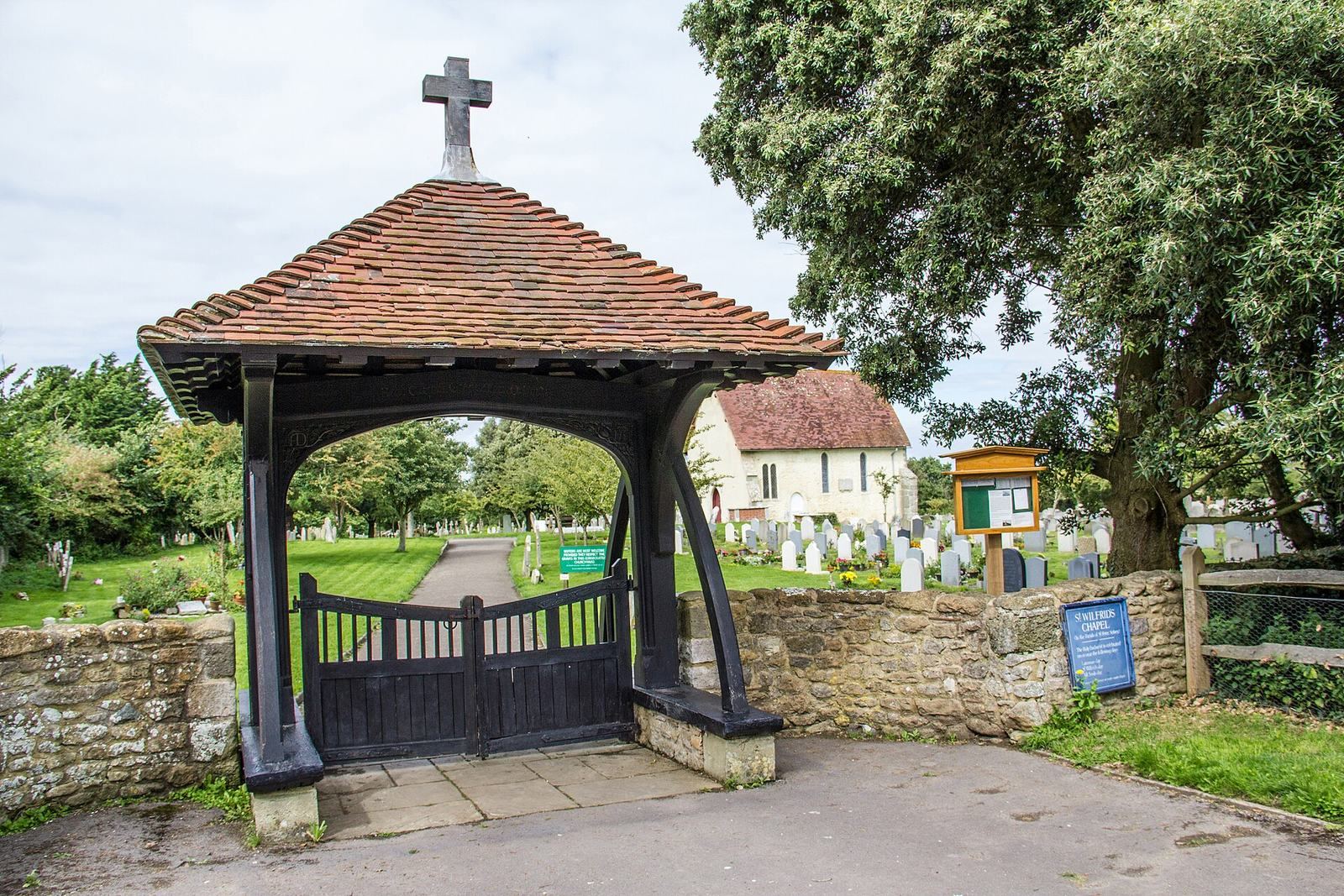
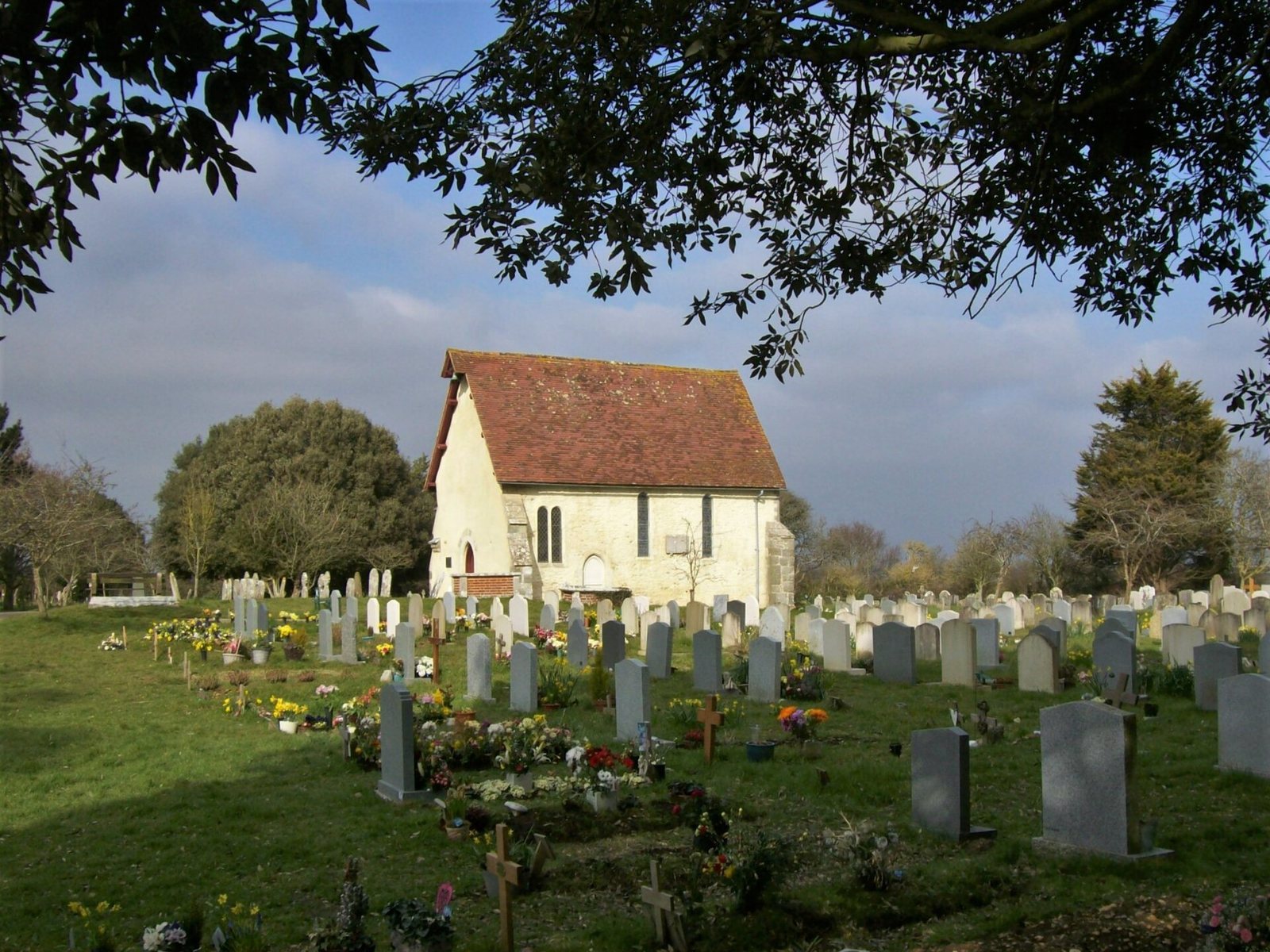
St Wilfrid’s Chapel, Church Norton, is the surviving chancel, the area around the altar, of a former Anglican parish church on the shore of Pagham Harbour in the United Kingdom. A church stood at the isolated site by the late twelfth century, and its chancel is an example of Early English Gothic, an early style of English Gothic architecture. The chapel may also occupy the site of a monastery founded by Wilfrid in 681.
Wilfrid and the bishopric at Selsey
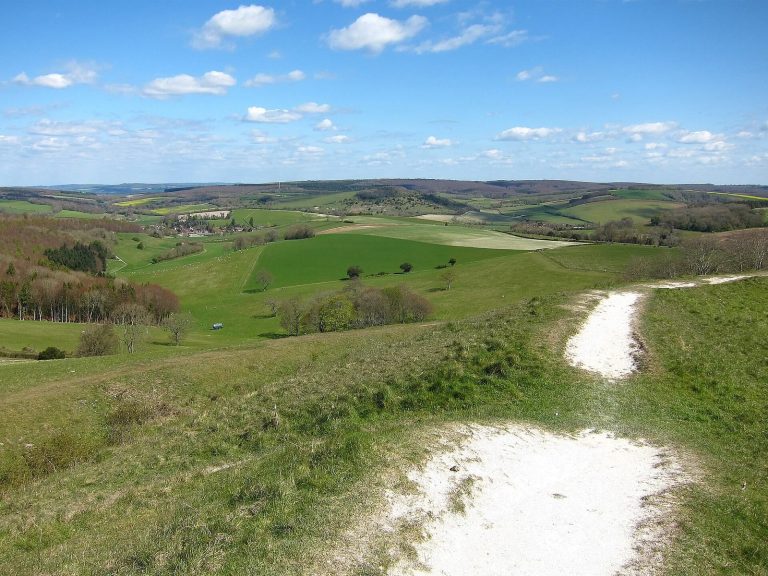
The surrounding area is considered the likeliest location of Cymenshore, where tradition places Ælle’s landing in 477. Ælle was the first king of the South Saxons, the people associated with Sussex. Selsey was then an island between the English Channel and Pagham Harbour, which once also opened to the sea on its western side.
In the seventh century, Wilfrid, a bishop and missionary later venerated as a saint, Christianised the area from Selsey. He apparently received land on the island and founded a monastery there in 681. The chapel may stand on its site. The monastery later became a cathedral and served 25 bishops between 681 and 1075. In 1075, the Council of London, an assembly of church leaders, ordered the bishop’s seat, or see, to move from Selsey to nearby Chichester. The new cathedral there shared its site with an existing church dedicated to St Peter. By the eleventh century the Selsey monastery had disappeared, and its former island had become a peninsula.
The parish church at Church Norton
The late-twelfth-century church may have replaced a Saxon building, although evidence for an earlier church is slight. Known as St Peter’s, it served as Selsey’s parish church from the thirteenth century until the mid-1860s.
The enclosure of 670 acres (270 hectares) of common land in 1830 helped Selsey grow, with new roads and houses, into a small seaside resort. As the population expanded, Church Norton’s distance from the town encouraged plans for a new church on Selsey High Street.
Relocation and use as a chapel
Opposition to the loss of the old Early English church led to an agreement to move part of it stone by stone. During the work of the mid-1860s, the church was divided between its original site and Selsey. Materials incorporated into the new St Peter’s Church included a font, pillars, arches and three sections of the nave’s pointed arches. A bell cast in 1844 by Mears & Co. of the Whitechapel Bell Foundry and Communion objects from the sixteenth to eighteenth centuries also went to the new church. Work was completed in 1865, and the new church was consecrated again on 12 April 1866.
An oversight meant that the relocated church had not been properly consecrated for marriages. The problem came to light in 1904, after 196 marriages had taken place there between 12 April 1866 and 25 February 1904. Although valid under church law, the marriages were not strictly legal; an order in 1906 confirmed their validity. The rectory remained at Norton at first. After its sale in 1902, a replacement was built beside the Selsey church and completed in 1903, while the old rectory took the name Norton Priory.
For several decades, the remaining church served as a cemetery chapel. In 1906 it received fittings, including a baptismal font, from the recently demolished St Martin’s Church in Chichester. The Bishop of Chichester rededicated it to St Wilfrid in 1917, after which it served as a chapel of ease, a subsidiary church for people living at a distance from their parish church.
Literary association and later care
Rudyard Kipling’s poem Eddi’s Service, published in his 1910 collection Rewards and Fairies, tells of a priest celebrating Midnight Mass on a stormy Christmas Eve without a human congregation. A donkey and a weary bullock enter the church and remain until dawn. The story is apocryphal and may draw on local tradition. Kipling took the priest’s name from Eddius Stephanus, a cleric who served as Wilfrid’s chaplain during his ministry at Selsey.
The former Anglican church was listed Grade I on 5 June 1958, England’s highest listed-building category for buildings of exceptional interest. The Diocese of Chichester declared it redundant, meaning no longer required for regular worship, on 1 November 1990, and its care passed to the Redundant Churches Fund, now the Churches Conservation Trust.
Remains
The former church once comprised a nave with aisles, a chancel, a small bellcot, a porch and a west-end tower. Its surviving chancel remains in the original churchyard beside Pagham Harbour, while the church’s other parts were moved to Selsey and rebuilt with modern additions.
The former church layout
The nave had a four-section arcade, a row of arches separating the central space from the aisles. Its first three sections date to about 1180, and a fourth was added later. The pointed arches had chamfered edges and scallop-shaped capitals. The sixteenth-century west tower had diagonal buttresses and reached a height of only 8 feet (2.4 metres).
The surviving chancel
Windows and former church junctions
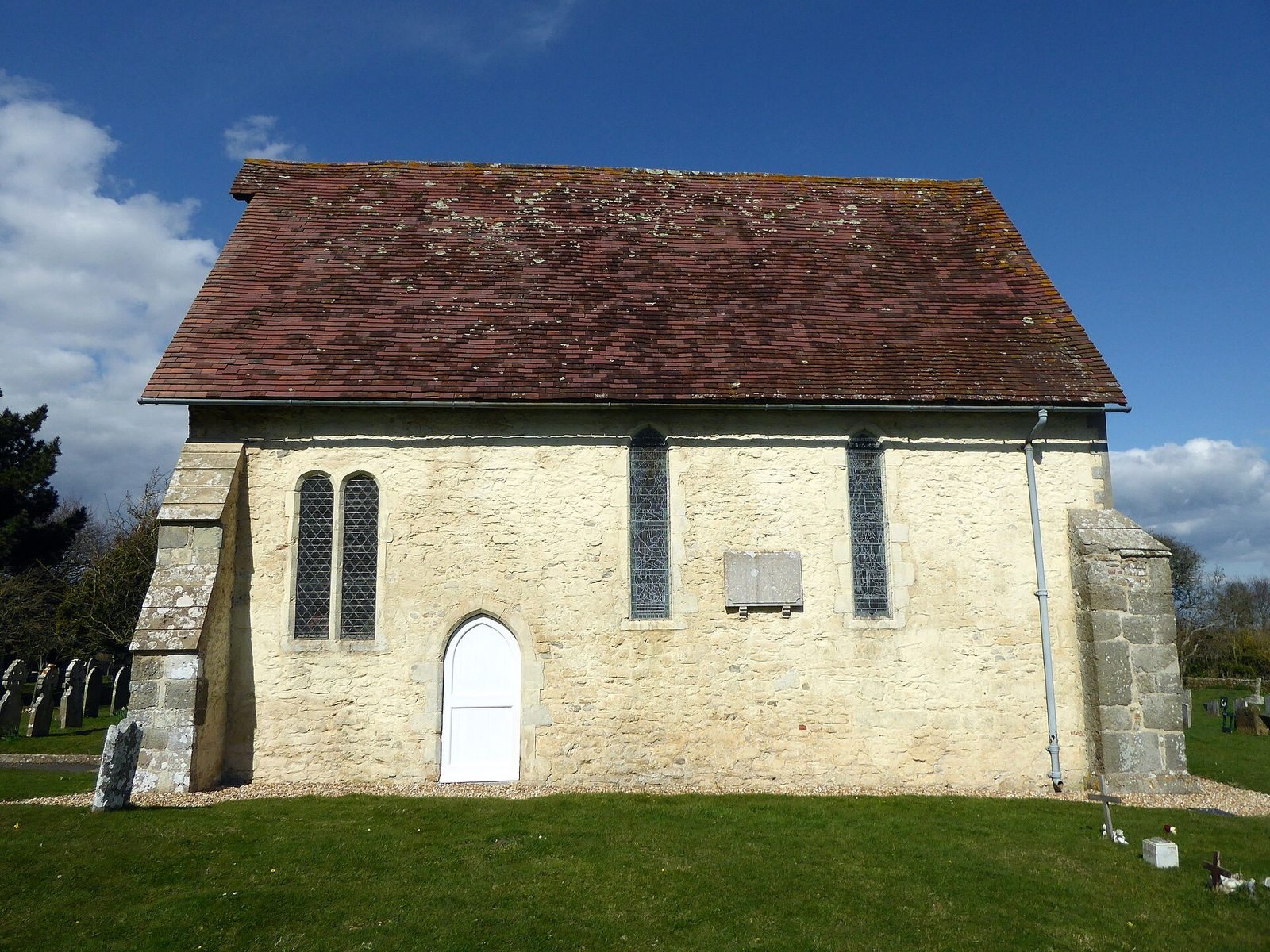
The chancel is a simple Early English Gothic structure. Its north and south walls retain tall, narrow lancet windows with pointed arches. The three-light east window dates from the fifteenth century and belongs to the later Perpendicular Gothic style. Traces of the former chancel arch and the end supports of the nave arcade can still be seen on the west wall.
Wall recesses and carvings
Two recesses in the south wall include one used as a piscina, a basin or recess for washing Communion vessels. A recess in the north wall holds a Caen-stone carving dated 1537. It shows John Lewis, also recorded as Lews, and his wife Agnes kneeling toward a central panel that is now defaced. The panel may once have depicted the Crucifixion or the Trinity. A nearby carving represents St George and the martyrdom of St Agatha.
Stained glass
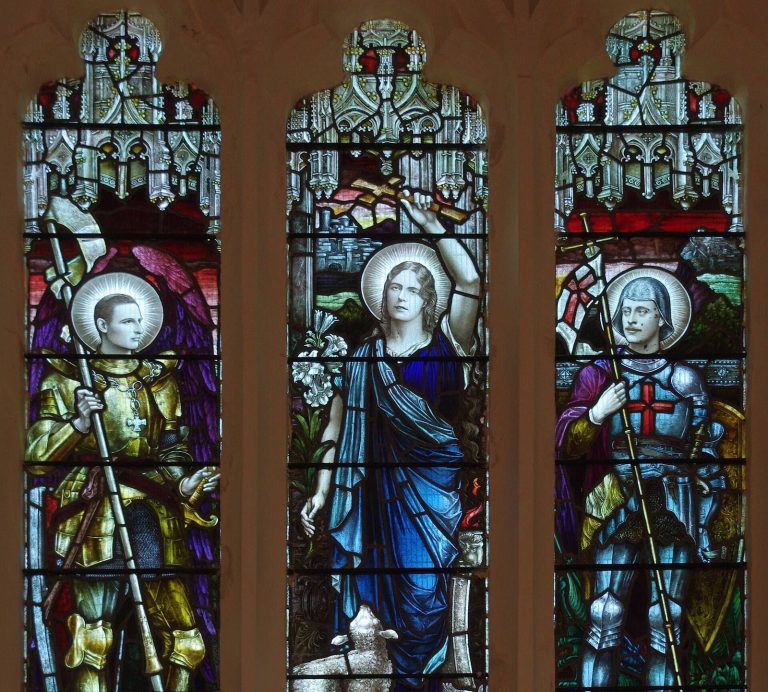
A 1969 stained-glass window by Carl Edwards commemorates women and features the now-demolished All Saints Cathedral in Cairo. A second window, made by Michael Farrar-Bell in 1982, depicts Pagham Harbour nature reserve and its animals and birds.