Chichester Castle: A Norman Fortress and Medieval Court
Site at a Glance
- Popularity
- Medium
- Country
- United Kingdom
- Primary era
- Medieval
- Eras represented
- Medieval
- Civilizations
- English, Norman
- Site type
- Military
- Remains
- Castle
On this page5 sections
History
Norman foundation and administration
Chichester Castle was a timber castle in Chichester, United Kingdom, built by the Normans shortly after the Norman Conquest, their takeover of England in 1066. Roger de Montgomery, Earl of Shrewsbury, ordered its construction. It was one of 11 fortified sites established in Sussex before 1100.
The castle became the centre for administering the Rape of Chichester, a territorial district in Sussex, after it was separated from the larger Rape of Arundel. Its position within the city placed it in an existing settlement.
Royal castle and conflict
The Earls of Sussex held the castle from 1154 to 1176, after which it passed to the Crown. In the early thirteenth century, it served as a court and jail. Along with Oxford Castle, it was among the earliest urban castles used for these functions.
During the First Barons’ War, a conflict between King John and rebellious English barons with French support, John ordered the castle destroyed in 1216. The order was not carried out. French forces captured the castle around the time Prince Louis of France landed in southern England with an army supporting the barons. English forces recaptured it in spring 1217. Later that year, Henry III ordered its destruction; the outcome of this order is not known.
Franciscan use and modern protection
At some point between 1222 and 1269, Richard, 1st Earl of Cornwall, granted the site to the Greyfriars, Franciscan friars traditionally associated with grey habits, for use as a friary. The motte is now protected as a Scheduled Monument, a legally protected archaeological site or historic structure. The castle ruins were excavated from 27 May to 3 June 2025.
Remains
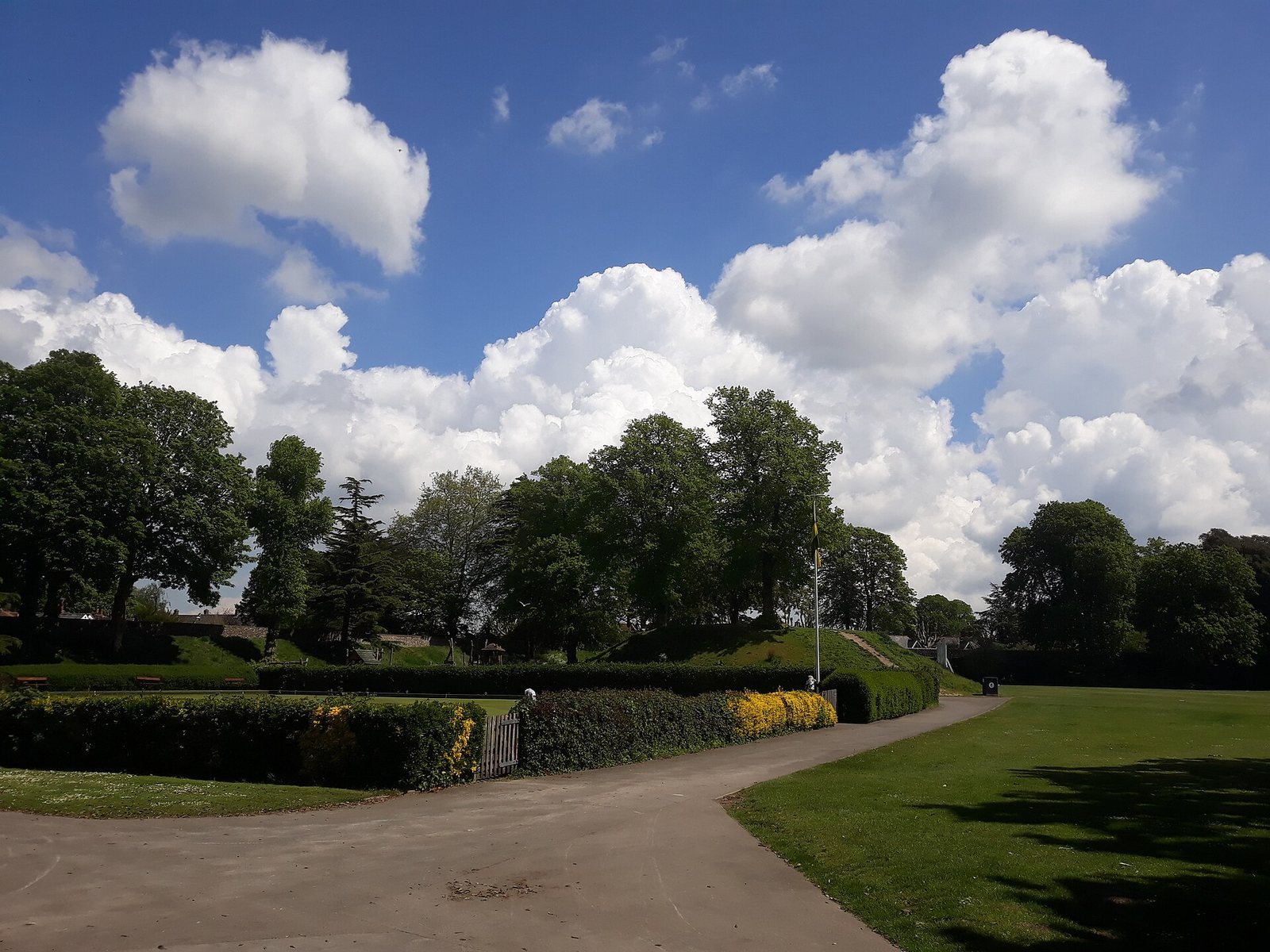
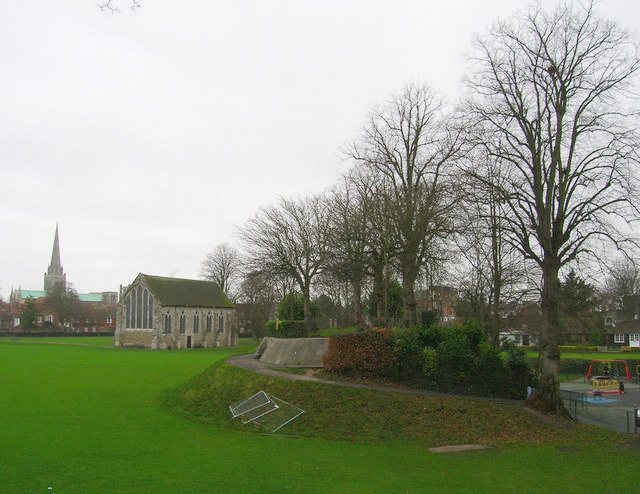
The castle occupied the northeastern corner of Chichester, within the protection of the city walls, and was inserted into an already established settlement. Buildings were probably cleared to make space for it. The castle was built of timber. Its motte, an artificial mound that formed part of the castle’s defences, remains visible in Priory Park.