Batán Grande: A Lambayeque Religious, Administrative, and Economic Center in Peru
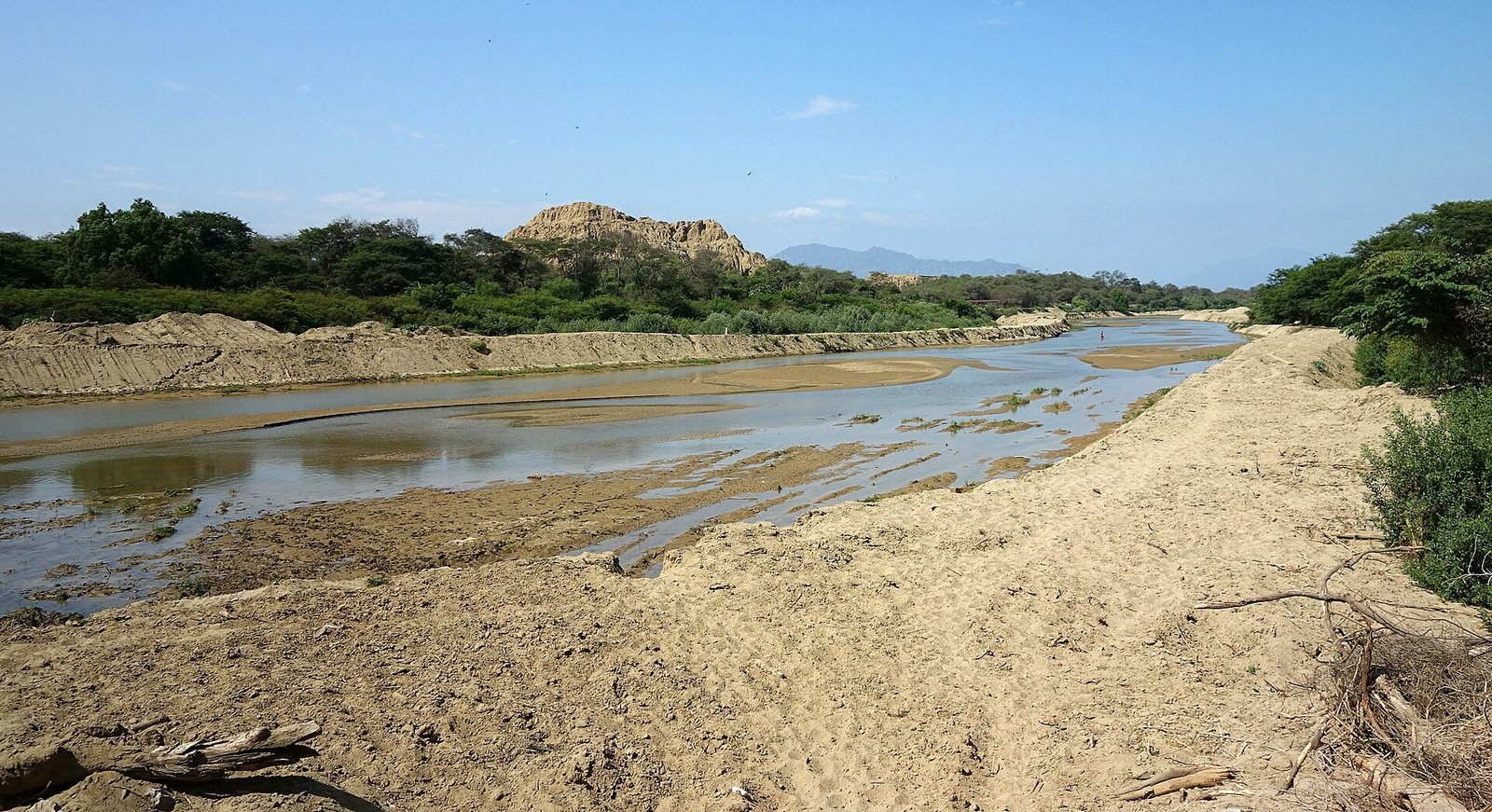
Site at a Glance
- Popularity
- High
- Country
- Peru
- Primary era
- Medieval
- Eras represented
- Medieval
- Civilizations
- Unclassified
- Site type
- Religious
- Remains
- Sanctuary
On this page12 sections
History
Batán Grande is an archaeological complex of the Lambayeque culture in the La Leche River valley of northern Peru. Its principal monuments date broadly from the eighth to the twelfth centuries. During the Middle Sicán period, around AD 900–1100, the complex served as the Lambayeque culture’s religious, administrative, and economic center.
A center of the Lambayeque culture
Batán Grande was also known as Sicán, Signán, or Shinán. Sicán may derive from the Muchik or Quingnam languages and may mean “abode of the moon.” The name Batán Grande first belonged to a hacienda, a large landed estate. Its name referred to flat, rounded stones used to grind minerals in pre-Hispanic times, and later passed to the archaeological area and to a settlement about 16 kilometres east. The estate was dissolved in the mid-twentieth century.
The complex was not a densely populated city. Few people lived there, while artisans and farmers are thought to have lived nearby. The elite controlled metal production and coordinated the exchange of prestige goods from different parts of South America. Batán Grande also served as an elite burial place and was probably among ancient Peru’s largest centers for metalworking and goldwork. Nearly 90 percent of pre-Hispanic Peruvian gold objects now in public and private collections are estimated to have come from the Lambayeque region, particularly Batán Grande.
Destruction and relocation
Between 1050 and 1100, fire destroyed the principal buildings, though it did not affect every structure. The burning appears to have followed a drought that lasted about 30 years. Because rulers or priest-kings relied heavily on sustaining agricultural production to maintain authority, the drought may have weakened their position. The population apparently rose against the elite, destroyed temples and palaces, and moved elsewhere. Túcume became the new capital.
Looting and archaeological investigation
Grave robbing began in the colonial period and continued on a large scale. Many objects from tombs entered collections around the world, while others were apparently melted down and sold by weight. Research at the site was restricted while the land belonged to the Batán Grande estate, associated with the Aurich family. Work became possible after the 1969 agrarian reform. Huaca La Ventana, one of the complex’s monumental structures, was heavily looted between 1920 and 1969.
Izumi Shimada began an archaeological project at Batán Grande in 1978, which became Peru’s longest-running archaeological project. His excavations of a mound in the center of the Batán Grande settlement in 1979, 1982, and 1983 contributed evidence about Lambayeque chronology and ancient metalworking. Shimada also proposed renaming the Lambayeque culture “Sicán,” after the area’s earlier name.
From October 1991 to March 1992, Shimada excavated the East Tomb at Huaca del Oro and uncovered the burial of a high-ranking Lambayeque figure. He named the individual the Lord of Sicán, an archaeological designation rather than a known personal name, in comparison with the Lord of Sipán, an elite figure associated with the Moche culture of Peru’s north coast. Finds from the project helped lead to the opening of the Museo Nacional Sicán outside Ferreñafe in 2001. The museum houses objects from the Lambayeque, or Sicán, culture.
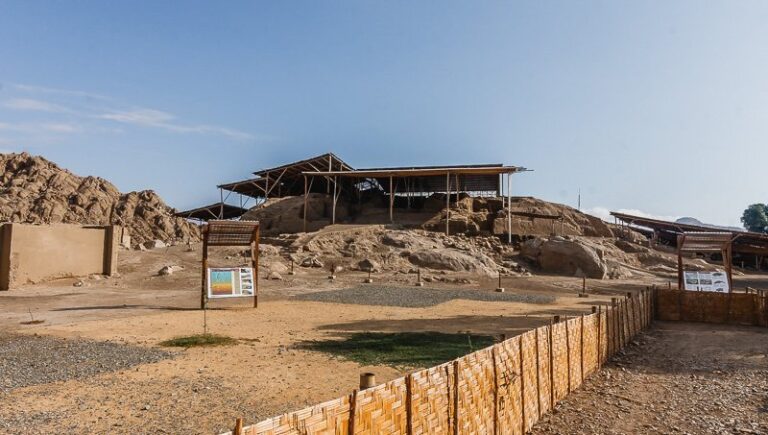
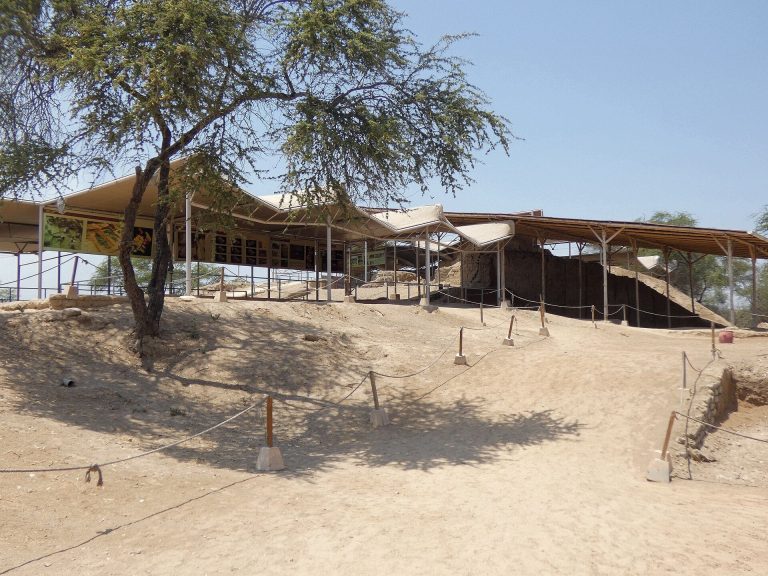
The Batán Grande Reserved Zone, covering 134 square kilometres around the site, was established in 1991. The archaeological area has been part of the Pómac Forest Historical Sanctuary since June 1, 2001, and was declared Cultural Heritage of the Nation in 2009.
Remains
Pyramids, rooms, and burial grounds
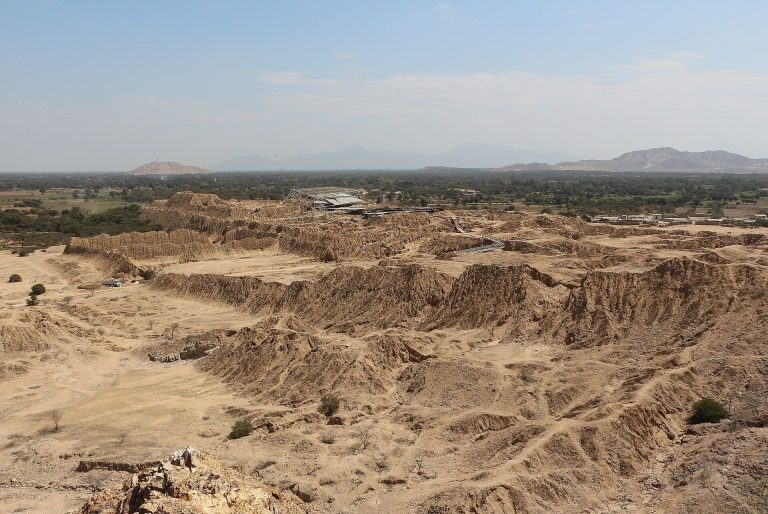
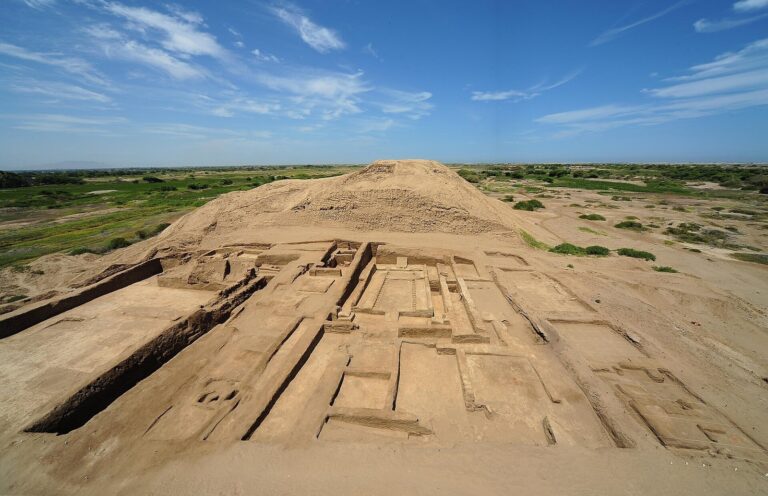
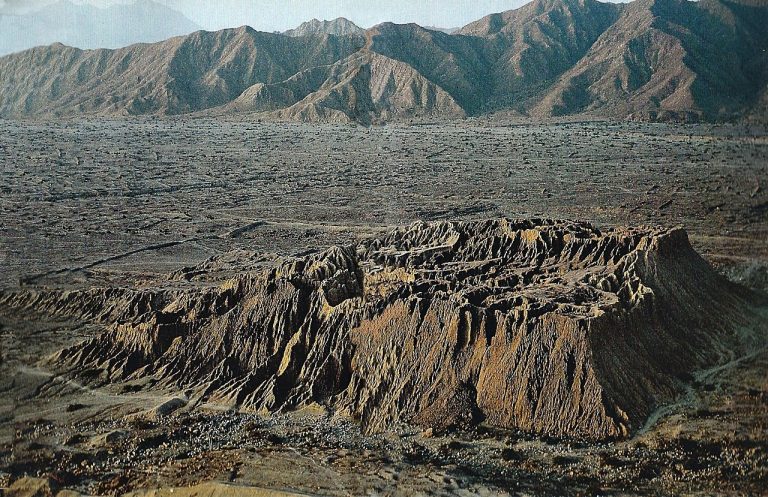
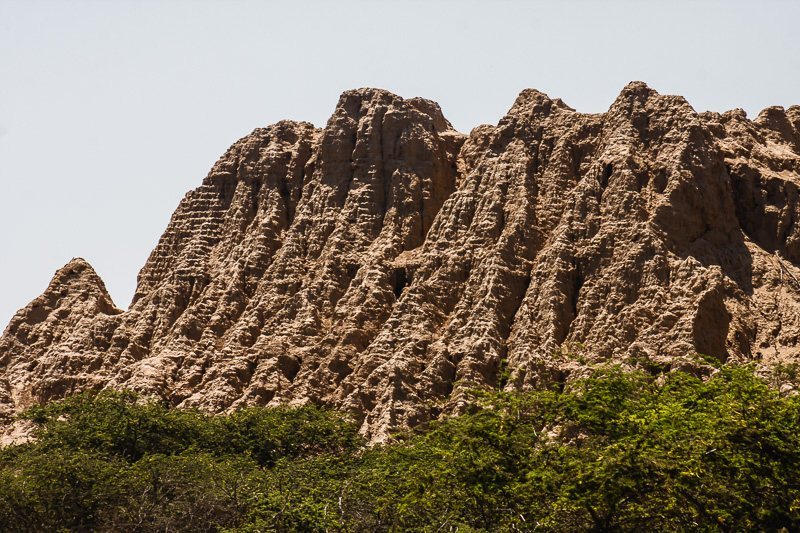
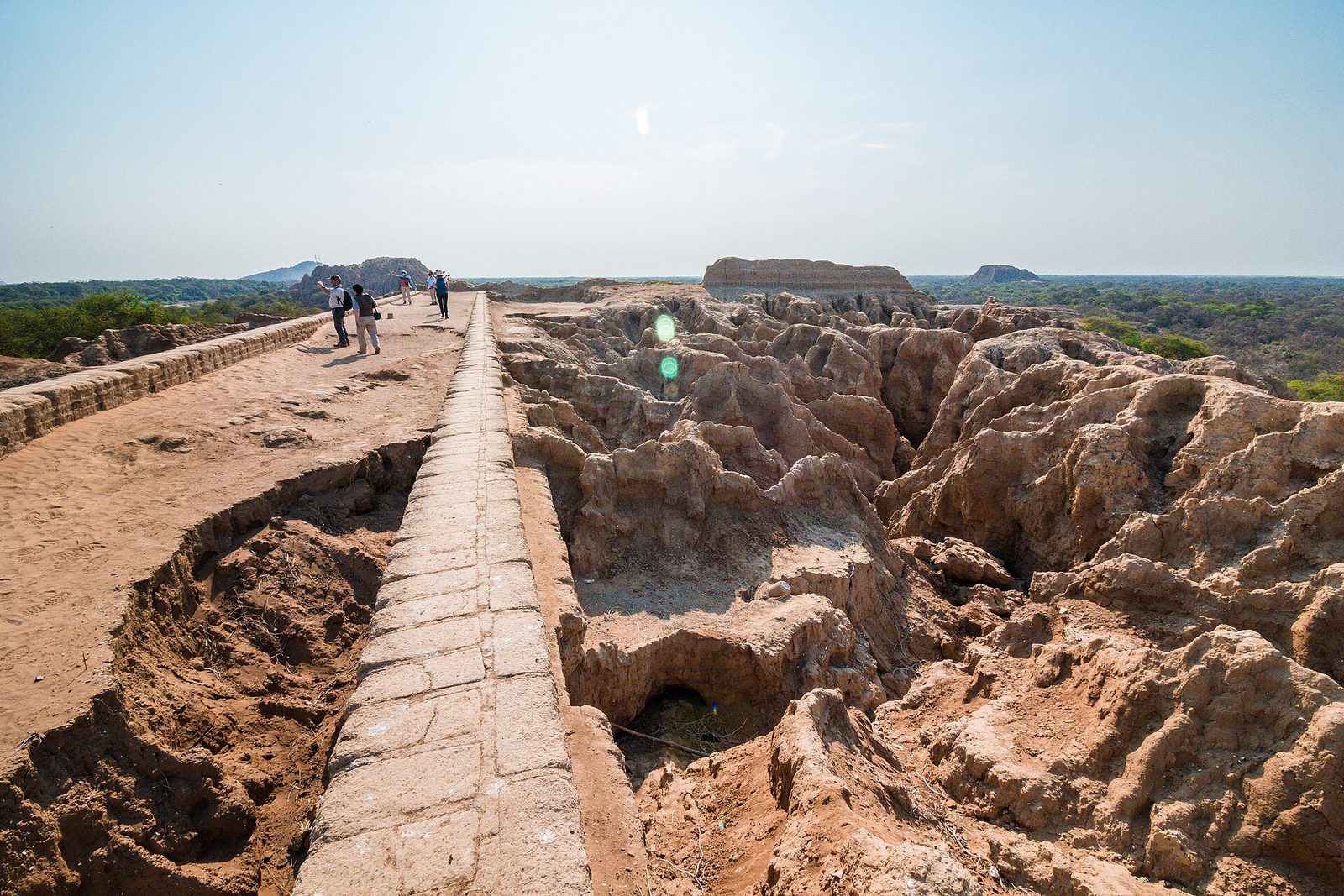
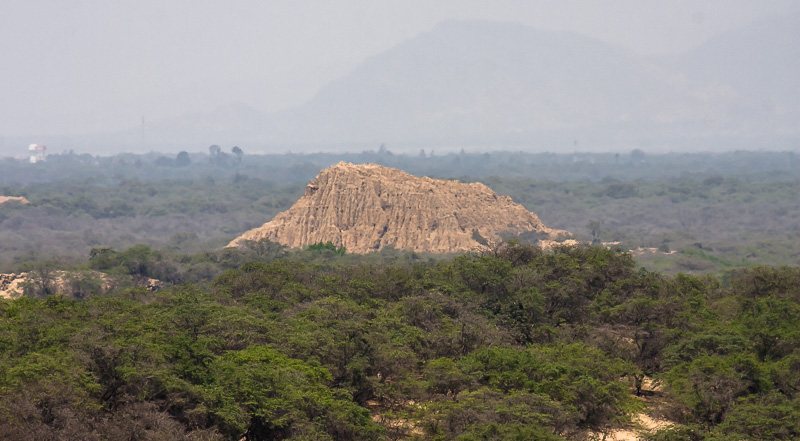
The complex contains about 20 truncated pyramids, some more than 30 metres high and accompanied by large platforms. These monuments, known as huacas, or Andean sacred or monumental structures, were built of adobe, a material made from sun-dried earth. They date broadly from the eighth to the twelfth centuries. The structures probably served several purposes, including temples, dwellings, cemeteries, and craft workshops. Rooms used rectangular adobe bricks with fills of varied materials, while subterranean tombs built of adobe coated with mud lay in burial grounds around the rooms. The complex lies chiefly in the district of Pítipo, with a smaller western portion extending into the neighboring districts of Íllimo, Pacora, and Túcume.
Huaca del Oro
Also called Huaca del Loro, this pyramid measures about 80 metres on each side at its base and rises more than 35 metres. A mural in one of its tombs depicted a rainbow topped with feline heads.
East Tomb
The East Tomb lay 12 metres below ground. Its central burial was a man about 40 to 45 years old, accompanied by two women around 20 and two children. His body was covered in cinnabar, a red mineral, and placed in a seated but inverted position, with his legs upward and head downward. He wore a gold mask, ear ornaments, and long earrings. Fine ceramics, gold objects, and precious stones accompanied the burial. It also contained about 20,000 card-shaped pieces of arsenical copper, a copper alloy containing 2 to 6 percent arsenic. Their purpose is uncertain, though they may have served as currency.
West Tomb
Excavated in 1995, the West Tomb contained 23 young women who had been sacrificed, along with a principal individual. That person was buried seated and facing west, wearing a gold mask and two gold-colored metal gloves. A gold cup had been placed in the right hand. The individual may have been a grandson or nephew of the Lord of Sicán.
Huaca La Ventana and Lambayeque imagery
The Tumi of Íllimo
Huaca La Ventana yielded the Tumi of Íllimo, a gold ceremonial knife associated with Lambayeque culture. The knife was long mistakenly attributed to the Chimú culture. Julio C. Tello helped recover it in 1937, and it was kept for several years at the National Museum of Archaeology, Anthropology and History. In 1988 it was stolen and melted down for sale with similar objects.
Murals and deity imagery
Murals from Huaca La Ventana carried designs related to the sea; reproductions are displayed in a room at the Museo Nacional Sicán. Lambayeque metalwork commonly depicts a winged humanlike deity. Some scholars identify this figure with Naylamp, the legendary founder of the Lambayeque lordship.