Huaca Rajada: Moche Funerary Complex and Tombs of Sipán
Site at a Glance
- Rating
- 3.8
- Popularity
- Very Low
- Country
- Peru
- Primary era
- Classical
- Eras represented
- Classical, Medieval
- Civilizations
- Moche
- Site type
- Burial
- Remains
- Necropolis
On this page11 sections
History
Huaca Rajada, also known as Sipán, is a Moche archaeological site and funerary complex in northern Peru. The Moche, a pre-Columbian civilization known for adobe monuments, fine ceramics, elite burials, and advanced metalworking, used the settlement from approximately AD 50 to 700. The Lord of Sipán probably ruled during the third century and died at about 40 years of age.
Moche rulers and funerary traditions
Sipán’s tombs provide evidence for the political and ritual authority of its rulers. The Old Lord of Sipán belonged to the same family as the Lord of Sipán and had ruled earlier. Objects placed in their burials helped establish the political and ceremonial importance of the people buried at the site.
The tombs also connected Sipán’s rulers with the Moche Sacrifice Ceremony, a ritual involving bloodletting and decapitation that was previously known through murals, ceramics, and other decorated works. Ornaments and a headdress from the burials correspond to figures shown in those ceremonial scenes, while large knives and related tools were suitable for ritual use.
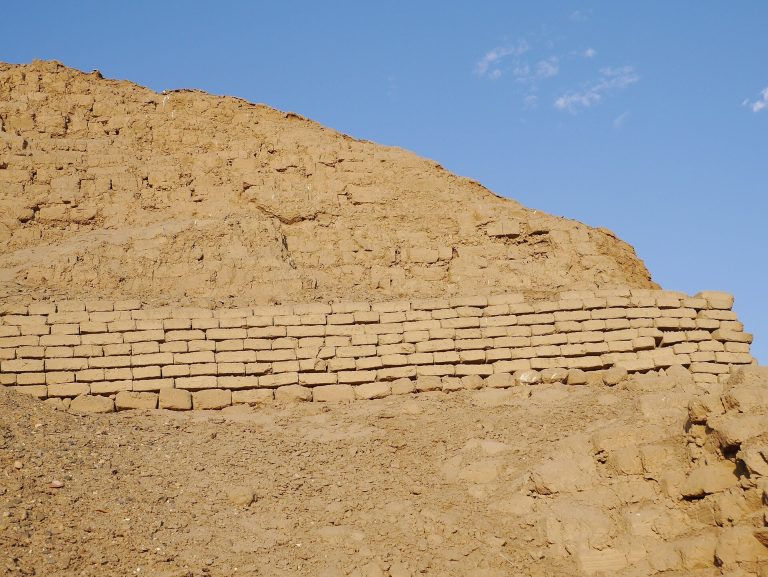
Commoners supplied labor for the construction of the rulers’ burial platforms as a form of taxation. Marked adobe bricks recorded these contributions. The excavated tombs provide much less information about the daily lives of Sipán’s commoners than about the rulers who controlled the complex.
The 1987 discovery
In February 1987, Ernil Bernal led huaqueros, or illegal tomb looters, into one of the pyramids. They removed valuable metal objects and destroyed hundreds of ceramics and human remains, while other artifacts entered the black market. After authorities confiscated a highly ornate mask and showed it to Walter Alva, Alva arrived with police, drove the looters away, fenced the tombs, and began systematic excavation with his team.
The work faced hostility from villagers and looters, including stone-throwing, but the team excavated twelve additional tombs. Walter Alva and Susana Meneses discovered the tomb of the Lord of Sipán in 1987. Fourteen tombs were excavated between 1987 and 1990, and the surviving archaeological material transformed interpretations of Moche society by demonstrating the exceptional status of the ruler.
A richly adorned figure previously interpreted as a deity in Moche ceramics was subsequently identified as the Lord of Sipán himself. His burial was accompanied by two men, two women, and a dog. The burial is also presented in connection with eight sacrificed individuals, the Old Lord of Sipán, and a priest who accompanied the ruler.
Excavation and later interpretation
Excavations from 1987 to 1990 recovered a major group of gold and silver ceremonial and ornamental objects dating approximately from AD 50 to 300. Their manufacture reflects highly developed Moche metalworking, while their placement in richly furnished tombs shows the value attached to these objects by Sipán’s rulers and the practice of replacing items buried with deceased elites.
The discoveries formed the foundation for the Royal Tombs of Sipán Museum in Lambayeque, which opened in 2002 under Walter Alva’s direction. The museum was created specifically to present the Sipán finds, especially the tomb of the Lord of Sipán, and its arrangement follows the archaeological sequence of the excavations. A Royal Tombs of Sipán exhibition traveled through the United States from 1993 to 1995, and a reconstruction of one Sipán tomb is displayed at the American Museum of Natural History in New York.
Remains
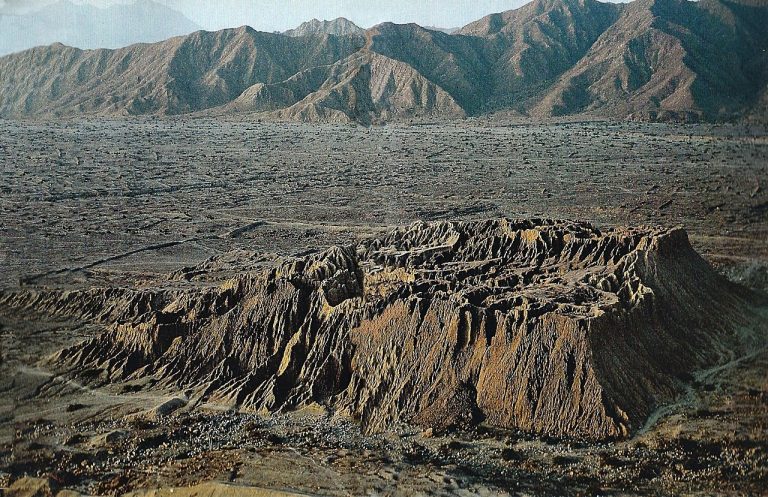
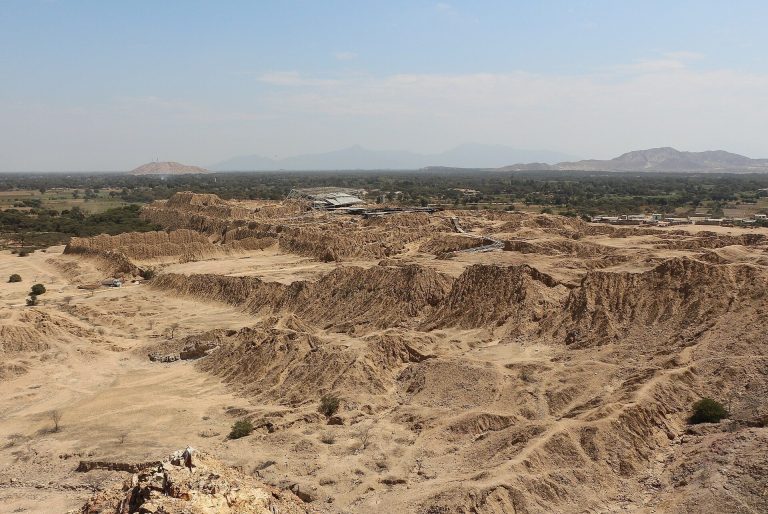
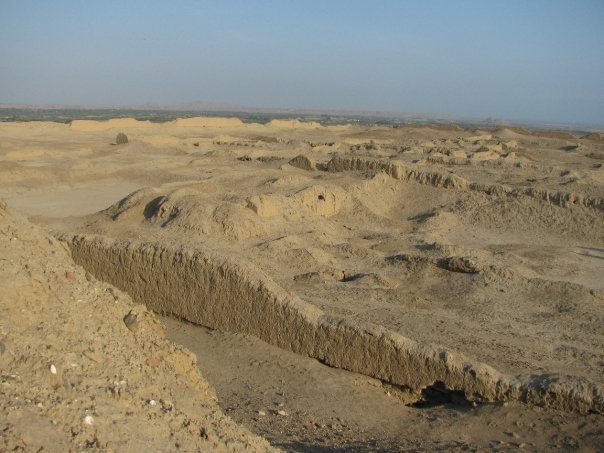
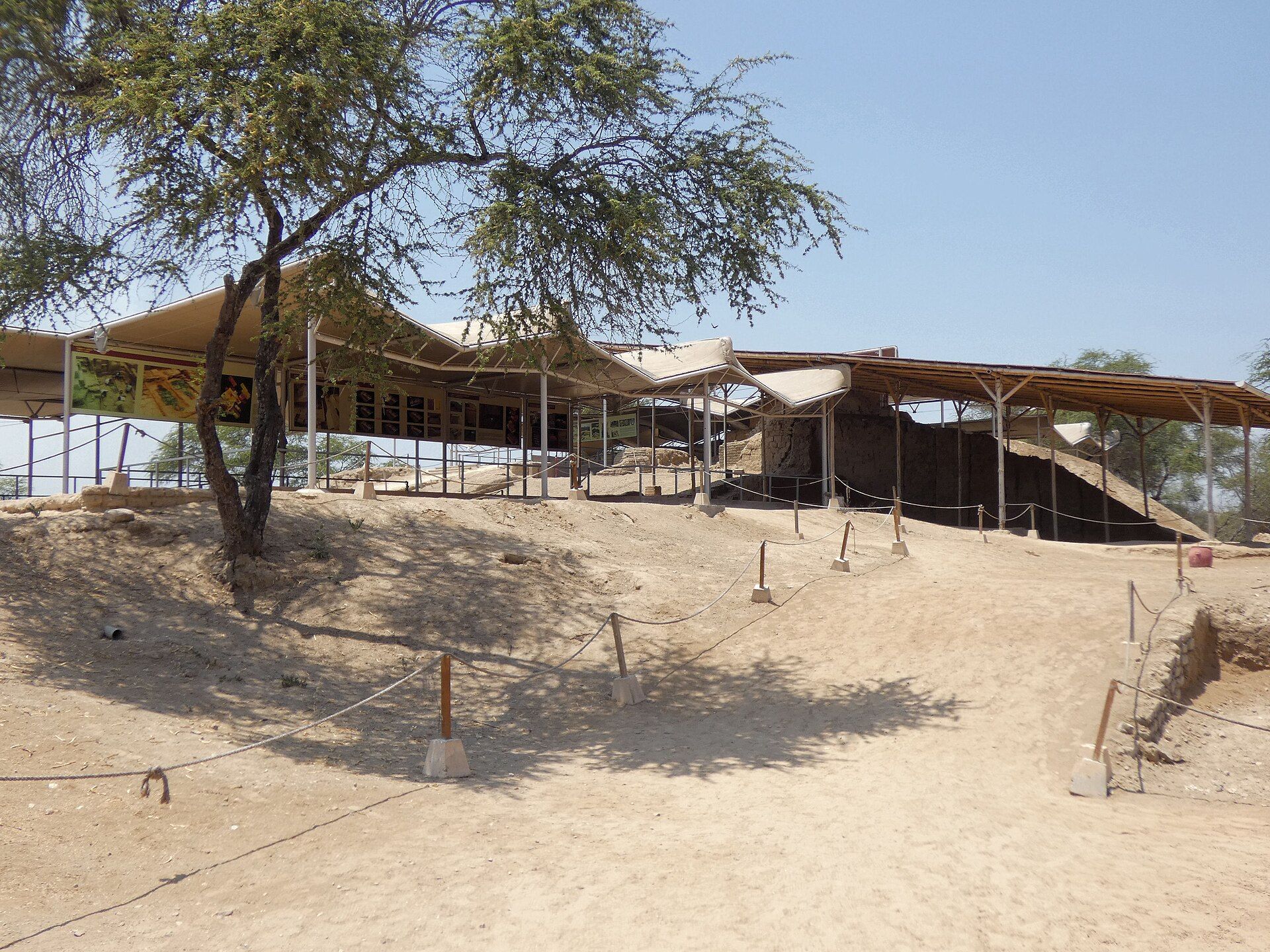
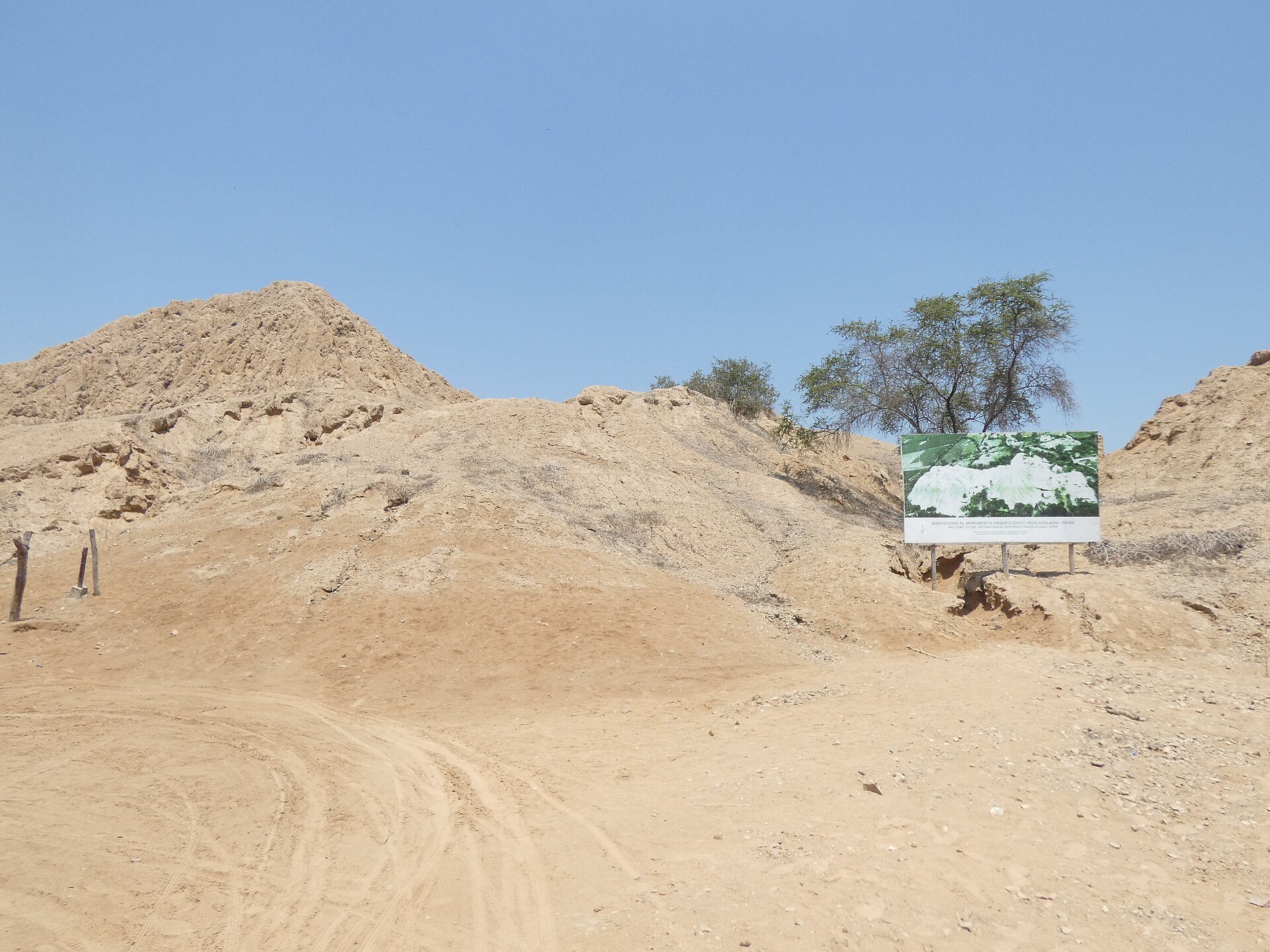
Huaca Rajada covers approximately 29.5 hectares at an elevation of about 83 to 102 metres. The complex consists of three adobe huacas, sacred or monumental Andean structures: two large truncated pyramids and a smaller, low platform. The platform and one pyramid were built by the Moche before AD 300, while a second pyramid was added around AD 700 by a later culture. The pyramids, burial platforms, and other funerary structures were made from adobe, earth formed into sun-dried bricks. Erosion has substantially altered their remains, apparently intensified by successive El Niño climate events that brought unusually heavy rainfall to parts of coastal Peru.
Adobe monuments and burial structures
The pyramidal complex
The three principal huacas form the monumental setting of the funerary complex. Their pyramidal forms and adobe construction link the burial structures to Moche building practice. Marked adobe bricks were used in the platforms and other structures, recording labor contributions associated with taxation and the construction of elite burials.
The Lord of Sipán’s tomb
The tomb of the Lord of Sipán contained precious objects made from gold, silver, copper, bronze, and ceramic. Jewelry and other body ornaments were placed with ceramics, wood carvings, and additional funerary goods. The burial arrangement included the ruler’s companions, a dog, and the other individuals associated with the ceremony surrounding his interment.
Tomb 3
Tomb 3, identified in a traveling exhibition as the oldest of the displayed burials, was a richly furnished pit burial. Its objects included gold jewelry decorated with human faces and spiderweb motifs.
Metalwork and funerary objects
The excavated assemblage included head-shaped and peanut-shaped beads, coffin straps, fan handles, spearheads, a copper-plated banner, ceremonial knives, golden headdresses, gold and silver nose and ear ornaments, and scepters. One necklace consisted of ten spiderweb beads, each showing a body with a human face mounted on golden wires. A gilded copper animal, possibly a fox or dog, was also recovered.
Moche metalworkers hammered copper alloys into thin sheets and used electrochemical processes to apply extremely thin gold or silver surface layers, approximately 0.5 to 2.0 micrometres thick. Copper ingots were shaped into sheets for objects such as masks. The precise coating method remains uncertain, but a widely accepted explanation involves dissolving gold in corrosive water-based compounds, immersing the copper sheet, and heating it to approximately 500 to 800 degrees Celsius. The resulting surface was a gold-copper-silver alloy rather than pure gold.
Individually made head-shaped beads with a silver appearance measured approximately 4.0 by 5.1 centimetres. Craftspeople alternated hammering and annealing a copper-silver alloy, then used plant acids or ammonia-rich stale urine to remove surface copper compounds. Silver made up only about 18 percent of the surface of these beads, although similar objects could contain as much as 90 percent silver at the surface.
Ritual equipment and reconstructed burials
Ornaments and headdresses from the tombs correspond to representations of the Moche Sacrifice Ceremony. Large knives and other tools were associated with bloodletting and ritual decapitation, giving the burial assemblages a direct connection with the ceremonial imagery found in Moche art.
The Royal Tombs of Sipán Museum contains a complete reconstruction of the Lord of Sipán’s tomb. It includes the structural arrangement of the burial, precious-metal body ornaments, jewelry, ceramics, wood carvings, and other funerary objects. Its galleries begin on the third floor and descend through lower levels, following the excavation sequence and the increasing antiquity of the tomb levels.
Some excavated materials, including gilded animals with movable parts, wooden objects, and textile fragments, were poorly preserved. A facial reconstruction of the Lord of Sipán was produced from his skull in September 2016 by the Brazilian 3D designer Cicero Moraes.