Chotuna-Chornancap: A Lambayeque Ceremonial Complex
Site at a Glance
- Popularity
- Medium
- Country
- Peru
- Primary era
- Medieval
- Eras represented
- Medieval
- Civilizations
- Sicán
- Site type
- Religious
- Remains
- Sanctuary
On this page14 sections
History
Chotuna-Chornancap is an archaeological complex in Lambayeque District, northern Peru, about 8 km west of Chiclayo. Built around AD 700, it served as a ceremonial center of the Lambayeque, also called Sicán, a pre-Columbian culture of Peru’s northern coast. Its archaeological span extends from the Middle Horizon through the Late Horizon, conventional periods used to organize Andean history.
Lambayeque center and later occupations
Chotuna served the Lambayeque culture from about 700 to 1300. Chimú occupation followed from about 1300 to 1470, then Inca occupation from about 1470 to 1532. The complex was abandoned in 1532.
Archaeologist Carlos Wester La Torre proposed that the complex had an administrative function as well as a ceremonial one. Evidence from the complex also points to ritual human sacrifice involving adults and children. Practices appear to have changed from partial severing of the head, associated with late Moche and early Sicán traditions, to opening the chest, which became common in Chimú and Late Sicán territories. The latter practice is attributed to cultural influence from northern South America and differed from methods used by some contemporary cultures farther south.
Naylamp tradition
Chotuna is linked in local tradition to Naylamp, a legendary figure associated with Lambayeque history. In the 1910s or 1920s, German engineer and ethnographer Hans Heinrich Brüning identified the site with Chot, a place in sixteenth-century chronicler Miguel Cabello Valboa’s account where Yampallec, an idol associated with Naylamp, was kept. Brüning later changed his view, but local tradition continued to identify Chotuna with the legendary place and to hold that Naylamp and his descendants were buried there.
Investigation and excavation
British traveler and writer Thomas Hutchinson made the first description of Chotuna after visiting in 1873. Brüning investigated the monument during the 1910s and 1920s. In 1972, German ethnologist Hermann Trimborn and archaeologist Jorge Rondón visited Chotuna and Chornancap; Trimborn later wrote historical and descriptive observations about them. Christopher B. Donnan mapped and studied the complex from 1980 to 1982, discovering mural paintings at Chornancap. In a 1989 study, he identified three successive occupation phases at Chotuna using pottery sequences, layered deposits, building sequences, and radiocarbon dating.
The Chotuna-Chornancap Archaeological Project began in 2006 under Wester La Torre, with support from Peru’s Ministry of Culture. Excavation of a structure about 80 m south of Huaca Chornancap uncovered a ritual area containing the tomb of the Priestess of Chornancap, discovered on 18 October 2011. The young woman was interpreted as a priestess, or possibly a ruler, and was buried with eight young women regarded as sacrificial victims. A male burial beneath her remains was publicized in August 2012. In 2016, work resumed at Huaca Susy, beside Huaca Chotuna; a separate team found 13 further graves, and that September a group of 17 pre-Hispanic burials at Chornancap was announced. The Chotuna-Chornancap Site Museum opened on 19 September 2009.
Remains
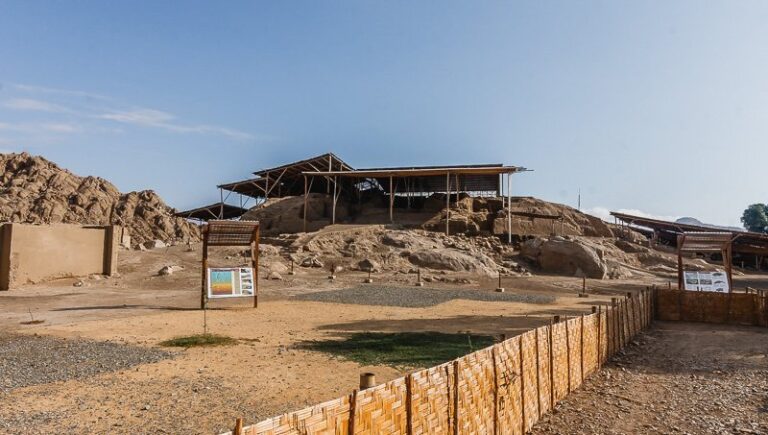
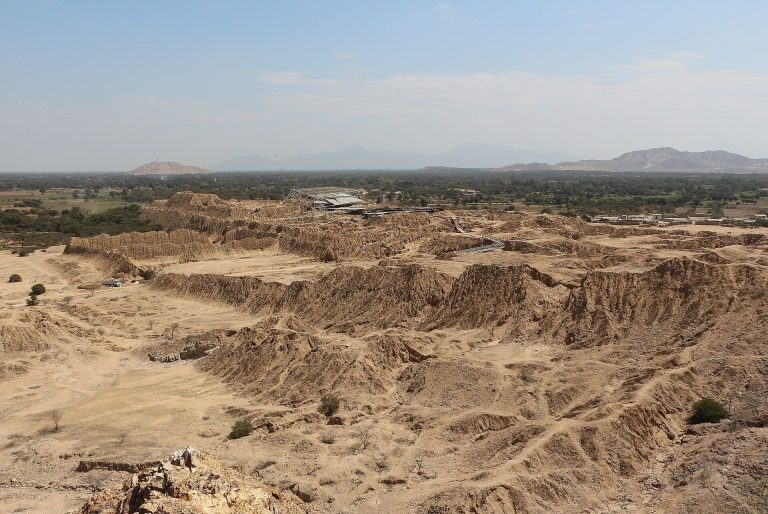
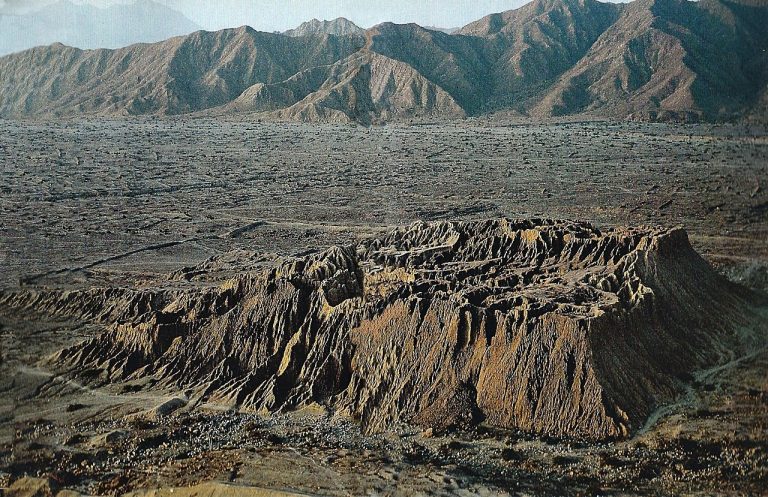
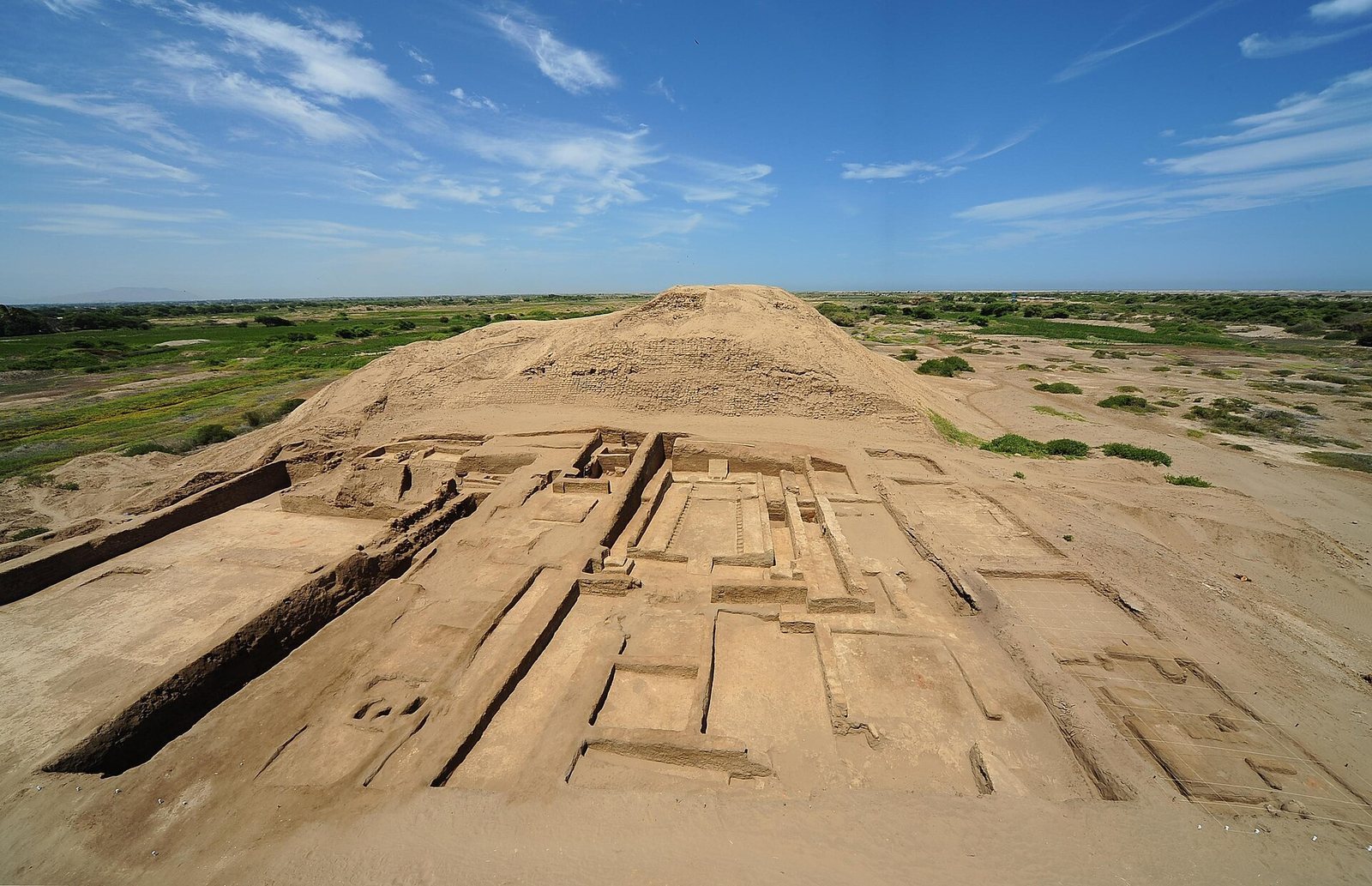
The complex covers about 95 hectares of plain and contains the remains of flat-topped pyramids and compounds, many built of adobe, bricks made from dried earth. Residential areas and cemeteries may have surrounded the monumental buildings. Human bones, pottery fragments, scattered ceramics, and evidence of intensive domestic activity occur in some sectors.
Huaca Chotuna
Main pyramid
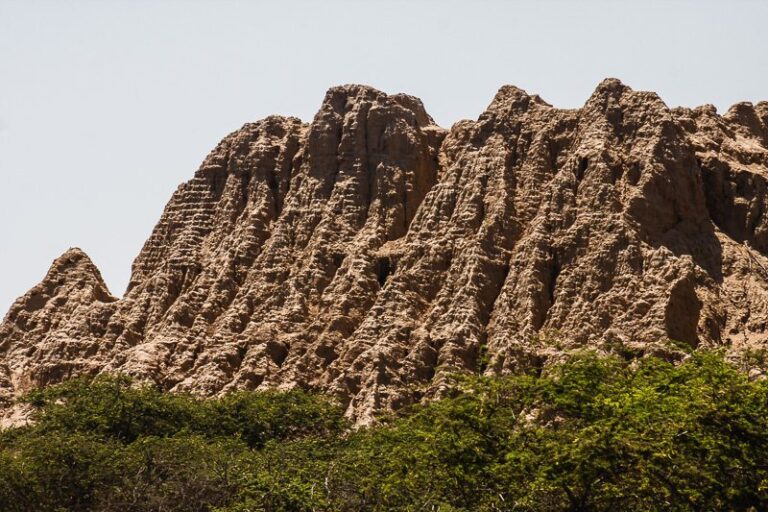
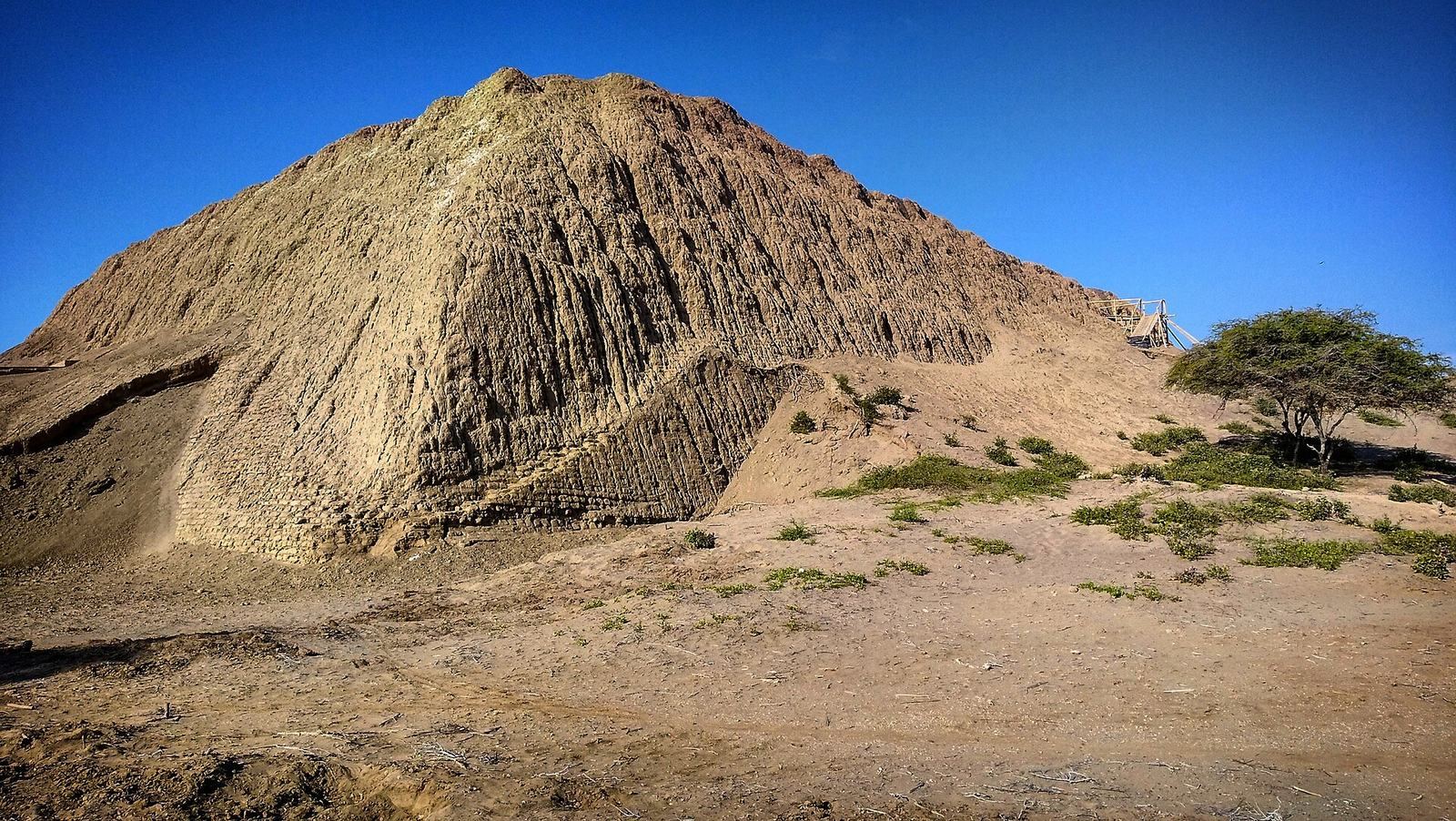
Huaca Chotuna, a sacred monument, includes stepped pyramids, palaces, and walled compounds made from adobe. Its principal stepped pyramid rises about 40 m. A ramp begins at the western front, continues around the west, north, and east sides, and reaches the summit.
Surrounding structures
A rectangular building beside the ramp on the west may have served as an artisan workshop. Large adobe-walled compounds to the southeast were probably gathering places. Smaller buildings to the northeast include the Huaca of the Friezes, Huaca Susy, the Huaca of the Sacrifices, and the Huaca of the Anthropomorphic Wave. Several structures are in ruins. Wall reliefs at Chotuna resemble those at the Huaca of the Rainbow in the Moche Valley.
Huaca Chornancap
Pyramid and northern courtyard
About 1.5 km west of Chotuna, Huaca Chornancap is a flat-topped pyramid with a T-shaped plan. Three platforms, built one above another, connect by a central ramp leading to the summit. On its north side, a corridor opens onto buildings where excavators identified successive periods of occupation and remodeling. A courtyard there has murals of figures depicting activities of the period in Lambayeque artistic style. Artists used six mineral pigments, including red, yellow, dark green, light green, and black.
Palace structure
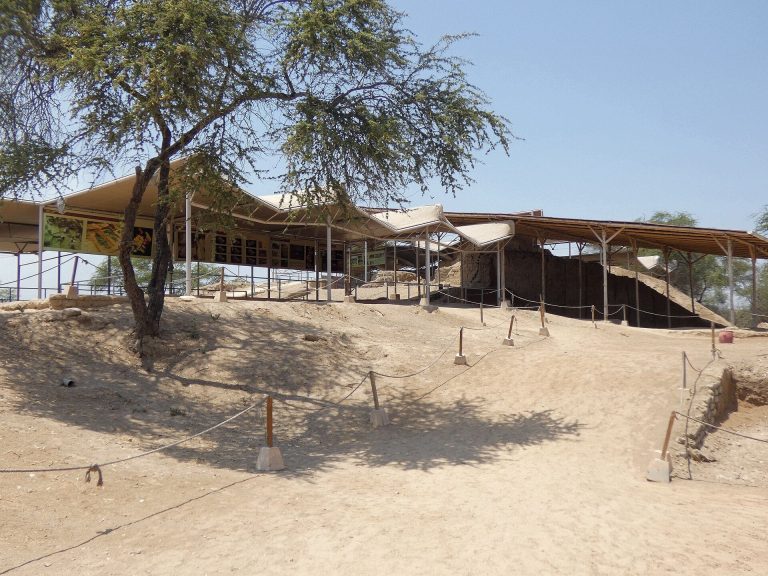
A mound about 80 m south of Huaca Chornancap was extensively excavated. The uncovered building is conventionally called a palace, and its ritual or ceremonial area contained the Priestess of Chornancap’s tomb.
Priestess’s burial
The tomb’s funerary objects included bracelets and finger rings made from tiny beads, nose and ear ornaments, ceremonial vessels, a scepter, a crown, and a mask worked in gold and silver. Two cloths covered the woman’s body; they bore copper lunar-disc ornaments decorated with the culture’s mythical wave motif, associated with the sea.
Other burials
The male burial beneath the priestess’s remains held an adult man laid on his back, extended east to west and facing west. He was not enclosed in an elaborate funerary bundle and was accompanied by other individuals and offerings. These included ten Spondylus princeps shells, from a marine bivalve prized in ancient Andean cultures, and another bivalve with cinnabar, a red mercury-bearing mineral.
Among the burials announced in 2016, one dating to the fifteenth or sixteenth century was considered to belong to a prominent person and included ceramic objects. The remains of two children whose feet had been amputated flanked the grave.
Site museum
The Chotuna-Chornancap Site Museum has an entrance façade modeled on the Huaca of the Friezes. Its displays include ceramics, metalwork, and mummified bodies, as well as oil paintings, graphic representations, and mannequins depicting episodes from Lambayeque pre-Hispanic history, including Naylamp’s landing.