Shrine of the Prophet Jarjis: An Islamic Pilgrimage Sanctuary in Azerbaijan
Site at a Glance
- Popularity
- Medium
- Country
- Azerbaijan
- Primary era
- Classical
- Eras represented
- Classical, Modern
- Civilizations
- Caucasian Albania, Russian
- Site type
- Religious
- Remains
- Tomb
On this page10 sections
History
The Shrine of the Prophet Jarjis is an active Islamic pilgrimage sanctuary in Şəfəq settlement, near Beyləqan in Azerbaijan. Its foundation is traditionally placed around the fourth century, amid the spread of Christianity in Caucasian Albania, an ancient polity in the eastern Caucasus. The shrine is associated with Jarjis, the name for Saint George in Islamic tradition. It is also known as the Shrine of the Yellow Prophet and the Chain Shrine.
Origins and local traditions
Islamic traditions sometimes identify Jarjis with Khidr, a revered figure in Islam, or with Elijah, a prophet recognized in both the Bible and Islam. One story describes George as a merchant from Palestine who preached against idolatry in Mosul. He opposed King Dadə’s statue of Apollo, an ancient Greek deity, and was imprisoned and tortured. In the story, angels helped him expose the idols as protected by the devil. George was martyred, and God destroyed the city in a rain of fire. His body was believed to have been buried at the Church of Saint George in Lod. Preachers later carried the story to Azerbaijan.
A local tradition instead says George travelled from Syria to the Mil plain and lived for 15 to 20 years in Beyləqan, formerly called Paytarakan. According to this account, Zoroastrian priests, followers of an ancient Iranian religion, attacked him because he tried to spread Christianity. Their arrows and blows did not injure him, but he fell into a well. The priests covered it with earth, forming a mound.
A separate legend says George came to Beyləqan to visit an uncle who had once ruled there, before King Dərziyana took power. The king suspected George of seeking revenge and persecuted him. Tradition says 33,000 people converted to Christianity, but the king had George dismembered and thrown into a well. God revived him three times. After a fourth dismemberment, George asked not to be revived again, and the well was filled with earth. His supporters enclosed the place for people to visit.
Destruction and restoration
Natural disasters and foreign invasions destroyed the shrine. It was rebuilt in the seventeenth or eighteenth century. Between 1899 and 1905, Hacı (an honorific for a Muslim who has completed the pilgrimage to Mecca) Qurban, son of Hacı Nəbi, arranged further restoration and brought the architect Həsən Təbrizi from Qajar Iran. The Qajar dynasty ruled Iran from the late eighteenth to the early twentieth century. After Qurban died, his son Hacıqulu continued the work. Həsən Təbrizi left the project unfinished in 1905, went to Tabriz, and died there. The chain he had left hanging in the monument’s center came to be treated as sacred by local people.
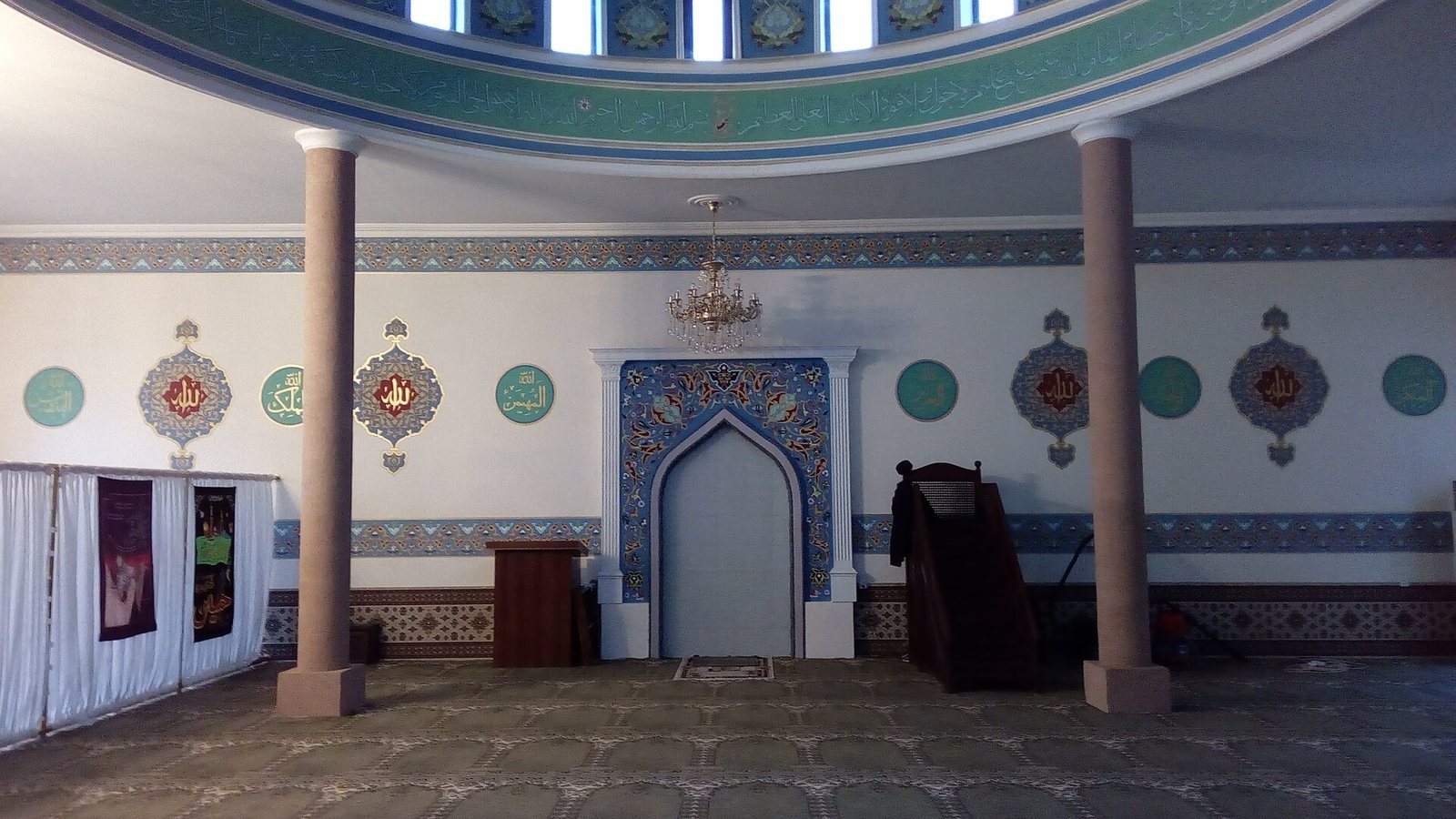
Repairs began in 1989 and resumed in 1997, after Azerbaijan became independent. From 2008 to 2010, Hacı Adil Qardaşxan oğlu of Hindarx built a mosque at the site. A local legend about the Soviet period says officials sent a group to demolish the shrine, but its leader, a Russian officer, died after a snakebite. Later attempts were also said to have been stopped by snakes, after which the authorities restricted access.
Continuing practice and disputed attribution
Pilgrims traditionally circle the grave in prayer and throw scarves toward the suspended chain. A scarf catching on its hook is taken as a sign that the thrower’s wish will come true. Other explanations say the chain was used to draw water from the well, to help workers keep their balance during construction, or to hang a lamp. Local clerics have said it has no connection with Islam and is venerated because it hangs above the grave.
The grave is traditionally identified as Saint George’s, but its occupant has not been established. The theologian Elşad Miri has argued that it belongs to an unidentified Russian officer and has criticized the shrine as contrary to Islam. Researcher Cəmşid Bəxtiyar has argued that preachers, rather than George himself, brought his story to Azerbaijan. The grave’s attribution remains unresolved.
Remains
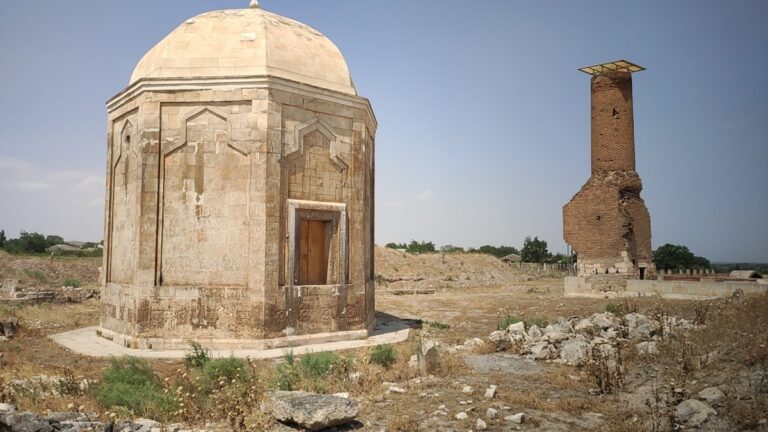
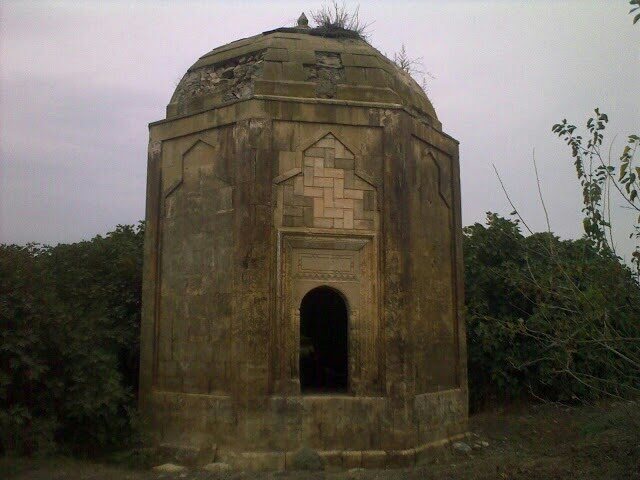
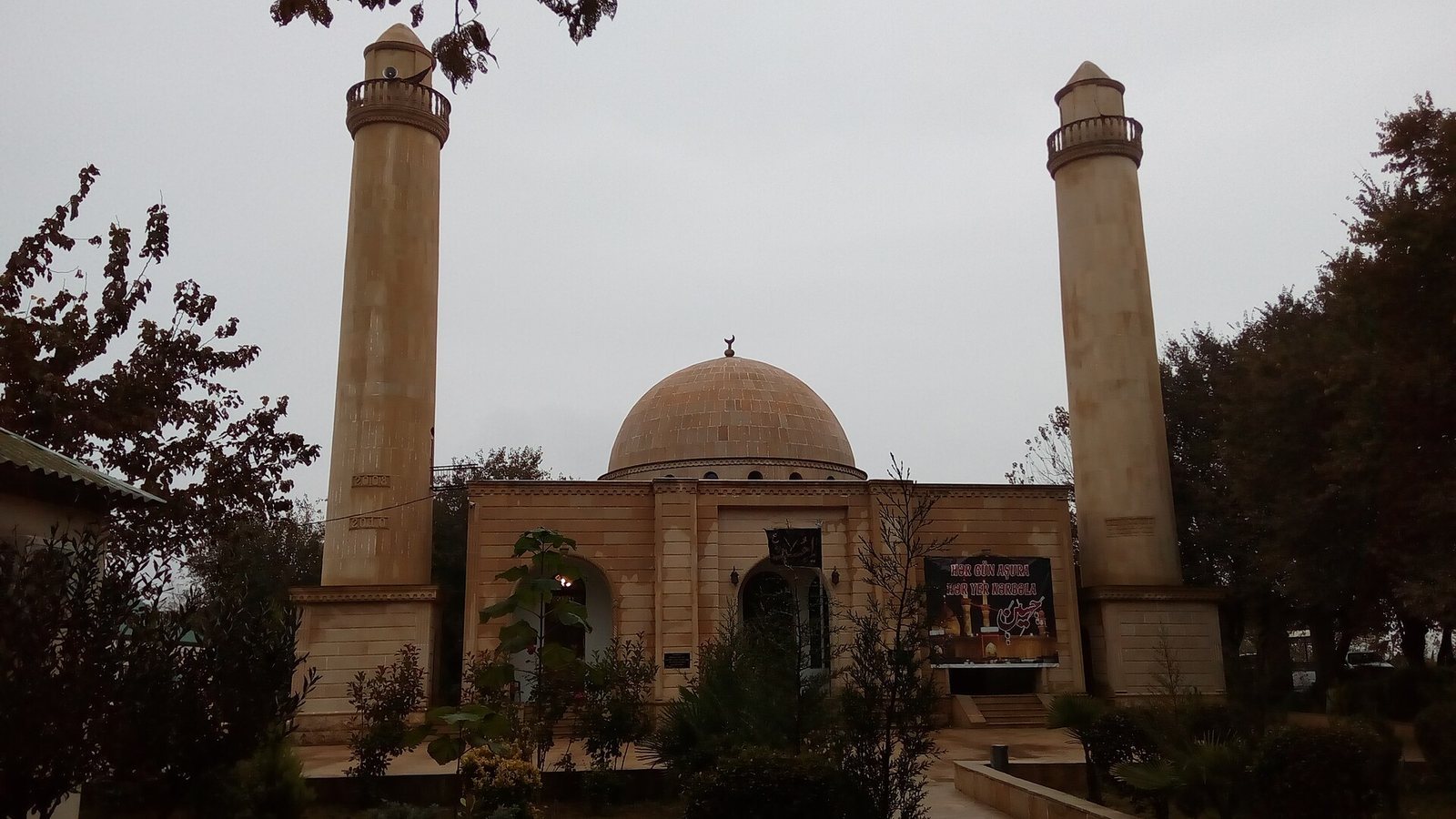
The complex lies within Şəfəq Cemetery, which was established around the shrine at a later date. It includes the shrine, a mosque built over it, and the surrounding burial ground. The shrine’s outline is circular, while its interior walls form an eight-sided circuit. Baked brick is the principal building material, and a dome rises above the structure.
Shrine building
Exterior
The shrine stands 7 metres high, with baked-brick walls 1.20 metres thick. Four arched openings in the dome each measure 0.20 by 0.40 metres. Two lower-level windows measure 1 by 1.40 metres, and the wooden entrance door is 1 by 2 metres. The building was once yellow, a colour locally associated with Saint George’s appearance, and was painted in other colours during later repairs. Large mirrors were formerly placed on the dome to guide caravans across the Haramı plain.
Interior and grave
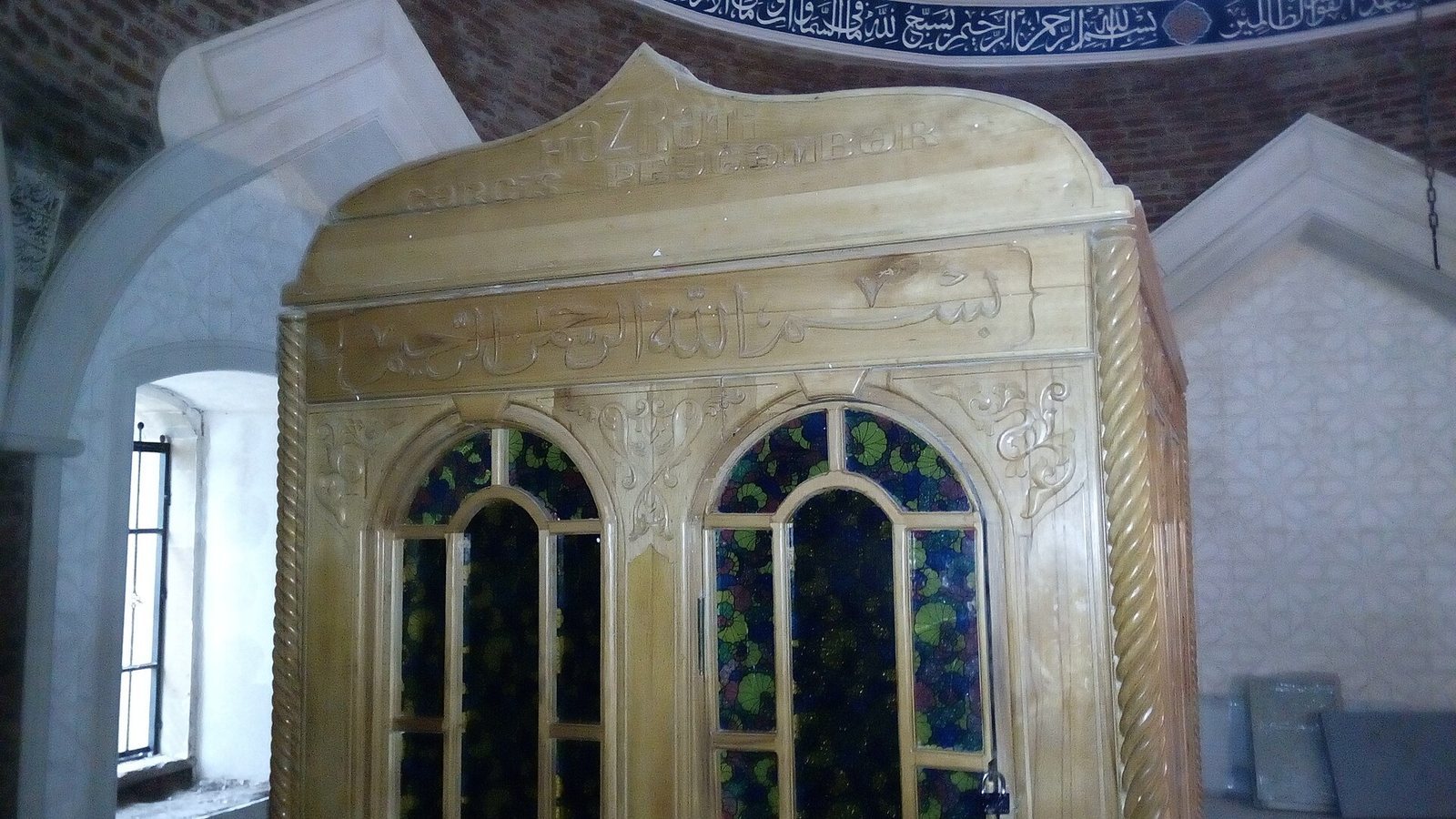
Just inside the entrance, a corridor measures 3 by 4 metres and rises to a height of 6 metres. A stone stairway on each side leads to the roof. At the shrine’s centre, the grave is faced with white marble. Its headstone bears the words “The revered Prophet Jarjis” in Cyrillic, Latin, and Arabic scripts.
Chain and worship space
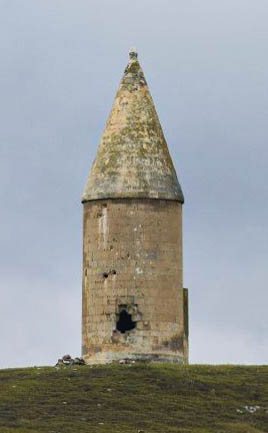
A 9-metre chain hangs from the centre of the dome. The shrine has ornamental patterns inside and can accommodate 100 people worshipping at one time. The monument is also described as having two minarets, mosque towers traditionally associated with the call to prayer.
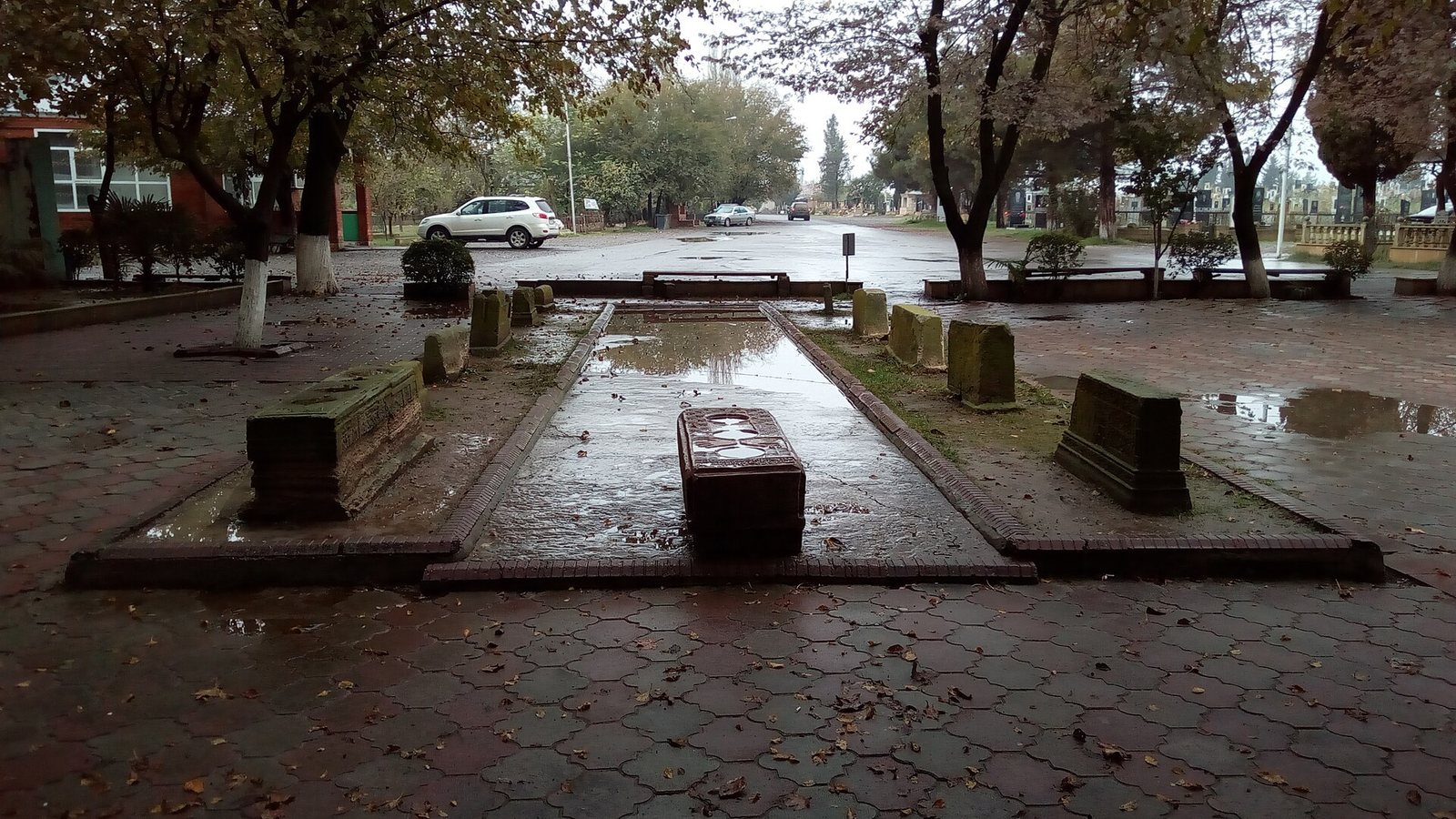
Cemetery
Graves around the shrine carry motifs associated with life and the heavens, including a wheel-of-fortune design, symbols of the moon and sun, and images of horses and riders. Some monuments bear six-pointed stars and inscriptions in Arabic script. The monuments with stars are dated to the period of Tsarist Russia, the era of imperial Russian rule before the 1917 revolution.