Szabolcs Earthwork: An Early Magyar Fortification and Royal County Seat
Site at a Glance
- Popularity
- Medium
- Country
- Hungary
- Primary era
- Medieval
- Eras represented
- Medieval, Modern
- Civilizations
- Austria-Hungary, Habsburg, Hungarian
- Site type
- Military
- Remains
- Castle
On this page6 sections
History
The Szabolcs earthwork is an early medieval fortification near the present-day settlement of Szabolcs in Hungary, built around 950. It may have served as a residence for a Magyar tribal chieftain during the Magyar Conquest, the settlement of the Carpathian Basin by the Magyars. The medieval chronicler known as Anonymus later credited the post-Conquest construction to the chieftain Szabolcs.
Royal county and frontier defense
Under King Stephen I, the surrounding area came under Christian royal authority, and the earthwork became the seat of the ispán, the king’s appointed head of a royal county, an administrative district under royal rule. In the second half of the 11th century, the defenses were strengthened by raising the walls and adding thickness to their inner sides. This work followed incursions by the Oghuz and Cumans, Turkic peoples, in 1068, 1085, and 1091.
In 1092, the castle entered contemporary written record in connection with the Synod of Szabolcs, a church council convened under King Saint Ladislaus. Ecclesiastical and secular leaders gathered there and accepted decrees issued by Pope Urban II. The county’s ispán worked with a castellan, who managed daily affairs at the castle, and a military commander, who led its warriors. These warriors were free men required to serve in arms and joined campaigns across the kingdom. Other people attached to the castle raised livestock, farmed, and carried out some crafts; slavery also existed in the early period.
Destruction and later use
King Andrew II’s grants of much of the county’s land weakened its body of armed free men. During the Mongol invasion of 1241–1242, a major Mongol military campaign in Hungary, Mongol forces captured and demolished the castle. It then lost its military importance. Before 1266, the king granted the settlement and castle to a branch of the Szentemágócs kindred, a kin-based lineage. The family held the estate until 1380 and adopted the name Szabolcsi from the place.
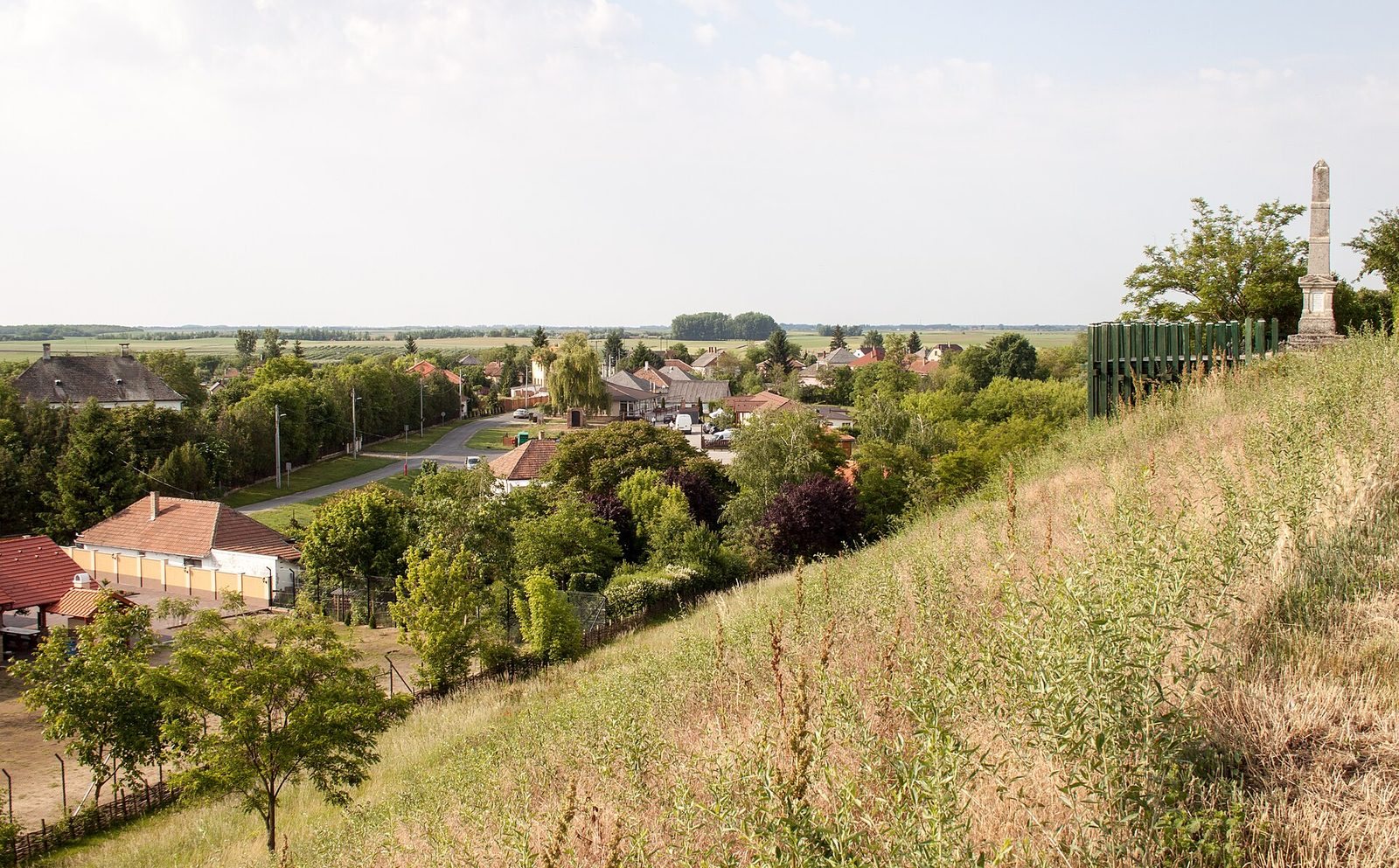
From the 18th century, the village cemetery occupied the earthwork’s interior. A millennium memorial was erected in 1896, and a statue of Szabolcs was installed at the entrance in 1996 to mark 1,100 years since the Hungarian Conquest.
Remains
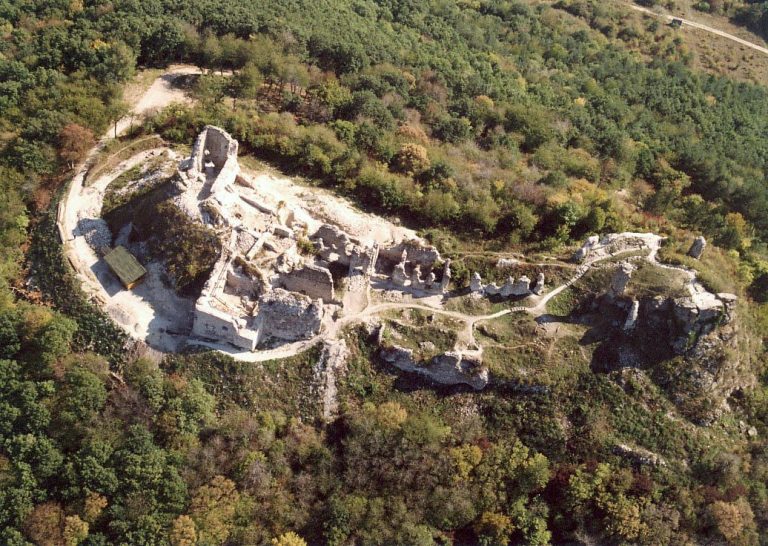
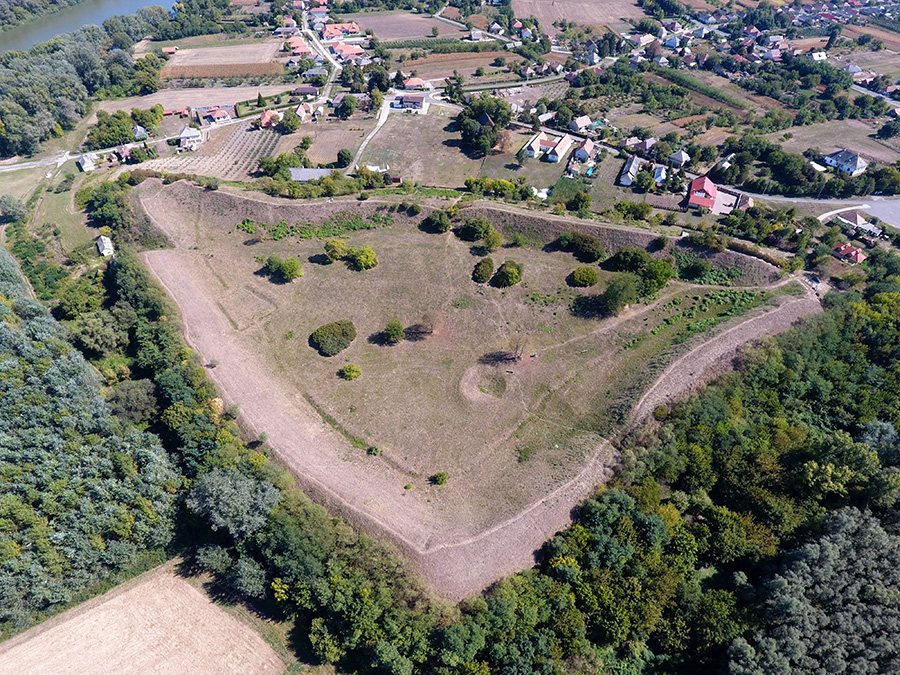
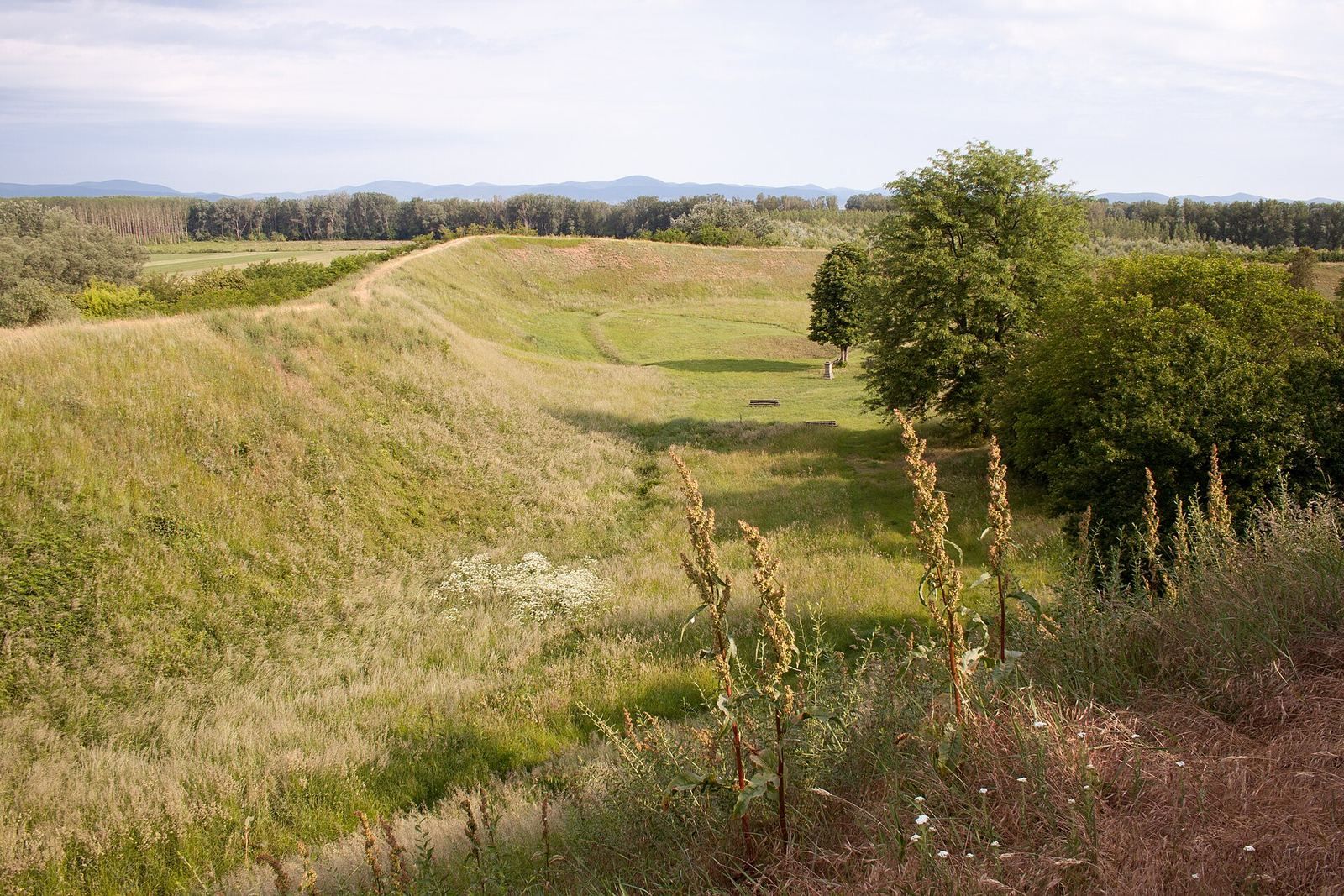
The earthwork has a triangular plan, with sides measuring 337, 225, and 387 metres, and covers 3.3 hectares. Two sides follow the former high bank of the Tisza River, while a dug artificial channel bordered the longest side. This arrangement left the fortification rising like an island amid surrounding waters. Its original defenses were made from timber beams arranged in a grid and packed with earth.
Defensive walls and gates
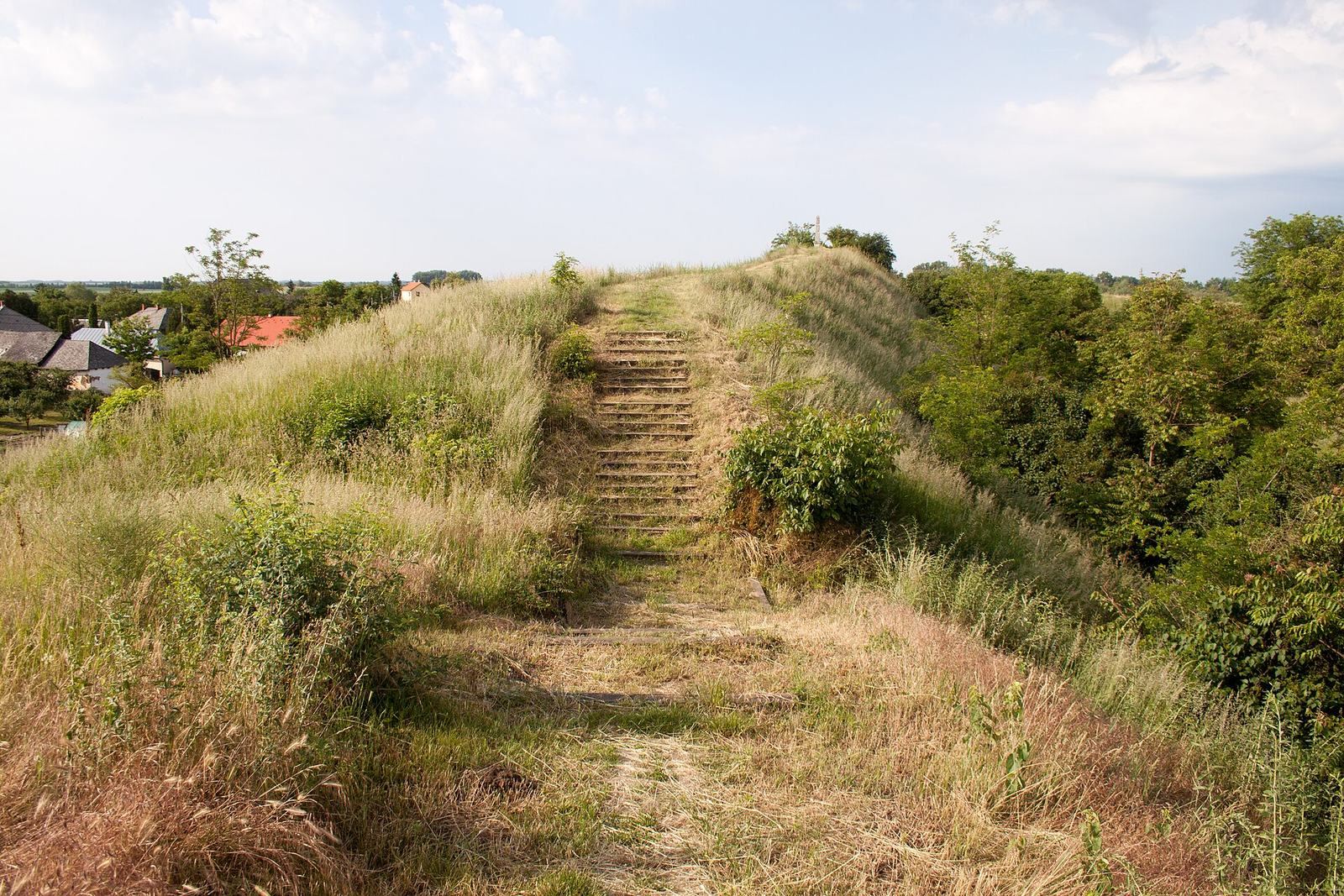
The earthen walls remain recognizable. Breaks at three points mark the former positions of paved castle gates, linking the surviving outline to the fort’s earlier entrances.
Interior and commemorative features
A depression within the earthwork may have been a cistern or a well. The millennium memorial stands on a wall, while the statue of Szabolcs is positioned at the entrance.