Julian Column: A Roman Monument Honoring Emperor Julian in Ankara
Site at a Glance
- Popularity
- Medium
- Country
- Turkey
- Primary era
- Classical
- Eras represented
- Classical
- Civilizations
- Roman
- Site type
- Civic
- Remains
- Monument
On this page4 sections
History
The Julian Column is a Roman-style stone monument in Ankara, Turkey, completed around 360–362. It was erected in honor of Julian, the fourth-century Roman emperor who sought to restore traditional Roman religious practices and is known as the last pagan Roman emperor. In 362, Julian launched a campaign against the Persians along a route through Ankara. News that he would pause and stay in the city prompted preparations across Ankara, including the construction of the column.
The monument is also popularly known by the Turkish nickname Belkıs Minaresi, meaning “Belkıs Minaret.” A minaret is a tower associated with a mosque, but the nickname does not indicate that the column served that purpose.
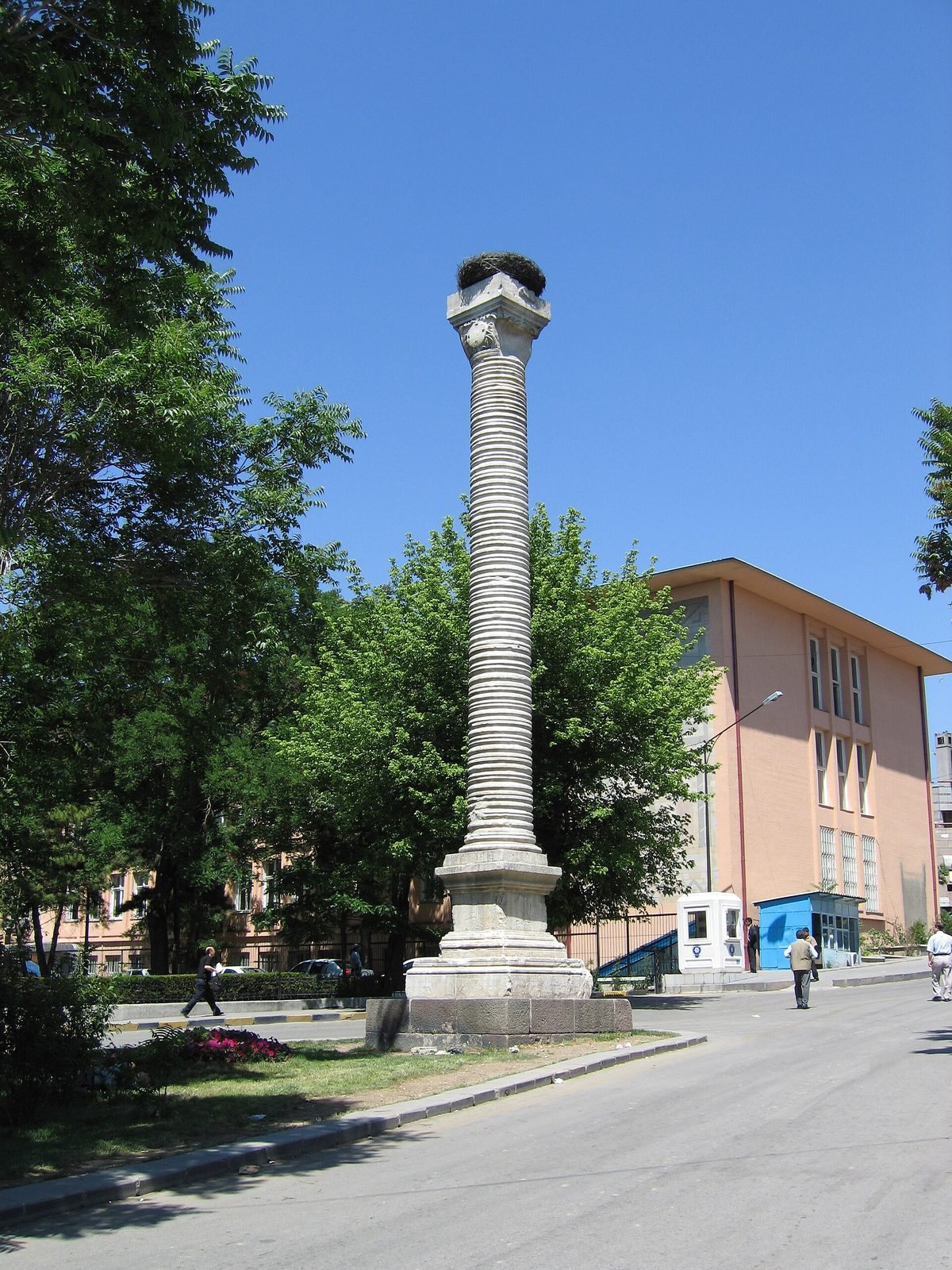
The column originally stood between the present-day İş Bankası building and Taşhan. The uneven ground caused it to lean over time, and in 1934 it was moved to Government Square, in front of the Ankara Governor’s Office. After many years without repair or renovation, the governorate restored it in 2001.
Remains
Column and platform
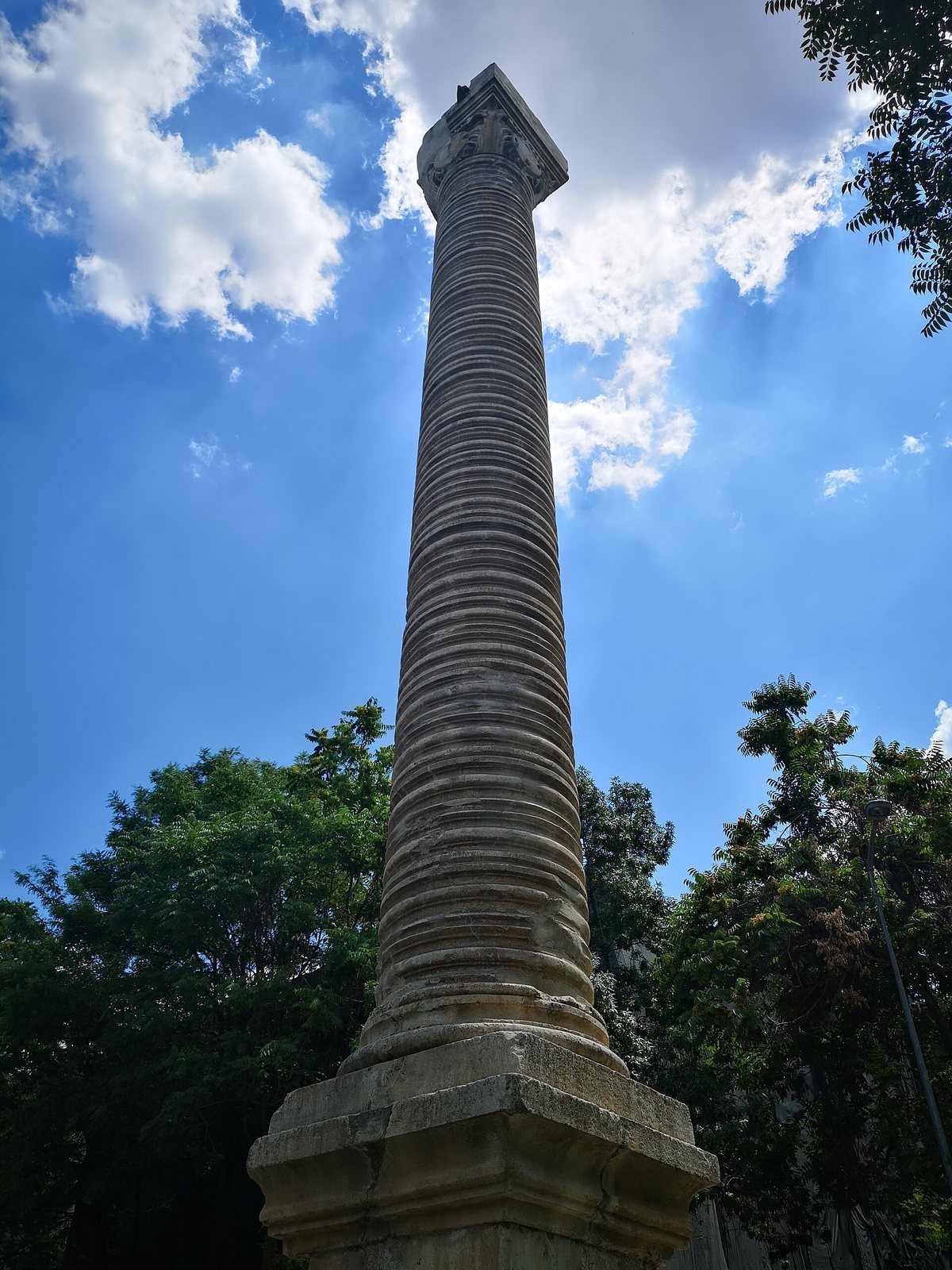
The monument is about 15 metres high and stands on a platform of andesite, a volcanic building stone. Its masonry, construction using laid or joined stone units, is made of white-grey limestone. The base is plain, while the shaft is grooved and ringed. At the top is a Corinthian capital, an ornate column top with leaf decoration, including raised acanthus motifs shaped after a leafy plant. The capital’s north-facing side is extensively damaged, although the column is generally in good condition.
Stork’s nest
For many years, migrating storks used a nest on the column as a stopping and breeding place. The nest was carefully protected during the 1934 relocation and the 2001 restoration. Images of the column with the nest appeared on postcards, postage stamps, and photographs of Ankara.