Budeč: A Prehistoric and Medieval Hillfort in Czechia
Site at a Glance
- Popularity
- High
- Country
- Czechia
- Primary era
- Medieval
- Eras represented
- Bronze Age, Medieval, Early Modern, Modern
- Civilizations
- Duchy of Bohemia, Habsburg, Habsburg Austria, Holy Roman Empire, Kingdom of Bohemia
- Site type
- Military
- Remains
- Fort
On this page13 sections
History
Budeč is a hillfort in Czechia whose occupation began in the Bronze Age and whose Slavic-period fortifications made it one of the Přemyslid dynasty’s principal strongholds by the tenth century. The Přemyslids were the ruling dynasty of medieval Bohemia. Budeč’s earliest known occupation belongs to the Middle Bronze Age, associated with the Tumulus culture, and the Late Bronze Age, associated with the Knovíz culture.
Prehistoric and Slavic fortifications
The first stone defenses were built during the Knovíz period. In the ninth century, a Slavic rampart was raised over the prehistoric fortification, possibly under Duke Bořivoj I, an early Přemyslid ruler. By the tenth century, Budeč ranked among the dynasty’s principal strongholds.
The princely stronghold
Between 895 and 905, Duke Spytihněv I commissioned a rotunda dedicated to Saint Peter. Its dedication to Saints Peter and Paul is known from the sixteenth century onward. The site is also linked by tradition to Saint Wenceslaus, a duke of Bohemia later venerated as a saint. The medieval Latin legend Crescente fide says that his father, Prince Vratislaus, sent him to Budeč to study the Psalter, the biblical book of Psalms, with a priest named Učen. The sixteenth-century chronicler Václav Hájek expanded this story, while later traditions connected Budeč with the legendary figure Krok and his daughters. These narratives gave the hillfort a more prominent place in the past than its known history appears to warrant.
A second rampart was added in the tenth century, and the Church of the Nativity of the Virgin Mary was built in the second half of that century. By the late tenth or early eleventh century, a third rampart had replaced the second. An episode of upheaval is thought to have brought the princely court complex to an end. The sequence has been linked to the second rampart covering the cemetery beside the rotunda and to the creation of a mass grave nearby. A common interpretation connects these events with the political change after Wenceslaus’s murder, when Boleslaus I became duke. The burial may instead, or also, relate to an unidentified tenth-century conflict.
Decline and later use
By the end of the eleventh century, the third rampart had deteriorated and Budeč’s use as a fortress had ended. People continued to live on the hill for several centuries as its population gradually declined. By the twelfth century, Budeč no longer appears among important castles or their administrators, suggesting that it had lost its place in state administration. In the second half of the thirteenth century, Queen Kunigunda of Halych gave the site to the Vyšehrad Chapter, a religious community of clergy based at Vyšehrad in Prague.
Burials took place beside the Church of the Nativity of the Virgin Mary for centuries. The church was closed in 1786 during the Josephine reforms, measures introduced under Emperor Joseph II that affected the Catholic Church, and was later demolished. Its stones may have been reused in a nearby cemetery wall built in the early nineteenth century. A new cemetery beside the rotunda was established in 1836. Budeč was considered as a possible national burial ground for distinguished people, but the proposal was instead realized at Vyšehrad Cemetery in Prague.
Modern remembrance and investigation
In the 1840s, educator Karel Slavoj Amerling drew on Budeč’s reputation as a supposed center of learning to establish a Czech industrial school of that name in Prague’s New Town. The school soon failed for lack of funds; its buildings later served as university dormitories and a canteen. Amerling’s promotion of Budeč also inspired the names of several teachers’ associations. Archaeological investigations began under Václav Krolmus in the 1840s. Zdeněk Váňa and Miloš Šolle undertook systematic research in the 1970s and early 1980s, and Andrea Bartošková investigated the site in the 1980s and later reviewed earlier discoveries.
The hillfort became a National Cultural Monument in 1962, and the hillfort and rotunda were listed as cultural monuments in 1967. During the twentieth century Budeč became a Catholic pilgrimage site, with gatherings around the feast of Saints Peter and Paul in late June and a National Saint Wenceslaus pilgrimage in late September. In the summer of 1939, pilgrims used the gathering to protest against the German occupation of the Czechoslovak lands. A fire damaged the rotunda’s interior on 2 August 1876; its liturgical space was rearranged in the 1990s.
Remains
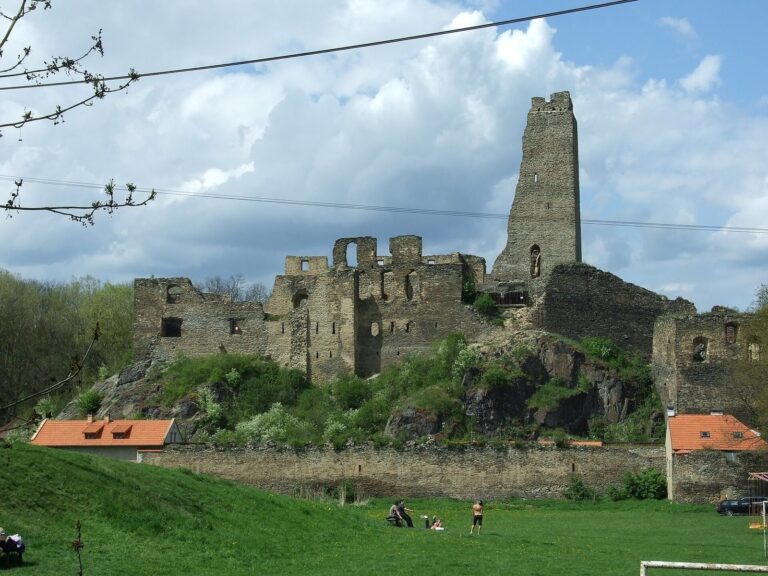
Budeč occupies a ridge spur about 260 to 280 metres above sea level, between the Zákolanský and Týnecký streams. The summit rises about 60 metres above the surrounding valleys. The slopes provide natural protection except at the southwestern neck, and the ground falls especially steeply to the southeast. Two main defensive circuits survive as the defining elements of the hillfort’s layout.
Fortifications
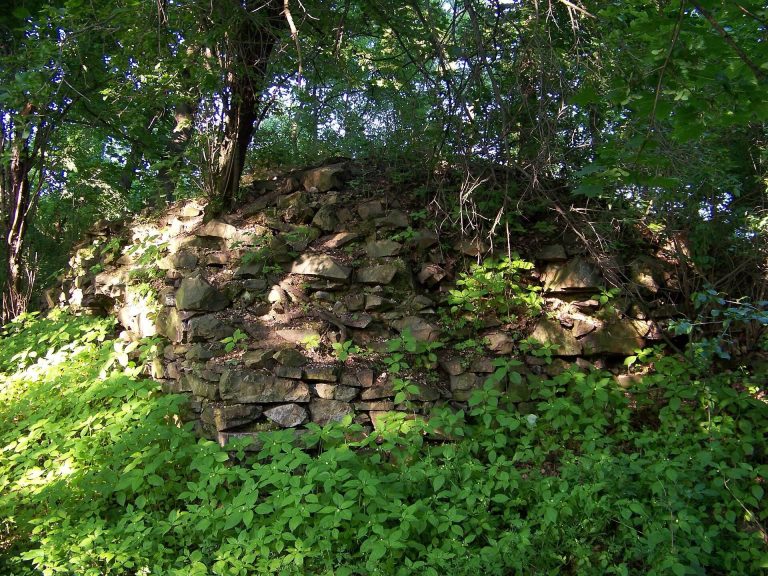
The oval inner enclosure, or acropolis, is the elevated core of a fortified site. At Budeč it covers more than three hectares at the highest point of the hillfort, and its ramparts extend for over 700 metres. A roughly triangular outer enclosure wraps around the acropolis on its northern side. Covering more than 19 hectares, its defenses run for about 1.5 kilometres.
The latest rampart reached a thickness of up to 11 metres and was accompanied by an external ditch. Some specialists suggest that smaller forward defenses may have joined the surviving works to the north and east, although later changes to the terrain have made their course uncertain.
Rotunda of Saints Peter and Paul
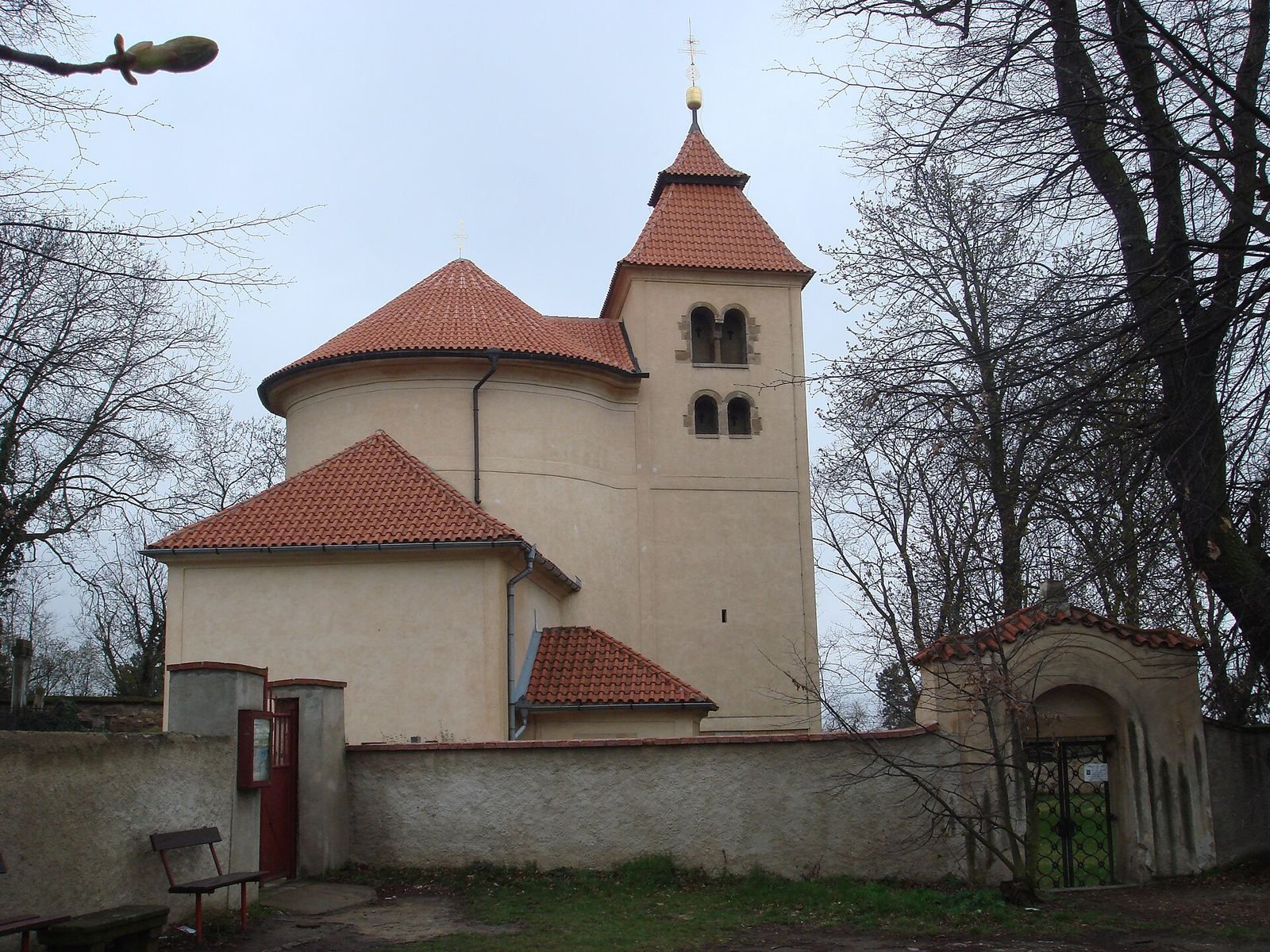
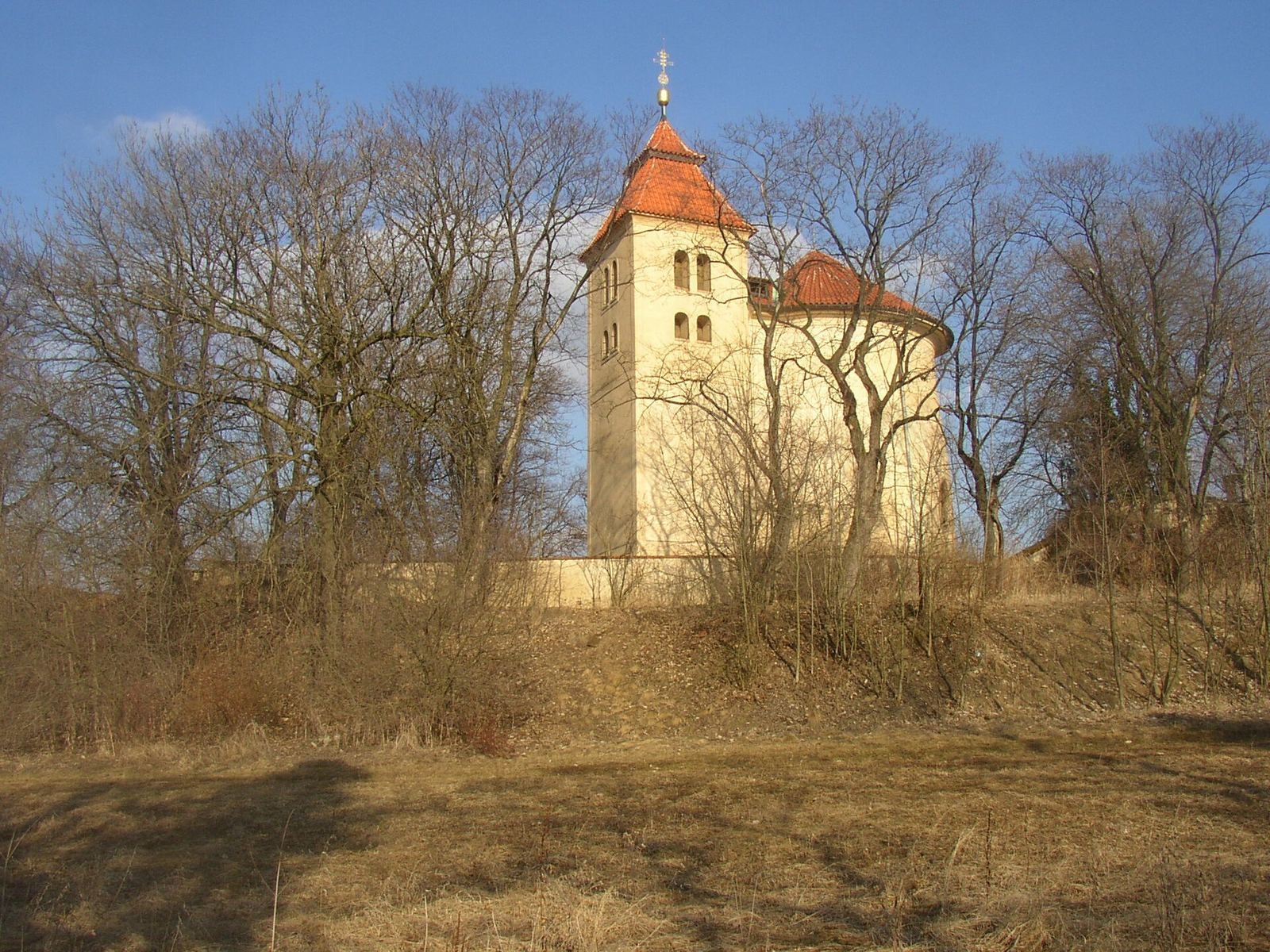
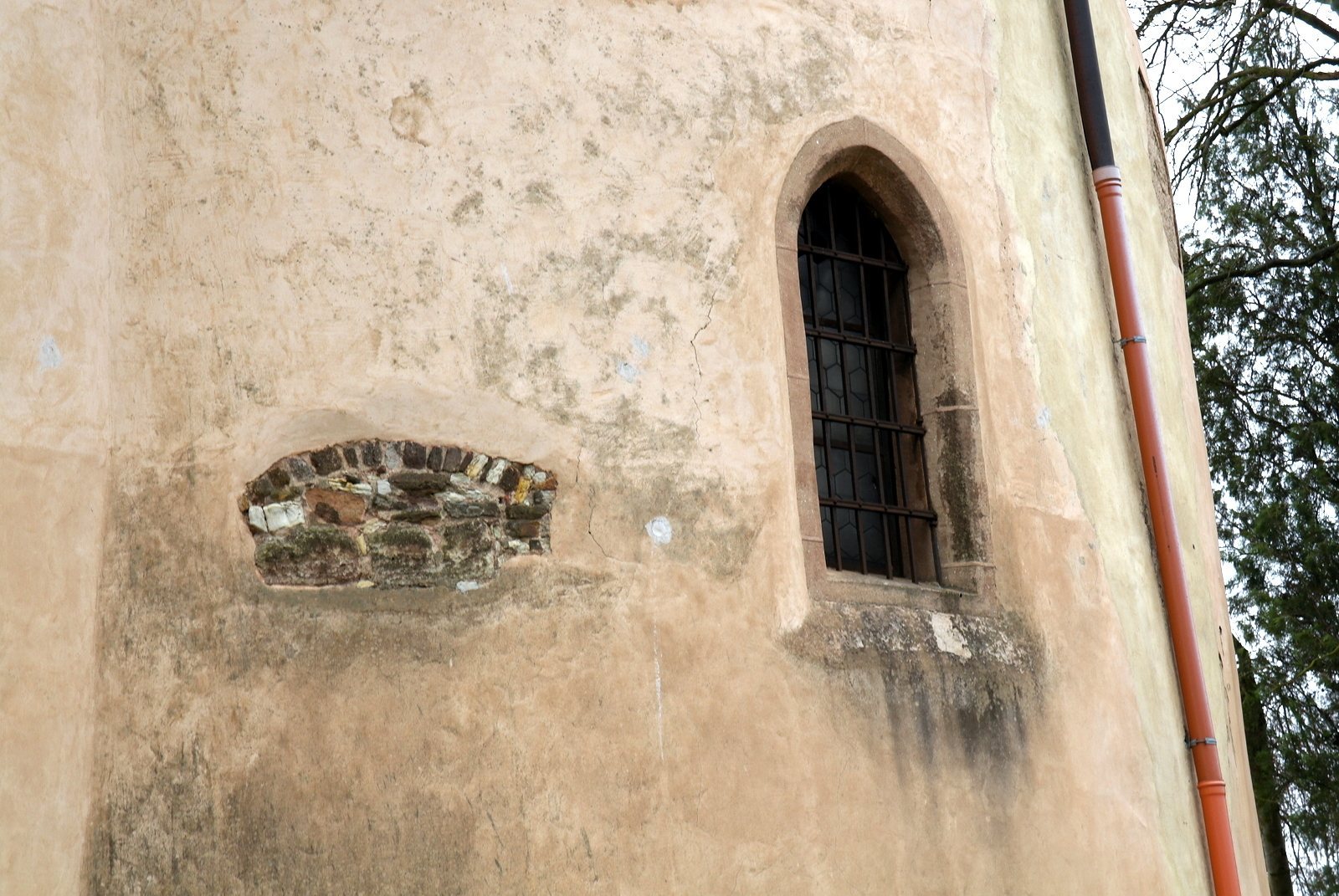
The rotunda is a slightly uneven circular building measuring more than eight metres across. Much of its masonry is original, and it is the oldest surviving building in the Czech Republic. A tower stands on its north side. Inside, a stone Renaissance pulpit bears the date 1585, and a sacristy was added in 1663.
Most of the interior decoration, including the principal altar, dates from periods later than the 1876 fire. An altar made in 1926–1927, designed by Štěpán Zálešák and carved by František Vavřich, once held a crucifix of unknown origin from the late sixteenth century. In the 1990s the altar was transferred to a church in Žilina. The present altar, made of marlstone, was created in 1994 by sculptor Petr Váňa.
Church of the Nativity of the Virgin Mary
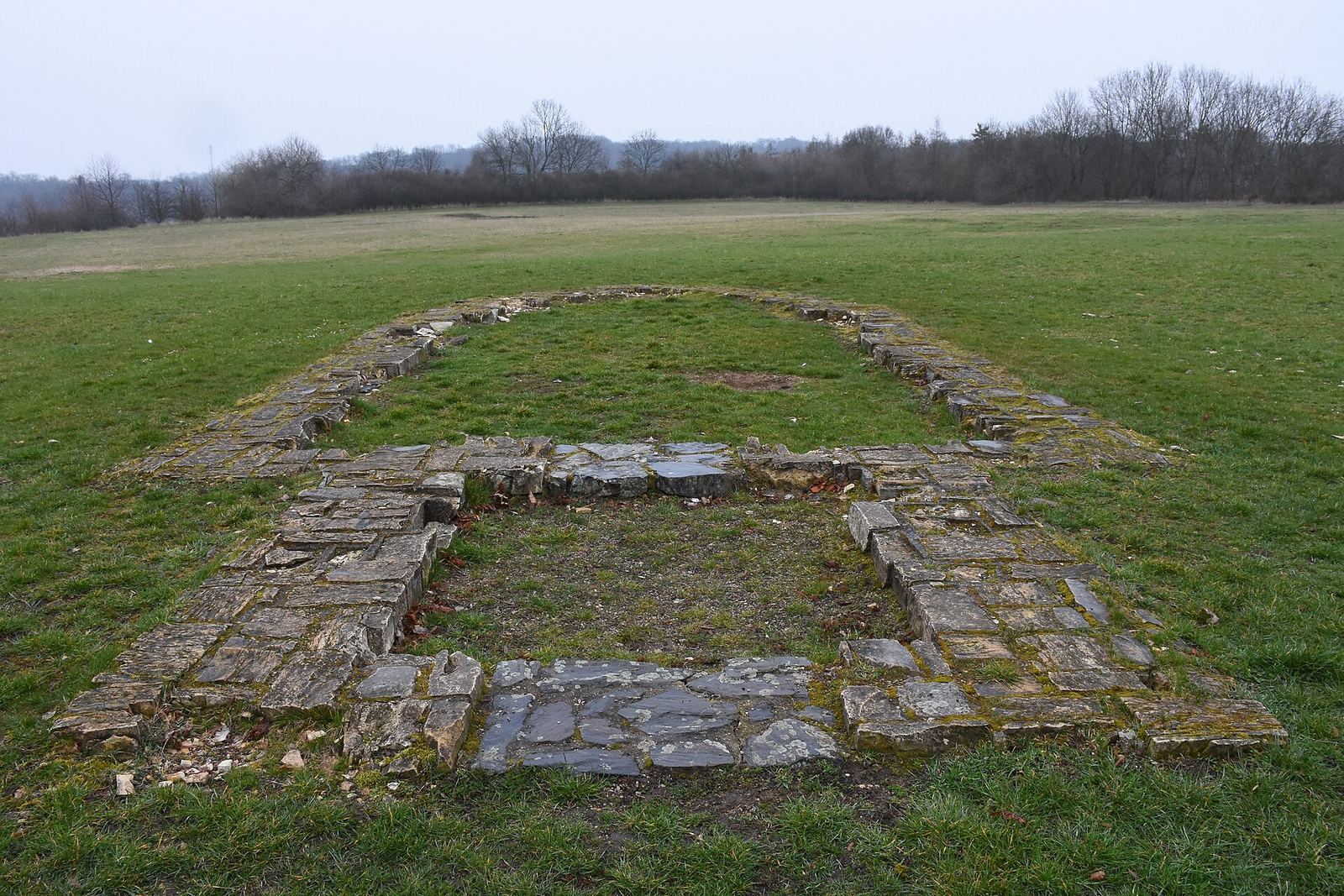
The former church was a single-nave building about 10 metres long and five metres wide, with a horseshoe-shaped apse, a rounded sanctuary end. A tower may have been added to its western front in the thirteenth century. Its ground plan is now marked in the grass by a model of the foundation masonry, a few dozen metres from the rotunda.
Cemeteries and burials
Cemetery beside the Church of the Nativity
The cemetery beside the Church of the Nativity contained 56 identified graves and dates to the first half of the tenth century. Finds from some burials include earrings, spherical buttons, and spurs. The burials’ lack of grave goods and of measures intended to prevent the dead from returning indicate Christian practice.
Cemetery beside the rotunda
The cemetery adjoining the rotunda includes the graves of educator Karel Slavoj Amerling, sculptor František Hnátek, historians Otto Urban and Václav Davídek, and members of the František Prokůpek family, who died in a railway accident in 1947. Some victims of the railway accident at Zákolany on 25 January 1964 are also buried there.
Mass grave at Na Týnici
Near the hillfort at Na Týnici, a mass grave held the remains of about sixty people, probably warriors. Its connection to an unidentified tenth-century conflict remains uncertain.