Issa: An Ancient Greek Colony and Roman City on Vis
Site at a Glance
- Popularity
- Medium
- Country
- Croatia
- Primary era
- Classical
- Eras represented
- Classical, Early Modern
- Civilizations
- Ancient Greek, Roman, Venetian
- Site type
- Settlement
- Remains
- City
On this page18 sections
History
Issa was an ancient Greek and Roman settlement on the site of the modern town of Vis, on the Croatian island of the same name. Greek colonists from Syracuse, who belonged to the Dorian people, founded it between 397 and 390 BC. Issa became one of the earliest Greek settlements on the Adriatic and the most important Greek colony in what is now Croatia. Its surviving walls reflect Hellenistic planning, from the period following Alexander the Great’s conquests.
Before the Greek colony
The island had been inhabited long before Issa was founded. Finds from a cave on its northern side include pottery from the Eneolithic, or Copper Age. Pottery fragments, bronze brooches, about a dozen burial mounds, and four hillforts, settlements fortified on elevated ground, belong to the Early, Middle, and Late Bronze Age, around 1800–1000 BC. Graves near Taleška Glavica in the south yielded objects from about 800–600 BC. During the first millennium BC, the Illyrian Liburnians, a people of the eastern Adriatic, held the island.
Greek Issa
The colony’s foundation is associated with the expansion of Dionysius the Elder, the fourth-century BC ruler of Syracuse. Under his son, Issa began to separate politically and economically from Syracuse and developed into an independent city-state. It maintained its own laws, fleet, and coinage, while pottery-making and viticulture supported its economy. In the fourth and third centuries BC, Issa founded settlements at Lumbarda on Korčula, Tragurium (Trogir), and Epetium (Stobreč), and traded with communities on the mainland.
Issa’s early political history is also linked with the Illyrian ruler Jonije. Strabo named him as the island’s ruler; a damaged inscription refers to Jonije’s island, while bronze coins bearing the name IONIO date to the middle of the fourth century BC. These pieces of evidence connect Jonije with Issa’s early history.
Roman rule
In 231 BC, when the Illyrian king Agron threatened the city, Issa defended its independence with Roman support and became Rome’s ally. During the Roman civil war of 49–45 BC, a struggle between Caesar and Pompey for control of Rome, Issa supported Pompey. After Pompey’s defeat, Caesar’s legate Vatinius occupied the city in 47 BC. Issa lost its free-city status and earlier privileges, came under Roman authority, and became dependent on the officials at Salona, a Roman colony in Dalmatia. It nevertheless remained an important trading centre and received Roman citizenship in the first half of the first century AD.
Research, damage, and protection
Antiquarian and archaeological study developed over several centuries. In the nineteenth century, Šime Ljubić excavated at Gradina and Martvilo and published research on Issan coins and Greek and Roman inscriptions from 1859 onward. Apolonije Zanella investigated the theatre and baths, publishing articles in 1893 and 1895, and Josip Brunšmid’s 1898 study examined inscriptions and coins from Greek cities in Dalmatia. From 1936, Grga Novak investigated the baths and other sites; his 1961 book brought Issa’s ancient history and archaeological monuments together in a systematic account. Mihovil Abramić, Branimir Gabričević, and Mladen Nikolanci also conducted important investigations. Research by the Archaeological Museum in Split has continued from the time of Frano Bulić to the present.
The ancient settlement suffered serious damage during the twentieth century, and many valuable finds disappeared. In the Second World War, British Allied forces used part of the site as a vehicle park, destroying a substantial area, including walls of the baths. Buildings were also erected on the archaeological zone after the war. Systematic investigation and protection of the surviving remains began in more recent years. The archaeological zone is registered as protected immovable cultural property and as a cultural-historical complex and archaeological heritage.
Remains
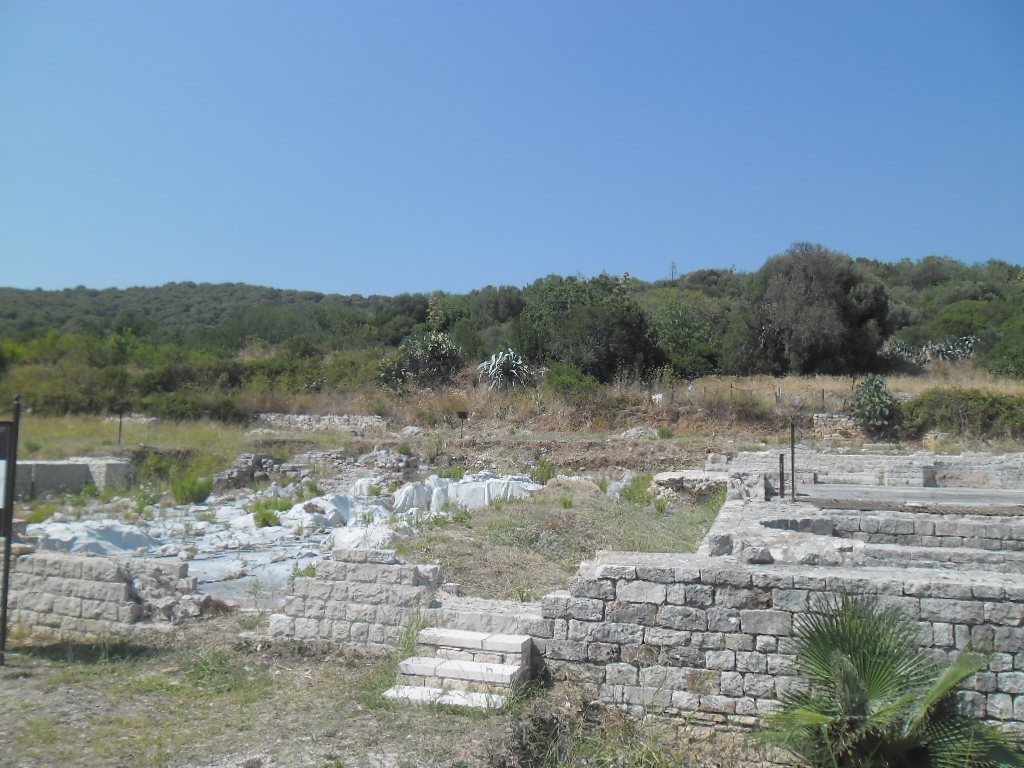
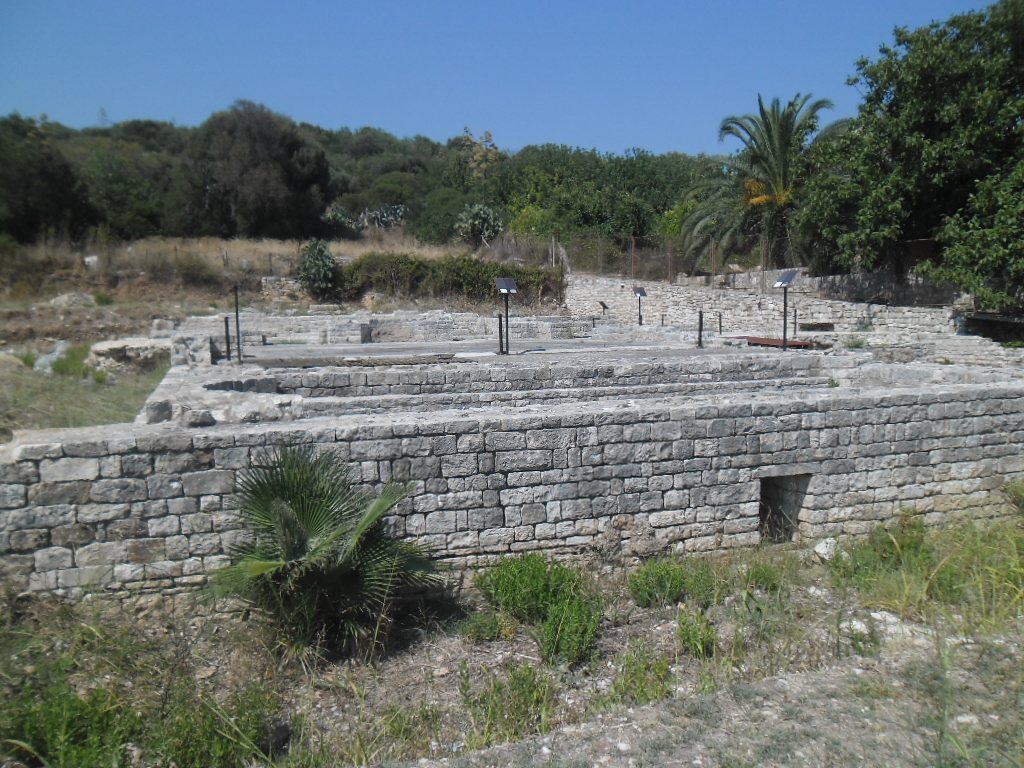
Issa occupied the Gradina area and the Prirovo peninsula, with buildings set on terraces and enclosed by defensive walls. Sections of streets, two cemetery areas, submerged parts of the harbour, Roman public buildings, and archaeological finds reveal the planned character of the ancient city. The walls are among the best-preserved Hellenistic examples in Croatia.
Cemeteries
The cemetery of Martvilo lay southwest of the city and contained burials with grave goods, particularly pottery. Another burial ground was located at Vlaška njiva. Together with the city walls, these cemetery areas help show how the settlement was laid out.
The western mausoleum
The most elaborate tomb found at Issa was uncovered in the western cemetery in August 1930. The mausoleum had been destroyed, so its appearance is known through surviving fragments: five stucco heads, pieces of stucco decoration and mosaic, part of a fresco with a human figure, and part of a female clay bust. Its floor had a multicoloured mosaic made from tesserae, the small pieces used to form a mosaic, each about two millimetres across. A repeating meander pattern framed a checkerboard of shaded, multicoloured squares, and the recovered section had been set into the floor as a central panel. Frescoes and stucco decorated the walls. Iron pegs on the backs of the heads suggest they may have been attached to the walls, but it remains uncertain whether they represented gods or idealized deceased people shown as philosophers or poets.
Roman public buildings
Baths
The baths stood in the southern part of the city and date to the early first century AD. Their walls were partly destroyed when the site was used as a vehicle park during the Second World War.
Theatre on Prirovo
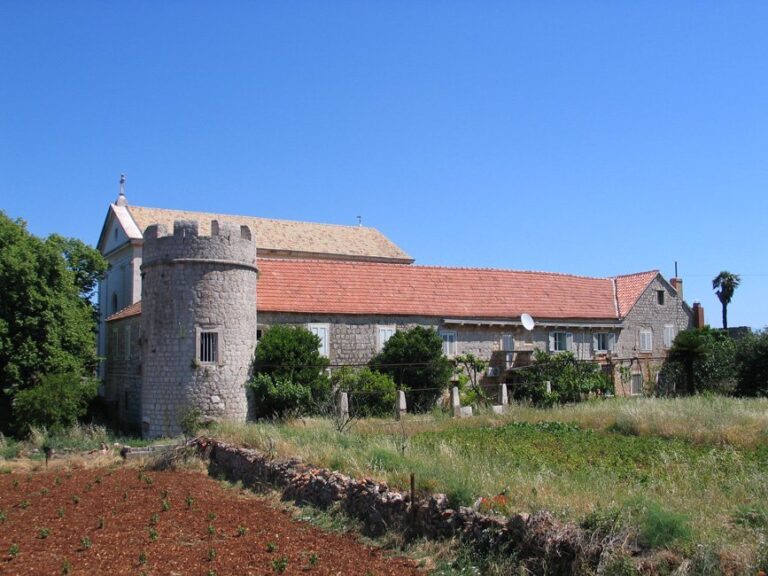
The Roman theatre stood on the Prirovo peninsula and was probably built over the foundations of a Greek theatre. A Conventual Franciscan monastery, a house of a branch of the Franciscan order, was later erected over it in the sixteenth century.
Coins
Issa’s surviving coins are bronze and were made mainly for local use. The mint’s exact starting date is unknown, though it is thought to have begun in the middle of the fourth century BC. The earliest issues, produced around that time, were overstruck, meaning a new design was stamped onto an older coin. Syracusan coins served as the base: the Issan designs show a young man’s head on one side and a leaping dolphin on the other, with IONIO on some examples. Coins from Heraclea and Pharos were also reused in this way, and the series continued to the end of the fourth century BC.
A later type, dated to the end of the fourth century BC, pairs a woman’s image with an eight-pointed star and the letters IS or IC, shortened forms of ISSAION, meaning coin of the Issaeans. Other issues reused coins from Metapont and showed Athena’s head paired with a deer, or Athena with a goat. The latest series featured a doe or a two-handled drinking cup called a kantharos on the front of the coin. These issues circulated until Issa lost its independence by the middle of the first century BC.
Clay figurines
Issa’s clay figurines were first imported from Tarentum. Local production had begun by the third century BC, as indicated by a discarded base made for a standing female figure. Many excavated examples came from burial chambers, where they had been placed as offerings for the dead. Common subjects include standing women in a chiton, a Greek tunic, and a himation, a cloak worn over it. Their hairstyles and head coverings vary, and some hold fans. Other figures represent deities, including Aphrodite in the Ourania form, or offerings dedicated to her, such as a dove with a clover on its breast. Toys were also made. The figures received a white base layer by dipping or brushing before being painted in different colours. Issa’s collection of these objects is among the richest in Croatia.
Moulds and relief pottery
Excavations have yielded many fragments of moulds for cups, as well as a stamp showing a leaping hare that was used to make moulds. Issa became a major centre for relief pottery, pottery decorated with raised designs. Production began in the second century BC and continued through antiquity.
Sculptures
A notable sculpture from Issa is a head of Artemis, the Greek goddess associated with hunting. Other recorded works include a statue of an emperor in military dress found at Gradina around 1730, later transferred from a collection in Vis to a collection in Split and then to the Archaeological Museum in Zagreb. An imperial statue bearing the letters APC was found at Gradina in 1804. In 1807, General Guillete removed a statue of Apollo and other artworks. An account written in 1704 by the abbot of the Prirovo monastery says that a monument to Diana, the Roman counterpart of Artemis, had been taken away from Vis.
Inscriptions
In 1436, Cyriacus Anconitanus noted a Greek inscription built into the theatre, another Greek inscription dedicated to Artemis, and a Roman inscription on the pedestal of a bronze statue of Augustus, Rome’s first emperor. During a visit in 1772, Alberto Fortis recorded a Roman inscription concerning the construction of a temple to Jupiter and Hercules.
Mosaics and the tradition of a royal palace
Fortis also noted mosaic floors that became covered by the sea as water levels rose. In 1553, the Venetian representative Giustiniani described columns, arches, and worked marble that he associated with a palace of Queen Teuta. The identification of the remains as her palace belongs to a historical tradition, rather than a confirmed attribution.
Reuse in later Vis
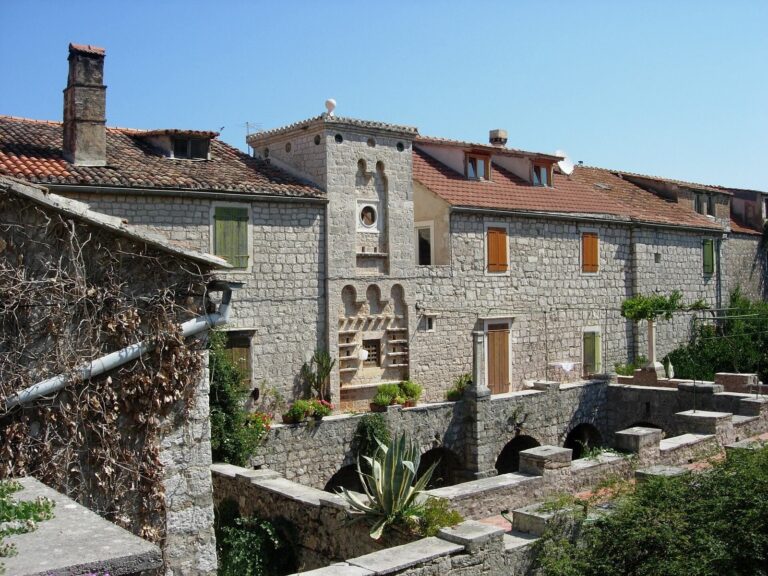
The later settlement of Vis developed south of the ancient city. Its inhabitants reused ancient ruins as building material, and this material remains visible in many buildings. The newer settlement also contains notable architecture from the late Middle Ages and later periods.