Lipník nad Bečvou Chateau: A Moravian Aristocratic Residence
Site at a Glance
- Popularity
- Medium
- Country
- Czechia
- Primary era
- Modern
- Eras represented
- Early Modern, Modern
- Civilizations
- Austria-Hungary, Austrian Empire, Habsburg, Habsburg Austria, Holy Roman Empire, Margraviate of Moravia
- Site type
- Domestic
- Remains
- Castle
On this page11 sections
History
Medieval estate and foundation
Lipník nad Bečvou chateau in Czechia began as a Renaissance residence built for the Bruntálský z Vrbna family. Lipník had belonged to the Helfštýn estate since the Middle Ages. In 1596, Hynek Bruntálský z Vrbna acquired several plots beyond the town’s built-up area and began establishing a family residence there. Construction took place from 1597 to 1609. After Hynek died in 1597, his son Jiří carried the work forward.
Jiří, Moravia’s chief judge, joined the Estates’ Revolt, an early 17th-century uprising by the Bohemian and Moravian estates against Habsburg rule. He died in prison at Špilberk in 1622. That year, the confiscated Helfštýn and Lipník estates passed to Cardinal František z Ditrichštejna, a senior dignitary of the Roman Catholic Church, who also acquired nearby Hranice. Lipník became an administrative center for the family’s North Moravian lands, and from 1626 the estate took its name from Lipník rather than Helfštýn. The chateau housed the estate administration, though the family’s principal residence remained at Mikulov.
Expansion and renewed aristocratic residence
The chateau complex grew in the 1650s under Maxmilian of Ditrichštejn. After the family line ended, its estate was divided among four heiresses. In 1858, Gabriela Ditrichštejnová, wife of Prince Alfred of Hatzfeld, received Lipník and Hranice by lot. Under their ownership, the chateau again served as an aristocratic residence.
Rebuilding began after 1860. Gabriela’s daughter Antoinetta, who married Count Michael Robert Althann, inherited the estate. Her son, Count Michael Karel Althann, became its last private owner.
Confiscation and municipal use
In 1945, Count Michael Karel Althann’s properties in Czechoslovakia and Poland were confiscated. The chateau passed to Military Forests and Estates and was used for offices and staff apartments. Tenants also cultivated vegetables on the roof terrace.
The chateau now houses the Lipník nad Bečvou municipal office. Its social hall is used for cultural events and wedding ceremonies, and a gallery occupies the former stables.
Remains
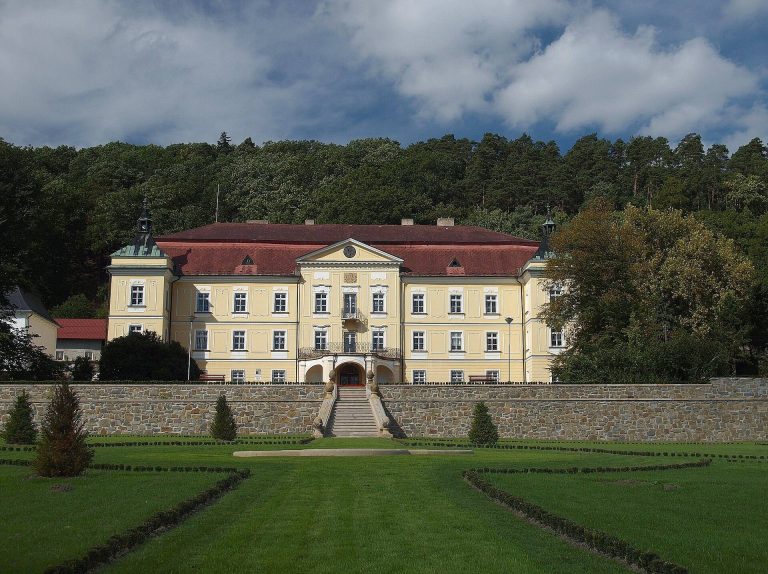
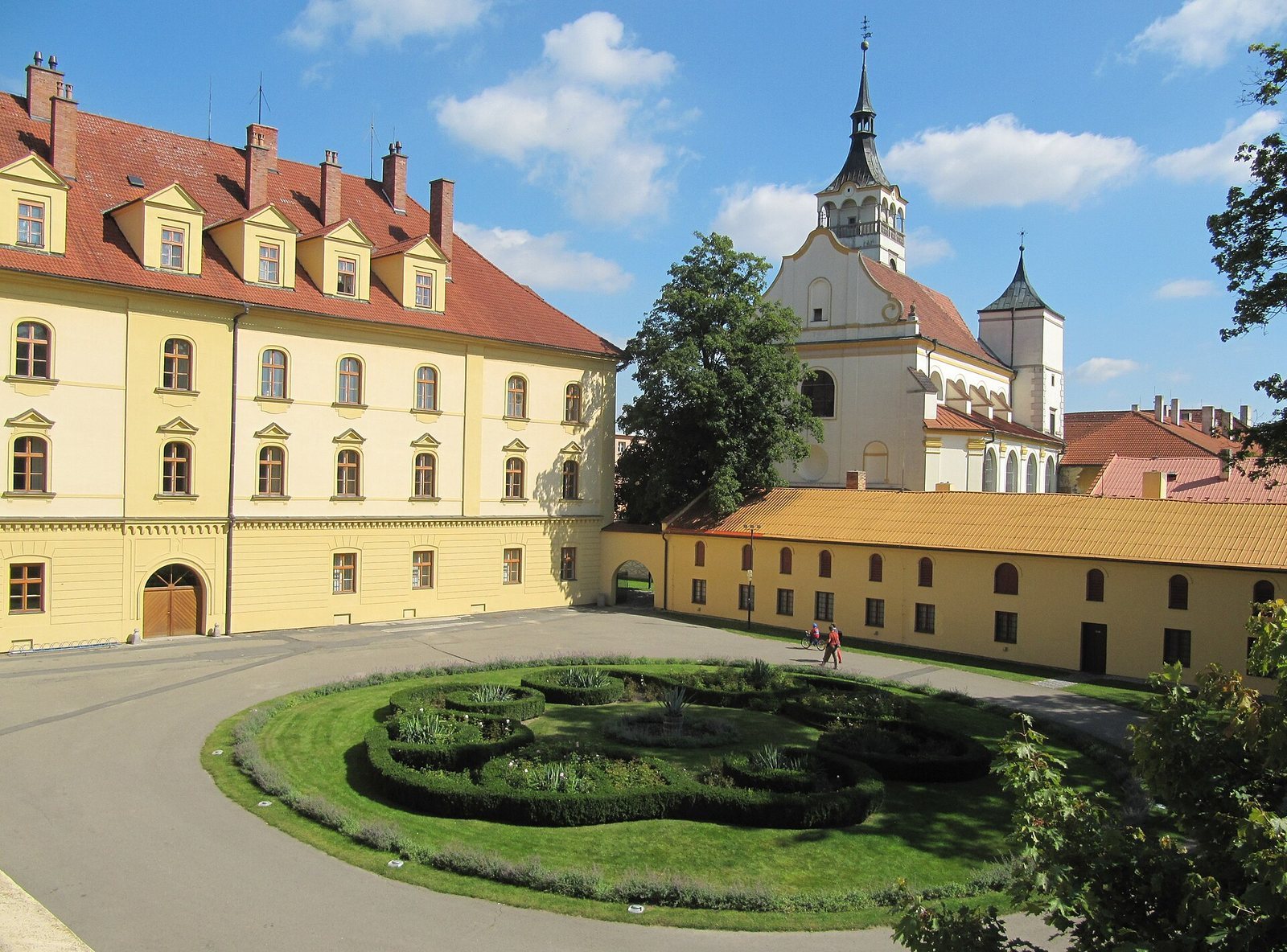
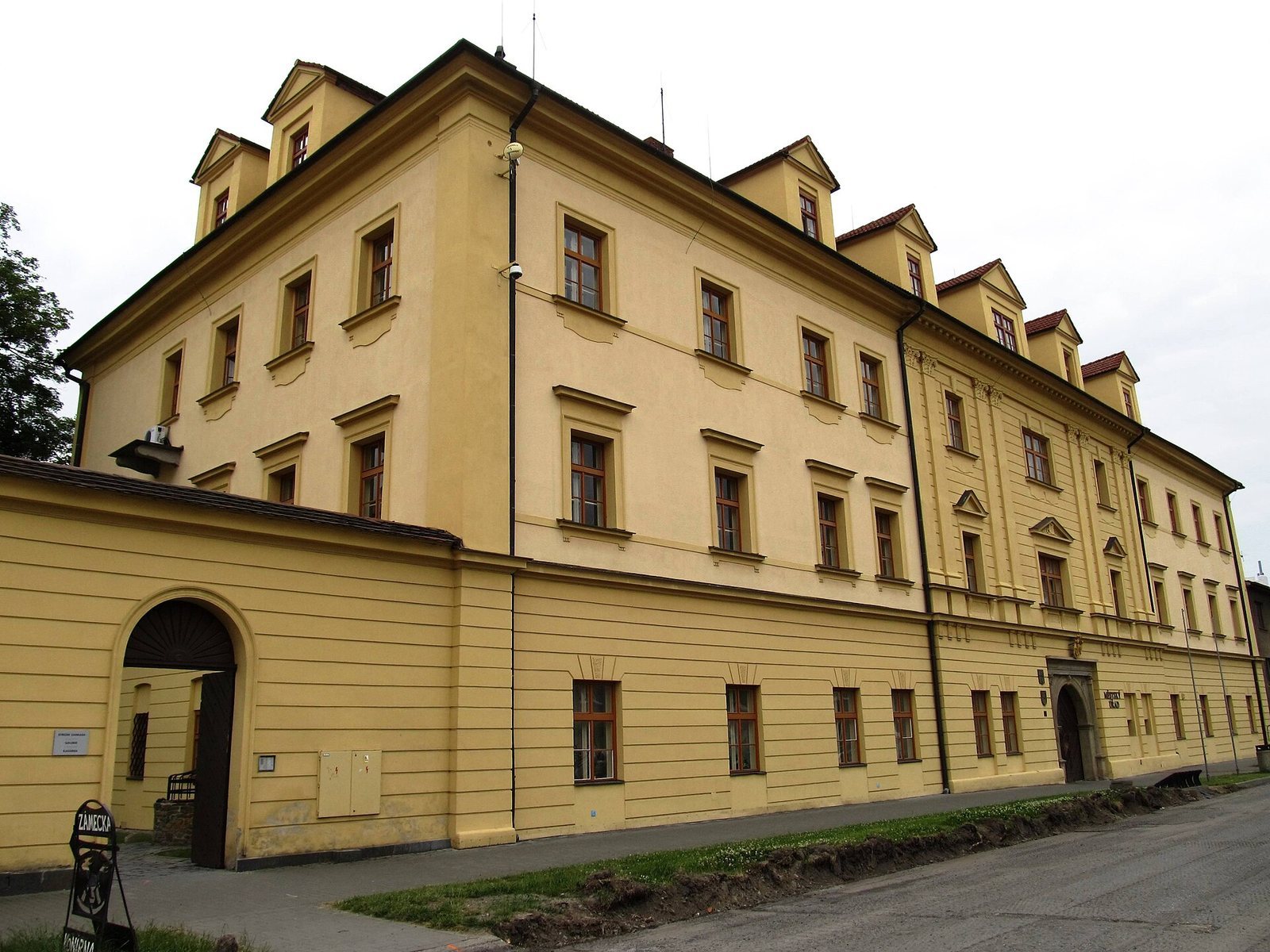
The chateau stands west of the town center within its compact urban fabric. Planned at first as a freestanding building, it developed into a complex with service wings and a courtyard garden. Its present appearance reflects a mid-19th-century rebuilding in later revivals of Baroque and Empire-period styles.
Chateau and roof garden
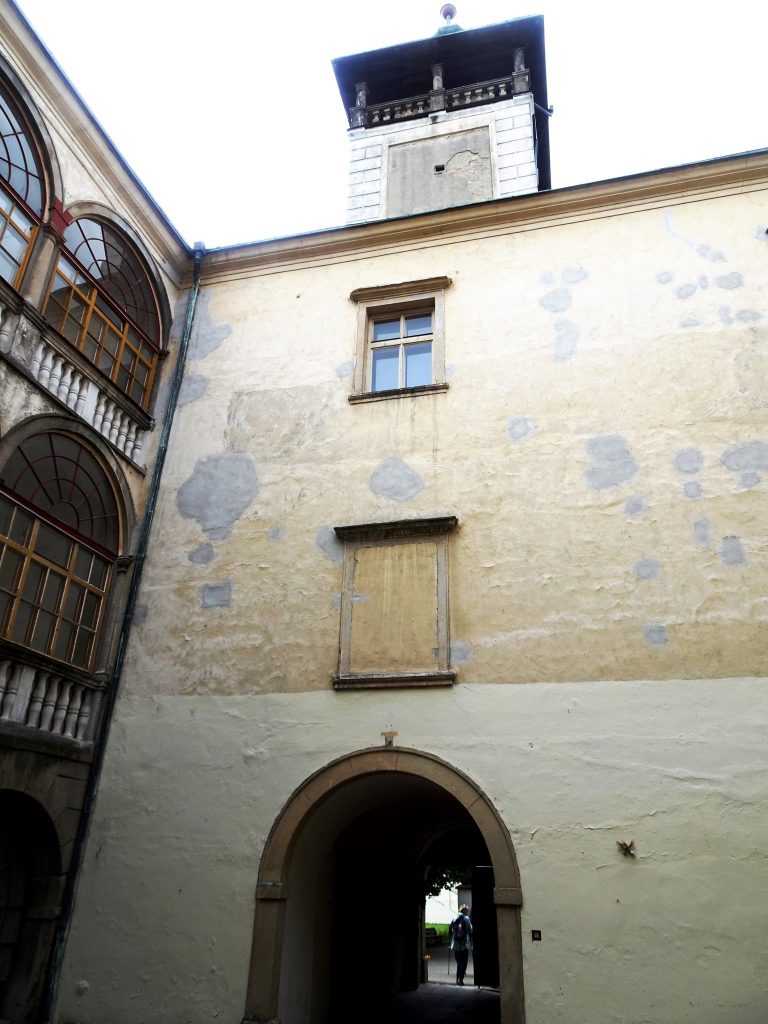
Building and courtyard
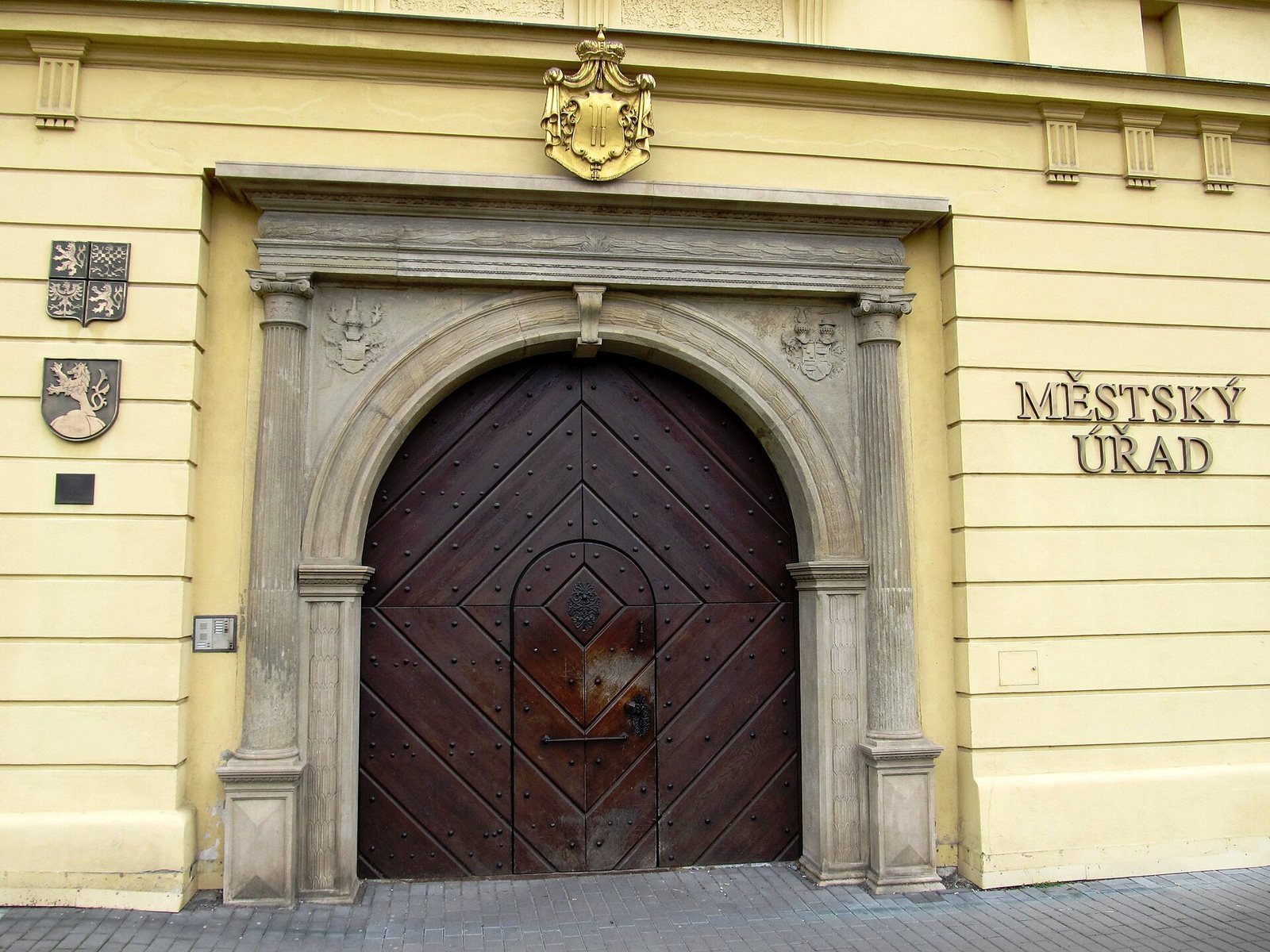
The chateau’s original Renaissance form survives in one identified feature, a stone portal bearing the coats of arms of Jiří Bruntálský z Vrbna and his wife. Later additions included side wings for services, which formed a courtyard with an ornamental garden. The garden also extended into areas south of the building.
Roof garden
A roof garden was designed in 1863 on the former stables by architect Josef Zürk and gardener Ferdinand Wenzel. In 1911, Countess Antoinetta Althann commissioned a major reconstruction. Reinforced-concrete beams and insulation were added to prevent water from leaking through the terrace into the rooms below. The garden was restored to its earlier form in 2006, using historical photographs as a guide.
Park and beech tree
English landscape park
South of the chateau complex is an English landscape park, a designed park arranged to evoke natural scenery. Its present form dates from the 1880s.
Opičák
Near the roof garden, a European beech (Fagus sylvatica) known as Opičák is a prominent feature of the castle park. The branching tree has several distinct roots.