Bonnecombe Abbey: A Cistercian Monastery in France
Site at a Glance
- Popularity
- Medium
- Country
- France
- Primary era
- Medieval
- Eras represented
- Medieval, Early Modern
- Civilizations
- County of Toulouse, French
- Site type
- Religious
- Remains
- Fortified Monastery
On this page13 sections
History
Foundation and Cistercian affiliation
Bonnecombe Abbey is a former Cistercian monastery in Comps-la-Grand-Ville, France, founded in 1162 by Raymond V, count of Rouergue, and Hugues, bishop of Rodez. Its architecture is described as Romanesque and classical. The abbey developed extensive holdings and exercised both civil and religious lordship across the region.
It was consecrated on 3 January 1167 by Gausbert, abbot of Candeil, who sent the first monks and appointed Matfred as their abbot. That year Bonnecombe joined the Cistercian order, a monastic tradition rooted in Benedictine life. It became a daughter house of Candeil and belonged to the lineage of Clairvaux, a major Cistercian abbey with a network of affiliated monasteries.
Estates and lordship
An early donation came from Étienne dell Estroa in 1194. Relations with Bonneval Abbey were initially tense, but in 1217 the two houses agreed on grazing rights over land between Gramond and the Viaur. In 1225, Bonneval sold La Serre and its dependencies to Bonnecombe for 10,000 sous in Rodez currency. Half the payment consisted of 84 oxen or cows.
Around 1225, Bonnecombe held part of the fief of Montmeyrac and established the Grange of Bonnefon, a monastic agricultural estate. By 1415, 70 farmsteads depended on it, and its lands extended over more than 6,000 hectares. The abbey retained the estate until the French Revolution. Its wider properties included fourteen granges, among them Lasserre-Bonnefon, Ruffepeyre, Bougaunes Is, Bar, Varcelles, Bernac Puechmaynade, Saint-Félix and Pousthorny, as well as the priory of Saint-Hilaire.
The abbey shared some holdings with other local powers. In the parish of Teillet, farmsteads were jointly held with either the lord of Tanus or the religious community of Sauveterre. Lands at Pousols, La Carpelie and Rocayrols, in the parish of Saint-Just, were divided equally between the abbot and the abbess of Saint-Sernin-sous-Rodez. The abbey disputed the fiefs of Saint-Martial de Contensou with the Hospitallers of Canabières, members of a Catholic religious order with charitable and military roles, and held almost all of the parish of Naucelle.
Churches attached to Bonnecombe included Saint-Hilaire, Naucelle, Saint-Martin, Comps and Carcenac-Salmiech. The monks built Saint-Martin in 1254. The abbot appointed clergy to the attached churches and granted land through notarized leases. The abbey collected rents, shares of crops and grapes, animals, tithes (customary contributions often paid in produce), and first-fruit offerings. Civil dues included a grain levy called the fifth-sheaf, a tenth of the vineyard harvest, and payments on animals.
Commendatory abbots and decline
Bonnecombe prospered under its regular abbots and held influence across western Rouergue, northern Albigeois and part of the Cassagnes area. In 1470 it entered the commendam, an arrangement in which an abbot could receive an abbey’s income without living there. The subsequent decline was linked to commendatory abbots pursuing interests elsewhere rather than residing at Bonnecombe. The future Pope Innocent VIII held the office in 1483–84.
Trappist return and later uses
The French Revolution damaged the abbey, and the community entered a period of decline. Trappist monks from Aiguebelle, a stricter branch of Cistercian monasticism, returned in 1876 and restored the house. Bonnecombe was raised again to abbey status in 1895. The complex has been protected as a French historic monument since 1840. In 1902, Bonnecombe founded the Calvaire monastery in Canada.
As recruitment fell in the second half of the twentieth century, the conventual chapter decided to close the house, and the Trappists left in 1965. An Orthodox Christian community, belonging to an Eastern Christian tradition outside communion with the Roman Catholic Church, lived there from 1965 to 1968. The buildings were then used as a reintegration center for former prisoners.
In 1980, the Diocese of Rodez entrusted Bonnecombe to the L’Arche community, a nonviolent movement founded by the Italian philosopher Lanza del Vasto. The Catholic charismatic Community of the Beatitudes moved in in 1998 and left in the early 2010s. The Association Notre-Dame de Bonnecombe maintained the site from 2005. The abbey has been unoccupied since 2017 and is privately owned.
Remains
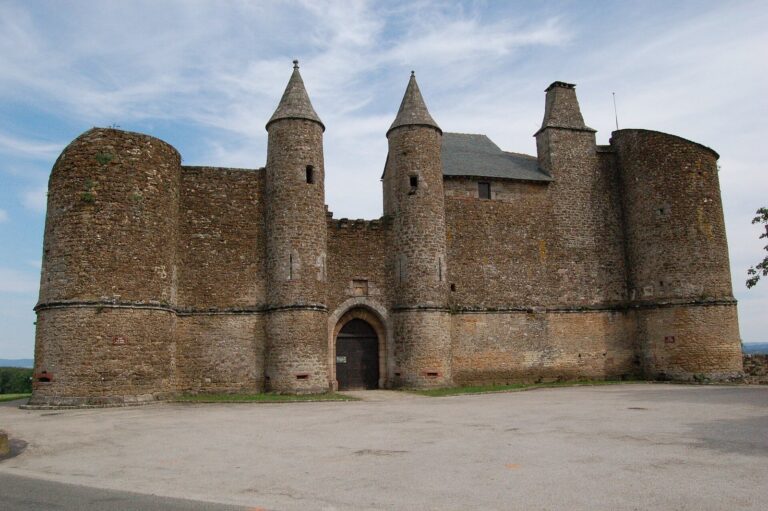
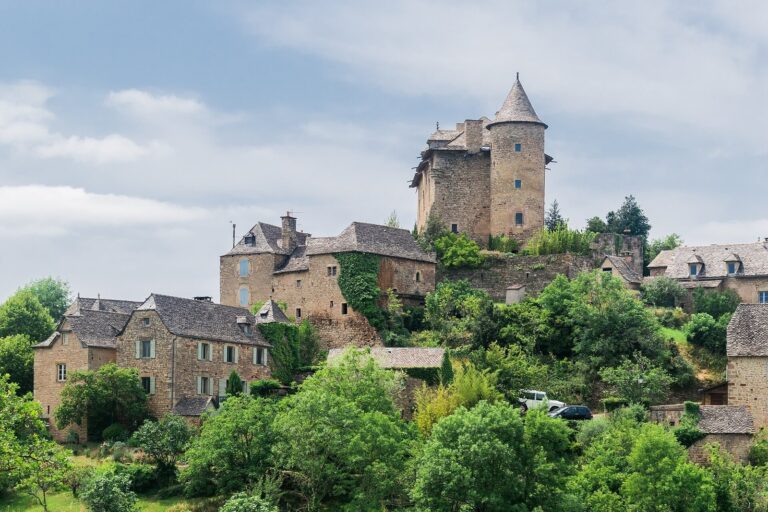
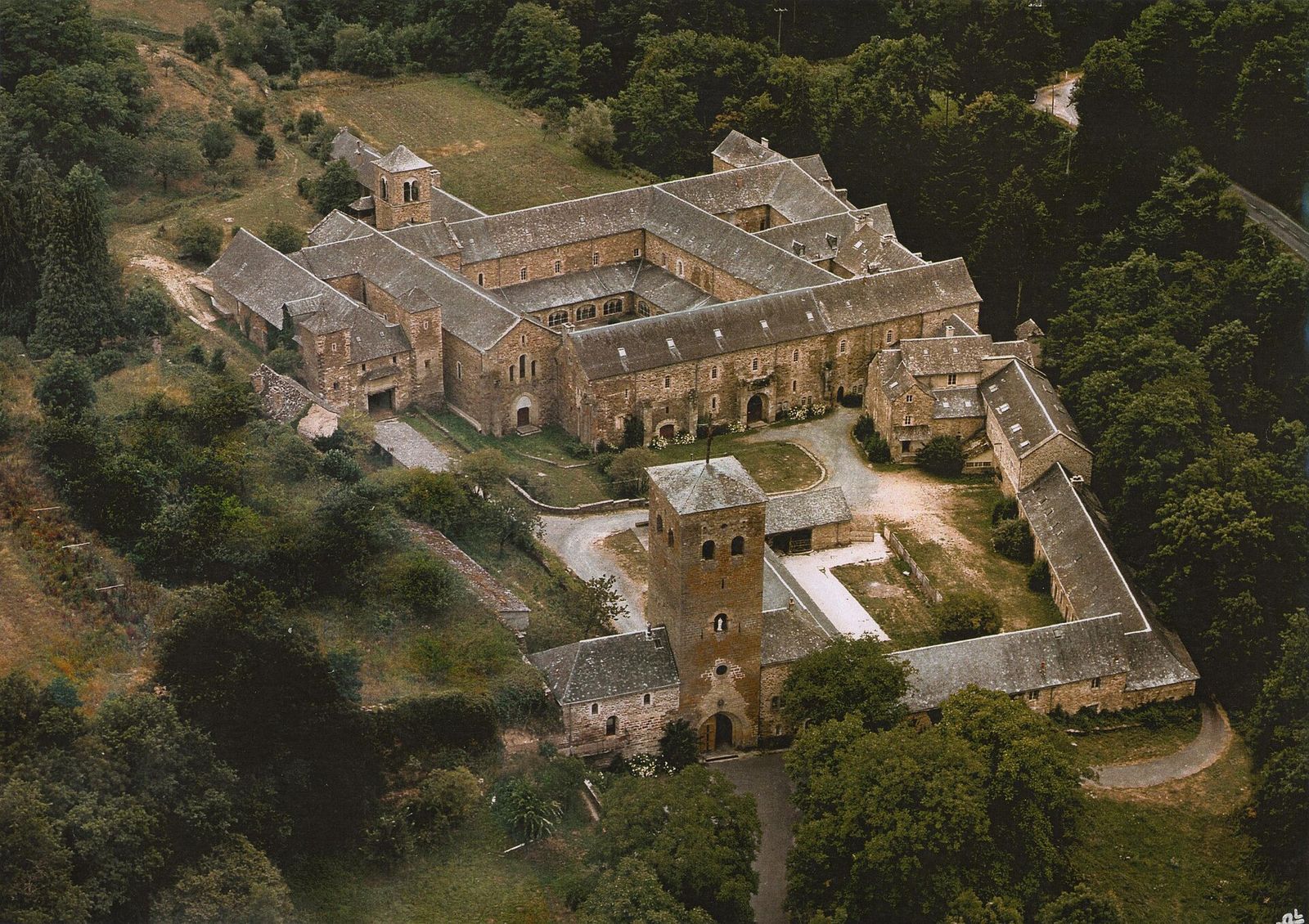
The walled complex stands in the Brengayrenc forest beside the Viaur, as the river descends from the Lévézou plateau. Its Romanesque and classical buildings include the abbey church, chapter house, cloister, refectory and conventual buildings.
Enclosure and church buildings
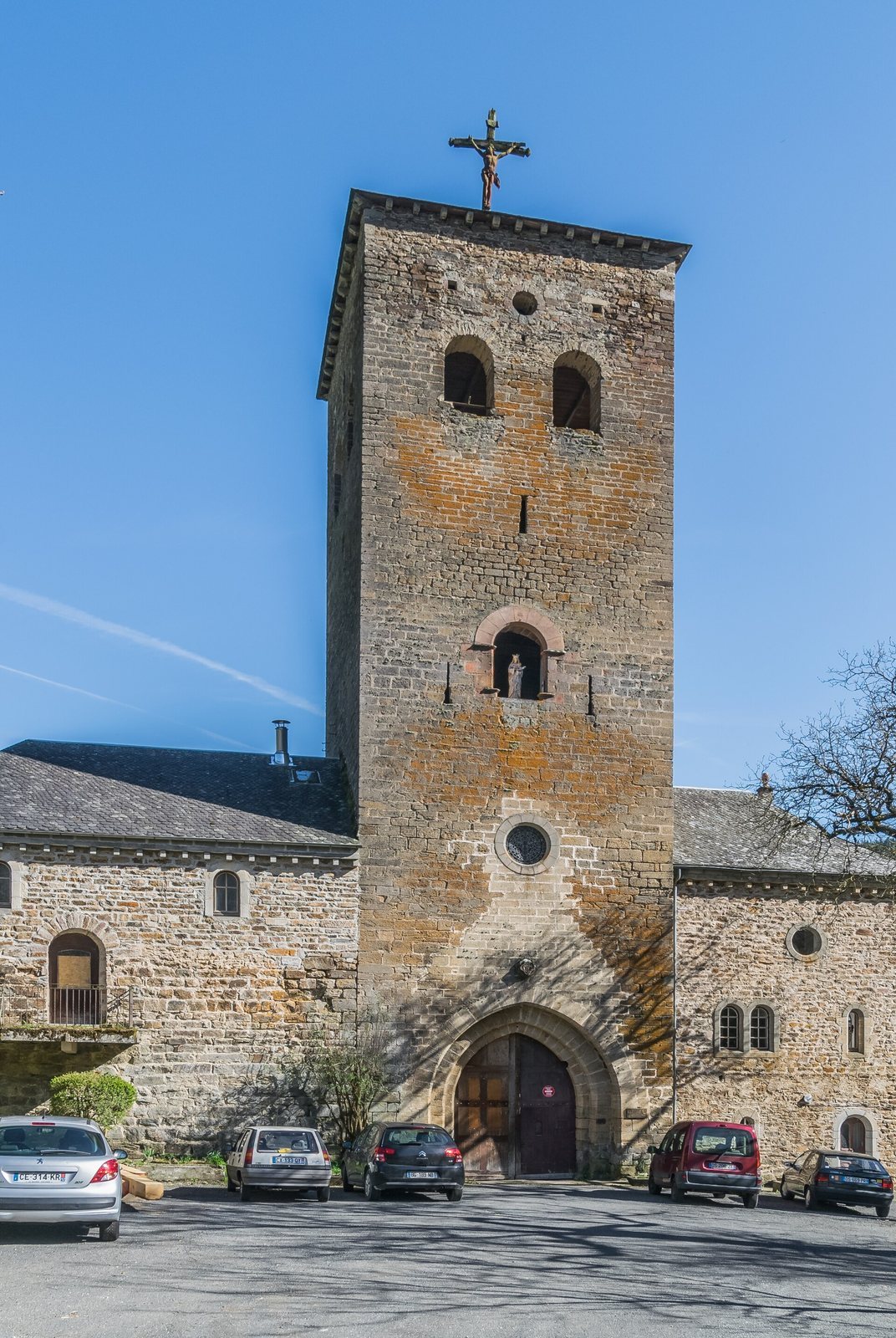
Saint Bernard Tower
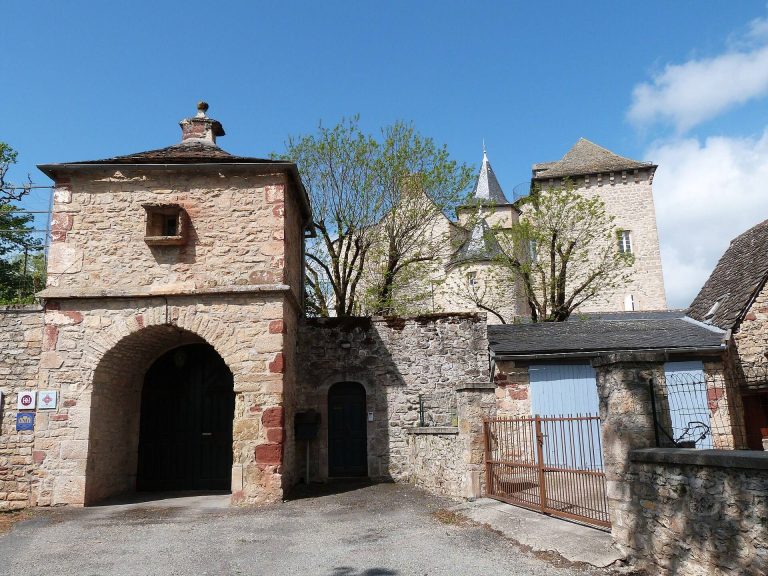
The surviving gateway is a large, square tower known as Saint Bernard Tower. Built during the Hundred Years’ War, it formed part of the abbey’s fortifications.
Twelfth-century abbey church
The abbey church has a cruciform plan and a single nave, and was rebuilt in its original structural form. The choir, two side chapels, transept vaults and full length of the nave date to the twelfth century. Hugues, bishop of Rodez, was buried in the choir in 1212.
Eighteenth-century church
A separate church dating to the eighteenth century was converted into a barn.
Cloister and burials
The cloister lies south of the twelfth-century church. Its burials are associated with Jalques, the lords of Landorre and Roquecézière, and Guillaume de Scorailles.
Altars and altarpiece
Some of Bonnecombe’s altars are now in the church at Carcenac-Salmiech. A Baroque altarpiece made in 1660 was transferred to the church at Comps in 1806 by Abbot Mignonac. Because the church’s choir was too small for it, the altarpiece was cut to fit and a tabernacle from another altarpiece was inserted. The tabernacle was restored in 1965.
Grange of Bonnefon
The grange was built with bricks fired locally, a construction type described as unique in Rouergue. Its reserve covered more than 300 hectares and was not leased out. A communal screw-operated press also stood there.