Sant’Ignazio all’Olivella: A Baroque Church in Palermo
Site at a Glance
- Popularity
- Medium
- Country
- Italy
- Primary era
- Early Modern
- Eras represented
- Early Modern, Modern
- Civilizations
- Habsburg, Habsburg Austria, Habsburg Spain, Italian, Kingdom of Sicily, Spanish
- Site type
- Religious
- Remains
- Church
On this page33 sections
History
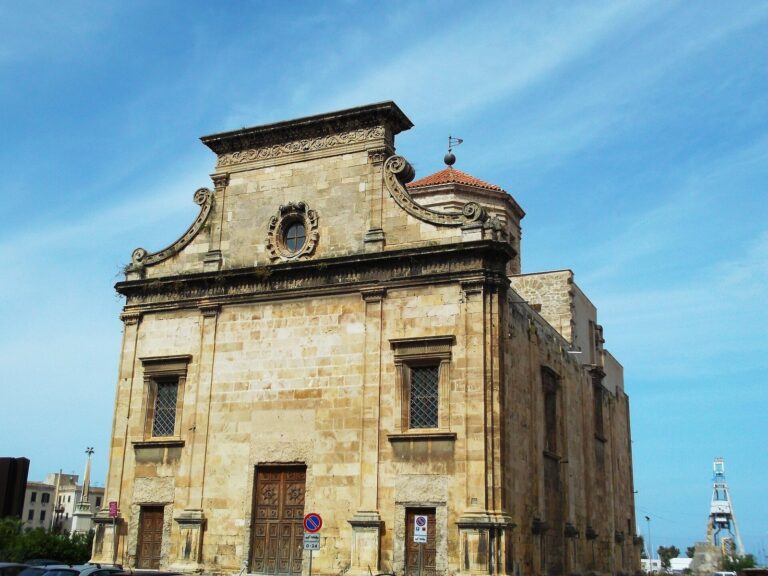
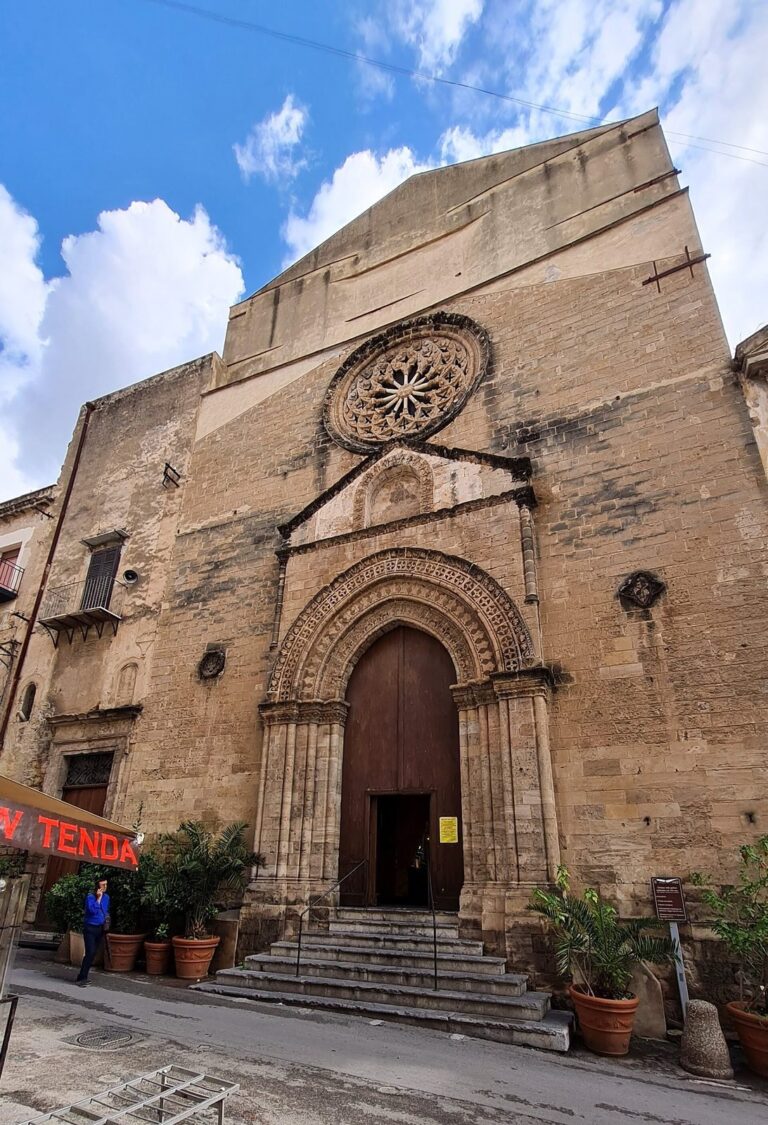
Sant’Ignazio all’Olivella is a Baroque church in Palermo, Italy, begun in 1598 for the Congregation of the Oratory of Saint Philip Neri, a Catholic community founded by the 16th-century Italian priest Philip Neri. The congregation established itself in Palermo in 1593 and received papal recognition in 1597. That year it was assigned San Pietro Martire, but the church was too small for its needs.
Foundation and construction
In 1598 the congregation agreed with the Company of Santa Caterina for land occupied by a small chapel of Santa Rosalia. The plot had earlier contained the Sinibaldi family’s house during the Norman period, as well as a chapel associated with that era. It was also reputed to be the birthplace of Santa Rosalia, the 12th-century saint closely connected with Palermo.
Antonio Muttone designed the new church. Its main body was complete by 1622, although the building still lacked a dome. The church was solemnly consecrated in 1711 by Bartolomeo Castelli, bishop of Mazara del Vallo, and the Oratorian fathers dedicated it to Saint Ignatius the Martyr.
Baroque additions and use
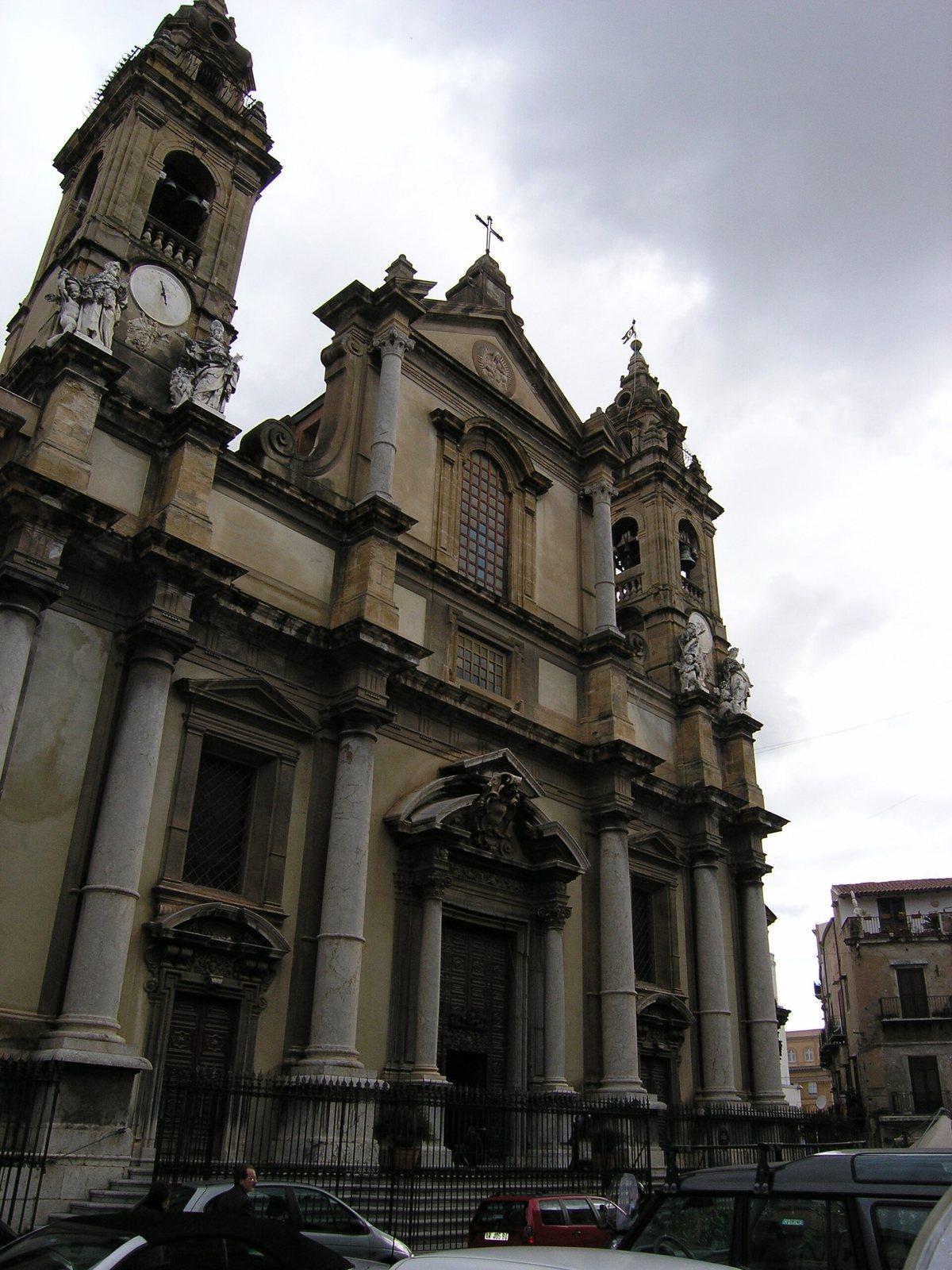
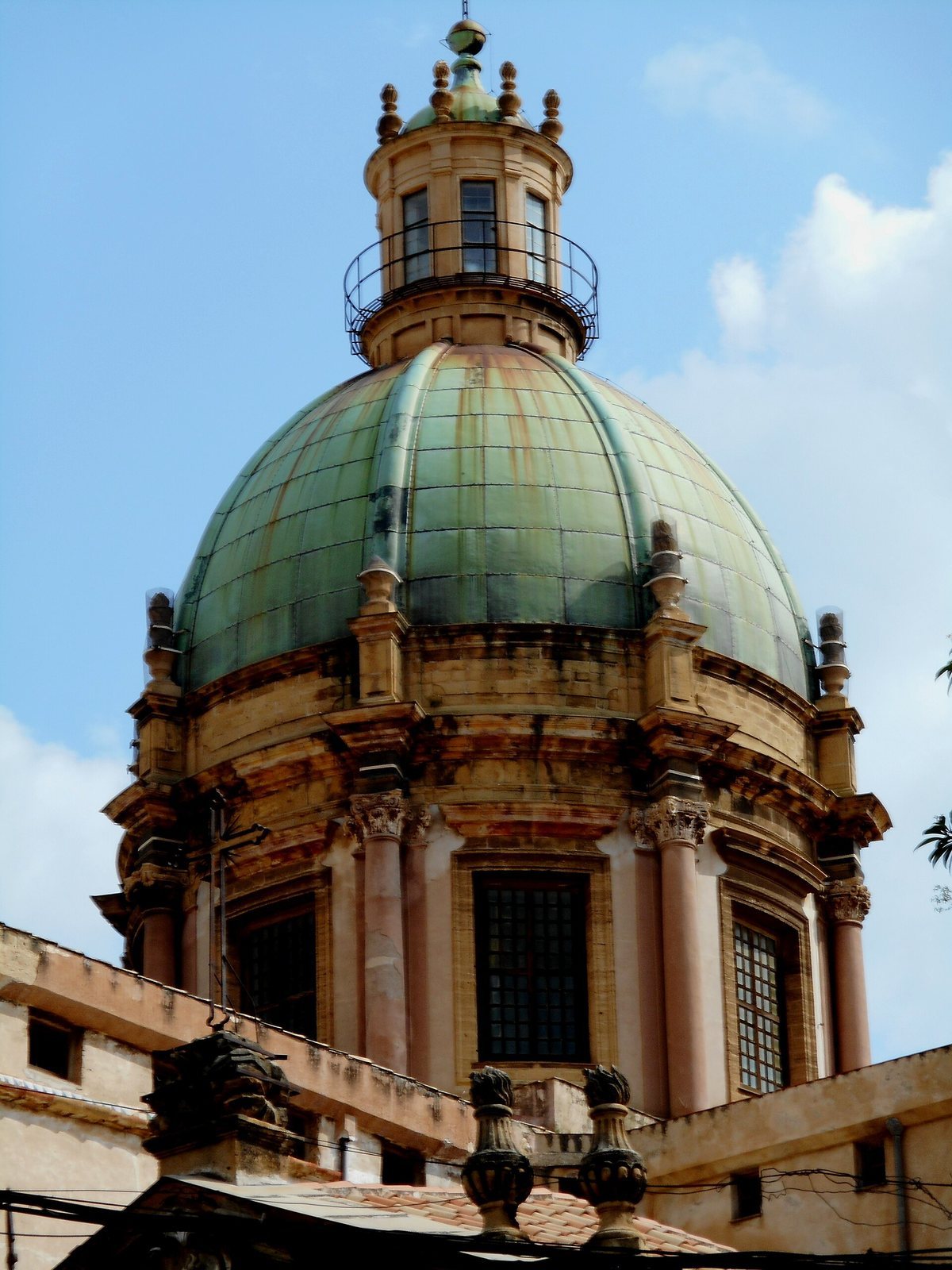
Francesco Ferrigno designed the dome, which master builder Simone Marvuglia constructed in 1732. Two bell towers were added in 1752, followed by a monumental staircase in 1775. From 1760, architect Giuseppe Venanzio Marvuglia planned decoration for the presbytery, the area around the main altar, and the central nave.
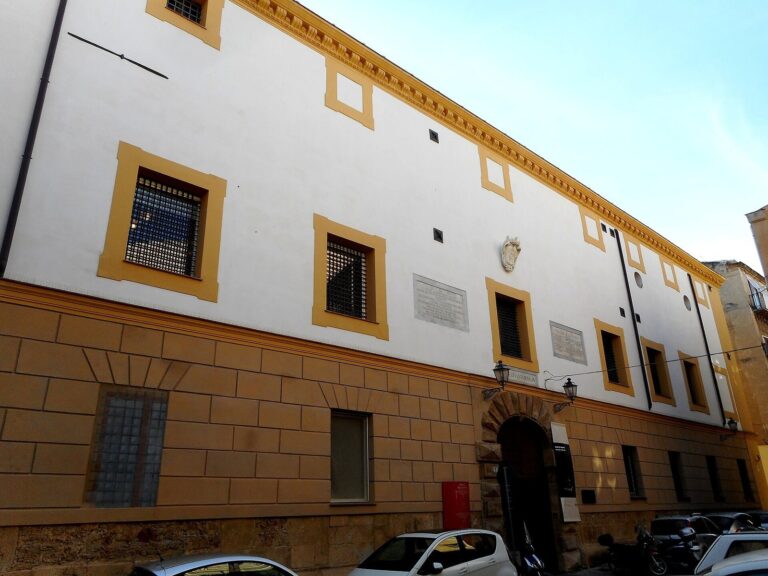
Bombing on 5 April 1943 damaged the dome and affected the church and museum complex. After the war, the transept, the crosswise section of a church, and dome were rebuilt. In 1950 the ruined south wing of the museum courtyard was reconstructed, and the original window openings along Via Bara were enlarged.
Museum and institutional changes
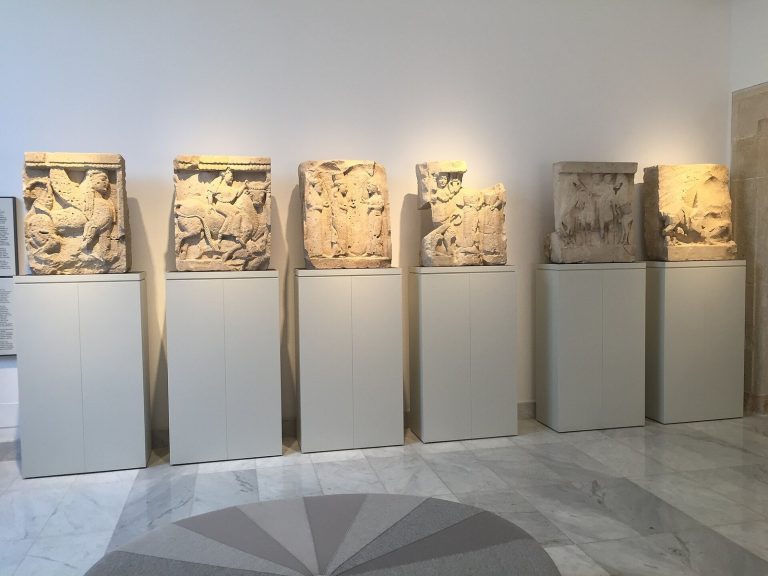
The Congregation’s House now contains the Regional Archaeological Museum Antonino Salinas. In 1952 archaeologist and museum director Jole Bovio Marconi reorganized its displays. The medieval and modern collections moved to Palazzo Abatellis, where the National Gallery was established, and the museum became exclusively archaeological. It gained regional museum status in 1977 under a law passed in 1975.
Laws suppressing religious institutions also dispersed parts of the complex’s contents. Books, shelving, and crafted woodwork were transferred in part to Palermo’s municipal library at Casa Professa.
Remains
Church exterior and plan
Façade and towers
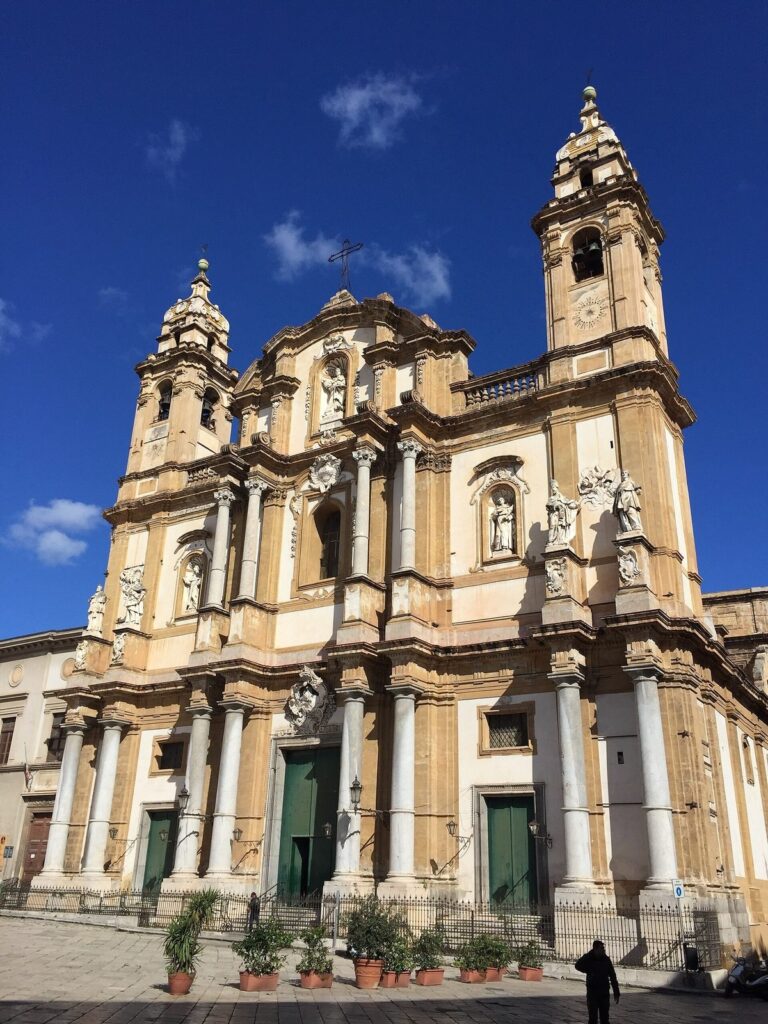
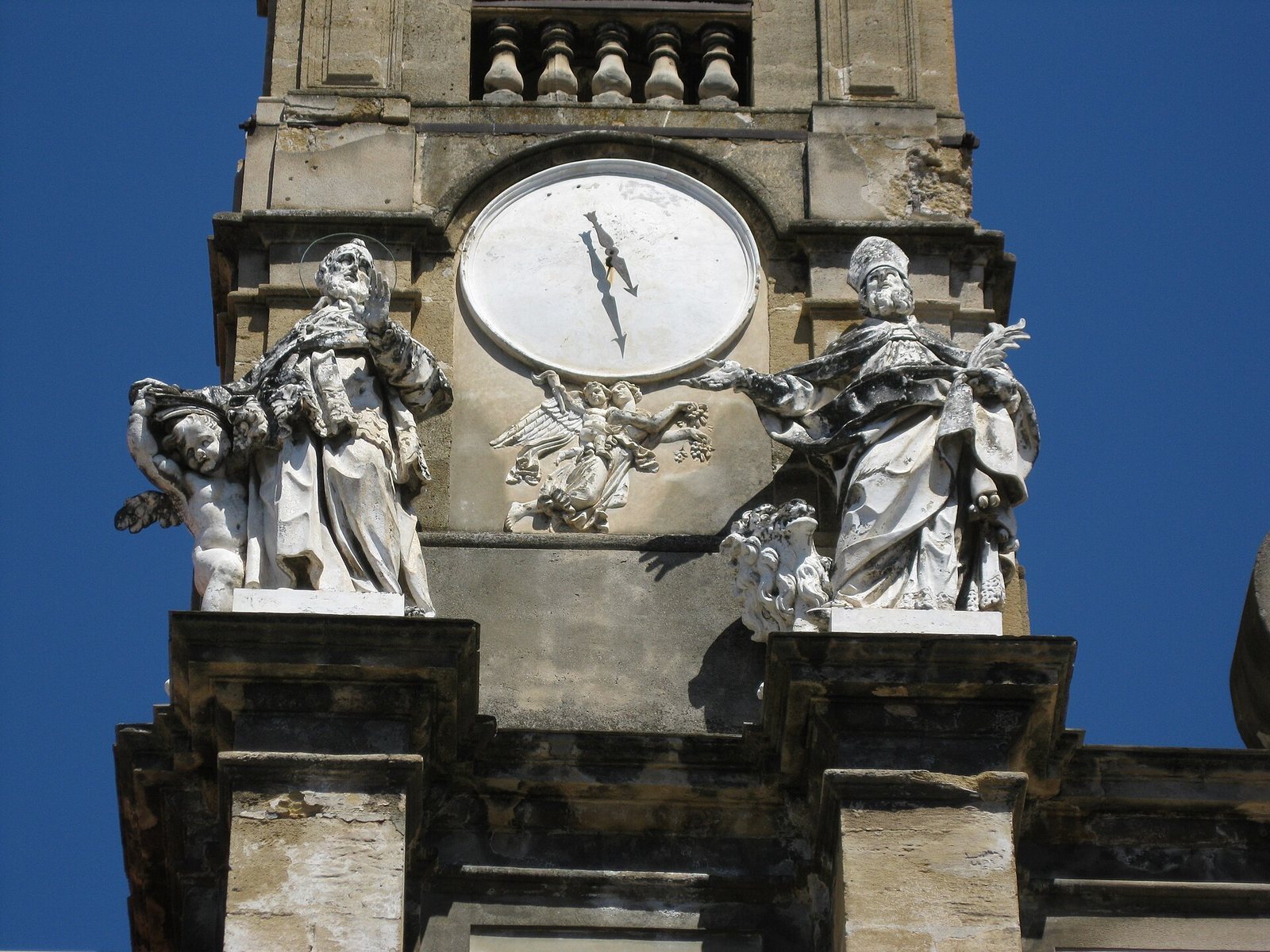
The church faces Piazza Olivella in Palermo’s historic centre. Its Baroque-Roman façade dates to 1690 and is framed by two tall bell towers, later fitted with clocks. Statues of Saint Philip Neri and Saint Rosalia stand near the upper corner pilasters, alongside figures of Saint Ignatius the Martyr and Saint Francis de Sales. A medallion in the triangular top of the façade reproduces a 17th-century Madonna and Child.
Carved lions on the door leaves refer to Saint Ignatius’s martyrdom, while a flaming heart represents the Congregation of the Oratory. A statue of Ignatius holds a palm, a traditional sign of martyrdom, with a lion at his feet.
Church layout
The church has a Latin-cross plan, with a long central space crossed by a transverse section. Three aisles are divided by columns, and side chapels open from the outer aisles. The floors are laid with marbles of different types and colours.
Main interior
Ceiling and music
Antonio Manno painted the ceiling’s recessed panels with biblical scenes in 1790. Two organs, each with a raised choir loft for singers or musicians, occupy the arms of the transept.
High altar
The raised high altar is framed by columns with Corinthian capitals, a heavy cornice, and a triangular pediment. Gaspare and Giuseppe Firriolo made its 18th-century stucco group, which depicts the Glory and includes allegories of Peace and Unity on the pediment’s sloping edges. A Hebrew inscription naming Yahweh appears among clouds and golden rays. Sebastiano Conca’s Triumph of the Holy Trinity, dating to around 1740, serves as the altarpiece.
Marble statues of Saints Peter and Paul by Ignazio Marabitti stand to either side of the altar, Peter on the left and Paul on the right. The niches contain stucco figures of the four Evangelists with their symbols: Luke with an ox, John with an eagle, Mark with a lion, and Matthew with an angel.
Lenten altar cloth
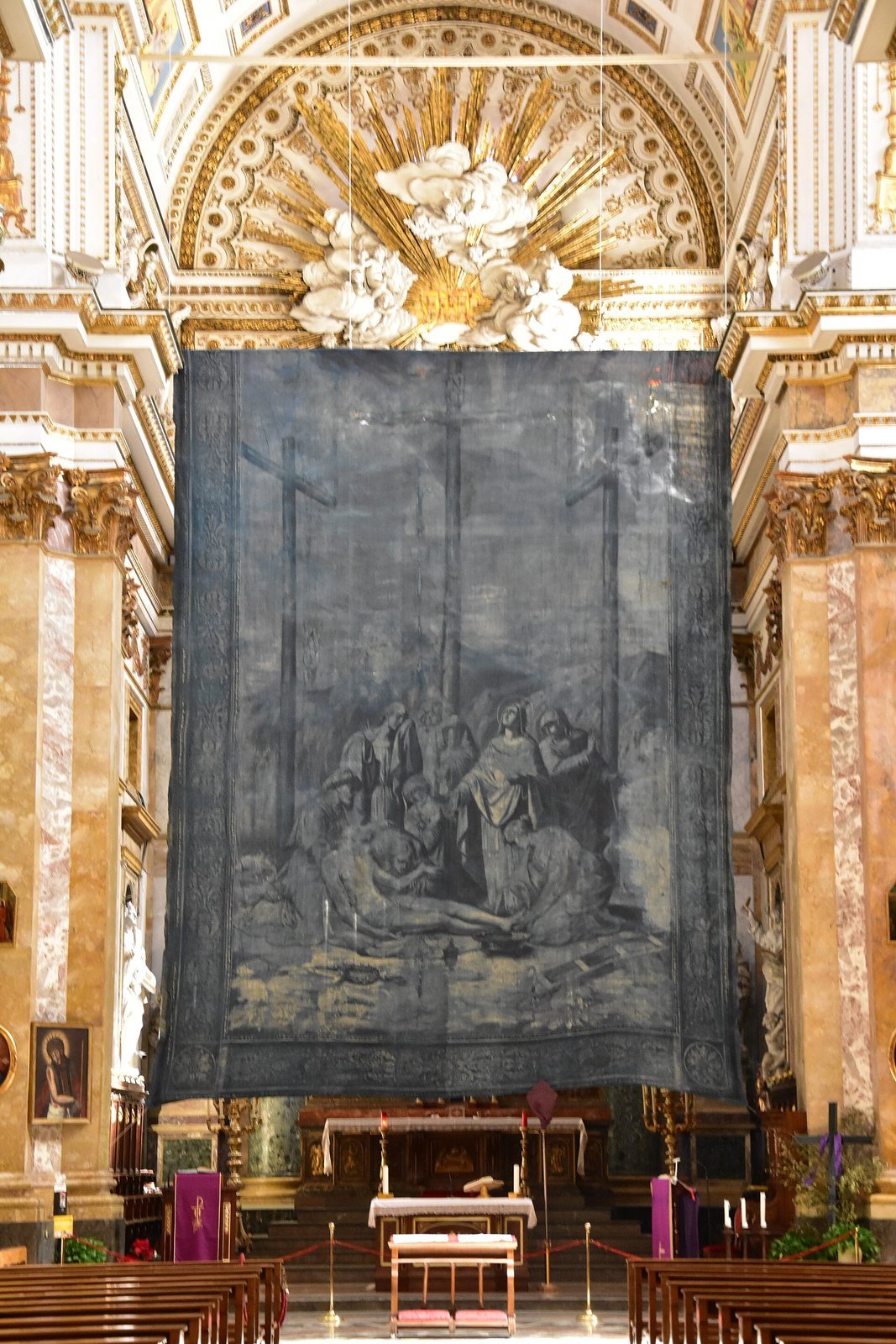
During Lent, a painted cloth known as a tila covers the altar. Against a blue-toned background, it shows Christ’s death and deposition. At the Gloria during the Easter-night service, the cloth falls to uncover the high altar and announce the celebration of the resurrection.
Right aisle chapels
Chapel of Saint Isidore the Farmer
The first bay contains the Chapel of Saint Isidore the Farmer. Its altar painting, The Miracle of Saint Isidore, is attributed to Domenico Fiasella.
Chapel of Saint John the Baptist
In the second bay, the Chapel of Saint John the Baptist has an altar designed by Gaspare Guercio, decorated with mixed marbles and stucco and fronted by an elaborate marble balustrade. Giuseppe Marino, Ottavio Bonomo, and Carlo D’Aprile carried out its decorative work. The paintings include Benedetto Zangara’s Saint Gemma Galgani and, above it, Pietro Bonaccorsi’s Madonna of Health.
Chapel of Saint Rosalia
The third bay’s Chapel of Saint Rosalia was established through the mediation of the Confraternity of Santa Caterina. Its altar painting, attributed to Filippo Randazzo, shows Saint Rosalia Crowned by the Virgin. Monochrome frescoes at the sides depict the saint adoring the Crucifix and experiencing ecstasy at her hermitage on Mount Pellegrino.
Chapel of Saint Casimir
The fourth bay contains the Chapel of Saint Casimir, with an altar painting by Guglielmo Borremans.
Chapel of Saint Mary of Egypt
The fifth bay’s Chapel of Saint Mary of Egypt now contains a wooden statue of the Immaculate Conception covered in silver. Alessandro Bagnasco, a sculptor active in the mid-19th century, made it. An earlier painting by Filippo Paladini showed the Virgin in Glory with Saints Francis of Assisi, Francis of Paola, Catherine of Siena, and Elizabeth of Hungary. The left niche holds Isaiah’s statue above a circular Annunciation panel; David’s statue and a Nativity panel occupy the right niche.
Left aisle chapels
Chapel of the Archangel Gabriel
The first bay’s Chapel of the Archangel Gabriel was under the patronage of the Castelli family, princes of Torremuzza. It contains Gregorio Castelli’s tomb and a monument to Gabriele Lancillotto Castelli, made in 1792. Pietro Novelli painted the altar image of Gabriel, and a fresco of the Risen Christ decorates the vault.
Chapel of Saint Mary Magdalene
The Guasto family held the patronage of the second bay’s Chapel of Saint Mary Magdalene. Pietro Volpes’s Rest during the Flight into Egypt, dated 1873, is now on the altar. A statue of Mary Magdalene was formerly placed there.
Chapel of the Most Holy Crucifix
The 17th-century Chapel of the Most Holy Crucifix combines gilded ornament with inlay made from 24 semiprecious stones. Its columns are jasper, and the inlay incorporates crystal, garnet, topaz, amethyst, agate, heliotrope, lapis lazuli, and carnelian. Mariano Smiriglio designed the ornate brass screen that closes the chapel. A wooden 17th-century Crucifix is mounted on a reliquary, a container for relics, behind glass with geometric designs. Side niches hold the Sorrowful Virgin and Saint John the Evangelist.
Vincenzo Riolo made frescoes and stucco work for the chapel, and the altar front uses coloured inlay to create a sense of architectural depth. Pietro Novelli’s vault frescoes were later transferred to canvas. Archbishop Giannettino Doria solemnly consecrated the chapel.
Chapel of the Holy Virgin
The fourth bay’s Chapel of the Holy Virgin contains paintings of the Marriage of the Virgin, the Holy Family, and the Meditation of Saint Ignatius, together with a statue of Saint Maria Goretti.
Chapel of Saint Philip Neri
The altar in the fifth bay’s Chapel of Saint Philip Neri is formed by two jasper columns and two granite columns. Sebastiano Conca’s Apparition of the Virgin to Saint Philip Neri, dated 1740, replaced a deteriorated painting by Guido Reni that was held in the Congregation’s premises. Giovanni Battista Ragusa made statues of Saint Joseph with the infant Jesus and Saint Joachim with the child Mary. The chapel also has polychrome marble decoration, a plaque dated 1622, a bust of Philip Neri, and a painting of his miracle.
Transept and sacristy
Transept chapels
Filippo Paladini’s Martyrdom of Saint Ignatius, dated 1613, stands on the altar of the Chapel of Saint Ignatius in the left arm of the transept. A side niche contains a stucco statue of Saint John the Baptist and a funerary monument to Giovanni Graffeo, abbot of Santa Maria del Parto. The niche opposite commemorates Francesco Graffeo. In the right arm, the Chapel of the Virgin has a Paladini altarpiece showing the Madonna in Glory with Saints.
Sacristy
The sacristy contains paintings of Saint John by Baciccio de Rosa and a work by Titian, as well as a gold monstrance, a vessel used to display the consecrated host in Catholic worship. Salvatore Lo Forte’s 19th-century paintings include Blessed Sebastian Valfrè Aiding Plague Victims and a Miracle of Saint Nicholas of Bari. The latter shows a ship rescued from a storm and Saint Nicholas appearing to Abbot Elpino.
Congregation complex and oratories
House and courtyards
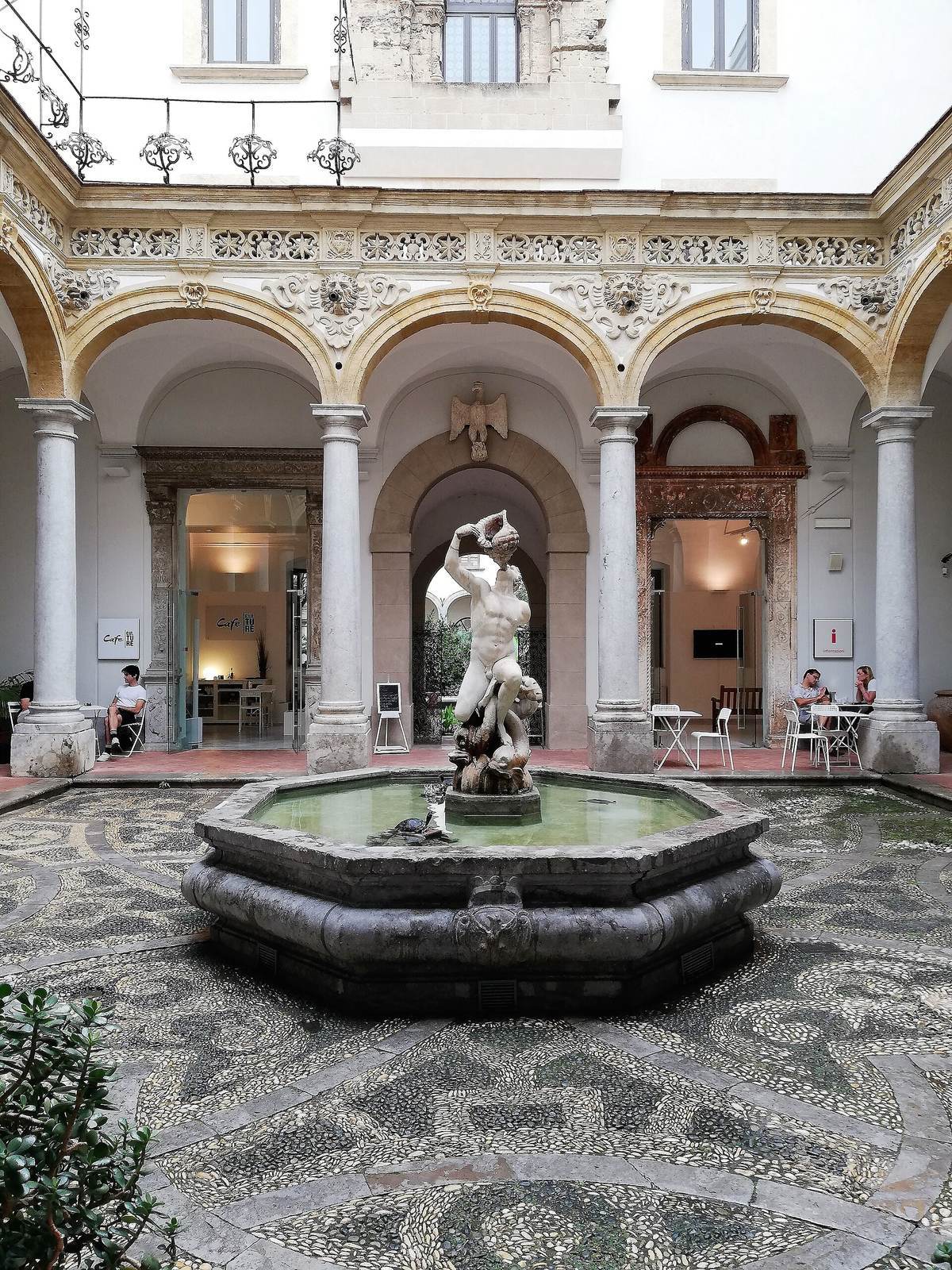
Pietro Novelli designed the façade of the Congregation’s House, which includes the library known as the Biblioteca Sclafani. Its first courtyard has four columns and three arches on each side, a cobbled floor, and a central fountain group. A statue of Glaucus playing a conch shell stands with Triton; the group came from a planted hanging garden on the San Pietro bastion at the Royal Palace.
The second courtyard is a large rectangle with a longer east-to-west axis. Its arrangement comprises ten columns by six, forming nine bays by five, and a central fountain with putti. Cells line its north side. A third courtyard is covered and has open galleries and balconies.
House chapel and communal rooms
A chapel in the House of the Oratorian Fathers had stuccoed and frescoed ceilings, with decoration in wood, gold, and ivory. A fresco attributed to Vito D’Anna shows Saint Philip Neri adoring the Holy Family. The religious recreation room had a 17th-century wooden ceiling with coloured decoration, later concealed beneath a 19th-century covering. The refectory occupied the ground floor.
Oratory of Santa Caterina d’Alessandria
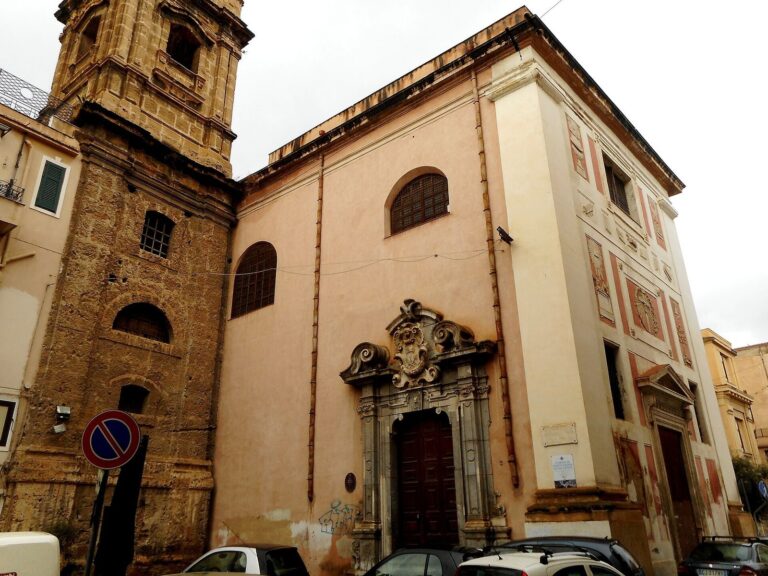
This oratory, a small place of worship, stands recessed from the piazza to the right of the church façade. Its small courtyard contains the Well of Saint Rosalia, which supplied and stored water for the former Sinibaldi residence.
Oratory of the Oratorian Fathers
This small chapel dates to 1730 and is the work of Francesco Ferrino. Its rectangular hall has a floor of majolica, tin-glazed pottery, and geometric decoration in carved wood, inlay, and fresco. The vault’s fresco of the Apparition of the Virgin to Saint Philip Neri is attributed to the school of Olivo Sozzi.
Oratory of Saint Philip Neri
Built in 1769 to Giuseppe Venanzio Marvuglia’s design, the Oratory of Saint Philip Neri has an angel on its façade pediment and capitals on its colonnade attributed to Filippo Pennino. Inside, a vestibule is topped by a gallery. Pietro Martorana painted the Virgin and Saint Philip Neri, and Ignazio Marabitti made the sculptural frame, Glory of Angels, in 1775. A statue of Saint Philip Neri stands at the fountain in the courtyard, where a pharmacy was formerly located.