Gorafe Megalithic Park: A Prehistoric Funerary Complex in Spain
Site at a Glance
- Popularity
- Medium
- Country
- Spain
- Primary era
- Bronze Age
- Eras represented
- Stone Age, Bronze Age
- Civilizations
- Unclassified
- Site type
- Burial
- Remains
- Necropolis
On this page18 sections
History
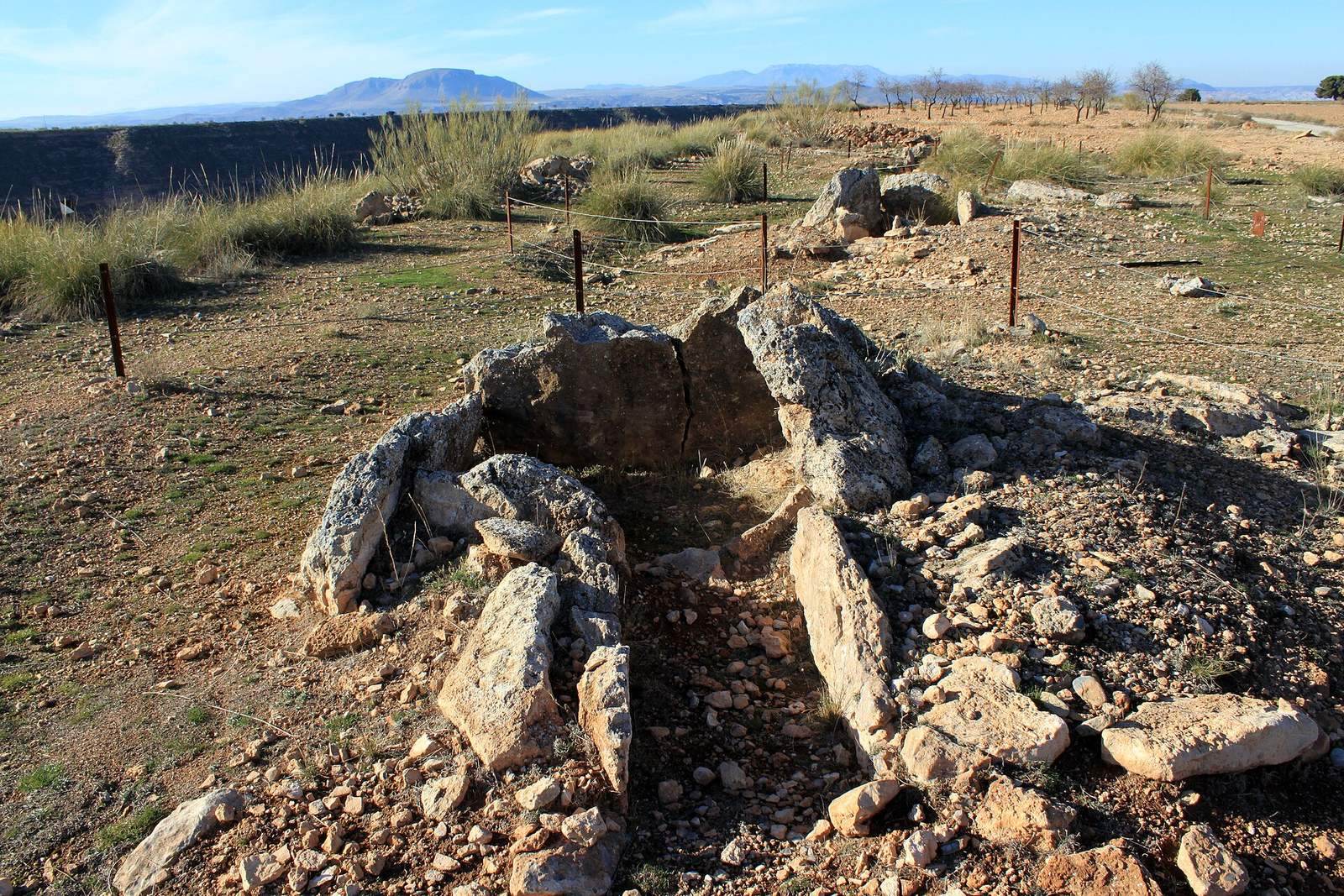
The Gorafe Megalithic Park is a prehistoric funerary complex in Gorafe, Granada, Spain, whose dolmens, or prehistoric stone-built tombs, span the Neolithic to the end of the Bronze Age. It is one of Europe’s major concentrations of prehistoric funerary monuments and an important example of megalithism in southern Iberia.
From the Neolithic to the Bronze Age
The earliest tombs date to about 2500–2300 BC, during the transition from the Neolithic to Bronze Age I, an early phase of the Bronze Age. These monuments belong to the complex’s oldest phase. Their builders are associated with Neolithic farming communities of the Almerian culture, a prehistoric farming culture of southeastern Iberia.
Most of the dolmens belong to a varied and archaeologically rich phase dated to 2300–1800 BC, understood as a period of cultural florescence. Later monuments, dating to 1800–1700 BC, are linked to agricultural and pastoral communities of El Argar, a Bronze Age culture of southeastern Iberia with settlements along the river. These later tombs are associated with metal objects, incised pottery and chambers described as having a false dome, a roof formed by stone courses that project inward.
Burial customs
The tombs served as collective burial places, apparently for several family clans. Their different sizes have been linked to social status, and the largest trapezoidal tombs may have belonged to influential families. Large burial groups have prompted suggestions of ritual sacrifice or epidemics, but neither explanation is established.
Excavation and conservation
Excavations in 1868 inventoried 242 dolmens. Extensive looting and damage to the monuments preceded the establishment of the park in 1998. Conservation work begun that year consolidated and restored tombs affected by human activity and environmental conditions.
Remains
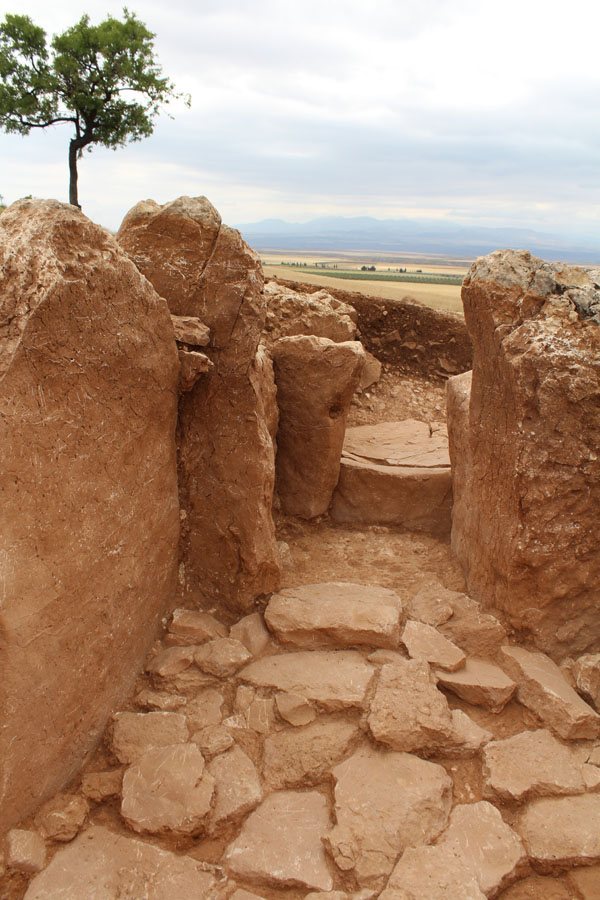
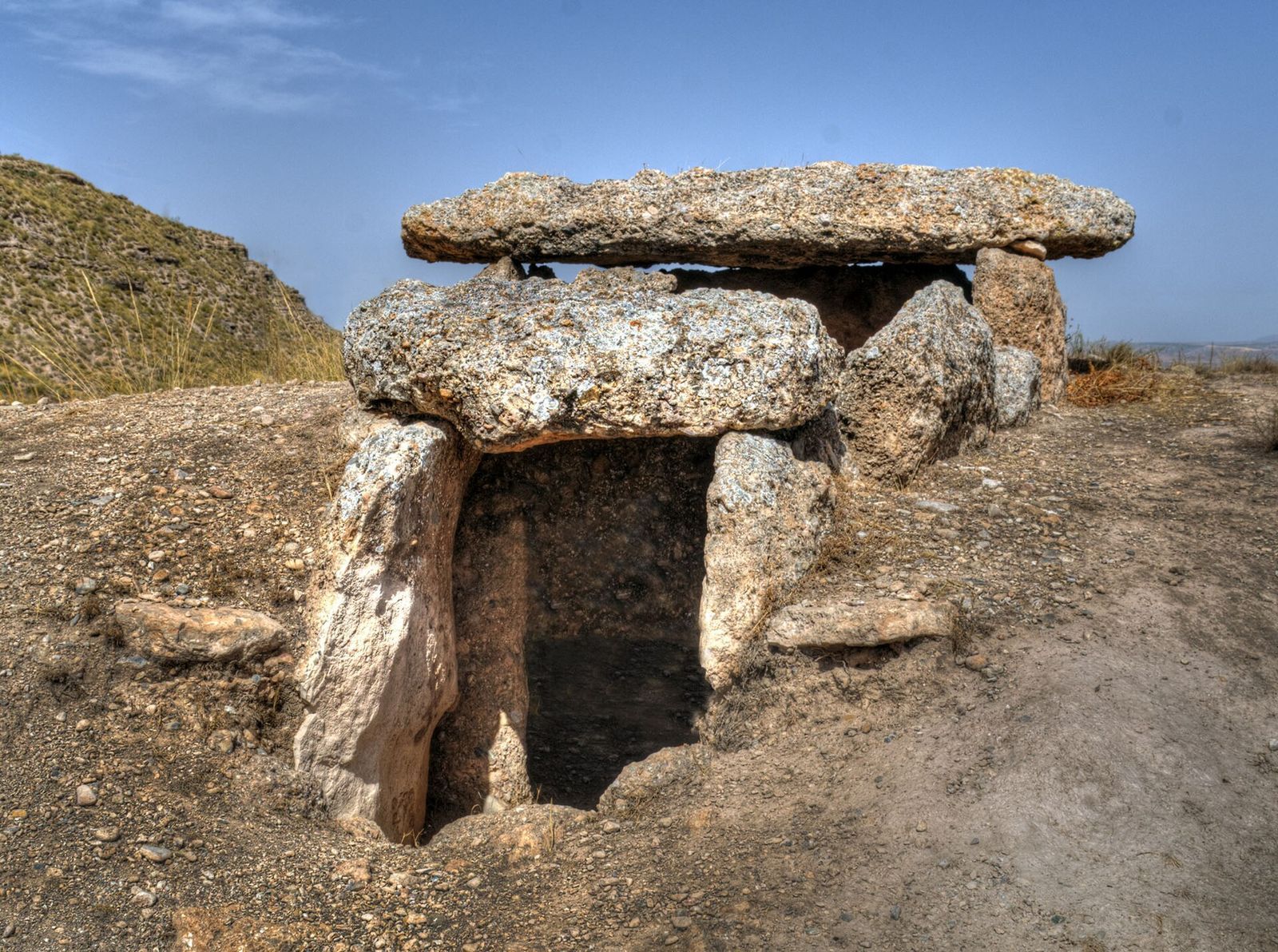
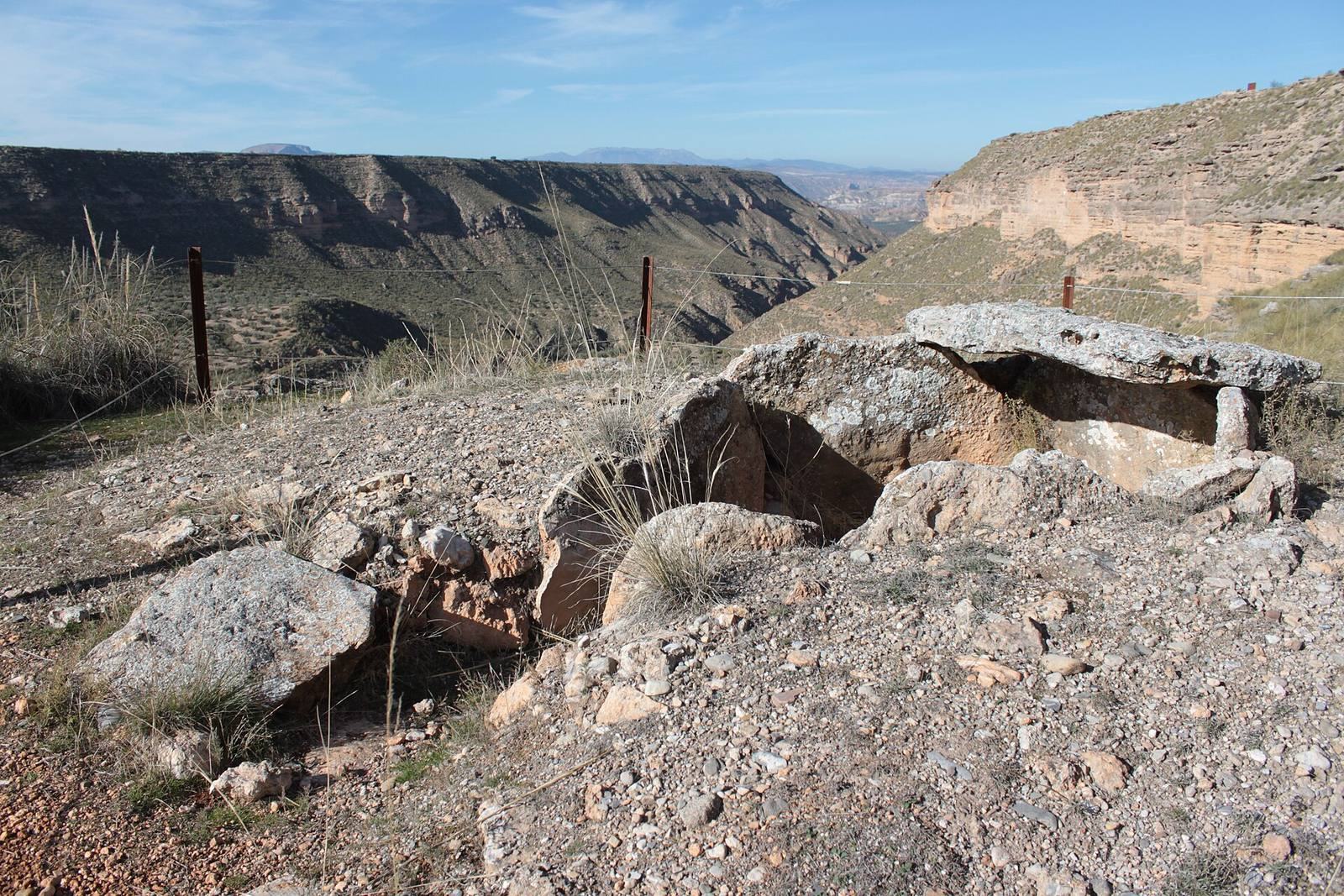
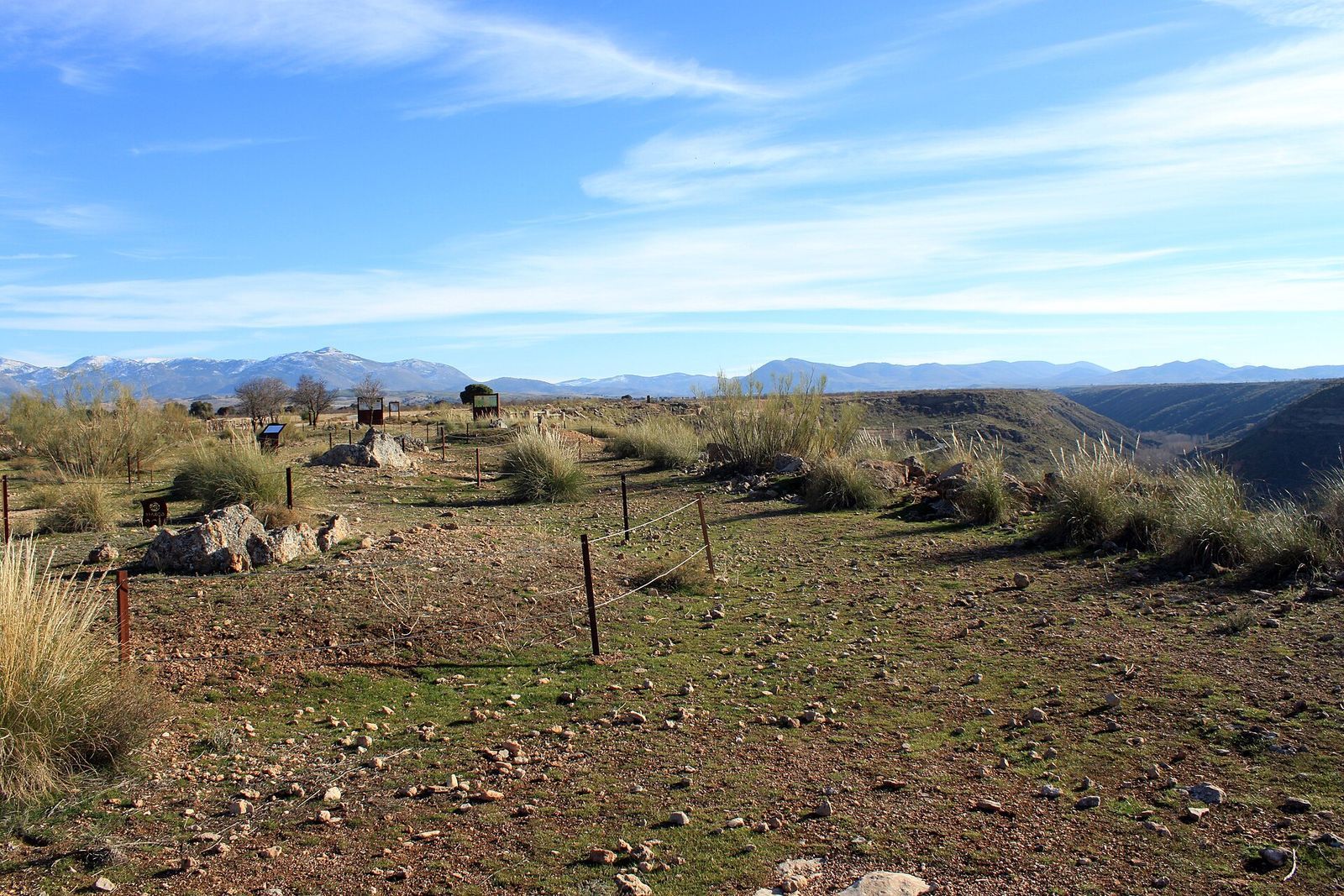
The dolmens occupy eroded slopes along the Gor River valley and extend for about 20 kilometres, from Las Angosturas to the confluence of the Gor and Fardes rivers. Their chambers were built from locally gathered limestone or conglomerate slabs, with upright stones forming the walls and, in many cases, large slabs covering the roofs.
Landscape and distribution
River valley and badlands
The surrounding Negratín badlands, also known as the Gorafe Desert, cover about 1,606 hectares within the Guadix sub-basin. Their reddish clays and sands formed during the Turolian, a late Miocene European land-mammal age. After uplift, an enclosed basin with lakes developed, accumulating conglomerate, rock made from cemented stone fragments, and limestone. During the Middle Pleistocene, water began draining west through the Guadiana Menor toward the Atlantic after the basin connected with the Guadalquivir basin. Erosion cut gullies and valleys into the landscape, while the Gor carved a deep valley through the plateau. Cereal cultivation on the valley and plateau has continued for at least 6,000 years.
Necropolises
Eleven burial grounds are identified across the complex: Baños de Alicún, La Sabina, Las Majadillas, Llano de la Cuesta de Guadix, Llano de Olivares, Hoyas del Coquín, Llano del Cerrillo de las Liebres, Gabiarra, Llano de la Carrascosa, Torrecilla and Baul. Several Bronze Age settlements are also known in the area. Of the 242 inventoried dolmens, 125 are preserved, and 37 have been restored.
Dolmen architecture
Chamber forms
The tombs have five chamber plans: trapezoidal, rectangular, pentagonal, quadrangular and polygonal. Pentagonal chambers account for more than half the total and are relatively consistent in size. Trapezoidal tombs are the largest and least common, while quadrangular examples are the smallest. Many polygonal examples are incomplete. Dolmen 110 is quadrangular, dolmen 116 rectangular and dolmen 133 pentagonal, with a passage. Dolmen 134 has a trapezoidal chamber and a passage. Bedrock forms one or more chamber walls in dolmens 40, 124 and 141, including two walls in dolmen 141.
Slabs, passages and stone features
Chamber walls consist of shaped limestone or conglomerate slabs set upright, generally increasing in size from the entrance toward the back. The largest chamber slabs, at dolmen 134, reach 2.20 metres in height; this tomb also has the park’s largest upright and roof slabs. Roof slabs survive in many dolmens, and those at dolmens 6, 134 and 186 exceed 2.5 metres in length. Passages commonly lead into the chambers, usually facing southeast. Dolmen 132 has the longest passage, while passages at dolmens 33, 36 and 84 retain roof slabs. Stone circles surround dolmens 42, 45 and 94. The single recorded engraving on an upright slab, at dolmen 77, depicts a human figure.
Major necropolis groups
Hoyas del Coquín
The Umbría de las Hoyas and Hoyas del Coquín Bajo burial grounds together contain 20 dolmens and date to 2300–1800 BC. Their largest tombs reach 2.20 metres in height and use some of the complex’s largest slabs.
Llano de Olivares
Llano de Olivares contains 23 dolmens, most with pentagonal chambers. Some retain their roof slabs.
Las Majadillas
Las Majadillas contains 23 dolmens and has the area’s highest concentration of tombs. Large examples include La Cobertera, which is 3.4 metres long, and dolmen 69, which measures 4.4 metres. Dolmen 84 held the remains of 22 people, the largest burial group identified in the region.
Human remains and grave goods
Burials
Human remains from 198 tombs represent 224 individuals: 64 children, 27 young people, 126 adults and seven elderly people. Many show signs of incomplete cremation.
Objects from the tombs
Finds include flint arrowheads, knives, axes and polishers, as well as bone awls, beads and perforated marine shells. Other objects include bracelets, rings, daggers, idols and ceramic vessels or sherds. Necklaces were made from bone, metal, shell and stone. Metal objects and pottery are less common among the finds than flint objects.