Church of St Peter, Edensor: A Church of England Parish Church
Site at a Glance
- Popularity
- High
- Country
- United Kingdom
- Primary era
- Modern
- Eras represented
- Medieval, Early Modern, Modern
- Civilizations
- British, English
- Site type
- Religious
- Remains
- Church
On this page11 sections
History
The Church of St Peter is a Church of England parish church in Edensor, United Kingdom. Its foundation dates to 1150, and the present building was rebuilt in 1867 for William Cavendish, 7th Duke of Devonshire. The church is the Church of England parish church closest to Chatsworth House, home of the Dukes of Devonshire.
The medieval church and the rebuilding of Edensor
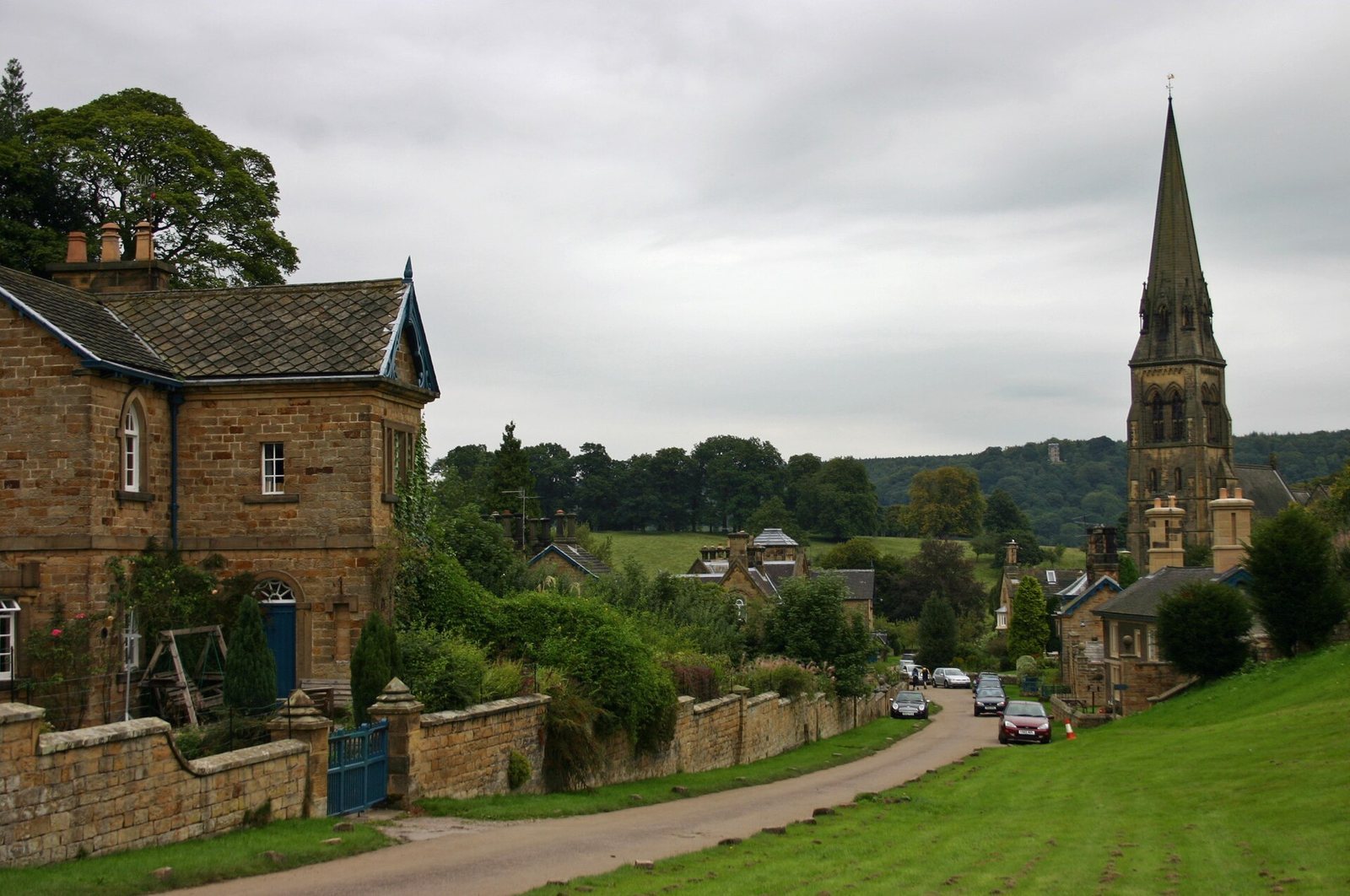
The original church dates from the 12th century and was altered in the 15th century. Edensor’s first village stood immediately beside Chatsworth House. Between 1838 and 1842, William Cavendish, 6th Duke of Devonshire, ordered its demolition so that the replacement village would be out of sight beyond a hill. Joseph Paxton oversaw plans for the new village and its parish church; the 6th Duke is regarded as the founder of modern Edensor.
The church built for William Cavendish, 7th Duke of Devonshire, was rebuilt in 1867 by the architect Sir George Gilbert Scott, about 25 years after the replacement village was completed. It was consecrated in 1870.
Parish life and churchyard history
Dedicated to St Peter, one of Jesus’s apostles and a leading figure in early Christianity, the church follows a High Church Anglican tradition that emphasizes formal liturgy and sacraments. It shares a parish with St Anne’s Church in Beeley and belongs to the Diocese of Derby, an area administered by a bishop. The church has Grade I listed status, England’s highest category for buildings of exceptional interest.
Joseph Paxton is buried in the churchyard, along with most Dukes of Devonshire and members of their families. Those buried there include William Cavendish, 6th Duke (1790–1858); Lord Frederick Charles Cavendish (1836–1882); Lucy Caroline, Lady Frederick Cavendish (1841–1925); William Cavendish, 7th Duke (1808–1891); Spencer Cavendish, 8th Duke (1833–1908); Victor Cavendish, 9th Duke (1868–1938); Edward Cavendish, 10th Duke (1895–1950); Andrew Cavendish, 11th Duke (1920–2004); and Deborah Cavendish, Duchess of Devonshire (1920–2014).
Kathleen Cavendish, Marchioness of Hartington (1920–1948), was the sister of US President John F. Kennedy and the wife of the 10th Duke’s eldest son. Three Commonwealth war graves in the churchyard commemorate a British soldier, a British sailor and a Canadian Army officer who served in the First World War.
Remains
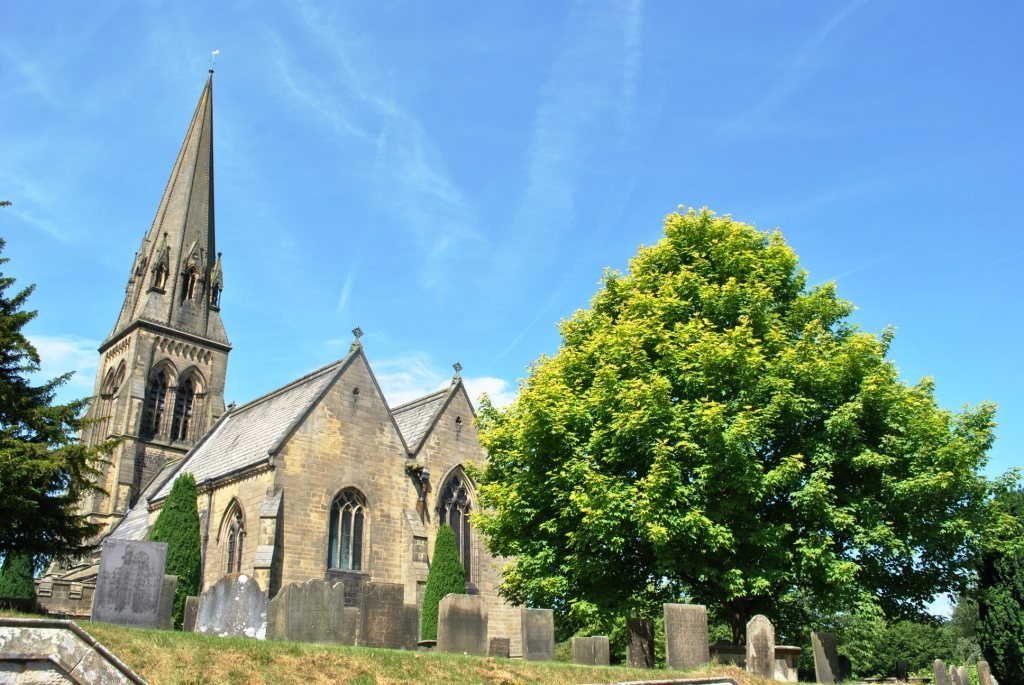
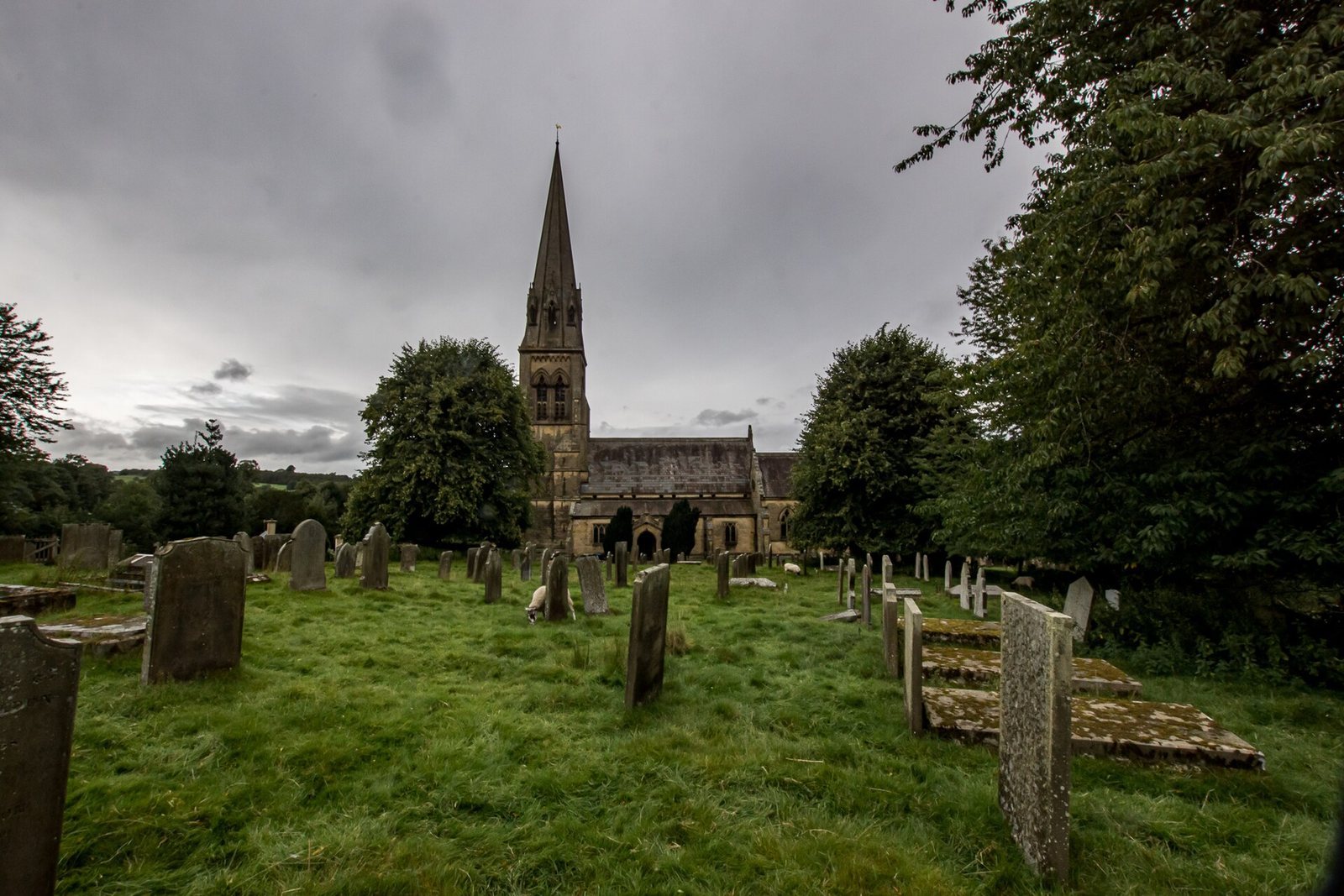
The church’s plan comprises a west steeple, a nave with aisles, a chancel, a north vestry and a southeast chapel. Its 166-foot spire was designed by George Gilbert Scott.
The church building
Plan and spire
The nave is separated from the aisles by four pointed arches on each side. The chancel forms the area around the altar, while the vestry is a room for clergy and church furnishings. The west steeple supports the tall, pointed spire.
Surviving features of the earlier church
The earlier church had a squat tower. The 1867 rebuilding incorporated fabric from the older Norman church, an English architectural tradition associated with the centuries after the Norman Conquest. Four of the nave’s arches and the partly restored porch belong to the earlier building. Two piscinas, basins used for washing sacred vessels, also survive; their date and possible connection to the Norman church are uncertain.
Memorials and interior features
Monuments and memorials
An early 17th-century memorial commemorates Henry Cavendish, who died in 1616, and William Cavendish, who died in 1625. They were sons of Sir William Cavendish and Bess of Hardwick; the younger William became the first Earl of Devonshire, a British noble rank below duke. A brass memorial honours John Beton, who died in 1570 and served Mary, Queen of Scots. A Barker family memorial remembers a relative who fought aboard the British warship HMS Swiftsure at the 1805 Battle of Trafalgar, a major naval engagement during the Napoleonic Wars.
Windows and organ
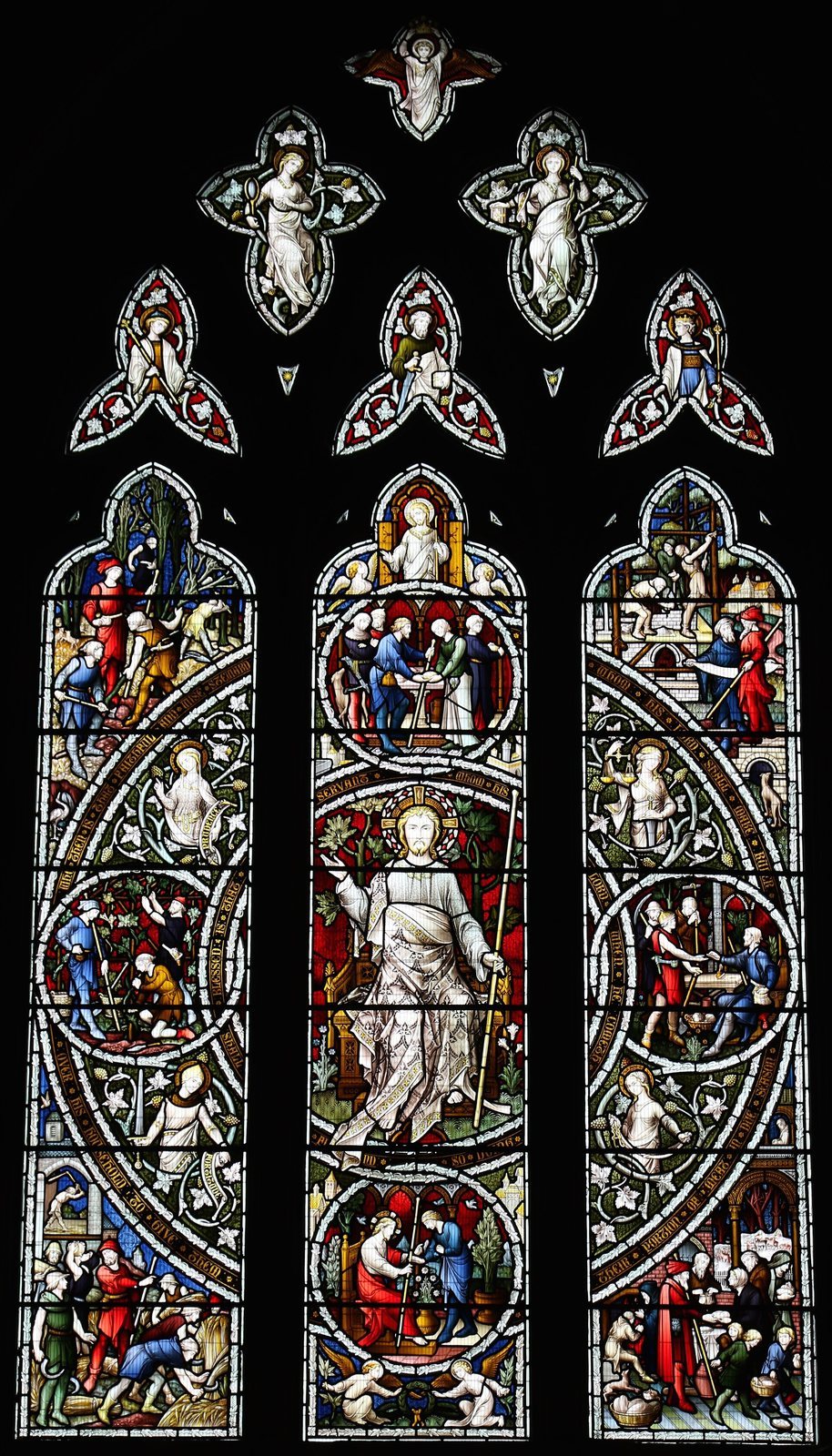
The east stained-glass window commemorates Lord Edward Cavendish and was made by Burlison and Grylls in 1892. Hardman & Co. made the west window in 1879 in memory of John Cottingham, steward to the 7th Duke; its imagery presents the virtues of a good steward, an official who managed a household or estate. The chapel window, also by Hardman & Co., commemorates Lord Frederick Charles Cavendish and dates to 1882. Bishop and Son built the pipe organ in 1873.
Churchyard memorials
The Cavendish family graves occupy the churchyard’s highest ground. Kathleen Cavendish’s grave has a headstone, and a plaque set into the ground commemorates John F. Kennedy’s visit to her grave on 29 June 1963, when he was president. A separate tablet commemorates Andrew Cavendish, 11th Duke of Devonshire, and his jubilee.