Křtiny Castle: A Baroque Residence in a Pilgrimage Complex
Site at a Glance
- Popularity
- Medium
- Country
- Czechia
- Primary era
- Early Modern
- Eras represented
- Early Modern, Modern
- Civilizations
- Habsburg, Holy Roman Empire, Margraviate of Moravia
- Site type
- Domestic
- Remains
- Castle
On this page6 sections
History
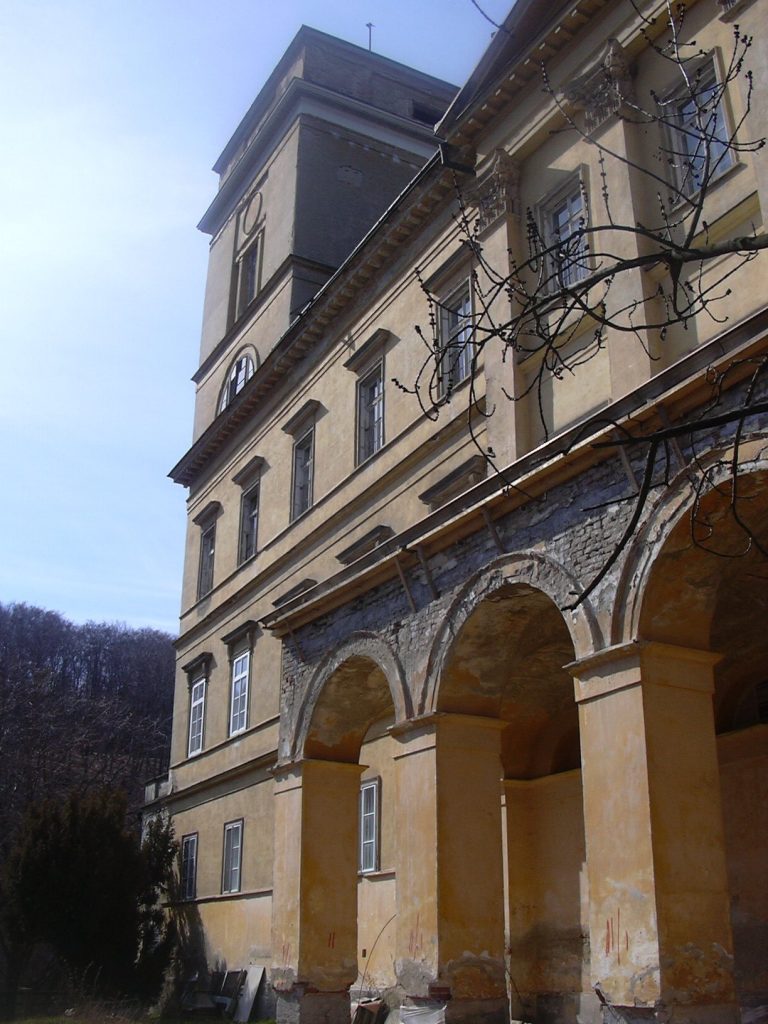
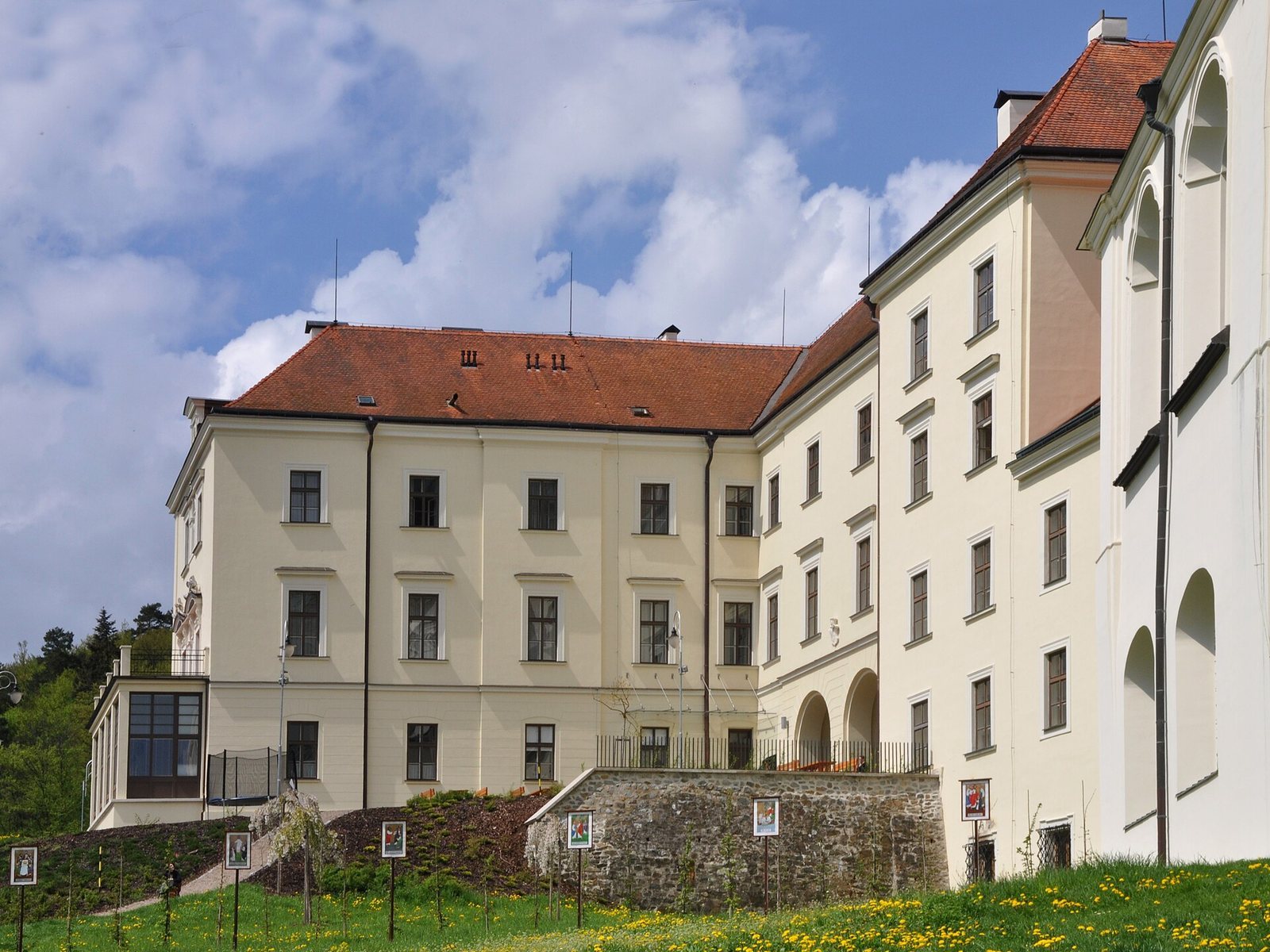
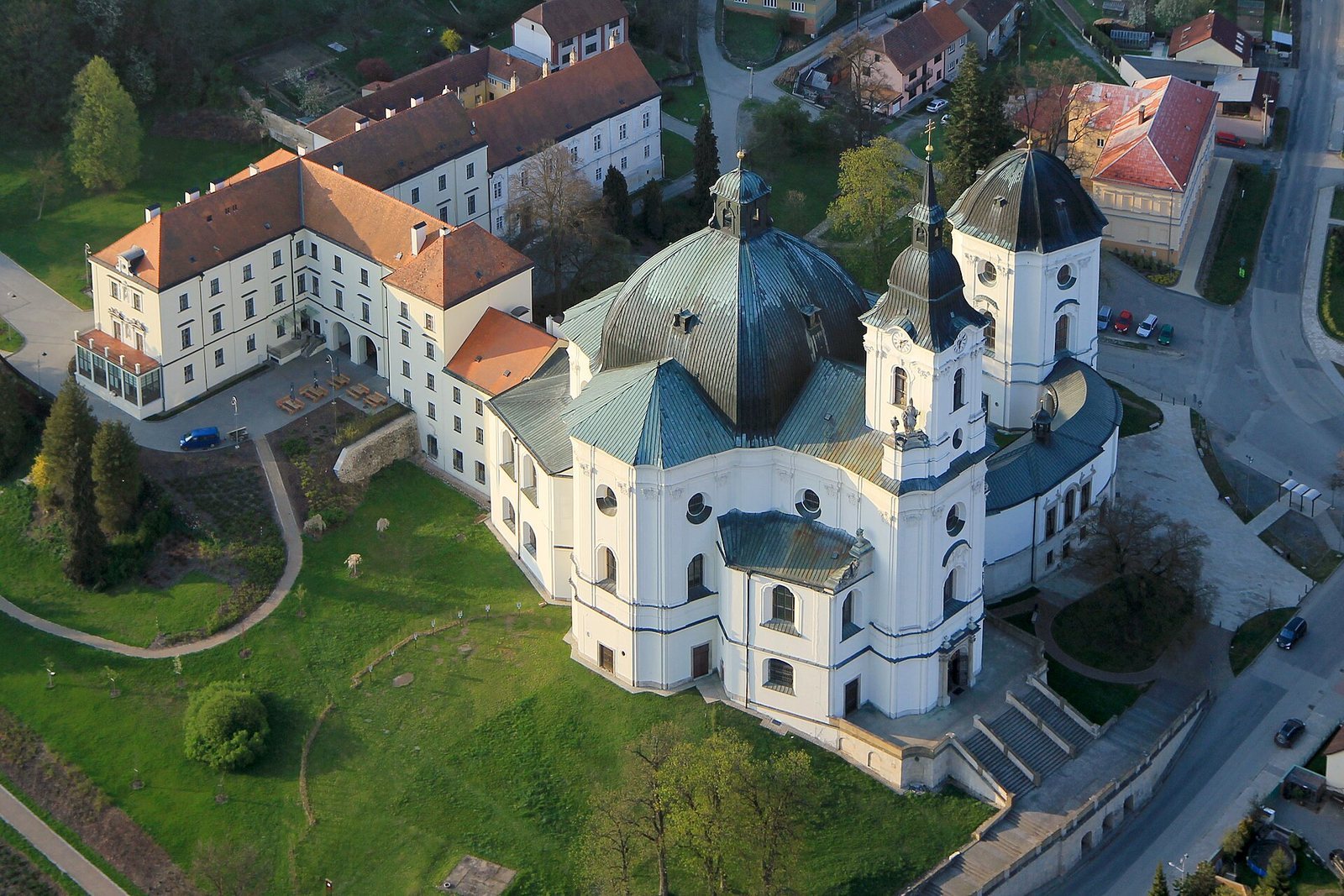
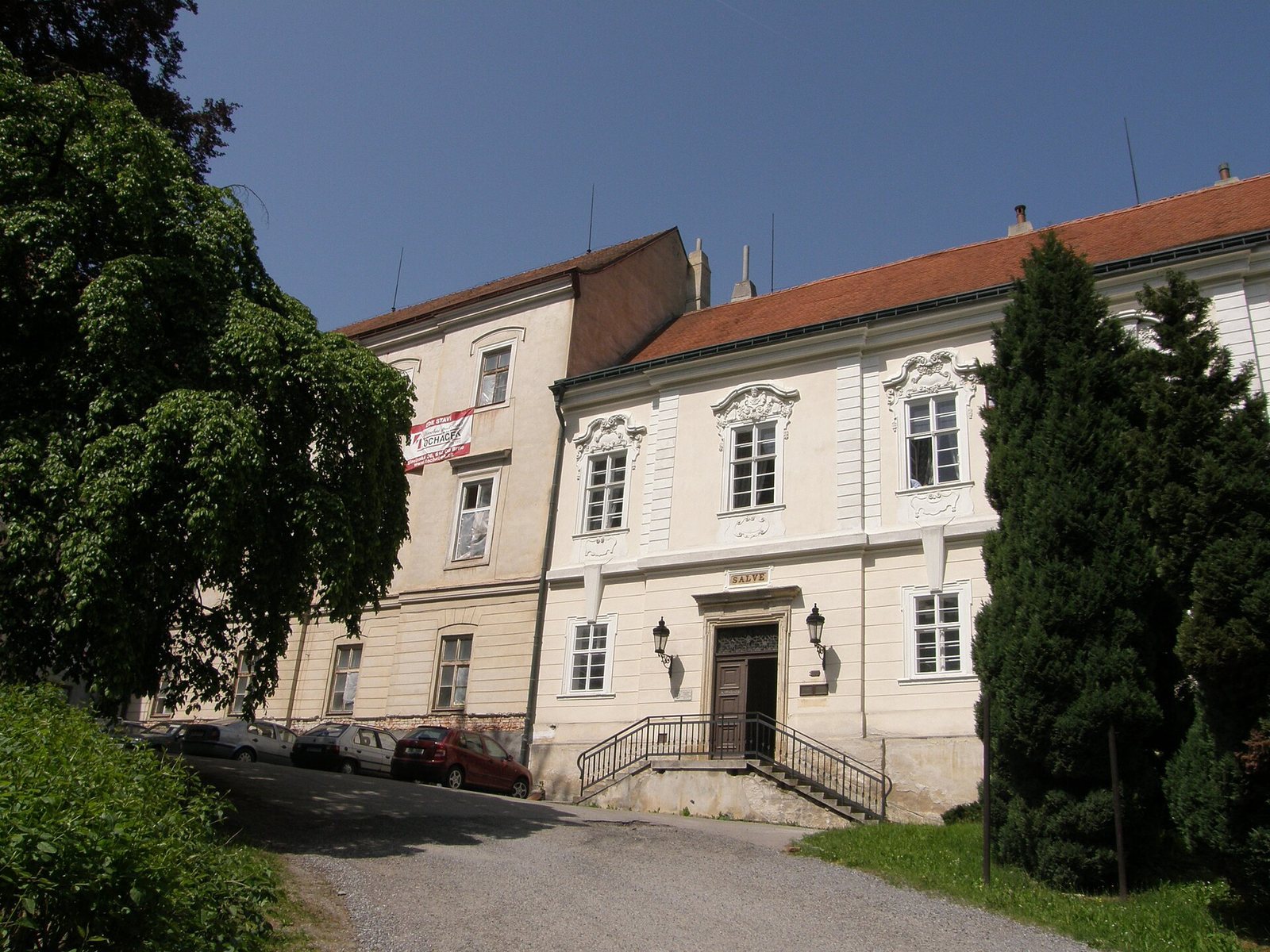
Křtiny Castle is a Baroque residence in Czechia, built in 1658 by Premonstratensians, a Catholic order whose priests lived communally under a religious rule. Its history became closely connected with the pilgrimage complex surrounding the Church of the Name of the Virgin Mary.
Foundation and pilgrimage complex
The settlement of Křtiny is first recorded in 1237. Its name has been understood as evidence of a history reaching back to the ninth-century mission of Cyril and Methodius, Christian missionaries associated with the spread of Christianity and literacy among Slavic peoples. The Premonstratensians based in Zábrdovice, a district of Brno, established the castle as their residence. It was remodelled in 1713 and again in 1864.
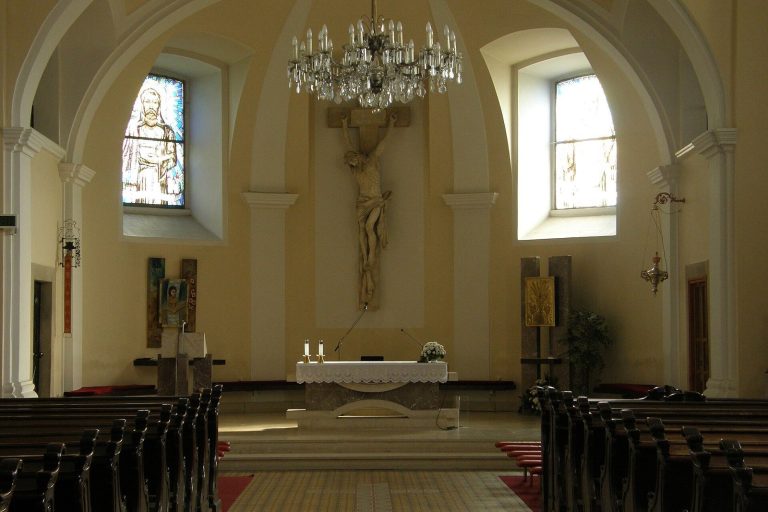
The Church of the Name of the Virgin Mary was built from 1718 to 1750 to a design by Jan Blažej Santini-Aichel, on a traditional sacred site. The monastery reached its greatest prominence in the second half of the eighteenth century, soon after the church was consecrated. Emperor Joseph II, a Habsburg ruler, dissolved the monastery. The church remained in religious use, while the monastery’s property was sold. Later owners of the castle included the Dietrichsteins, the Bubna of Litice family, and the Taubers.
Changing ownership and uses
Johann II of Liechtenstein acquired the castle in 1894 and intended to repair it before giving it to the municipality for use as a school or hospital. The municipality declined the offer because of the expected costs, and a doctor subsequently lived in the building. In 1923, the castle passed to the Agricultural University in Brno when the university took over the Liechtenstein Adamov estate. It continued to serve as a doctor’s base, and the German army used its accommodation during the Second World War.
From the 1950s, the university used the castle for practical instruction at its school farm. Although repairs and alterations took place, the building deteriorated overall. The Křtiny School Forest Enterprise became responsible for its management in the early 1980s; the castle had served as the enterprise’s headquarters from 1967 to 1996.
Extensive repairs began in 1994. The south wing was reconstructed in 1997, and work on the main building followed. By the end of 2001, an audiovisual teaching hall had been built and the social hall renovated. The remaining part of the north wing was approved for use in November 2008. The castle is listed in the Czech State List of Cultural Monuments together with the church, and the wider pilgrimage complex became a Czech National Cultural Monument in 2008. Today, the castle supports practical teaching and educational activities at Mendel University in Brno and also functions as a hotel and restaurant.
Remains
The Baroque complex consists of a main building and north and south wings. Its present arrangement includes teaching, accommodation, dining, and multipurpose spaces.
Castle buildings and rooms
The south wing contains an audiovisual teaching hall. The two-storey north wing includes accommodation, a kitchen, a restaurant, and multipurpose rooms. The castle also has a Congress Hall, a Social Hall, a Hunting Salon, and an Opletal Salon. Repairs to the roof trusses and replacement of the roof covering were initially undertaken to prevent water from entering the building.
Church of the Name of the Virgin Mary
The church’s exterior wall decoration approaches Rococo, a lighter and more elaborate style that developed after Baroque. Moravian painter Jan Jiří Etgens and sculptor Ondřej Schweigl contributed to the interior decoration. The church stands on the sites of two earlier buildings: a Romanesque church, in an early medieval European style, traditionally called the Czech church, and a later Gothic church, traditionally called the German church.