Madara Archaeological Reserve: A Landscape of Ancient Sanctuaries and Medieval Remains
Site at a Glance
- Popularity
- Medium
- Country
- Bulgaria
- Primary era
- Medieval
- Eras represented
- Classical, Medieval
- Civilizations
- Bulgarian, Byzantine, Roman, Thracian
- Site type
- Religious
- Remains
- Sanctuary
On this page19 sections
History
The Madara Archaeological Reserve lies near Shumen in northeastern Bulgaria. The area contains evidence of human settlement from around 6000–7000 BCE and later use by Thracians, Romans, Bulgars, Byzantines, and Christian communities.
Prehistoric and Thracian use
People lived in the area by around 6000–7000 BCE. The Great and Small Caves provided shelter, while early inhabitants gathered roots and fruit and hunted. Cliffs and plentiful water flowing from the rocks later formed the setting for a major cult complex.
Ancient Thracians used the Great Cave as a sanctuary dedicated to nymphs, female divinities associated with nature. The sanctuary has also been interpreted as a place where divination took place. One proposed explanation of the name Madara, also rendered Madra, connects it with a sacred mountain and with ancient Iranian and Indo-Aryan words for incantation or divination. This interpretation links the name to Bulgar pagan worship and priestly divination.
Fortress and Bulgar cult
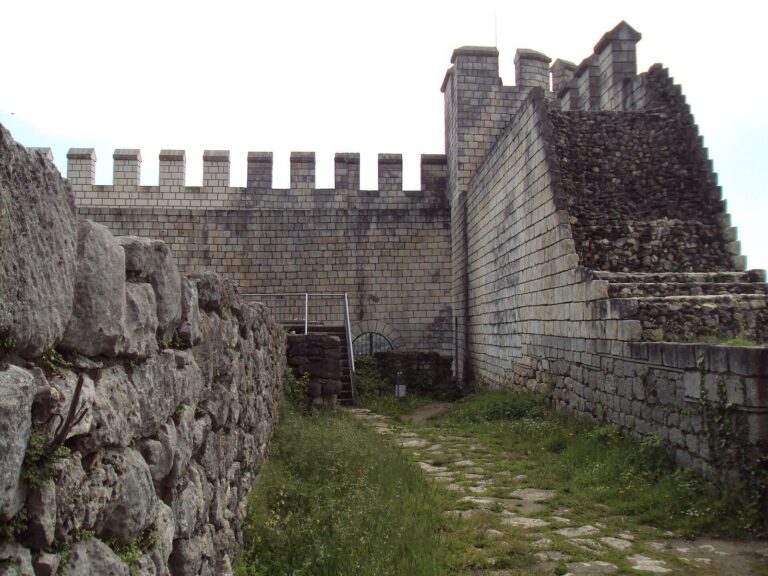
A fortress was built on the rocky plateau in the second or third century BCE. Romans, Bulgars, and Byzantines renewed it in later periods, and it may have remained in use until Ottoman forces arrived.
Interpretations of the Madara relief have changed over time. Early publications identified its rider as Khan Krum, while another scholarly tradition associated it with Omurtag. More recent interpretations favor a deity believed to be the namesake figure from whom the Bulgarians derived their name. An earlier mounted image near Ctesiphon depicts Ahura Mazda, the principal deity of Zoroastrianism, beside a Persian ruler receiving symbols of authority. The image predates the Madara relief and differs in style. One hypothesis proposes that Bulgarians remembered it while travelling toward Byzantine lands and adapted it as a sign of possession.
Some archaeologists consider Madara a probable Bulgar cult center and suggest it could be the legendary Mundraga mentioned in medieval writings. The area may also have held summer residences of Bulgar khans, a title for rulers. In 2003, researchers from the Shumen Regional History Museum and Shumen University, including Nedelcho Nedelchev and Georgi Atanasov, identified and studied a workshop associated with plaques showing the Thracian Horseman. Nedelchev argued that the relief’s resemblance to this imagery reflected a continuing tradition of horseman worship.
Christian communities and medieval change
Several large Christian buildings, including churches and monasteries, belong to the period of Boris-Michael, also known as Boris I, the Bulgarian ruler associated with the country’s Christianization. These structures bear traces of fire. An early Christian monastery and a separate rock-cut monastery formed part of the area’s religious life. The rock-cut community dates to the fourteenth and fifteenth centuries and operated for more than two centuries.
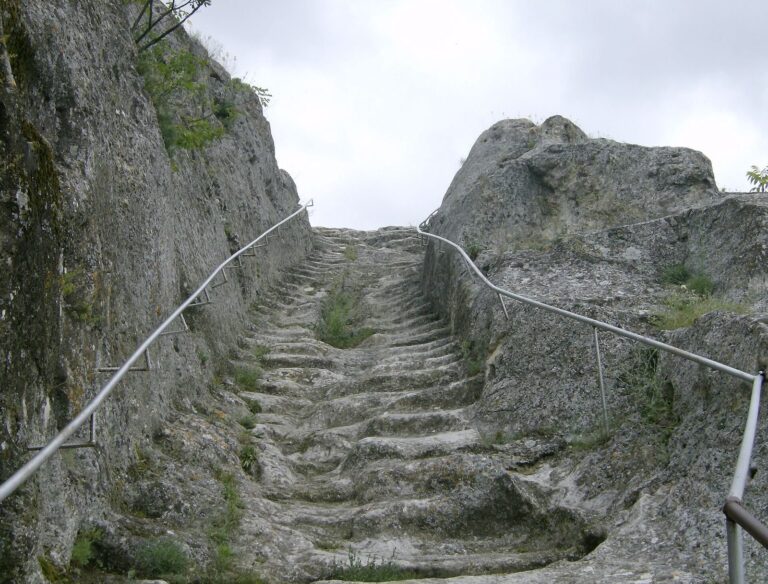
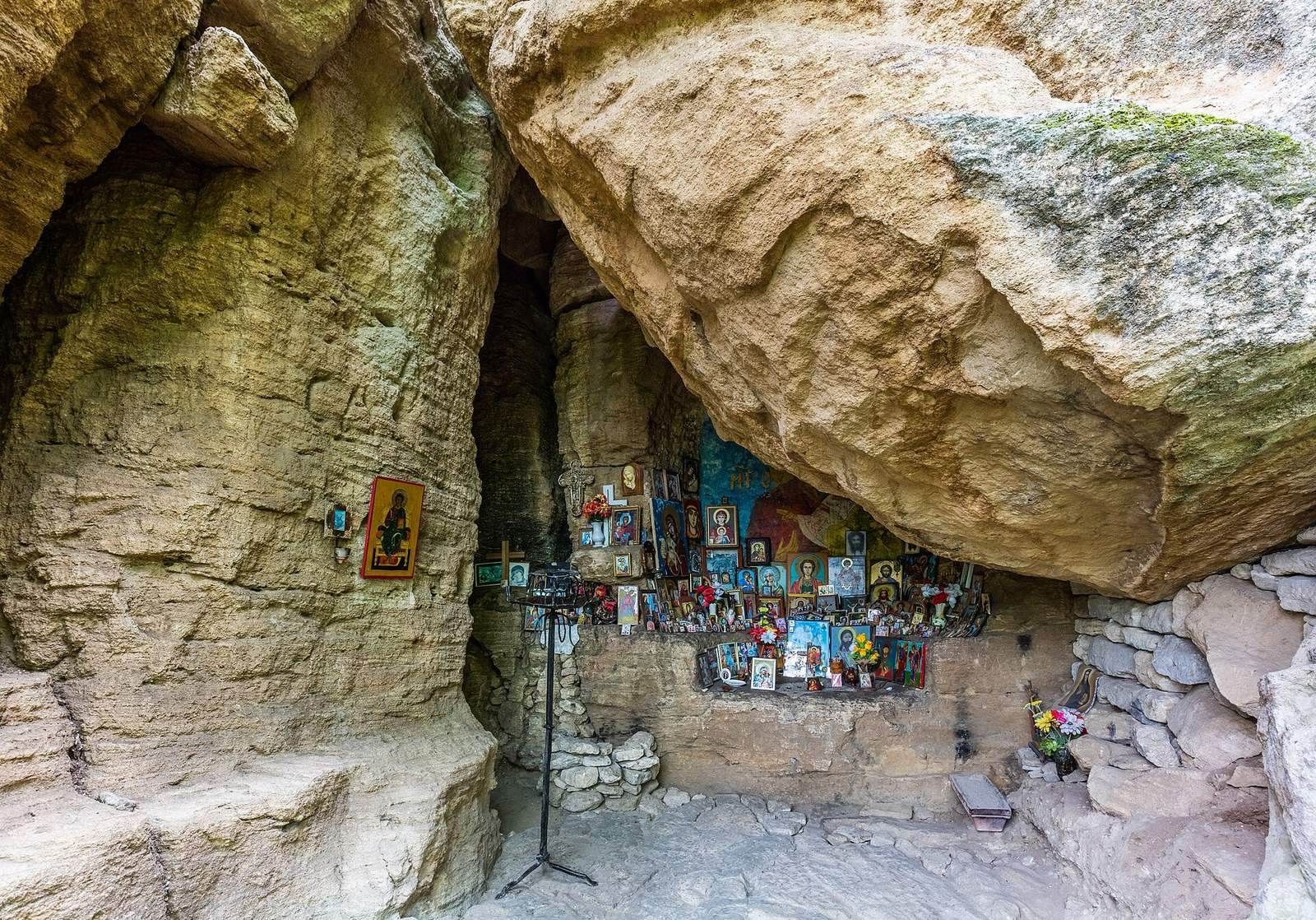
A monastery chapel was built near the Great Cave at the foot of the cliff. Local clairvoyants have associated it with a local saint whose name is now forgotten. A destructive earthquake in the fourteenth century demolished the chapel and buried the fortress’s only stairway access.
Archaeological study and recognition
Nineteenth-century notices by Géza Fehér began the study of Madara, followed by more detailed work by Karel Škorpil. Rafail Popov carried out the first archaeological probes. Early investigators focused chiefly on interpreting the relief. Before 1944, the rock-cut tomb at Kireka was examined. Some scholars have proposed that it was the burial place of Boris-Michael, who, according to this interpretation, withdrew to a nearby monastery with a direct view of Pliska. A large settlement around the sanctuary has also been proposed, and several early Christian sanctuaries have been investigated.
A Roman villa was excavated in the mid-twentieth century. In modern recognition of the site’s heritage, the Madara Horseman is a UNESCO World Heritage property, a designation for places recognized as having outstanding universal value.
Remains
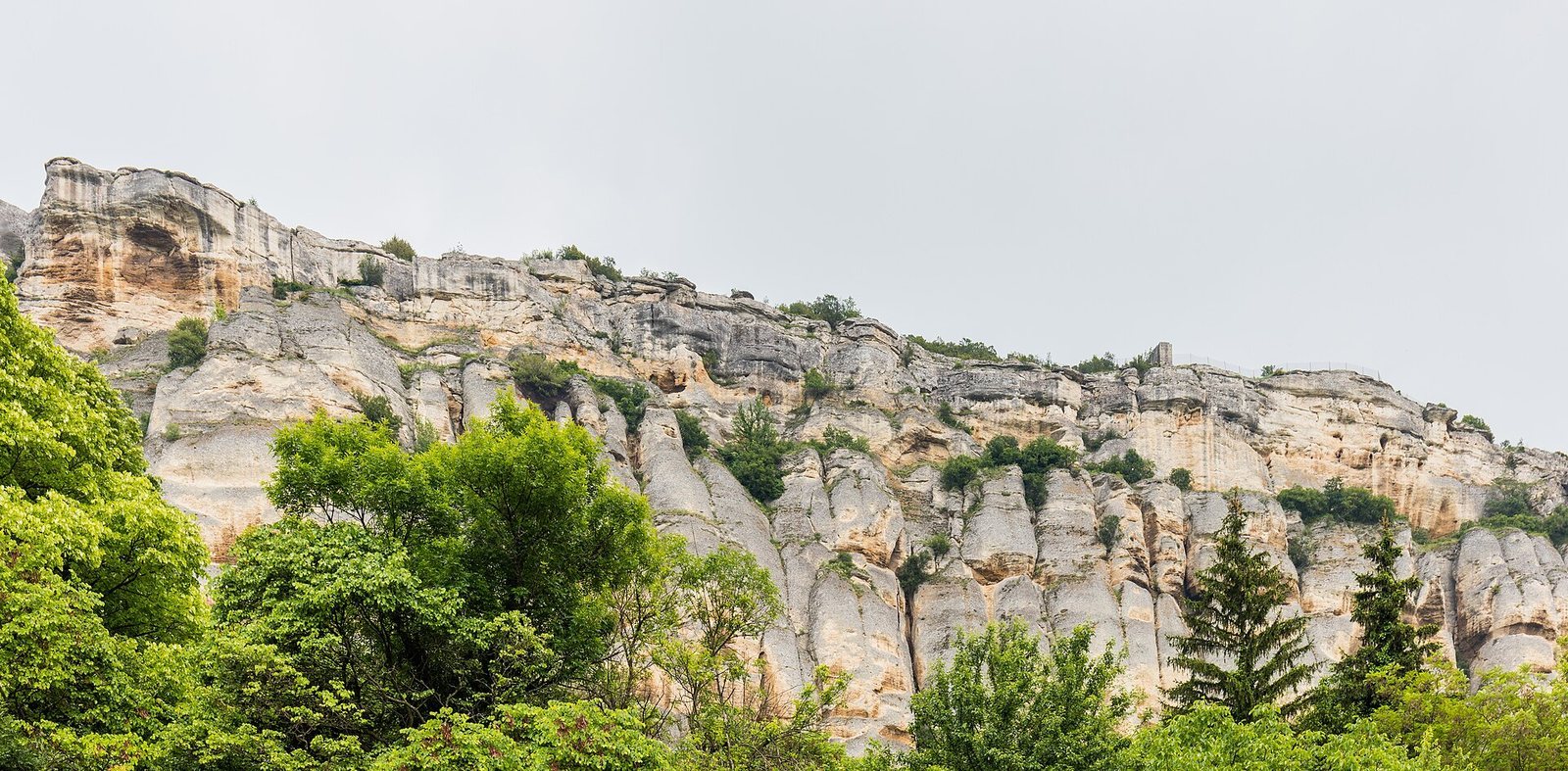
The reserve covers several hundred decares, each equal to 1,000 square metres. Its remains occupy a landscape of cliffs, caves, and a rocky plateau, combining natural shelters, carved rock, and built structures.
Caves, relief, and cult structures
Great and Small Caves
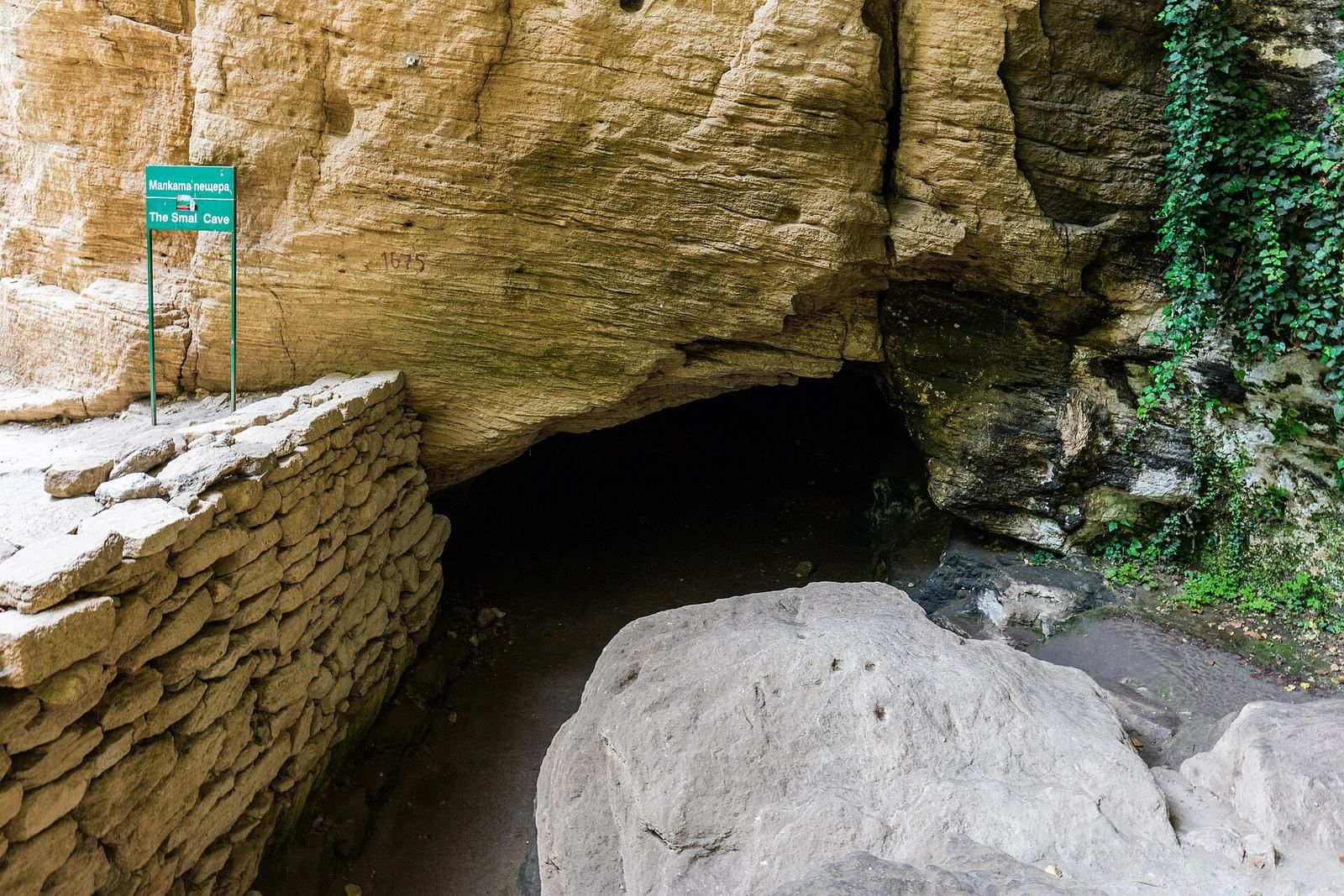
The Great Cave is a natural rock shelter about 30 metres high, with the smaller Small Cave nearby. Both are natural formations, and water flows abundantly from the surrounding rocks.
Madara Horseman
The Madara relief is carved into the rock as a bas-relief, a figure raised from a flat surface. It depicts a mounted figure.
Bulgar cult complexes
The largest Bulgar cult complex is a building of about 100 square metres constructed around an isolated rock outcrop, apparently connected with the outcrop’s deification. Its walls survive to a height of more than two metres. The complexes extend beneath the rock relief toward Kaspichan and east toward Kyulevcha.
Sanctuary objects and workshop
Dedicated plaques found at the sanctuary portray the Mother Goddess Bendis, the Three Nymphs, and Asclepius, a god associated with healing. A marble fragment bears zodiac signs. A local workshop is associated with the production of plaques depicting the Thracian Horseman, a recurring figure in ancient Thracian religious imagery.
Fortress and settlement remains
Plateau fortress
The fortress occupies the rocky plateau. Its sole stairway approach was described as a secret entrance; the fourteenth-century earthquake buried it.
Roman villa
The Roman villa occupied a rise above the present railway station and covered more than two decares, or 2,000 square metres.
Christian and funerary remains
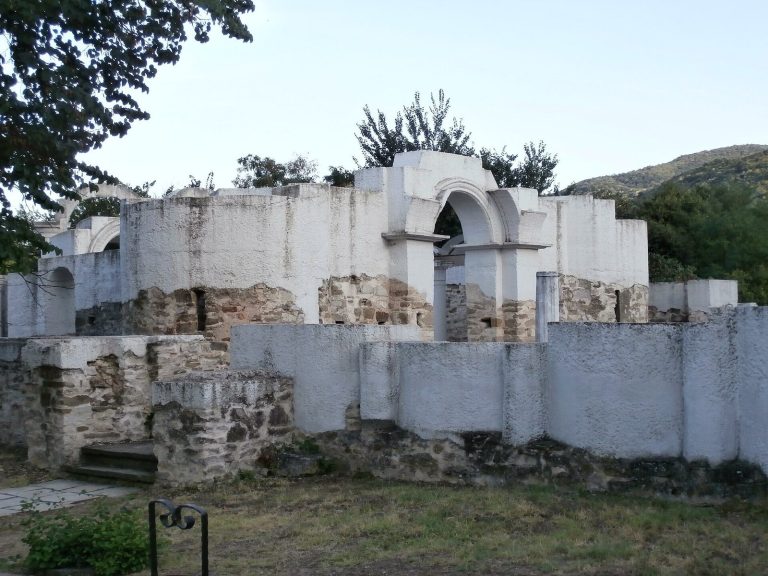
Early Christian monastery
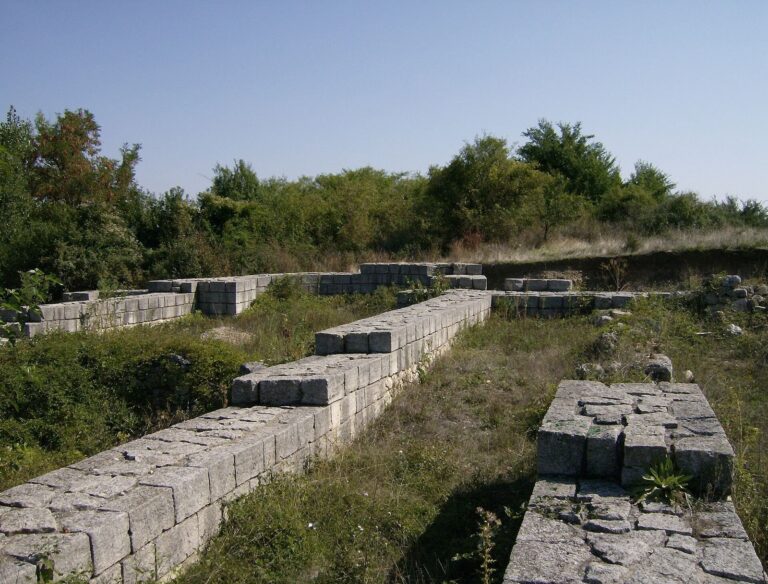
A large early Christian monastery stands on a gently sloping meadow and faces north. Its remains indicate that it was once luxurious, before treasure hunters looted it.
Rock-cut monastery
The rock-cut monastery comprises dozens of cells. Many lie high along the cliff rim east of the Madara relief and Great Cave, often more than 40–50 metres above the ground.
Kireka tomb
About three kilometres from the relief, toward Kaspichan, the Kireka tomb is cut into a sheer rock face. Its features are associated with Thraco-Roman burial structures of the fourth and fifth centuries. Rock-cut urns flank the tomb, and one has a channel that may have drained or collected a sacred liquid. A shallow cross, intricately divided into sections and more than one metre across, marks the entrance. Grooves there suggest a heavy door and prolonged use.
Objects held at the archaeological museum
The Madara archaeological museum holds Neolithic tools and a gold belt ornament from the First Bulgarian Empire, the medieval Bulgarian state that existed from the late seventh to the early eleventh century. Its collection also includes a sundial depicting Orpheus, the legendary musician associated with the ancient Orphic tradition. It is one of the few surviving examples of its kind in Bulgaria.