Abbey of San Michele Arcangelo: A Monastic and Pilgrimage Complex in Italy
Site at a Glance
- Popularity
- High
- Country
- Italy
- Primary era
- Early Modern
- Eras represented
- Medieval, Early Modern, Modern
- Civilizations
- Kingdom of Naples, Norman
- Site type
- Religious
- Remains
- Monastery
On this page14 sections
History
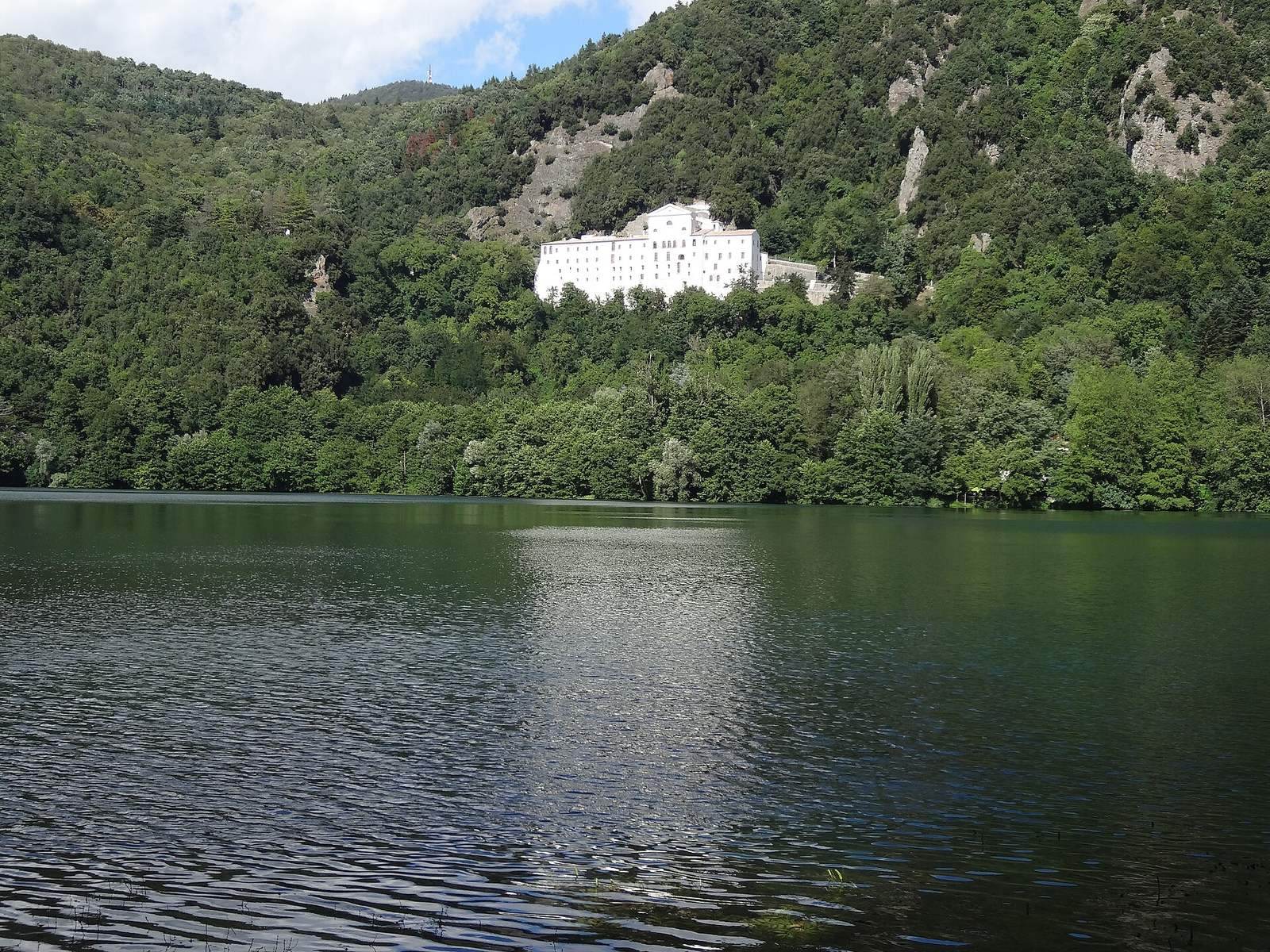
The Abbey of San Michele Arcangelo is a Catholic abbey and pilgrimage complex at Monticchio, Italy, on Monte Vulture’s eastern flank beside Lago di Monticchio Piccolo. It developed around a cave inhabited by Basilian hermits, members of eastern monastic communities following a tradition associated with Saint Basil. Worship at the site dates to the third or fourth century AD, while the abbey’s foundation is uncertain and generally placed in the early medieval period.
Early communities and Norman rule
In 726, Byzantine emperor Leo III the Isaurian issued a decree against the veneration of sacred images. The flight of eastern monks that followed helped spread Basilian communities along the Adriatic coast and into the Monte Vulture area. By the late tenth century, the monk Vitalis of Castronovo and his nephew and disciple Elia of Sicily had come from Calabria. Vitalis died near Rapolla in 994. Greek monks occupied the cave above the small lake and fostered devotion to Saint Michael there.
Benedictines, who follow the Rule of Saint Benedict, later replaced the Basilian hermits. They established a monastery and church between the lakes, associated in turn with Saint Peter and Saint Hippolytus. The cave sanctuary and larger abbey served related pilgrimage needs, with the abbey providing assistance and lodging. In 1043, the Normans, who had established political power in southern Italy, granted a church near Melfi to William Iron Arm and expelled the Basilian hermits from Monticchio in support of the Benedictines.
In 1059, Pope Nicholas II and the Norman duke Robert Guiscard agreed to recognize Norman conquests in return for military aid to the papacy. Nicholas visited Monticchio and consecrated Saint Michael’s church according to the Latin rite. The Normans besieged and captured Monticchio in 1078.
Medieval fortunes
During the twelfth century, the abbey faced competition from the Congregation of Montevergine, a Benedictine community founded by William of Vercelli that attracted grants and other benefits previously directed to older abbeys. Monticchio’s monks sought to maintain the institution and encourage pilgrimage. A papal bull dated 2 April 1175 listed its possessions.
The abbey’s material and spiritual decline deepened from around 1220, after Frederick II was crowned emperor by Pope Honorius III. Abbot Giovanni later petitioned Charles of Anjou to restore the abbey’s lands and privileges. The community regained direct administration of its property and revenues, but wars between the Angevins and the Durazzeschi, rival branches of the Angevin royal house, devastated the Vulture region and the abbey’s holdings. Alfonso of Aragon became king of Naples in 1442.
An earthquake on 5 December 1456 brought down much of the abbey at Sant’Ippolito, killing its last Benedictine abbot in the collapse. The disaster hastened the community’s decline, which continued into the first half of the sixteenth century.
Later communities and rebuilding
Pope Pius II intended in 1460 to place the abbey in the hands of cardinals. It later became a commendatory abbey, an arrangement that assigned a religious house’s income and administration to a cleric who did not necessarily live there as its superior. Cardinal Marco Sittico Altemps granted the commendation to Cardinal Federico Borromeo, who sent Bernardino Calcagni to take possession in 1591. Augustinian friars, followers of the Rule of Saint Augustine, occupied the sanctuary from around the middle of the sixteenth century.
A small Capuchin community, a branch of the Franciscan order, replaced the Augustinians in 1593 and took possession of the sanctuary in 1608. The Capuchins began repairs, left Monticchio, and later returned after receiving a promise that a new convent would be built and the church restored. In 1669, falling rocks broke through the church roof and brought down part of the sanctuary.
From 1773, under guardian friar Michelangelo of Rionero, the local superior of the friary, increased resources enabled work to proceed more quickly after 1791. Work on the convent and church was completed around 1805. The complex passed to the Constantinian Military Order, a Catholic chivalric order, in 1782 and remained its property until 1866. The abbey is Catholic and belongs to the Diocese of Melfi-Rapolla-Venosa.
Remains
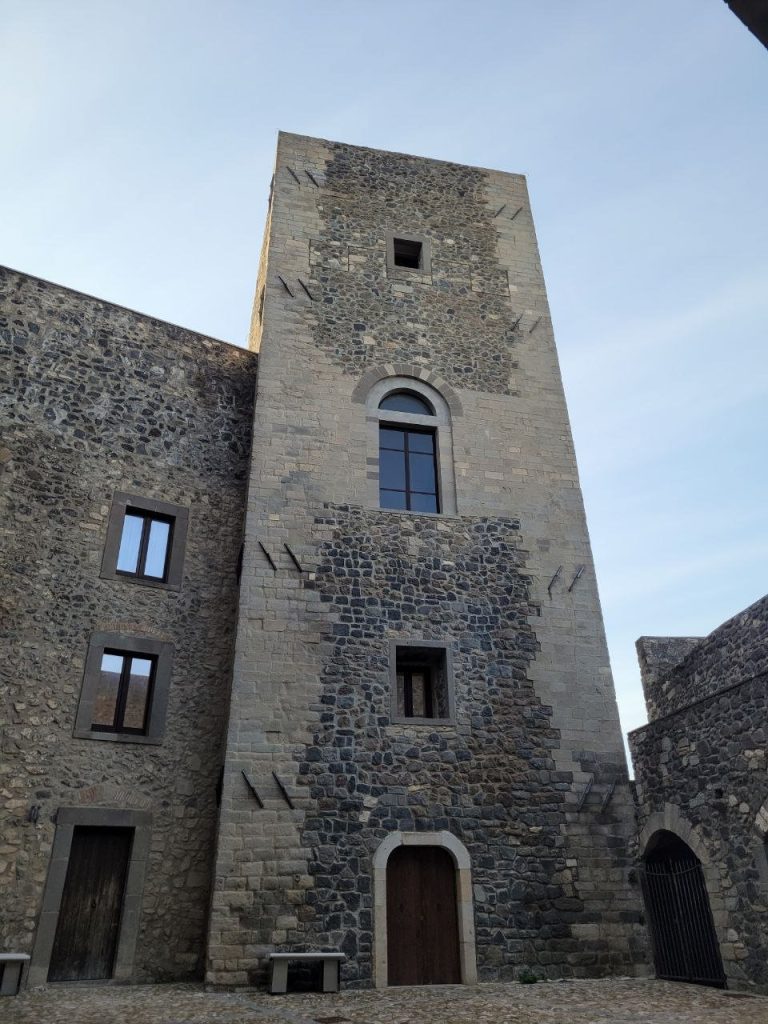
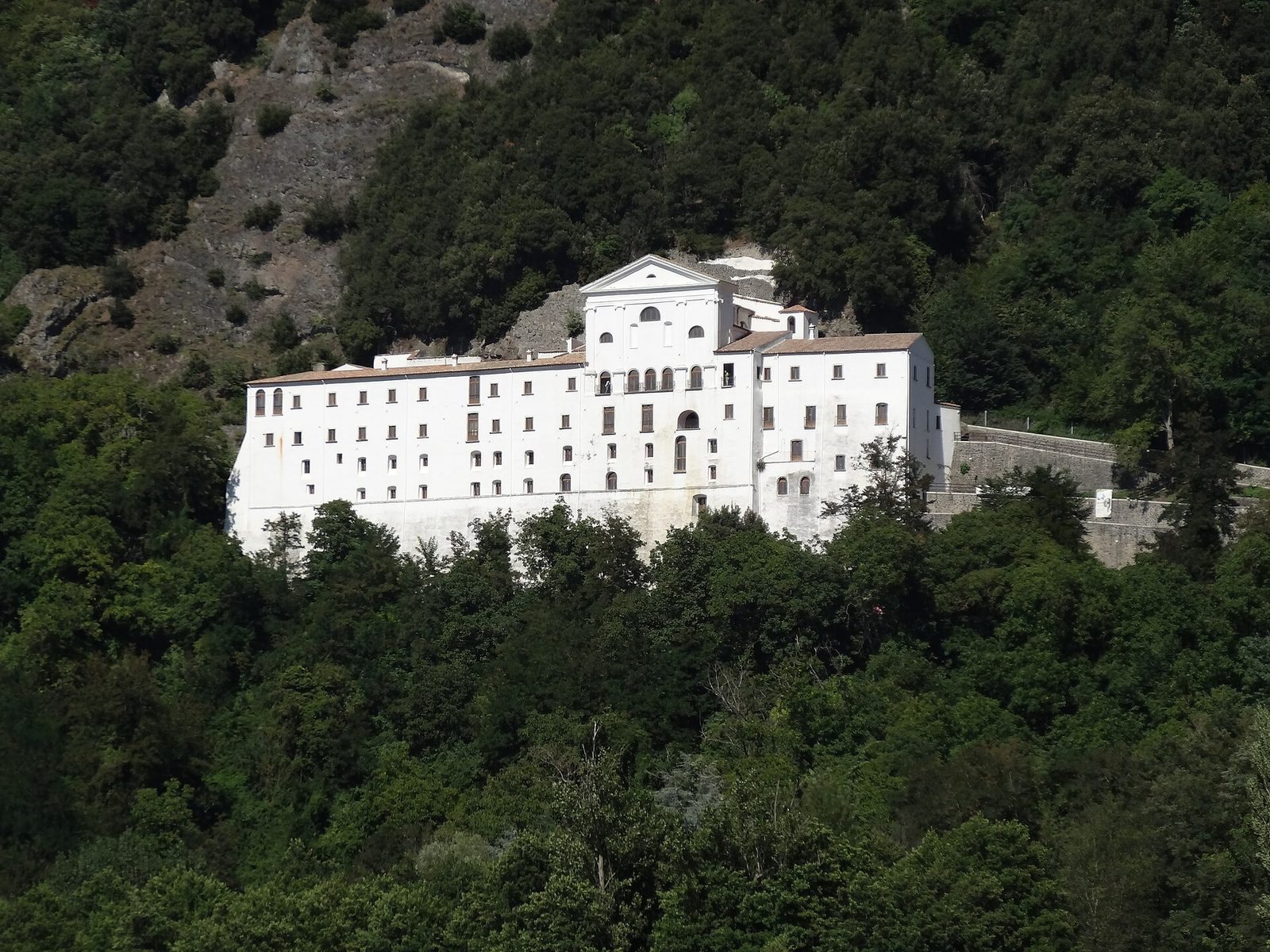
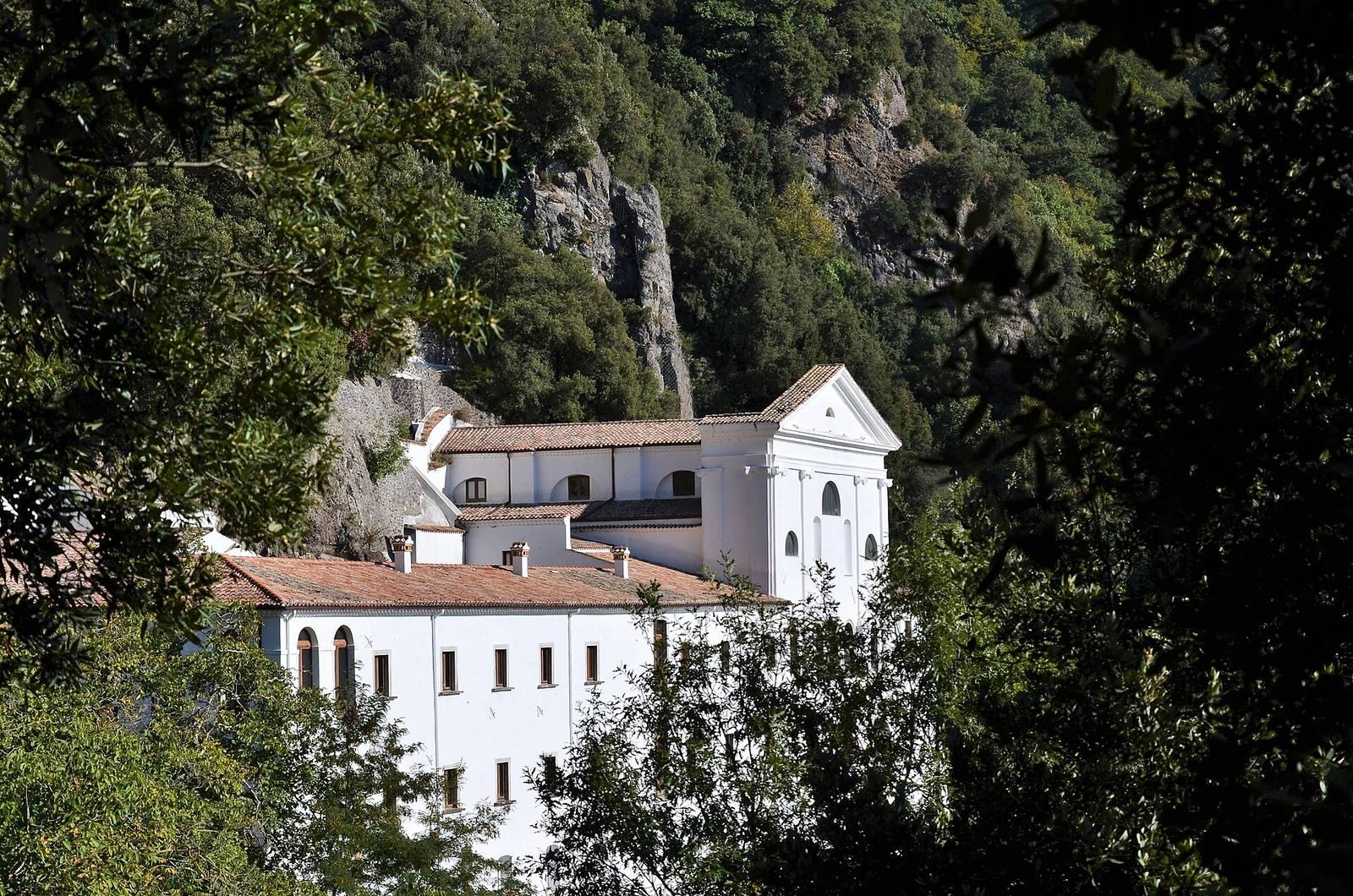
The complex combines the remains of a lakeside monastery on the isthmus between the two lakes with the cave sanctuary on the eastern side of Lago di Monticchio Piccolo. Its buildings include a multi-storey convent and an eighteenth-century church. A route once connected the abbey and sanctuary, climbing the volcano’s slopes as a steep staircase enclosed by buildings near the cave.
Abbey of Sant’Ippolito
Church phases and ruins
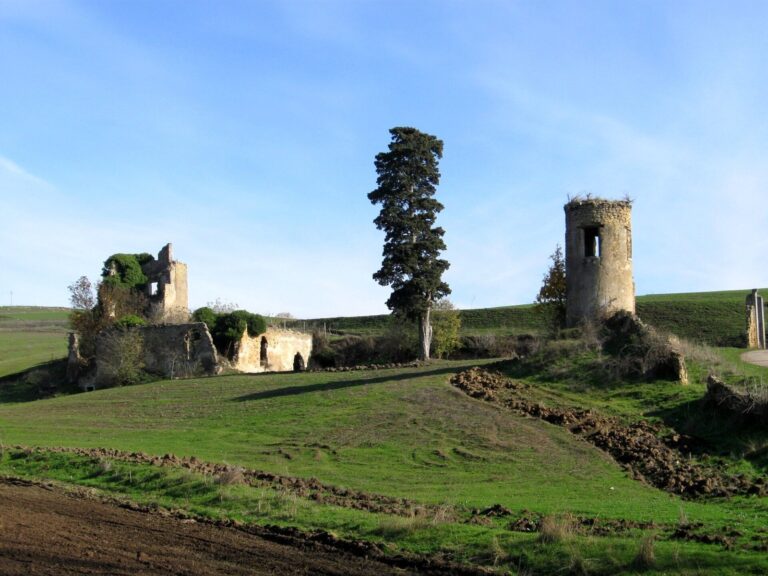
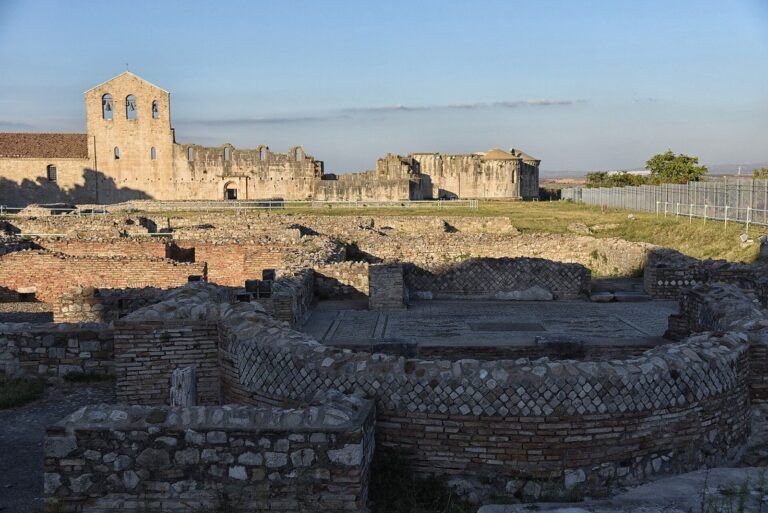
The earliest church phase consists of a single-aisled building with an apse, the rounded end of a church, dating to the ninth or tenth century. A later church had three aisles and an end formed by three lobes. In another phase, the earlier church became a crypt, a chamber beneath the church, under a larger building with three aisles, a three-lobed end, and a raised transept, the crosswise section intersecting the main body. Eleventh-century work lengthened the aisles and added a bell tower. The tower, apse, and perimeter walls survive among the abbey’s ruins.
Pilgrim accommodation and approach
The monastery included buildings for helping and accommodating pilgrims. A rough route linked it with the cave sanctuary; near the cave, the path became a steep, enclosed staircase. The larger abbey and the sanctuary thus formed connected parts of the pilgrimage complex, with the abbey providing lodging and practical assistance.
Saint Michael’s cave sanctuary
Cave shrine and terraces
The sanctuary’s earliest arrangement centered worship on a cave cut into tuff, rock formed from volcanic ash. In the first half of the eleventh century, a small shrine-like structure called an edicule was built there and decorated with frescoes. A broad platform was added below the shrine in the second half of that century, then enlarged during the twelfth century as the cave was incorporated into a larger building. Nearby, votive deposits, objects left as offerings, date to the fourth or third century BC.
Stairway, caves, and enclosed rooms
The sanctuary’s interior extended across several levels connected by stairs. As the church building continued down the slope, it enclosed smaller caves in the volcanic rock and the final part of the stairway toward the lakes. These caves, also found below the main cave and along the route, served as shelters for pilgrims and as burial places. Benedictine monks used rooms created within the enlarged building as a small guesthouse for people serving the sanctuary.
Church and convent
Capuchin rebuilding
The Capuchin convent incorporated renovated lower sections of the earlier building and restored medieval fabric, then expanded on both sides of the church. The eighteenth-century Franciscan church had three aisles with continuous barrel-vaulted ceilings and elaborate stucco decoration. The Capuchins retained the Norman shrine but concealed the late-medieval apse behind a new high altar beneath a canopy. A new statue of the Archangel took the place of an older image.
Alterations and present arrangement
The final section of the Holy Staircase reaches the right side of the altar, beside entrances to rooms used to assist pilgrims. A connection to the convent opens on the left. Later restoration removed the Baroque decoration and uncovered the steps between the church and shrine. After the church vault was demolished, a roof supported by a framework of connected beams replaced it. The roof appears wooden but is made of reinforced concrete. Opening the late-medieval façade onto the corridor between guesthouse and convent brings the lakes into view from within the church. A small room off the left aisle became a chapel for the main altar removed from the area around the church’s former high altar. The sanctuary is now enclosed within the church and convent.