Temple of Diana in Nemi: A Sanctuary of Worship and Healing
Site at a Glance
- Popularity
- High
- Country
- Italy
- Primary era
- Classical
- Eras represented
- Classical
- Civilizations
- Roman
- Site type
- Religious
- Remains
- Sanctuary
On this page11 sections
History
The Temple of Diana in Nemi was a sanctuary on the northern shore of Lake Nemi in Italy, built around 300 BC for worship of the Roman goddess Diana. Worship at Nemi may have flourished from at least the sixth century BC, and tradition placed the sanctuary’s foundation on the date of the annual Nemoralia festival.
Early worship and foundation
A sacred grove associated with Aricia preceded the temple. It contained a carved cult image that survived until 43 BC and was represented on coins. Later Republican coins linked to a family from Aricia depicted Diana Nemorensis, or Diana of the Grove, in three forms.
Festival, authority, and healing
The Latin cities shared the sanctuary through the Latin League, an association of cities in ancient Italy. Its presiding official was the Rex Nemorensis, meaning King of the Grove. The sanctuary stood within Aricia’s territory, and its presence helped the nearby town grow into an influential, prosperous centre for healing and medicine.
The three-day Nemoralia was held each year on the Ides of August, a recurring date in the Roman calendar. First-century BC descriptions tell of worshippers reaching the sanctuary with torches and garlands. The festival later spread across Italy, including to the Temple of Diana on Rome’s Aventine Hill.
Pilgrims sought healing from Diana in her role as healer. This aspect of her worship was associated with the myth of Hippolytus, a figure in Greek myth who was resurrected, and with Asclepius, the god of healing, through similarities in healing practices. The cult’s healing focus and strong community gave it a distinctive character among Diana’s cults around the Mediterranean. Situated at a crossroads south of Rome and near the Via Appia, a major road leading from Rome towards southern Italy, the sanctuary likely drew substantial religious traffic.
Later use and rediscovery
The sanctuary remained in use into the late Roman imperial period. It was abandoned as Christianity was imposed, and marble and decorative elements were removed. Forest gradually covered the site, which remained largely undisturbed for centuries.
Amateur excavations began in the seventeenth century, including work by Mario and Pompeo Frangipani, the lords of Nemi. Later investigations, including those of Antonio Nibby, were carried out largely by amateur excavators and foreign scholars.
Remains
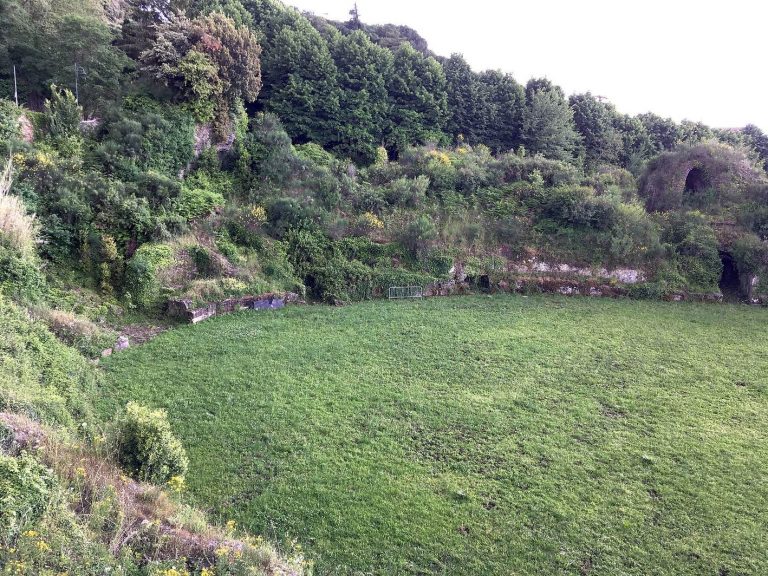
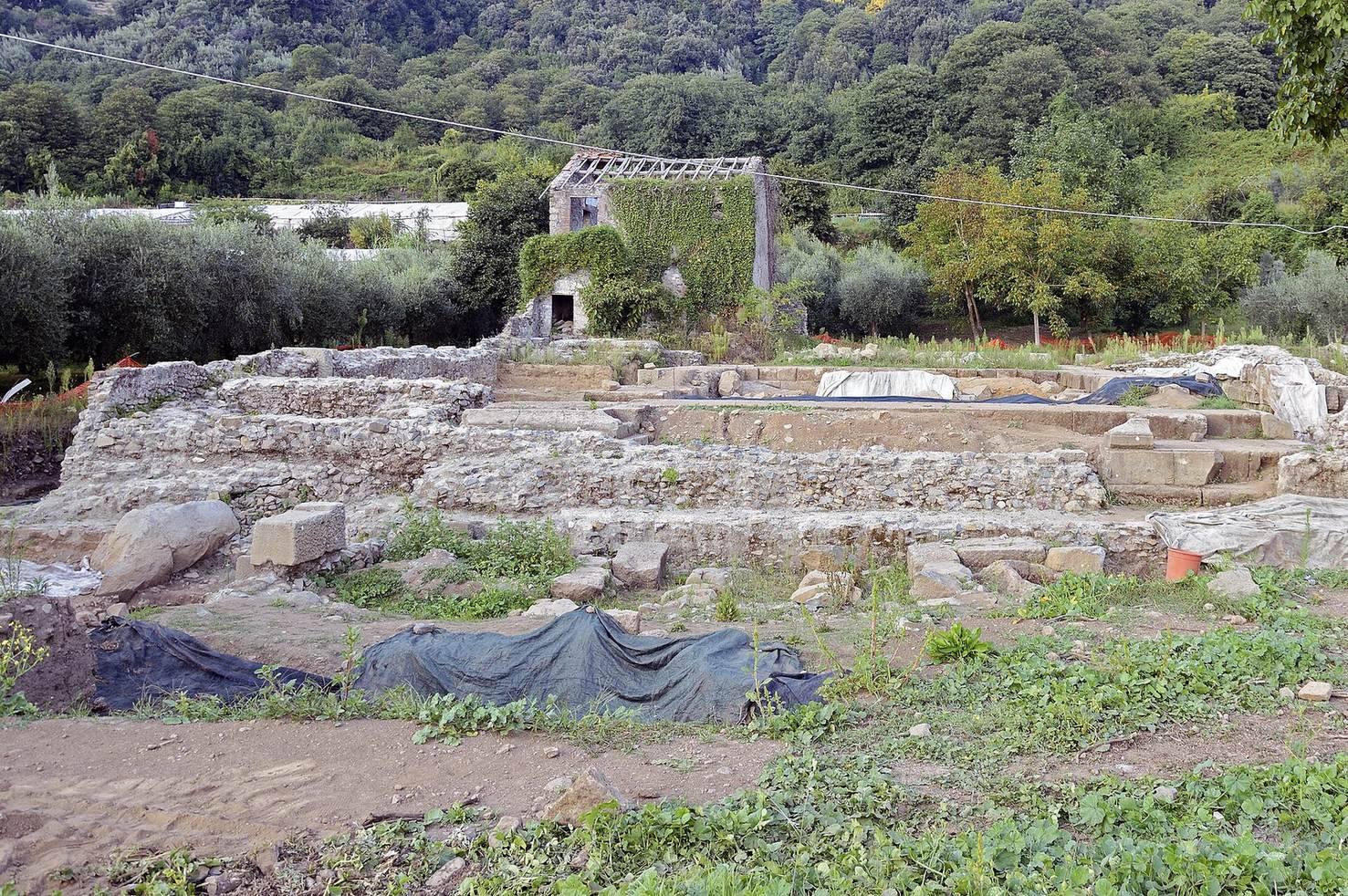
The sanctuary occupied about 45,000 square metres on a hillside below the crater rim and the modern town of Nemi. Its principal terrace, on the northern shore of Lake Nemi, measured approximately 200 by 175 metres. Large sections of the terraces and buildings survive, while much of the sanctuary remains unexcavated.
Terrace and built complex
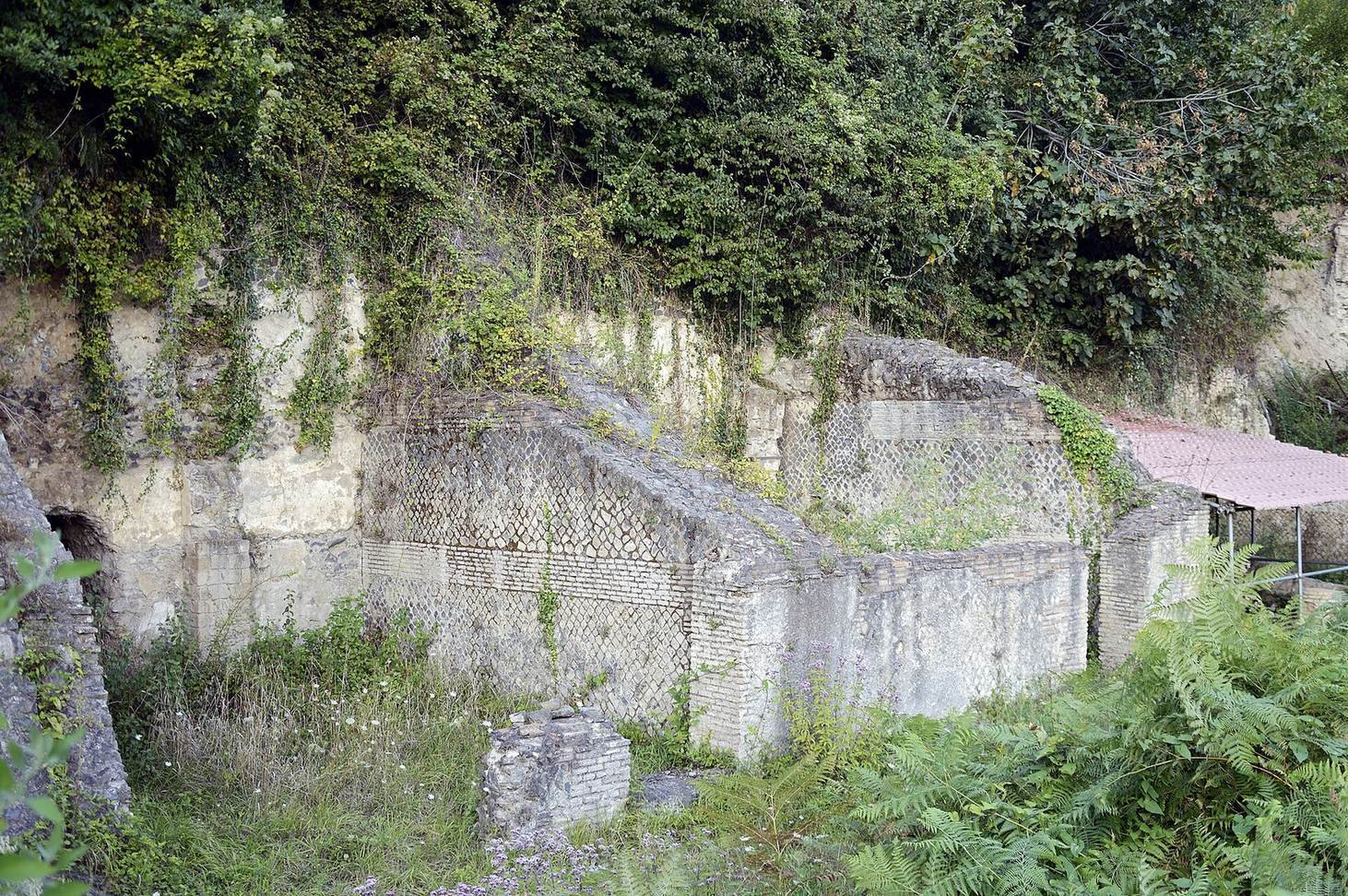
Terraces and retaining walls
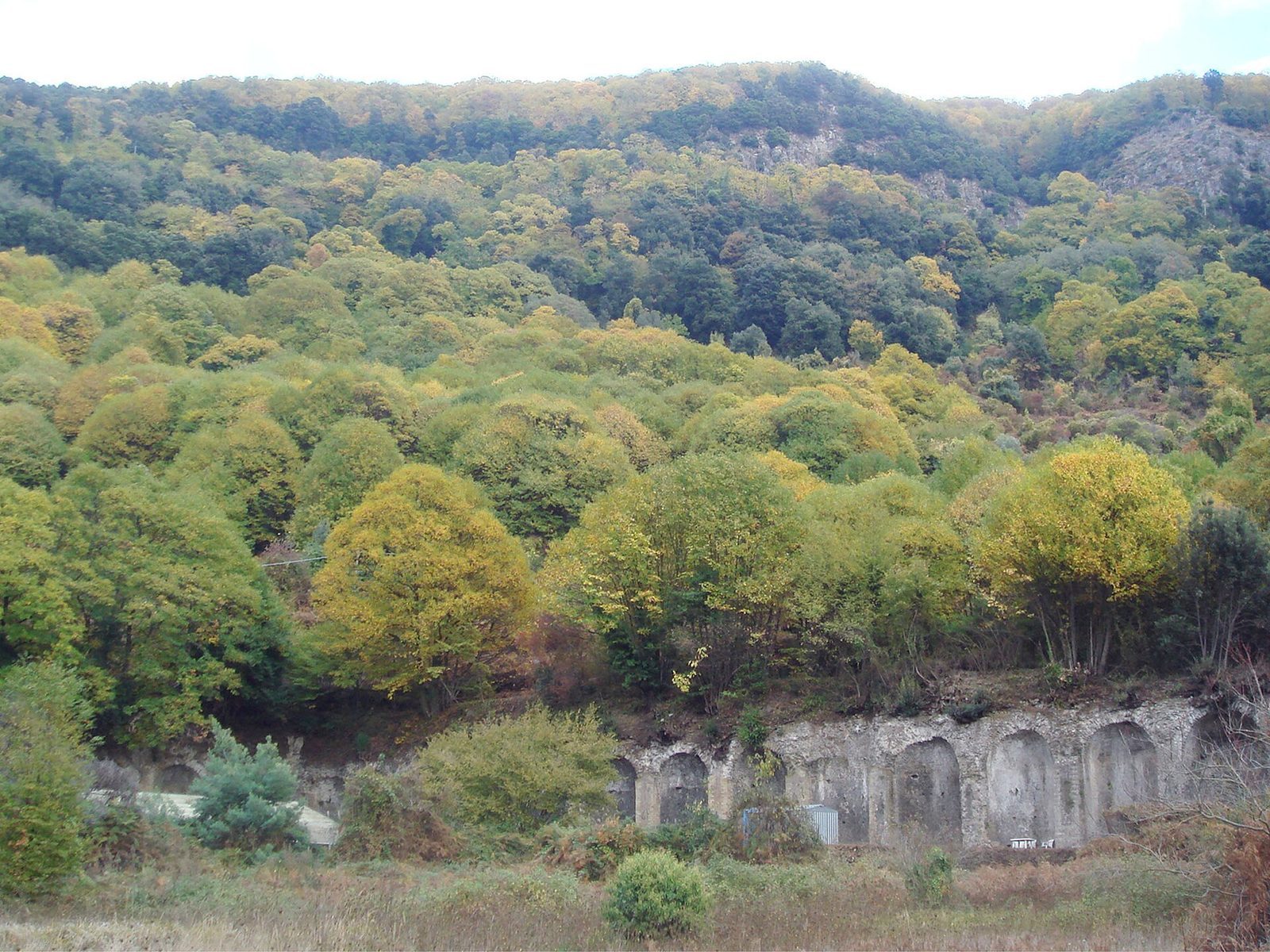
Triangular supporting structures held up the terrace on its downhill side. Uphill, a massive wall with semicircular niches supported an upper terrace. The niches, which rise several metres above ground, probably held statues.
Temple and associated buildings
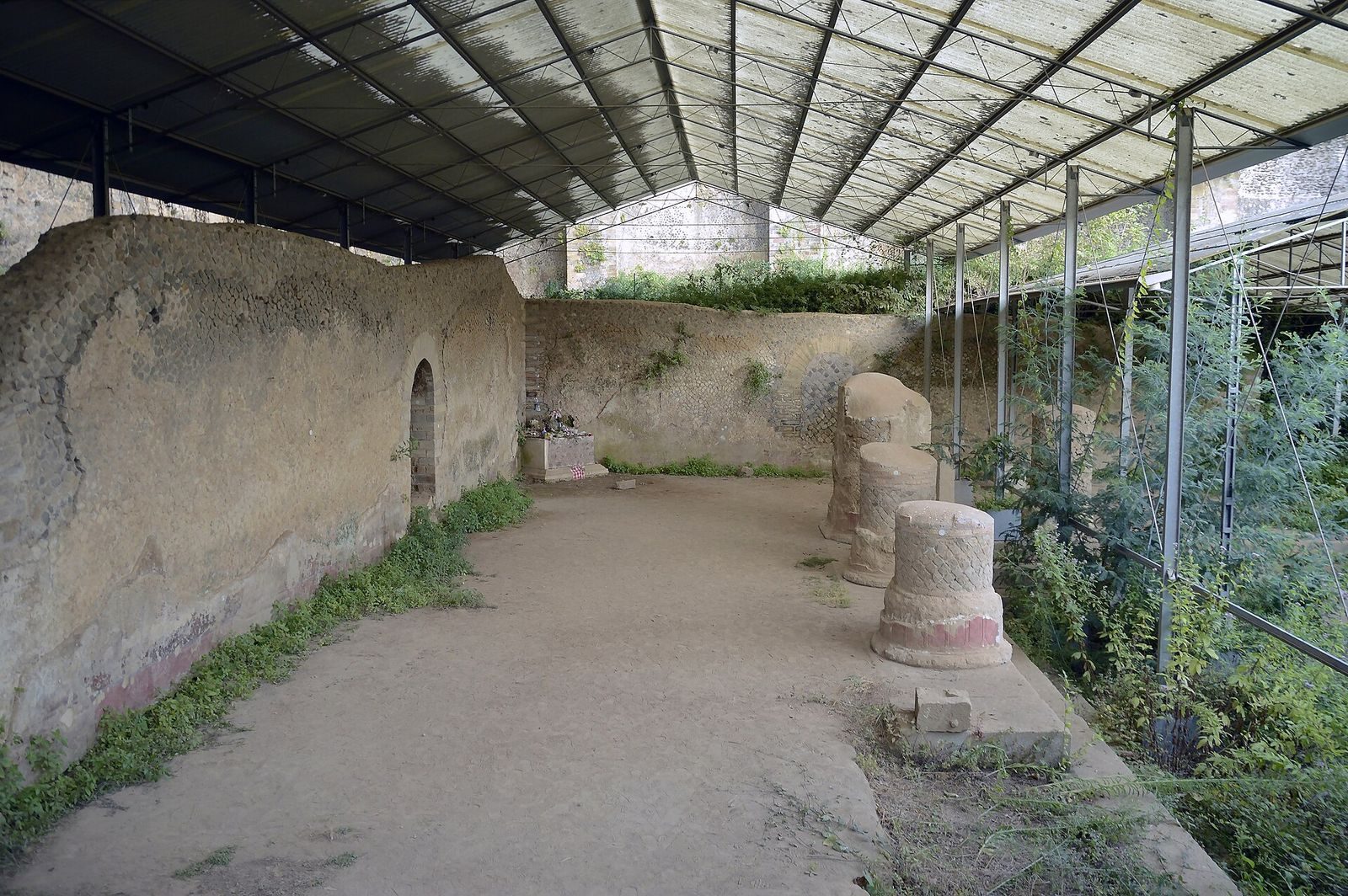
Two colonnaded walkways in the Doric style, a classical column design, ran across the terrace. One had columns covered in red plaster; the other used dark-grey peperino, a volcanic building stone. The complex also included a temple, rooms for priests and pilgrims, spaces for offerings, hydrotherapy baths, a theatre, and a nymphaeum, a monumental fountain or grotto associated with water. Visible remains include part of the temple’s pronaos (entrance porch), at least one altar dedicated as a religious offering, and some columns.
Votive objects and sculptures
Healing offerings
Religious offerings included anatomical representations of eyes and abdominal organs, made in terracotta or bronze, as well as objects depicting surgical instruments. These finds reflect the sanctuary’s association with healing.
Figurines and museum collections
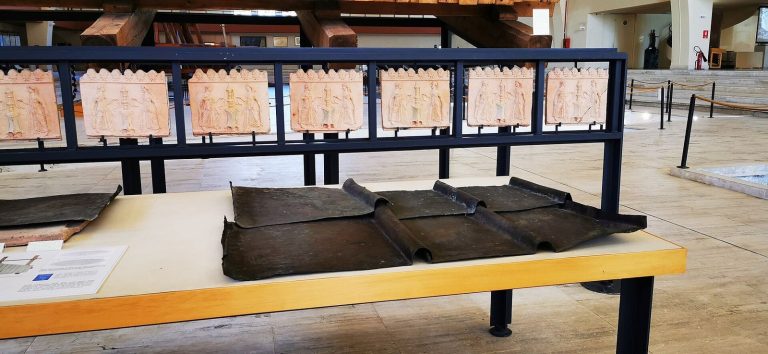
Four small bronze figures found at the sanctuary depict draped men and women holding a bowl for pouring a ritual offering and a box for incense. They are now in the British Museum’s collection. Sculptures and other finds from the site are held by museums including the University of Pennsylvania, the Museum of Fine Arts in Boston, Nottingham Castle Museum, the Ny Carlsberg Glyptotek, the Museum of Roman Ships at Nemi, Villa Giulia, and the Baths of Diocletian. Objects dating from the seventh to the first century BC, recovered from the sanctuary’s Giardino locality, are preserved at Villa Poniatowski in Rome.