San Felipe Fortress: An Eighteenth-Century Spanish Colonial Fortification
Site at a Glance
- Popularity
- High
- Country
- Mexico
- Primary era
- Early Modern
- Eras represented
- Early Modern
- Civilizations
- Spanish
- Site type
- Military
- Remains
- Fort
On this page6 sections
History
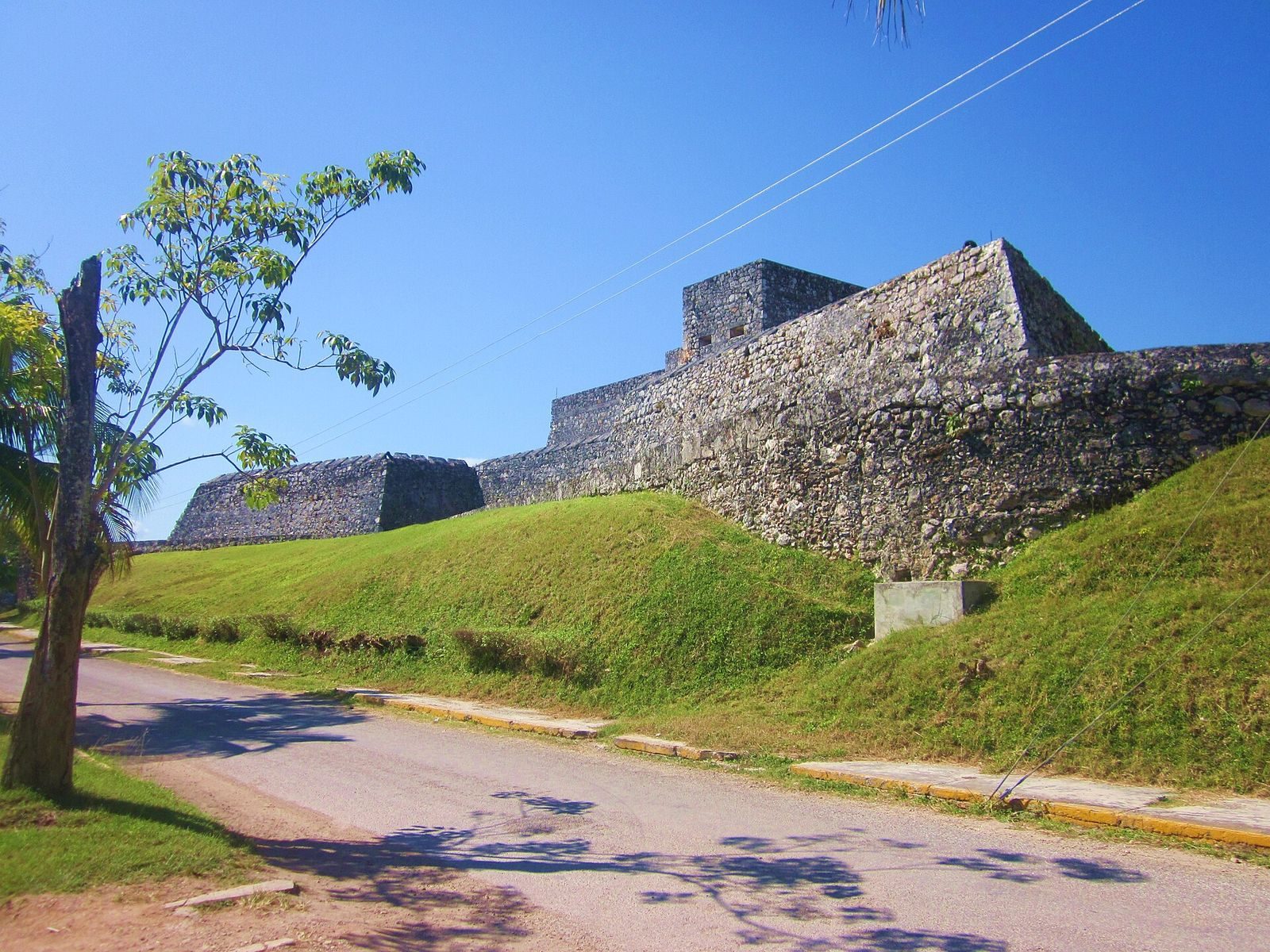
San Felipe Fortress, also called the Castle of San Felipe de Bacalar, is an eighteenth-century Spanish colonial fortification in Bacalar, in present-day Quintana Roo, Mexico. Ordered in 1725 as a military post under the Viceroyalty of New Spain, Spain’s colonial government in North America, it formed part of efforts to counter English expansion in the region.
Foundation and expansion
Viceroy Juan de Acuña proposed a fortification in response to English expansion from Jamaica. In 1725, Governor of Yucatán Antonio de Figueroa y Silva ordered its construction amid threats of English annexation from Belize and the removal and smuggling of logwood by English woodcutters. Logwood is a tropical tree whose heartwood was used to make dye. Captain Juan Podio, an Italian officer, undertook the first construction.
The fortress and its walls were enlarged in 1733. Beginning in 1754, military engineer Juan de Dios González Dávila carried out improvements and strengthening works. Completed in 1770, these works enabled the fortress to support artillery.
Wartime service and later reuse
During the Anglo-Spanish War of 1779, a conflict between Spain and Britain, the fortress played an important role and had some independence in organizing the capture of Cayo Cocina. In 1858, the Cruzo’ob, Maya insurgents in the Caste War of Yucatán, occupied the fortress. It remained unused until the early twentieth century, and this long period of disuse caused substantial deterioration.
A museum was installed at the fortress in 1965. Following major remodeling, the Museum of Piracy of Bacalar was inaugurated there in 1983. The fortress continues to house the museum.
Remains
Construction and original facilities
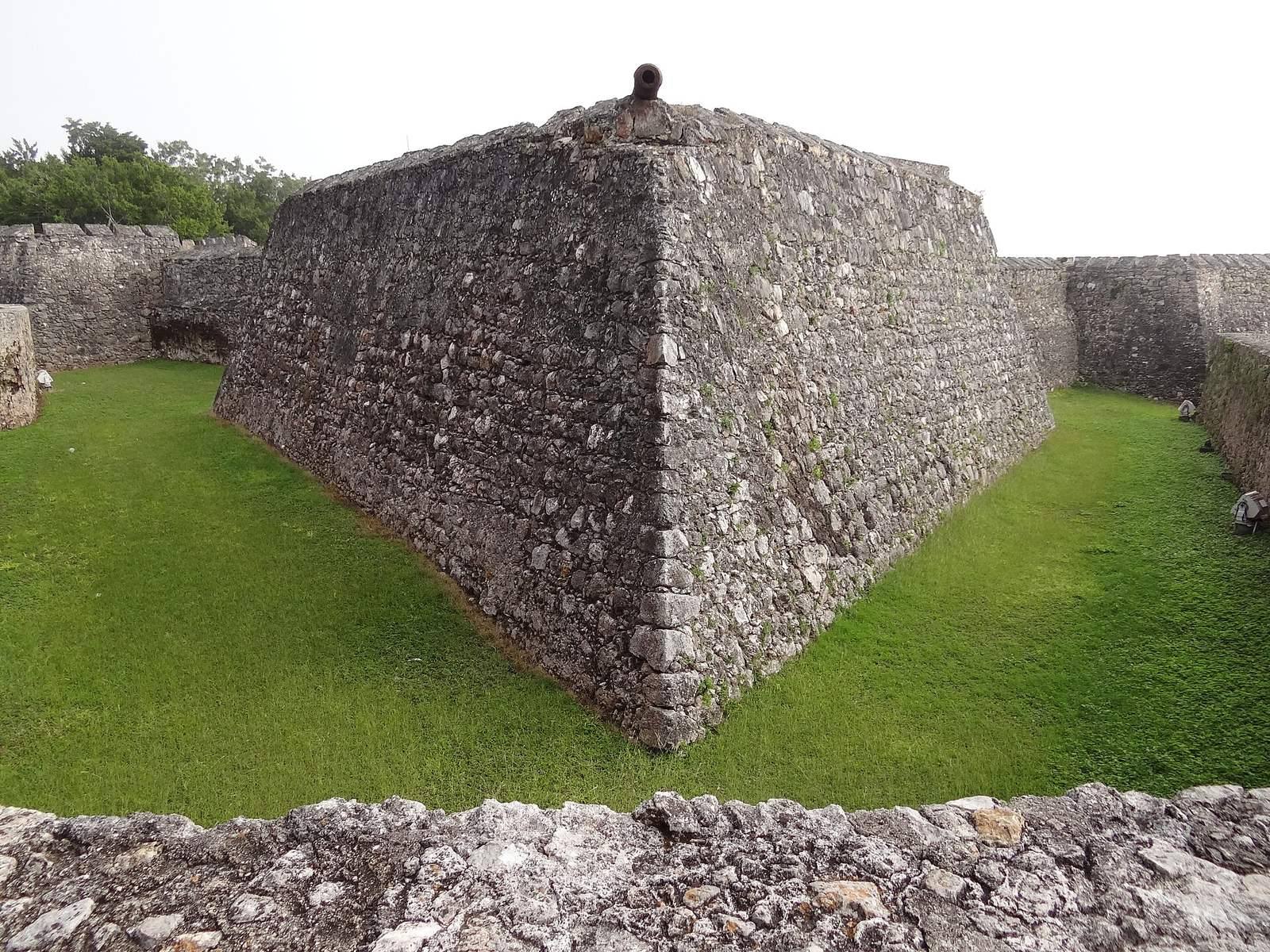
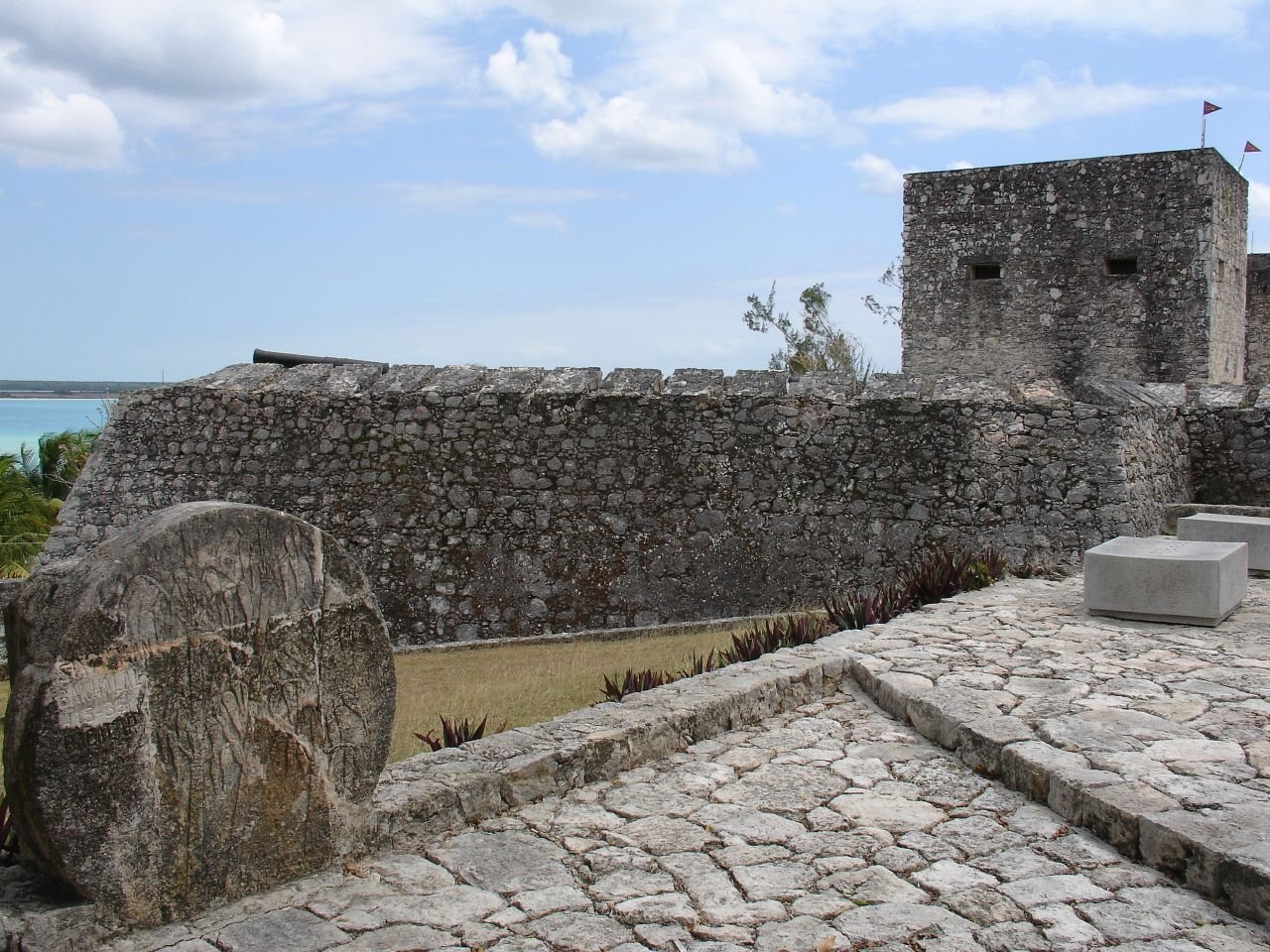
Built of coral limestone, the fortress originally included accommodation for the garrison, a warehouse, a chapel, and spaces for the command staff.
Defensive works
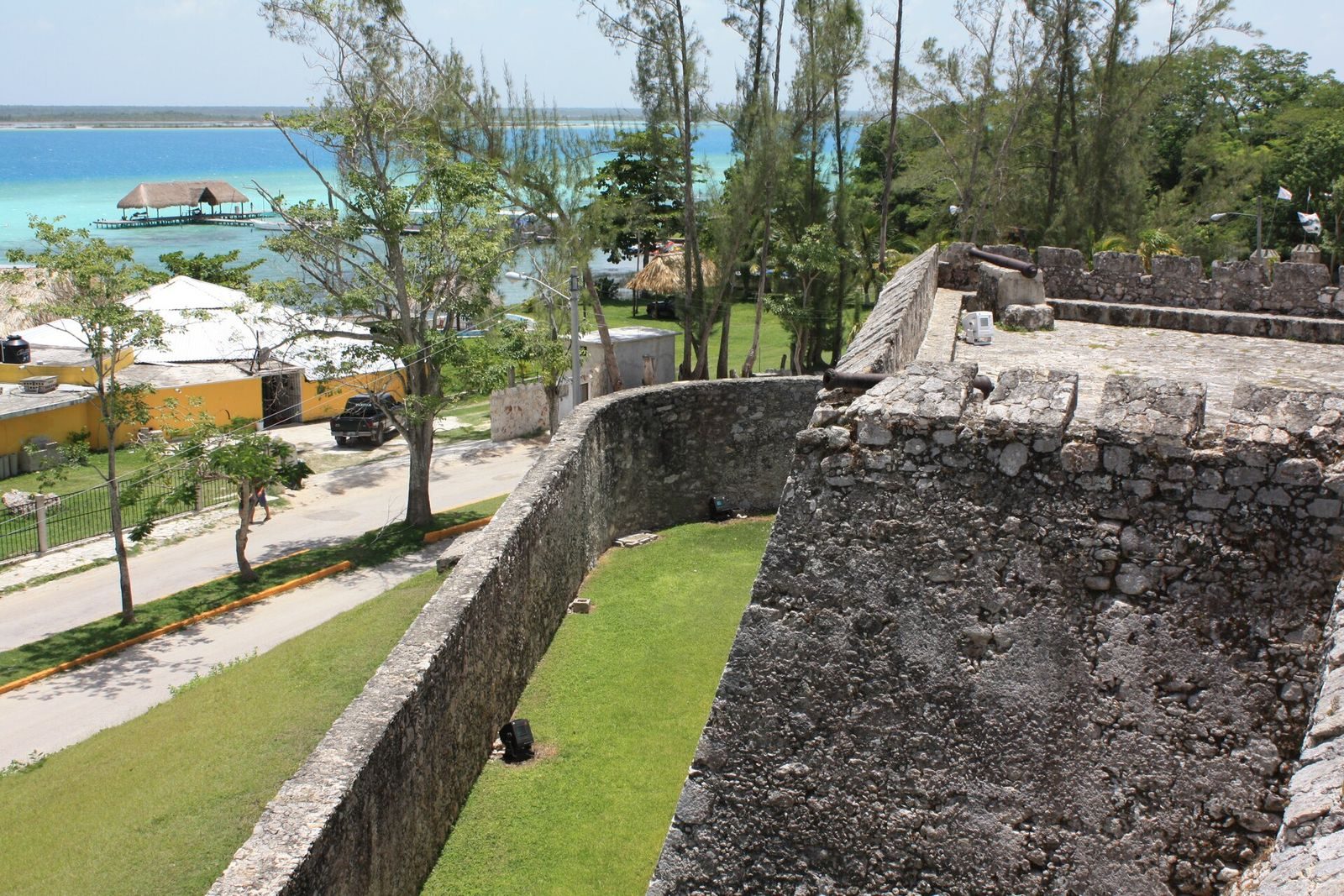
The defenses included a moat and drawbridge, built in 1796 by military engineer Rafael Llovet y Litiery, as well as bastions, projecting sections of a fortification designed for defensive fire. One bastion houses the Museum of Piracy of Bacalar.