Monastery of La Real: A Cistercian Abbey in Palma
Site at a Glance
- Popularity
- Medium
- Country
- Spain
- Primary era
- Medieval
- Eras represented
- Medieval, Early Modern
- Civilizations
- Crown of Aragon
- Site type
- Religious
- Remains
- Fortified Monastery
On this page9 sections
History
The Monastery of La Real is a Cistercian monastery in the Secar de la Real district of Palma, Spain. The Cistercians, a monastic order within the Benedictine tradition that emphasized communal religious life, established it after the conquest of Mallorca in 1229; its construction is dated to 1238. Founded by Poblet, La Real belonged to a network linked to Clairvaux, with Poblet as its mother house.
Foundation and move to La Real
Tradition holds that Pope Gregory IX asked Vidal d’Alguaire, then abbot of Poblet, to send monks to establish a monastery in the newly conquered kingdom. In the early 1230s, Count Nuño Sánchez received royal permission to found a monastery and granted the community lands at Esporles, as well as estates and houses at Manacor. A papal bull issued in 1237 confirmed Cistercian possessions and privileges.
The first community was based at Esporles, where it is recorded in 1236 under the title Saint Mary of the Fountain of God. The monks moved toward Palma in 1239 and settled at La Real, whose abbey church is mentioned in 1266. The endowment there included the Deià estate, the holding of Saint Lawrence, the earlier lands at Esporles, and other farmsteads with mills.
Institutional standing and Ramon Llull
Poblet supervised La Real for more than three centuries, appointing and replacing monks and lay brothers at its discretion. La Real became independent of Poblet in 1560 while remaining affiliated with it. In the seventeenth century, both monasteries joined the Cistercian Congregation of Aragon. La Real’s abbots also held high standing in Mallorca’s church and government. The abbot ranked second at island synods and, under the Palatine Laws governing the royal household and court, held second place in the courts after the bishop.
Ramon Llull, a Majorcan philosopher and religious writer, withdrew from secular life at La Real and probably spent about nine years there in study and contemplation. Its library, among Mallorca’s most important, gave him resources for learning; there he encountered mysticism and the teachings of Saint Augustine. After what he understood as divine inspiration at Mount Randa, Llull returned to the monastery and wrote The Abbreviated Art of Finding Truth. He also began General Art and Blanquerna, whose central character some interpretations connect with Cistercian ideals. In his will of 1313, Llull left La Real a chest of books.
James II of Mallorca gave Llull Miramar, between Valldemossa and Deià, for his plan to establish a school teaching Arabic. Miramar had been a grange, or monastic agricultural estate, belonging to La Real. After the school ended, James II transferred the property to the monastery.
Later changes and restoration
In the eighteenth century, abbot Antoni Ramon Pasqual i Fleixes became a prominent scholar of Llull. He wrote both the Vindicationes Lulianae and a history of La Real. The Cistercian community was compelled to leave Mallorca in 1820 and returned in 1823. The monastery was dissolved in 1835 during the Spanish confiscation of church property, a process that suppressed religious houses and transferred their lands and possessions. After a period of decline, the Missionaries of the Sacred Hearts took over in 1897 and restored the monastery.
The Mallorca Island Council declared La Real an Asset of Cultural Interest on 6 February 2006. In the early twenty-first century, a proposal to build a major hospital nearby drew opposition from residents and the Salvem la Real platform, who objected to locating it in the monastery’s surroundings. Construction went ahead, and the hospital was completed in December 2010, when patients and services were transferred there.
Remains
Only a small portion of the former complex survives. The monastery stood amid water channels and springs, including Font d’en Baster and Font de la Vila; the plentiful water was an important reason for choosing the site. The complex was enclosed by a high, crenellated wall, and its architecture was notably plain and austere.
Enclosure and church
Wall and entrance
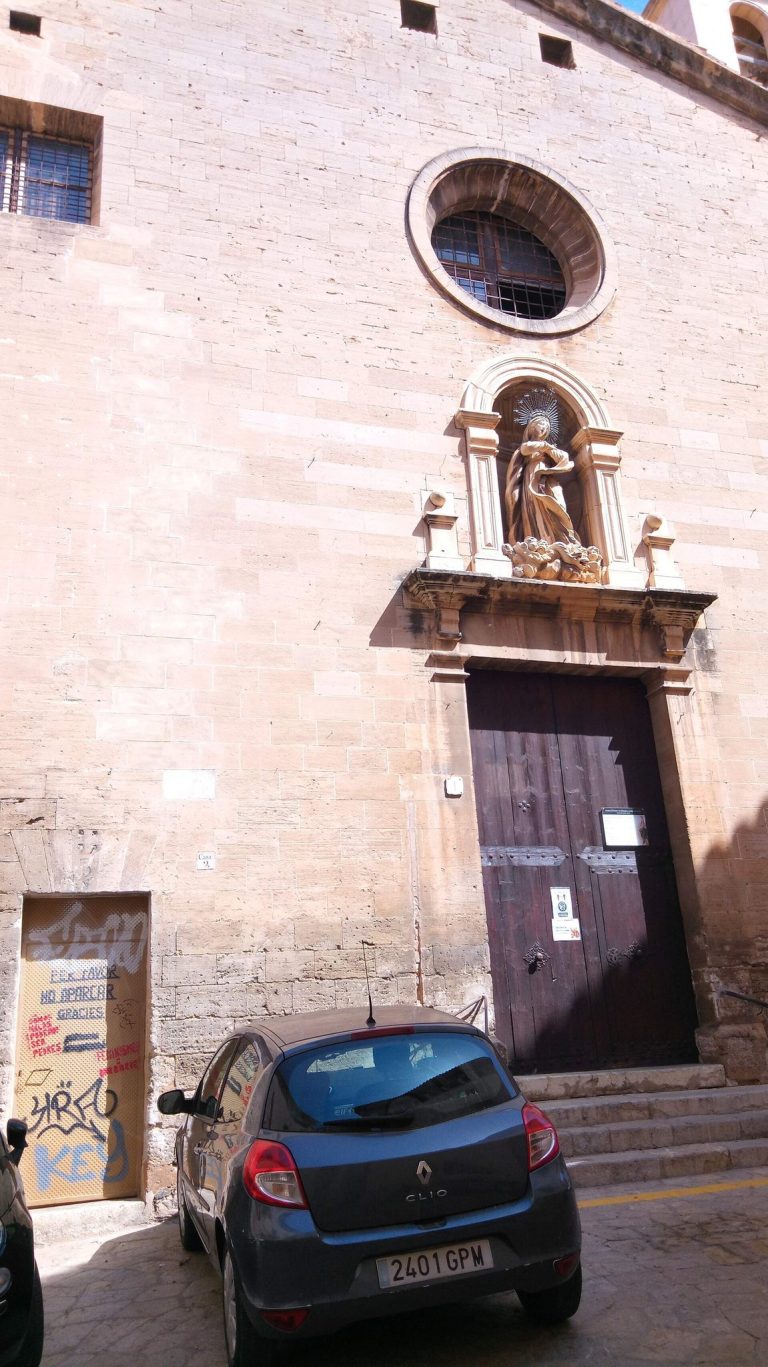
A large entrance portal in the enclosing wall included a niche for the Virgin Mary. From the entrance, a narrow lane led to the church, linking the outer boundary with the principal surviving building.
Abbey church
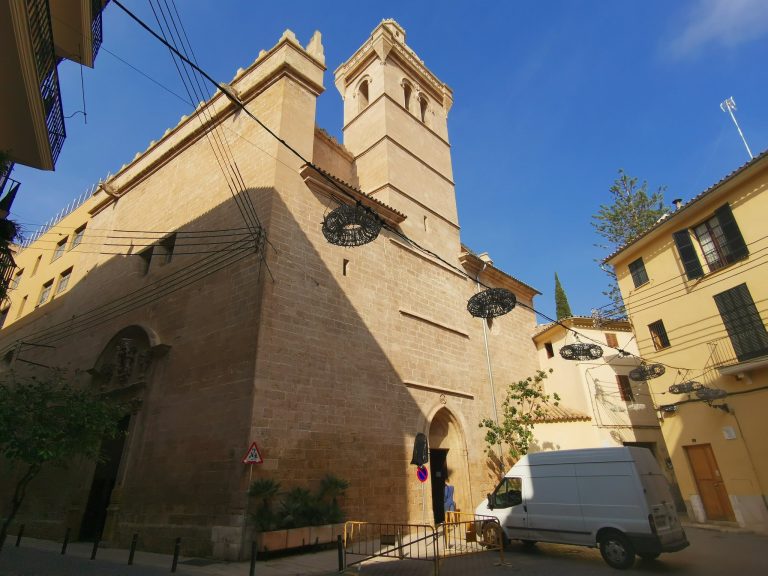
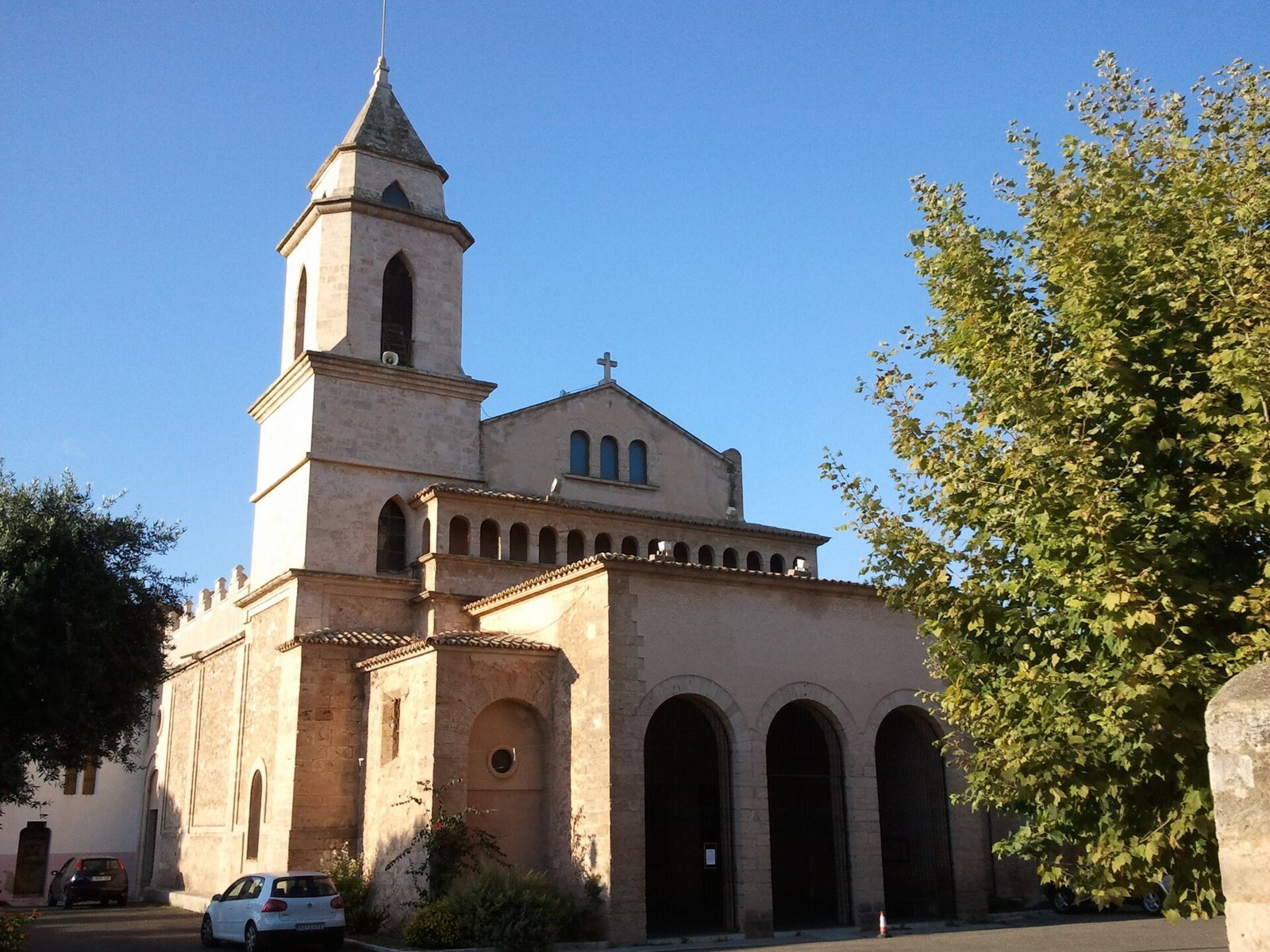
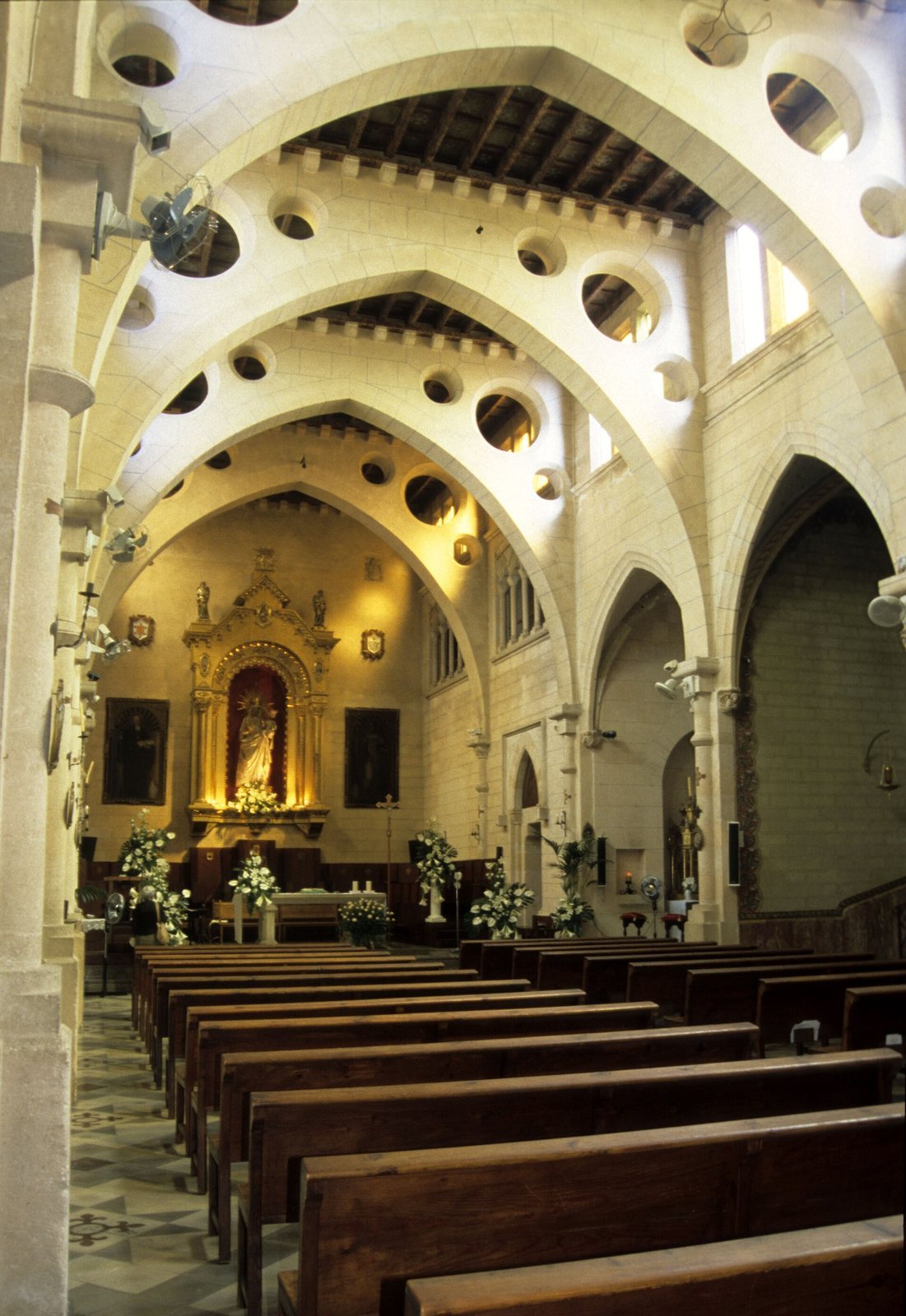
Built in the thirteenth century and mentioned in 1266, the church was extensively altered in the early twentieth century. It has a single nave and a double-pitched timber roof supported by pointed transverse arches. This arrangement differs from customary Cistercian church design and is an exception among Cistercian buildings in the Crown of Aragon. Timber roofs supported by arches were a local form used in parish churches built during the conquest, including those at Escorca, Campanet, and Alcúdia, as well as in mendicant convent churches. Cistercian churches generally used stone vaults, while mixed timber-and-arch roofs were more usual in service buildings.
Cloister and communal rooms
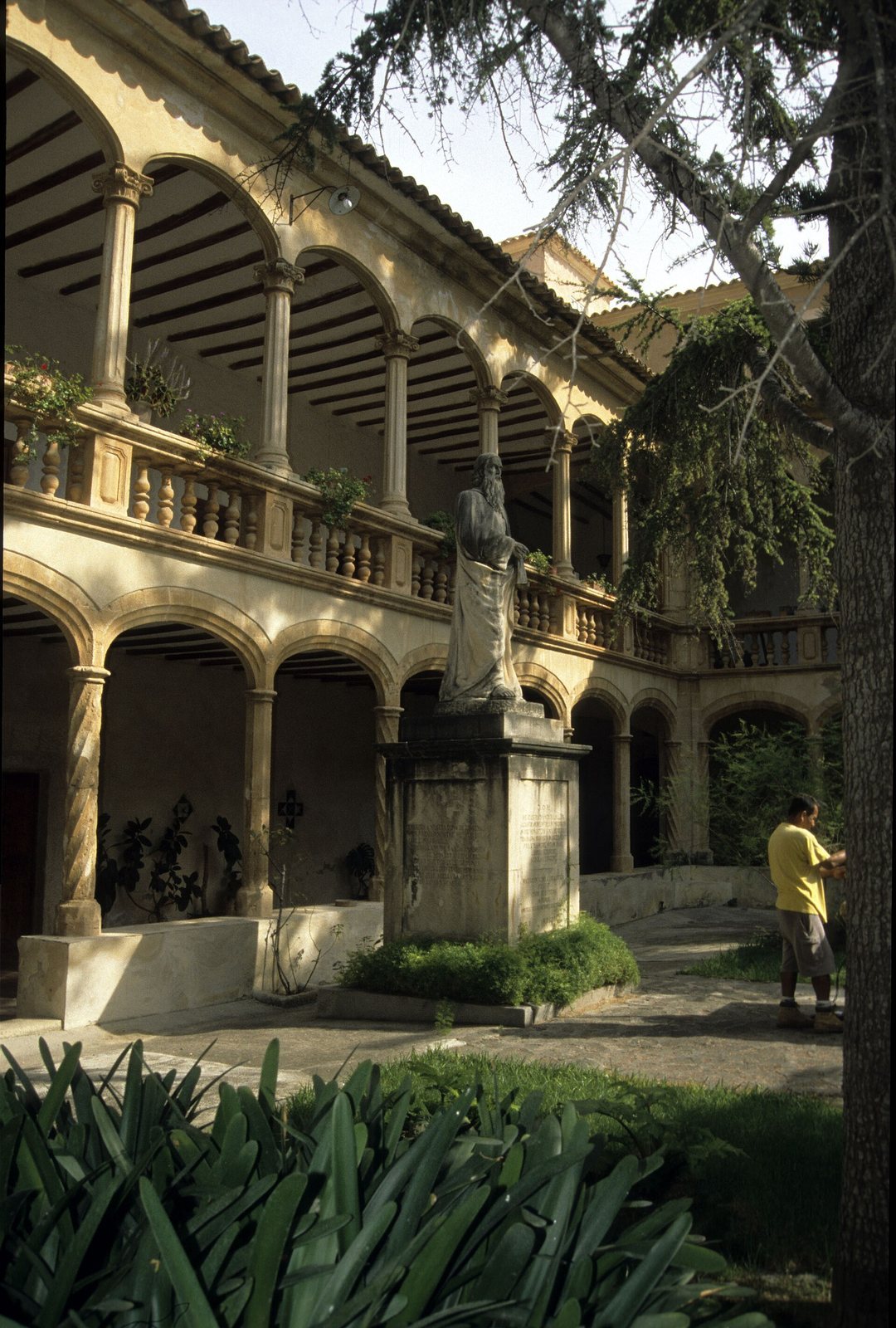
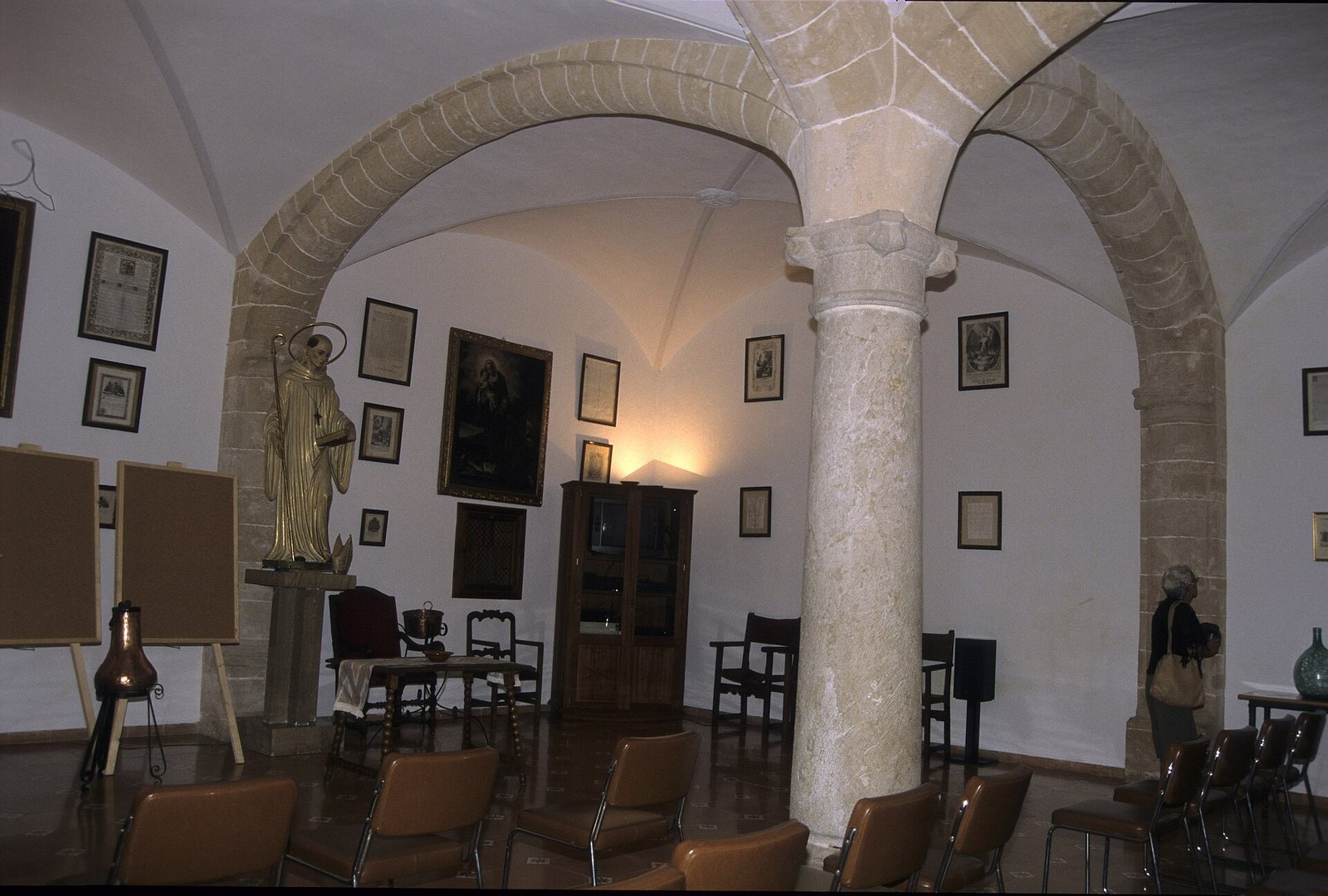
The cloister occupies its customary position in the monastic layout, but it was entirely rebuilt in the sixteenth century and has since undergone repeated restoration. The surviving Renaissance cloister has two storeys. The meeting room, refectory, and other communal service rooms were arranged around it.