Abbey of Notre-Dame de Josaphat: A Benedictine Monastery in Lèves, France
Site at a Glance
- Popularity
- Medium
- Country
- France
- Primary era
- Medieval
- Eras represented
- Medieval
- Civilizations
- French
- Site type
- Religious
- Remains
- Monastery
On this page10 sections
History
Foundation and early holdings
The Abbey of Notre-Dame de Josaphat is a former Benedictine monastery in Lèves, France, founded in 1117 by Geoffroy de Lèves, a canon and bishop of Chartres, and his brother Goslein, lord of Lèves. Benedictine monks followed the Rule of Saint Benedict, and the brothers established the abbey on their ancestral lands.
Local tradition connects the foundation with a pilgrimage vow. Geoffroy, elected bishop in 1115, is said to have travelled to Pope Paschal II in 1116 seeking release from a vow to go to Jerusalem. In this account, the pope agreed on condition that Geoffroy spend an equivalent sum founding a monastery. The story also links the abbey’s name to the Valley of Josaphat in the Holy Land. Pope Calixtus II and King Louis VI confirmed its property in 1119. The first monks may have come from Fourmetot, whose monastery had been damaged by war.
The abbey’s religious holdings included the Priory of Saint-Epain and Saint-Blaise and the parish church of Saint-Pierre and Saint-Paul at Ablis. The church of Sainte-Madeleine at Davron, formerly a lord’s chapel, became a priory, a monastic house governed by a prior, between 1117 and 1130. Other properties included the church of Saint-Médard at Chalo-Saint-Mars, the churches of Saint-Arnoult-des-Bois in the Perche and Saint-Martin at Orouër, both recorded in 1117, and the eleventh-century Priory of Saint-Laurent at Brueil-en-Vexin. The Priory of La Brosse appears in records from 1317.
Other assets ranged from land in the Perche, recorded in 1117, to uncultivated plots and a wine press at Saint-Chéron in 1120, land at Saint-Priest and an estate at Limoron in 1123, and land at Ormoy given by Guillaume de Mahéraud and his wife Itte in 1149. Later holdings included an alder-planted plot at Gallardon in 1420, a house at Mantes in 1422 and the mill of Longsault, leased in 1540–41. The abbey also received ecclesiastical tithes, dues on produce or income, at Andeville before 1300. Robert, an official who administered the bishop of Chartres’s temporal interests, confirmed them in 1300.
Medieval community and conflict
In 1156, the abbey and Milon de Lèves, a local lord, disputed their respective mills on the Eure. Bishop Robert intervened after the conflict arose. The circumstances leave open whether the monks had appealed to him, but the episode illustrates the growing authority of bishops to intervene on their own initiative.
Abbot Gautier reported to King Philip Augustus in 1201 that the community comprised 50 religious, all priests. In 1205, he exchanged some property with Hugues de Gallardon. The abbey church also served as a burial place for six bishops of Chartres. Geoffroy de Lèves was buried in its choir after his death in 1149, followed by Gauslin de Muzy-Lèves in 1155, Robert le Breton in 1164, John of Salisbury in 1180, Pierre de Celle in 1183 and Renaud de Bar in 1217.
War, reform, and closure
English forces set fire to the abbey in 1432 and again in 1466. During the wartime ruin, Abbot Jean II de Malmaison sent monks to Fourmetot, where they lived on the revenues of that house. Guillaume I, abbot from 1390 to 1407, had an abbatial residence built. In 1564, Calvinists, followers of the Reformation movement associated with John Calvin, ruined the abbey.
The abbey was restored after joining the Congregation of Saint-Maur in 1640, a Benedictine reform congregation whose monks were known as Maurists. Seven Maurists remained there in 1768. The French Revolution partly destroyed the complex, and the abbey closed in 1792.
Revolution and later use
In 1812, the property belonged to Alexandre Auger, a Paris merchant, who sold it to Antoine Gros, a wine merchant and caterer in Neuilly-sur-Seine. It later passed to the d’Aligre family. A hospice named Marie-Thérèse opened at the abbey in 1818. The institution became the Hospice d’Aligre and, in 1968, took the name Fondation d’Aligre et Marie-Thérèse as a departmental public institution.
Around 1905, Charles Métais, a priest and parish priest of Lèves, organized excavations in the former abbey church and published their results in 1908. The abbey was classified as a historic monument in 1914, and its cloister was registered in 1928.
Remains
The former abbey church
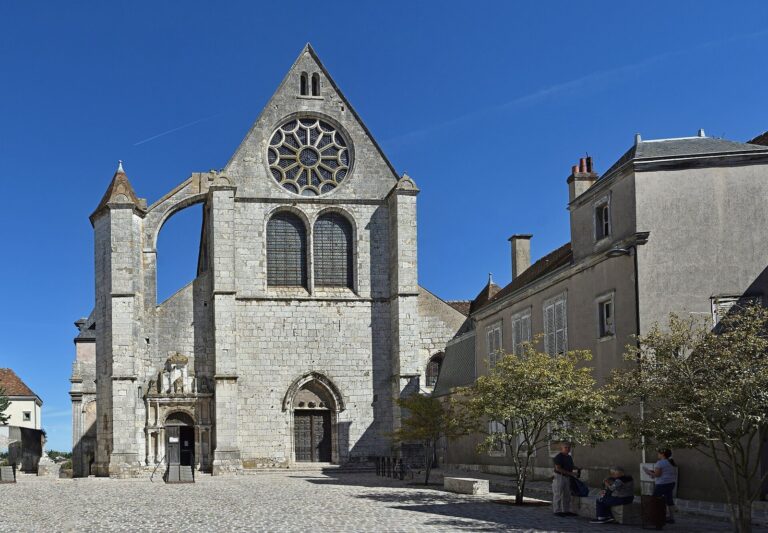
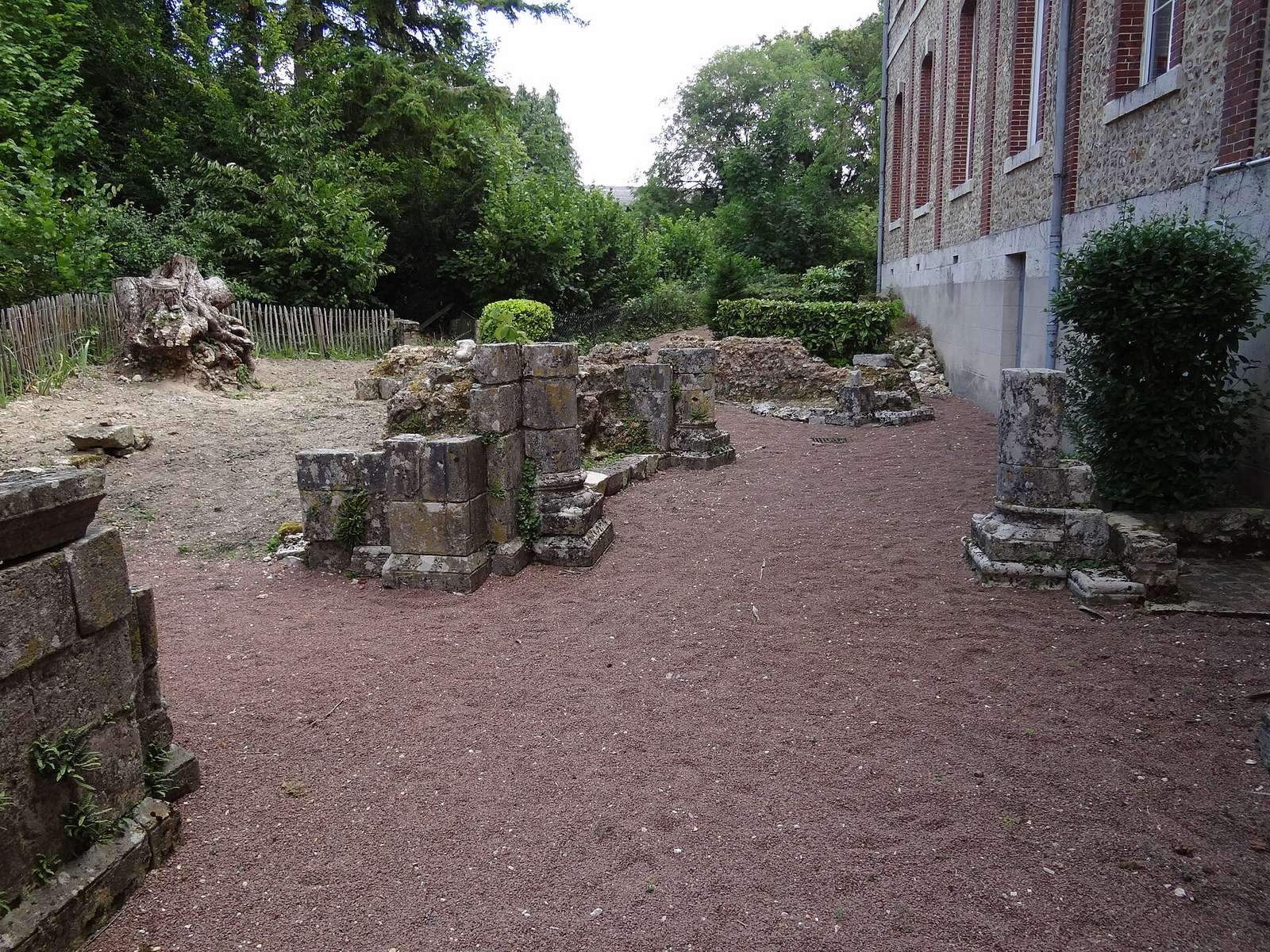
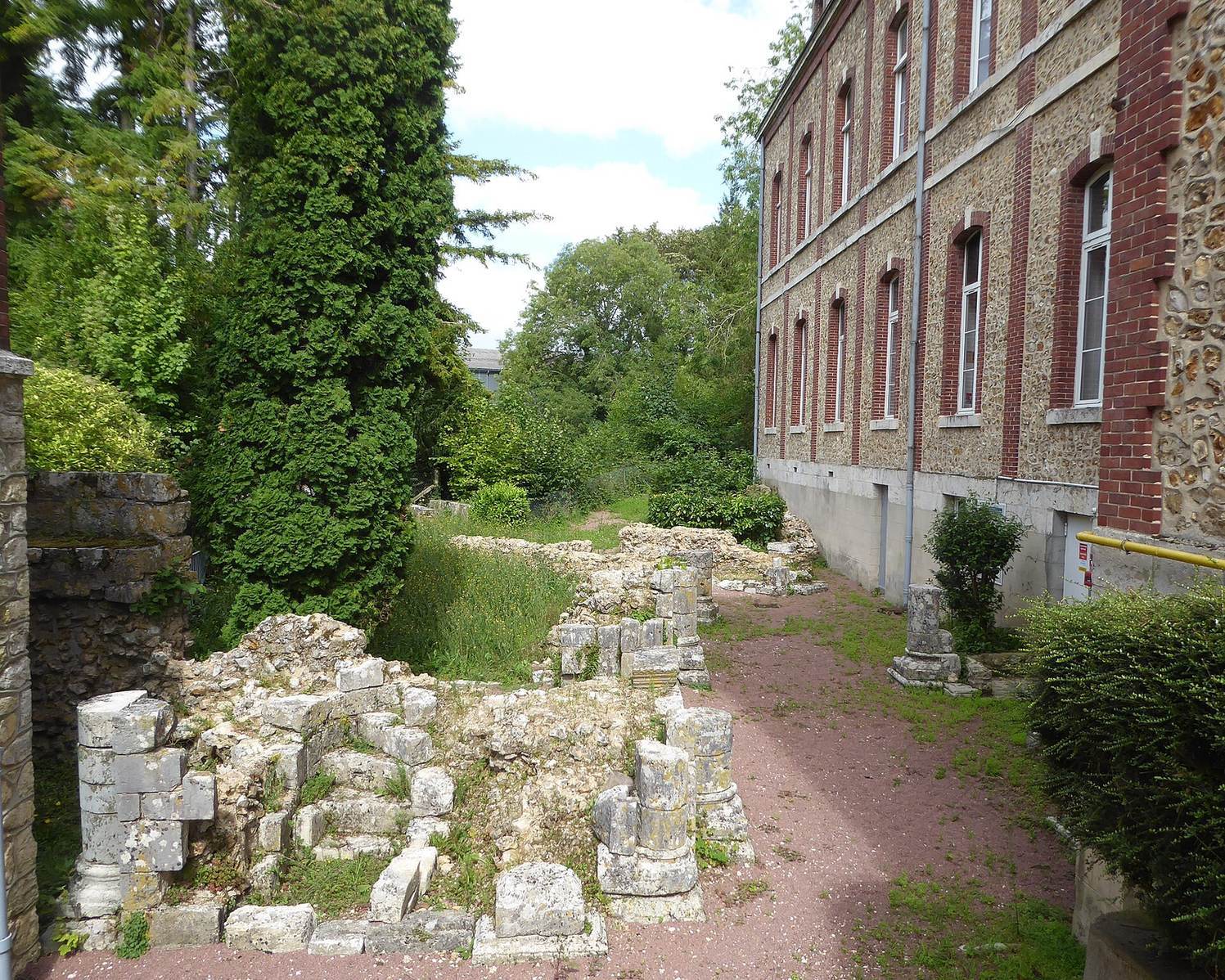
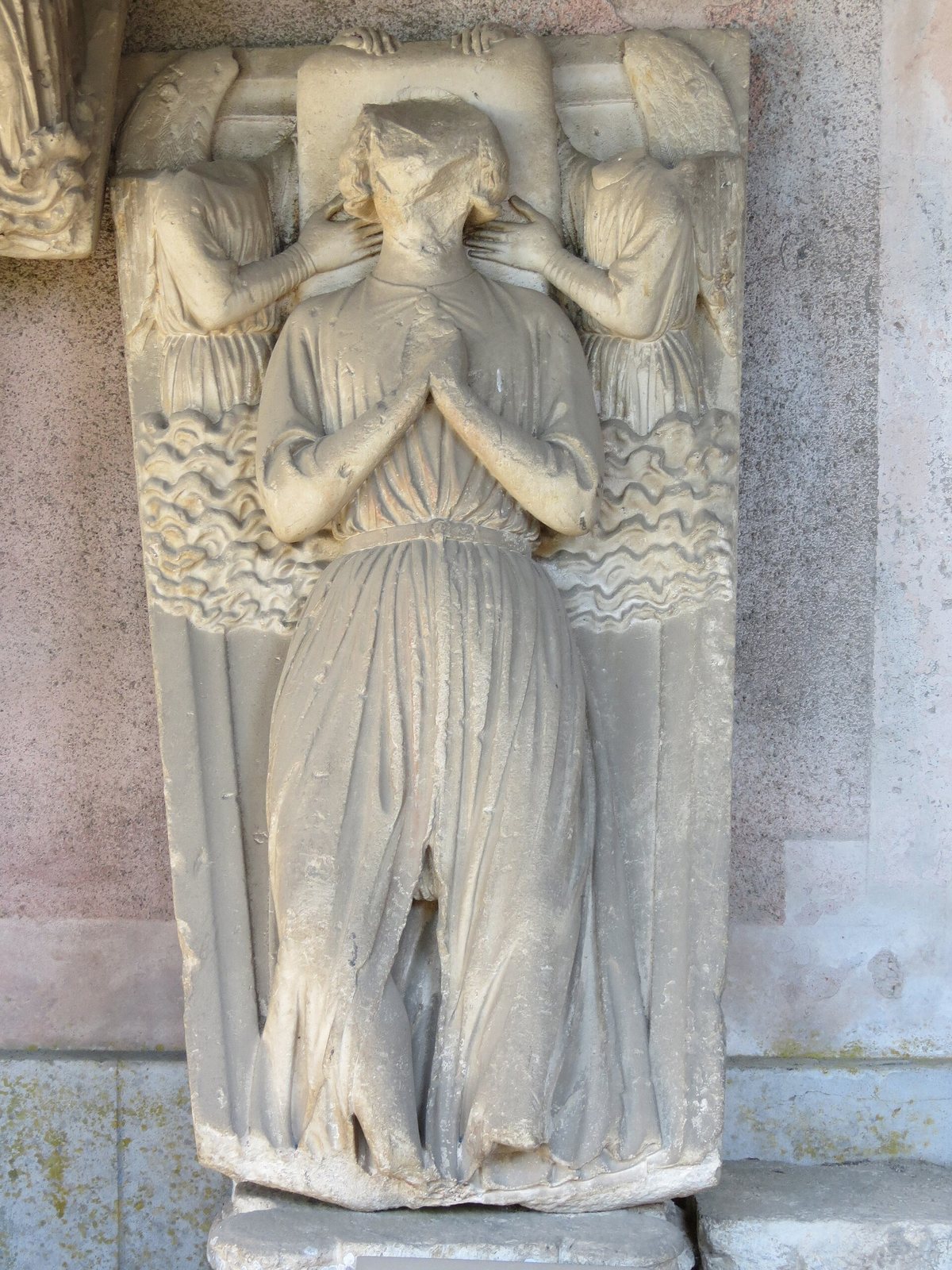
The former church included a Chapel of the Virgin and a small apse in the north transept. Two columns stood in the apse, which had a sloping altar and an opening towards the sacred spring. A sarcophagus identified as the tomb of John of Salisbury was sealed into a church wall; after excavation, it remained in its original position in the small apse. The recumbent effigy of Lucia de Lèves lay in the north arm of the transept, near the choir.
Funerary remains
The tomb effigy of Renaud de Bar and his pastoral staff are preserved at the Museum of Fine Arts in Chartres. Other funerary remains associated with the abbey include two grave slabs for Agasse de Chartres, a cloak clasp and the grave slab of Abbot Thomas de Meulan, who died in 1352. Its Latin inscription identifies him as a native of Meulan and as the abbey’s former head.
Lapidary museum and cloister
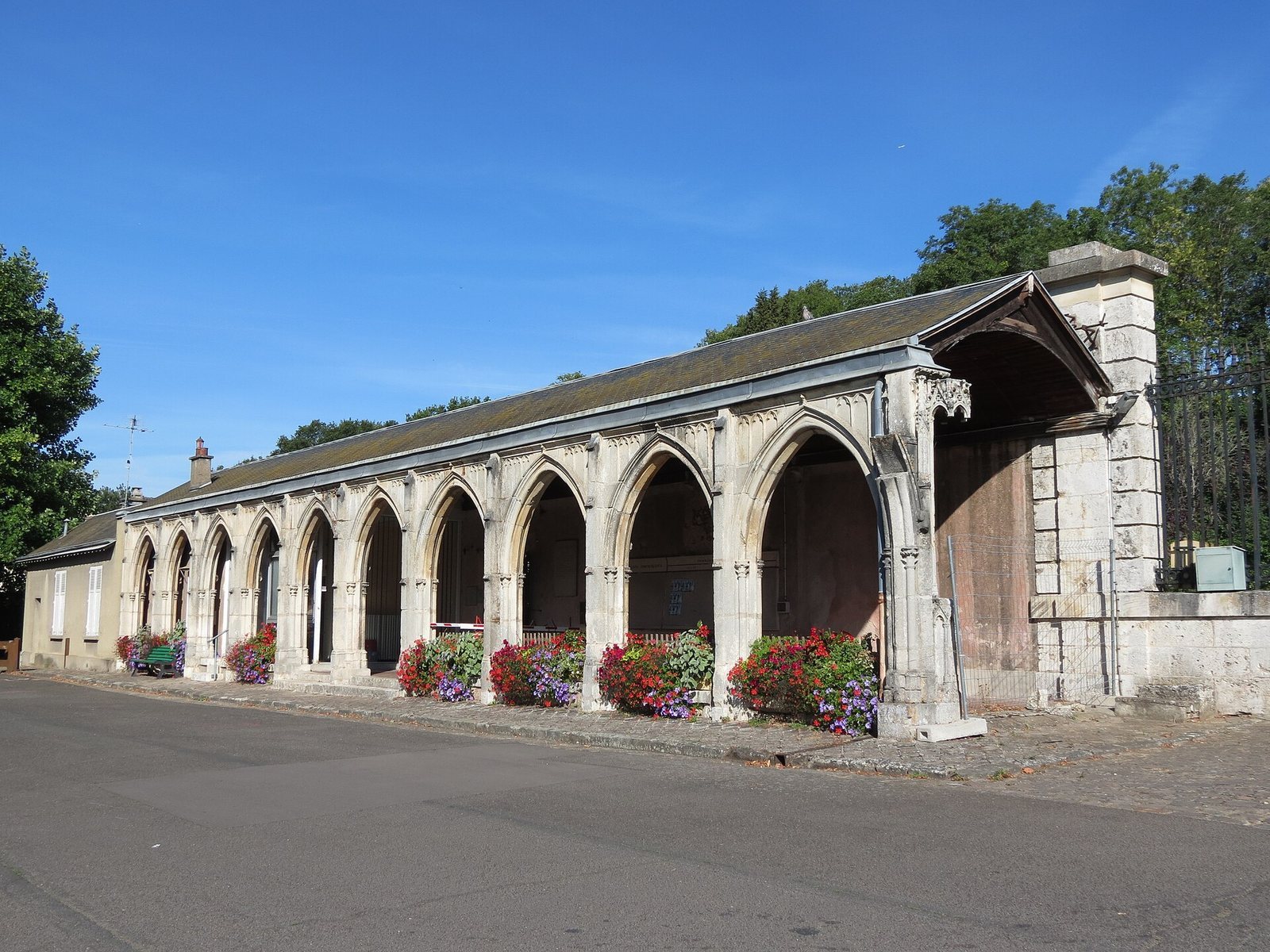
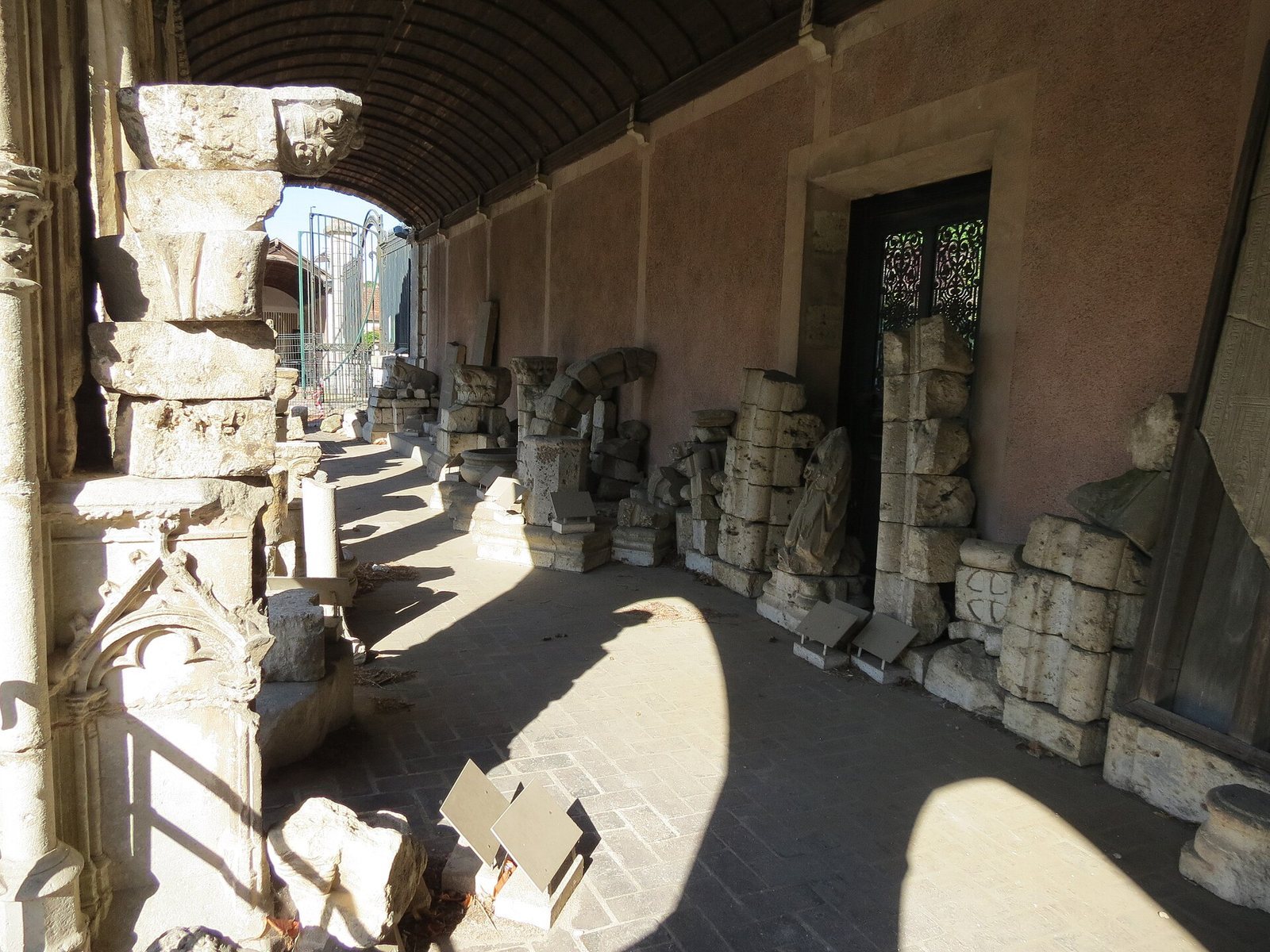
Excavations uncovered tombs dating to the twelfth and thirteenth centuries, now displayed in a lapidary museum, a collection of carved stone and other stone objects. The museum occupies the eastern section of a reconstructed former cloister belonging to the separate abbey of Notre-Dame de Coulombs. The cloister was rebuilt on both sides of the entrance to the Fondation d’Aligre et Marie-Thérèse; its western section includes both interior and exterior portions.
Pilgrimage setting and historic views
The Via Turonensis, one of the principal pilgrimage routes to Santiago de Compostela in northwestern Spain, runs alongside the abbey. A spring at the site was reputed to cure pulmonary diseases. The abbey is also shown in a 1696 work by Louis Boudan and in a seventeenth-century view associated with the Benedictine scholar Dom Germain’s illustrated collection of French monasteries, the Monasticon Gallicanum.