Village de l’an Mil: A Medieval Settlement and Open-Air Museum in France
Site at a Glance
- Popularity
- Medium
- Country
- France
- Primary era
- Medieval
- Eras represented
- Medieval, Modern
- Civilizations
- Duchy of Brittany, French
- Site type
- Settlement
- Remains
- Village
On this page11 sections
History
Medieval occupation
Village de l’an Mil is an archaeological site and open-air museum at Lann Gouh in Melrand, Morbihan, France, where a village was occupied from the tenth through the fourteenth century. The settlement may have been inhabited as early as the eighth century. It comprised 17 buildings before it was deserted, and its inhabitants left few everyday objects behind.
Rediscovery and reconstruction
The village was rediscovered in 1902. Excavation campaigns followed from 1977 to 1992, revealing the remains of the settlement. The open-air museum opened in 1985, and reconstruction of village buildings began that year.
Reconstruction continued and expanded into practical investigations of medieval buildings, farming, and crafts. These activities have included experiments with threshing, metalworking, and cultivation, using reconstructed features and an experimental farm to explore how such work was carried out.
Remains
Settlement layout
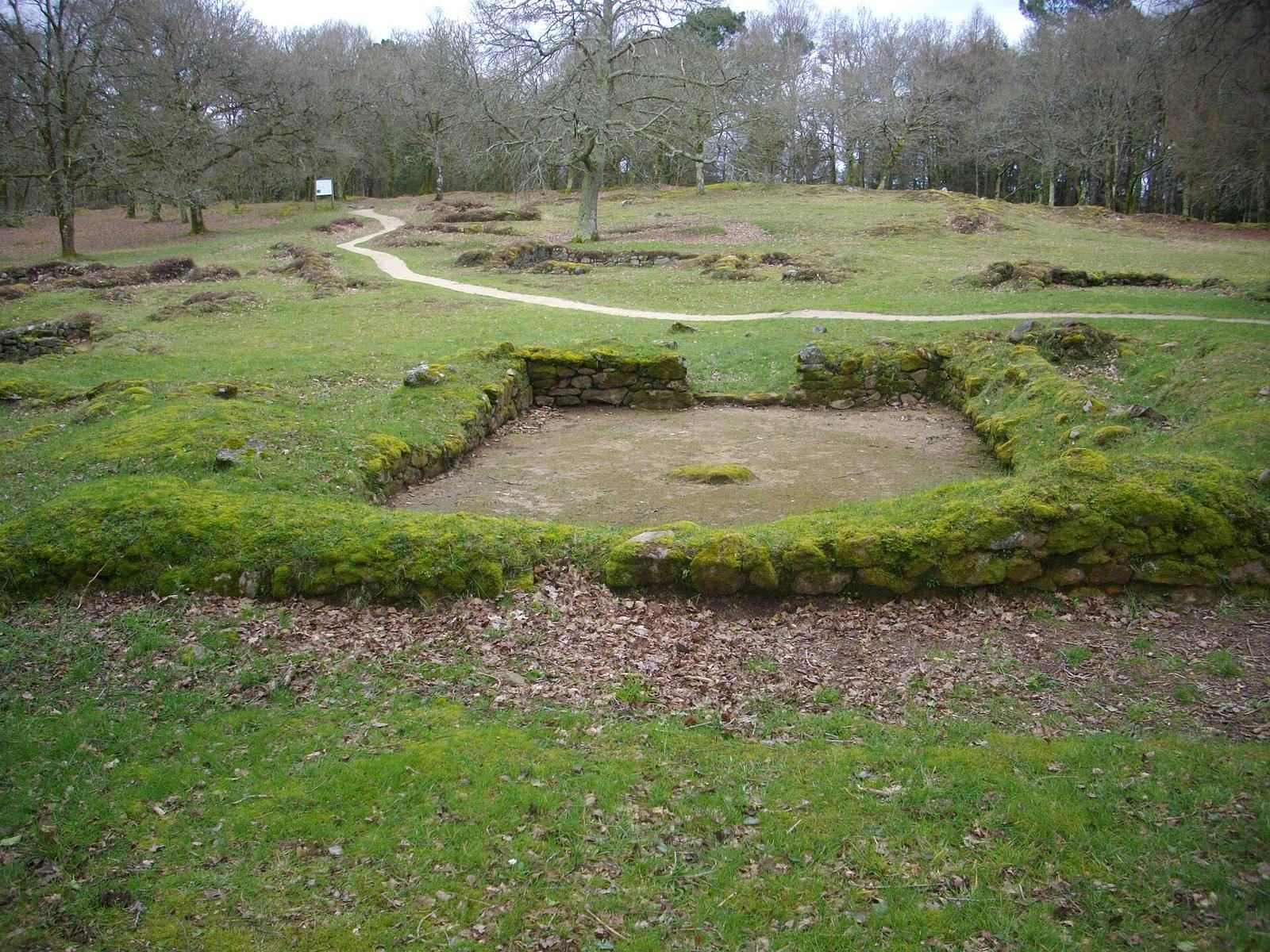
The archaeological village covers about 1.5 hectares on a plateau reaching 112 metres in elevation. An earthen bank enclosed the settlement and may have supported a fence of upright stakes. Houses and ancillary buildings stood around a central square used as a shared living space, with a communal bread oven among its features. The wider museum grounds and nearby experimental farm each cover about 10 hectares. A south-to-north path crosses the site along a route used during the village’s occupation; local granitic grit now protects its surface.
Houses and domestic spaces
The visible ruins are chiefly house walls, hearths, and floor traces that indicate circulation areas and private courtyards. Houses measured no more than about 11 metres long and 6 metres wide. Their granite walls averaged about 80 centimetres high and 60 centimetres thick, with two stone faces around a rubble filling. People and livestock shared the buildings beneath one roof. Slightly sloping floors placed the human living area above the animals, allowing warmth to rise while keeping residents away from animal waste. Central hearths were formed from granite blocks arranged in circular, rectangular, or square shapes. A layer of granitic grit marks interior floor surfaces; the ground was scraped to improve sanitation, and use by people and animals gradually formed the floor. Two doorways lay midway along the long walls. One was usually blocked and is interpreted as the “door of the dead,” opened to carry out a deceased person because the living were not meant to use the same opening. Timber framing, thatch, and other upper parts have not survived; the acidity of Breton soils rarely preserves organic materials.
Communal oven
The communal oven survives as a collapsed vault about 3 metres in diameter, constructed with granite and clay-rich earth mixed with chopped vegetation and topped by an earth mound. A wood shelter beside it had a floor of river pebbles, which insulated stored fuel from moisture in the ground. Ash deposits indicate that the oven opening faced north, away from the prevailing westerly winds.
Reconstructed village buildings
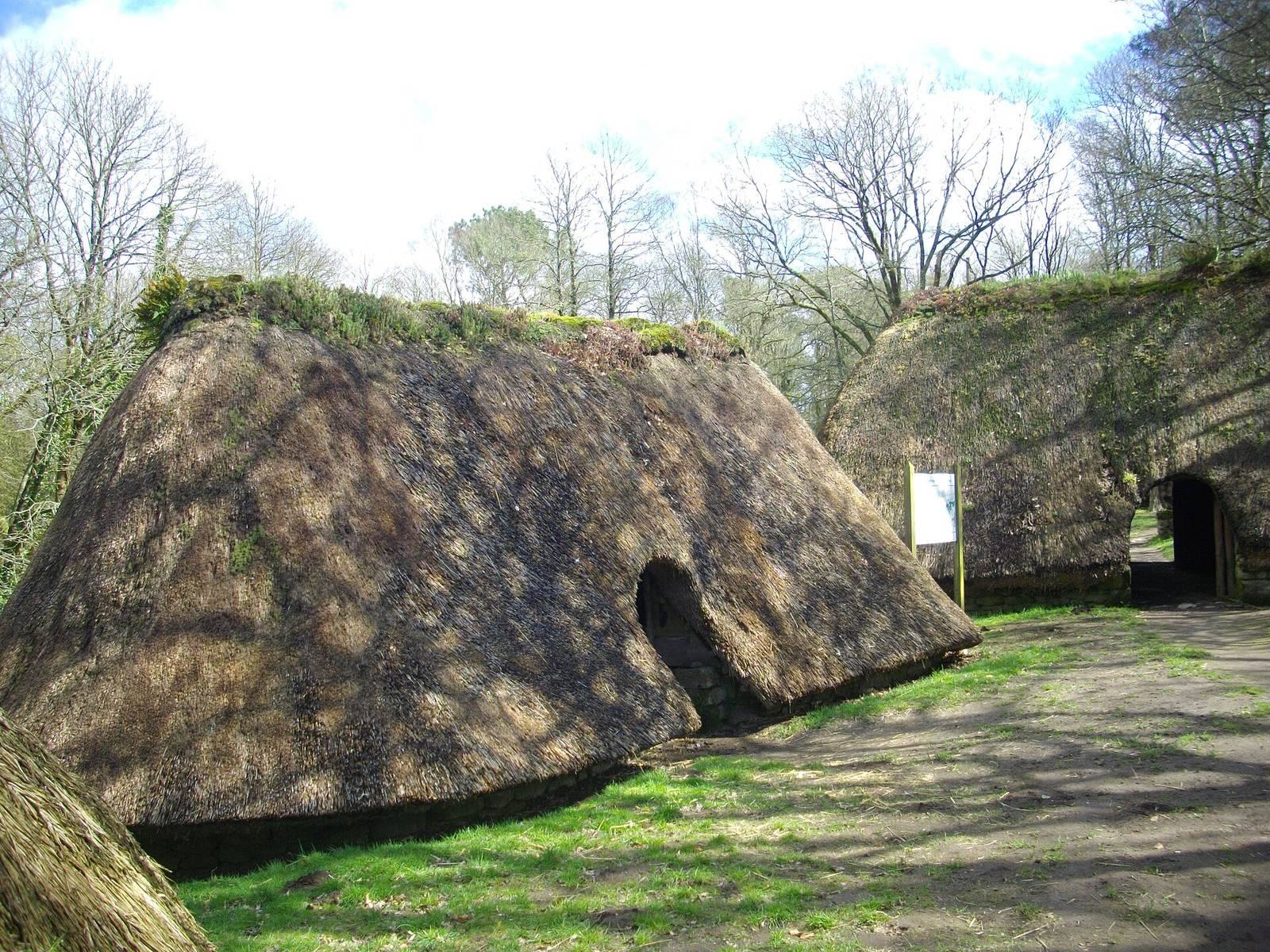
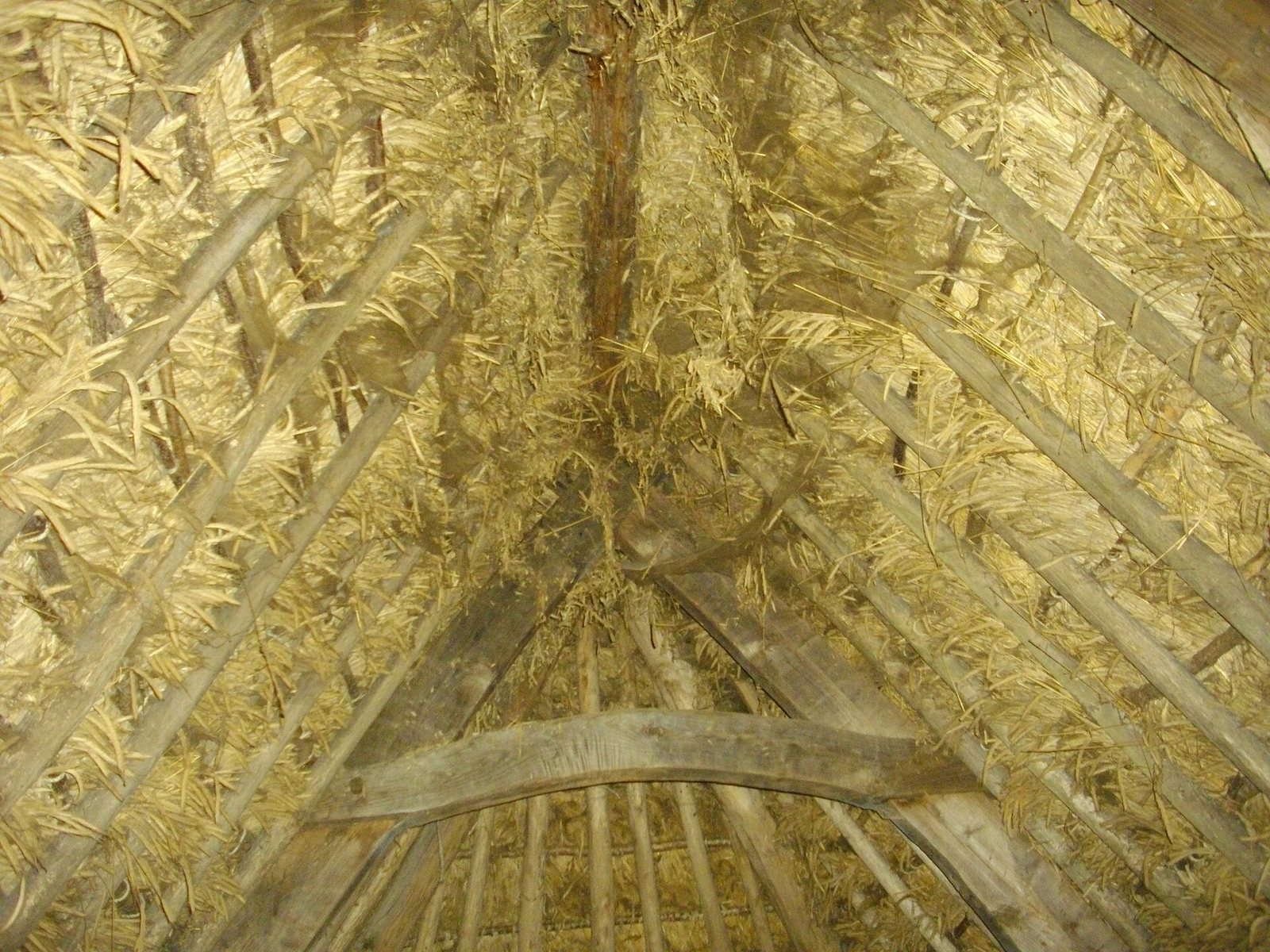
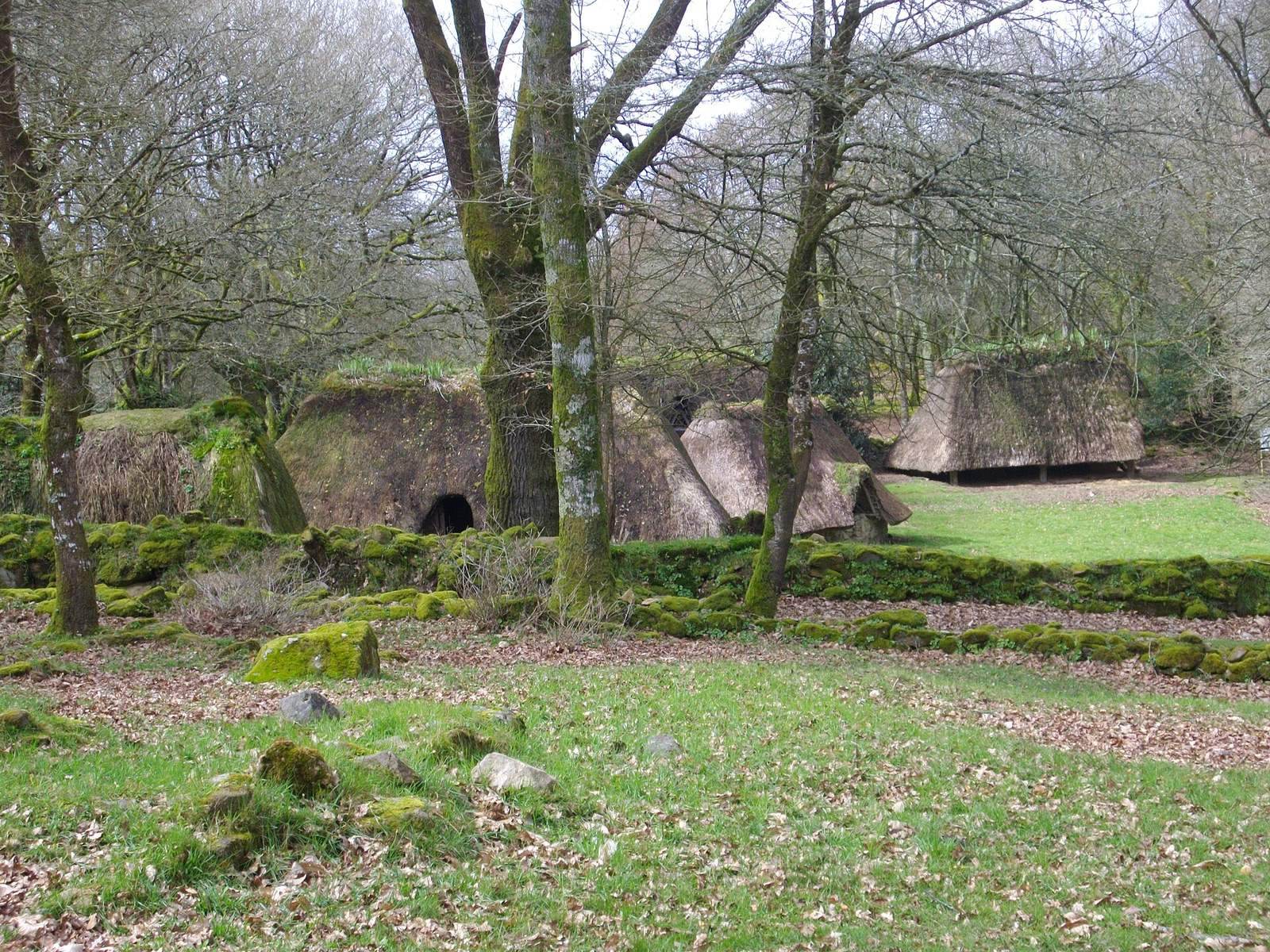
Reconstructions based on the Lann Gouh remains include houses, a raised granary, a wood shelter, a bread oven, a chicken coop, and a sheepfold. The reconstructed houses have rectangular plans and straight or rounded gables. Their low local-granite walls have two stone faces with a filling bound by clay-rich earth. Thatch extends nearly to the ground and wraps around the buildings; smoke could escape through a doorway or an opening in the roof. Closely spaced rafters are held at their bases by a wooden pole. Timber from nearby woodland was roughly shaped with axes and adzes, while braids made from plant fibres secured the roof structure.
Experimental areas and farm
A threshing floor built in the late 1990s has been used to test threshing with a flail and to measure pollen dispersal. These trials help assess how far pollen from a threshing area may travel and in what quantities it might later be recovered. A reconstructed metalworking area has a hearth, a fixed forge at ground level, and a bloomery, a low furnace for producing iron from ore. The experimental farm includes buildings, animals, and an area for practical trials. Its garden grows medicinal, dye, and food plants cultivated or gathered in the Middle Ages, including flax, wormwood, and burdock. The garden lies close to the houses on ground thought likely to have been used by the village’s inhabitants. Shallow, unsuitable soil around the houses meant families did not grow crops directly beside their homes. The garden is cultivated without crop-protection products; yields, damage by wild animals, and the growth of perennial plants are monitored over time. The farm also presents a medieval miniature depicting a wolf trap, two reconstructed traditional wolf-trap designs, and a woven fence.
Excavated finds
Excavations yielded about a thousand objects, chiefly pottery fragments. These include pieces of cooking griddles, pitchers, pots, and dishes, as well as a knife blade fragment. Other finds include stationary and rotary hand querns, hand-operated grain mills, whetstones, millstones, and spindle whorls, weighted tools used in spinning. Numerous cooking-pot fragments bear traces of fire. Together, the finds point to cereal cultivation, sheep raising, wool spinning, and the use of pots for cooking. The pottery has a lustrous, talc-rich fabric found widely in western Brittany. Excavated objects are held at an archaeological repository in Vannes, while the site’s archives are kept in its village reception building.
Care of the remains
Vegetation is cut back to prevent trees from damaging the fragile archaeological remains. The protective covering of local granitic grit on the south-to-north path helps safeguard the route that crossed the village during its occupation.