Cuatro Puertas: A Pre-Hispanic Cave Complex on Gran Canaria
Site at a Glance
- Popularity
- Medium
- Country
- Spain
- Primary era
- Medieval
- Eras represented
- Medieval, Modern
- Civilizations
- Amazigh
- Site type
- Settlement
- Remains
- Village
On this page13 sections
History
Cuatro Puertas is a pre-Hispanic archaeological complex on Montaña Bermeja in southern Telde, Gran Canaria, Spain, built by the island’s Indigenous inhabitants. Pre-Hispanic refers to the period before Spanish conquest. The complex is associated with Berber culture, a broad ethnocultural identity also commonly called Amazigh.
Indigenous use and production
Cuatro Puertas combined caves and ritual activity with the production of hand grindstones. It is one of seven identified grindstone-production locations on Gran Canaria. Grindstones were used in household food preparation, including grinding barley for gofio, a toasted flour made from roasted grains. Agriculture was a principal means of subsistence on Gran Canaria, unlike the greater reliance on livestock on other islands in the archipelago. Grindstone production at the site belongs to both prehistoric and later historic periods.
Ritual interpretations
The purpose of the Four Doors Cave is uncertain, though many archaeologists consider it possibly sacred. They point to its monumental form, its position near an almogarén (ritual space), and descriptions of comparable places in chronicles of the conquest. Under this interpretation, ceremonies may have been led by a faycán (religious leader) and harimaguadas (virgin priestesses under a faycán’s authority, described as daughters of nobles).
The almogarén was used for libations and offerings to deities, including Alcorac, identified as a sun deity; milk also featured in ceremonies. The Papers’ Cave was probably associated with fertility rites, an interpretation linked to triangles engraved on its walls.
Chronicles of the conquest give Cuatro Puertas little or no attention, despite its location about four kilometres from the Conquest Tower in Gando Bay.
Abandonment and later use
The complex was abandoned in the 15th century. Later, some caves were adapted as shelters for goats and sheep, a use that continued until recent decades.
Modern alterations and protection
In the mid-20th century, the site was used during the filming of Tirma. Work on the rock at the Four Doors Cave for a scene severely damaged its original archaeological setting. Annual summer-solstice observances at the cave are a recent practice, not an ancient tradition; the rock was deliberately altered to create the intended orientation.
Cuatro Puertas became a Spanish Asset of Cultural Interest in the archaeological-site category on May 25, 1972, under Decree 1435/1972.
Remains
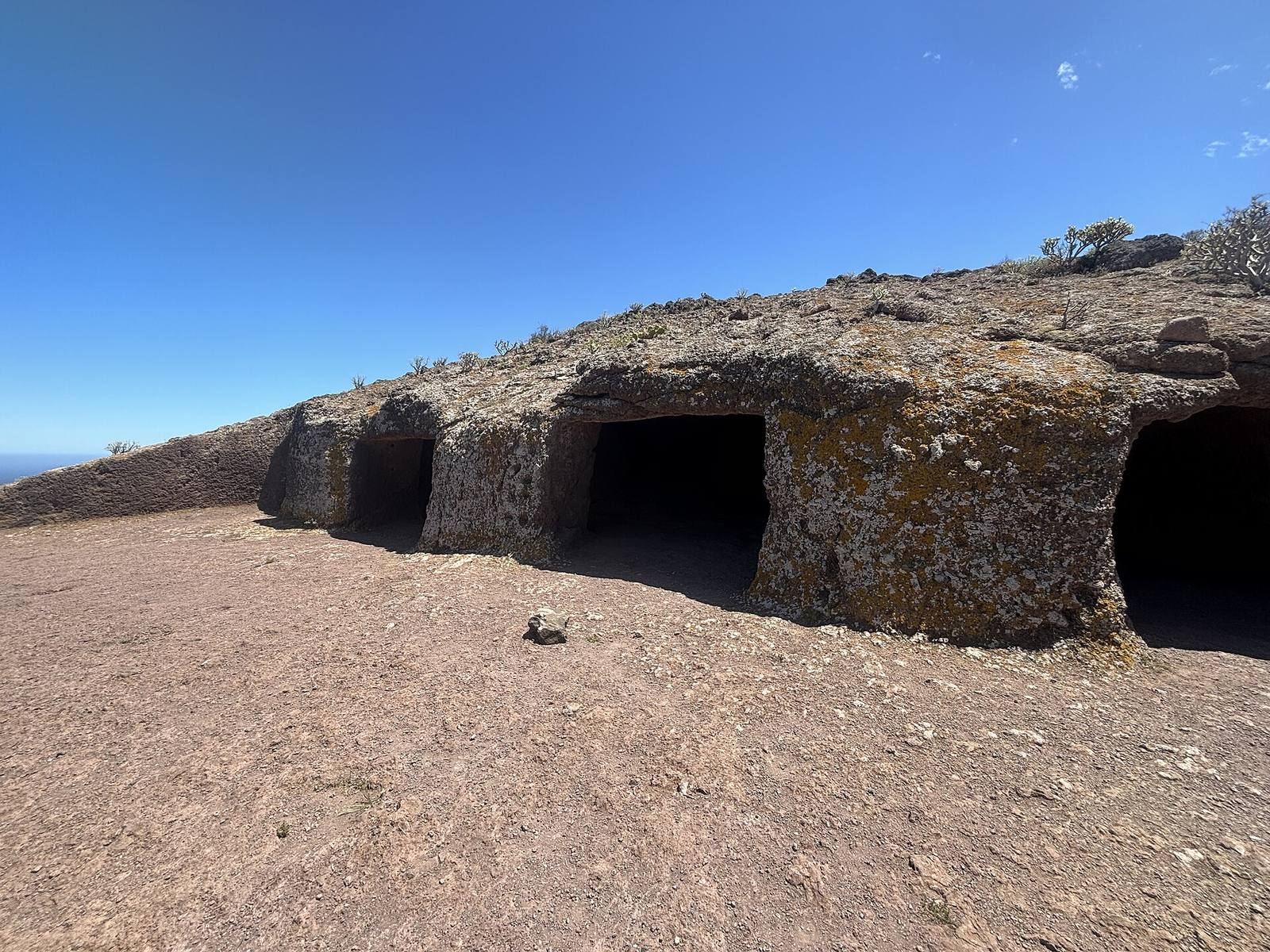
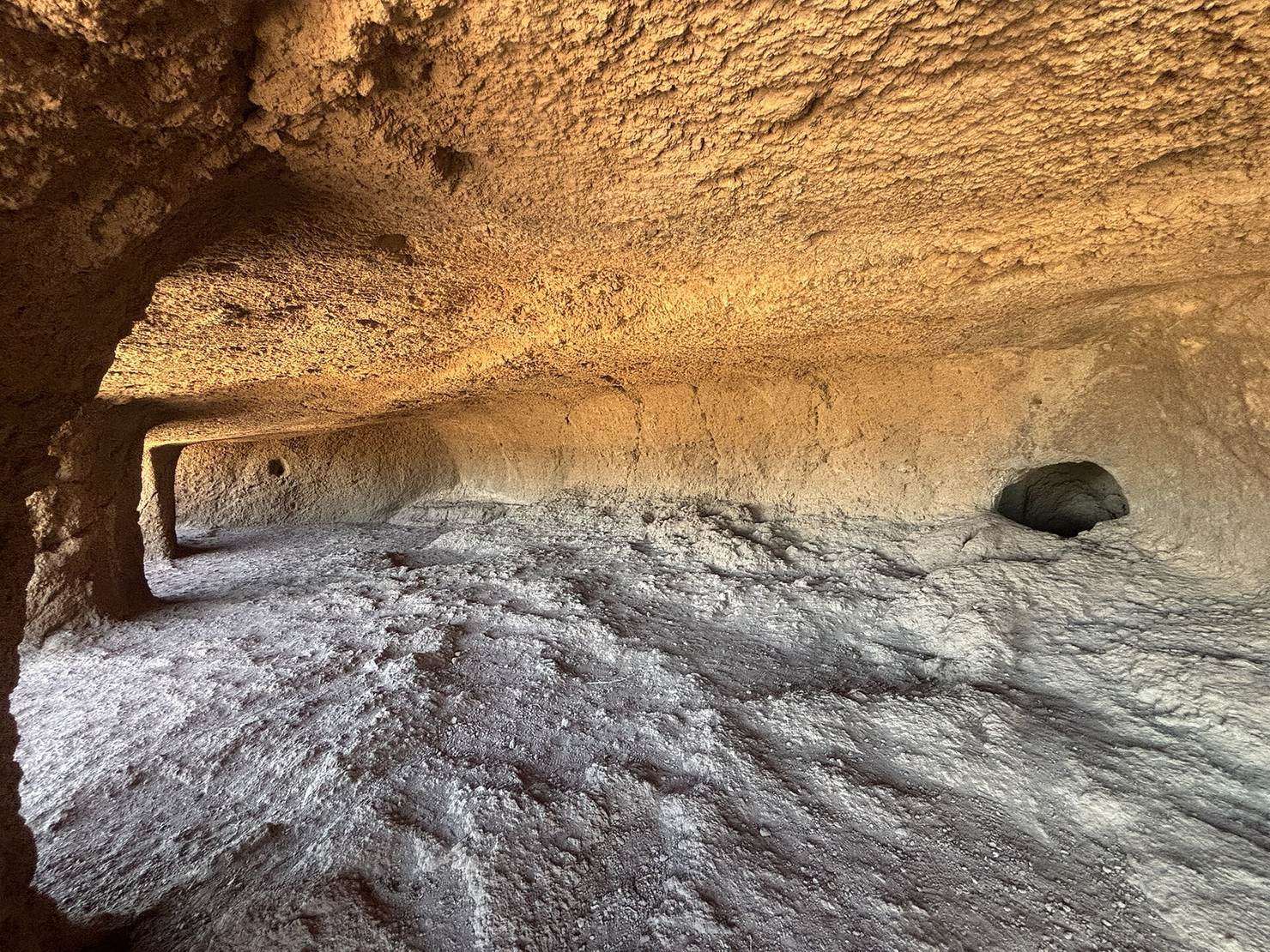
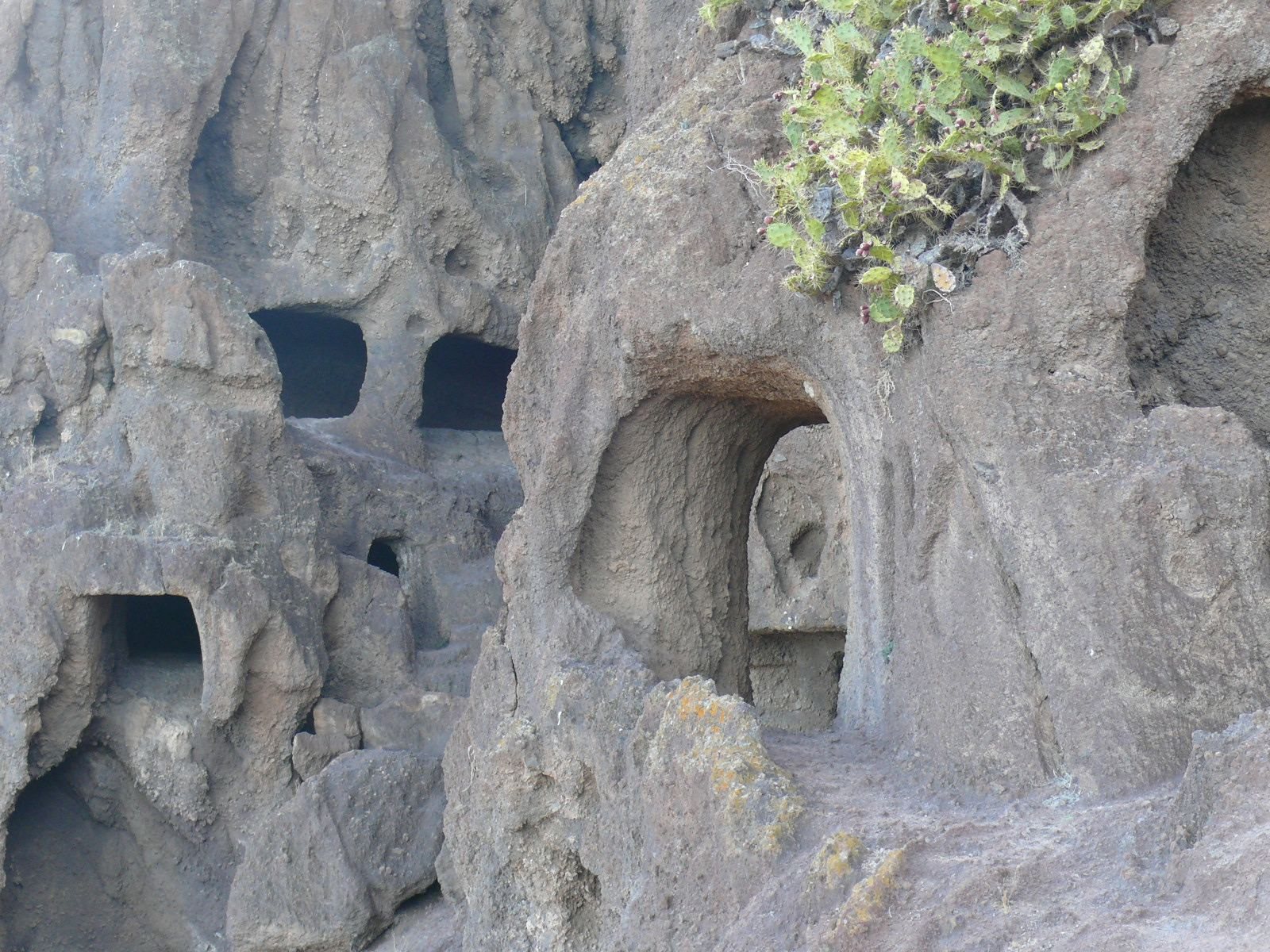
The complex extends across almost the whole of Montaña Bermeja, whose elevation is given as 315 metres. The mountain is about six kilometres from Gran Canaria’s east coast, and its upper slopes overlook Telde and the eastern coast. The site includes artificial caves, some connected to one another, as well as paths, alleys, granaries and a ritual area. The caves were cut into tuff, rock formed from consolidated volcanic ash, using stone picks. Many have a central space with smaller rooms opening from it. Dry-stone walls, built by stacking stones without mortar, may have closed some caves; light partitions or stone alignments may have divided larger rooms.
Cave complex and ritual area
Four Doors Cave
Near the summit on the mountain’s northern side, the Four Doors Cave measures about 17 by 7 metres and opens to the northeast. Four large doorways lead into a single, roughly globe-shaped chamber. The entrances may have been closed with coverings made from skins or other materials. Just beyond the porch, about 20 holes for posts indicate that the exterior space was enclosed. A vertical entrance was prepared beside a column at one of the central doorways.
Almogarén
Above and a short distance east of the Four Doors Cave, in the mountain’s upper part, another cave contains an enclosed ritual space known as an almogarén.
Papers’ Cave
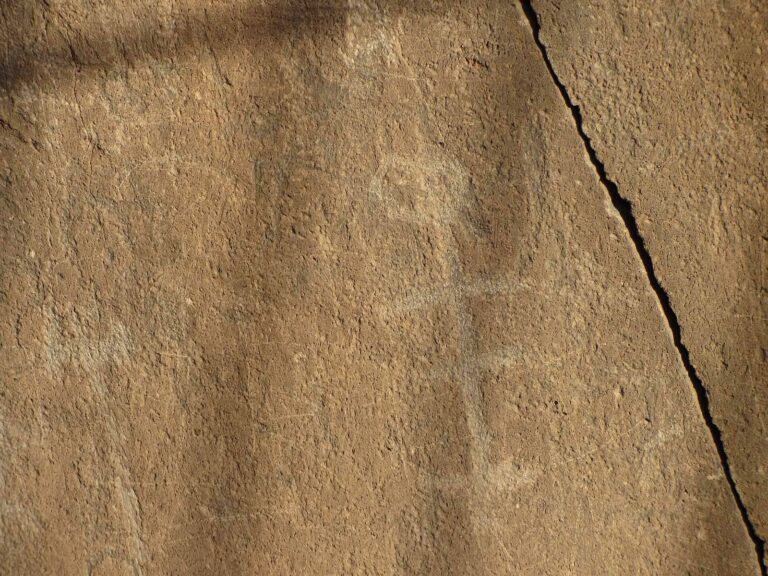
On the mountain’s southern side, a path cut into the rock leads east from the ritual area to the Papers’ Cave. The cave has a roughly circular floor plan and triangles engraved on its walls.
Pillars’ Cave
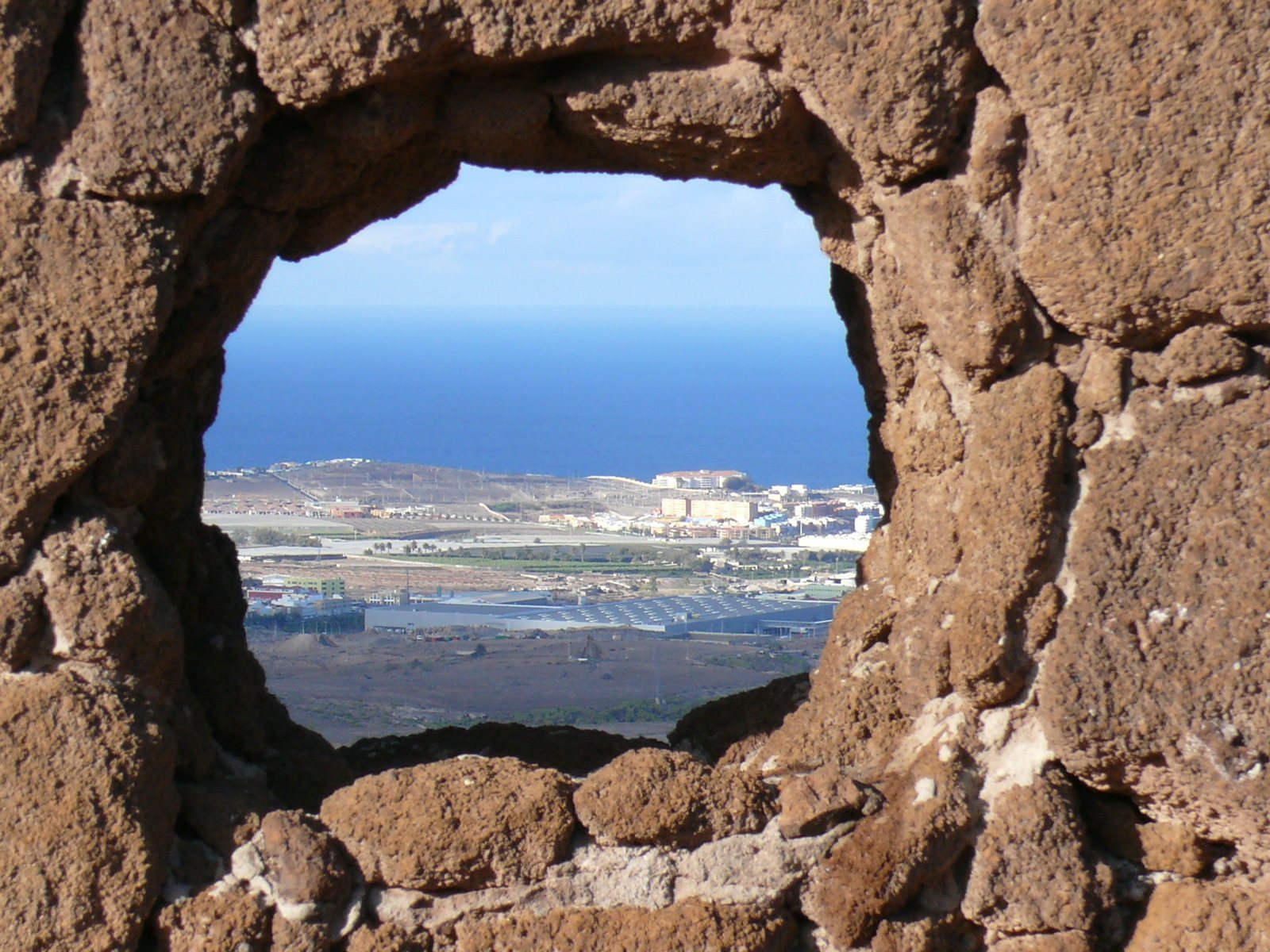
Farther along the same path, the Pillars’ Cave forms the central part of the cave settlement. It faces south, sheltered from prevailing winds, and has a broad view that includes the coast. Ramps, stairs and small tunnels connect its cavities. A thick dry-stone wall may once have enclosed the complex.
Most of the caves are circular and have side rooms. Their features include floor depressions for cooking fires, cavities in the walls for storage, seats, and holes for beams or posts. Grooves around openings could hold frames for windows and doors, which could be closed with hides or cloth made from plant fibres. The cave system also contains granaries and other recesses, some with uncertain functions. An eastern path from the cave passes a rock arch and a narrow chimney toward the Audience Cave, then continues toward the quarry. Prickly-pear plants have overgrown the route, obscuring it.
Audience Cave
The Audience Cave lies about 200 metres from the Four Doors Cave, near a narrow chimney that is difficult to locate. Its spaces have served various purposes, including sleeping quarters, kitchens, silos and granaries.
Hand-grindstone quarry
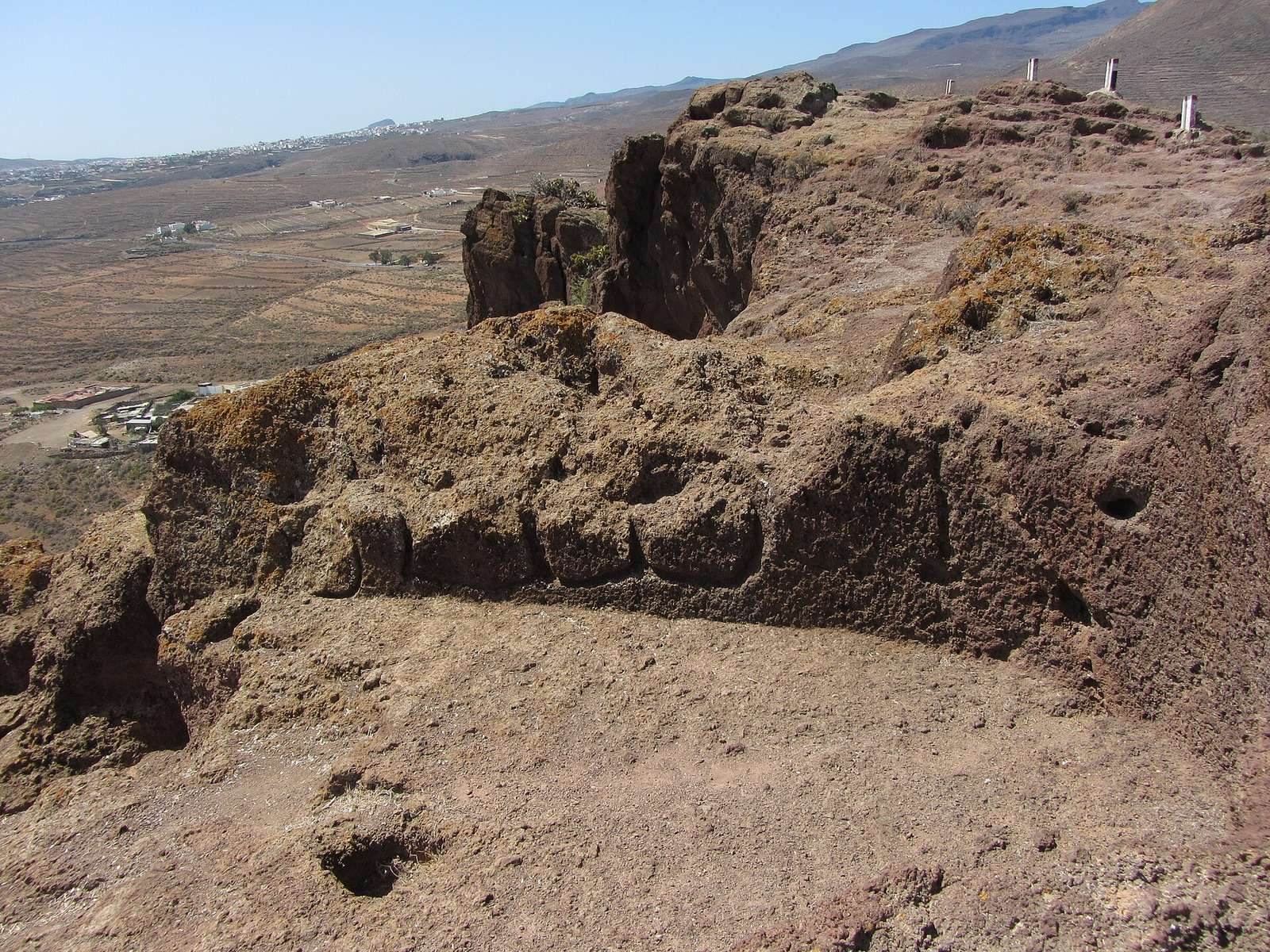
The quarry occupies the mountain’s lower northern slope, at elevations of about 197 to 210 metres. Its surroundings include dark volcanic fragments of different sizes from the Pleistocene, the geological epoch before the Holocene. The fragments include basanite and nephelinite, both types of volcanic rock. In places, the slope is steeper than 45 degrees. Extraction created a south-facing shelf with an irregular face about 20 metres wide and 10 to 14 metres high, alongside a principal extraction area and several smaller workings. Two main production areas are identified in the quarry, one prehistoric and another from a later historic period.
Removing grindstones left round or oval impressions in the rock, arranged according to its natural contours and reshaping the surface. Across Gran Canaria, makers used tuff and vesicular basalt, basalt containing small cavities formed by gas bubbles in cooling lava. Tuff was used about three times as often. Because it is less structurally coherent, fragments could enter flour made with tuff grindstones and cause more tooth wear than basalt fragments. Wind, water and human use have considerably deteriorated the wider complex. The quarry itself is in good condition, with its south-facing position protecting it from humidity and lichen growth.