Merton College Chapel: A Gothic College and Parish Church in Oxford
Site at a Glance
- Popularity
- Medium
- Country
- United Kingdom
- Primary era
- Medieval
- Eras represented
- Medieval, Early Modern
- Civilizations
- English
- Site type
- Religious
- Remains
- Chapel
On this page16 sections
History
Merton College Chapel is the Church of England chapel of Merton College in Oxford, United Kingdom. Dedicated to St Mary and St John the Baptist, it took shape as a Gothic church in the late 13th century. Walter de Merton, the college’s founder, was associated with its establishment.
Medieval foundation and plans
On 13 September 1266, the Benedictine Abbey of Reading granted the church of St John the Baptist to Merton College’s scholars. By the late 1280s, that church was in ruins, and construction of a replacement on the same site began around 1290. The new chapel was largely complete by the end of the 13th century.
The building replaced the parish church of St John and served both the local parish and the college until 1891. Older records often refer to it as Merton Church. In the early 16th century, the college seems to have given up plans to extend the building. In 1517, it leased the land set aside for the nave to Richard Foxe, Bishop of Winchester and founder of Corpus Christi College.
Religious change
During the reign of Edward VI (1547–1553), the English Reformation, a religious transformation that separated the English church from papal authority, altered worship at the chapel. Medieval glass was probably removed or covered, while service books, vestments, furnishings and images were taken away as incompatible with the new religious order.
Catholic worship returned under Mary I (1553–1558), and the college embraced it. Elizabeth I’s reign brought Protestantism back by force. In its defense of the older religion, the college faced a three-week siege led by Matthew Parker, Archbishop of Canterbury.
Damage and later history
By 1634, the church had fallen into considerable disrepair. The south transept roof collapsed in 1655, damaging many medieval monuments and leading to rebuilding work involving architects including Christopher Wren and Edward Blore.
In 1928, a spire from the chapel was given to the University of Virginia in honor of Thomas Jefferson’s educational ideals. During the Second World War, stained glass was taken down for protection from bombing and stored in a vault beneath the New Bodleian Library.
Worship and music
On 23 January 1967, Father Michael Hollings celebrated the first Roman Catholic Mass in the chapel since the Reformation. A new choral foundation followed in 2008, when Peter Phillips and Benjamin Nicholas became Directors of Music. The choir has 30 singers, including 18 choral scholars, as well as two organ scholars, and features in the annual Passiontide at Merton festival.
For the college’s 750th anniversary, it commissioned a new organ, which arrived in August 2013 and was formally opened in April 2014. The Merton Choirbook was also premiered in 2014. Its contents include liturgical music in Latin and English, seasonal anthems and commissioned works, some inspired by the new organ. In 2016, Merton became the first Oxford University college to admit girls to its Choral Foundation; the group included 24 girl choristers.
Remains
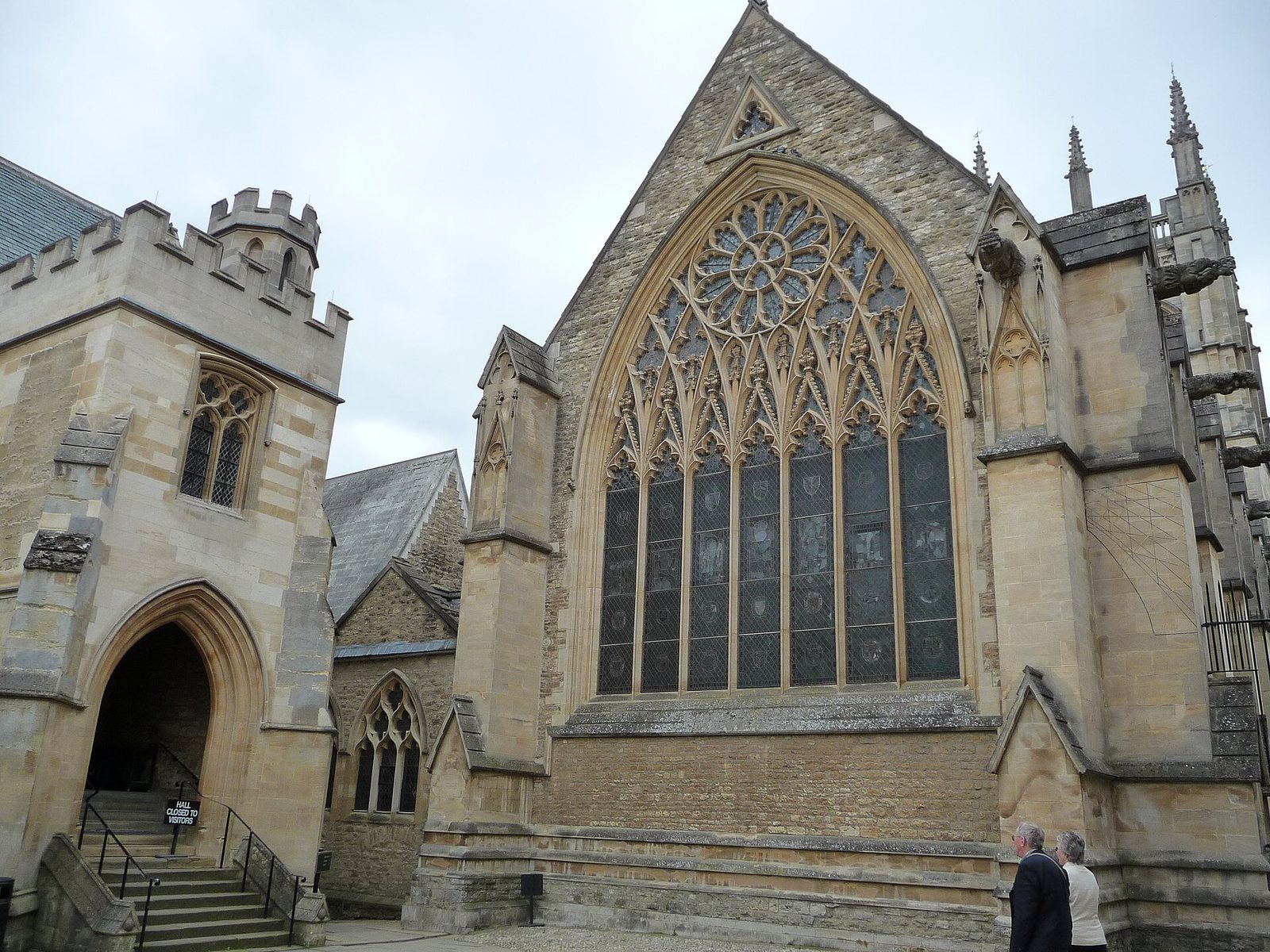
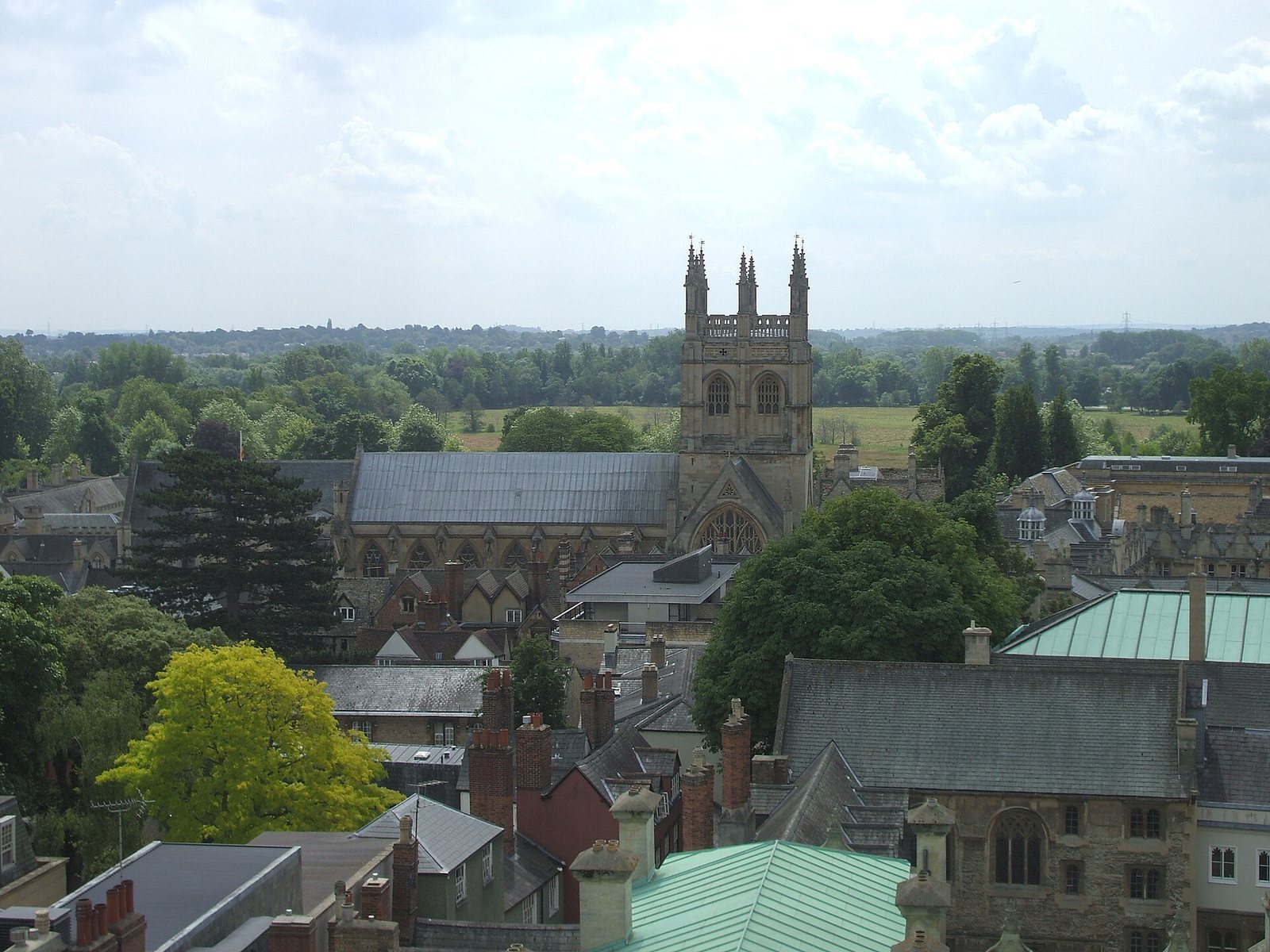
The chapel’s Gothic layout centers on the choir, the area used by clergy and singers, and includes crosswise arms called transepts. A north door opens onto the street, while other doors connect with the college. The original plan extended west with a nave, the main lengthwise body of a church, and two side aisles, but this part of the design was never built.
Choir and stained glass
Choir and east window
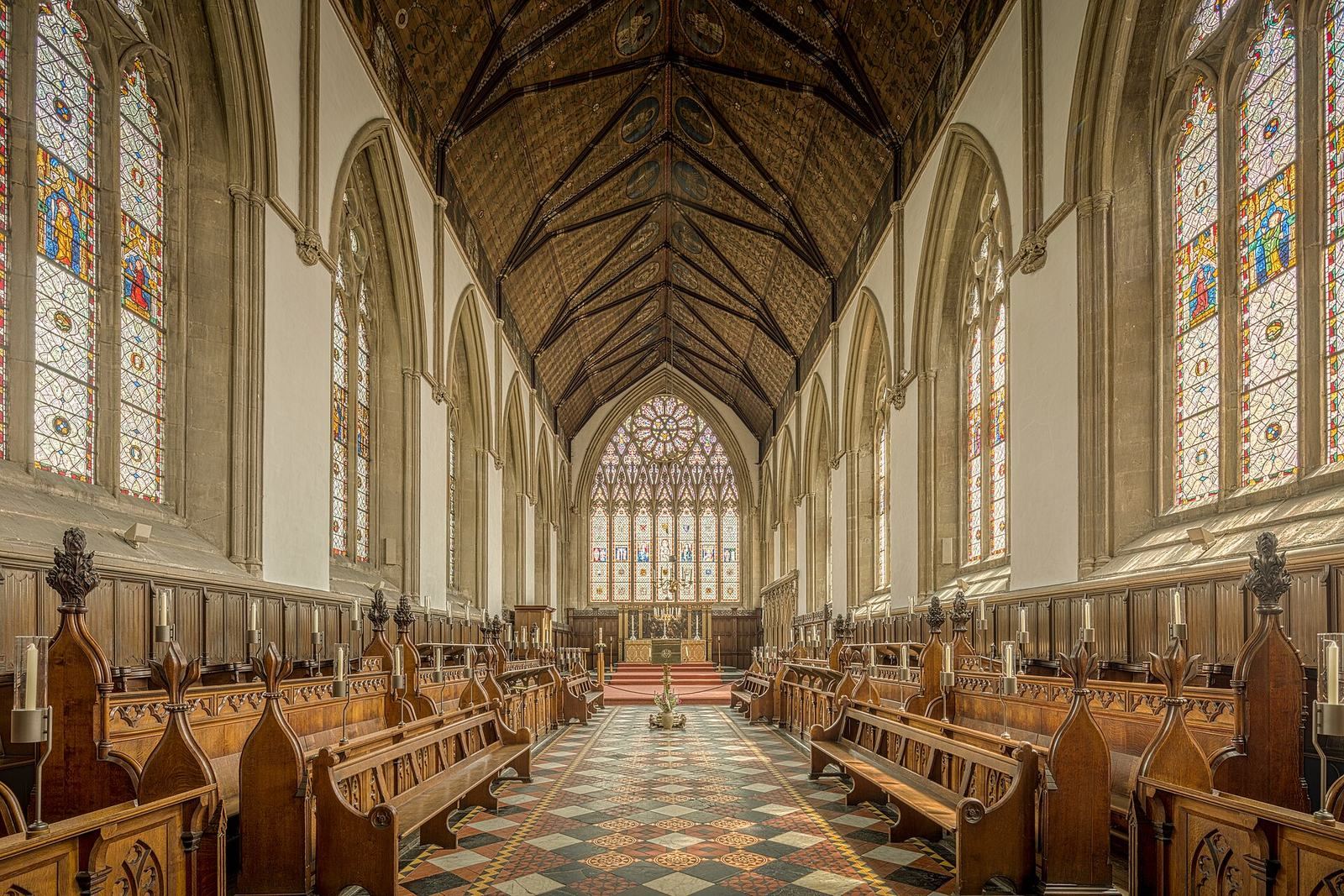
The choir was completed by 1294 and has an exceptionally large east window. Its design shows a loosening, late in the 13th century, of the strict geometric patterns associated with the Early English phase of English Gothic architecture.
Medieval glass
Seven pairs of windows line the choir’s side walls. Twelve retain original 13th-century glass in Decorated tracery, the ornamental stone framework that divides a Gothic window. Henry Mansfield donated the glass sometime between 1289 and 1296. The east window includes a late-13th-century scene of the Annunciation, the Christian account of the angel Gabriel telling Mary she would bear Jesus.
During the Reformation, boarding and whitewash protected glass in the chancel, the altar end of the church. The wall paintings behind the choir seats, which had also been preserved, were destroyed in 1651. Glass in the transepts and the lower part of the great east window appears to have been broken between 1646 and 1655.
Transepts and tower
South transept
Built in the 14th century, the south transept suffered the roof collapse of 1655. The damage affected many medieval monuments. In 1671, Christopher Wren was commissioned to provide a new screen and choir seats, carved in a classical style.
North transept and great tower
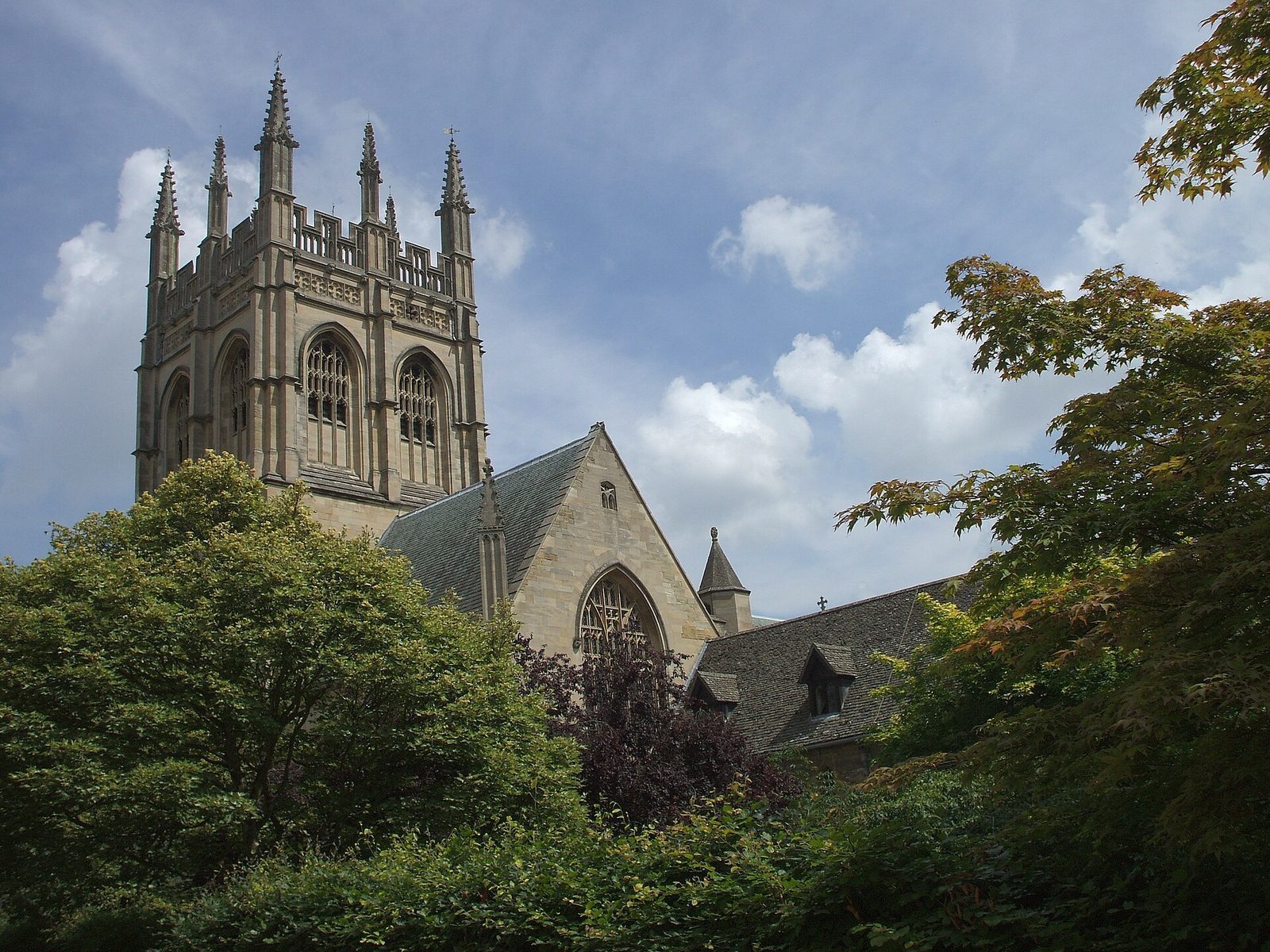
The north transept dates from the early 15th century. The great tower was completed around 1450, with its construction dated to 1448–1451.
Fittings and organ
Lectern and floor
John Martock gave the chapel’s pre-Reformation lectern in 1504. The medieval floor tiles were replaced with black-and-white marble in the 17th century.
Dobson organ
Built by Dobson Pipe Organ Builders of Lake City, Iowa, the Dobson organ has 44 ranks, or sets of pipes producing particular sounds, across three manuals, the keyboards played by hand. It was designed to support a broad repertoire. The chapel is also noted for its acoustics.
Spire at the University of Virginia
The chapel spire given to the University of Virginia in 1928 is located in Pavilion Garden VI.