Shizhongshan Grottoes: Buddhist Cave Temples in Yunnan
Site at a Glance
- Popularity
- Medium
- Country
- China
- Primary era
- Medieval
- Eras represented
- Medieval
- Civilizations
- Unclassified
- Site type
- Religious
- Remains
- Temple
On this page9 sections
History
Carving under Nanzhao and Dali
The Shizhongshan Grottoes are Buddhist cave temples on Shizhong Mountain in Jianchuan, Yunnan, China. Carving was underway by AD 850, during the Nanzhao kingdom, and continued into the Dali period. Nanzhao and Dali were successive medieval kingdoms in what is now Yunnan, with the short-lived Changhe, Tianxing, and Yining regimes in the transition between them.
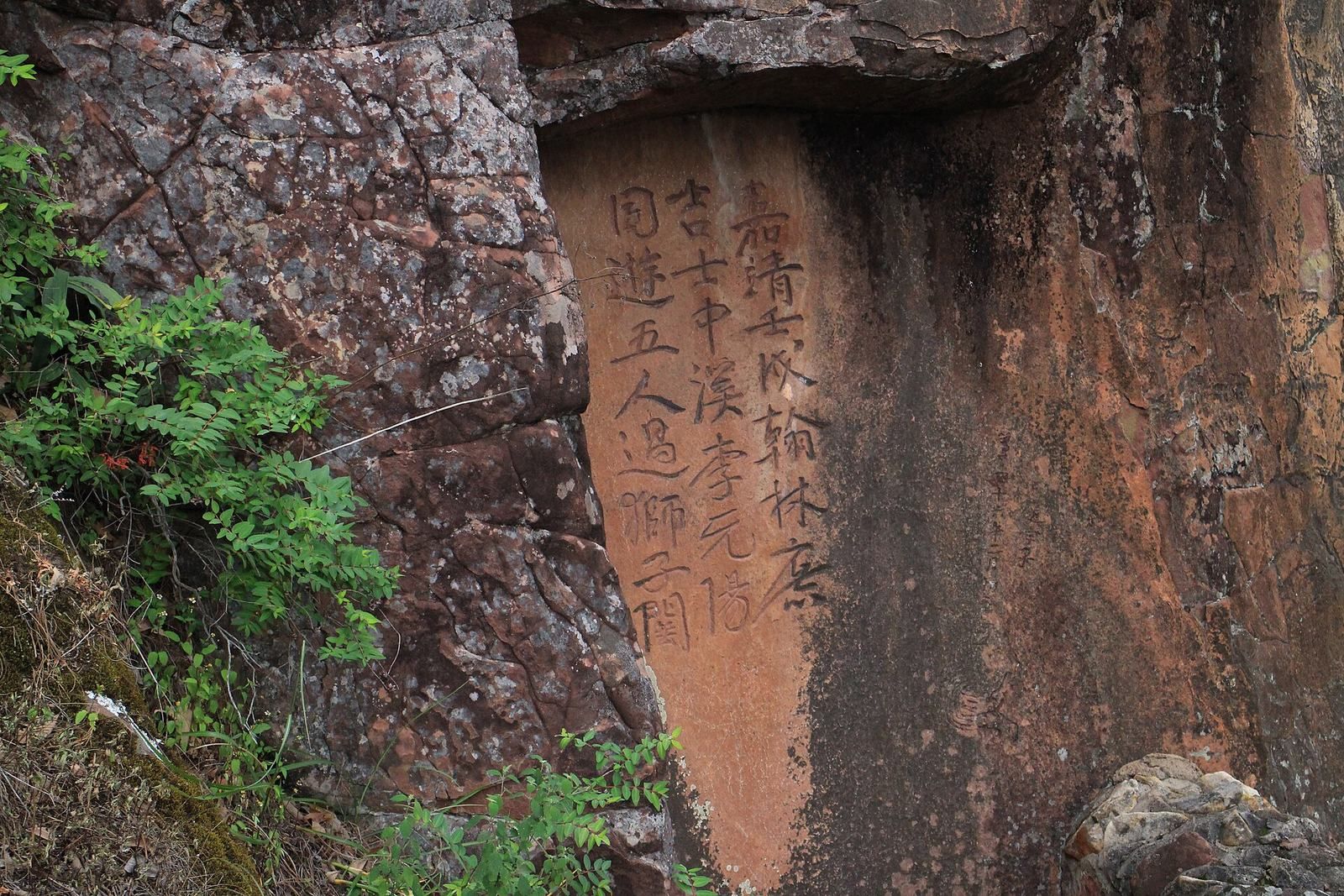
Inscriptions in Shizhong Temple Cave 8, Lion Pass Cave 10, and other caves indicate that work continued through at least AD 1179, in the middle-to-late Dali period. The caves thus preserve a record of Buddhist carving across several successive governments in medieval Yunnan.
Later knowledge and modern study
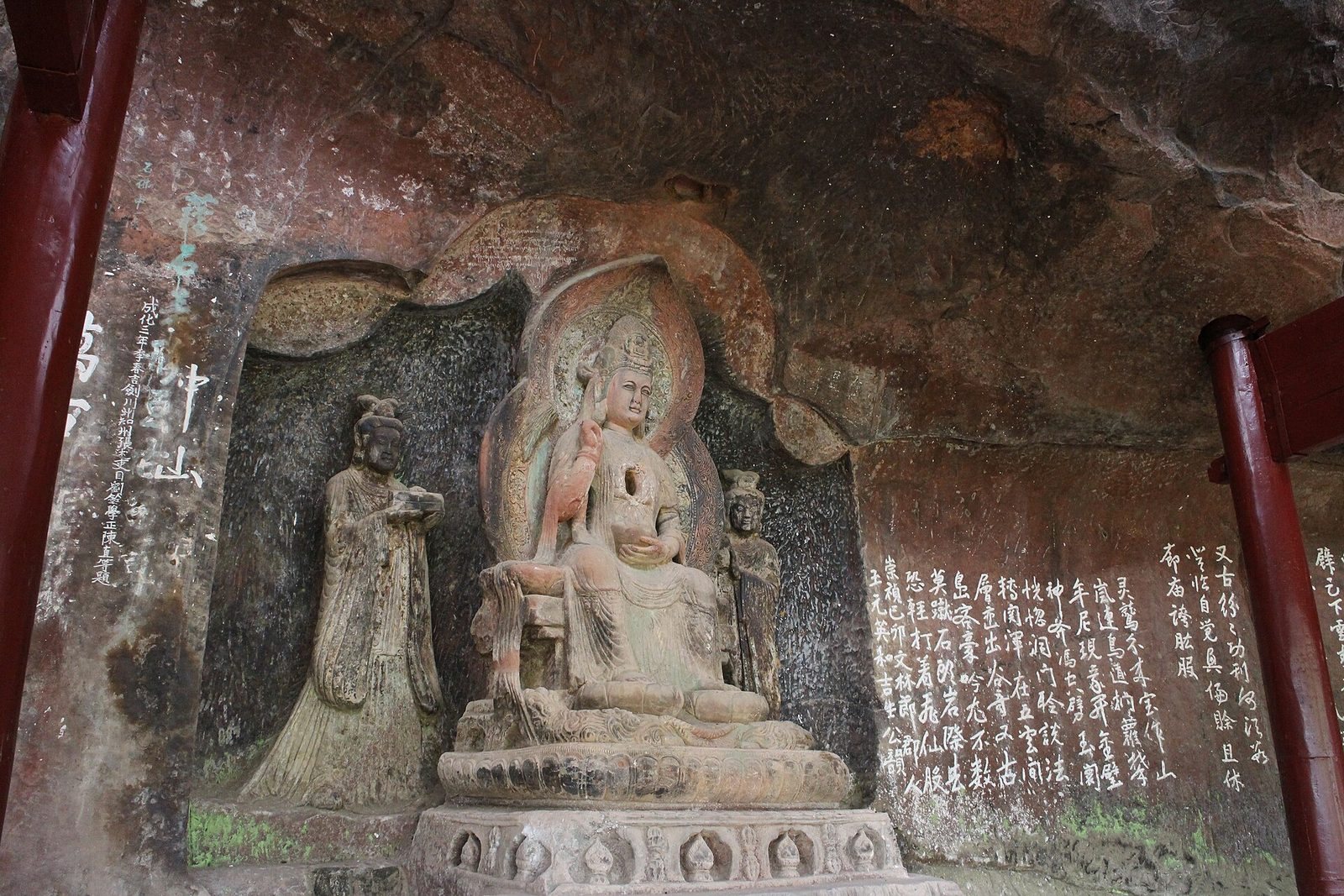
Records from the Yuan, Ming, and Qing dynasties show that people continued to know of the grottoes, although they attracted little attention. These records include writing by the Ming scholar Li Yuanyang and travel accounts by Xu Xiake.
Art historian Li Lin-can examined the caves in 1939 and sent a report to Shen Congwen the following year. His conclusion that the carvings dated to Nanzhao helped bring the site to scholarly attention. In 1950, Song Boyin joined the Central Southwest Visiting Mission’s first ethnic survey in Yunnan; his account of the Jianchuan grottoes was published in 1957.
In 1961, the State Council placed the Shizhong Temple, Lion Pass, and Shadeng areas among China’s first group of nationally protected major historical and cultural sites. A joint team from Peking University’s archaeology department and Yunnan University’s history department conducted a comprehensive investigation in 1999 and published a survey report. A local tradition claims that the grottoes were destroyed in the 1960s, but the claim remains doubtful and unresolved.
Remains
Caves and sculpture
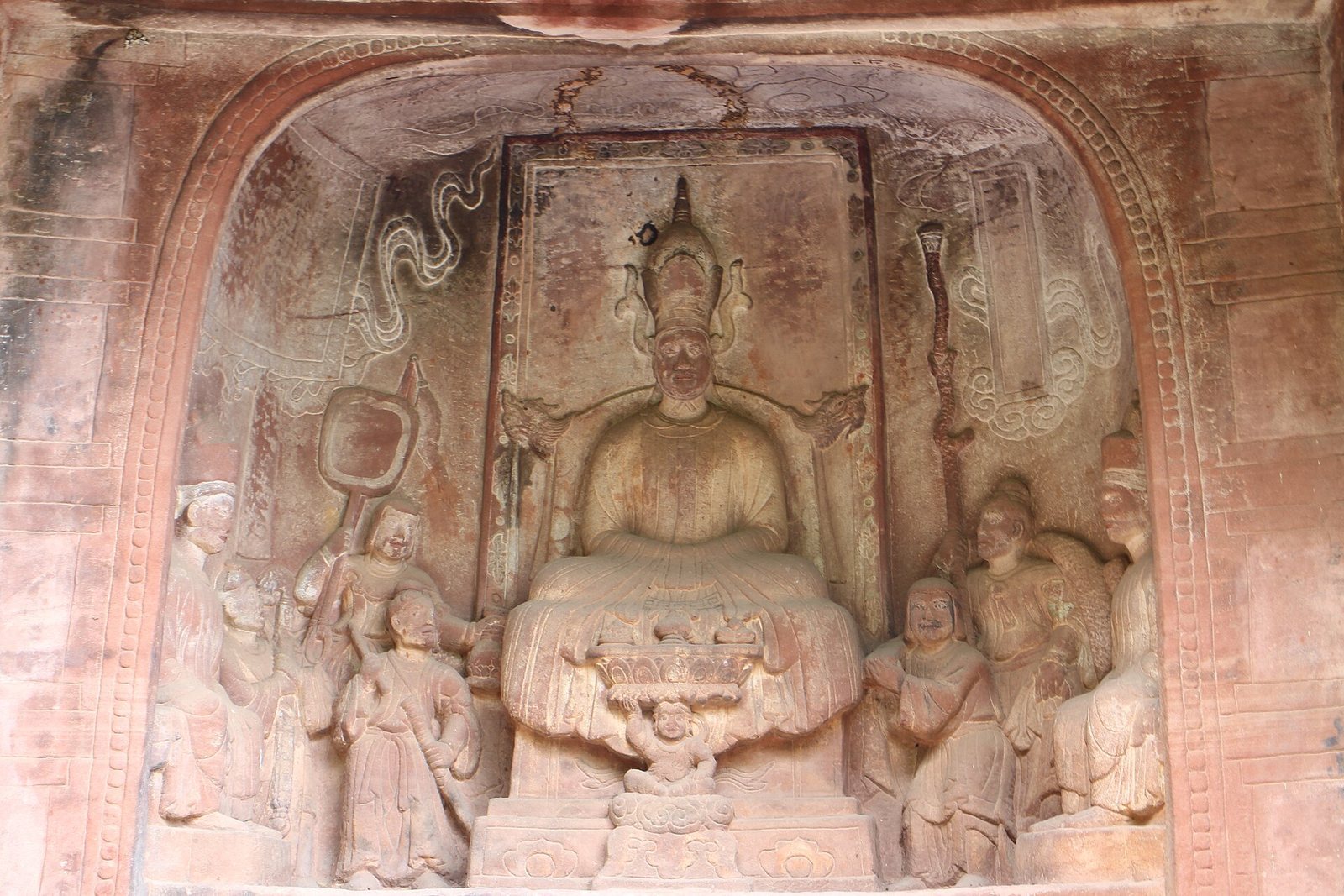
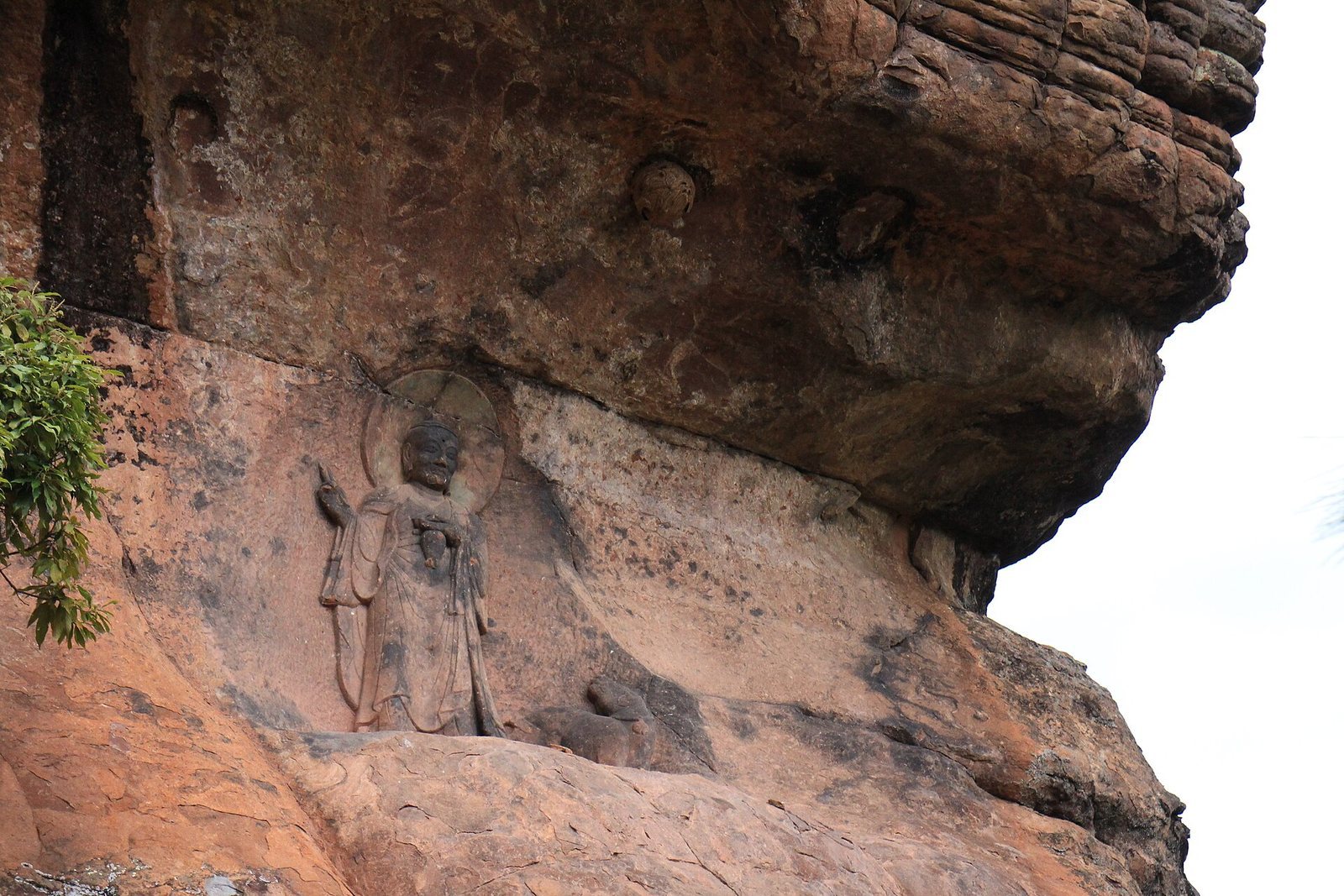
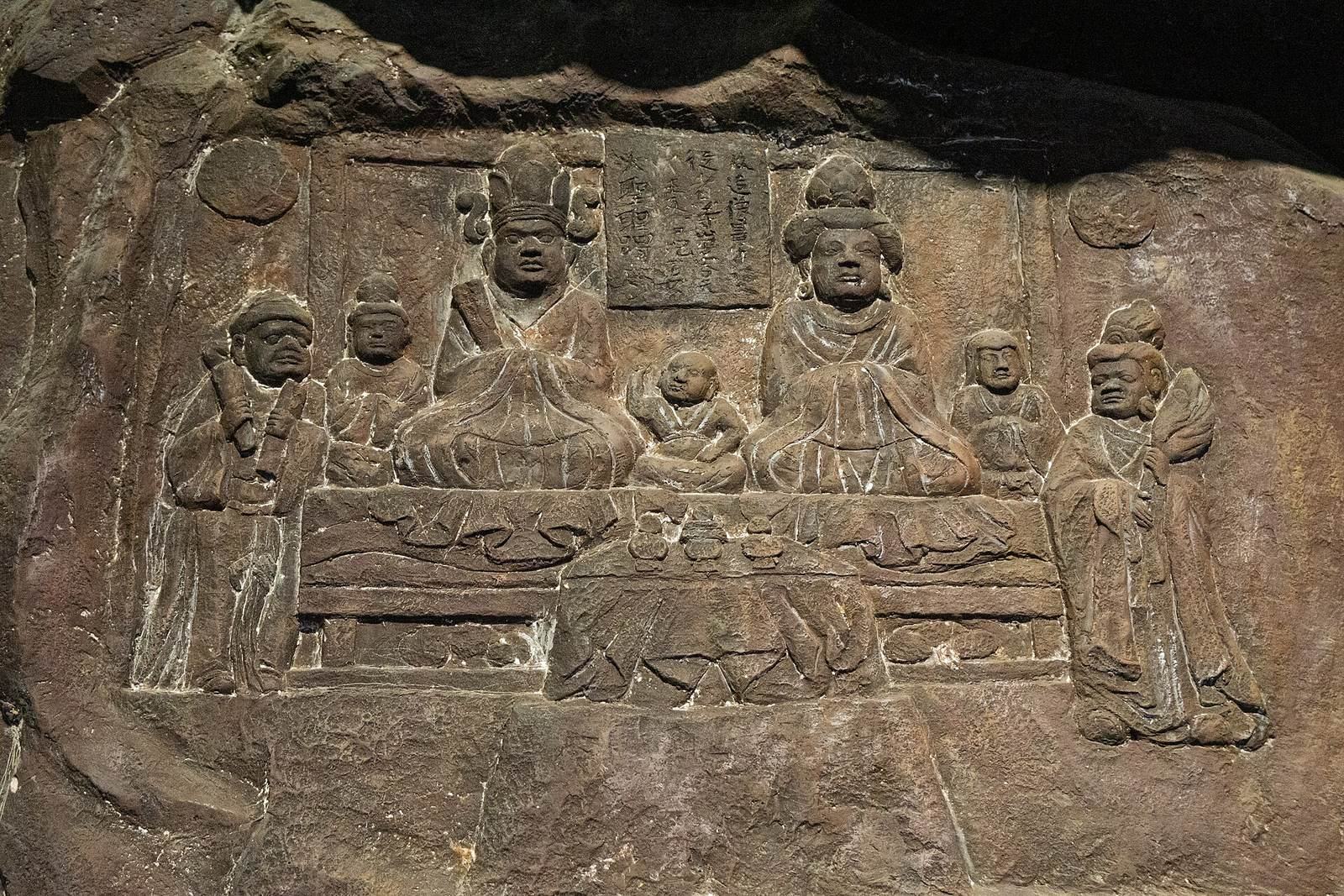
The grottoes extend across the Shizhong Temple, Lion Pass, and Shadeng areas on Shizhong Mountain. A large rock on the mountain resembles a bell and gives the mountain its name. The site contains 17 caves and 233 sculptures. Their subjects include Buddhas, bodhisattvas (figures who seek enlightenment for the benefit of others), heavenly kings (Buddhist guardians), and Wisdom Kings (wrathful Buddhist deities), as well as monks, lay worshippers, donors, Nanzhao rulers, their relatives and attendants, queens, court women, officials, and military figures.
The sculptures combine features associated with the Tang and Song, successive Chinese dynasties, with local characteristics linked to Bai artistic heritage. Many were made using the round-knife technique, a carving method using a rounded blade. Their figures have lively proportions and flowing, rounded lines, arranged in carefully tiered compositions. The sculptures and carving methods also share notable similarities with grottoes in Sichuan and Chongqing.
Carved architecture and decoration
Several caves have niches shaped like buildings, with details including Sumeru pedestals, bases modeled on the cosmic mountain of Buddhist and Hindu traditions, hall-like forms, and carved curtains. These features provide evidence for timber architecture during the Nanzhao and Dali periods. A group of three bracket sets, assemblies supporting projecting roofs, is interpreted as representing a cave façade from which two columns were omitted, rather than three sets placed between columns. One roof has been tentatively reconstructed as a nine-ridge hip-and-gable form, with sloping sides and gables at its ends. Carved ornaments include scrolling plants, honeysuckle, pearl patterns, lotus petals, flaming jewels, and the vajra, a ritual implement used in Buddhist practice. Stone columns with carved bands in the Hall of Wisdom Kings have a parallel in mid-Tang murals at Dunhuang. In a niche illustrating the Vimalakirti Sutra, a column bears a bound-lotus design around its middle and an inverted lotus at its top.
Sculpted scenes
The central niche in one cave is often associated with the episode in which Manjusri, a bodhisattva linked with wisdom, questions Vimalakirti, a lay Buddhist, about illness. Another interpretation identifies it with either the Inconceivable chapter or the Contemplation of Sentient Beings chapter, both later sections of the scripture. A separate niche carved during the Dali period should be understood as depicting life in that period rather than in Nanzhao. A pair of figures is identified as Mahakala, a wrathful Buddhist deity, and Vaisravana, a guardian king, rather than Dhritarashtra and Virudhaka, two other heavenly kings.
Cliff paintings
Four fragmentary murals remain on an exposed cliff face. Painted in the late Nanzhao period, they depict bodhisattvas whose faces are now indistinct. They are the only surviving original paintings from the Nanzhao period and share stylistic features with contemporary murals at Dunhuang.
Cave inscription
An ink inscription in Shizhong Temple Cave 8 names a visitor from Binchuan and places the visit in the seventh year of a Dali reign era. The era name is unidentified, so the date cannot be matched to a Gregorian year.