Great St Bernard Hospice: An Alpine Refuge for Travellers
Site at a Glance
- Popularity
- Very High
- Country
- Switzerland
- Primary era
- Medieval
- Eras represented
- Medieval, Modern
- Civilizations
- French, Holy Roman Empire, Swiss
- Site type
- Religious
- Remains
- Monastery
On this page16 sections
History
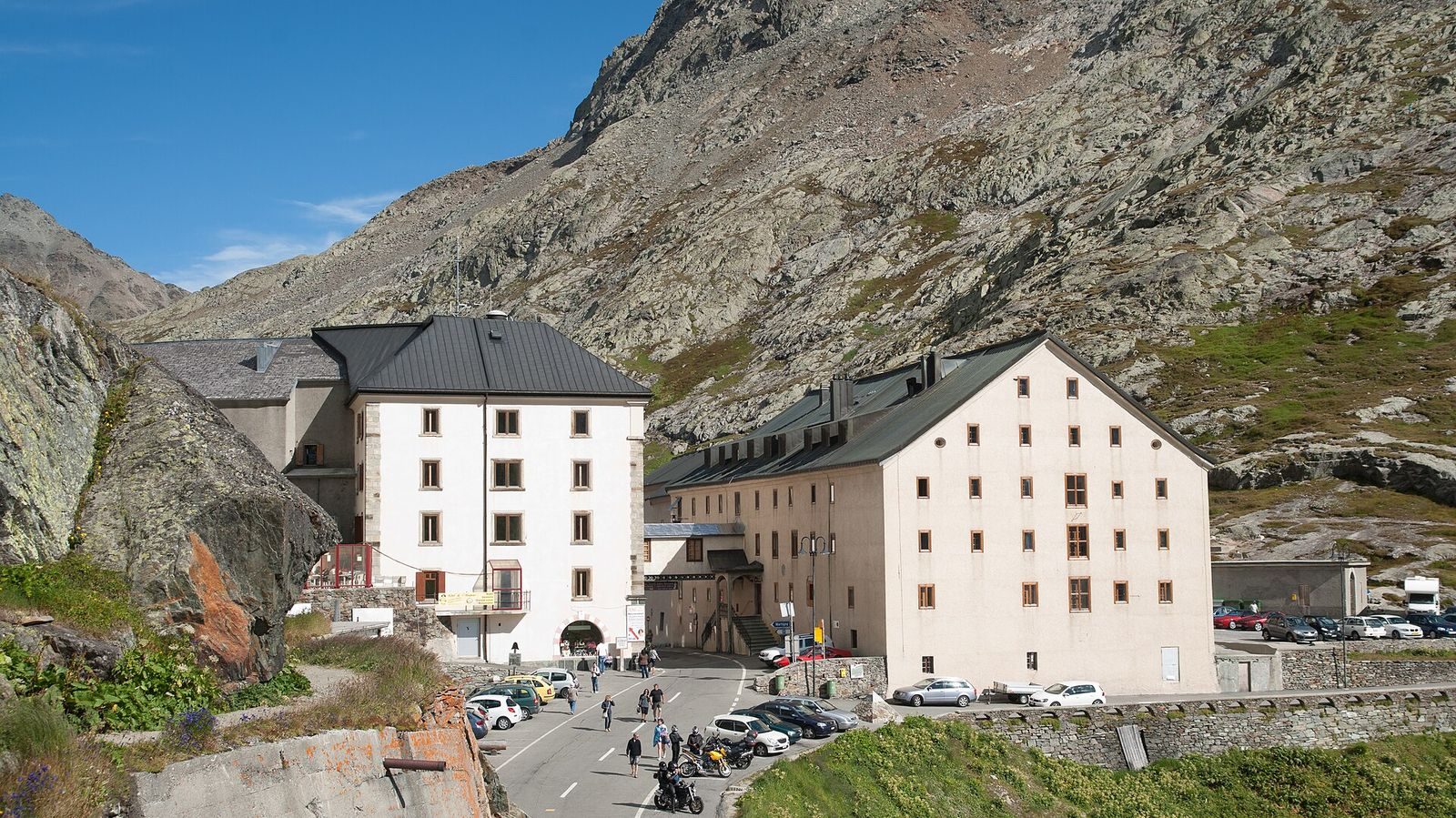
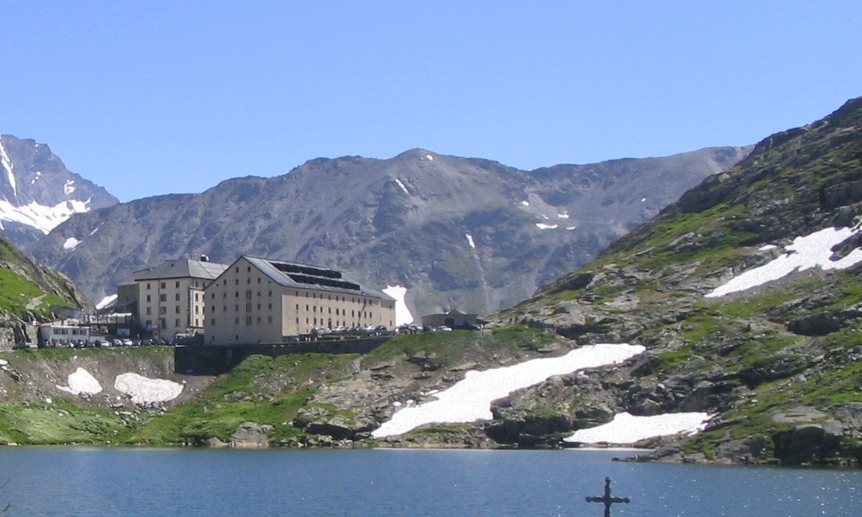
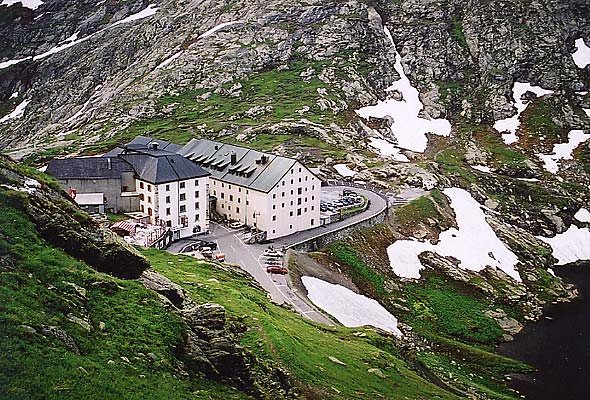
The Great St Bernard Hospice is a religious hostel and refuge at the Great St Bernard Pass in Switzerland’s canton of Valais. Tradition dates its foundation to around 1050 and credits Bernard of Aosta, also known as Bernard of Menthon, and Queen Ermengarde of Burgundy. The hospice sheltered travellers crossing the Pennine Alps, a route of importance since antiquity, and was intended to protect them from bandits and attacks.
The pass before the hospice
People worshipped deities at the pass during the Iron Age. A place of offering to Pan preceded a Roman temple to Jupiter. The Romans improved the road, and coins from their period reflect the crossing’s use. The pass was once called Mons Jovis, meaning “Mount Jupiter,” and later Mont-Joux; the hospice also became known as Montjoux.
A separate religious institution stood at Bourg-Saint-Pierre, below the pass, by the ninth century. First recorded around 812–820, it was a hospice or monastery dedicated to Saint Peter. Groups broadly called Saracens in medieval European usage destroyed it during raids in the mid-tenth century, probably around 940. This earlier institution was distinct from the hospice later founded at the pass.
Foundation and medieval growth
The hospice’s purpose was to offer protection and shelter along the mountain route. It belonged to the Augustinian Canons Regular, clergy who lived in a community under the Rule of Saint Augustine, and fell under the authority of the Bishop of Sion. The bishop also held the offices of prefect and count of Valais. Hospitality was offered without regard to a traveller’s social position or reason for crossing, extending even to smugglers and customs officers.
The hospice church, dedicated to Saint Nicholas, is first mentioned in 1125. By the middle of the twelfth century, clergy led by a provost, the head of the community, had taken over from the laypeople thought to have managed the institution in its earliest years. Bernard was declared a saint in 1123 by the Bishop of Novara, and in 1149 the hospice’s dedication was extended to include him.
The canons’ properties ranged from England to Sicily. The congregation counted 78 hospices, houses, priories, and churches in 1177, and 86 in 1286. Many properties came as gifts from nobles seeking to strengthen their influence on both sides of the Alps. Among the prominent benefactors were the Holy Roman emperors Frederick I Barbarossa and Henry VI, Henry I of England, and the counts and dukes of Savoy.
A general chapter, an assembly of members and representatives responsible for the congregation’s governance, appears in the record by the mid-twelfth century. Its representatives supervised the properties and sought to maintain their religious and practical unity. The congregation repeatedly faced disciplinary and financial difficulties. Efforts to address them are associated with provosts Jean d’Arces and Juan de Cervantes, both of whom later became cardinals.
Contested authority
Savoy’s influence over the appointment of the congregation’s provost grew as the dynasty received substantial property around Lake Geneva. In 1451 Pope Nicholas V granted the House of Savoy a role in appointing senior clergy, in return for Felix V of Savoy giving up his position as antipope. Communities in Valais also sought authority over the hospice because of its political importance.
During the Burgundian Wars of 1474–1477, the Swiss Confederates fought Burgundy and its allies. Valais supported the Confederates, while Savoy backed Burgundy. The Confederates’ victory secured Valais authority over the hospice. In 1752 Pope Benedict XIV divided the provostship between Valais and Savoy. The Savoyard portion was secularized and assigned to the Order of Saints Maurice and Lazarus, a chivalric order associated with the House of Savoy. Since 1762, the provost leading the congregation’s confederation has held the right to use pontifical insignia, the vestments and symbols associated with a bishop’s office.
Dogs, Napoleon, and changing use
The St Bernard breed developed at the hospice, probably from dogs donated by families in Valais during the 1660s and 1670s. Initially used for guarding and defence, the dogs later carried or pulled loads and searched for travellers who were lost or buried in snow. Their strength in deep snow and ability to follow human scent made them useful in rescues, which substantially reduced deaths on the pass. A note from 1708 describes a roasting spit made by canon Camos around 1700 and turned by a dog; the breed’s use at the hospice is first recorded in 1709.
In May 1800 Napoleon Bonaparte crossed the pass with 46,000 men, who received the hospice’s customary hospitality. Napoleon and his officers admired the dogs, helping to popularize the breed. Barry I was then a puppy. General Louis-Alexandre Berthier wanted to take him, but dog keeper Julius Genoud refused, believing the young dog could become a rescue animal. Barry was said to have saved more than forty people, though he could not save Genoud when an avalanche caught him.
In 1801 Napoleon entrusted the canons with a hospice on the Simplon Pass, where the necessary facilities were completed between 1831 and 1835. After the Sonderbund War, a Swiss civil conflict fought in 1847, Valais secularized much of the congregation’s property in 1848 and provided compensation that was largely symbolic. The pass road was completed in 1905, bringing more visitors. Hospitality remained free until 1940, when its abuse had brought the religious community close to financial ruin; guests were then charged. The last recorded rescue by a hospice dog took place in 1955. In 2004 the canons’ breeding operation moved to the Fondation Barry in Martigny, which maintains the breed and continues the tradition of bringing dogs to the hospice in summer.
The hospice also entered nineteenth-century literature and public life. Annette von Droste-Hülshoff published a dramatic verse work about it in 1838, although she had never visited. Charles Dickens stayed there in 1846 and later used it as the setting for a chapter of Little Dorrit (1857). In 1878 Crown Prince Friedrich III of Prussia, his wife Victoria, and their daughter Viktoria stayed at the hospice while travelling on foot. François-Nestor Adam entered as a novice in 1927, taught theology and philosophy, served as novice master from 1928 to 1932, and was provost from 1939 to 1952. Maurice Tornay made his profession as an Augustinian canon there in 1935. The hospice is protected as a cultural property of national importance in Switzerland.
Remains
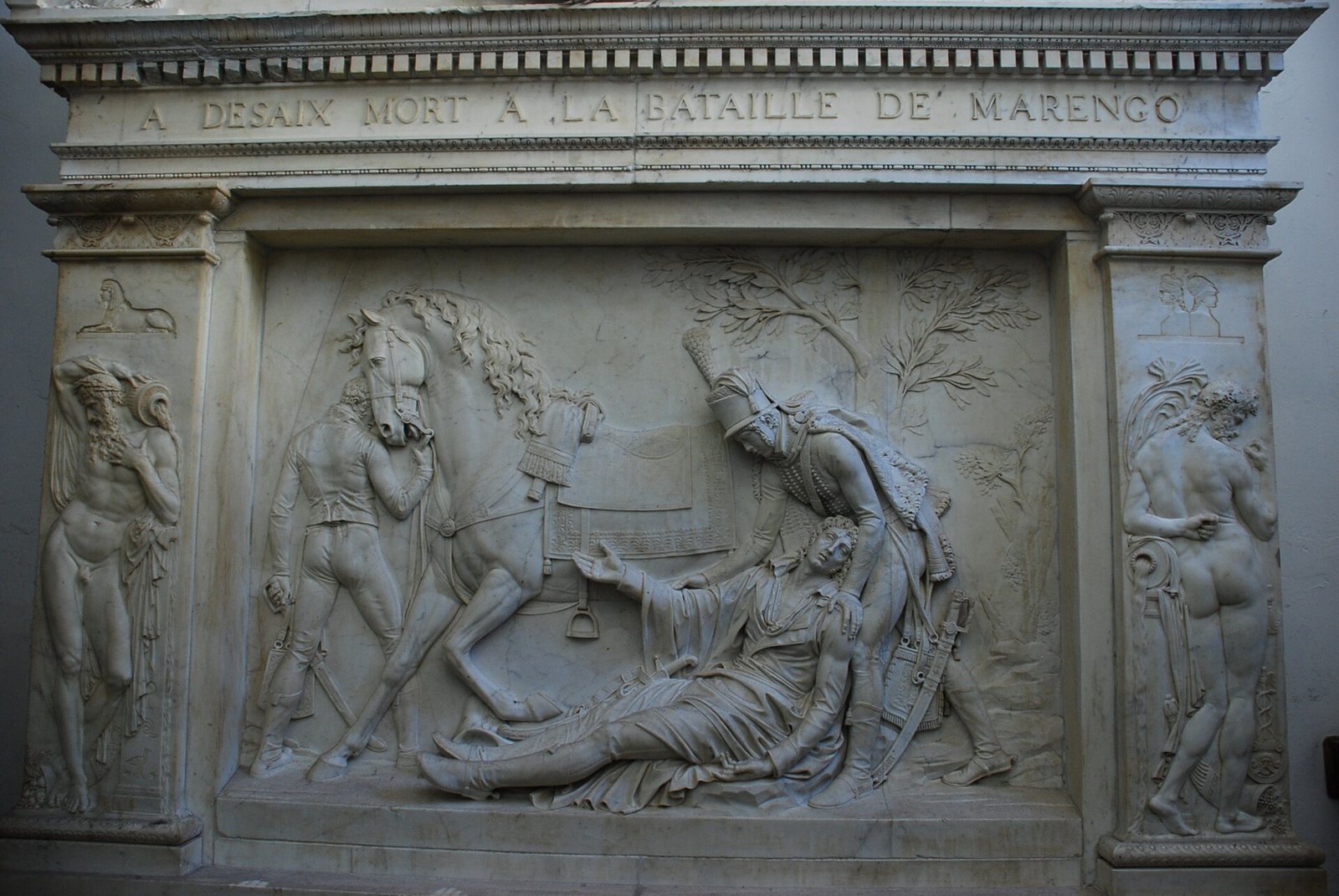
The hospice stands at about 2,470 metres above sea level in the Pennine Alps, in the municipality of Bourg-Saint-Pierre. The Italian border lies a few hundred metres to the south. Its physical record includes the religious complex, traces of an Alpine garden, an ossuary, and a monument commemorating General Louis Desaix.
The hospice complex
Core buildings
The complex comprised a church, a dwelling, and a hospital. Together, these buildings served the religious community and the travellers who needed shelter or care at the pass.
Main building
In 1823 the hospice building was raised by one storey under the direction of Lausanne architect Henri Perregaux. This alteration changed the building’s height while preserving its use as part of the hospice.
Landscape and archaeological features
Plan de Jupiter
The location of the Roman temple to Jupiter is still called Plan de Jupiter. Finds of Roman-period coins belong to the archaeological evidence for activity at the pass.
Alpine garden
The canons maintained an Alpine botanical garden known as the Jardins du Valais. Its last traces lie north of the hospice, near small lakes at about 2,610 metres above sea level.
Burial and commemoration
Ossuary
The hospice ossuary, also called the Morgue, was established in 1476 and walled up in 1950.
Desaix monument
General Louis Desaix’s body lies anonymously in the chapel beneath an altar dedicated to Saint Faustina. Napoleon ordered a monumental tomb for Desaix in June 1800, although the general had not crossed the Alps with the reserve army. His body remained in Milan until its burial at the hospice in 1805, attended by Berthier as the emperor’s representative. The commemorative monument was installed in a chapel in 1806 and moved in 1829. The sculpted tomb later became a cenotaph, a memorial for someone buried elsewhere. In 1979 it was placed in the stairway between the ground floor and the library above, and a bust by Angelo Pizzi crowns it.
Timber routes
Wood for heating and building came from forests in Val Ferret. In 1189 Count Thomas of Savoy offered timber for the hospice. It was taken by horse to Le Clou, dried there, and carried over the Fenêtre de Ferret toward the pass. From 1736, timber travelled instead across the Col du Bastillon and the Col des Chevaux without leaving Swiss territory. The path between the two passes became known as the Chemin des Chevaux, or Horses’ Path. The hospice retained forest rights in Val Ferret until 1890.