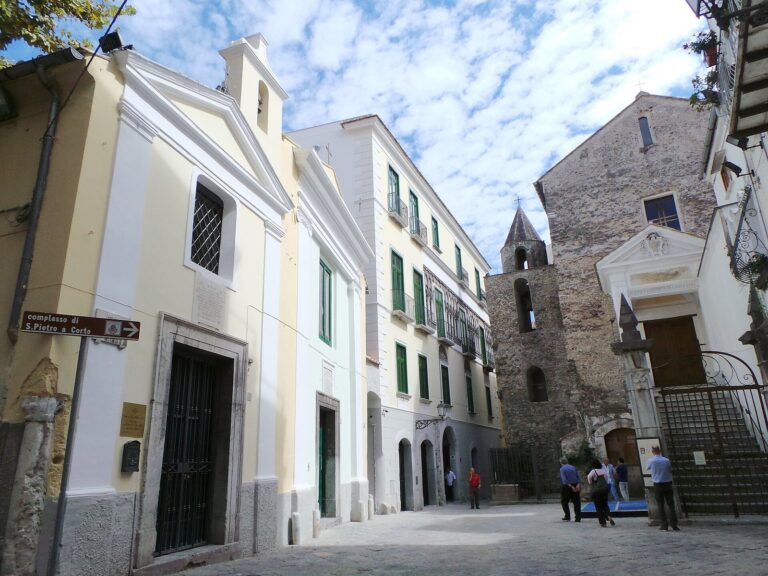
Minerva’s Garden: A Medieval Medicinal Teaching Garden in Salerno
Site at a Glance
- Popularity
- High
- Country
- Italy
- Primary era
- Early Modern
- Eras represented
- Early Modern, Modern
- Civilizations
- Habsburg, Habsburg Spain, Italian, Kingdom of Naples, Spanish
- Site type
- Civic
- Remains
- Park
On this page6 sections
History
Minerva’s Garden is a historic medicinal garden in the old part of Salerno, Italy. In the early 14th century, Matteo Silvatico established a garden of simples there, a teaching plot where medicinal plants were identified and studied for use in remedies based on a single substance. It is regarded as a forerunner of later European botanical gardens. The garden takes its name from Minerva, the Roman goddess associated with wisdom and the arts.
Medieval garden and medical teaching
The Silvatico family owned a garden on the site from the 12th century. In the Middle Ages, the surrounding area was known as Plaium montis. Silvatico used the garden to teach students of the Salernitan Medical School, a medieval centre of medical instruction, showing them plants and explaining their names and qualities. The plants also supplied ingredients for therapeutic remedies.
Ownership and restoration
After the Second World War, the garden’s last owner, Professor Giovanni Capasso, donated the property to the charitable institution Asilo di Mendicità. The gift followed efforts by the institution’s chairman, lawyer Gaetano Nunziante. A plan for a botanical garden dedicated to Silvatico was presented in November 1991, and Salerno’s municipal administration carried it out in 2000 through the Urban programme. Restoration, completed in 2001, addressed long neglect by removing unsuitable additions, consolidating structures and recovering faded design details. Garden archaeology also helped clarify earlier layers, planting-bed arrangements and the water system. The renewed planting included rare species and plants mentioned in the Regimen Sanitatis Salernitanum, a medieval health guide associated with Salerno, and the Opus Pandectarum Medicinae, a reference work on medicinal substances.
In 2016, Paola Lanzara, formerly director of the Rome Botanical Garden, donated about 1,000 books to establish the garden’s library collection. A further restoration and expansion in 2023 added the Avallone Garden as a terrace and included work on Palazzo Capasso, the pergola stairway, vertical surfaces and walking surfaces.
Remains
Terraces and historic structures
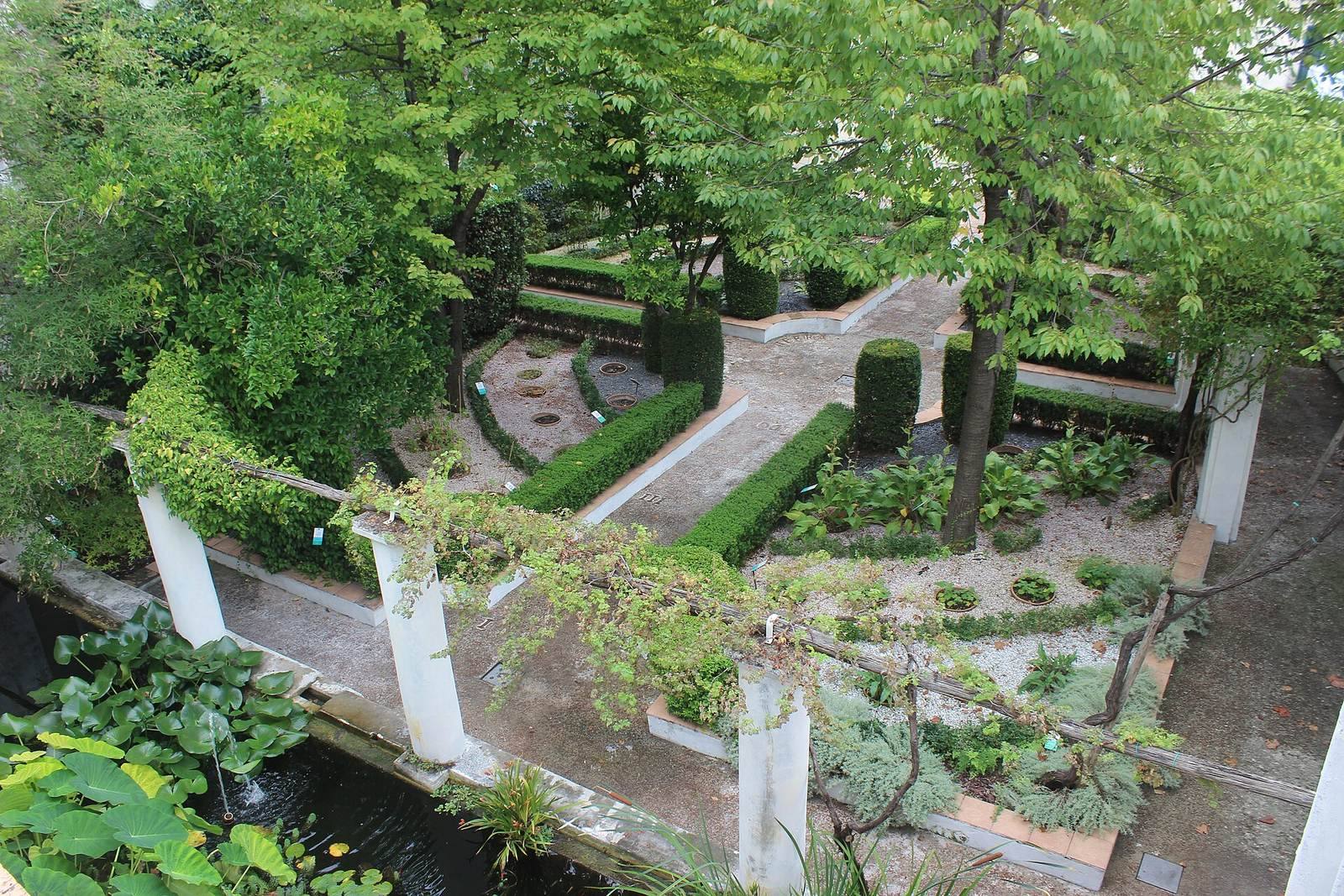
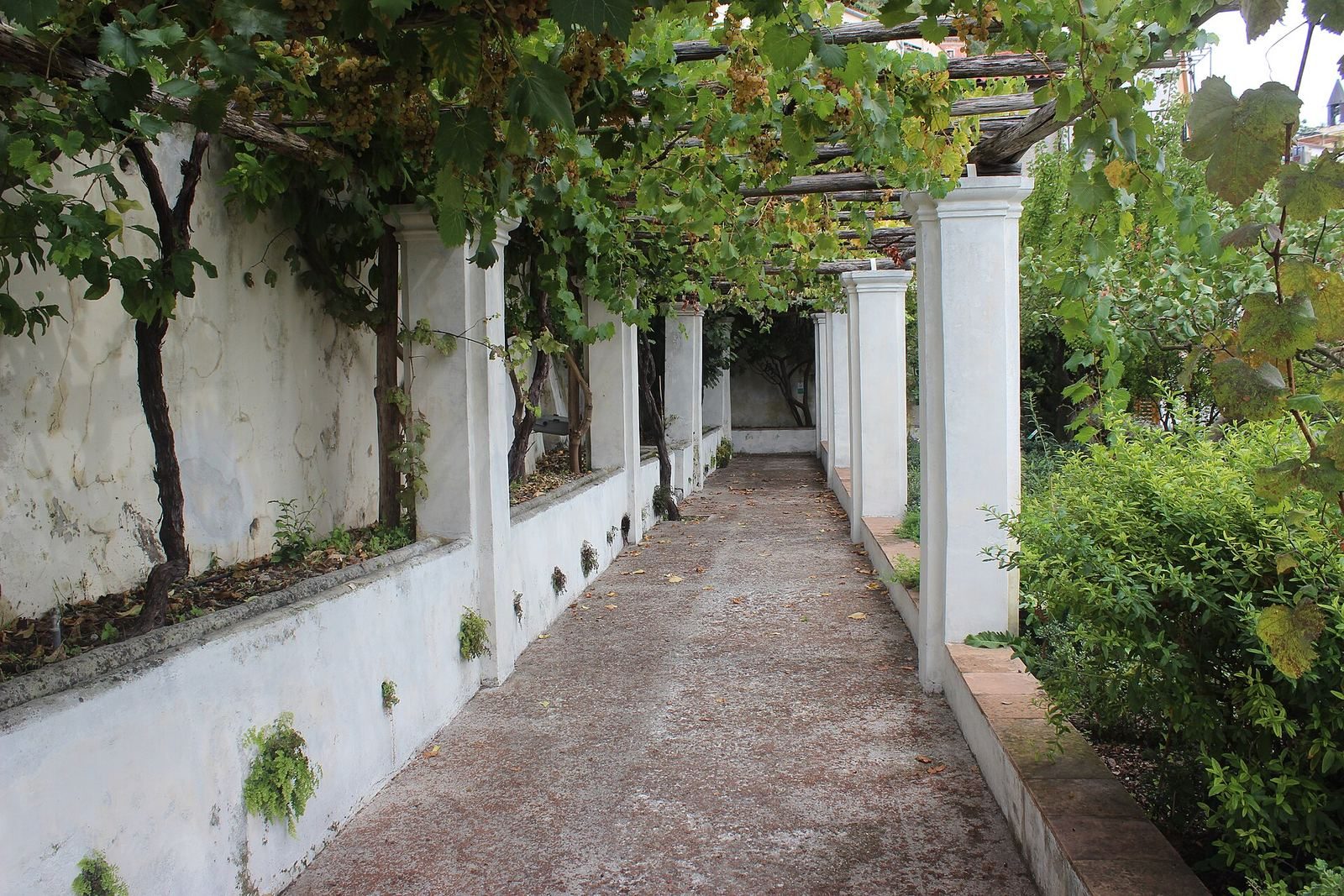
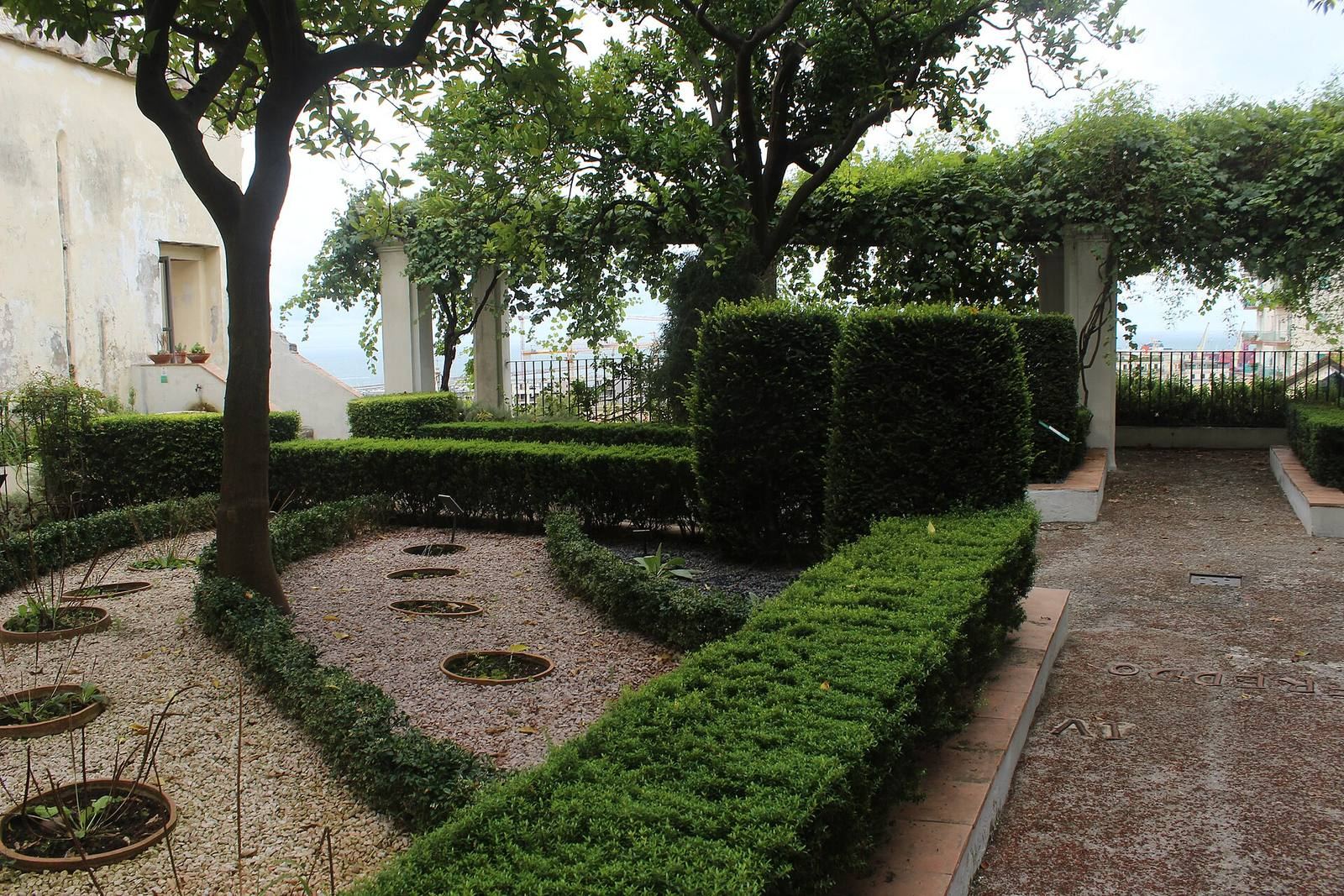
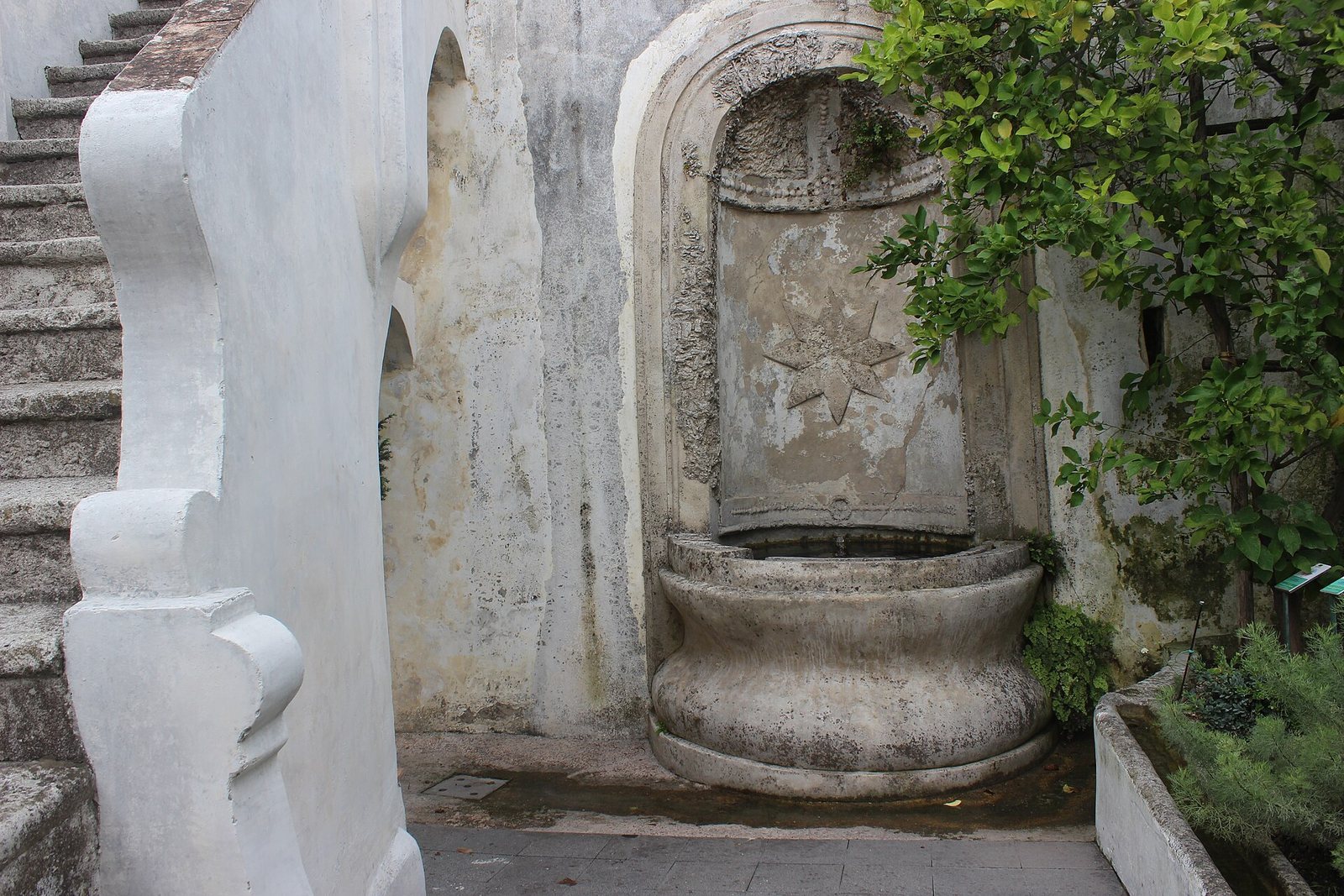
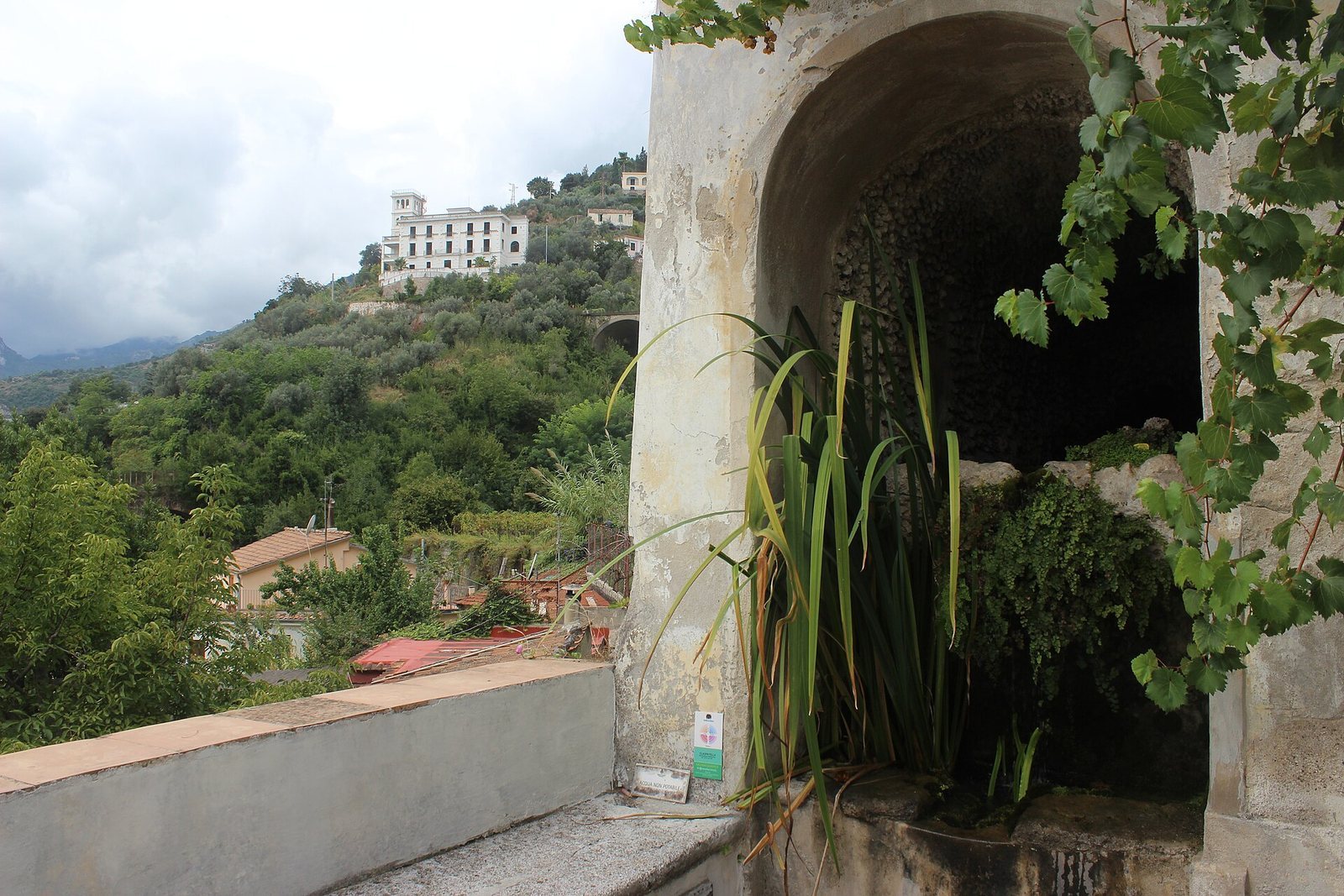
Minerva’s Garden forms part of a line of walled terraces extending from the Villa Comunale, near the Fusandola stream, toward Arechi Castle. It lies about halfway along this axis, which passes around the stream. The garden occupies several levels linked by a long stairway built over the ancient city walls. Cross-shaped pillars carry a wooden pergola above the stairs, and the elevated route offers views of the sea, the old town and the surrounding hills. Features from the 17th and 18th centuries survive, including elements from the garden’s last flourishing period; the site is considered an example of an 18th-century garden in Salerno.
Water and planting
Channels, basins and fountains distribute water through the terraces. Abundant water helped keep the plots cultivated over many centuries, and the system combines practical use with decorative effect, drawing on ancient and Arabic traditions. The garden’s exposure and limited northerly winds create conditions suited to plants that require warmth and humidity. Its arrangement follows botanical and landscape themes rather than a conventional botanical-garden plan. The largest terrace presents an ancient classification of plants, while other beds follow landscape designs. Labels relate each species to an ideal position in a diagram of the elements arranged in concentric levels. More than 300 species grow in the garden, including the legendary mandrake, once believed to possess extraordinary powers. Herbaceous plants, which have no persistent woody stems, form most of the collection and include annuals, biennials and perennials, plants completing their life cycles in one growing season, two growing seasons or more than two years, respectively.