Dobrilovina Monastery: A Serbian Orthodox Monastery in Montenegro
Site at a Glance
- Popularity
- Medium
- Country
- Montenegro
- Primary era
- Early Modern
- Eras represented
- Early Modern, Modern
- Civilizations
- Ottoman
- Site type
- Religious
- Remains
- Monastery
On this page11 sections
History
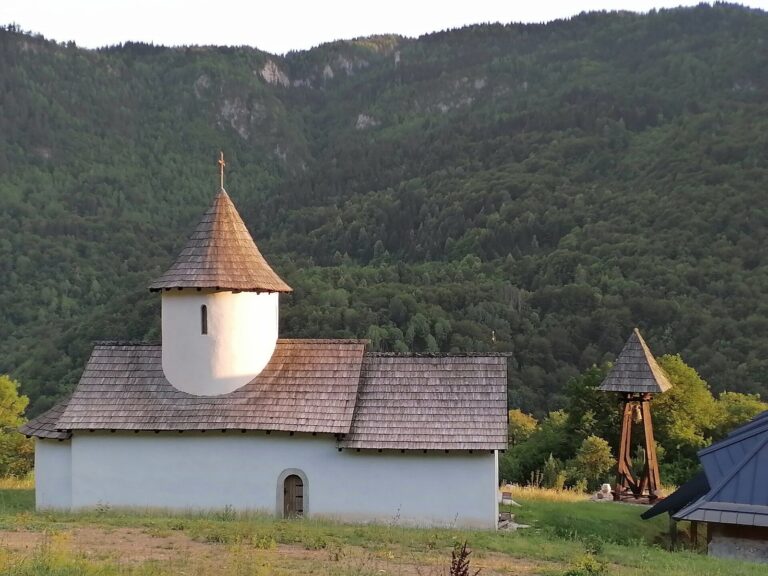
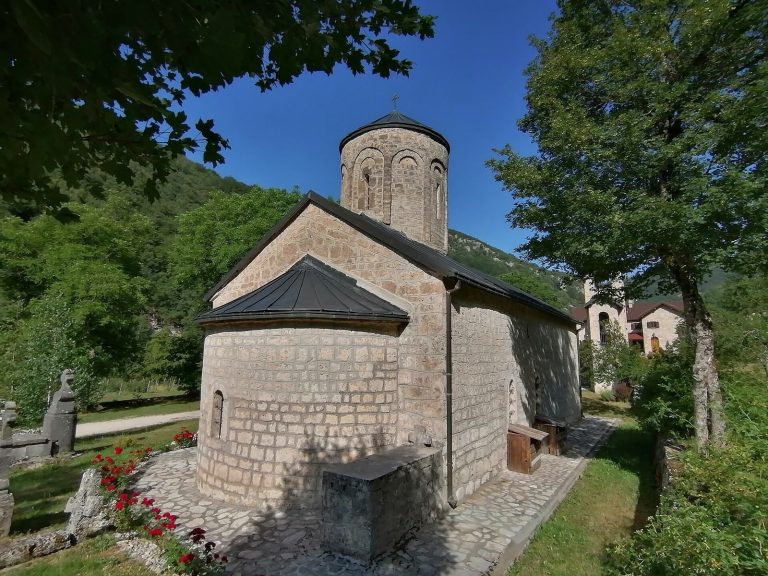
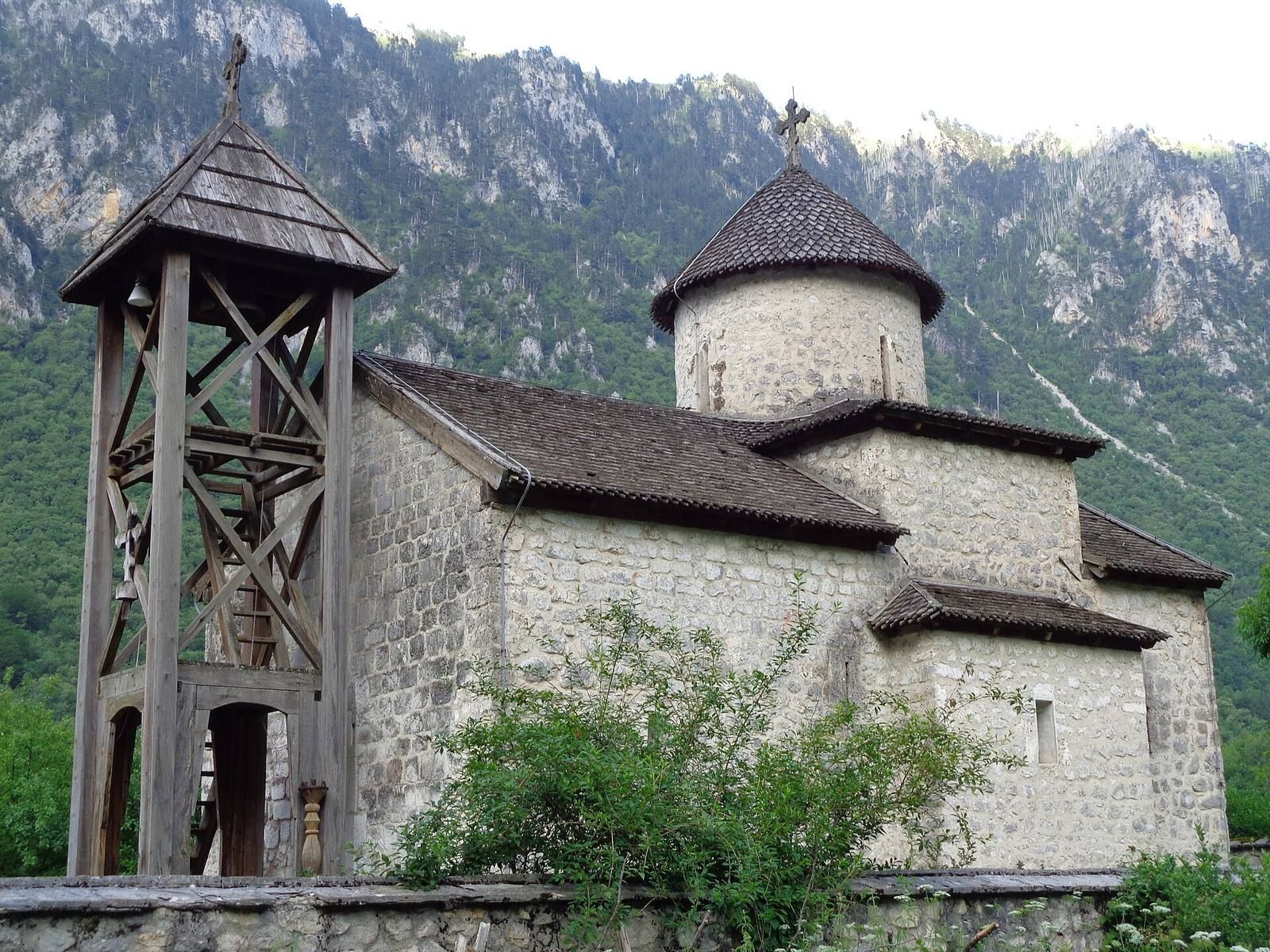
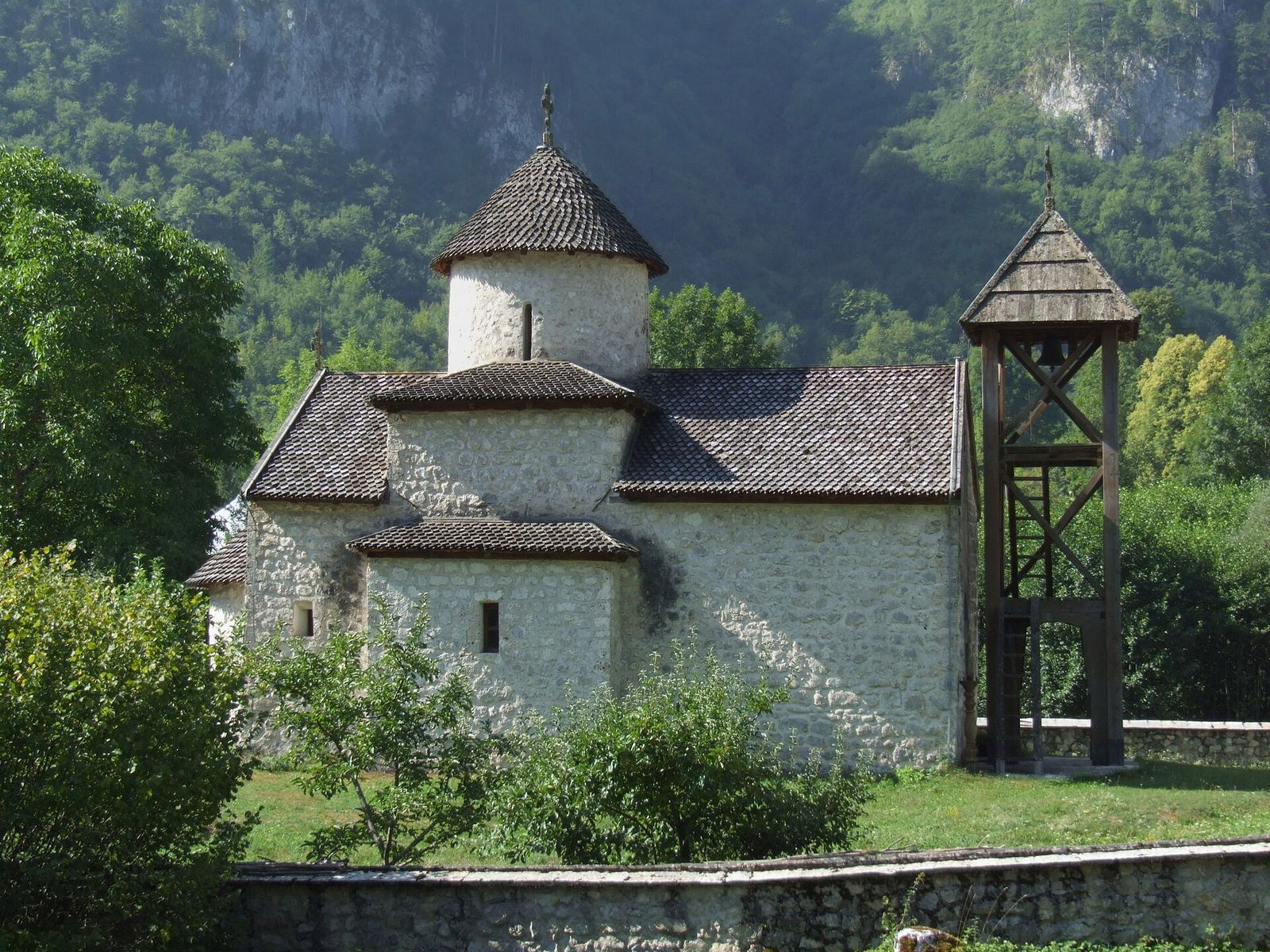
Dobrilovina Monastery is a Serbian Orthodox monastery in Donja Dobrilovina, near Mojkovac in northern Montenegro. Its church, built in the Raška architectural tradition, was completed in 1609, although the monastery’s founding date is unknown.
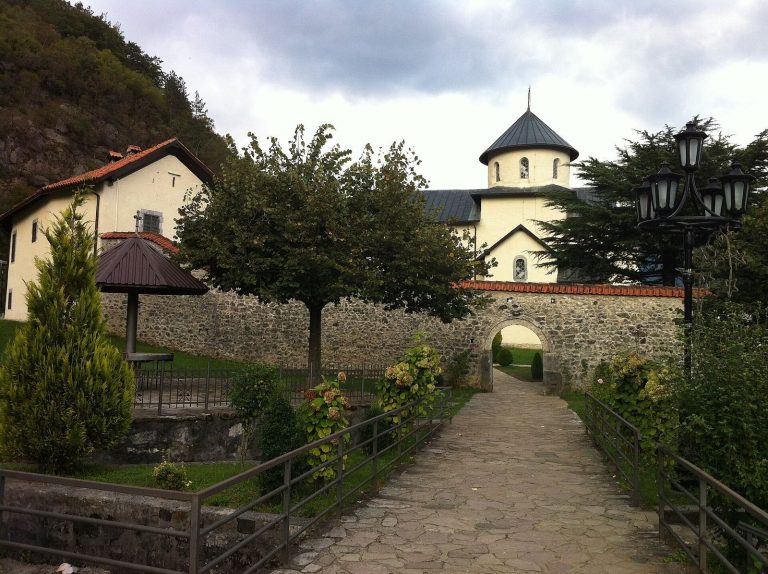
The settlement appears as Dobrihnina, later Dobrilovina, in a 1253 charter issued by the Serbian king Stefan Uroš I and in a later charter concerning the Lim area. These references relate to the village, not to the monastery’s foundation. Tradition places an earlier church here in the medieval Nemanjić period, names the Serbian prince Vukan Nemanjić as its founder, and compares its size with Morača Monastery. Neither the founder attribution nor the earlier church’s scale is established as historical fact. Dobrilovina is also called Little Morača because of its resemblance to Morača, a Serbian Orthodox monastery dating to 1252.
Rebuilding and monastic life, 1590s–18th century
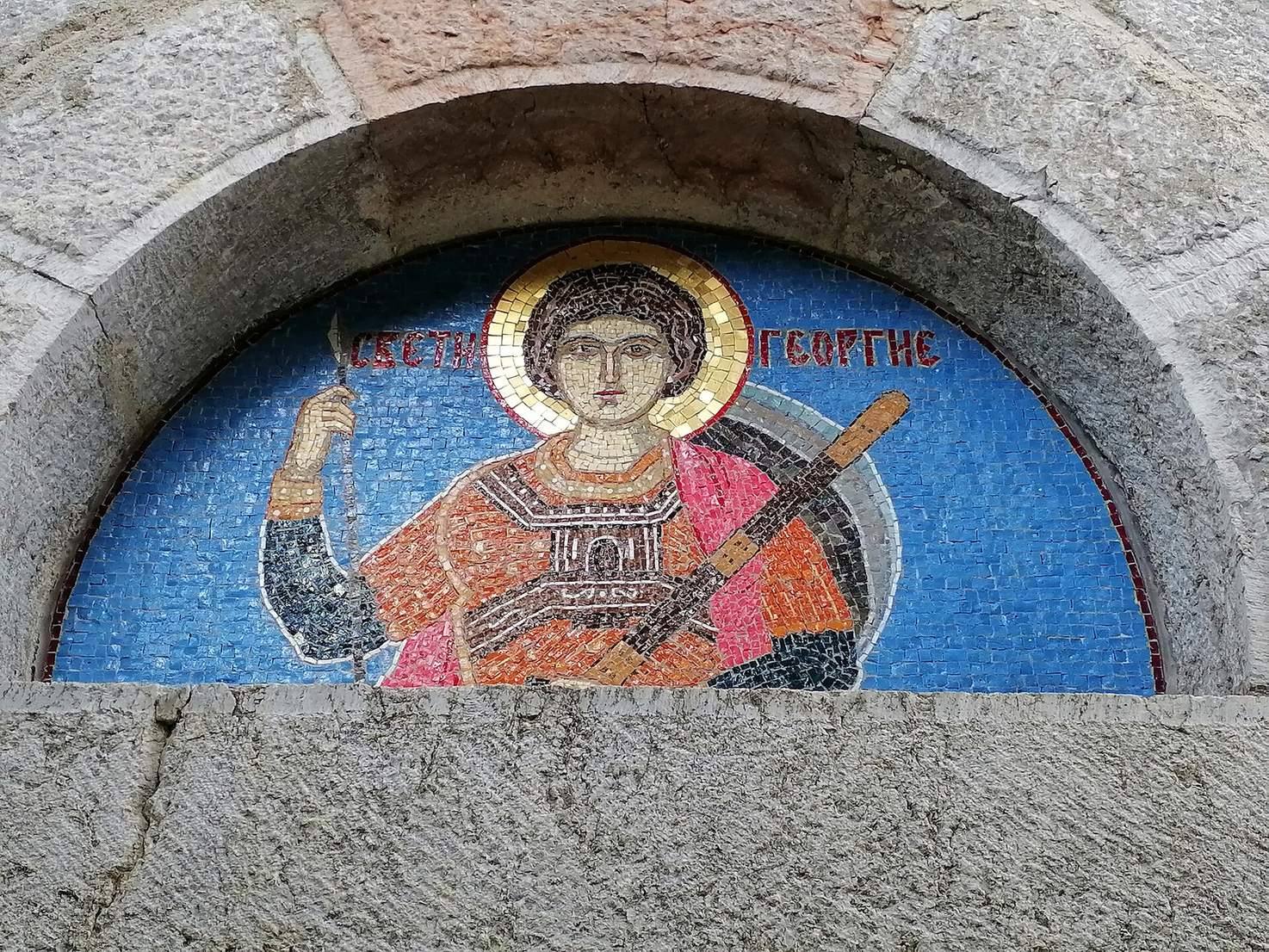
In the early 1590s, Ottoman authorities allowed local people to repair or rebuild a ruined church at Dobrilovina. The church was consecrated in 1594, when Abbot Janićije, head of the monastic community, and Zarija, its spiritual guide, were named. The church dedicated to Saint George was completed in 1609 as an endowment by Abbot Joakim and the brotherhood. An inscription above the nave doorway records the endowment. Duke Radič Milošević, a regional military and political leader, and local lords helped support the work. The frescoes were finished by 1613.
In 1602, a Theotokarion, a collection of hymns to the Virgin Mary, was written at the monastery, and the monk Joseph gave the church an Octoechos, a liturgical book arranged around eight musical modes. The Theotokarion later passed through Cetinje before being taken to Russia. A menaion, a book of services for fixed dates in the church calendar, was written at Dobrilovina in 1664. During the Cretan War, a conflict between Venice and the Ottoman Empire from 1645 to 1669, people in Potarje and neighboring territories rose against Ottoman rule. Tribes from both banks of the Tara had contributed to the church, which served Christians in Potarje and Zatarje as a shared place of worship.
In 1673, books, church utensils, and an ancient panagia, an Orthodox medallion depicting the Virgin Mary, were brought from Ravna Reka Monastery, also known as Majstorovina. These valuables were later taken to Nikoljac Monastery. After 1699, Dobrilovina received relics, sacred remains or objects associated with a saint, of Arsenije I, a medieval Serbian Orthodox archbishop, from Dovolja Monastery. The church was roofed and monastic life resumed in 1749.
Attacks and restoration, 1799–1878
Ottoman forces ravaged the monastery in 1799. The monks removed its valuables for safekeeping, but the objects were never returned, and the monastery was abandoned. It stood deserted by 1802 and remained so for 28 years. In 1871, S. Kosanović placed the church’s destruction around 1813, linking it to an episode in which Omer Akn and two companions terrorized and extorted the abbot.
In 1833, Makarije, a monk-priest from Vraćevšnica Monastery, restored Dobrilovina with help from Jovan Savić and the priest Vid. That same year, Turkish forces from Kolašin attacked and dispersed the brotherhood. Mihailo Dožić-Medenica was appointed monastery administrator in 1866 and restored the church during the 1860s with help from the Šaranci. He also established the first secret school in the Tara valley. Ottoman attacks temporarily forced the school to relocate. Dožić organized a regional insurgent battalion that fought from 1875 to 1878 during the Montenegrin–Ottoman War, a conflict between Montenegro and the Ottoman Empire.
In 1877, Ottoman forces emptied the monastery and damaged the church. After liberation from Ottoman rule in 1878, the region became part of the Principality of Montenegro, and the monastery entered the Zahumlje-Raška Diocese. Dobrilovina became a center of spiritual and political life, as well as aspirations for freedom in Potarje. It remains the only monastery in the historical tribal region of Šaranci.
Twentieth-century changes
The church was renovated in 1905. In 1931, the Zahumlje-Raška Diocese was abolished and incorporated into the Metropolitanate of Montenegro and the Littoral. During the 1941 bombing of Belgrade, ten manuscripts from Dobrilovina held at the National Library there were destroyed. Some of the monastery’s books are now kept at Nikoljac.
Dobrilovina was abandoned after the Second World War and restored in 1989. Its diocesan affiliation changed again in 2001, when it joined the newly established Eparchy of Budimlja and Nikšić. The monastery belongs to the Serbian Orthodox Church and is active.
Remains
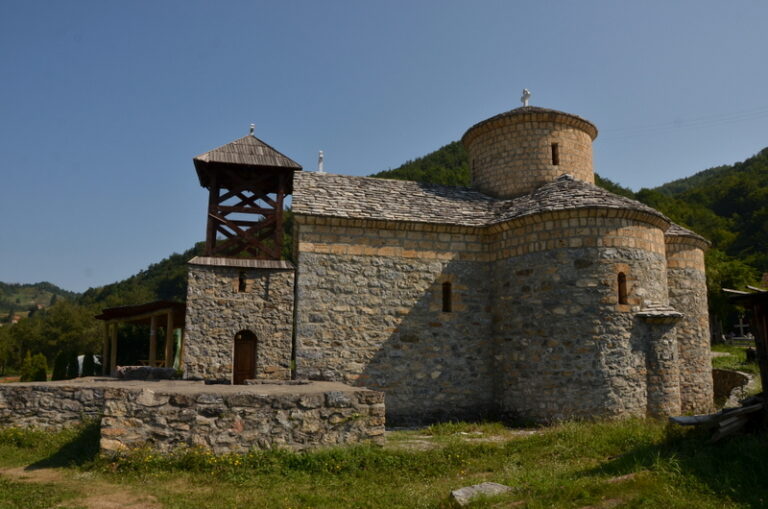
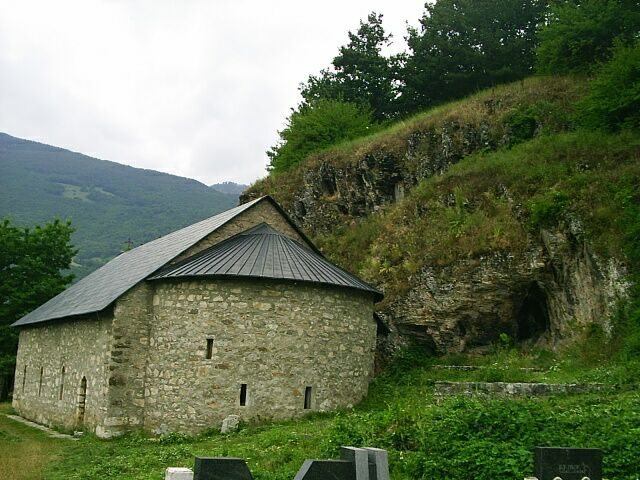
The monastery stands on the left bank of the Tara, at the beginning of the Tara River Canyon, in the region of Potarje and the historical tribal area of Šaranci, near the Crna Poda forest. Its church follows the Raška architectural tradition, and the complex also includes monastic buildings and a nearby cave used by the community.
Church
Plan and construction
The church has a single main space, ending in a rectangular sanctuary. Low side chapels project crosswise from the main space in the ground plan. Stone and wood are its stated building materials. Its spatial and architectural traits have been compared with churches at Uvac, Ovčar Banja, Pustinja, Majstorovina, and Tronoša.
Frescoes
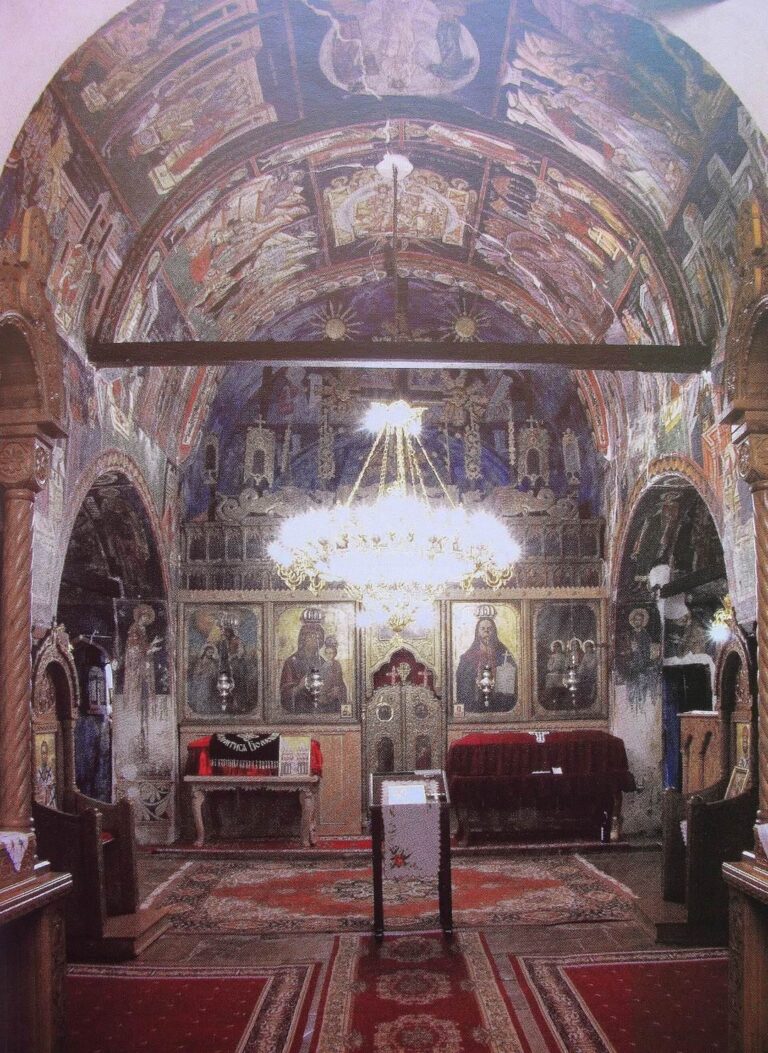
Frescoes survive in part. Shallow-relief vines and rosettes decorate the halos of the Evangelists on the curved supports beneath the dome. The same kinds of ornament surround the halo of the Pantokrator, a traditional image of Christ as ruler of all, on the dome’s inner cap.
Monastic buildings and nearby cave
Cell and quarters
A monastic cell was built in 1689. The monastery’s quarters were burned in 1877, and new quarters were built during the restoration of 1989.
Cave
A nearby cave served as a hiding place for ritual objects removed during the 1799 attack. It also temporarily housed the monastery’s secret school during Ottoman attacks.