Zamczysko Hillfort in Bydgoszcz: A Lusatian and Early Medieval Fortified Settlement
Site at a Glance
- Popularity
- Medium
- Country
- Poland
- Primary era
- Iron Age
- Eras represented
- Bronze Age, Iron Age, Medieval
- Civilizations
- Unclassified
- Site type
- Military
- Remains
- Fort
On this page6 sections
History
Prehistoric and Early Medieval Occupation
Zamczysko Hillfort in Bydgoszcz is a fortified archaeological site in Poland, associated with the prehistoric Lusatian culture of Central Europe and a later early medieval settlement. The date of its fortifications has not been established. Early investigations placed the hillfort broadly between the sixth and tenth centuries, but later excavations uncovered substantial older material and prompted closer study of the site’s chronology.
The early medieval settlement is dated from the late sixth century to the middle of the tenth. It was occupied for about 400 to 450 years, across at least two phases. The settlement was probably destroyed and abandoned during conflicts involving the early Piast monarchy, the Polish state under the Piast dynasty. These conflicts may have taken place under Mieszko I, a tenth-century Piast ruler, or his predecessor.
Archaeological Investigations
Excavations took place in 1938, 1947-1948, 1961-1962, and 1993. The discovery of older remains changed the interpretation of Zamczysko, which early investigators had understood chiefly as an early medieval hillfort.
Remains
Landform and Defenses
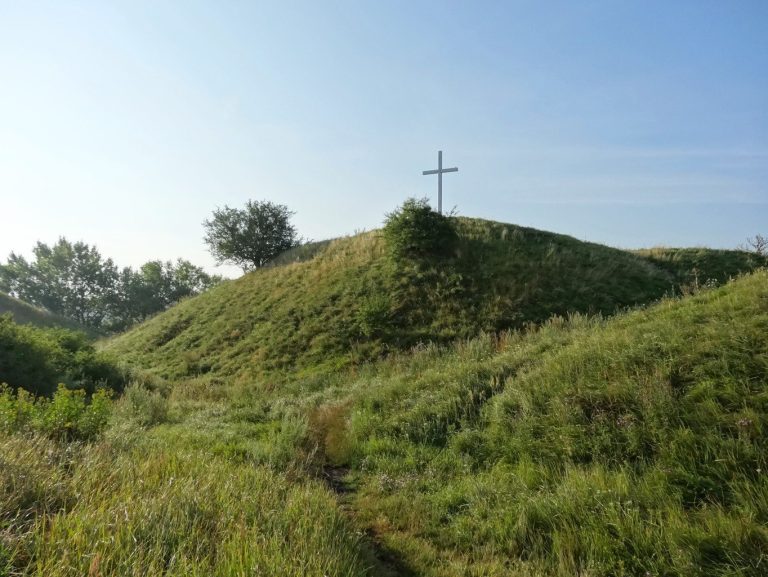
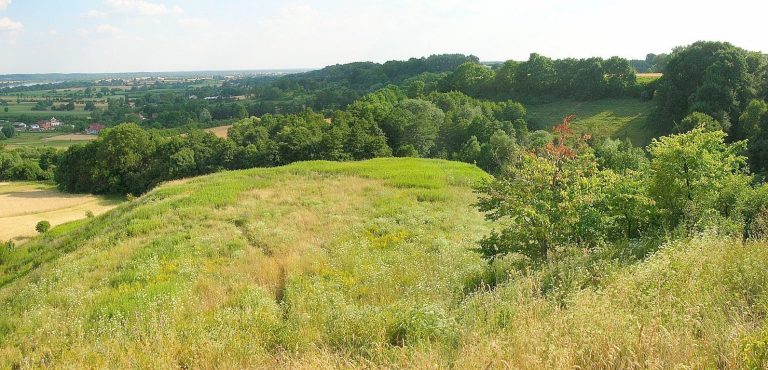
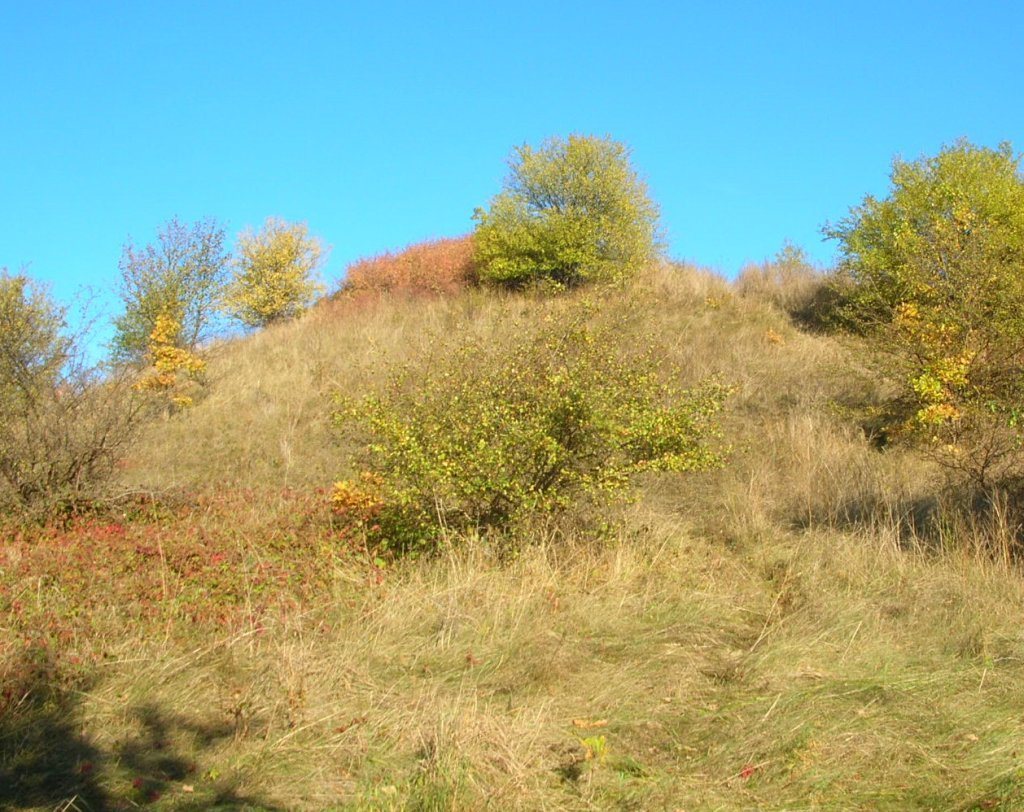
The settlement occupies a projecting ridge of glacial deposits on the Fordon Slope, between the Świecie Upland and Toruń Basin. Its flat summit lies 95 metres above sea level and rises 40 metres above the surrounding land. Steep sides once formed the edges of a dry moat. A ridge continues east between a valley and the broad meltwater valley of the Brda and Vistula. A timber-and-earth rampart enclosed the settlement, accompanied by a clay outer bank and a surrounding moat. A crosswise arm of the moat protected the easiest approach from the upland. The rampart was assembled in stacked sections, with long beams joined by crossbeams into a grid. Interlocking beams strengthened the structure, and the compartments held alternating fills of clay and fieldstones. For much of its length, the rampart followed the sharp upland edge and sat in a foundation trench. The moat was cut in terraces into a hillside sloping 20 to 30 degrees; its inner wall stood about five metres high, while the steep outer slope made access to the rampart difficult.
Domestic Features and Finds
Excavations revealed 15 domestic pits containing pottery, a fragment of a bronze pin, a stone axe, and two clay spindle whorls. Several thousand pottery fragments were recovered. About 13 percent were classified as early medieval, while most belonged to the older Hallstatt period, an early Iron Age era in Central Europe. A count of 1,200 vessel fragments, including finds from the 1960s and 1993, likewise had a small early medieval share and was dominated by Lusatian pottery from the Hallstatt period. Pottery and spurs helped date the early medieval settlement.