Saint Nicholas Church in Bydgoszcz-Fordon: A Historic Parish Church in Poland
Site at a Glance
- Rating
- 4.5
- Popularity
- Low
- Country
- Poland
- Primary era
- Modern
- External website
- Open
- Eras represented
- Early Modern, Modern
- Civilizations
- Kingdom of Prussia, Polish–Lithuanian Commonwealth
- Site type
- Religious
- Remains
- Church
On this page16 sections
History
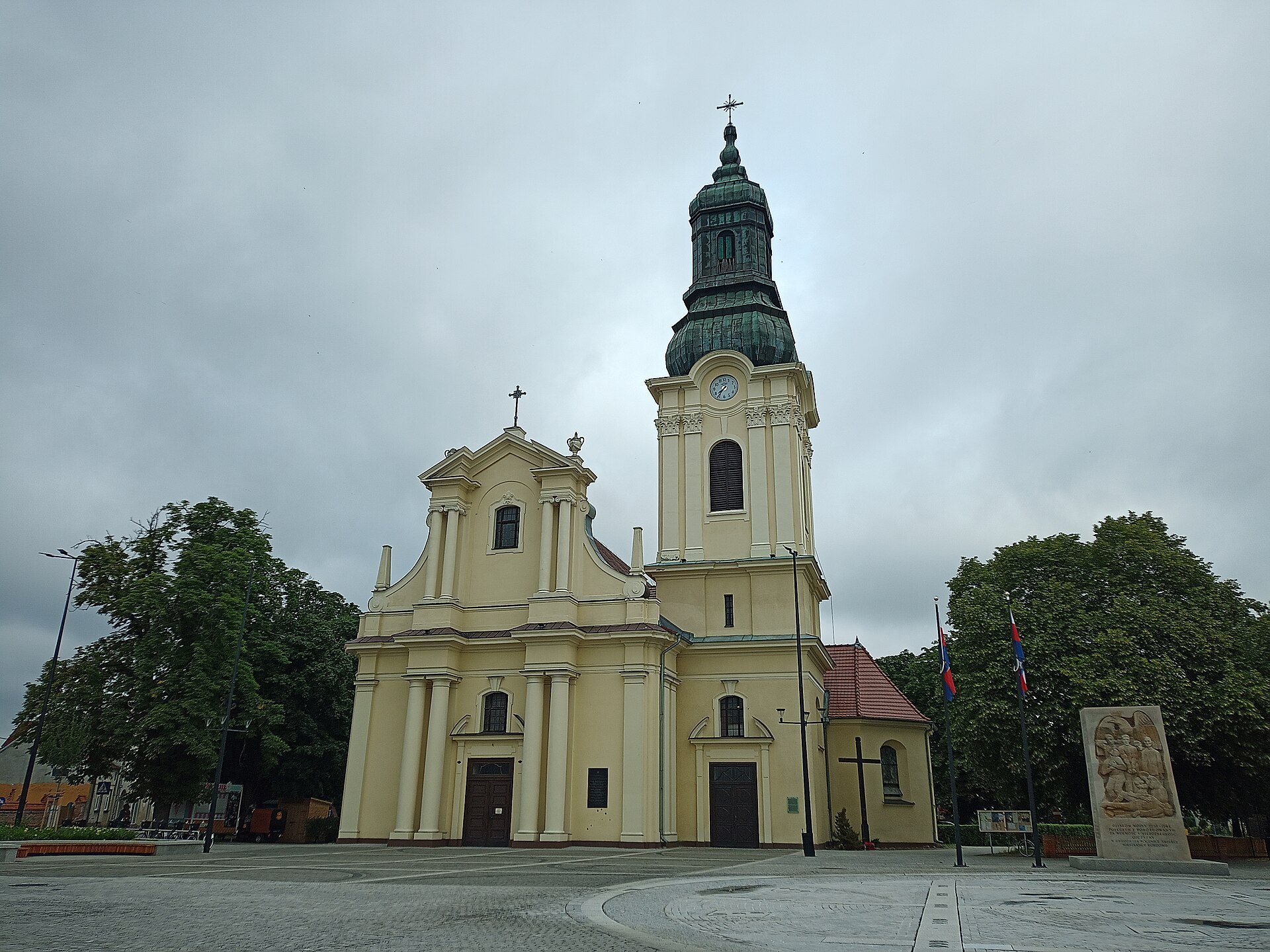
Saint Nicholas Church in Bydgoszcz-Fordon is a Roman Catholic parish church in Poland and the oldest religious building in Fordon. Dedicated to Saint Nicholas, the fourth-century bishop traditionally associated with charity and the protection of children, sailors, and travellers, it continues the medieval parish of Wyszogród. The present Neo-Baroque church took its form through an enlargement carried out between 1926 and 1933, while its history reaches back to a wooden church built in Fordon in 1424.
From Wyszogród to Fordon
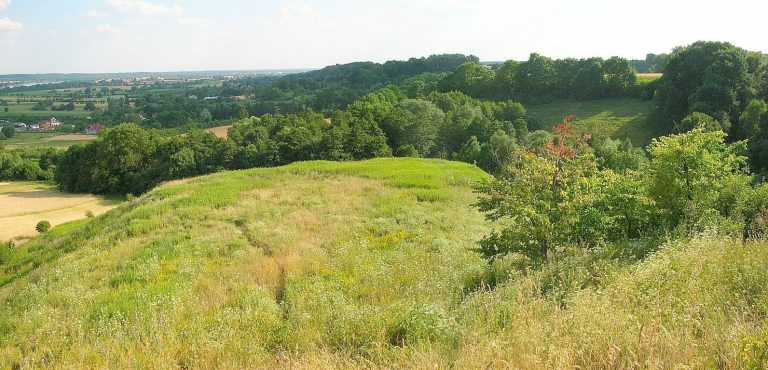
Before Fordon developed, local inhabitants attended Saint Mary Magdalene Church at Wyszogród, a medieval fortified settlement on the Vistula about two kilometres west of the present church. Wyszogród was destroyed in 1330 during the Polish-Teutonic War, a conflict between the Polish-Lithuanian state and the Teutonic Order. The settlement then shifted eastward towards the area now occupied by Fordon.
King Władysław II Jagiełło, who ruled Poland and was grand duke of Lithuania from 1386 until his death in 1434, established Fordon for a second time. A wooden church was built there in 1424, although the precise date of its foundation is unknown. It was already dedicated to Saint Nicholas. Parish life moved from Wyszogród to Fordon during the 1430s, and the first priest in Fordon is recorded in 1435.
The medieval parish covered Fordon and surrounding villages, including Łoskoń, Pałcz, Wyszogród, Siersko, Jarużyn, and Strzelce Dolne. The wooden church remained in use until the end of the sixteenth century. It had three altars, including a principal altar with a statue of the Transfiguration of Jesus, and the parish priest was generally assisted by two vicars.
The brick church and its eighteenth-century transformation
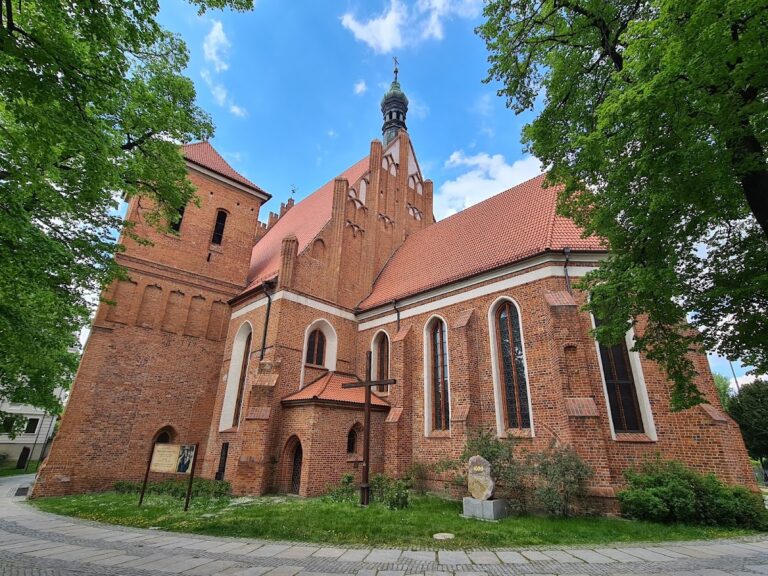
In 1598, Baltazar Miaskowski, suffragan bishop of Włocławek and parish priest of Fordon, ordered the construction of a brick church dedicated to Saint Nicholas. A suffragan bishop held an assisting or subordinate position within an ecclesiastical province. The building was completed during the first half of the seventeenth century as a late-Gothic, single-nave church with an eastward orientation and no tower.
The church stood beyond the densely built town centre, beside a square where people waited for the ferry across the Vistula. In 1632, members of the family of Łukasz Wybranowski of the Poraj noble house were buried in the crypt beneath the chancel. The Poraj house was a Polish heraldic clan whose members shared the Poraj coat of arms.
After a fire, a new church was erected in 1691, with a chapel dedicated to Saint Anne on its northern side. Extensive renovation followed during the first half of the eighteenth century. A brick porch and a bell turret were added, and by the middle of the century the church had five altars. The principal altar depicted the Resurrection of the Lord, while the side altars were dedicated to Saint Anne, the Annunciation, Saint Barbara, and Saint Joseph.
A column carrying a figure of Saint John Nepomucene was erected in front of the church. The parish also established a school and a poorhouse. From 1765, the church served as the seat of the Fordon deanery within the Diocese of Włocławek. A deanery is an administrative grouping of parishes supervised by a dean. In 1824, the parish was transferred to the Diocese of Chełmno, whose seat was at Pelplin. Before the partitions of Poland, three religious brotherhoods in Fordon were dedicated to Saint Anne, Saint Barbara, and Saint Joseph.
Neglect, enlargement, and wartime damage
During the Prussian Partition, the period from 1772 to 1918 when Polish territories were governed by Prussia or the German state, the church suffered neglect because Fordon’s Polish Catholic community faced difficult financial circumstances. Later in the nineteenth century, a small chapel was added to the north wall, while a porch with an additional entrance was built on the south side.
After Poland regained independence in 1920, the local Catholic population regarded the church as too small. The parish decided to enlarge it in 1923, when Father Bolesław Piechowski served as parish administrator. Stefan Cybichowski prepared the design, retaining the walls of the earlier church while creating a Neo-Baroque, single-nave building with three bays and a tower.
Construction began in 1926 with the demolition of the old nave and chapel. The new sections were built in 1927 and 1928, the tower was erected in 1929, and finishing work continued into the early 1930s. The church was consecrated on 15 October 1933. The extension added one bay to the north and increased the nave’s length from approximately 30 to 38 metres. In this form, the former small late-Gothic church became a large Neo-Baroque building that dominates Old Fordon.
In September 1939, during the German invasion and occupation of Poland, bombing damaged the church. The occupation authorities closed it until January 1940. On 2 October 1939, a public execution took place in the market square in front of the parish church. Those killed included Fordon mayor Wacław Wawrzyniak and the priests Henryk Antoni Szuman and Herbert Raszkowski.
Postwar changes and conservation
Postwar work brought a new Saint Barbara altar, the replacement and repair of the organ, modern lighting, a public-address system, new stained-glass windows, and a marble floor. In 1959, Konrad Dargiewicz painted frescoes on the vaulted ceiling. The former chancel became the Academic Chapel in 1977 and also houses the Emaus Academic Chaplaincy.
Lightning struck the tower on 12 June 1980, causing it to burn. During repairs in 1982, the Neo-Baroque dome was replaced and covered with copper sheeting. Further renovation included work on the facade in 1994, restoration of the tower and installation of a clock in 1995, and exterior lighting in 1998. Since 2004, the Fordon parish has belonged to the Diocese of Bydgoszcz. The church was entered on the Kuyavian-Pomeranian Voivodeship Heritage List on 20 October 1994 under registration number A/424/1.
Remains
Exterior and surviving earlier fabric
Neo-Baroque church
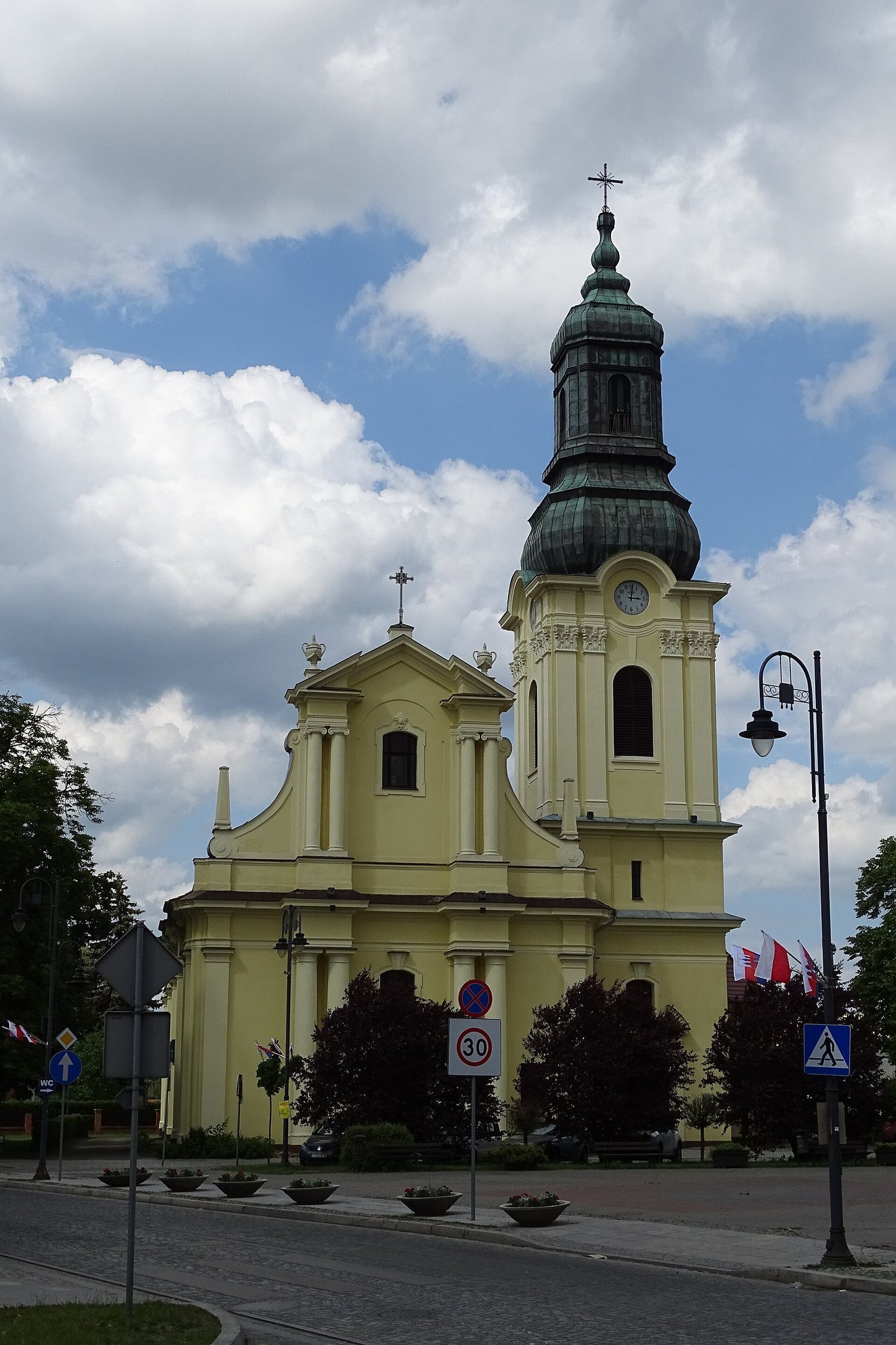
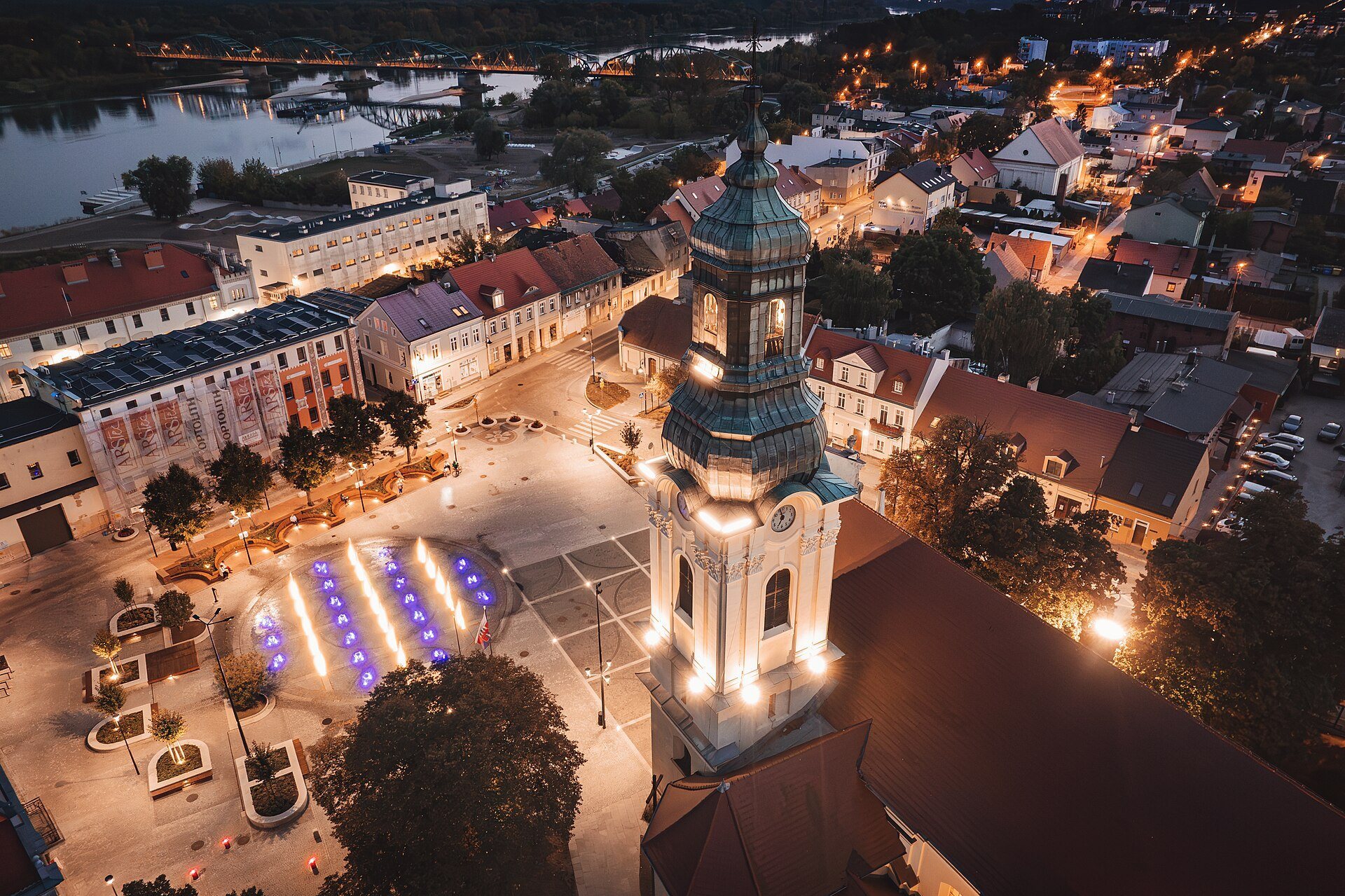
Saint Nicholas Church stands on the north side of the market square in Old Fordon, in the eastern part of Bydgoszcz, approximately 400 metres from the Vistula. The brick, plastered building has a single nave, a closed chancel facing north, and a tower at the southeast corner. Unlike the earlier church, which was oriented eastward, the present building follows a north-south axis.
The northward extension added one bay to the nave and enlarged the windows to admit more light. The two-storey facade has Tuscan columns at the main entrance and pairs of Ionic columns above them. Volutes and finials frame the upper level. The 48.8-metre tower has pilasters with Corinthian capitals and prominent cornices. Its massive copper dome dates from the repairs of the 1980s.
Earlier chancel and sacristies
A three-sided chapel on the eastern elevation preserves the chancel of the earlier church. A rectangular sacristy stands on the north side, while the original low sacristy survives to the northeast. It has a barrel vault, a continuous curved ceiling of semicircular section, with lunettes, or curved openings and recesses, cutting into the vault.
Two surviving rounded-arch openings in the chapel once formed part of the division between the old chancel and nave. They now contain stained-glass windows made by the studio of Stanisław Powalisz of Poznań. One depicts Saint Adalbert in connection with Wyszogród, and the other shows Saint Mary Magdalene, patron of the former Wyszogród church.
Interior architecture and altars
Vault and Academic Chapel
The nave is covered by a barrel vault with lunettes on the transverse arches and is supported by wall columns. The eastern chapel has a wooden coffered ceiling. Since 1977, the former chancel has served as the Academic Chapel, a chapel associated with university or student pastoral ministry. It also accommodates the Emaus Academic Chaplaincy.
The chapel contains the former principal altar of the seventeenth-century church. This Baroque altar dates from the middle of the seventeenth century and has a Rococo finial added in the middle of the eighteenth century. Its altarpiece contains a mid-seventeenth-century painting of the Adoration of the Blessed Virgin Mary by Saint Nicholas and Saint Martin.
Principal and side altars
The church contains seven altars. The principal altar in the chancel was designed by Stefan Cybichowski. It held Antoni Michalak’s Descent from the Cross until 1937, and since 1947 it has held Stanisław Wojciechowski’s painting of the Blessed Virgin Mary. Two side altars in the chancel contain sculptures of the Sacred Heart of Jesus and Saint Joseph by Bronisław Kłobucki of Bydgoszcz.
Opposite the Baroque altar in the Academic Chapel stands a polychrome Saint Barbara altar. Restoration of its painting of Saint Barbara revealed a second nineteenth-century image, showing Saint Anne with the Virgin and Child and funded by A. Kryska. Two contemporary prayer altars, dating from about 1960, stand at the front of the nave beside the presbytery, the area around the main altar reserved for the clergy. One carries an image of Divine Mercy, and the other an image of Our Lady of Perpetual Help.
Furnishings and liturgical objects
Processional panels and decorative furnishings
The furnishings combine works from the 1920s and 1930s with Baroque elements retained from the earlier church. They include altarpieces and paintings, ceiling frescoes, stained glass, sculptures, and processional devotional panels, which are two-sided images or objects carried during religious processions.
Three surviving processional panels come from the old church. One has a Gothic frame and shows Saint Anne with the Virgin and Child on one side and a Franciscan friar on the other. A polychrome panel from the late eighteenth century has metal paintings of the Immaculate Conception and Saint Anthony. Another panel, made during the first half of the eighteenth century, carries late-nineteenth-century images of the Holy Trinity with Saint Anne and Mary on one side and Saint Nicholas on the other.
Chalices and monstrance
The preserved liturgical objects include a gold Gothic chalice made in 1585 with Renaissance ornament from the workshop of Jakub Grunau in Toruń. The collection also contains a Baroque chalice made in a Gdańsk workshop in 1734, a forged silver Baroque monstrance from 1745, and another chalice combining late-Renaissance and Baroque features. A monstrance is a vessel used to display the consecrated Eucharistic host.
Organ and former bell
The pipe organ was made by Wilhelm Sauer. It originally stood in Fordon’s Evangelical Church, now the Catholic Church of Saint John the Apostle and Evangelist, and was moved to Saint Nicholas Church after 1945 by the Bydgoszcz organ builder Józef Sobiechowski.
The former church bell was cast in 1643 in Gdańsk by Gerhard Benningk. It carried the inscription Laudate Dominum in cymbalis bene sonantibus and a medallion of Saint Nicholas. Its lower diameter was 96 centimetres. When the tower burned on 12 June 1980, the bell fell and cracked. In the early 1990s, it was melted down to cast a bell for the newly established parish of Saint John in Fordon.