Schoonhoven Castle: A Castle Complex in Aarschot, Belgium
Site at a Glance
- Popularity
- Medium
- Country
- Belgium
- Primary era
- Early Modern
- Eras represented
- Early Modern
- Civilizations
- Duchy of Brabant, Habsburg, Habsburg Austria, Habsburg Spain, Holy Roman Empire, Spanish
- Site type
- Domestic
- Remains
- Castle
On this page9 sections
History
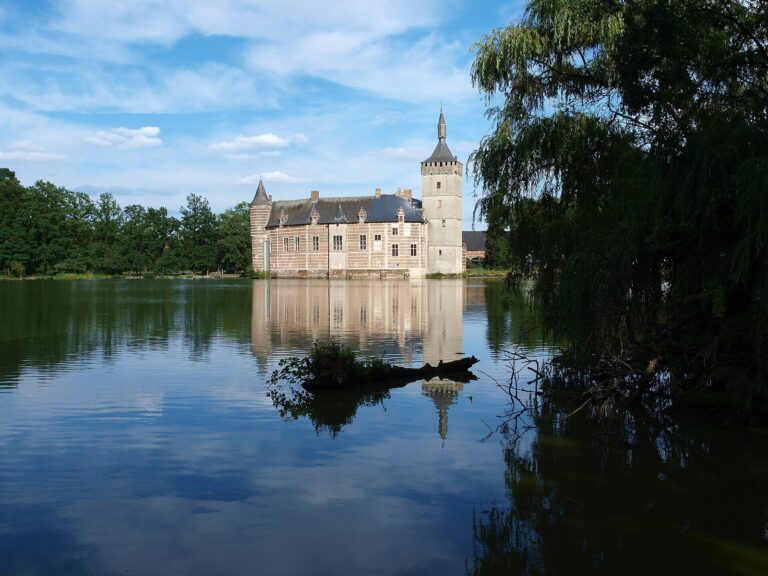
Schoonhoven Castle is a castle complex in Aarschot, Belgium, with an earlier castle probably built around 1500 and a later residence commissioned around 1770 in the Classicist style, which draws on ordered forms from ancient Greek and Roman architecture.
The earlier castle
The name Schoonhoven first appears in the mid-13th century. A castle was probably built there around 1500 for Herman van Eynatten, a local noble. Its earliest known depiction dates to the late 16th century and was held in the collection of Charles III de Croÿ, a prominent nobleman in the Habsburg Netherlands.
The later residence and its occupants
The attached chapel was built or rebuilt in 1671, although the date does not establish which. Around 1770, Jean-Antoine van der Noot, also a local noble, commissioned a new castle. Its forecourt was demolished in 1850.
From 1903 to 1908, the Clerics of Saint Viator, a Catholic congregation also known as the Viatorians, rented the castle temporarily after being expelled from France.
Remains
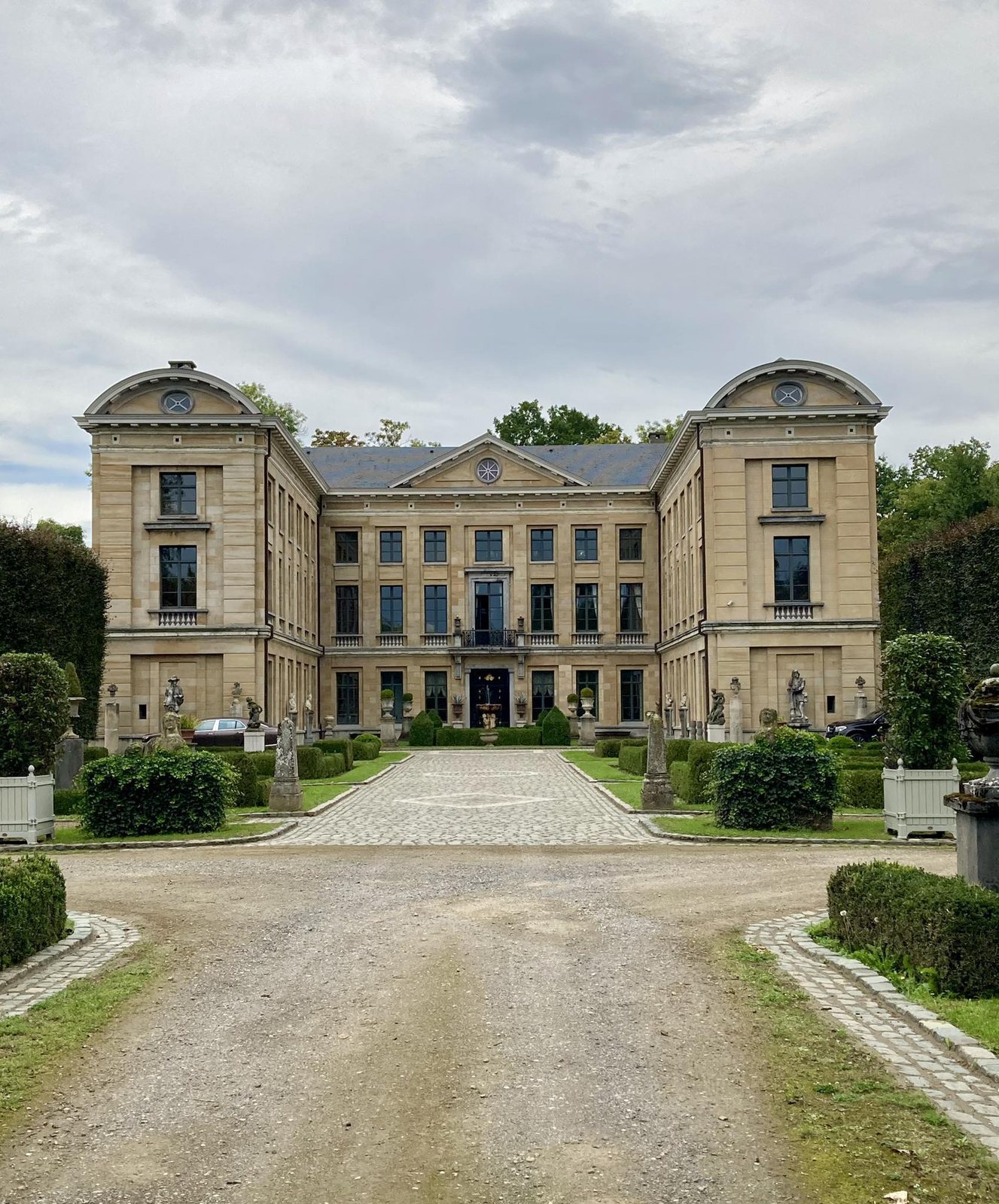
The complex brings together an earlier castle site on a moated mound and a later, U-shaped residence in the Classicist style. An attached chapel is accessible through the castle, and a symmetrical garden occupies the mound in front of it.
Castle and chapel
Earlier castle site
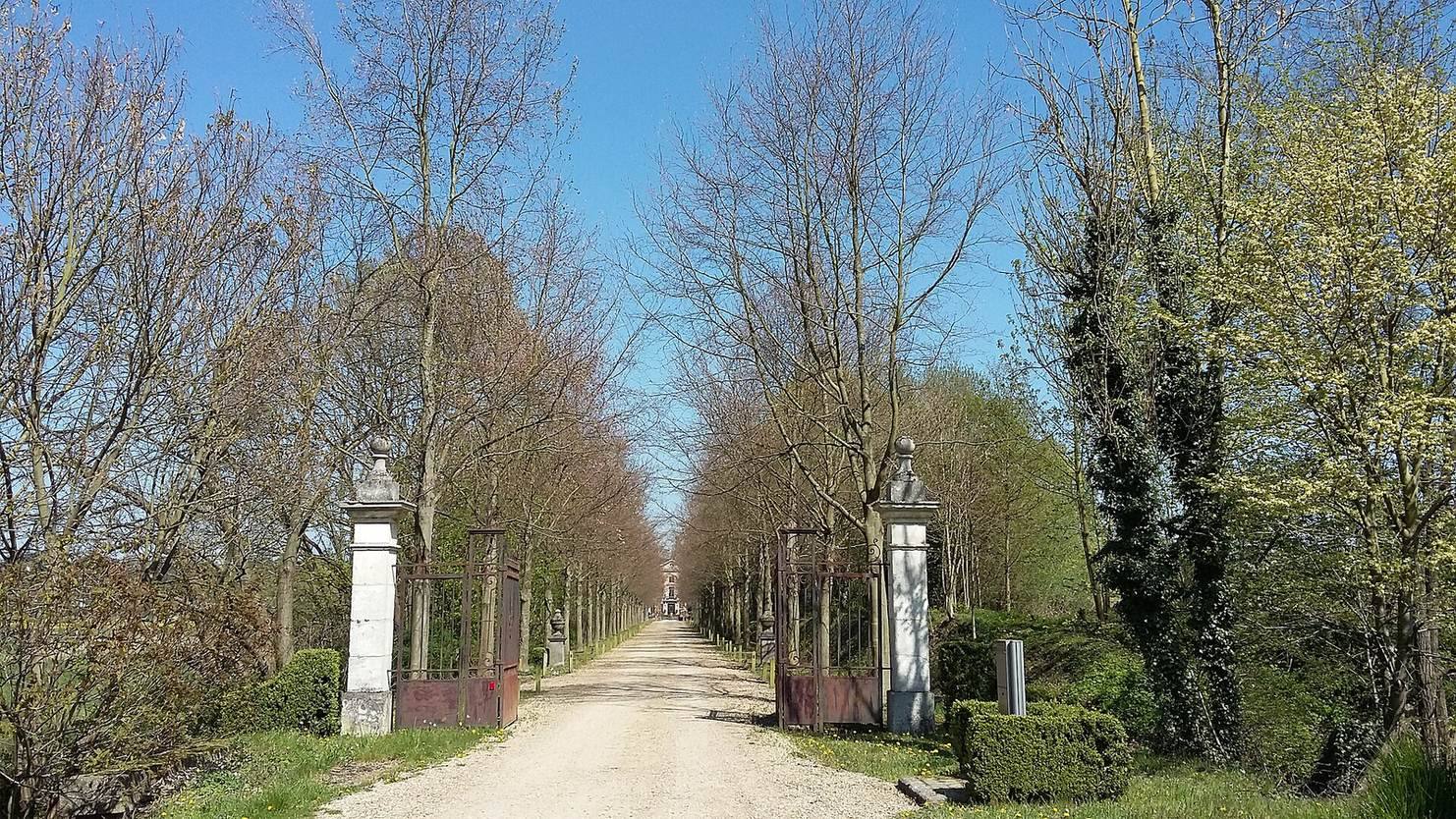
The earlier castle stood on a motte, a raised earth mound used as a base for a fortified building, and was surrounded by a moat. A drive and drawbridge provided access. A barn and kitchen garden also stood on the mound, while several ponds were used for fish farming.
Later castle
The later castle has a U-shaped plan. Its main building is crowned by a triangular pediment, a decorative feature on a facade, while each side wing has a curved pediment at its gable end.
Chapel
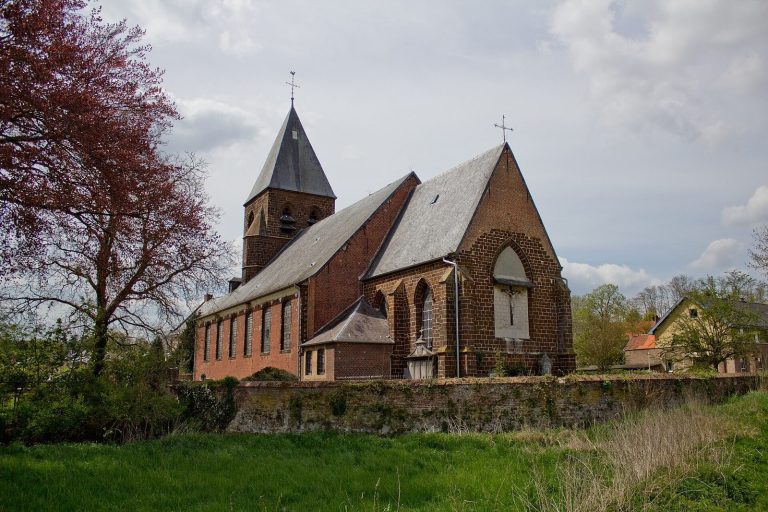
The small chapel is attached to the castle and reached through it. Its tower is Baroque, an early modern European style known for elaborate, dynamic forms, and carries a pear-shaped spire. The chapel contains stucco, or molded decorative plaster, made by J.C. Hansche.
Garden and watermill
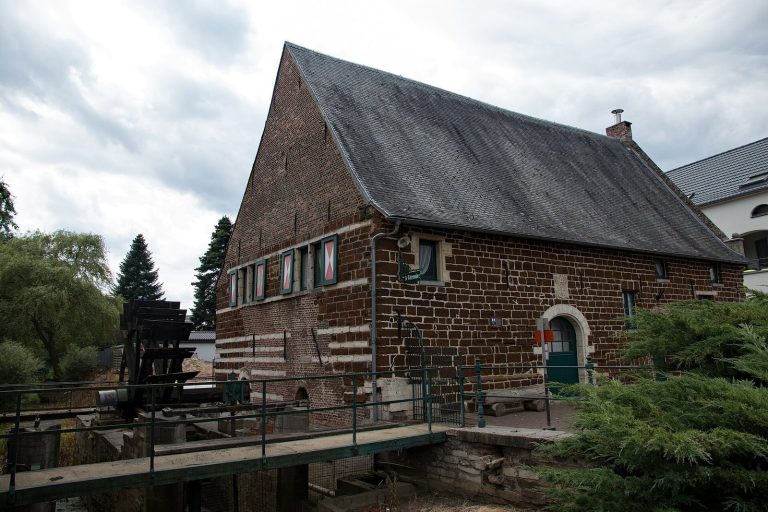
A symmetrical garden lies on the motte in front of the castle. The associated Schoonhoven Mill was a watermill on the Grote Motte.