Basilica of Our Lady of Scherpenheuvel: A Baroque Marian Pilgrimage Shrine in Belgium
Site at a Glance
- Rating
- 4.5
- Popularity
- Medium
- Country
- Belgium
- Primary era
- Early Modern
- External website
- Open
- Eras represented
- Early Modern
- Civilizations
- Habsburg
- Site type
- Religious
- Remains
- Basilica
On this page15 sections
History
The Basilica of Our Lady of Scherpenheuvel is a Roman Catholic parish church and Marian pilgrimage shrine in Scherpenheuvel-Zichem, Belgium. Built as a Baroque church during the early seventeenth-century Counter-Reformation, it developed under the patronage of Archdukes Albert and Isabella, who ruled the Catholic Southern Netherlands and promoted pilgrimage, Marian devotion, and Catholic renewal.
The oak and the first chapel
The shrine began with a small statue of the Virgin Mary placed in an oak on the hill. A foundation legend says that a shepherd became unable to move after taking the fallen statue away and recovered only when it was returned to the tree. The truth of this story is uncertain, but by the second half of the sixteenth century inhabitants of nearby Zichem visited the oak when relatives were ill. They traditionally walked around it three times while praying.
Zichem belonged to the Barony of Diest, a possession of the House of Orange-Nassau. During the Dutch Revolt, the barony changed hands repeatedly. United Provinces forces removed the statue during their occupation from 1580 to 1583, while parishioners restored the cult after Alexander Farnese retook the town in 1587. Soldiers and almoners of the Army of Flanders stationed near Diest and Zichem helped spread the shrine’s reputation.
In 1602 the statue was removed from the oak and placed in a small wooden chapel. When this building became too small, a stone chapel replaced it. Count Frederik van den Bergh laid its foundation stone on 13 July 1603 on behalf of Albert and Isabella.
Archducal patronage and expansion
Albert and Isabella made their first pilgrimage to Scherpenheuvel on 20 November 1603. They attributed the relief of the besieged town of ’s-Hertogenbosch to the Virgin’s intercession, and their pilgrimage became an annual nine-day novena held in May or June.
After an official enquiry, Mathias Hovius, Archbishop of Mechelen, approved the cult in 1604. Collections of miracles attributed to the Virgin’s intercession appeared in Dutch, French, Spanish, English, and Latin. Philip Numan produced several editions and additional collections, while Justus Lipsius and Erycius Puteanus published Latin versions. These works attributed nearly 700 miracles to the Virgin during the seventeenth century and provoked controversy with Calvinist theologians, who rejected the idea of miraculous intercession by saints.
Under Albert and Isabella’s patronage, Scherpenheuvel was raised to town status in 1605 and became an independent parish in 1610. Their support also helped secure a papal indulgence on 16 September 1606, the feast of Our Lady of Sorrows. Before the cult received official approval, pilgrims took pieces of the oak as devotional souvenirs. Hovius later ordered the tree to be felled and divided. Some pieces remained at the sanctuary, one large section went to Albert and Isabella, and much of the wood was made into images of the Virgin that were distributed among princes, nobles, and clergy.
The planned church and town
In the summer of 1606, the stone chapel was enclosed by a seven-sided closed garden, or Hortus Conclusus. This Marian symbol, derived from the enclosed garden of the Song of Songs, represented Mary’s purity and virginity. On 28 April 1607, after a cease-fire with the United Provinces, Albert and Isabella announced plans for a large church surrounded by a planned fortified town. They laid the foundation stone of the present church on 2 July 1609, the feast of the Visitation.
The church was dedicated by Archbishop Jacobus Boonen in June 1627, although its bell tower remained unfinished. The growing number of pilgrims led to the appointment of the Oratorians, members of a Catholic community of secular priests devoted to pastoral and devotional work. They built a convent behind the church and connected it to the building by a long corridor.
Disruption, restoration, and continued pilgrimage
The Oratorians administered the sanctuary until the French Republic annexed the Austrian Netherlands and dissolved the monasteries. The church then returned to parish status. During and after the French occupation from 1797, the town suffered extensive damage, the Oratorians were expelled, and the church was looted.
The cult was solemnly restored when the statue was crowned on 25 August 1872. Cardinal Victor-Auguste-Isidor Deschamps performed the ceremony on behalf of Pope Pius IX. Pope Pius XI raised the shrine to the status of a minor basilica on 2 May 1922. A minor basilica is a church given special papal status because of its religious, historical, or devotional importance. On 2 February 2011, Pope Benedict XVI dedicated that year’s Golden Rose to the basilica, and papal nuncio Giacinto Berloco presented it on 15 May 2011.
The basilica is affiliated with the Roman Catholic Church and the Archdiocese of Mechelen-Brussels. It is protected as built heritage in the Flemish Region, with protection dates of 29 January 1952 and 8 October 2021. The shrine remains an important Marian pilgrimage centre. The season traditionally extends from 1 May to the first week of November. Since 1931, the 57-kilometre De Grote Trek from Antwerp has taken place on the first Sunday of May. On the Sunday after All Hallows, the statue is carried around the basilica in the Procession of Candles, and every 25 years the coronation is commemorated by the Kroningsfeesten. The most recent celebrations mentioned took place in 1997.
Remains
Central plan and exterior
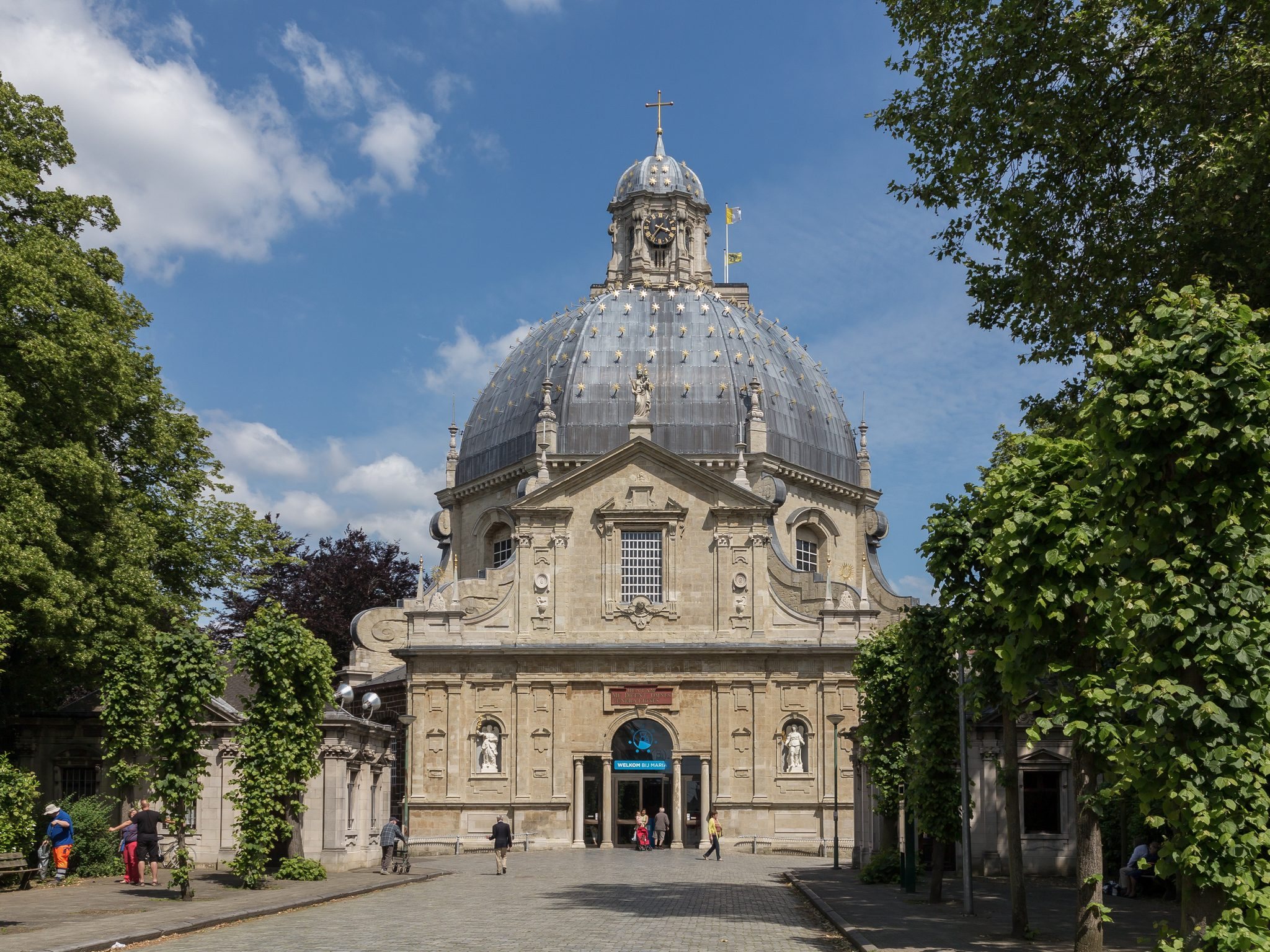
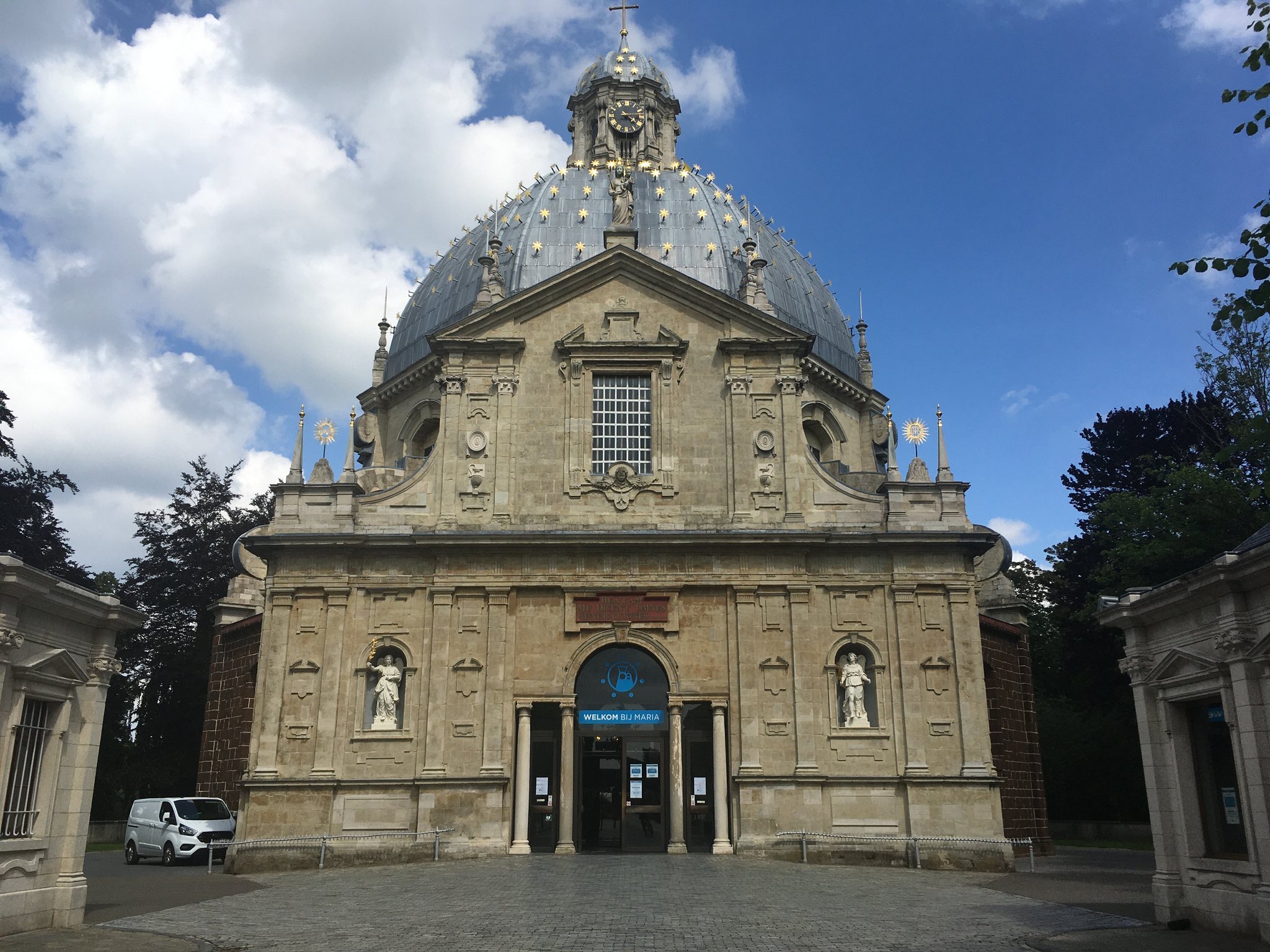
The basilica is a centrally planned, domed Baroque church generally attributed to Wenceslas Cobergher, an archducal architect and engineer. Its design is linked to the seven-sided Hortus Conclusus and to the plan of Scherpenheuvel. The floor plan forms a seven-pointed star, seven avenues lead toward the site, and the dome rests on seven columns.
Central worship space
The main altar stands on the site of the original oak. Six sides of the central space are bordered by chapels, while the seventh opens into a vestibule flanked by two further chapels. An ambulatory, a passage for movement around the main worship space, connects the side chapels and allows pilgrims to walk around the central area without entering it.
Bell tower and dome
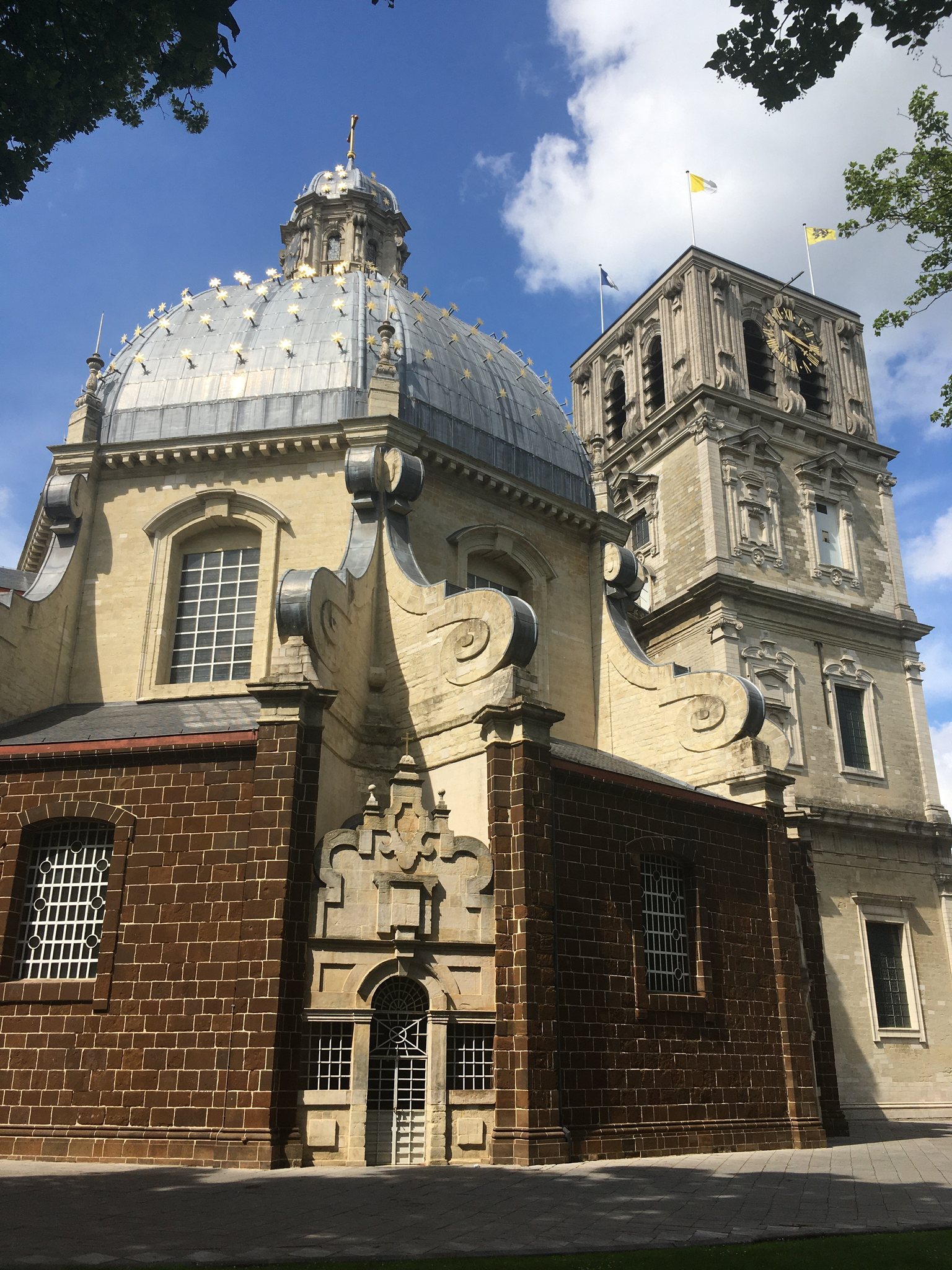
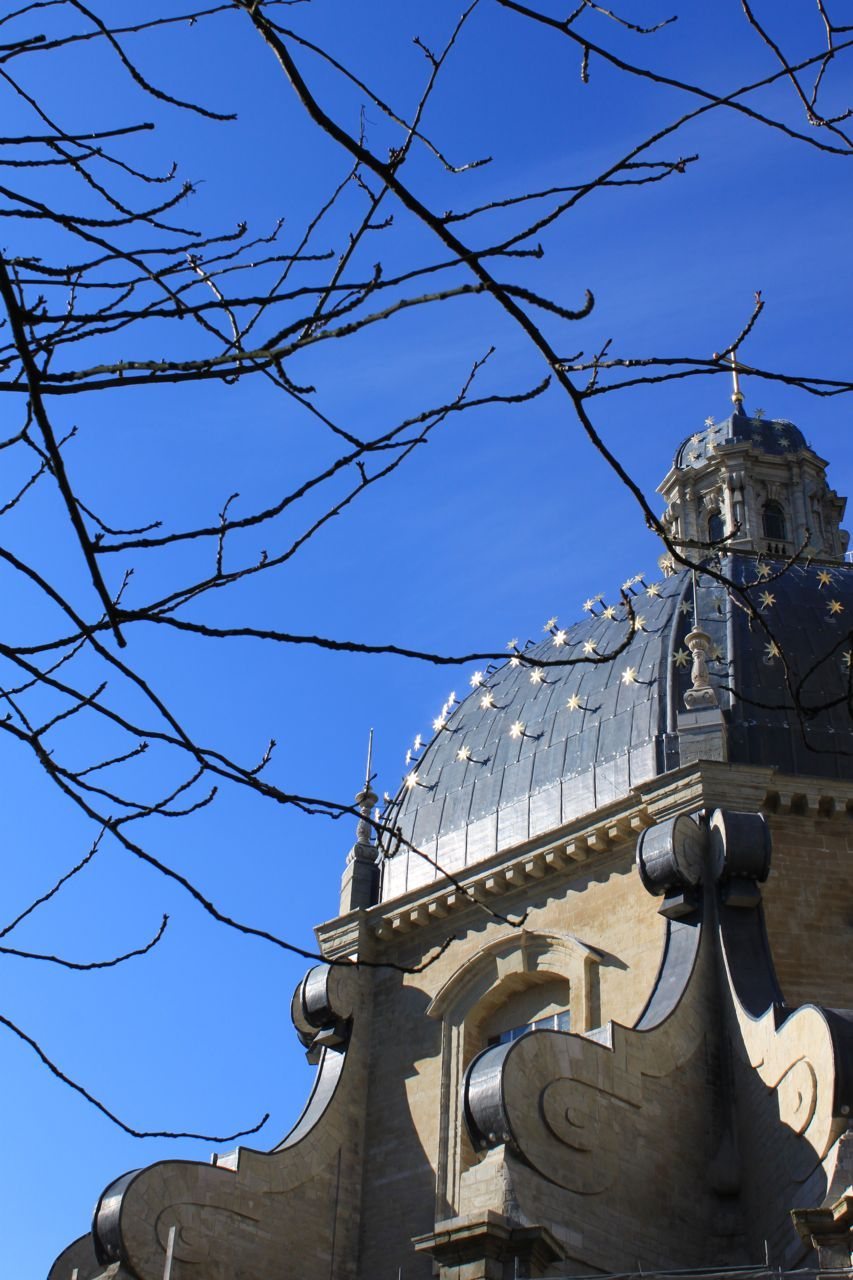
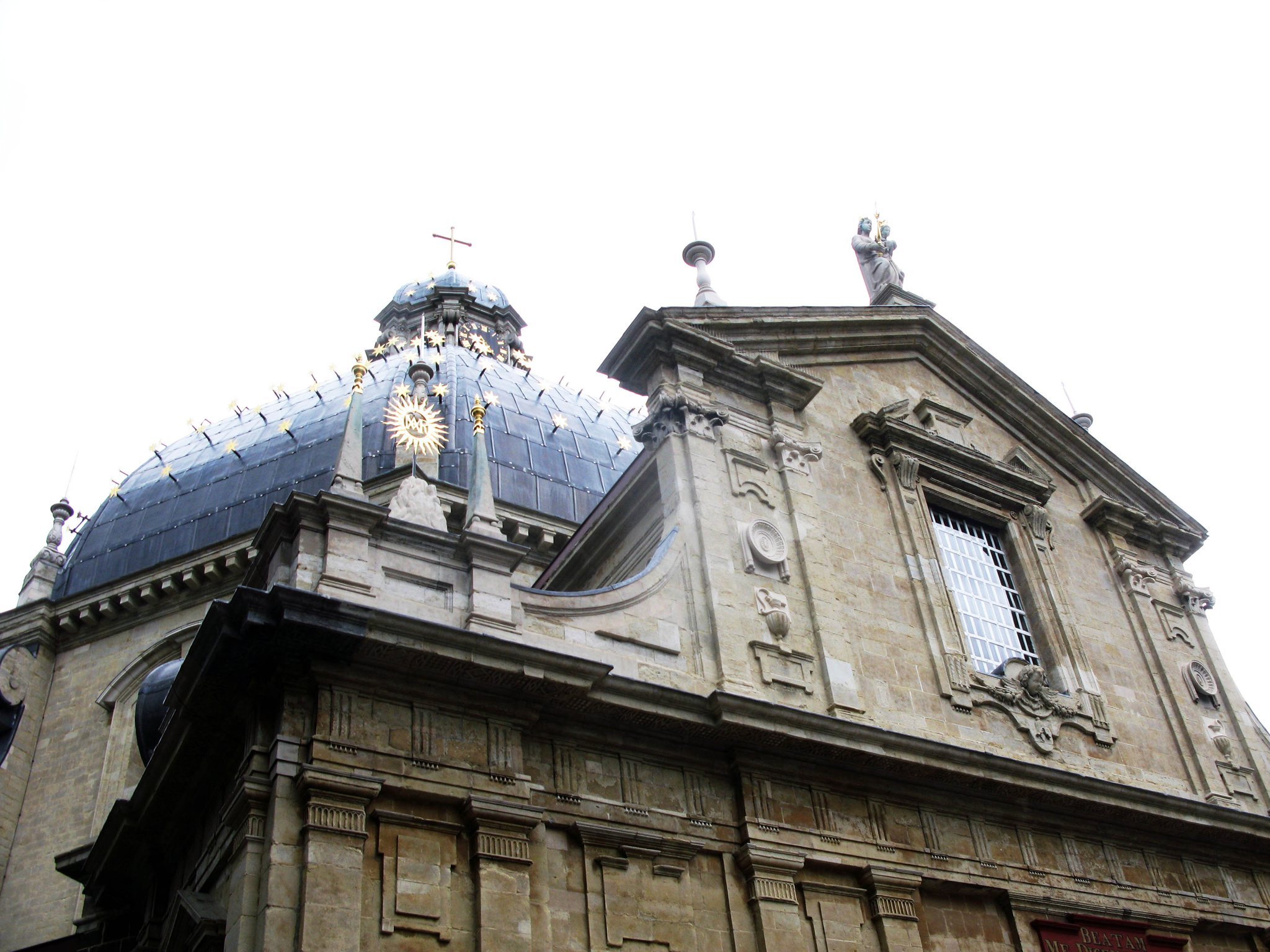
The unfinished bell tower stands opposite the vestibule. Seven additional altars are positioned beneath the tower and along the exterior walls. The dome’s exterior is covered with 298 gilded, seven-pointed stars. The repeated use of seven in the plan, altars, columns, and stars refers to the Seven Sorrows of the Virgin, a Catholic devotion focused on seven episodes of suffering in Mary’s life.
Altars and paintings
Scenes from the life of the Virgin
The main altar and six side altars contain altarpieces by Theodoor van Loon depicting seven scenes from the life of the Virgin. The side altarpieces show the Encounter at the Golden Gate, the Birth of the Virgin, the Presentation of the Virgin, the Annunciation, the Visitation, and the Presentation of Jesus at the Temple. The main altarpiece depicts the Assumption of the Virgin.
Lamentation of Christ
Van Loon also painted the Lamentation of Christ, which forms part of the basilica’s painted decoration.
Sculpture and Marian symbolism
Prophets, evangelists, and archangels
Sculptural decoration is attributed to the brothers Robert and Jean De Nole. Six prophets stand on the columns of the central space, four seated evangelists occupy the vestibule, and two archangels flank the main entrance.
Emblems in the architecture
The church’s iconographic program uses Marian emblems associated with the Immaculate Conception, the Catholic doctrine that Mary was preserved from original sin from the moment of her conception. The seven columns refer to the seven columns of the House of Wisdom in Proverbs 9:1. The entrance and vestibule, with their archangels and altars dedicated to All Saints and All Angels, represent the Gateway to Heaven, while the bell tower evokes the Tower of David. Other symbolic images include Jacob’s Ladder, the Ark of the Covenant, the Strong City, and the Closed Garden.
The overall design has been compared with the later Basilica of Santa Maria della Salute in Venice, constructed between 1631 and 1681.